10 Upstate New York Towns So Packed With Tourists That Locals Avoid Downtown On Busy Weekends
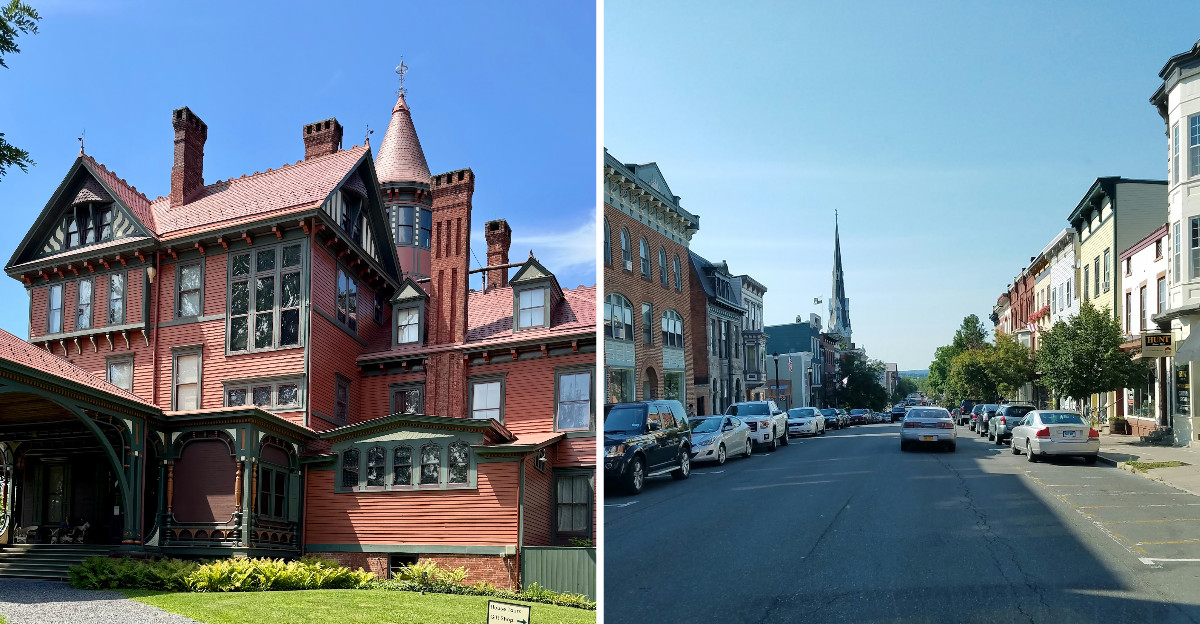
One village in this story has exactly one traffic light, and it sits on a Main Street just two blocks long.
I’m going to be extremely specific here. That single light is what I like most.
Another spot hid a stream that drops 400 feet through a gorge with 19 waterfalls.
A third once ran a mountain railway with an average grade of 64 percent. Yes, I’m appreciating something very particular.
Upstate New York packs these oddly precise wonders into small downtowns. Then summer weekends arrive, and those tiny streets fill up fast.
So, which ones send the people who live there quietly out the back roads?
1. Lake George
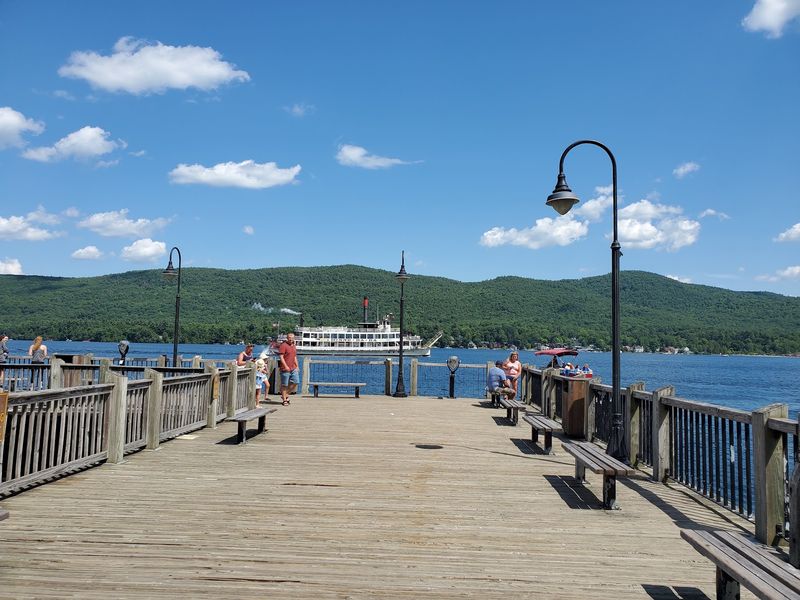
Some towns get busy on weekends, and some get a full Adirondack traffic jam with sunscreen. Lake George lands firmly in the second group.
The village sits at the southern end of its namesake lake in northern New York, framed by forested Adirondack hills.
Canada Street forms the busy downtown spine, with shops, restaurants, and family attractions along the route. Because it’s also part of Route 9, through traffic meets vacation traffic right where many people want to stroll.
Shepard Park offers a lakeside break, while the nearby public beach and boat cruises explain why warm weekends bring so many visitors into a relatively small area.
The village has roughly 1,000 year-round residents, a striking contrast with the number of summer vacationers. During popular festivals and sunny holiday weekends, parking spaces and sidewalk room can become scarce.
Arriving early gives you time to explore before the afternoon bustle. Another option is to visit on a weekday, when browsing and taking waterfront photographs can feel more leisurely.
The sparkling lake itself remains the main attraction. Mountains rise beyond the water, boats travel across the surface, and the town makes a colorful base for an Adirondack getaway.
Come for those views, then let the lively streets become part of the story.
2. Lake Placid
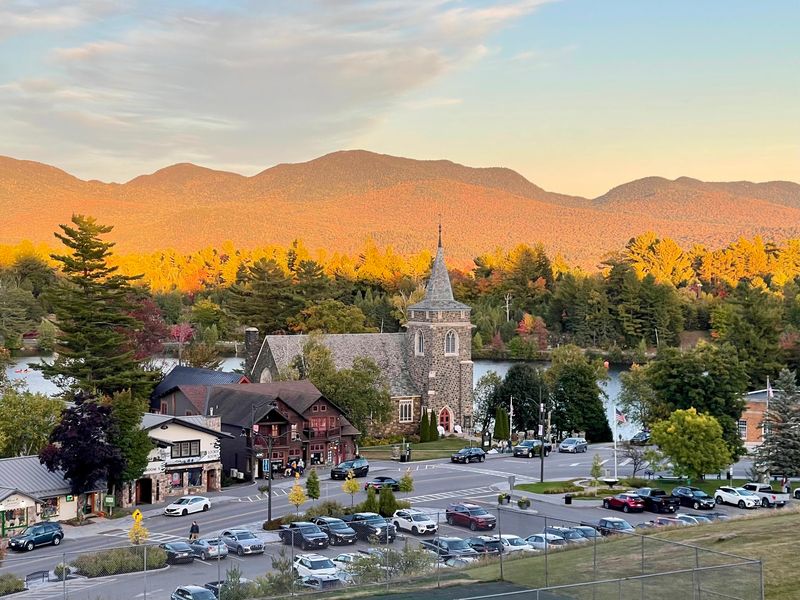
Two Winter Olympics in one tiny village is a lot of trophy shelf space. Lake Placid hosted the Games in 1932 and again in 1980.
That history still shapes Main Street. The Olympic Center houses the 1980 Herb Brooks Arena, the 1932 Jack Shea Arena, and the Olympic Museum, where displays celebrate both Winter Games.
You can even try a bobsled simulator without leaving the building.
The museum’s entrance is at 2634 Main St, Lake Placid, NY 12946, right beside the village’s main shopping and dining area.
This is also the stretch where Lake Placid’s famously confusing geography becomes clear: the water beside downtown is Mirror Lake, rather than Lake Placid itself.
Mirror Lake covers roughly 124 acres and doesn’t permit motorized boats. Its beach, paddling opportunities, and shoreline paths are a strong draw during summer, while the Olympic venues attract visitors throughout the year.
With a village population of only a few thousand, a sunny weekend can make restaurants and downtown parking particularly busy. The High Peaks region brings additional hikers and outdoor enthusiasts into the area.
Planning a mountain outing? From May 1 through October 31, access to trails through the Adirondack Mountain Reserve near Keene Valley requires a reservation. That applies to reserve trailheads, rather than every hike near town.
A relaxed early walk beside Mirror Lake can be just as rewarding as an ambitious mountain day.
3. Cooperstown
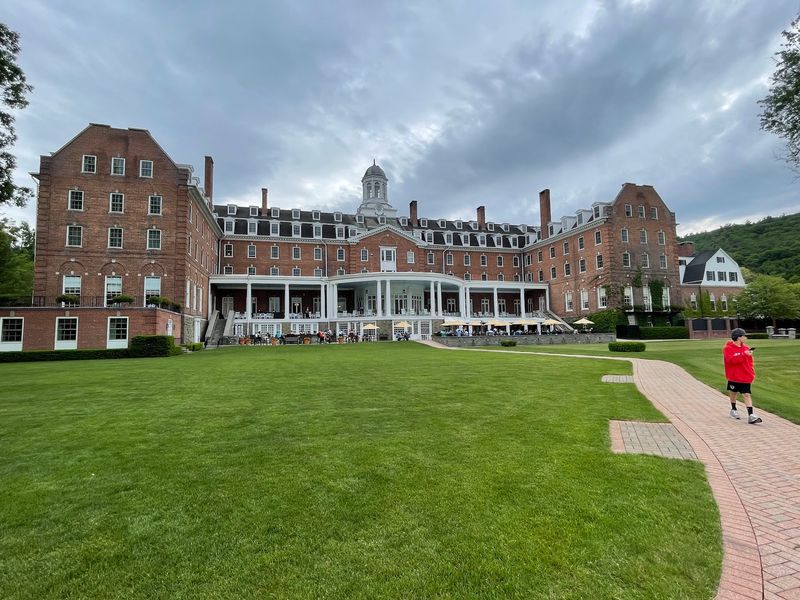
One traffic light holds the line against thousands of baseball fans. Cooperstown’s two-block Main Street has the only signal in the village.
That compact downtown contains the National Baseball Hall of Fame and Museum, where three floors explore the sport’s history.
Its collections include tens of thousands of objects, and the Plaque Gallery remains one of its recognizable spaces. Summer museum hours extend into the evening, giving fans more time to explore.
Doubleday Field and numerous baseball-themed storefronts sit nearby, so an afternoon of sightseeing can unfold within just a few blocks.
Fewer than 2,000 people live in the village year-round. During Hall of Fame Induction Weekend, that small population shares the streets with thousands of visitors. Special trolley parking outside the center helps relieve the congestion.
For a change of scenery, follow State Highway 80 along Otsego Lake. Fenimore Art Museum displays American art, and Fenimore Farm & Country Village offers historic buildings, heritage animals, and the Empire State Carousel.
The lake and countryside make a lovely contrast with the lively downtown. Arrive early, park once, and let the afternoon alternate between baseball history and quieter scenery.
The single traffic light may be modest, but the town’s visitor appeal certainly isn’t.
4. Saratoga Springs
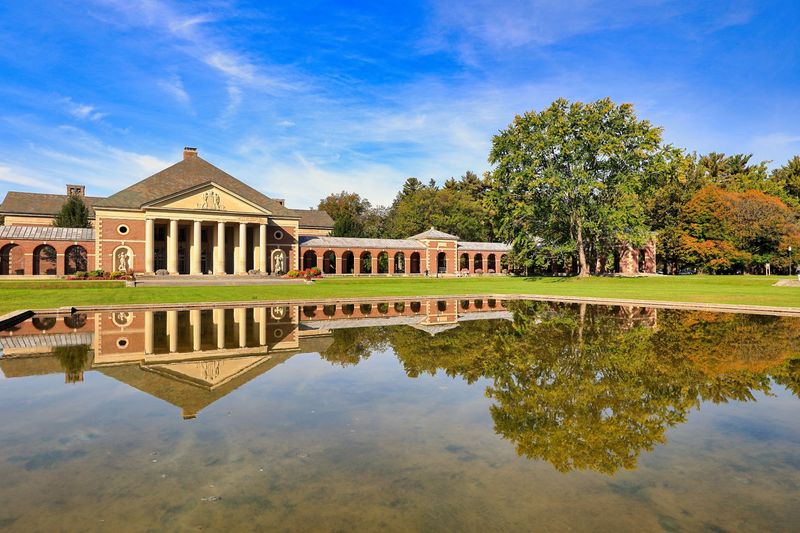
Horses have been running here since 1863, and the crowds have been chasing them ever since. Saratoga Race Course is one of America’s longest-running sporting venues.
The 2026 summer racing season began July 3 and concluded September 7.
More than a million paid admissions were recorded during the meet, giving a sense of how much energy the racing calendar brings to the city. Downtown Broadway and Caroline Street become especially lively when major events are scheduled.
The historic course stands at 267 Union Ave, Saratoga Springs, NY 12866, a short distance from downtown shops and restaurants. Across the road, the National Museum of Racing and Hall of Fame presents the history of thoroughbred competition.
Music adds to the summer schedule. Saratoga Performing Arts Center stages concerts and performances by the New York City Ballet and The Philadelphia Orchestra, drawing audiences beyond the racecourse crowd.
For a more relaxed outing, Congress Park offers pathways, mineral springs, a historic carousel, and the elegant Canfield Casino building. Saratoga Spa State Park has wooded trails, distinctive mineral features, and the Roosevelt Baths and Spa.
New York travelers wanting a quieter downtown can plan around busy racing days and major performances. Outside peak summer, the historic architecture and spacious parks remain appealing.
A morning stroll through Congress Park and an afternoon browsing Broadway show why Saratoga attracts visitors for much more than one season.
5. Woodstock
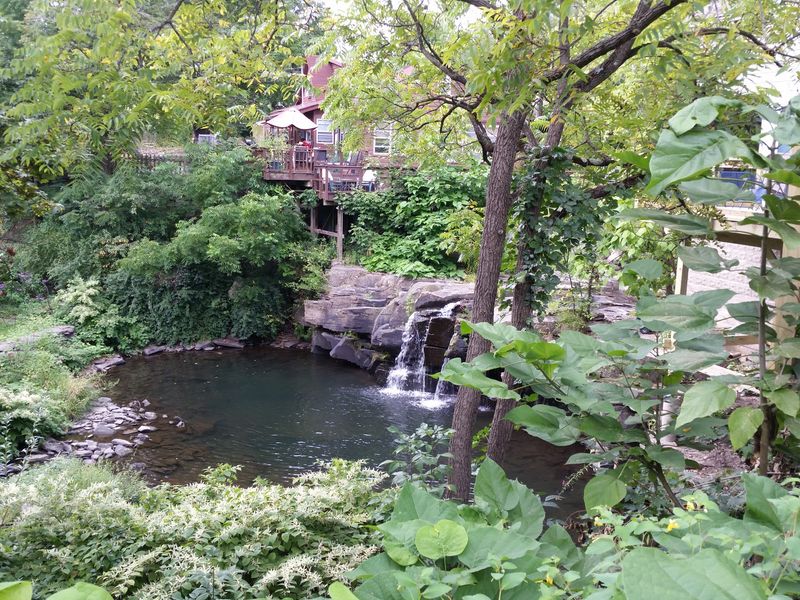
Fun fact for your next trivia night. The famous 1969 festival didn’t actually happen in Woodstock.
The event took place in Bethel, while the town whose name it carried built its own creative reputation long before that summer.
The Byrdcliffe Arts Colony began taking shape in the early 1900s, drawing painters, writers, and craftspeople into the Catskill foothills.
Today, Woodstock’s compact business center gathers around Tinker Street and the Village Green. Galleries, independent boutiques, bookstores, and cafes share a walkable area that attracts day-trippers from across the Hudson Valley.
The larger town has several thousand residents spread across rural terrain, but much of the visitor activity concentrates in these few downtown blocks. That contrast is particularly noticeable on sunny weekends and during special events.
There is more to explore beyond the shops. The surrounding mountains and country roads offer leafy scenery, while local arts organizations continue the community’s longstanding creative traditions.
A weekday morning offers a gentler pace for browsing. On Saturday, embrace the lively village atmosphere, find a comfortable place to sit, and enjoy how much personality this small Catskills center manages to hold.
6. Cold Spring
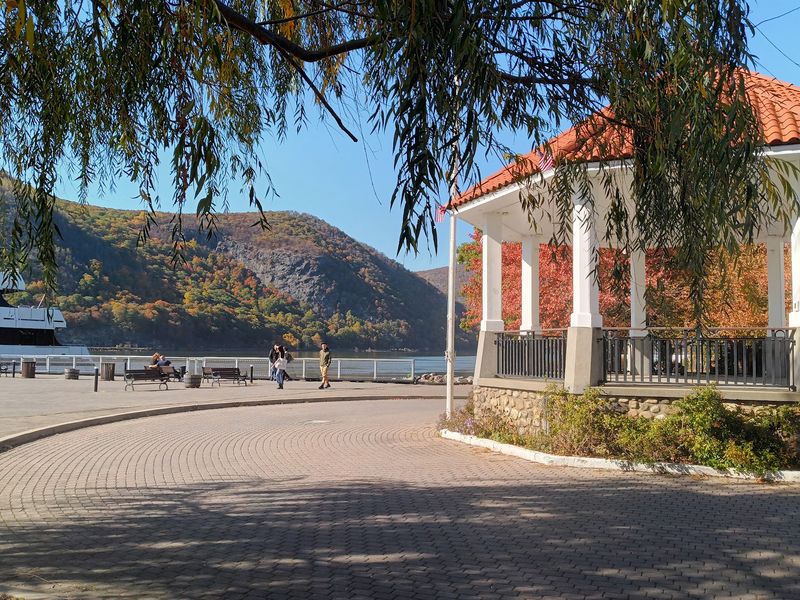
A train drops hikers right at the edge of a nineteenth-century village, and they all seem to arrive at once. Cold Spring sits on Metro-North beside the Hudson River.
From the station, Main Street rises past historic storefronts, cafes, and antique shops.
The surrounding historic district preserves a remarkable collection of nineteenth-century architecture, making even a short stroll feel like a journey through an earlier era.
The riverfront offers views toward the Hudson Highlands, and the nearby West Point Foundry Preserve has pathways through wooded grounds and preserved industrial features.
Train access makes this an especially popular day trip, and sunny weekends can bring plenty of pedestrians onto the narrow sidewalks. Starting early or choosing a weekday gives you more room to browse.
Hikers should plan with current trail access in mind. Breakneck Ridge, Wilkinson Memorial, and Lower Brook trailheads remain closed during construction through 2026, along with Breakneck Ridge station.
The Washburn trailhead for Bull Hill remains an option for experienced hikers, while Little Stony Point offers a shorter waterfront outing.
If the goal is a relaxed day, there is no need to climb a mountain. A walk by the river, an antique-shop visit, and a quiet pause near the station capture plenty of Cold Spring’s appeal.
7. Skaneateles
Ask what the name means, and the answer is refreshingly blunt. Skaneateles comes from a Haudenosaunee word meaning long lake.
Fair enough, since the lake stretches about sixteen miles and reaches roughly 300 feet at its deepest point.
The clear water draws boaters and waterfront visitors, especially when summer sunshine makes the northern shore irresistible.
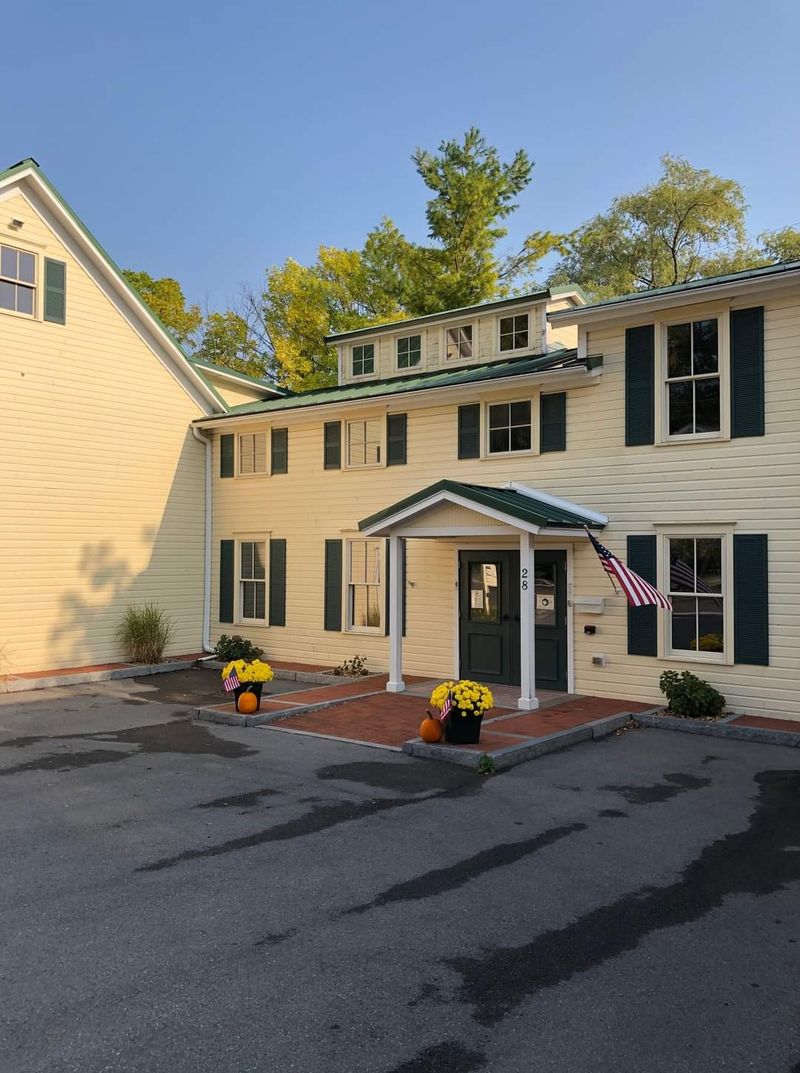
The village gathers at the lake’s northern end, where Genesee Street has historic storefronts and places to eat.
The Sherwood Inn traces its beginnings to a stagecoach tavern established in 1807, giving the center an unmistakably old-fashioned character.
Benches near the lake offer an easy place to pause, while the short blocks invite a leisurely circuit through shops and cafes.
History enthusiasts can explore the Skaneateles Historical Society Museum on Hannum Street. Its renovated historical exhibits and Friday-and-Saturday afternoon schedule make it a particularly pleasant addition to a weekend outing.
Summer concerts and community events add to the village’s appeal. With a population of only a few thousand, popular weekends can leave the lakefront sidewalks and parking areas feeling remarkably busy.
Arrive early for the quiet water views, then browse downtown before the afternoon bustle. The long lake and the compact village make a memorable combination, whether you’re staying for lunch or the entire day.
8. Rhinebeck
Everything in Rhinebeck seems to meet at one intersection. The village business core centers on a classic four corners.
Market Street and Montgomery Street cross near an inviting stretch of independent shops, restaurants, and historic buildings.
The Beekman Arms has been part of the scene since 1766, continuing a lodging tradition that reaches back through centuries of Hudson Valley travel.
The village’s walkable streets take you past boutiques, storefront windows, and handsome older homes. It’s a place where an afternoon can disappear into browsing.
Then there’s the Dutchess County Fairgrounds. Major exhibitions and seasonal events attract visitors from well beyond the village, adding another reason downtown roads and parking areas may feel busy on certain weekends.
Rhinebeck has only a few thousand year-round residents, while its historic center serves as a destination for shopping, dining, and regional gatherings. A sunny Saturday brings those uses together in a fairly small area.
Rather than arriving at the busiest time, try a morning walk through the four corners before the afternoon activity builds. You can also visit the surrounding countryside and return for a meal later.
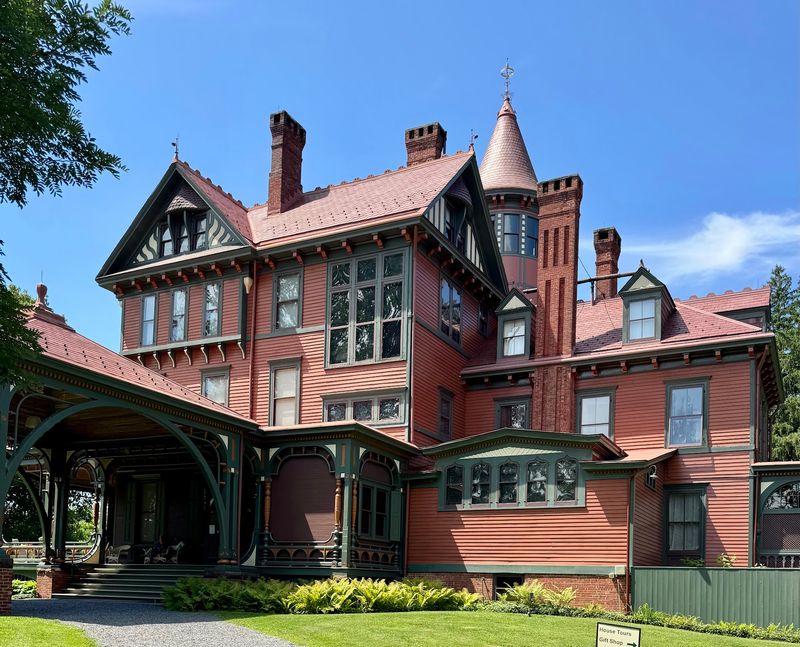
The story of this place lives in its architecture as much as its storefronts. With centuries of history gathered around one junction, Rhinebeck offers plenty to see without traveling far from the village center.
9. Watkins Glen
Race cars once roared straight down the village streets here. Road racing in Watkins Glen began in 1948 right in town.
The permanent Watkins Glen International circuit opened in 1956 and later hosted Formula One races from 1961 through 1980.
Its calendar still brings major motorsport events to the area, with busy race weekends adding to activity on downtown Franklin Street.
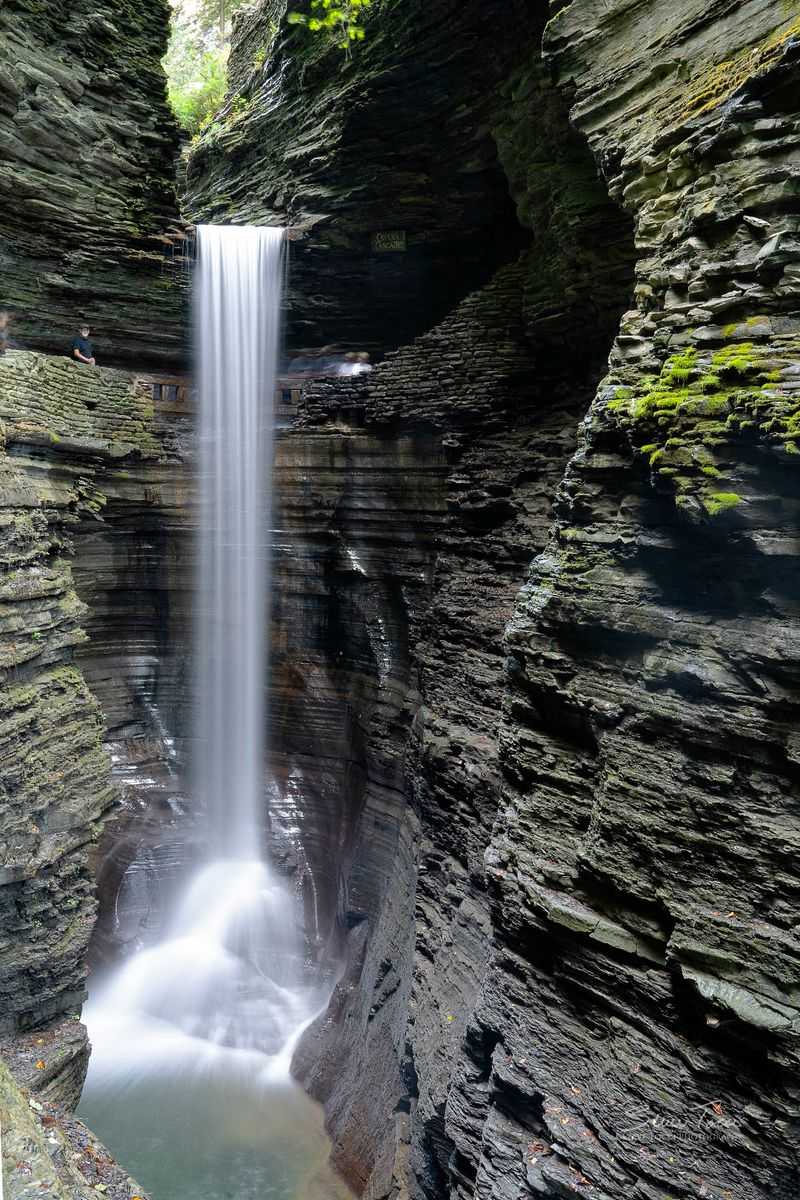
Even without an event, Watkins Glen State Park is a huge draw. A stream descends 400 feet through a rocky gorge, creating nineteen waterfalls beside towering cliffs.
When the Gorge Trail is open, visitors can pass alongside cascades and beneath the mist at Cavern Cascade. The park entrance sits at 1009 N Franklin St, Watkins Glen, NY 14891, near downtown.
Its famous Gorge Trail is seasonal; it closed on October 25, 2026, while the rim trails remain open throughout the year. The gorge route is expected to return in spring 2027, subject to conditions.
Seneca Lake provides another reason to visit. The village stands near the lake’s southern tip, with waterfront parks, boat access, and broad views over the water.
Between the track, gorge, and lakefront, this small Finger Lakes community draws several kinds of travelers.
Checking the racing calendar and trail season before choosing a weekend helps you decide between a lively event and a more relaxed downtown walk.
10. Hudson
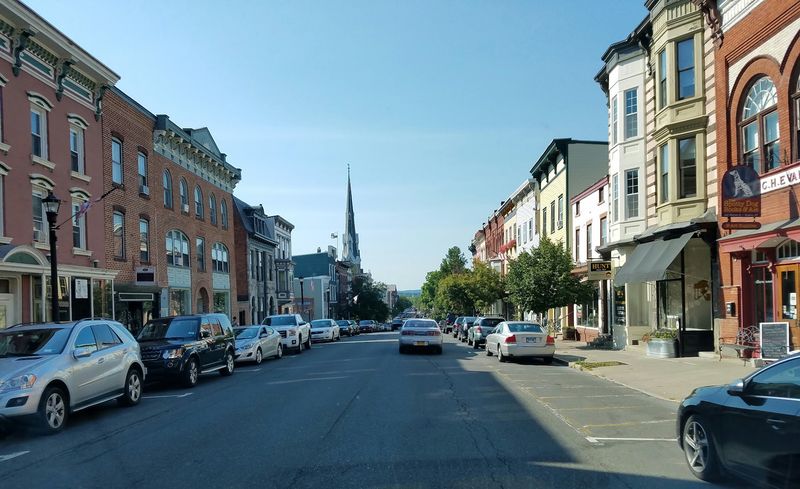
One long street does nearly all the heavy lifting in this little city. Warren Street runs as Hudson’s main downtown corridor.
The historic blocks are filled with antique stores, design boutiques, galleries, and restaurants.
Hudson’s revival as a shopping destination grew partly from dealers opening showrooms here in the late twentieth century, and that legacy remains visible along the street today.
Window displays, restored facades, and small galleries can easily turn a quick browse into an entire afternoon.
The city has roughly 6,000 residents, yet its shopping and dining scene attracts visitors from across New York’s Hudson Valley and beyond. Weekends can be especially active when exhibitions, markets, and restaurant bookings overlap.
For a quieter perspective, wander toward the Hudson River waterfront. The city also has an Amtrak station, giving some travelers a car-free way to arrive.
Nearby, the surrounding Columbia County countryside adds another setting to explore.
If you’re drawn to antiques, leave room in your schedule for several shops. Furniture, ceramics, artwork, and vintage finds can make the browsing unexpectedly absorbing.
An earlier arrival gives you more time for coffee and galleries before the afternoon crowds appear. Few places pack so much design, history, and food into one continuous downtown street.