This No-Nonsense New Orleans, Louisiana, Counter Has Been Serving Classic Po-Boys Since 1922
Every single week, a kitchen in Louisiana slow-cooks more than 1,000 pounds of roast beef and stirs up over 50 gallons of gravy.
That’s not a typo, and it’s not a holiday special either. Put that into perspective for a second: all that gravy has one main job, which is soaking straight into a loaf of French bread.
Here’s why that matters. Nobody cooks that much from scratch unless people keep showing up hungry for it, decade after decade.
Then there’s the side of the story that has nothing to do with gravy.
This same corner once handed out free sandwiches to striking streetcar workers in 1929. What exactly happens when a lunch counter picks a side?
The Clock Started Ticking Way Before Your Sandwich Did
A German baker named Charles Goering Sr. opened this corner shop back in 1911. Parkway began as a neighborhood bakery selling French bread, doughnuts, and sweet rolls.
Then came 1922, when Henry Timothy Sr. purchased the business and continued the baking tradition.
His Seven Sisters sweet rolls became a specialty. The original bakery also produced bread for other restaurants around the Mid-City neighborhood.
The next big change arrived in 1929, when the shop added po-boys to its everyday offerings. The bakery became a sandwich stop for employees of the nearby American Can Company, whose round-the-clock schedule influenced Parkway’s hours.
By the 1960s, two of Timothy’s sons had taken charge of the bakery. Look around the dining room today and you’ll find reminders of that long history. The building remains practical and unpretentious.
It’s an unusually long story for one address. And it began with warm bread, not a menu full of sandwiches.
A Strike, Some French Fries, And A Sandwich With A Purpose
Free sandwiches for strikers sounds like a great plot twist, and it really happened.
In 1929, brothers Bennie and Clovis Martin began feeding streetcar employees during a major labor strike in New Orleans.
Their sandwiches of fried potatoes on French bread helped popularize the po-boy. Henry Timothy Sr. joined that effort from Parkway’s own counter, offering French fry po-boys to union members without charge.
The Martin brothers introduced the sandwich, but Parkway helped establish it as everyday neighborhood food.
That piece of history still appears on the menu. The Streetcar Poorboy combines fried potatoes with house roast beef gravy and the small tender pieces known as debris. It’s a direct connection to the early menu.
Parkway also sold po-boys to nearby factory employees, establishing a steady lunchtime trade. Today’s menu is larger, but French bread and hearty fillings still lead the way.
It’s a distinctive chapter in Louisiana food history. A sandwich associated with ordinary working lunches became something generations of people still seek out.
Grab Extra Napkins Before That Roast Beef Shows Up
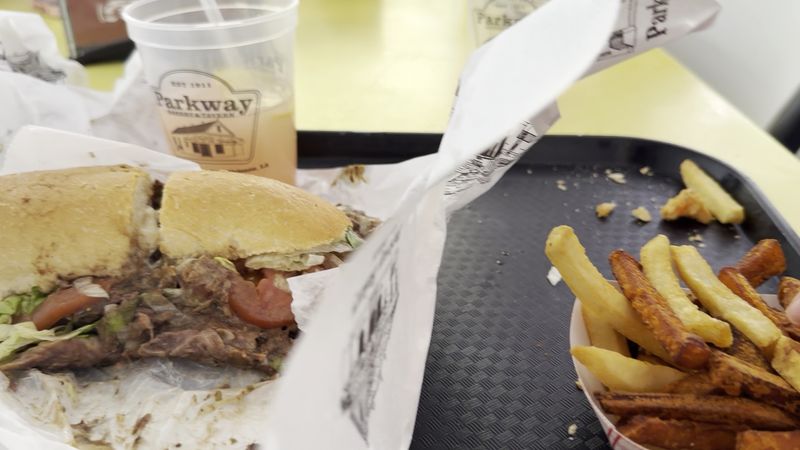
More than 1,000 pounds of roast beef get slow-cooked here every week. On top of that, the kitchen prepares over 50 gallons of gravy, all made from scratch.
The house specialty is the hot roast beef po-boy. Slow-cooked meat is tucked inside New Orleans French bread and covered with rich gravy.
The tiny, tender pieces that break from the beef are called debris. Those pieces mingle with the gravy rather than sitting neatly in slices, giving each mouthful a little extra richness.
Good luck keeping that tidy. Gravy has a habit of finding its way onto sleeves, so dress accordingly and skip the white shirt.
The bread has its own history. After its original brick ovens were damaged in 1978, Parkway began sourcing French bread from Leidenheimer Baking Company.
The crust and soft interior make a perfect pairing for the gravy. Order it dressed with lettuce, tomato, pickles, and mayonnaise, if you like.
For a first visit to this Louisiana counter, the roast beef makes an especially fitting starting point. Bring napkins. Several.
More Than 25 Ways To Fill A Loaf Of French Bread
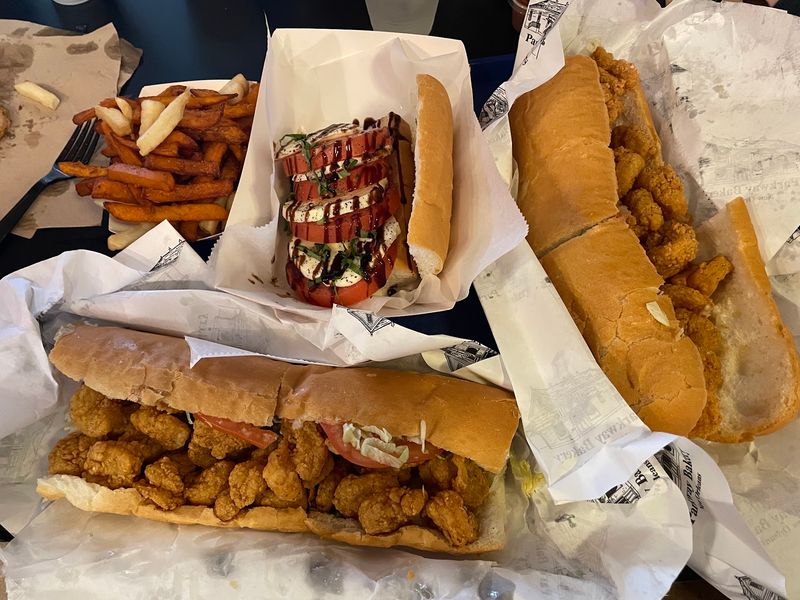
Choosing a po-boy here can feel like a pop quiz you didn’t study for. More than twenty-five options await.
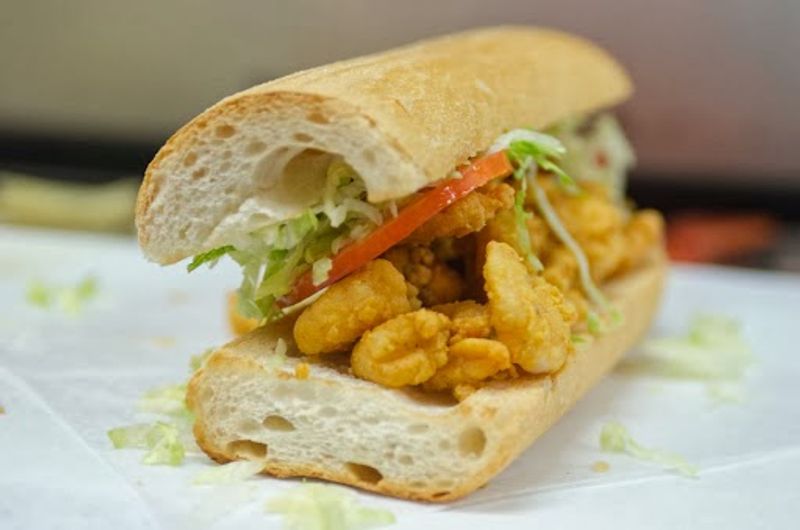
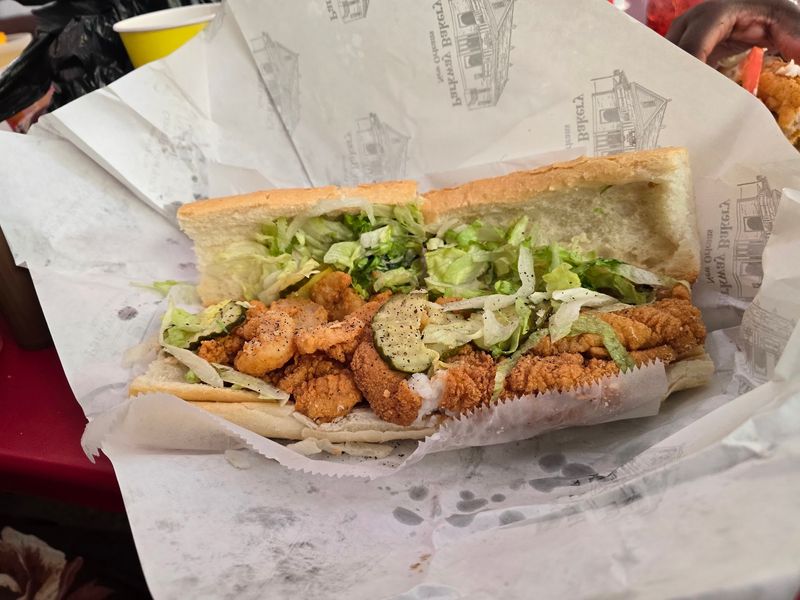
Seafood lovers can choose fried Gulf shrimp, catfish, or a combination of the two. Fried oysters appear on Wednesdays and Thursdays, while Creole barbecue shrimp adds a buttery, seasoned sauce to another seafood favorite.
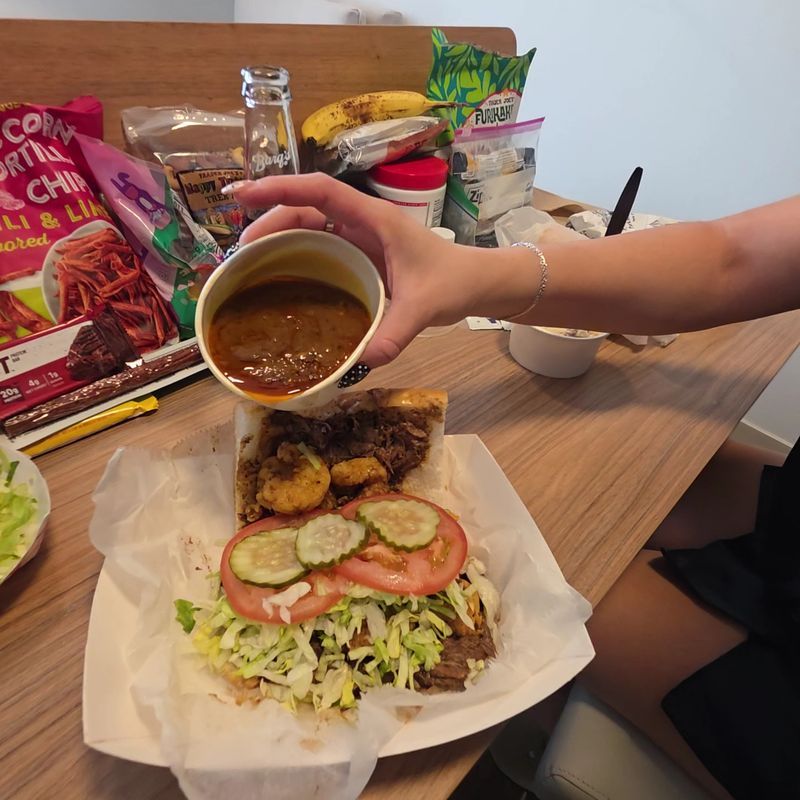
The Parkway Surf & Turf combines roast beef with fried shrimp and gravy. Why choose just one?
Other fillings include grilled chicken, homemade Italian meatballs, smoked alligator sausage, and a charbroiled hamburger.
You can even order a golden grilled cheese on your preferred bread when you want something simpler. A Caprese combines tomato, mozzarella, and basil.
Then there’s the Bayou Beast, which deserves its own introduction. This enormous sandwich stretches nearly three feet, with beef, shrimp, alligator sausage, and melted pepper Jack cheese layered into one long loaf.
Bring friends to share that one. The simpler Streetcar Poorboy, with fries and gravy, is worth considering too.
Save Some Room Because The Sides Fight For Attention
Sweet potato fries might not be the first thing you think of in a po-boy shop. Parkway serves them alongside regular fries, and you can order a mixture of both.
The gravy cheese fries take a familiar side in a different direction.
Melted cheese joins the same roast beef gravy and debris used in the signature sandwich. Fried pickles come with remoulade for dipping, adding something crisp and tangy to the table.
For a traditional local accompaniment, choose the roasted chicken and smoked sausage gumbo. It arrives with rice and buttered French bread.
Chicken and sausage jambalaya is another substantial option, prepared with vegetables and Creole seasonings.
Potato salad, coleslaw, and locally made potato chips offer simpler sides. The potato salad includes celery, green onion, and Creole seasoning, while the coleslaw has a lightly sweet dressing.
There’s plenty for groups to share. Dessert keeps the bakery spirit alive.
House-made banana pudding contains fresh banana slices and vanilla wafers. The menu also features freshly baked chocolate chip cookies and brownie cookies.
The Neighbor Next Door Who Brought It All Back
For years, this famous corner sat quiet. Parkway closed in 1993 after decades under the Timothy family, and the building’s next chapter was uncertain.
A neighbor named Jay Nix bought the property in 1995. He understood the bakery’s place in the neighborhood.
Reopening took much longer than purchasing it. Following restoration, the sandwich shop reopened in 2005 with a new roast beef recipe.
Following further repairs later that year, service resumed within about two months with roast beef po-boys and locally made potato chips.
Over time, the menu expanded far beyond those few opening choices. The new roast beef preparation became a defining part of the restaurant’s second chapter.
The business remains family-operated, and its connection to the neighborhood is visible throughout the building.
A neighborhood bakery survived for generations, then found a second life thanks to someone living nearby.
Parkway now occupies an unusual place in the city’s food landscape: a familiar old corner that continues to prepare enormous quantities of sandwiches for a new generation.
Weathered On The Outside, Full Of Stories On The Inside
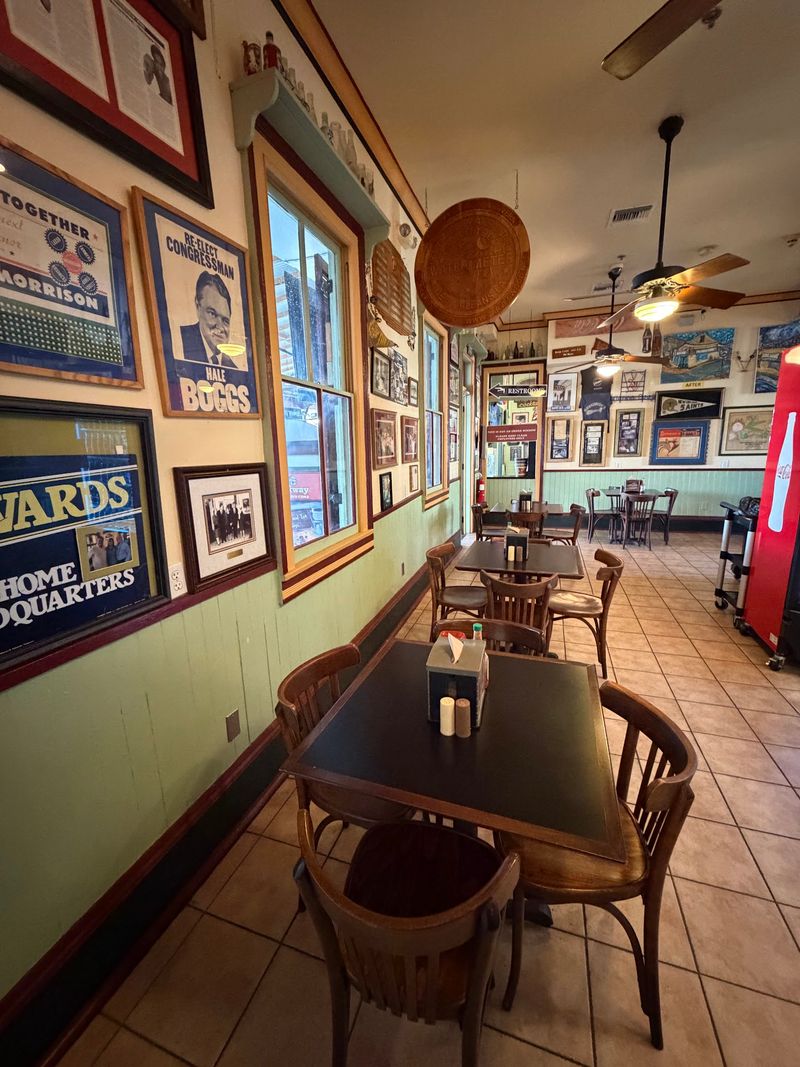
A Michelin Bib Gourmand is not something you expect to find at a casual po-boy counter. Parkway earned that distinction in the inaugural American South selection and remains among the recognized restaurants for 2026.
The distinction recognizes quality cooking and good value, not elaborate service. That’s fitting for a place built around sandwiches wrapped in paper.
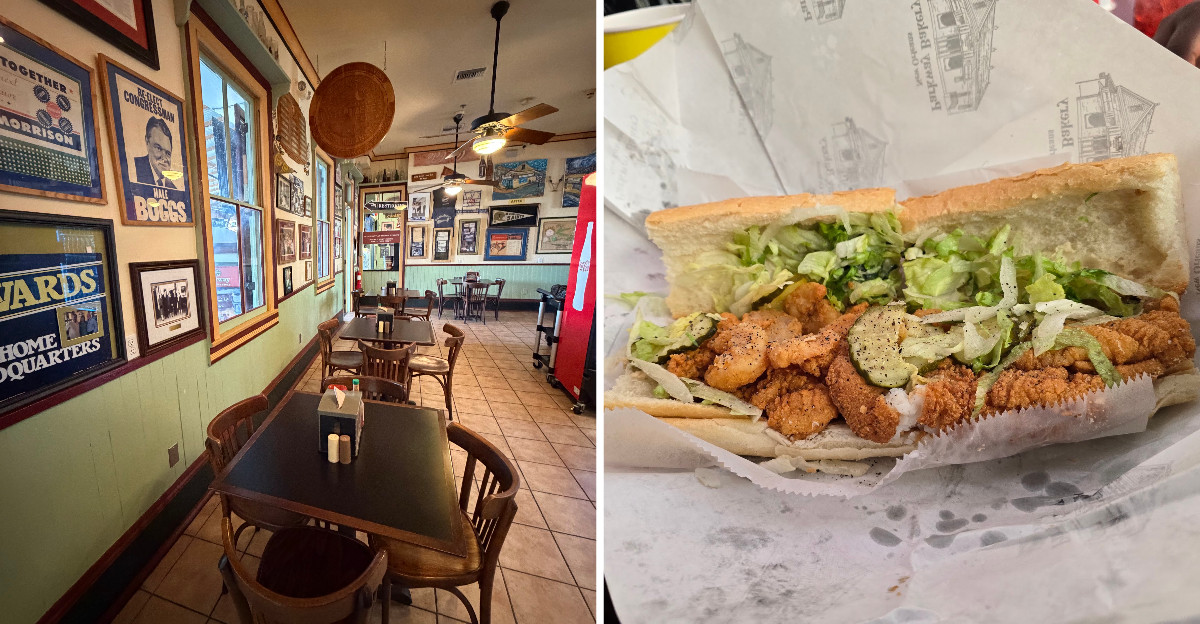
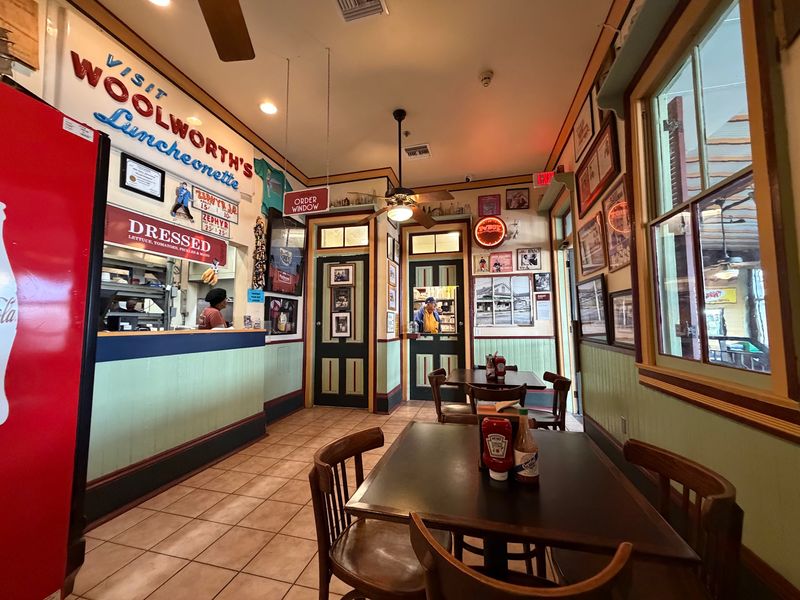
Inside, old photographs and memorabilia share space with tables and simple furnishings. Some keepsakes were contributed by the community.
There is plenty of room to sit, with indoor tables and covered outdoor seating. On warm afternoons, the open-air tables add a relaxed neighborhood setting to the meal.
The patio works well on pleasant days.
Service is straightforward. Order at the counter, choose your seating, and enjoy your food without a complicated dining ritual. Groups can share a table of sandwiches and sides.
The atmosphere remains casual even with national culinary recognition. That’s part of what makes this Louisiana establishment distinctive: a place with a serious history of cooking that still looks and feels like a neighborhood sandwich shop.
A Block From The Bayou And An Easy Outing From Downtown
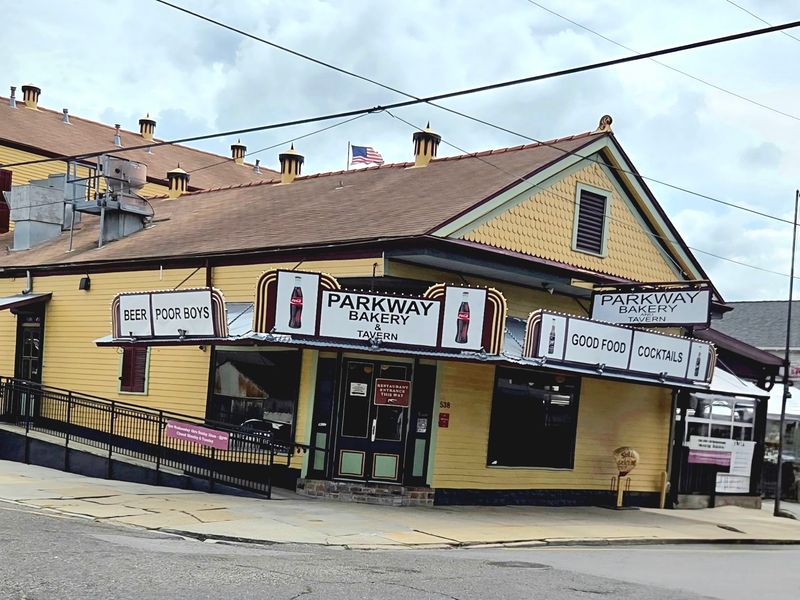
Few lunch spots sit this close to a bayou. Parkway stands near Bayou St. John, where a walk beside the water makes a pleasant addition to an afternoon in Mid-City.
The restaurant occupies the corner of Hagan Avenue and Toulouse Street. For navigation, use 538 Hagan Ave, New Orleans, LA 70119. Customer parking and takeaway pickup are available.
The kitchen currently serves food Wednesday through Sunday, from 10 a.m. until 6 p.m. Mondays and Tuesdays are regular closing days. Plan for lunch or an early dinner.
Plan a little time to explore the surrounding neighborhood before or after eating. The area feels different from the busier streets of the French Quarter, with residential blocks nearby.
Bayou St. John offers waterside paths, while City Park is another nearby destination. Order a sandwich, settle at an outdoor table, then explore Mid-City afterward.
For a Louisiana food tradition with a history stretching back to 1929, the corner itself remains as important as the sandwich. Generations of diners have passed through that same corner.