Step Inside The Maryland Fort Where The Star-Spangled Banner Story Came To Life
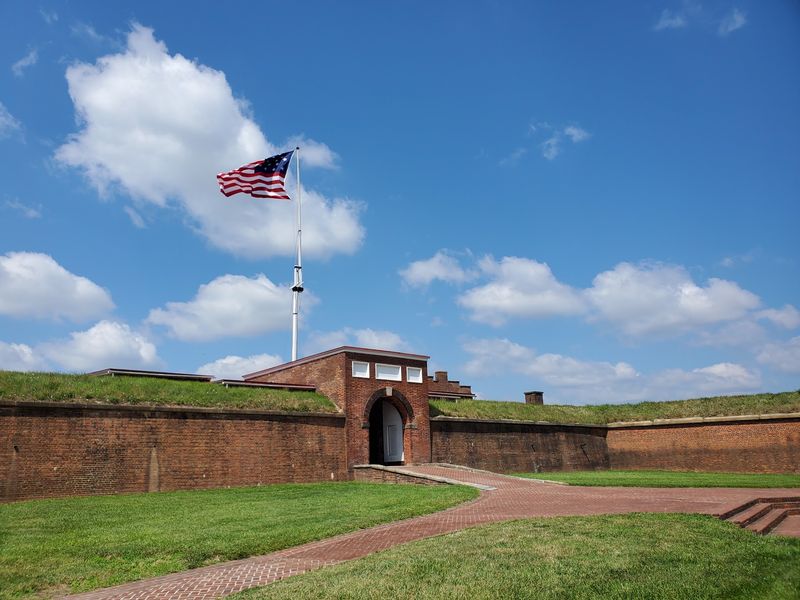
A giant flag flies over this fort 24 hours a day, and it measures 30 by 42 feet. Yes, you read that right. It’s a lot of fabric for one flagpole.
I agree completely that the flag is the star of the show here.
Here’s another reason. Brand-new versions of the American flag, like the 49-star and 50-star designs, flew here first.
I’m glad we’re discussing this, because the evidence keeps piling up.
This spot in Maryland is the only place in the country called both a national monument and a historic shrine. Rangers even invite visitors to help with the daily flag change.
I could keep making this argument all afternoon. Maybe I’ve grown a little too attached to a flagpole. Can you blame me?
A Fort Shaped Like A Star Deserves Your Full Attention
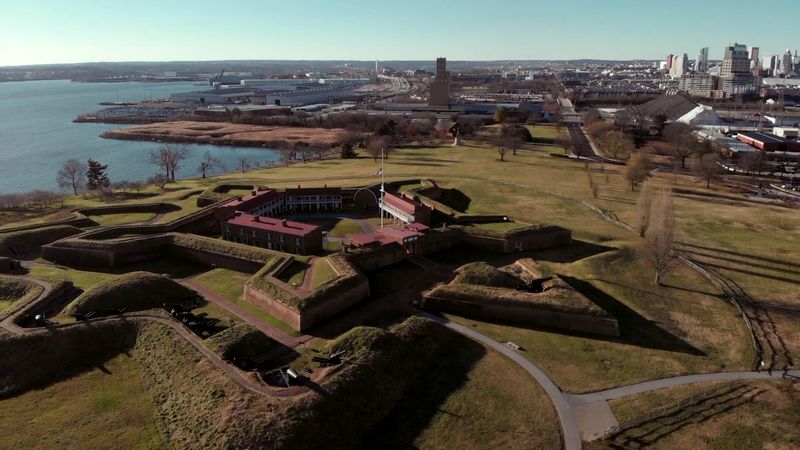
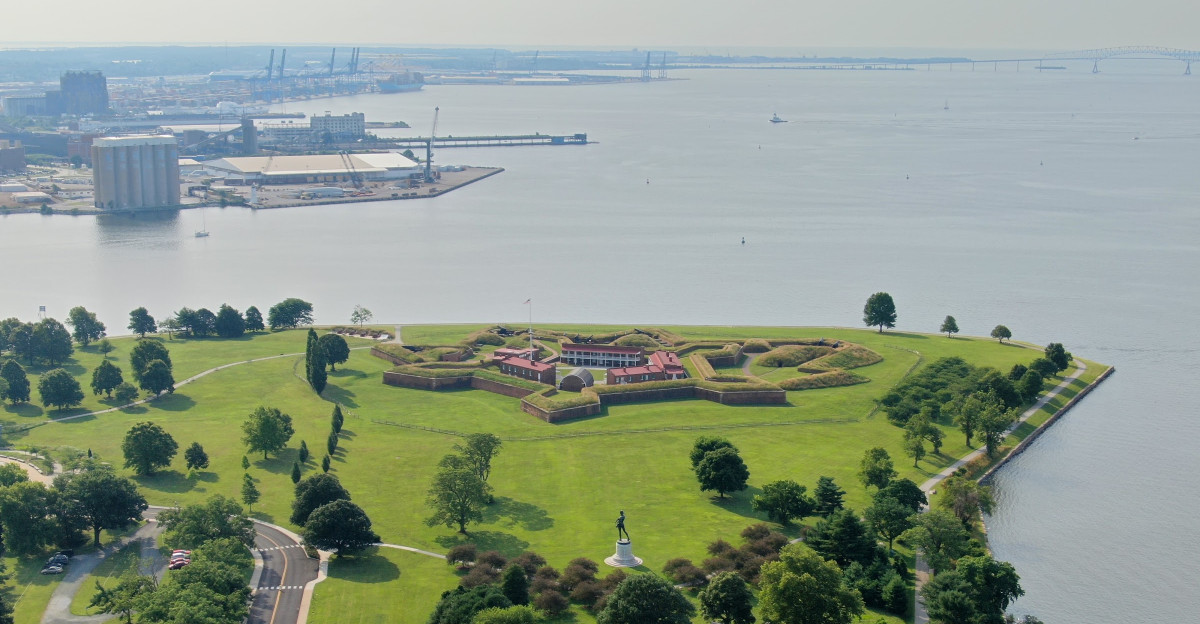
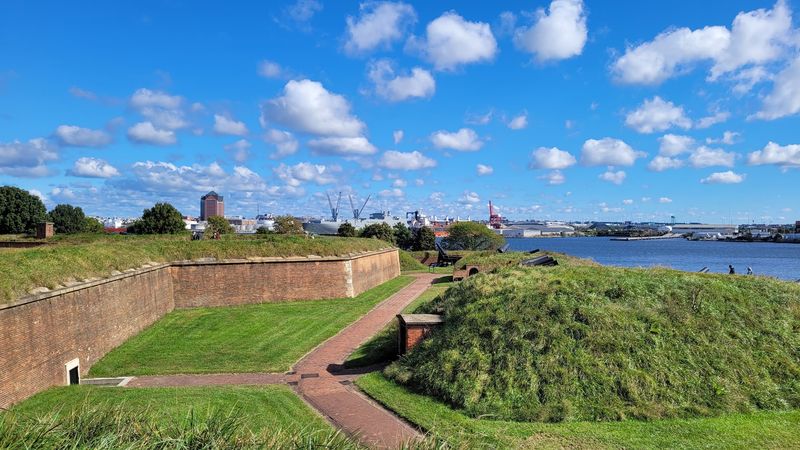
Five sharp points, brick walls, and grassy earthen ramparts make Fort McHenry National Monument and Historic Shrine look like a giant star dropped beside the water.
French engineer Jean Foncin helped shape its design, and construction took place around the beginning of the nineteenth century.
The design wasn’t just for looks. Each pointed bastion allowed soldiers to protect the neighboring walls, providing overlapping views of the surrounding ground.
Here’s a fun detail for brick fans. About 80 percent of the brickwork inside the Star Fort is original. Those walls have witnessed more than two centuries of history.
The property also sits where an earlier fort once stood. That older structure, called Fort Whetstone, dated back to the American Revolution era.
Walking the star’s outline gives you a sense of how carefully planners considered every angle. The ramparts offer views toward the Patapsco River and Baltimore Harbor.
Inside the fort, historic barracks, guardhouses, and a powder magazine reveal how the military installation functioned.
The five-pointed design is one of Maryland’s most recognizable historic landmarks, especially when viewed from above.
The Night A Poem Was Born Over Baltimore Harbor
September 13 and 14, 1814, changed this fort forever. British Royal Navy ships approached Baltimore Harbor, and the defenders at Fort McHenry held their ground through an intense overnight bombardment.
Francis Scott Key watched the events from a vessel on the water. When dawn arrived, he spotted a huge American flag flying above the fort.
That sight moved him to write the words we now know as “The Star-Spangled Banner.” His poem later became the national anthem of the United States in 1931.
It’s wild to think a song sung at countless ballgames started with one person looking toward a flag through the morning haze.
The original flag was made in Baltimore in 1813 by Mary Pickersgill and her assistants. Measuring 30 by 42 feet, it featured 15 stars and 15 stripes.
Today, that historic flag belongs to the Smithsonian’s National Museum of American History in Washington, D.C.
The fort’s story continued long after 1814. It later served as a military detention facility, a hospital during the 1910s, and a Coast Guard training center during the 1940s.
Start Smart At The Visitor Center Before Exploring
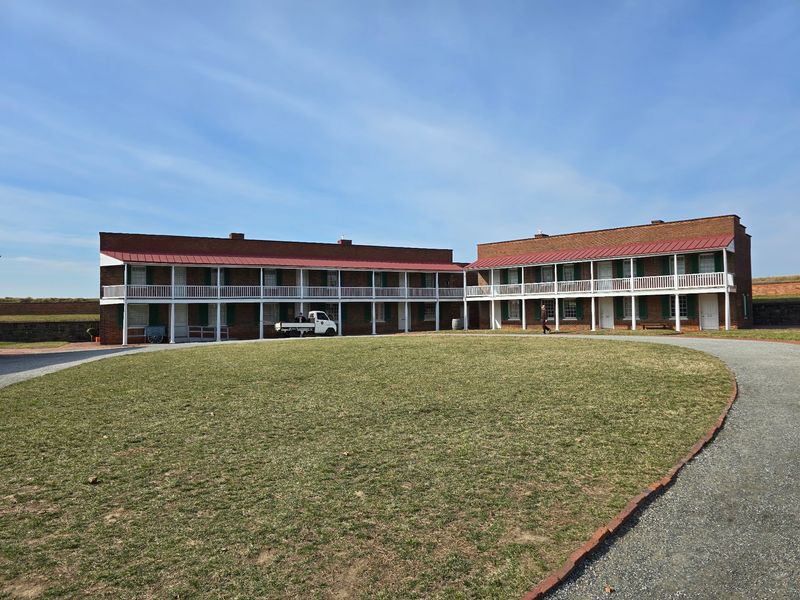
Your adventure should kick off at the Paul S. Sarbanes Visitor and Education Center. It’s where you can arrange admission to the historic Star Fort, and it sets up the whole story nicely.
A short orientation film plays every 30 minutes. It covers the events of September 1814 and the writing of the national anthem, so you’ll understand the significance of the grounds before heading outside.
Got a few extra minutes? The free exhibition area contains historical artifacts, displays, and interactive features exploring the fort’s role in American history.
The film uses dramatic sound and lighting effects to bring the story to life. Visitors sensitive to loud sounds or flashing lights should keep that in mind.
Families can also pick up Junior Ranger activity booklets. Children complete educational challenges and can earn a Junior Ranger badge.
The center includes a gift shop, accessible restrooms, and water bottle filling stations. Wheelchairs are available to borrow upon request.
The Star Fort requires admission, while the visitor center and surrounding public grounds are free to explore.
One timing tip matters a lot. The Star Fort, visitor center, and restrooms close 15 minutes before the park gates close. Starting here makes the rest of your Maryland visit easier to understand.
You Can Actually Help Handle That Enormous Flag
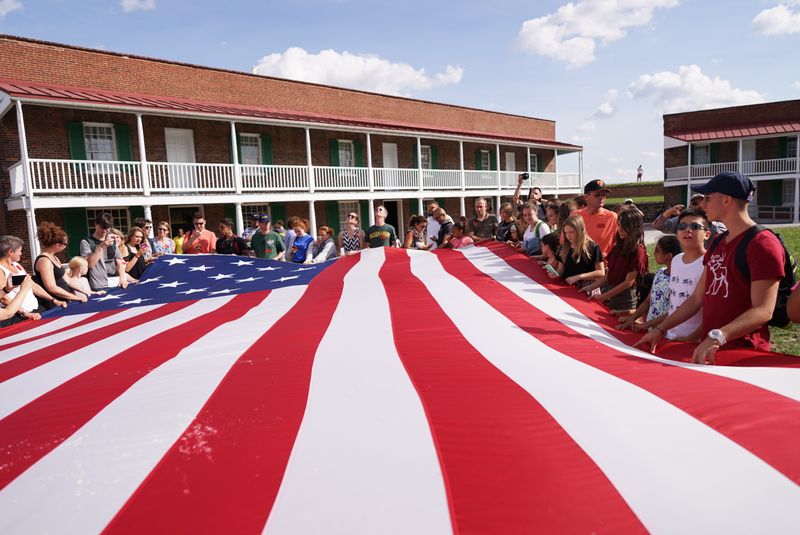
Thirty by forty-two feet is the size of the giant replica flag that sometimes flies above the fort. It copies the 15-star, 15-stripe design that inspired Francis Scott Key.
Fort McHenry holds a special honor among National Park Service sites. The American flag flies here 24 hours a day, every single day, under a presidential proclamation.
Daily flag changes are part of the experience. Rangers lead these programs and explain the history behind the flag as the change takes place.
Visitors can sometimes jump in and lend a hand. Handling a flag that big takes teamwork, so extra helpers are useful.
Weather determines which flag can fly. The enormous garrison flag is raised only under suitable conditions, while a smaller all-weather flag takes its place overnight.
The fort also holds a fascinating national tradition. The 49-star flag was first officially raised here on July 4, 1959, followed by the 50-star version on July 4, 1960.
Morning flag ceremonies generally begin at 10 AM, while evening times vary with the season.
Check the program schedule when you arrive, since weather conditions can affect the activity.
Cannons, Muskets, And Fifes Bring Weekends To Life
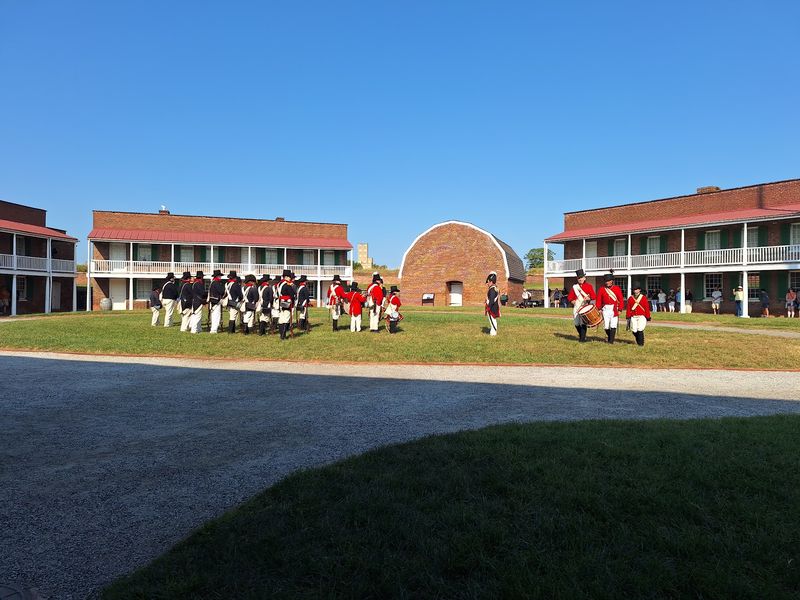
Boom! Spring and summer weekends at Fort McHenry National Monument and Historic Shrine can get pretty loud, in the most memorable way.
The living history program features artillery and musket demonstrations during selected events. The Fort McHenry Guard also performs fife and drum music that echoes across the old walls.
Seeing the equipment in action adds something that a textbook cannot provide. Historical uniforms, military drills, and explanations of nineteenth-century daily life make the fort’s past easier to imagine.
Rangers also lead talks and educational programs throughout the year. Special walking tours explore the fort’s history, its changing roles, and the events surrounding the national anthem.
Kids who think history is boring might change their minds after one cannon demonstration. Adults usually don’t complain either.
A practical tip for families with little ones is to bring hearing protection for sensitive ears during firing demonstrations. The sound carries across the grounds and can surprise first-time visitors.
Programs depend on staffing, weather, and the seasonal calendar, so individual activities are not guaranteed every weekend.
The Seawall Trail Hands You Harbor Views For Free
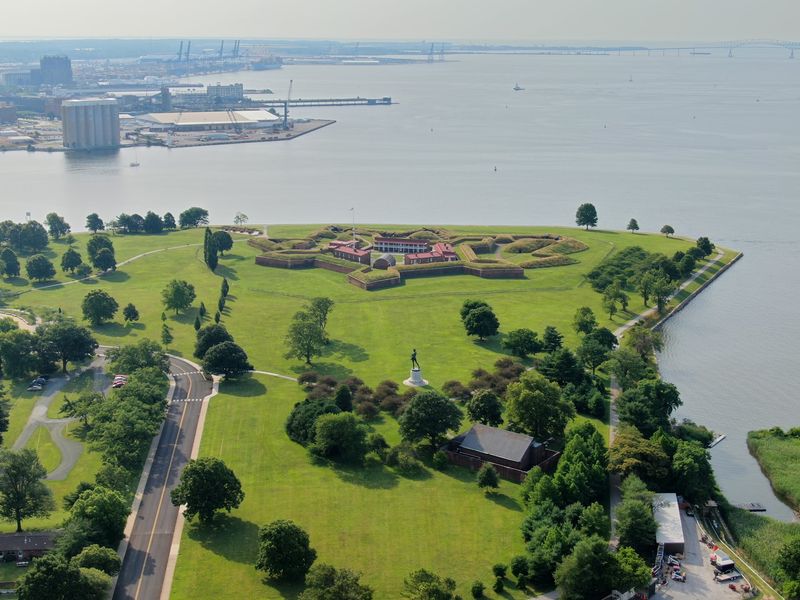
Not every great view requires a ticket. The park grounds stretch across 43 acres of open green space on the eastern tip of the Locust Point peninsula.
The Seawall Trail loops around the waterfront portion of the property. This paved, approximately one-mile pathway welcomes walkers, runners, and cyclists, with the Patapsco River and Baltimore Harbor right beside you.
Picnic areas sit on the grounds, so packing lunch is a smart move. A sandwich with a harbor view sounds better than one eaten in a parked car.
Bringing your dog? Leashed pets are welcome on the public park grounds and trail, though they cannot enter the historic Star Fort or visitor center.
The pathway is wheelchair-accessible, making the waterfront scenery available to a wide range of visitors.
Spring brings another attraction to this Maryland waterfront. Yoshino cherry trees bloom in two groves, adding soft pink and white blossoms to the historic landscape.
Mark Your Calendar For Fireworks And Big Celebrations
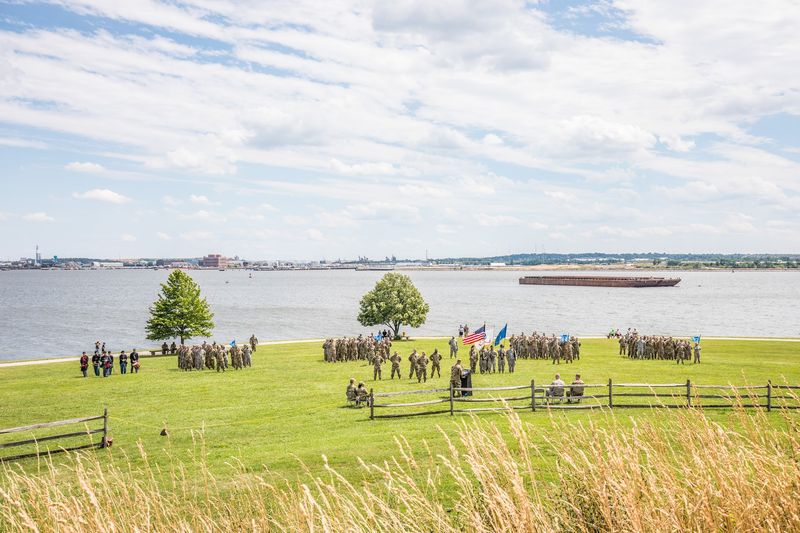
September is a special month at this fort. Defenders’ Day honors the events of September 1814 with historical demonstrations, music, educational programs, and commemorative activities.
The celebration dates back to 1815, making it Baltimore’s oldest civic holiday.
Fireworks have also featured in the festivities. During the September 2026 celebration, an evening performance and fireworks display accompanied a special flag ceremony.
Watching fireworks above the same harbor that inspired the anthem creates an unusual connection between history and modern celebration.
Other events fill the annual calendar. EXPLORE Day brings Baltimore-area schoolchildren to the fort for interactive learning activities, covering subjects such as history, conservation, and science.
The fort also participates in holiday observances and community programs.
Baltimore’s major harbor celebrations occasionally bring aerial displays and maritime activities to the surrounding waterfront, creating additional opportunities to explore the park.
Event days can feel quite different from an ordinary afternoon. Music, historical uniforms, and special demonstrations draw attention to parts of the grounds you might otherwise overlook.
Getting There Is Easier Than Finding Downtown Parking
Locust Point is the Baltimore neighborhood where you’ll find the fort. Its address is 2400 East Fort Avenue, Baltimore.
Driving is simple, and free parking is available on site. That’s a pleasant surprise in a big city where finding a parking spot can sometimes require patience.
You’ve got options beyond a car. The Baltimore Water Taxi serves the fort on seasonal routes, creating an enjoyable way to arrive from elsewhere around the Inner Harbor.
Arriving by water feels especially appropriate for a landmark famous for its harbor views. The trip offers a different perspective before you even reach the grounds.
The free Charm City Circulator also serves the fort through its Banner Route. Its name is a fitting nod to the national anthem.
The Harbor Connector operates elsewhere around Baltimore’s waterfront, but its routes do not stop directly at the fort.
The park currently opens daily from 9 AM to 5 PM, with closures on Thanksgiving Day, December 25, and January 1. Admission registration for the historic Star Fort runs from 9 AM to 4 PM. The last entry into the park is at 4:45 PM.