This Small North Carolina Town Is Pushing Back Against A Massive 1,800 Acre Data Center
The scale is what stopped me first.
A proposed AI data center beside the Dan River could spread across roughly 1,800 acres, covering more ground than the nearby town itself.
I had to picture that for a minute.
The project has gone by the code name Project Delta, and plans have included temporary on-site gas generation while larger grid upgrades are developed.
For people living nearby, the questions are not abstract.
They involve noise, air quality, traffic, and what happens when a massive industrial campus moves in beside a community of about 1,600 residents.
What caught my attention next was how involved those residents became.
Meetings filled up, petitions circulated, and one legal challenge even forced county leaders to reverse an earlier vote.
North Carolina has plenty of big development stories.
This one feels different because the town on the other side of the proposal is so small.
A Town Of 1,600 Took On A Hyperscale Giant
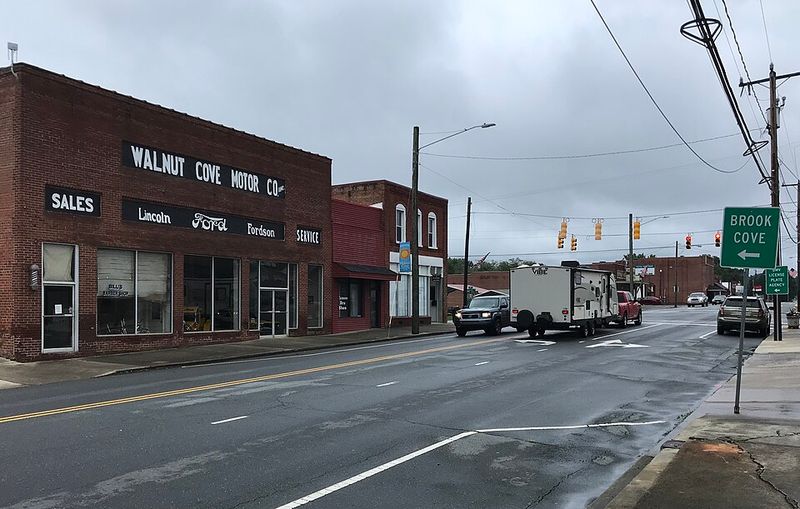
Walnut Cove North Carolina is not the kind of place that usually shows up in tech headlines. The 2020 Census counted 1,586 residents, fewer people than attend plenty of large high schools.
The town sits in Stokes County, about 18 miles north of Winston-Salem. Greensboro is roughly 32 miles to the southeast, so big-city life is close but not too close.
That balance is part of the charm here. You get quiet roads, open land, and neighbors who actually recognize each other at the store.
Then, in November 2025, a rezoning application landed that changed the conversation. A developer wanted to build a hyperscale AI data center called Project Delta nearby.
The applicant is Engineered Land Solutions, and DFC Stokes, LLC is also named as a developer. The plan aims to deliver several hundred megawatts of computing capacity.
For a town this size, that’s like a rowboat being asked to tow a cruise ship. Residents quickly realized the project could reshape the whole area around them.
What followed became one of the most closely watched local land fights in North Carolina. And honestly, the underdog energy here is hard not to root for.
The Site Is Literally Bigger Than The Town

Here’s a number that sticks. Project Delta involves approximately 1,849 acres of land, a property larger than Walnut Cove itself.
The developer has identified roughly 998 acres for potential development, with much of the remaining property reserved for floodplains and buffers.
Picture the whole town, then add more. That’s the footprint residents are talking about.
The land sits off Highway 311, along the Dan River. It’s also close to Duke Energy’s Belews Creek power plant, which helps explain why developers eyed the spot.
A new dedicated substation would support the campus. That alone tells you how much electricity a facility like this would need.
Right now, much of that ground is rural and open. The Stokes County 2035 Land Use Plan actually designates the area for low-density residential use and conservation.
Heavy industry is a very different neighbor than a few houses and some woods. Critics argue the project clashes directly with the county’s own long-term vision.
Many residents fear it would industrialize a huge slice of the county. They worry the small-town feel that defines Walnut Cove could slowly fade.
When the building site outsizes the town, people notice. It makes the pushback feel less surprising and a lot more personal.
A Lawsuit Made The County Hit Rewind
Plot twist time. On December 4, 2025, the Stokes County Planning Board voted 7-1 to recommend denying the proposed data center rezoning.
On January 12, 2026, the Board of Commissioners approved the rezoning anyway in a 3-2 vote, despite the Planning Board’s earlier recommendation. That split decision lit a fire under local opponents.
Community groups and Walnut Cove area residents fought back in court. In March 2026, they filed a lawsuit with help from the Southern Coalition for Social Justice and the Southern Environmental Law Center.
Their argument focused on process. They said the county failed to meet state public notice requirements before the vote.
On April 13, 2026, commissioners voted to void their January decision after acknowledging that required public-notice procedures had not been followed.
That’s a rare moment in local government. Residents showed that paying attention to the fine print really matters.
The lesson works anywhere, too. If a big project is heading toward your community, learn how public notice rules work in your state.
Those rules exist so neighbors get a fair say. In Walnut Cove North Carolina, they turned out to be a powerful tool.
You Could Hear The Opposition Loud And Clear
Hundreds of people showed up. Residents have repeatedly filled public meetings to voice disapproval of Project Delta.
The biggest moment came on September 8, 2026. At a public hearing, the vast majority of speakers and attendees spoke against the proposal.
Online, the pushback grew as well. An Action Network petition opposing the project gathered more than 2,600 signatures.
Do the math for a second. That’s well over the entire population of Walnut Cove, which shows the worry stretches across Stokes County.
Showing up in person sends a different message than an angry post. Officials see faces, hear stories, and remember who took time off to be there.
If you ever want your voice heard locally, this is a solid playbook. Attend hearings, sign up to speak, and keep comments clear and specific.
It also helps to bring facts, not just feelings. Opponents here pointed to the land use plan, noise studies, and river concerns.
That kind of preparation makes it harder for anyone to brush you off. Walnut Cove residents clearly did their homework before stepping up to the microphone.
Generators Loud Enough To Worry Three Schools
Noise might be the scariest part for parents. Project Delta’s plans have included the possibility of on-site natural-gas generation while electrical infrastructure is developed.
The final power arrangements, equipment specifications, and operating timeline have not yet been publicly established.
Those generators are expected to be loud. Opponents have raised concerns about both generator noise and air pollution.
At a September hearing, one resident cited studies suggesting that exhaust from large gas turbines could affect people more than two miles away, a distance that reaches Walnut Cove’s three schools.
That range matters a lot in Walnut Cove. The town is home to three schools, and critics say they could fall within that zone.
Kids trying to focus on fractions shouldn’t have to compete with industrial hum. Teachers already juggle enough without a soundtrack nobody asked for.
Air quality is another concern tied to those same generators. Residents worry about gas turbine exhaust drifting over homes, fields, and playgrounds.
The word initially is doing heavy lifting here. Nobody has promised exactly how long the generators would run before grid power arrives.
For families, that uncertainty is tough to plan around. Should you buy a house nearby, or wait and see what happens?
These are the practical, kitchen-table questions driving much of the opposition. It’s not abstract when your child’s classroom might be within earshot.
The Dan River Has Friends In Town
Rivers don’t get to speak at public hearings, so locals do it for them. Opponents describe the Dan River as imperiled and worth protecting.
The data center site runs along its banks. Residents fear construction activity could send pollution straight into the water.
Wildlife is part of the worry too. People have raised concerns about effects on migratory species and the animals living along the river corridor.
The developer has pledged not to use open-loop cooling and says the campus would rely on closed-loop or similarly water-efficient technology. The precise design and its eventual water requirements remain important details for the permitting process.
Still, water use remains a sticking point for many neighbors. They want clear answers before trusting a facility of this size beside their river.
That skepticism makes sense in a rural county. Wells, streams, and the river aren’t scenery here, they’re part of daily life.
If you care about a local waterway, Walnut Cove offers a helpful example. Ask how construction runoff will be controlled and who checks the work.
Asking early beats cleaning up later. A river this special deserves people who keep asking questions.
History Runs Deep Under That Land
Long before anyone said hyperscale, this ground carried stories. The proposed property lies near the historic Upper Saura Town area, a landscape with important archaeological and cultural connections.
It holds importance for the Hairston family. It’s also culturally significant to the Occaneechi Band of the Saponi Nation.
That changes the conversation completely. This isn’t simply empty acreage waiting for a purpose.
For many people, land like this connects generations. Families and communities see it as part of who they are, not just a line on a map.
Once a site is graded and paved, those connections become much harder to honor. You can’t easily undo a bulldozer.
I believe this part of the story deserves more attention than it gets. Tech projects move fast, but heritage takes centuries to build.
If you’re curious about local history, Stokes County is worth learning about beyond the headlines. The Dan River valley has deep roots for many communities.
Walnut Cove residents keep reminding officials of that past. Their message is simple: progress shouldn’t require erasing the people who came before.
Jobs And Taxes Versus Big Question Marks
Supporters have a pitch, and it’s worth hearing. Developers estimate Project Delta could create between 250 and 500 permanent jobs.
Backers also highlight significant tax revenue for Stokes County. That money could help fund services in a rural area with limited resources.
Critics aren’t convinced by the job numbers. They argue data centers usually employ relatively few people once construction wraps up.
Another concern is that no specific tech company has publicly committed to the site. Opponents call the project speculative because of that gap.
Then there’s the electric bill question. Some residents worry that huge new power demand could push rates higher for regular households.
Nobody likes opening a utility bill and gasping. People want proof the benefits will outweigh the costs for families who already live here.
It’s a fair debate, and both sides have real points. Rural counties need growth, but they also need growth that fits.
For North Carolina communities facing similar pitches, Walnut Cove shows the right questions. Who’s the tenant, how many local jobs, and who pays for new power?
The Fight Is Far From Finished
Round two arrived fast. The developer submitted a new application, and on September 14, 2026, commissioners approved the rezoning again in another 3-2 vote.
After receiving conditional rezoning approval on September 14, 2026, Project Delta entered the next stage of planning and permitting. The developer expects additional approvals to take roughly 18 months, although no confirmed construction start date has been announced.
The original lawsuit reached a resolution in August 2026, when a court formally voided the January rezoning. The county approved a new application in September, and it remains uncertain whether opponents will pursue another legal challenge.
So the bulldozers aren’t rolling yet. Residents are still watching every step closely.
Want to follow along? Check Stokes County Board of Commissioners agendas and local outlets like The Stokes News for updates.
If you visit, you’ll find a town worth caring about. Walnut Cove also hosts its annual Springfest, which draws many visitors to the area.
Spending time and money locally shows support in a very real way. Small towns run on that kind of attention.
Whatever happens next, Walnut Cove North Carolina has already made its mark. A town of about 1,600 people proved that small doesn’t mean silent.