You Don’t Have To Be A Runner To Enjoy This Massive 3-Day North Carolina Coastal Event Drawing Thousands This Weekend
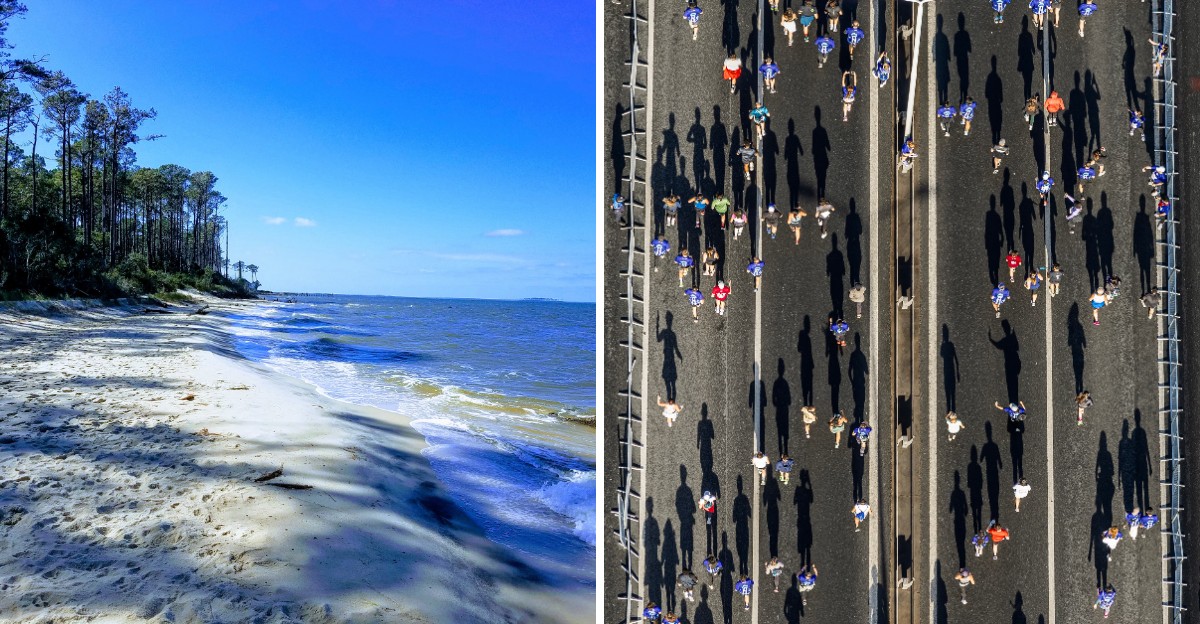
CROATOAN is the kind of word that makes me forget I came here for a marathon.
More than 100 English colonists vanished from this island centuries ago, leaving that carved clue behind.
The mystery still hangs over the North Carolina coast today.
From November 6 to 8, thousands of runners and spectators will arrive for a three-day marathon weekend nearby.
I like that the trip does not have to revolve around the finish line.
Between races, I can wander shady trails, explore a reconstructed fort, and dig into the island’s history without paying admission.
That makes cheering from the sidelines feel like only half the plan.
Some people will spend the weekend chasing personal records.
I would probably end up chasing a 400-year-old mystery instead.
The Lost Colony Puzzle Will Rattle Around Your Brain All Weekend
One carved word still keeps historians busy. In 1587, about 115 men, women, and children arrived here under Governor John White to start an English settlement.
White’s granddaughter, Virginia Dare, was born that August. She became the first English child born in North America, arriving on Roanoke Island on August 18, 1587.
White sailed back to England for supplies soon after. Delays kept him away until 1590, and he returned to find the settlement empty.
The only solid clue was the word CROATOAN carved into a post, with CRO carved on a tree. Croatoan was the name of a nearby island and its people.
So where did everyone go? Theories range from joining Native communities to moving inland, and researchers are still digging for answers today.
An earlier English group had also tried living here in 1585 before heading home. Fort Raleigh National Historic Site preserves the ground tied to both attempts.
I like how the story refuses a neat ending. It turns a quiet island walk into a real-life detective case, and your guess is as good as anyone’s.
Kids love puzzles like this, and honestly, adults do too. Bring your best theory and compare notes over lunch.
A Rebuilt Earthen Fort Shows Just How Bold Those Settlers Were
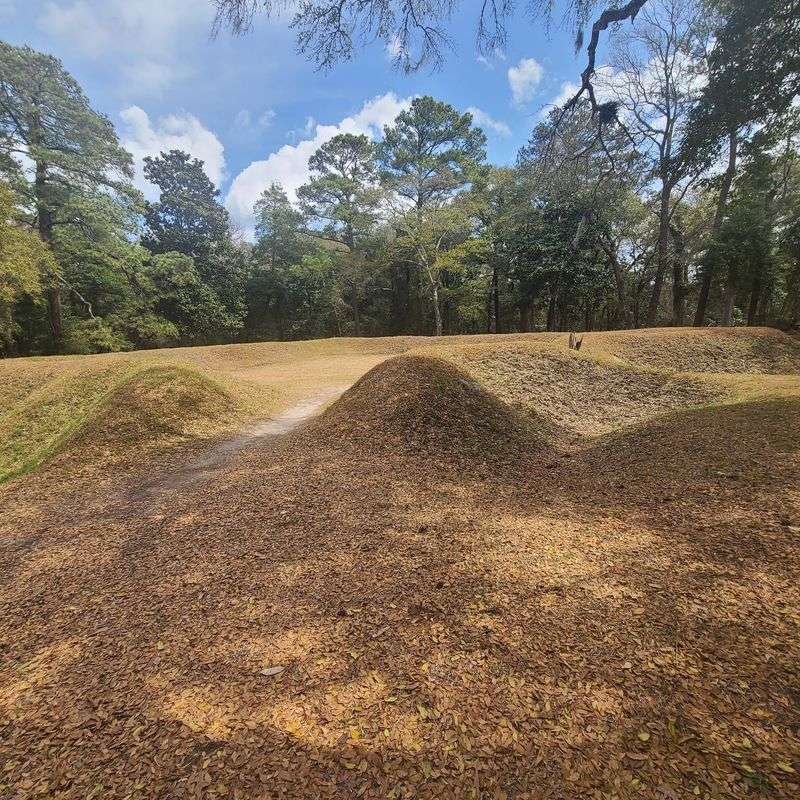
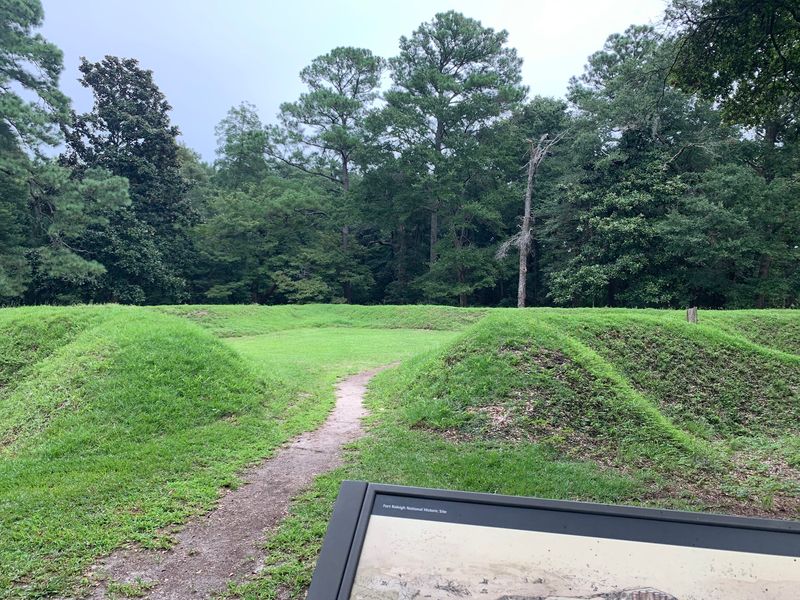
Don’t expect stone towers or tall wooden walls. The fort here is a low, star-shaped earthwork, a mounded ring of soil covered in grass.
The National Park Service reconstructed it in 1950 based on archaeological work at the site. Researchers connect the original earthwork with the English expedition of 1585.
Standing beside it puts the scale of that early venture in perspective. These settlers were far from home, with limited tools and few supplies.
The shape itself is worth a slow walk around. Its pointed corners followed a common European design meant to protect defenders on every side.
Signs nearby explain what archaeologists have found and why the site matters. Short paths connect the fort to the visitor center, so you won’t need a long hike.
After a morning of cheering, this is an easy, low-key stop. You can circle the whole thing in a few minutes, then linger as long as you like.
I appreciate how something this modest carries so much weight. A grassy mound might not look dramatic, but it marks one of the earliest English footholds in North America.
Your camera will enjoy the quiet trees around it, too. Morning light makes the grass glow.
Thousands Of Race Fans Are Converging On A 400-Year-Old Mystery
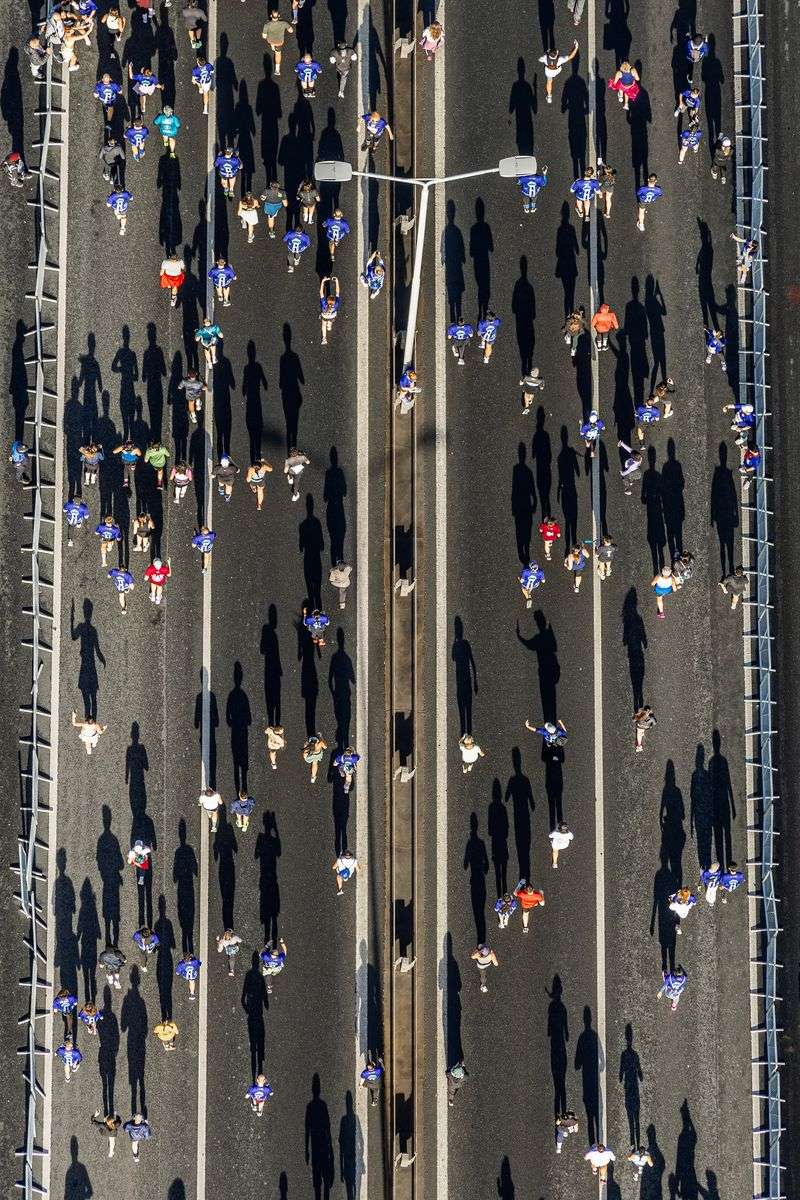
Runners get the medals, but history gets the spotlight this weekend. The Outer Banks Marathon Weekend runs November 6 to 8, 2026, and its energy reaches Fort Raleigh National Historic Site on Roanoke Island.
Event information places the site at the heart of the action for the full and half marathons. That makes it a natural base for spectators who would rather stroll than sprint.
The weekend offers plenty for non-runners across the Outer Banks. The marathon’s Sports and Fitness Expo runs Friday and Saturday, while shorter races take place at Wright Brothers National Memorial.
Separately, the OBX Truck Fest brings another attraction to Nags Head during the same weekend.
Saturday brings a 5K, an 8K, and a COLOR Fun Run at the Wright Brothers National Memorial. Live music and post-race celebrations round out the weekend for everyone.
I believe the smartest plan mixes cheering with exploring. Catch the runners in the morning, then spend the afternoon wandering trails where English settlers once walked.
North Carolina has plenty of beach towns, but few pair a marathon with a mystery this old. Pack comfy shoes either way, since you’ll still log some steps.
Think of it as a field trip with a finish line. Nobody hands out homework, either.
Interactive Exhibits Make The Visitor Center Way More Fun Than Homework
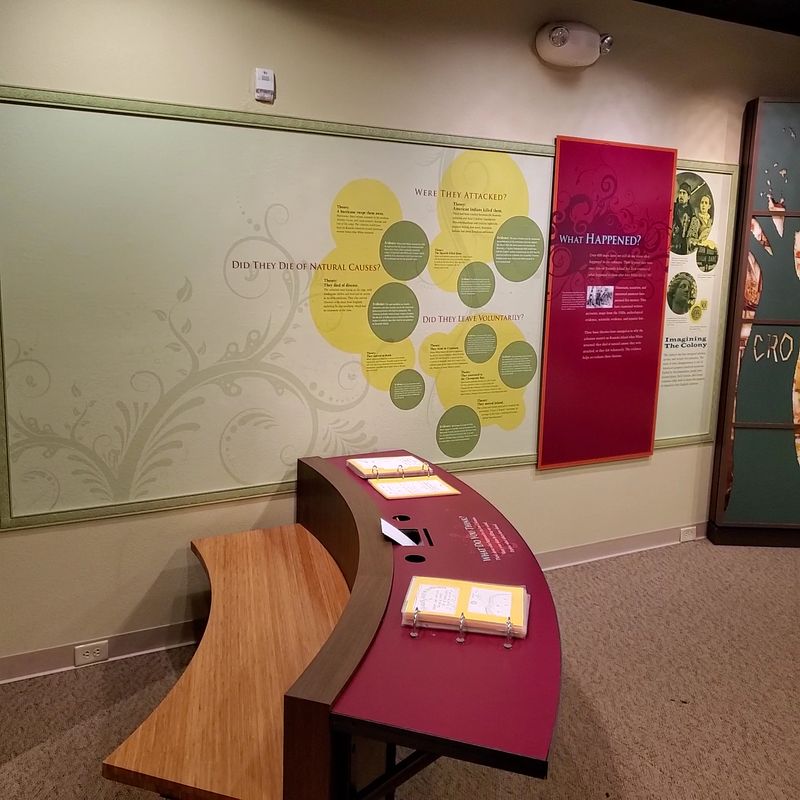
Real objects pulled from the soil sit inside the visitor center. Exhibits display artifacts found at the site, along with displays about the English voyages and the Native people already living here.
A short film tells the colony’s story before you head outside. It’s a smart first stop if you want the background before exploring the grounds.
One highlight connects to science history. Scientist Thomas Hariot and metallurgist Joachim Gans worked here in 1585, testing minerals and studying the land.
Artist John White also painted detailed watercolors of local people, plants, and animals. Those images gave Europe some of its earliest looks at this part of North America.
Families can pick up Junior Ranger activities, which turn the visit into a hands-on challenge. National park passport fans can also grab a stamp at the desk.
A gift shop stocks books about the colony and the island’s past. Rangers are on hand to answer your toughest questions.
The center keeps regular hours of 9 a.m. to 5 p.m. daily. Plan your race-weekend visit early, since the doors close before evening.
I believe this is the best rainy-day backup on the island. Good luck finding a cozier way to wait out a storm.
Two Shady Trails Turn History Into A Breezy Woodland Stroll
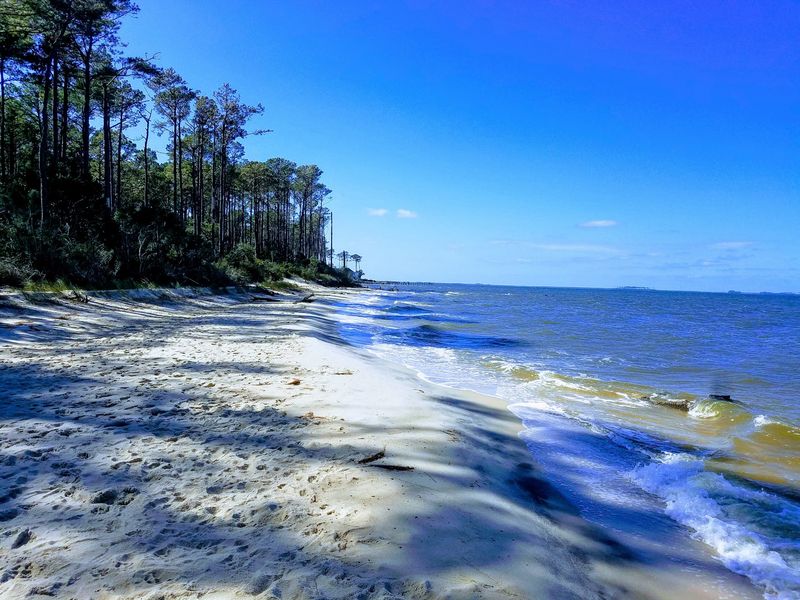
Shady paths make this site a pleasant break from race-day bustle. Two main trails wind through the grounds, and each tells a different chapter of the island’s story.
The Thomas Hariot Nature Trail is a short loop through coastal forest with a view of the water. Signs along the way share Hariot’s observations of the plants and animals he found here.
Hariot published one of the first English reports about this land in 1588. Reading his words under the same kind of trees feels pretty special.
The Freedom Trail stretches farther through the woods toward Croatan Sound. Markers along the way share stories from a powerful chapter you’ll read about next.
The grounds stay open after the visitor center closes for the day. That gives you some flexibility around race schedules and dinner plans.
Leashed dogs are welcome, which is great news for traveling pups. Picnicking is allowed too, so packing a lunch makes plenty of sense.
Wear comfortable shoes and bring water, especially if the November sun shows up. Bug spray never hurts in coastal woods, either.
I can’t imagine a calmer contrast to a busy race morning. Birds, rustling trees, and water views do the cheering instead.
A Powerful Freedom Story Lives On This Island, Too
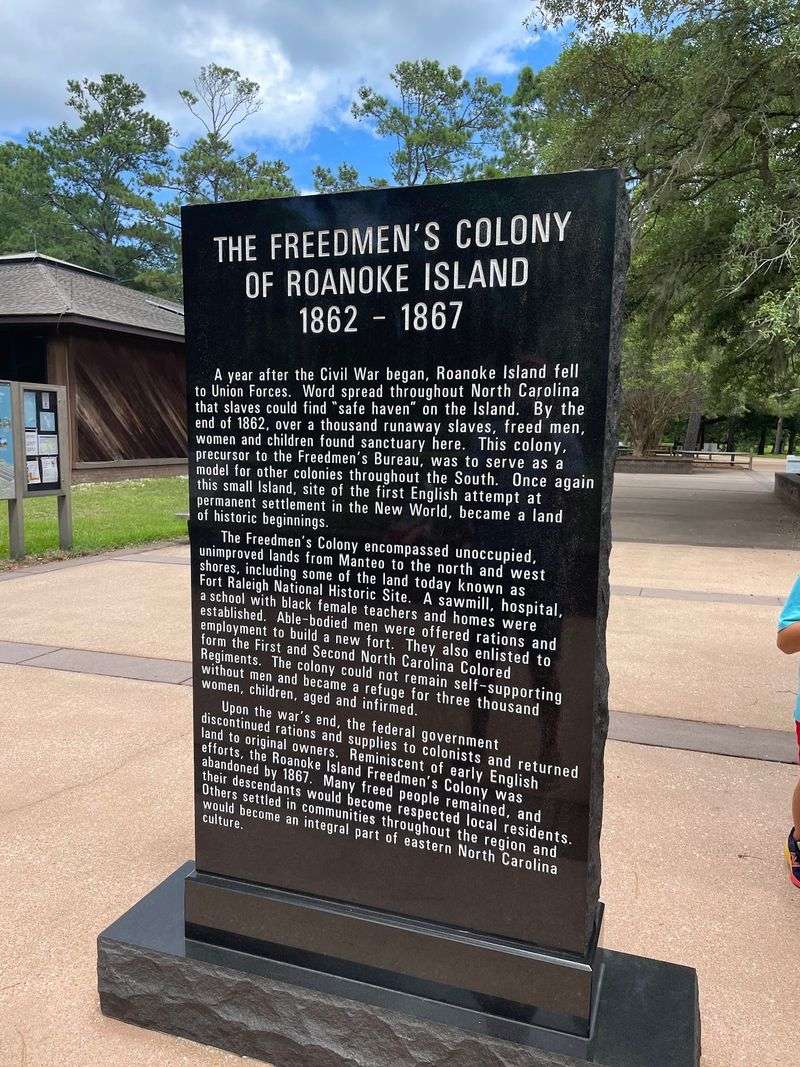
Most visitors come for the Lost Colony, but a second story deserves equal attention. During the 1860s, Roanoke Island became home to the Freedmen’s Colony.
Union forces took control of the island in 1862. Soon, people escaping slavery arrived seeking freedom and a fresh start.
The community grew into a settlement with homes, churches, and schools. Teachers came to help residents learn to read and write.
At its peak, the colony held thousands of people. It is now recognized in the National Park Service’s Underground Railroad Network to Freedom.
A monument at the park honors the freedmen and their families. Markers on the Freedom Trail share details about daily life and the residents’ determination.
I like how this site holds two very different stories about new beginnings. One group vanished, while the other built something lasting against long odds.
Take a few quiet minutes at the monument during your visit. It adds real depth to a weekend that might otherwise focus only on finish lines.
This chapter of North Carolina history rarely makes the postcards. Your visit helps keep it in the conversation.
Older kids may find it especially eye-opening. It pairs nicely with a Junior Ranger booklet.
That Waterside Stage Has Hosted A Famous Show Since 1937
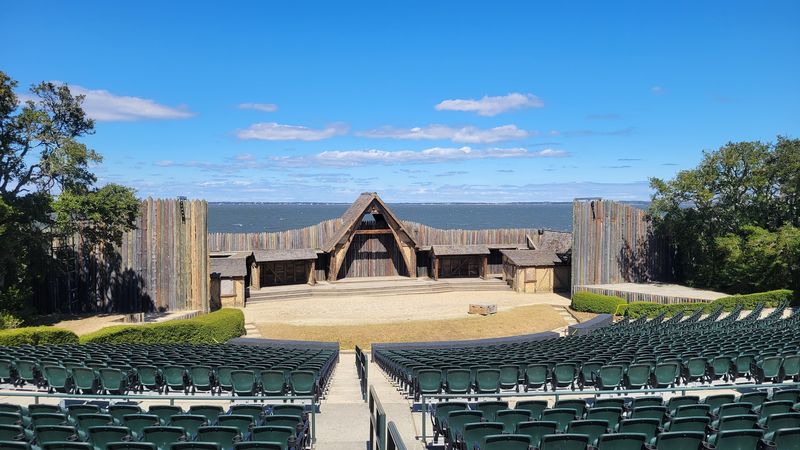
Few stages anywhere have a backdrop like this one. The Waterside Theatre sits right on Roanoke Sound, inside the park grounds.
Since 1937, it has hosted The Lost Colony, an outdoor symphonic drama by Pulitzer Prize-winning playwright Paul Green. It ranks among the longest-running outdoor dramas in the country.
President Franklin D. Roosevelt attended a performance in 1937.
That’s a pretty impressive guest list for a show staged beside the water.
Andy Griffith also performed in the production before his television fame. He later made his home on Roanoke Island.
The play runs during the summer season, so it won’t be on stage during November race weekend. You can still walk down and admire the theater and its view.
Standing there gives you a feel for the setting, even with empty seats. The water and trees frame the stage beautifully.
I believe this spot alone is worth a return trip in summer. Watching the colony’s story unfold where it actually happened sounds hard to beat.
Snap a photo now, then circle a summer date on the calendar. Your future self will thank you.
Free Admission And A Garden Next Door Make Planning Easy
Good news for your wallet: entry costs nothing. Fort Raleigh National Historic Site charges no admission for the visitor center, grounds, or trails.
Fort Raleigh National Historic Site stands at 1500 Fort Raleigh Road, Manteo, NC 27954, on the northern end of Roanoke Island.
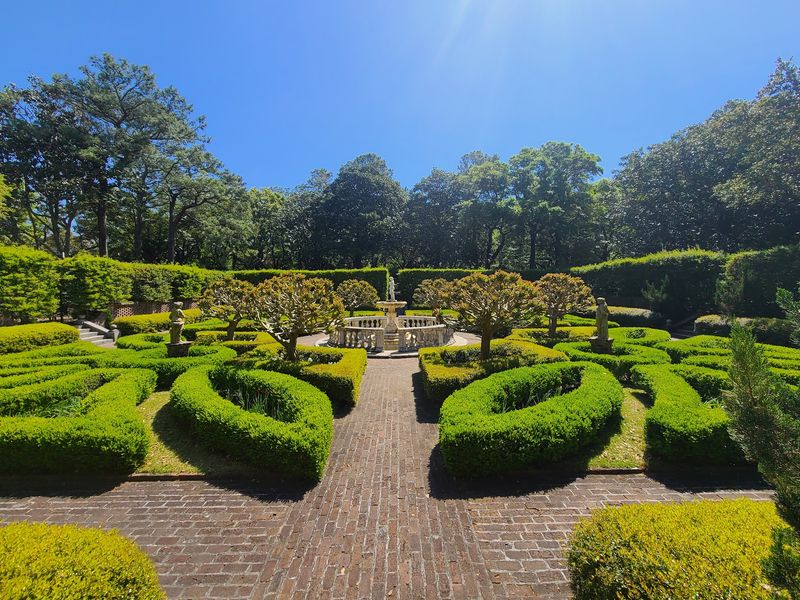
Right next door, the Elizabethan Gardens offer a separate attraction with its own admission. The Garden Club of North Carolina created it as a living tribute to the colonists.
Expect formal gardens, statues, and walking paths with views of the sound. It pairs naturally with a Fort Raleigh visit.
Check hours ahead, since seasonal schedules can change. Combining both stops makes for a relaxing afternoon away from the race activity.
The visitor center keeps 9 a.m. to 5 p.m. hours every day. Parking is plentiful on ordinary days, though race weekend brings special rules.
I like how simple it is to build a whole day here. Free history, pretty gardens, and water views cover a lot of vacation bases.
Bring a light jacket in November. Breezes off the water can feel cooler than the forecast suggests.
Race-Day Roads Need A Smart Game Plan, So Grab Yours

Parking at the historic site itself is off-limits on race day. Designated lots at Manteo Elementary, Middle, and High Schools, plus the College of The Albemarle, handle the crowds.
Race weekend brings different traffic arrangements to different parts of the Outer Banks. Saturday’s shorter races take place around Wright Brothers National Memorial in Kill Devil Hills, while Sunday’s marathon and half marathon follow routes through Manteo and Roanoke Island.
Expect restrictions near the racecourses and follow official traffic directions.
Give yourself an extra 20 to 30 minutes for travel. That cushion beats sitting in traffic while the runners cruise past.
Packet pickup happens at the Sports and Fitness Expo at Ramada Plaza Nags Head Oceanfront, located at 1701 South Virginia Dare Trail in Kill Devil Hills. Even non-runners can browse vendor booths and soak up the excitement there.
Spectators can cheer near designated areas along the Roanoke Island course, with the start and finish at Fort Raleigh National Historic Site. Live music and post-race fun keep the party going afterward.
I believe the best plan is cheering in the morning and exploring Fort Raleigh later. Comfortable shoes, snacks, and a charged phone cover the basics.
North Carolina’s barrier islands put on a real show this weekend. Your only race might be to the barbecue tent, and that’s perfectly fine.
Check the official event schedule before you leave home. Start times and details can shift from year to year.