This Tiny Sandhills Town In Nebraska Has A Church Ranchers Built From Straw Bales
The walls of this little church are two feet thick, and they’re packed with baled rye straw. Ranchers stacked those bales back in 1928, then covered them with plaster to keep hungry cattle from snacking on the building.
I love that detail. Somebody had to think about cows eating the church, and they solved it with mud.
The building still stands in a Sandhills village of barely more than a hundred people in western Nebraska. It’s listed on the National Register of Historic Places.
It’s also called the oldest known straw-bale church in North America.
I can’t imagine a better reason for a Sandhills detour. A pastor’s family once lived in the back, and a small window still shows what’s hiding under the stucco.
So how did a handful of ranchers pull this off with almost no trees around?
A Church Built From The Same Stuff Cattle Eat
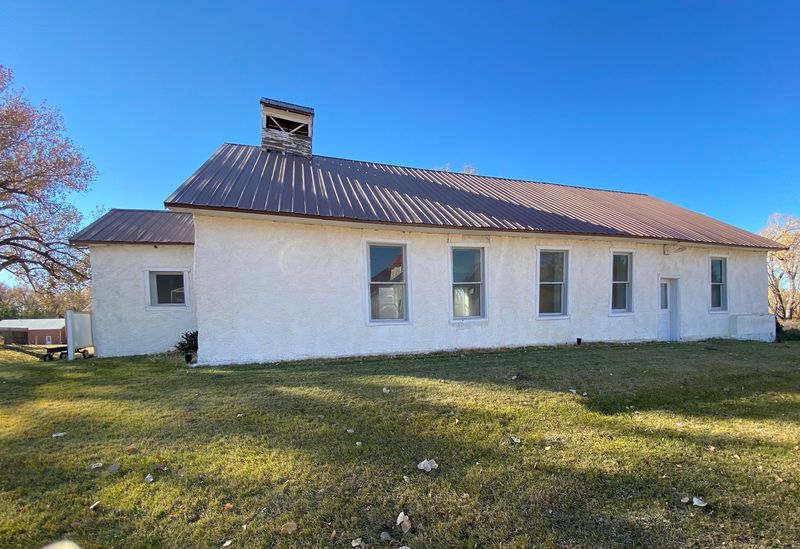
Straw is usually what ends up under livestock, not under a steeple. In Arthur, though, the Pilgrim Holiness Church turned a farm byproduct into a house of worship that still stands today.
Builders finished the church in 1928 using bales of rye straw for the walls. Those walls measure about two feet thick, which makes the building sturdier than its humble ingredients suggest.
The church sits in Arthur, the county seat of Arthur County in the Nebraska Sandhills. It’s a tiny village, and the church fits right into its quiet, ranch-country streets.
Its fame stretches far beyond the county line. The Pilgrim Holiness Church holds the title of the oldest known straw-bale church in North America.
That claim carries real weight, too. The building is listed on the National Register of Historic Places, which puts it alongside some of the country’s most important landmarks.
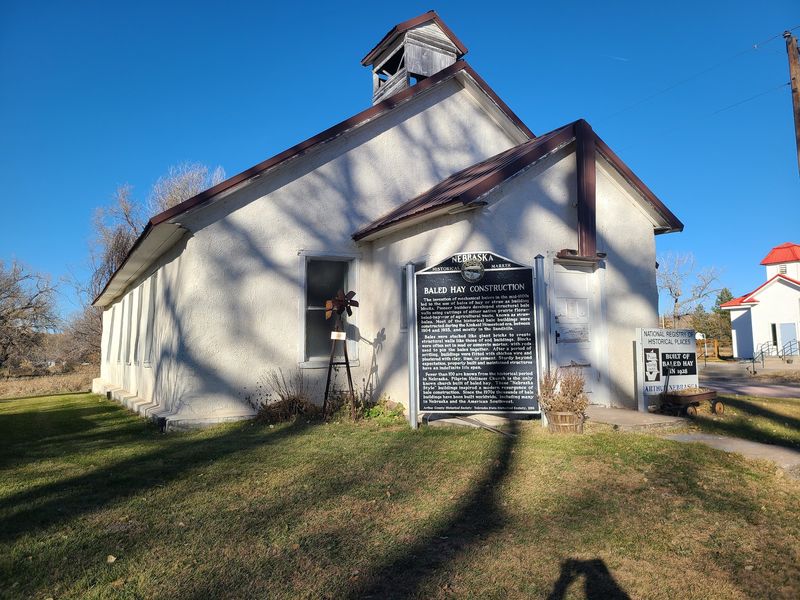
From the outside, it looks like a modest stuccoed church. Nothing on the surface shouts “straw,” and that’s half the fun of knowing the secret.
Once you learn what’s inside those walls, you’ll never look at a hay bale quite the same way again. Honestly, it’s the best kind of small-town surprise.
Why Sandhills Ranchers Reached For Rye Instead Of Lumber
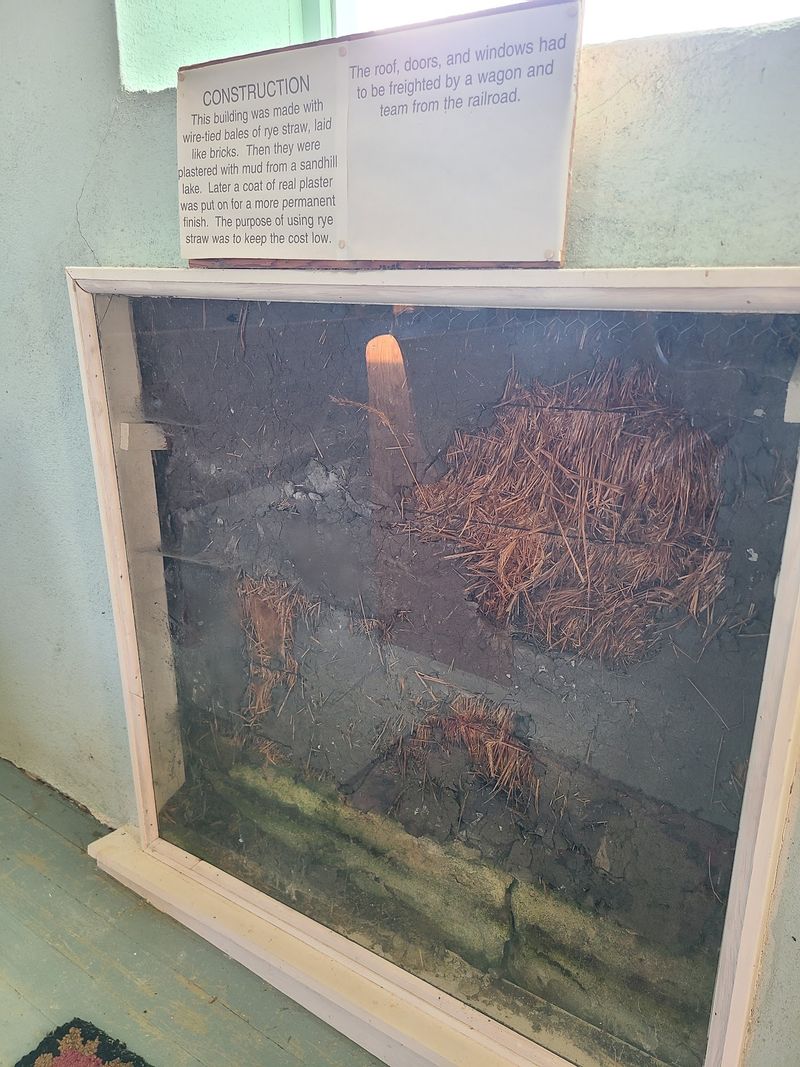
Trees are scarce in the Sandhills. That simple fact shaped nearly everything about how early settlers built their homes, schools and churches.
Back in the early 1900s, timber and brick were costly in this remote corner of Nebraska. Hauling them in over long distances made the problem even worse.
So ranchers looked around and used what they had. Rye straw, a leftover from farming and ranching, was plentiful and easy to get.
Baled straw turned out to be a clever choice. It stacked like giant building blocks and gave thick, insulated walls against Sandhills winters and summer heat.
The Pilgrim Holiness Church wasn’t a one-off experiment either. Between 1896 and 1945, an estimated 70 straw-bale buildings went up across the Sandhills.
Those structures included schools, offices and farm buildings. Many settlers clearly trusted the method enough to bet their daily lives on it.
I like how practical this all feels. Nobody was chasing a design trend, they were just solving a problem with the grass around them.
That kind of thinking still says a lot about Sandhills people. Resourceful, stubborn and a little bit brilliant sounds about right.
Gumbo Mud Kept The Cows From Lunch
Here’s a problem most church builders never face. If your walls are made of straw, the neighborhood cattle might decide your sanctuary is a snack.
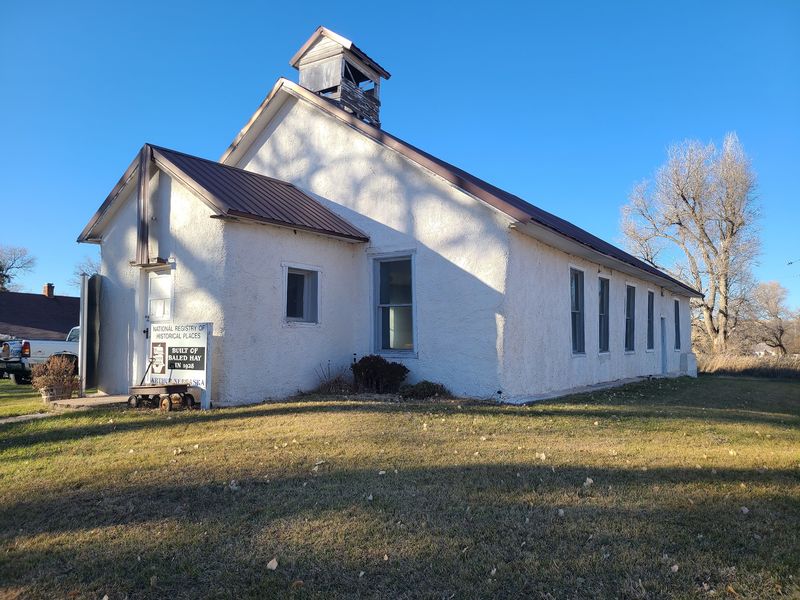
Arthur’s builders had an answer for that. They coated the straw bales with “gumbo mud” plaster, which protected the walls from curious, hungry cattle.
That mud layer did double duty. It shielded the bales and gave the building a finished surface that could stand up to Sandhills weather.
Fast forward to 1976, when the building got a major restoration. Crews re-stuccoed the exterior, so today’s smooth walls hide the original plaster underneath.
Luckily, nobody wanted that story buried. During the restoration, a “truth window” was installed so people could peek at the original gumbo mud.
A truth window is exactly what it sounds like. It’s a small opening that proves the building really is what everyone says it is.
Good luck resisting the urge to lean in close. Seeing that old plaster makes the 1928 story feel real in a way a plaque can’t.
It’s also a fun detail to share with kids. Few history lessons start with cows trying to eat a church.
The Pastor Lived Right Behind The Pulpit
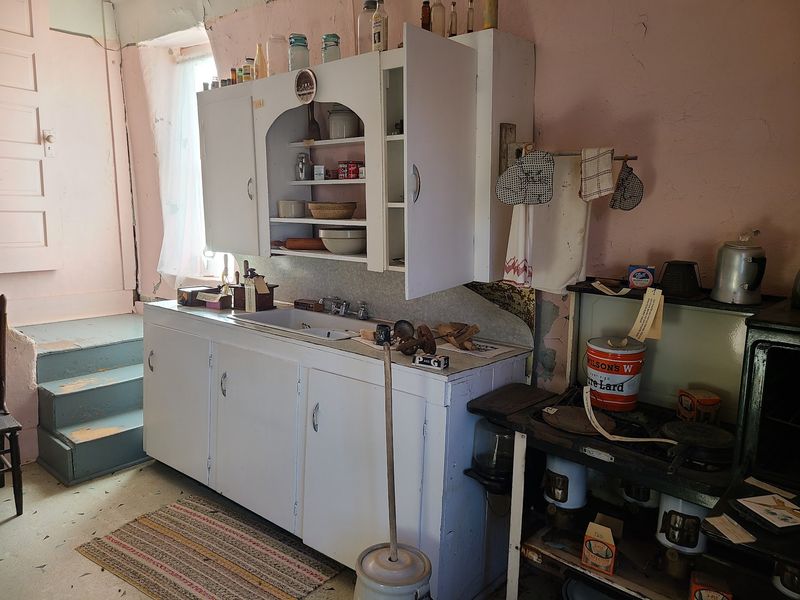
Talk about a short commute. At the Pilgrim Holiness Church, the preacher’s home was built right into the back of the building.
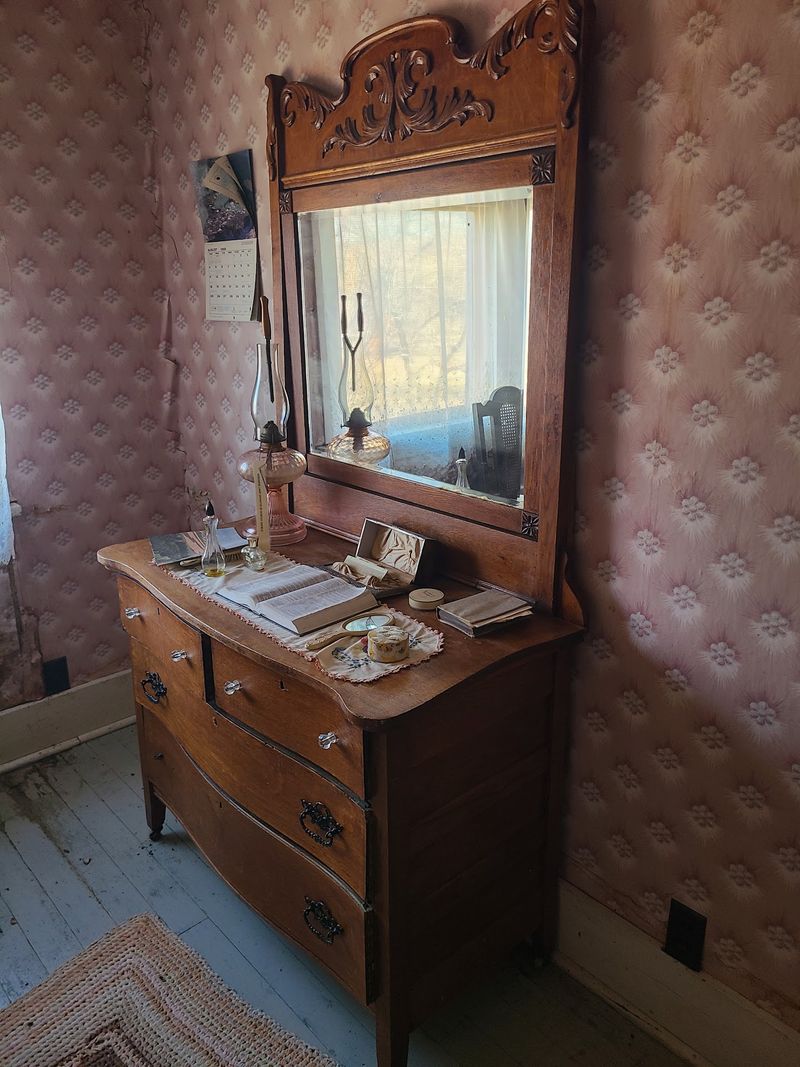
The rear section held the pastor’s residence. It included a kitchen and a parlor, plus two sleeping rooms upstairs.
That setup made plenty of sense in ranch country. Housing was hard to come by, so combining church and home kept things simple.
The building rises a story and a half. It measures roughly 32 by 56 feet, which is a generous size for a straw-bale project of its era.
Over 35 years, the church welcomed a long line of ministers. Nineteen different preachers and their families called the place home during that stretch.
Think about that number for a second. Nineteen families cooked, slept and raised kids inside walls made of baled rye.
I believe that’s what gives the building its warmth. It wasn’t just a Sunday stop, it was somebody’s everyday house for decades.
Every one of those families left a little of their story behind. The rooms now carry that history quietly, one creaky floorboard at a time.
Seven Rows Of Pews Sloping Toward The Altar
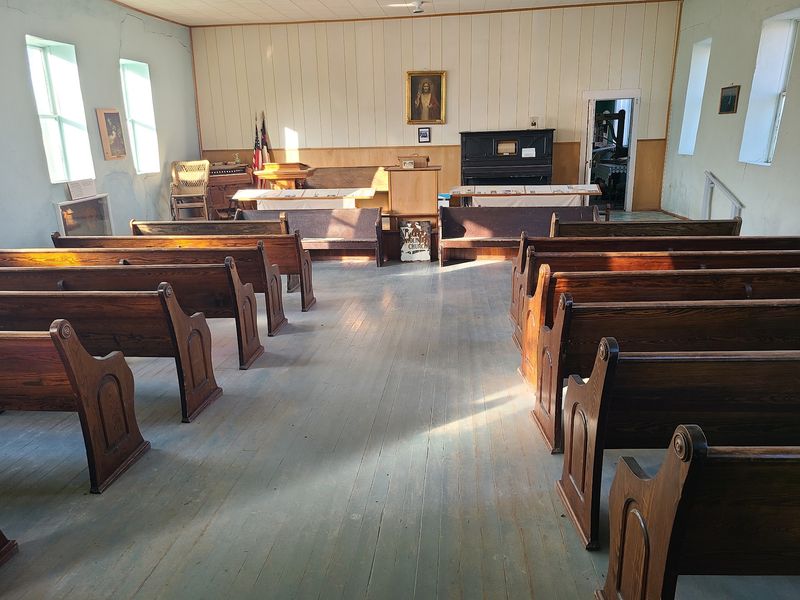
Small sanctuaries have a special pull. Inside the Pilgrim Holiness Church, the worship space keeps things close and simple.
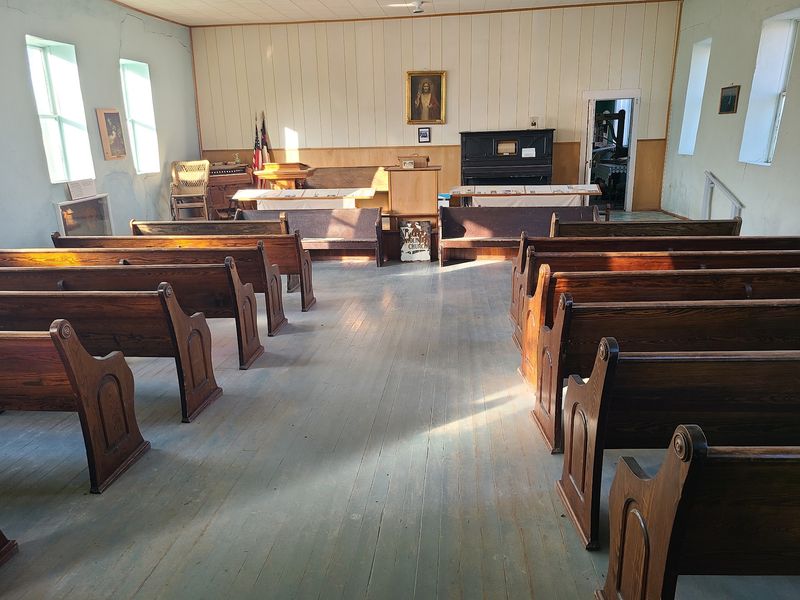
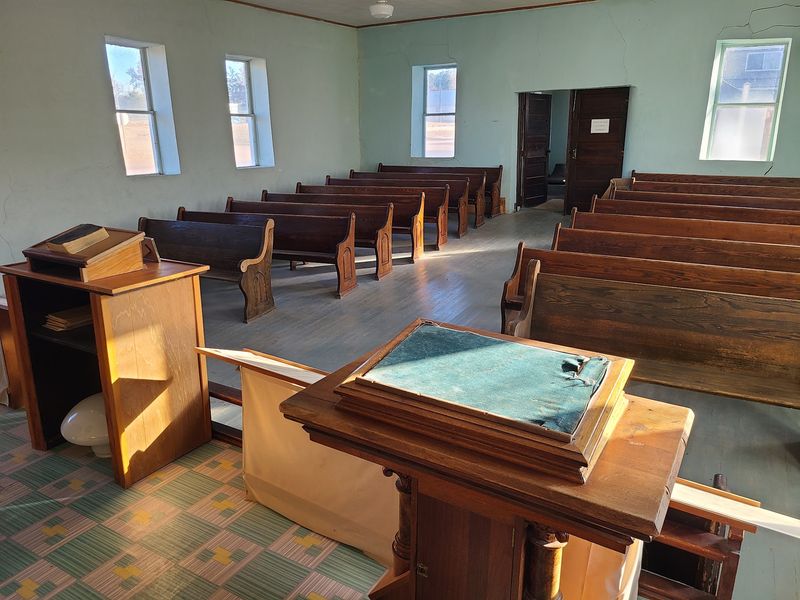
Seven rows of pews fill the main room. They slope gently down toward the altar-platform, so every seat faces the front naturally.
That slope is a thoughtful touch for a rural church. It helped the congregation see and hear the preacher without any fancy equipment.
The room doesn’t need grand decoration to feel meaningful. Its scale alone tells you this was a gathering place for a small, tight community.
Remember, those thick straw walls surround the whole space. They likely helped the room stay comfortable through the swings of Nebraska weather.
Sitting in a pew here connects you to a very specific time. Ranch families once filled these rows after long drives across the Sandhills.
One descendant of an early Arthur County pioneer has shared that his great-grandfather helped build the church somehow. Nobody living knows exactly how, which somehow makes it even more touching.
Stories like that turn a quiet room into something personal. The pews hold more family history than any guidebook can list.
From Weekly Services To A Treasured Museum
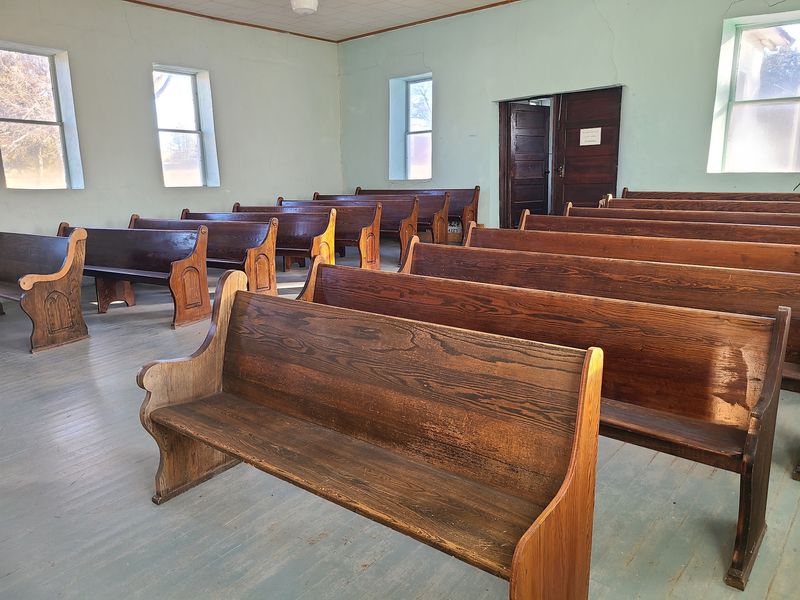
Regular services no longer happen inside the straw-bale walls. The building found a second life instead, and it’s a pretty great one.
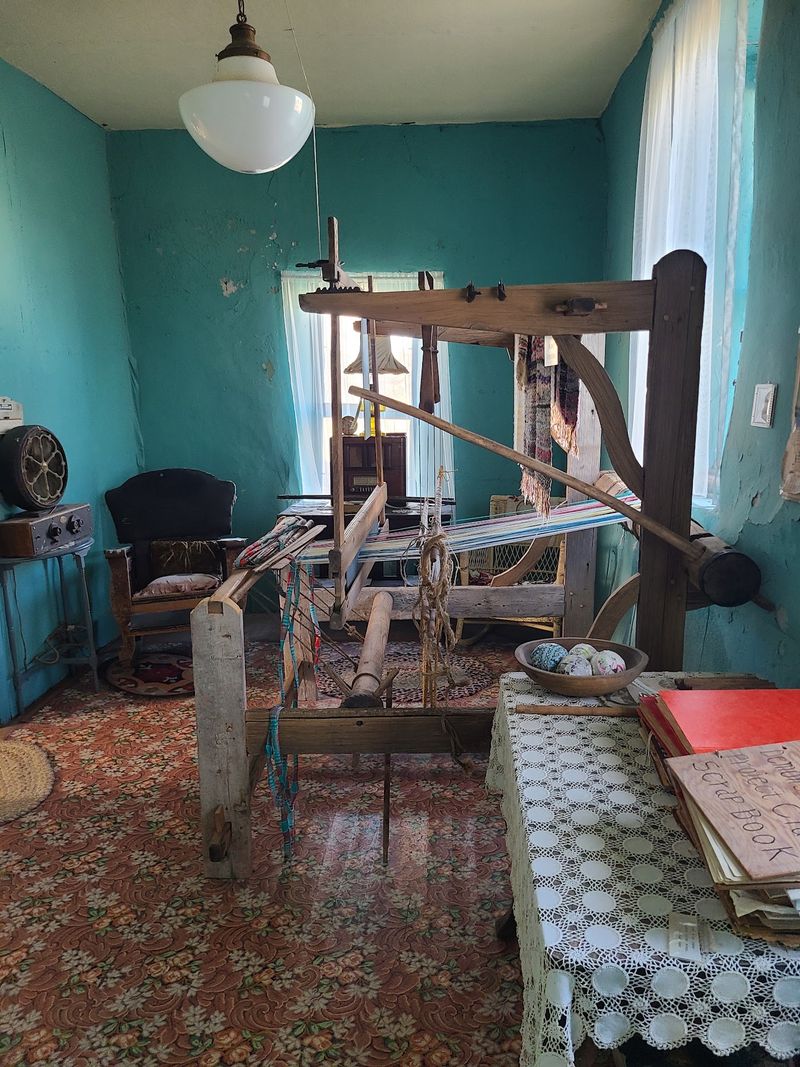
The Arthur County Historical Society now owns the Pilgrim Holiness Church. The group keeps it preserved as a historical museum for anyone curious about Sandhills life.
Their 1976 restoration was a big deal. It brought a new wooden roof along with the fresh stucco that protects the exterior today.
That care is why the building still looks so tidy nearly a century later. Straw lasts a long time when people look after it.
Visitors come from far beyond Nebraska to see it. A straw-bale church with National Register status tends to attract curious travelers and builders alike.
Modern straw-bale enthusiasts treat it almost like a pilgrimage site. Fitting, considering the name on the building.
The museum role also keeps the town’s story front and center. Locals who live nearby clearly enjoy seeing people stop and take it in.
That’s a nice feeling for a traveler. You’re not intruding on a relic, you’re being welcomed into a piece of community pride.
A Tiny Courthouse Shares The Spotlight Down The Street
Arthur doesn’t stop at one oddity. The village also claims the original Arthur County Courthouse and Jail, built between 1913 and 1914.
Ripley’s Believe It or Not recognized it as the world’s smallest courthouse. That’s quite a title for a town of this size to carry.
Today the little building works as a museum. It holds original handmade furniture and documents from the county’s earliest days.
Getting in has a charming small-town twist. During working hours, you can get the key from the newer courthouse next door.
The museum sits at City Park on Main Street. It pairs perfectly with the church, since both show how settlers made do with very little.
Arthur itself was founded in 1913 and incorporated in 1944. Both the village and the county are named for President Chester A.
Arthur.
The 2020 census counted just 128 residents. Two nationally notable buildings in a town that size is a pretty impressive ratio.
That’s one of the joys of Nebraska’s small towns. They often pack more stories per block than places many times bigger.
Quiet Streets Made For Curious, Slow Travelers
Speed isn’t the point out here. Arthur moves at the pace of ranch country, and the Pilgrim Holiness Church matches that easygoing rhythm.
History lovers will feel right at home. So will anyone fascinated by building methods, especially folks interested in sustainable or natural construction.
Families can make it an easy, educational stop. Kids tend to remember the church made of straw long after they forget other road trip facts.
Descendants of Sandhills pioneers may find it especially meaningful. Some trace family roots to the ranchers who helped raise these walls.
The surrounding village has a plainspoken charm. Dirt roads and wide-open views remind you how remote and self-reliant this community has always been.
Don’t expect crowds or a gift shop scene. This is a quiet, small-scale stop that rewards people who enjoy noticing details.
Locals here are known for being friendly and happy to answer questions. That makes a short visit feel more like a neighborly chat than a museum tour.
If big attractions wear you out, this is the antidote. One small church, one big story, and plenty of sky.
Plan Ahead Before Heading To Cedar Street
Good news first. Finding the church is simple once you reach Arthur, since the whole village is easy to navigate.
The Pilgrim Holiness Church sits at 216 Cedar St, Arthur, NE 69121. Arthur lies in the Nebraska Sandhills, north of Ogallala, so budget time for a scenic rural drive.
Tours aren’t run on a big public schedule. A phone number posted on the front door connects visitors with someone who can arrange a look inside.
That personal approach is part of the charm. Tours often come with plenty of stories about the building and its neighbor to the west.
Since hours can vary, plan with some flexibility. Calling ahead from the number on the door is the smartest move.
Services are sparse in tiny Sandhills towns. Fill up your tank and pack snacks before leaving bigger towns.
Bring a camera for the stucco exterior and the truth window. Both make for memorable photos of a very unusual landmark.
Pair your stop with the tiny courthouse museum nearby. Together they make a satisfying, unhurried afternoon in western Nebraska.
Worth Every Mile Of Sandhills Highway
Some landmarks impress with size. The Pilgrim Holiness Church impresses with nerve, ingenuity and a whole lot of rye straw.
It tells the Sandhills story in one building. Scarce trees, stubborn ranchers and creative problem-solving all show up in those two-foot walls.
The details are what stick. Gumbo mud against cattle, a truth window, a pastor’s kitchen behind the pulpit, and nineteen families over 35 years.
Add National Register status and the oldest known straw-bale church title. Suddenly a tiny Nebraska village feels like a must-see destination.
I like that the visit stays personal. A number on the door, a friendly guide and a story-filled tour beat any velvet rope.
The drive itself is part of the reward. Rolling grass hills and big skies set the perfect stage for this kind of history.
Is it a full-day adventure? For many travelers, pairing it with the courthouse museum makes a relaxed, rewarding outing.
Either way, you’ll leave knowing something few people do. In Arthur, ranchers once built a church out of straw, and it’s still standing proud.