Long Before Interstates, Drivers Crossed Nebraska On This Historic Brick Highway You Can Still Walk Today
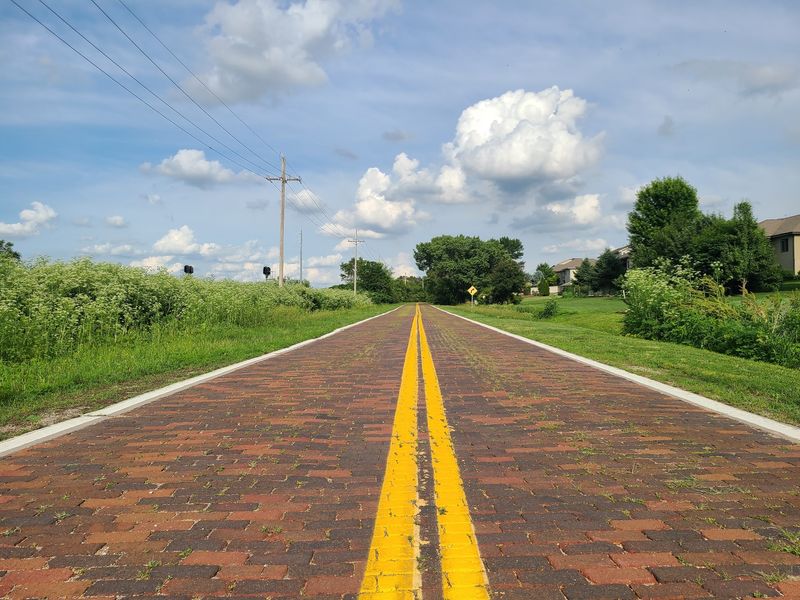
Roughly three miles of red brick laid by hand in 1920 and 1921 still carry cars across a quiet corner of Nebraska. Nobody roped it off, either.
Those same bricks once rumbled under early motorists chasing the Pacific on America’s first coast-to-coast highway. County crews set them over a concrete base, and much of that work is still holding a century later.
I like how this road refuses to act like a relic. You can roll your windows down, ease off the gas, and feel the hum of every brick through the steering wheel.
Trees crowd in close along parts of the route, and the modern city fades fast behind you. I can’t imagine a cheaper ticket to the 1920s, so where exactly does the asphalt quit and the brick take over?
Three Miles Of Brick Hiding On The Western Edge Of Omaha
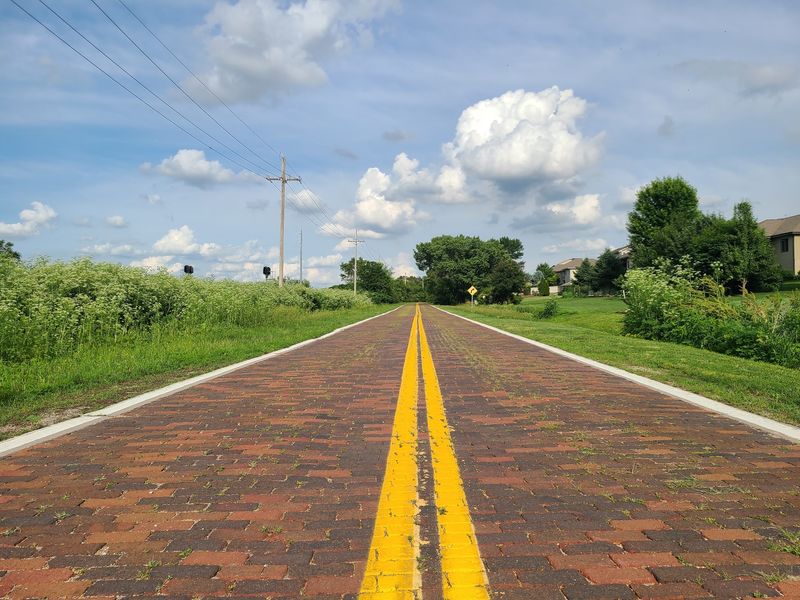
Plenty of Nebraskans have driven within shouting distance of the Old Lincoln Highway, Original Brick Surface without realizing it. The brick runs for roughly three miles between Omaha’s western suburbs and the Elkhorn area.
Officially, the stretch is known on the National Register as the Lincoln Highway, Omaha to Elkhorn section. Most people simply call it the brick road, which is honest and easy to remember.
What makes it special is simple. It’s an original piece of the first highway built to cross the entire country, and it still carries everyday traffic.
You aren’t looking at a short demonstration patch beside a visitor center. You’re driving a working county road that happens to be paved with brick laid more than a hundred years ago.
The route sits in Douglas County, just north of busy West Dodge Road. That closeness to modern Omaha makes the switch to brick feel even more startling.
One minute you’re surrounded by subdivisions and traffic lights. A few turns later, the pavement changes color, the trees close in, and the whole drive slows down to an earlier rhythm.
A Coast-To-Coast Dream Born When Cars Were Still A Novelty
Back in 1913, crossing the country by car sounded about as reasonable as crossing it by kite. Roads were mostly local dirt tracks that turned to mud whenever the sky felt moody.
That same year, a group led by auto booster Carl Fisher formed the Lincoln Highway Association. Their goal was bold and a little wild: one marked route from New York to San Francisco.
They named it for President Abraham Lincoln, which gave the project instant national weight. Nebraska landed squarely in the path, with the route crossing the state from east to west.
Omaha celebrated its piece of the new highway on October 31, 1913. Civic festivities marked the occasion, and the city clearly understood it was joining something big.
Here’s the catch, though. Being on the route didn’t mean being paved, and many Nebraska miles stayed gravel or dirt for years afterward.
Early travelers needed patience, spare parts, and a healthy sense of humor. The idea of smooth, reliable pavement was still more promise than reality across most of the Plains.
Vitrified Brick Laid In 1920 And Still Doing Its Job
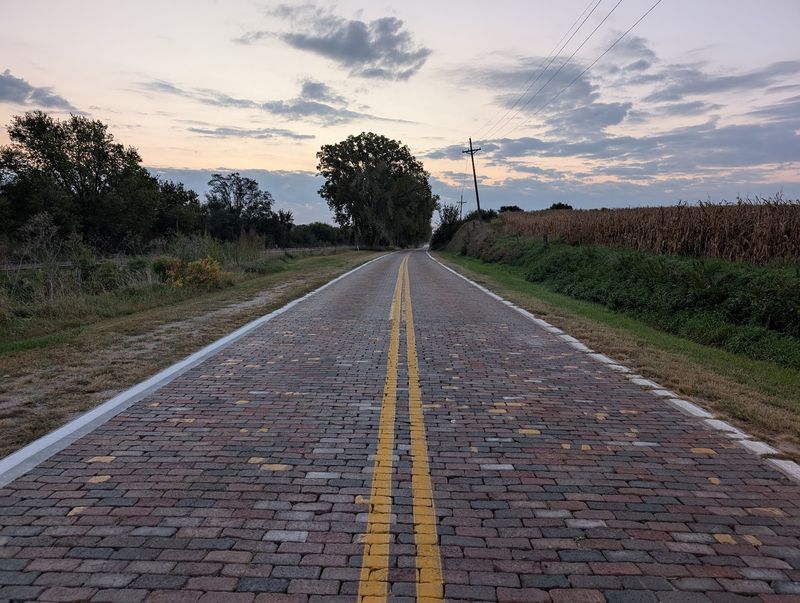
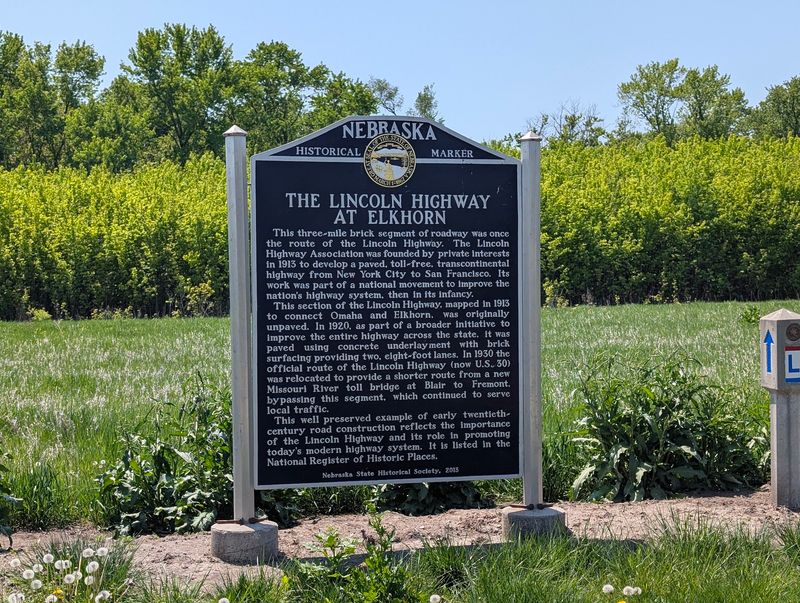
Paving finally arrived on this stretch in 1920 and 1921. Douglas County crews set vitrified brick on top of a concrete base, building a two-lane road for the cars of the day.
Vitrified brick is fired at very high heat, which makes it hard and tough against moisture. That toughness explains a lot about why you can still drive on it today.
Think about the timeline for a second. These bricks went down before radio was common in homes, and they’ve outlasted generations of cars that rolled over them.
The segment is considered the only known rural stretch of the Lincoln Highway in Nebraska that keeps its 1920s paving materials. Patching has been fairly limited, so the original character comes through clearly.
Look down and you’ll see the bricks running in neat rows, edge to edge. Each one was placed by a person, not poured from a truck.
That handmade quality is easy to miss at highway speed. Slow down, though, and the craftsmanship practically introduces itself beneath your tires.
Your Tires Will Notice The Difference Right Away
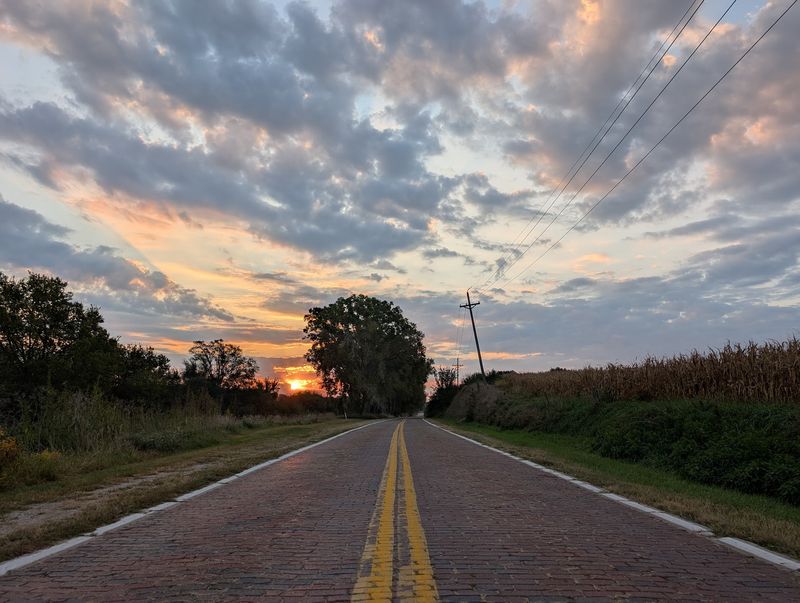
Bumpy, in the best possible way. That’s the honest summary of a drive on this brick, and it’s a big part of the fun.
Smooth asphalt goes quiet under you after a while. Brick does the opposite, sending a steady, rhythmic thrum up through the seat and steering wheel.
The full run covers about three miles, which feels just right. It’s long enough to settle into the hum and short enough that nobody in the back seat starts asking how much longer.
Tall trees line parts of the route, giving the drive a shaded, tucked-away feel. In summer, the green canopy makes the red brick pop even more.
There’s no reason to hurry here. The road rewards a slow roll, with windows down and the radio off so you can actually hear the bricks.
Kids tend to get a kick out of the sound and the bounce. Adults, meanwhile, often catch themselves wondering what this felt like in a car with skinny tires and no padding.
How A Detour Accidentally Saved The Whole Stretch
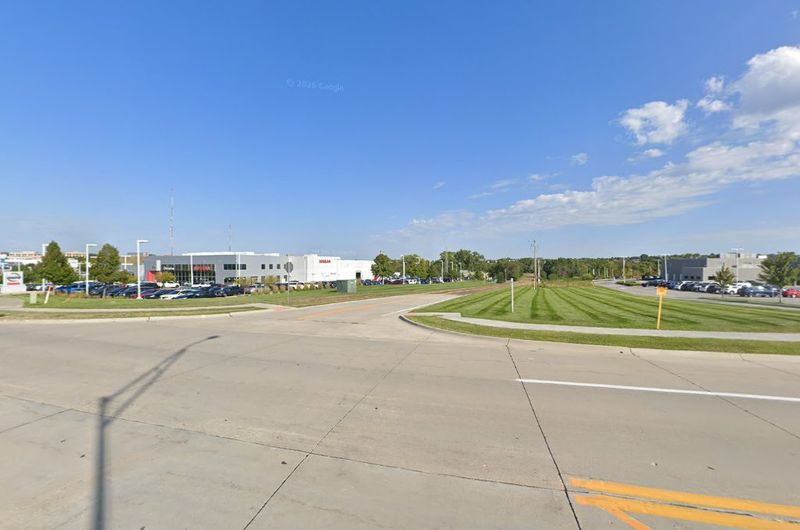
Ironically, getting bypassed may be the best thing that ever happened to this road. Being left behind kept it out of the way of bulldozers.
Around 1930, the main Lincoln Highway route shifted to a different path. The Omaha to Elkhorn brick no longer carried the big flow of cross-country traffic.
Once the long-haul drivers moved elsewhere, the stretch settled into life as a local road. That meant fewer reasons to widen it, straighten it, or bury it under new pavement.
Across much of the country, original highway surfaces vanished during later upgrades. Old concrete and brick disappeared under layer after layer of modern roadway.
This piece in Nebraska quietly escaped that fate. It kept doing a smaller job while the rest of the world sped past on newer routes.
Call it a happy accident of traffic planning. The road lost its national spotlight, yet it gained a long, peaceful retirement that preserved its original surface for us.
The 1980s Fight That Kept The Asphalt Away
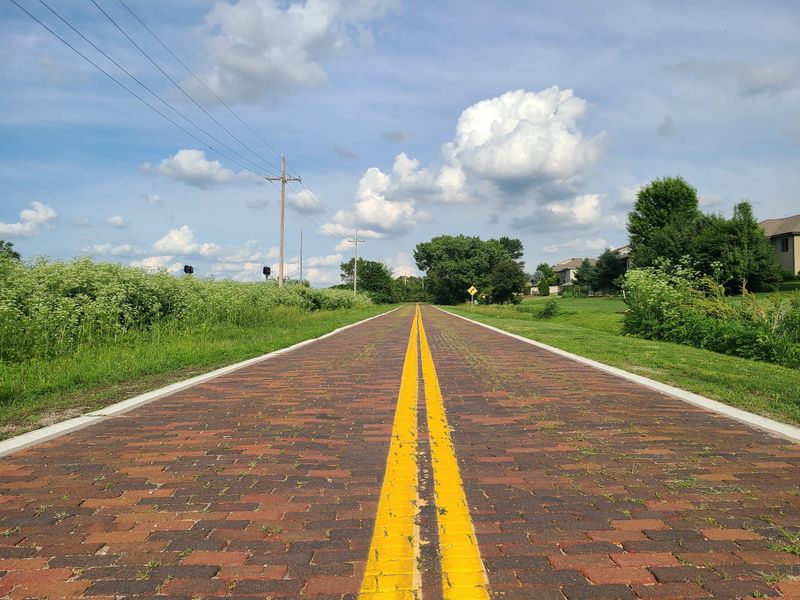
Asphalt almost won. In the early 1980s, county engineers proposed covering the old brick with a fresh layer of blacktop.
On paper, it probably looked practical. Asphalt is quick to lay, familiar to maintain, and smooth for drivers who don’t love a rumble.
Local advocates and preservation supporters saw it differently. They pushed back and argued that the brick deserved restoration rather than burial.
Their effort worked. The original bricks were restored, and the road kept the look and feel that makes it worth visiting today.
That decision matters more than it might seem. Once brick disappears under asphalt, it rarely comes back, and the history goes with it.
Every Nebraskan who drives this stretch now benefits from that stand taken decades ago. It’s a good reminder that one community speaking up can protect something irreplaceable for people who weren’t even born yet.
Worth The Turn Off West Dodge, Every Single Time
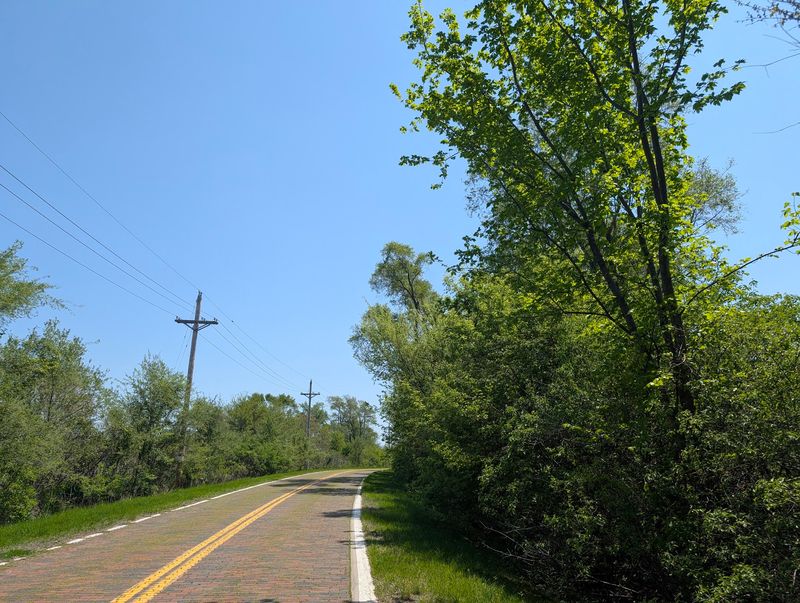
Some history lives in books, and some lives under your tires. The Old Lincoln Highway, Original Brick Surface lands firmly in that second group.
It packs a lot into three miles. You get 1920s brick, a story of near loss, classic markers, a truss bridge, and shaded stretches that feel far from the city.
None of it requires tickets or a long road trip. A short detour from everyday Omaha traffic puts you on a piece of the first highway across America.
That mix of easy access and real age is rare in Nebraska or anywhere else. Many historic roads survive only as fragments or plaques.
Here, the original surface is still doing the job it was built for. That alone makes the drive feel like a small victory for everyone who cared enough to save it.
Next time you’re cruising West Dodge, consider swinging north for a few minutes. The bricks have waited more than a century, and they’re in no rush to go anywhere.