This North Carolina Roadside Attraction Is Shaped Like A Giant Seashell And Dates Back To The 1930s
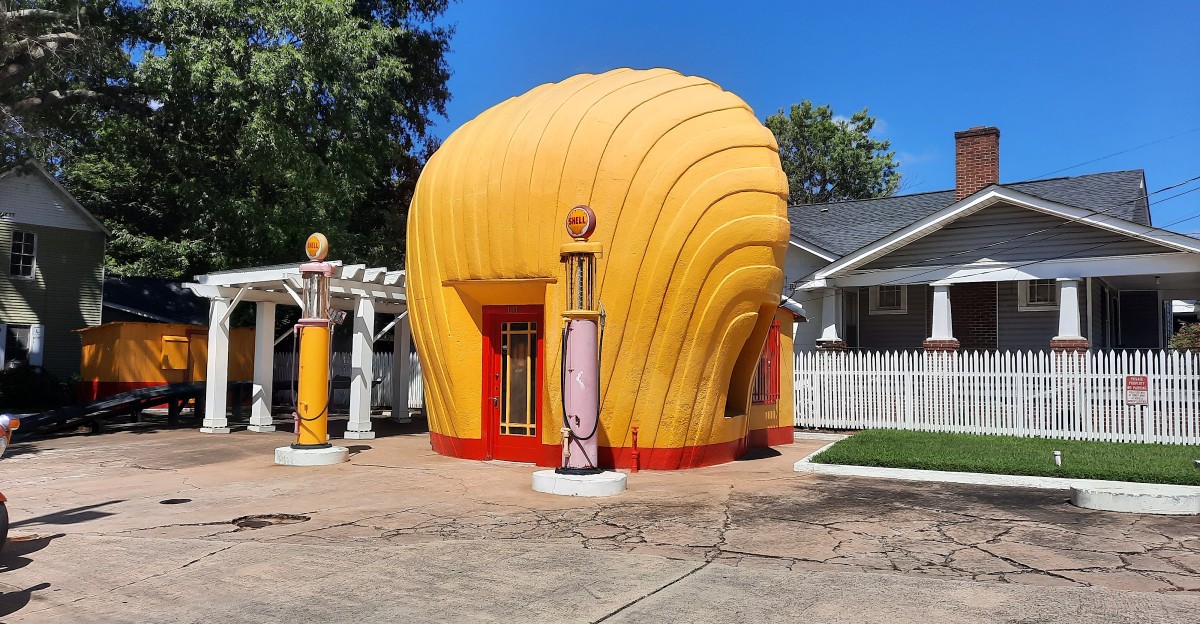
I cannot decide what amuses me more, the 18-foot scallop shell or the fact that somebody patented the design.
Back in 1930, this giant yellow structure actually served as a gas station.
Now it survives as one of North Carolina’s strangest roadside landmarks.
Seven others once stood around the same city, but this is the only one still hanging on.
Knowing that makes the little neighborhood corner feel oddly important.
I’m also fascinated by how seriously the builders committed to the joke.
Concrete stucco and a wooden framework turned an oversized seashell into a real business instead of a temporary gimmick.
Most old gas stations fade into the background.
This one practically demands a U-turn.
If I spotted it through the windshield, there is no chance I would keep driving.
A Seashell Gas Station Sounds Made Up, But It Is Very Real
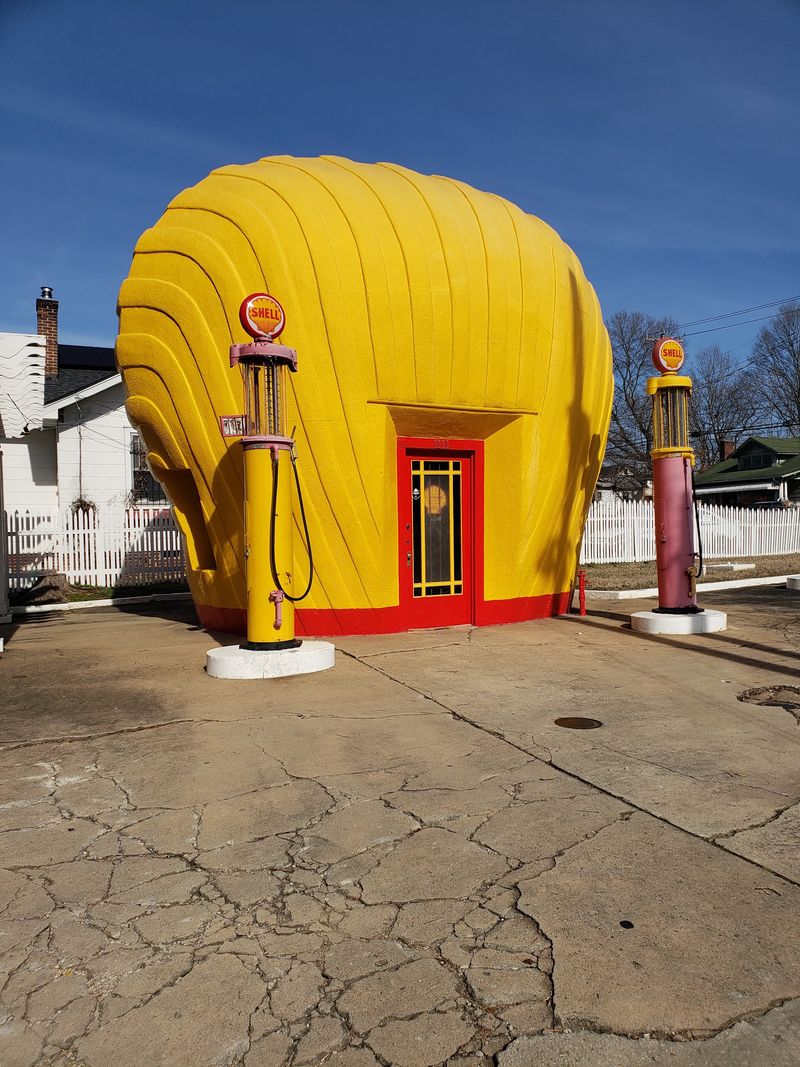
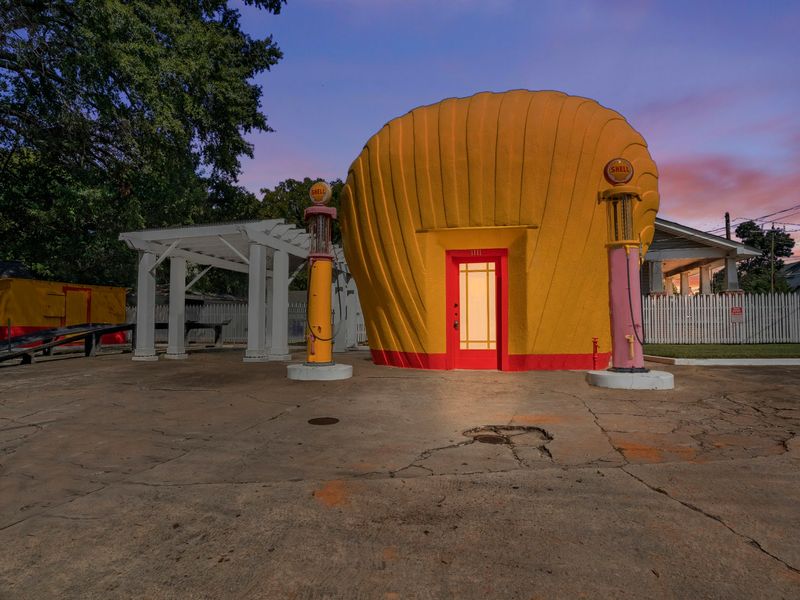
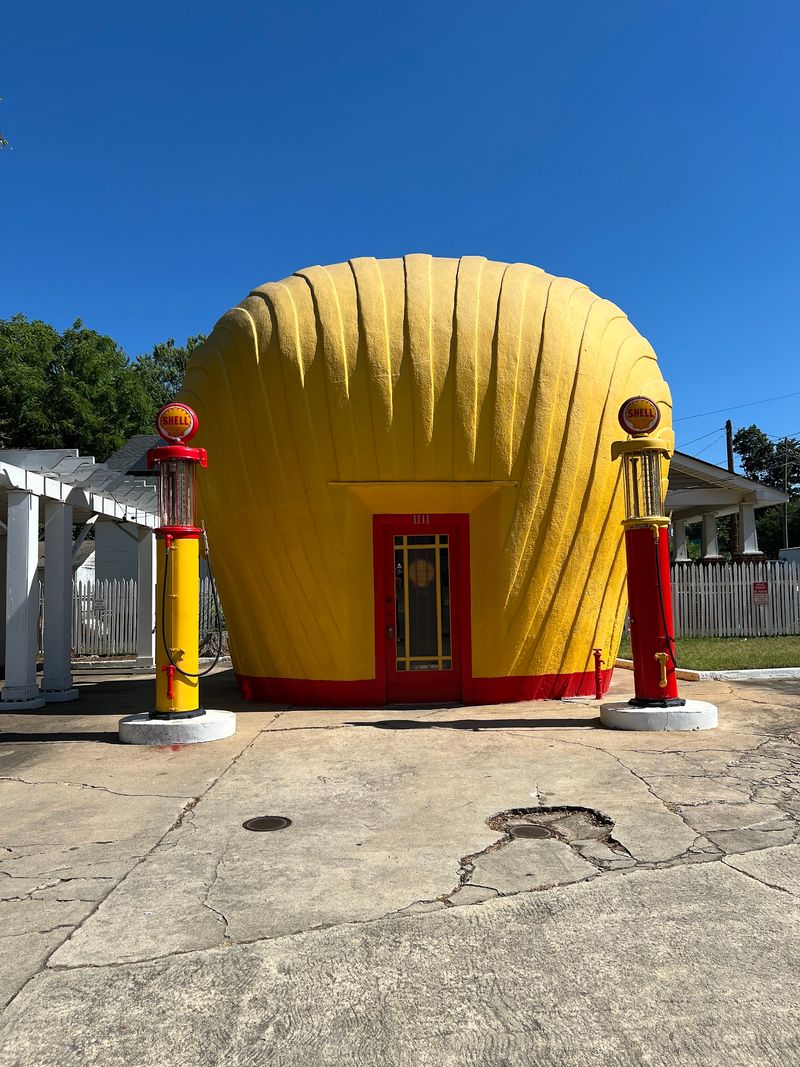
Some buildings blend in, and then there is the Last Shell Oil Clamshell Station. Officially known as the Shell Service Station, it looks exactly like a giant scallop shell plopped onto a city corner.
The ridged shape fans out across the front, just like the real thing you might find on a beach. Bright yellow paint and red trim match the classic Shell brand colors, so the message was never subtle.
That was the whole point back in the 1930s. Drivers were zipping past on new roads, and businesses needed something eye-catching to pull them in.
A shell-shaped station for a company called Shell is a joke that tells itself. It is also a perfect example of novelty architecture, where the building itself becomes the advertisement.
Today, the station no longer pumps fuel, but it still stops traffic in a different way. People pull over just to stare, snap photos, and wonder who dreamed this up.
The good news is that the answer is surprisingly well documented. The story behind this shell involves a clever local company, a patent, and a builder with a creative streak.
That history makes the quirky shape even more fun to appreciate.
Eight Shells Once Dotted The Area, And Only One Made It
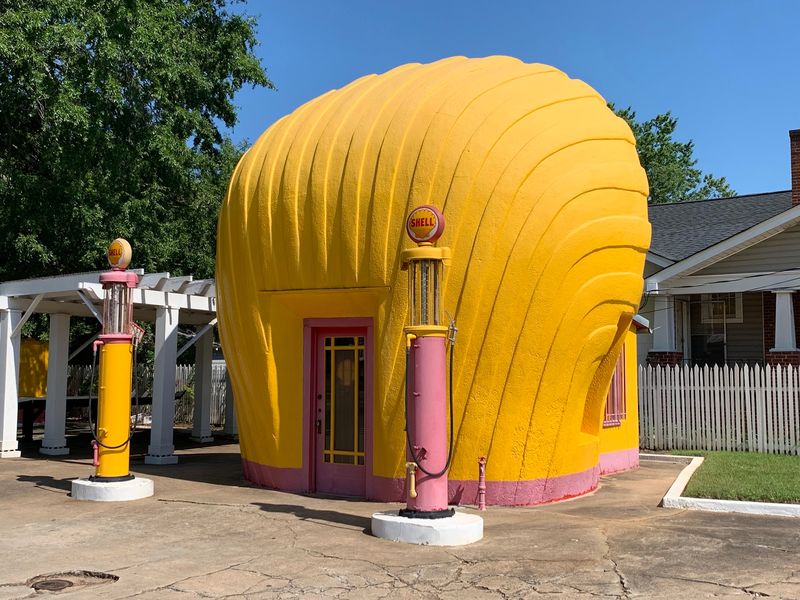
Around 1930, a local Shell distributor called the Quality Oil Company had a bold marketing idea. The company was founded by Joseph Glenn and Bert Bennett, and they wanted the new Shell brand noticed in North Carolina.
Quality Oil commissioned the Frank L. Blum Construction Company to build the unusual stations, turning the Shell company’s familiar logo into full-size roadside architecture.
The design was patented on November 25, 1930, which made the idea officially theirs.
Eight of these clamshell stations popped up in the Winston-Salem area. One of them even stood in nearby Kernersville.
Over the decades, the others disappeared one by one. Roads changed, businesses moved, and quirky little buildings often lost out to newer designs.
That leaves this single survivor on Sprague Street. Calling it the last Shell Oil clamshell station is not a marketing slogan.
It is simply the truth.
Knowing it once had seven siblings makes a visit feel a bit like meeting the last member of a rare species. You are not just seeing an odd building.
You are seeing the final piece of a creative business plan that once spread across an entire city.
The station sits at 1111 E Sprague St, Winston-Salem, NC 27107, at the corner of Sprague and Peachtree Streets.
Concrete, Wire, And Bent Wood Built This Beachy Beauty
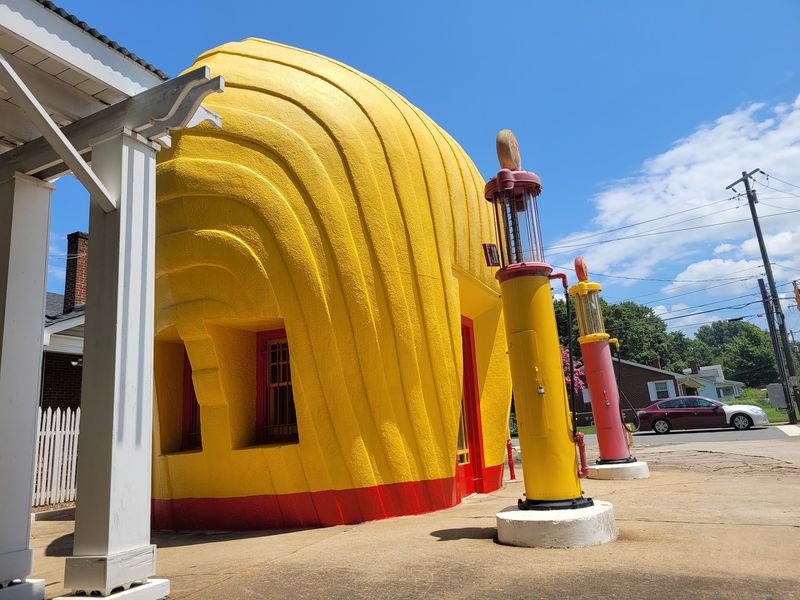
Building a giant shell takes more than a good imagination. The builders used concrete stucco spread over a framework of wire and bent wood.
That method let them create smooth curves and ridges without needing fancy modern tools. The result rises about 18 feet tall, which is roughly the height of a two-story house.
Look closely at the front, and you will spot a central entrance tucked into the shell. Along the sides, deeply recessed windows sit inside the curved walls.
Those details give the building a cozy, cave-like feel from the outside. It looks playful, but it was also a working station where attendants served drivers.
The paint job seals the deal. Bright yellow covers the shell, while red accents echo the familiar Shell logo colors.
On a sunny day, the colors practically glow against the street. Photographers love that contrast, and honestly, so does anyone who enjoys a building with personality.
It is impressive that a structure made of wire, wood, and stucco has lasted since the 1930s. Careful preservation work deserves a lot of the credit for that long life.
Those Vintage Pumps Steal The Show Out Front
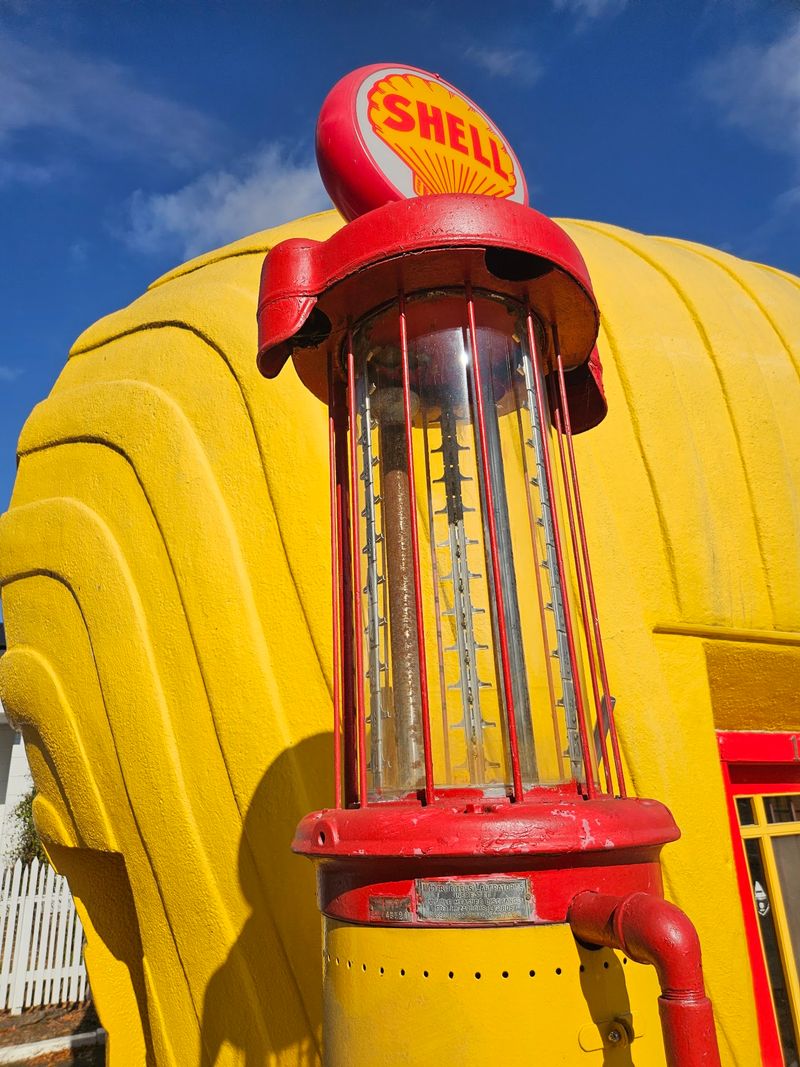
Old-school gas pumps have serious charm. The ones standing outside this station look like they rolled straight out of a classic movie.
These pumps were restored and donated by the Quality Oil Company during preservation work. That same company that built the original stations stepped up decades later to help save the last one.
Replica lamp posts were added too. Together, the pumps and lamps help recreate the feel of a 1930s fill-up stop.
Nearby, you will also notice a wooden, trellised shelter. It was reconstructed to match the original structure that once served as a car wash.
These pieces turn the site into a full scene instead of just a single building. For photos, that matters a lot.
Stand back far enough, and you can capture the shell, the pumps, and the trellis in one frame. Classic car owners have figured this out, and hot rods look right at home here.
Fill-ups are long gone, of course, so do not roll in on an empty tank. Plan your fuel stop elsewhere and save this corner for pictures.
Peek Through The Windows For A Tiny Time Capsule
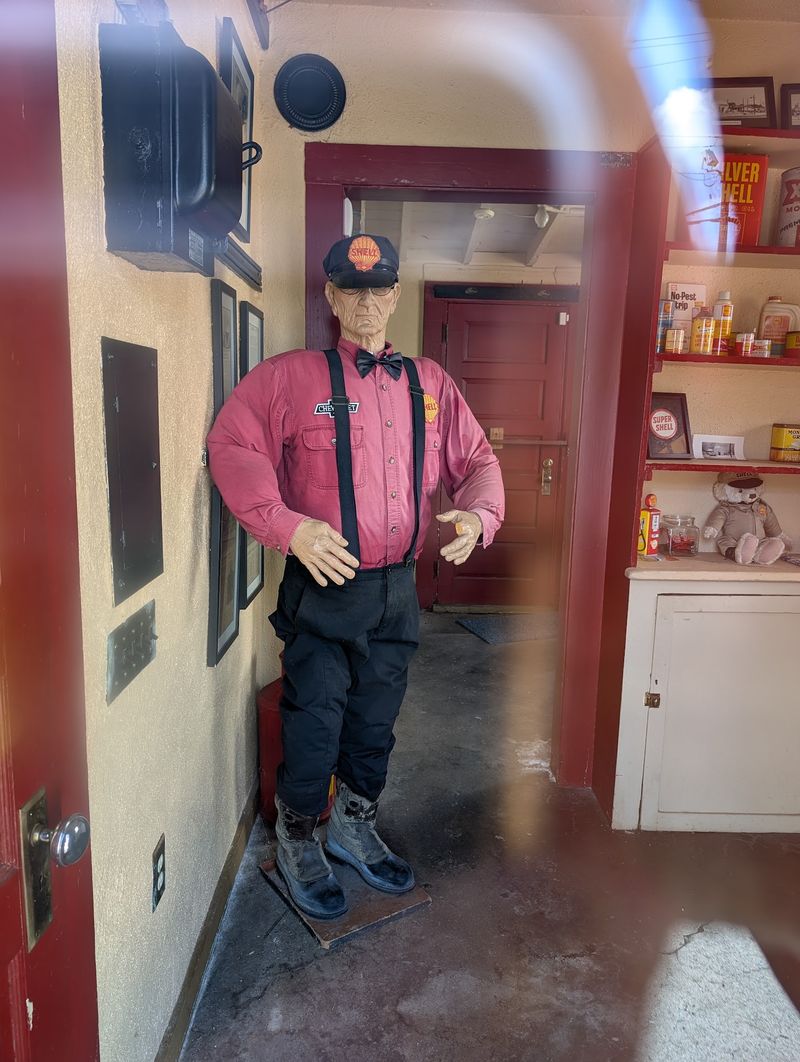
Inside this little shell sits a collection that works like a museum of sorts. You usually cannot walk in, but the windows offer a peek.
The building is privately owned, and public entry generally is not allowed. Still, curious visitors can often look inside from the outside.
Through the glass, you may spot original Shell signs and old oil cans. Historic photographs and newspaper clippings from the station’s working days fill in the story.
A mannequin dressed in attendant style has been spotted through the window too. It might give you a small jump if you are not expecting company.
Bring patience and maybe shade your eyes with your hand. Sunlight on the glass can make the details harder to see.
Remember that the site is watched by 24-hour video surveillance. That protects the building and its treasures, so be respectful and keep your hands to yourself.
Even a quick glance inside adds a lot to the visit. It turns a fun photo stop into a small lesson about how drivers once filled up in North Carolina.
It Earned A National First Back In 1976
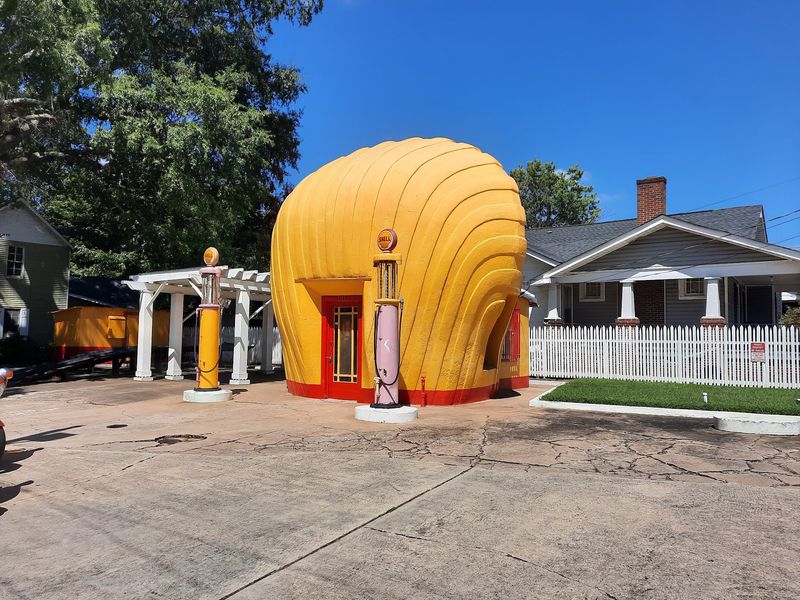
History books do not usually include gas stations. On May 13, 1976, this one made history anyway.
That day, the Last Shell Oil Clamshell Station became the first individual gas station in the United States listed on the National Register of Historic Places. Pretty impressive for a building shaped like beach decor.
The honor recognized more than just a cute design. It showed that roadside architecture tells real stories about how Americans traveled, shopped, and advertised.
Winston-Salem added its own recognition later. On May 2, 1994, the city named it a Local Historic Landmark, number 92 on its list.
Those titles matter because they help protect the building from careless changes. They also remind people that history is not only found in grand mansions and courthouses.
Sometimes it hides in a small, playful structure on a neighborhood corner. This shell proves that everyday places can be worth saving too.
Next time a classmate or friend says gas stations are boring, you have the perfect comeback. One of them beat every other station in the country to a major national honor.
From Lawn Mowers To Loving Restoration
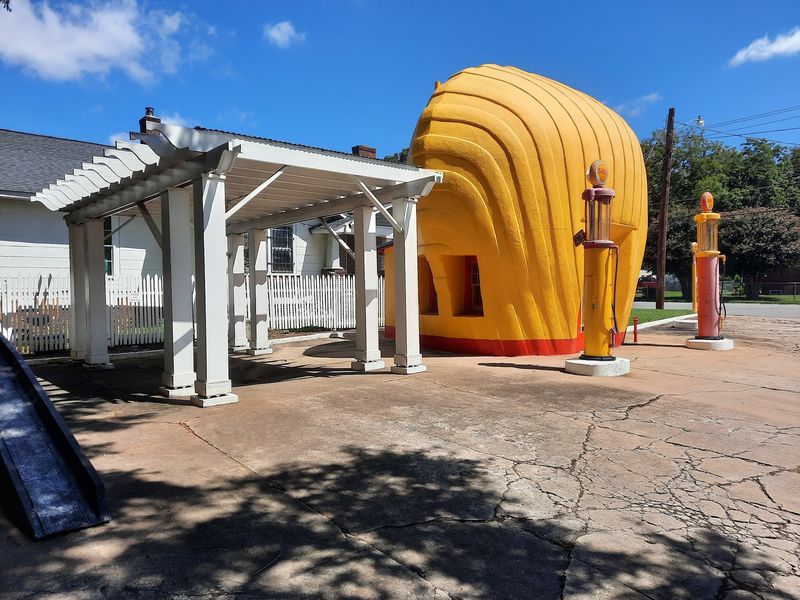
Fuel stopped flowing here in the 1950s. Most buildings would have faded away after that, but this shell found a new job.
During the 1970s and 1980s, it worked as a lawn mower repair shop. Picture grass clippings and engine parts inside a giant seashell, and you get the idea.
Preservation North Carolina eventually stepped in to save the historic station. After earlier preservation efforts and fundraising, the building underwent a major restoration in the 1990s, bringing its distinctive shell shape and original character back to life.
The group repaired the shell, and the wooden car wash trellis was rebuilt. Quality Oil Company added the restored pumps and replica lamps.
Preservation North Carolina even kept a regional office inside the building until 2011. Imagine telling people your workplace was a historic seashell.
The organization still holds protective covenants on the property. Those rules help guard the landmark against demolition or major changes.
Regular maintenance keeps the bright paint and curves looking sharp. It is a great example of how teamwork between a nonprofit and a local business can rescue something special.
Without that effort, the last shell might have gone the way of the other seven.
Plan A Quick, Smart Photo Stop On Sprague Street
Finding this landmark is easy once you know where to point the car.
The area is a quiet, older neighborhood rather than a busy tourist strip. That means you should drive slowly and keep an eye out for the yellow shell.
Parking space is limited right at the site. If another car is already there, be ready to wait a moment or park thoughtfully nearby.
Most visits are short and sweet. Plan for a quick photo session, a look at the pumps, and a peek through the windows.
Morning or late afternoon light tends to make bright colors pop in pictures. Try a wide shot first, then move closer for the ridges and details.
Since it is privately owned and monitored, stay on respectful ground and do not climb anything. Neighbors live close by, so keep noise down.
Charge your phone before arriving. You will probably take more pictures of a seashell than you ever expected to take in one afternoon.
Every North Carolina Road Trip Deserves This Weird Little Detour
Road trips are better with a few silly surprises. A giant seashell gas station in the middle of the Piedmont definitely qualifies.
The Last Shell Oil Clamshell Station is a famous American roadside attraction for good reason. It packs creativity, business history, and preservation into one small, bright package.
Kids usually get a kick out of the shape right away. Adults tend to enjoy the backstory about eight stations and one survivor.
History fans get something extra too. The national first in 1976 gives this stop bragging rights most landmarks can only dream about.
Classic car lovers have their own reason to swing by. Parking a vintage ride near those pumps creates a photo that feels like it belongs in an old magazine.
This corner also shows how North Carolina values quirky pieces of its past. Not every state kept its oddball buildings standing this carefully.
So the next time you pass through Winston-Salem, carve out a few minutes. You will leave with great photos, a fun story, and a new favorite answer to the question about the strangest gas station you have ever seen.