This Easy Idaho Trail Stays Nearly Flat For 5 Miles And Ends At A Canyon Waterfall
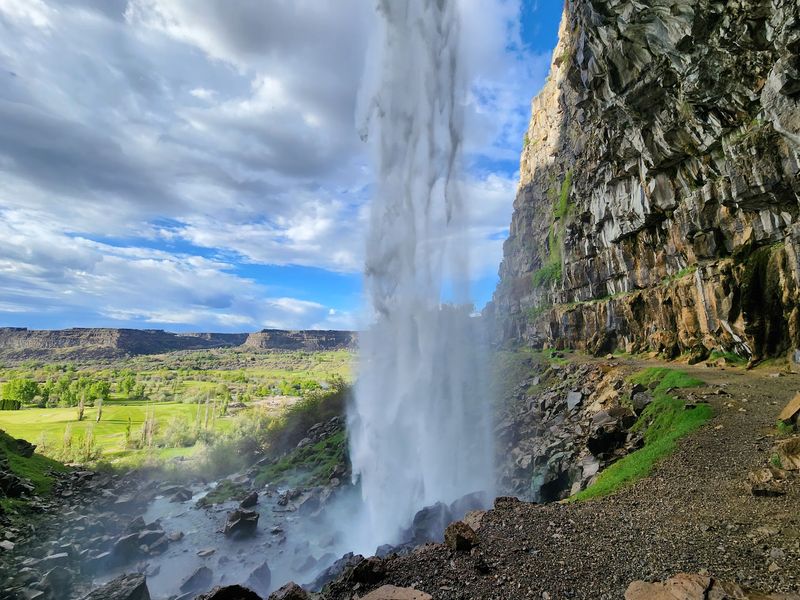
A waterfall drops off a canyon wall here, and you can walk right behind it.
The water keeps falling all year because an aquifer feeds it, not the river below.
That detail alone makes this Idaho spot different from most falls in the region. Many cascades shrink by late summer.
This one keeps going, mist and all.
Getting there can be easy, too.
A paved rim path runs nearly flat along the canyon edge, with big views the whole way. Strollers, bikes, and wheelchairs can handle it.
I like how the reward comes at the end of an easy walk instead of a brutal climb. I believe that’s why families and casual walkers keep it on their list.
So what does it feel like to stand behind a curtain of falling water?
A Waterfall That Lets You Slip Behind It
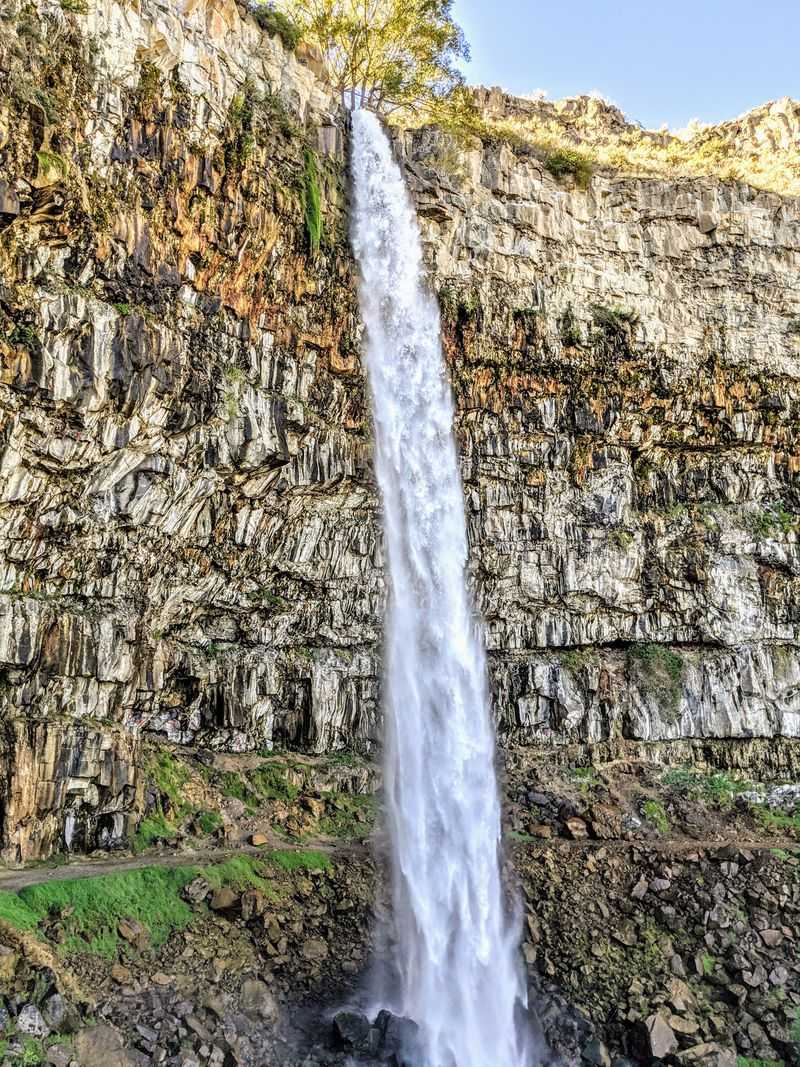
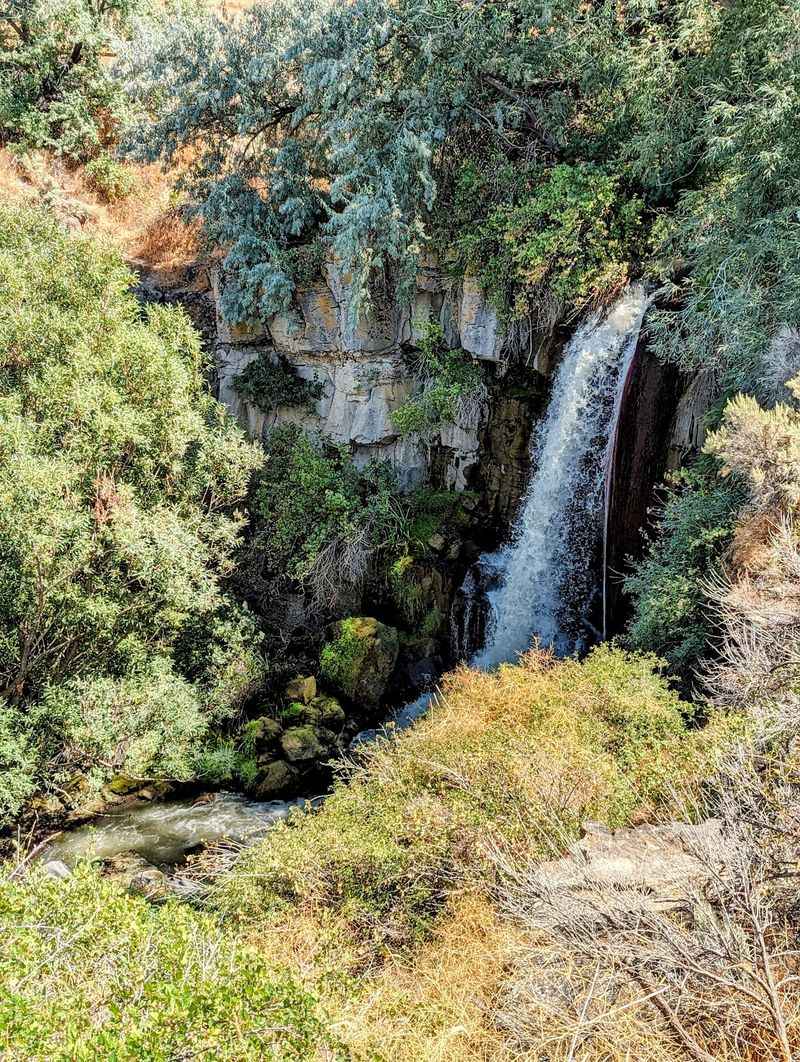
Perrine Coulee Falls sits on the north side of the Snake River Canyon near Twin Falls, Idaho. It spills from the canyon rim and drops roughly 200 feet into a rocky alcove below.
The best part hides at the bottom. A short, rocky path leads right behind the curtain of water, where you can look back out at the canyon.
Walking behind the falls is the experience people bring up most. Few waterfalls make it this easy to get a view from the inside.
The setting adds plenty of drama on its own. Dark basalt walls frame the falls, and the Snake River runs far below the overlook.
It also pairs neatly with a paved rim trail that stays almost flat. That combination is rare for a waterfall with this much height.
Think of it as a two-part outing. First comes the easy stroll along the rim, with wide canyon views the whole way.
Then comes the payoff, a cool spray and a rocky ledge tucked behind falling water. Not a bad trade for a gentle walk, right?
Why The Water Never Takes A Summer Break
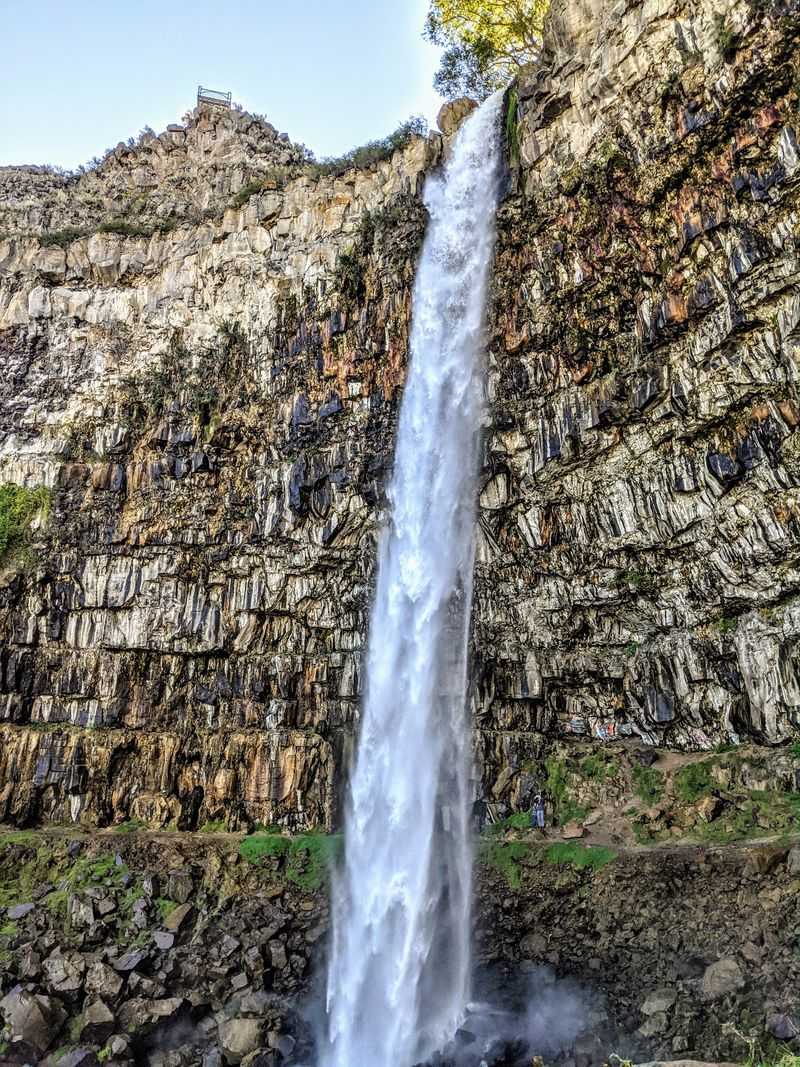
Plenty of Idaho waterfalls run big in spring and fade by August. Perrine Coulee Falls keeps flowing year-round, which changes your planning completely.
An aquifer feeds this waterfall instead of the Snake River itself. That steady source keeps the water moving even when other falls in the region shrink.
So timing matters less here than at bigger neighbors. You don’t need to chase a narrow spring window to see a real flow.
That reliability makes it a handy backup plan, too. If another waterfall looks thin on your visit, this one is still pouring off the rim.
The flow also shapes the mood around the base. Mist drifts off the rocks, and the alcove feels cooler than the open rim above.
On a hot Magic Valley afternoon, that cool air feels like a small gift. Many visitors stop here specifically to cool down after a long day of sightseeing.
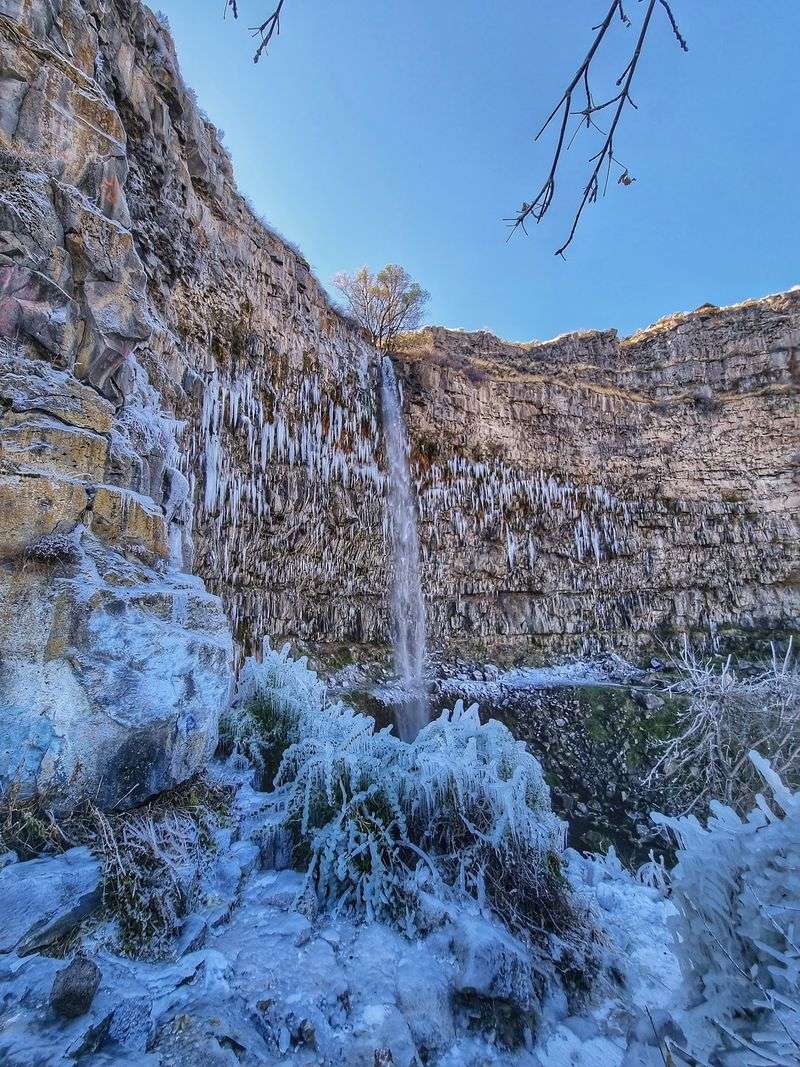
Fall and winter bring their own look. The water keeps falling while the canyon colors shift around it, so every season offers something different.
The Rim Path Built For Easy Miles
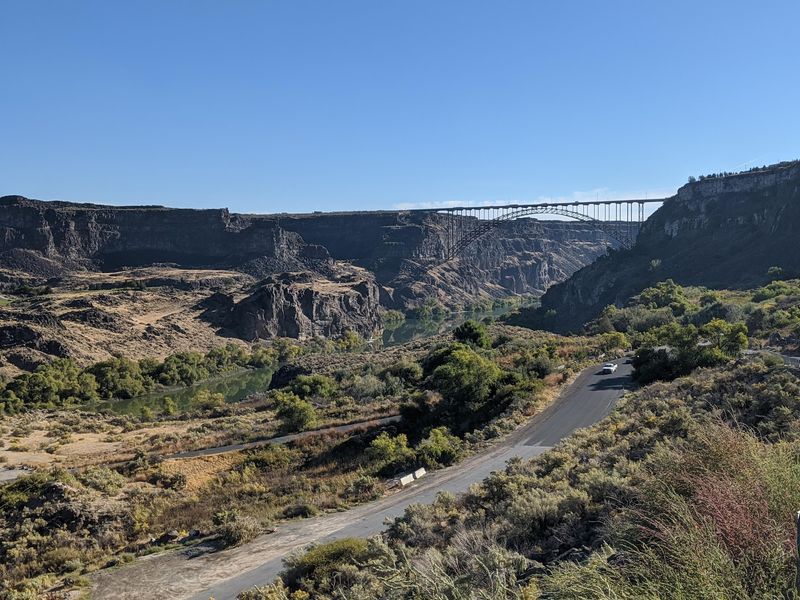
Paved, wide, and almost perfectly flat, the Snake River Canyon Rim Trail does the heavy lifting for this outing. It stretches more than 10 miles along the south rim of the canyon in Twin Falls.
That surface opens the door for nearly everyone. Walkers, cyclists, rollerbladers, strollers, and wheelchairs can all use it.
You can pick a five-mile chunk and barely notice any climbing. The canyon does all the dramatic work while your legs stay comfortable.
The views stay constant, which is the real treat. Deep canyon walls, the river far below, and open sky follow you the entire way.
Multiple entry points make it easy to shape your own route. Short loop, long out-and-back, or a ride on rented wheels all work.
Some people walk the rim to soak in the canyon. Others treat it as the scenic warm-up before heading to the falls themselves.
Either way, it’s hard to find a gentler path with this kind of scenery in Idaho. Comfortable shoes and water are really all you need.
Bridge Views That Steal The Show
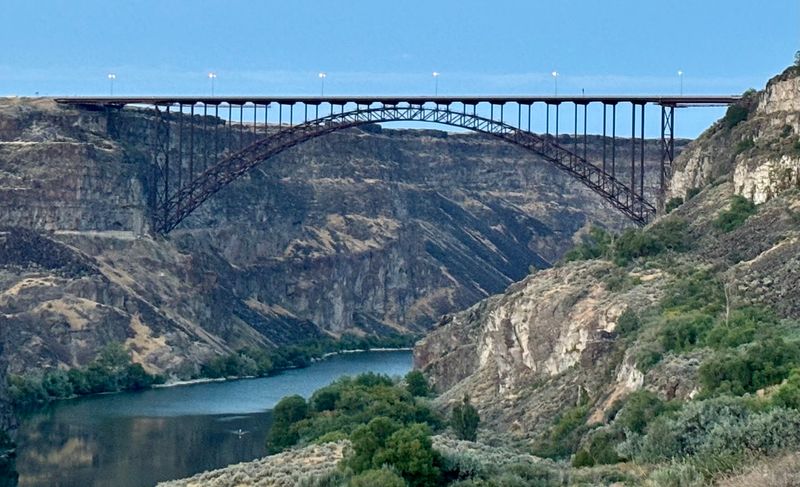
Stretching 1,500 feet across the gorge, the Perrine Bridge anchors nearly every view along the rim. It’s hard to keep your camera pointed anywhere else.
The bridge carries US-93 over the Snake River Canyon. From the trail, you see its full length and the long drop beneath it.
Near the falls, the bridge pops into view again. Walk down from the waterfall area and you’ll catch great angles of the span above the canyon.
That pairing gives photographers two subjects in one stop. Waterfall shots in one direction, bridge shots in another.
Bridge views come up again and again with people who visit the falls. It’s the kind of backdrop that makes even a quick phone photo look planned.
The scale is what surprises most first-timers. Standing on the rim, the span looks almost delicate against the massive canyon walls.
Early or late light adds even more depth to the scene. Shadows stretch across the basalt, and the bridge seems to float over the river.
History And Extra Falls Along The Route
Evel Knievel once tried to jump the Snake River Canyon, and the rim trail passes his jump site. Historical markers point out the spot, so you can stand near a famous piece of daredevil history.
It’s a fun detour that fits the canyon’s thrill-seeking reputation. Between the jump site and the BASE jumpers, this stretch of Idaho clearly attracts bold ideas.
Waterfall fans get bonus scenery, too. The route offers views of Pillar Falls, a set of rocky formations in the river below.
From up top near Perrine Coulee Falls, you can spot several other waterfalls along the canyon walls. One trip, many cascades.
These extras turn a simple walk into a small tour. Every mile seems to hand you something new to point at.
Families can turn it into a scavenger hunt. Find the bridge, the jump site, the river formations, and finally the big waterfall.
It all keeps the pace lively without adding effort. The trail stays easy, but your list of sights keeps growing.
Mist, Rock, And A Cool Pocket Of Air
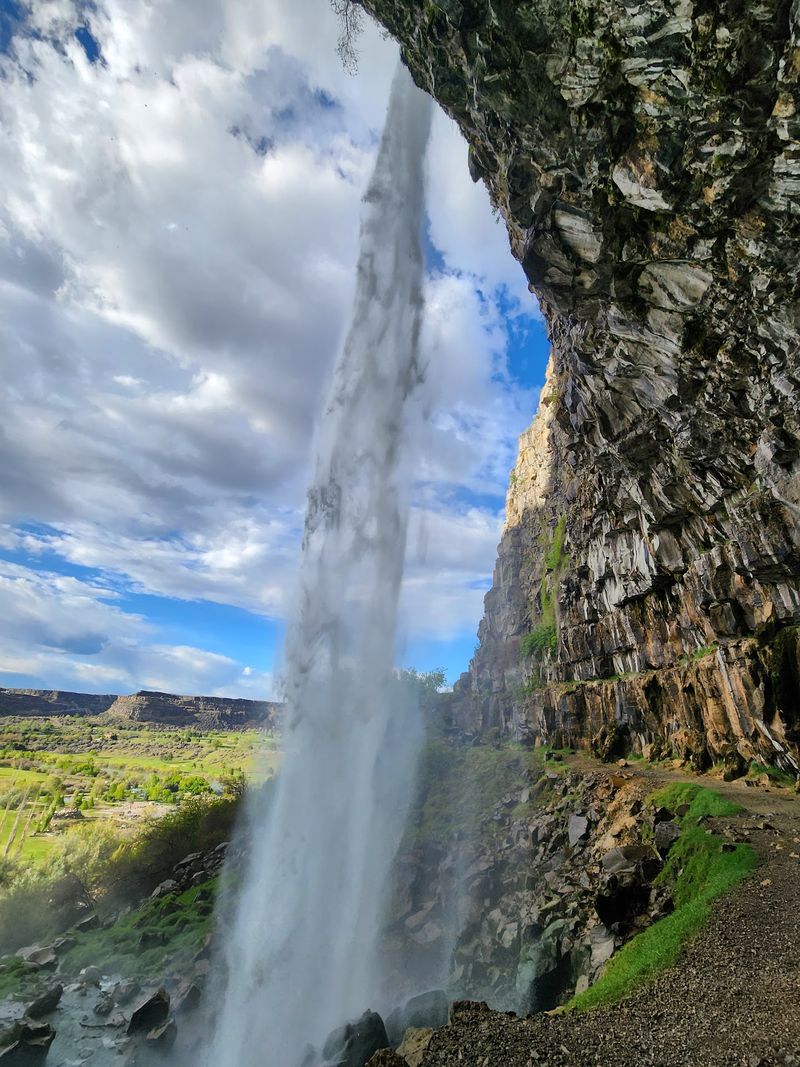
Step behind the falls and the temperature seems to drop. Mist drifts off the rocks and lands softly on your skin.
On a hot summer day, that spray feels wonderful. Visitors often describe it as the perfect way to cool down after sightseeing.
You won’t get soaked in most conditions. A rain jacket helps, but plenty of people walk through without one.
The alcove also sits in a sheltered spot. Even on windy days, the area behind the falls feels protected from the gusts.
There’s room to move and take photos from different angles. Looking out through the water at the canyon is the shot nearly everyone wants.
The rocks underfoot stay wet, so watch your step. Shoes with decent grip make the experience far more relaxing.
It’s a calm, almost quiet moment despite the rushing water. Few places in southern Idaho let you feel this close to a waterfall without wading in.
Take a minute and just stand there. The view from behind is the whole reason you came.
A Quieter Rival To Shoshone Falls
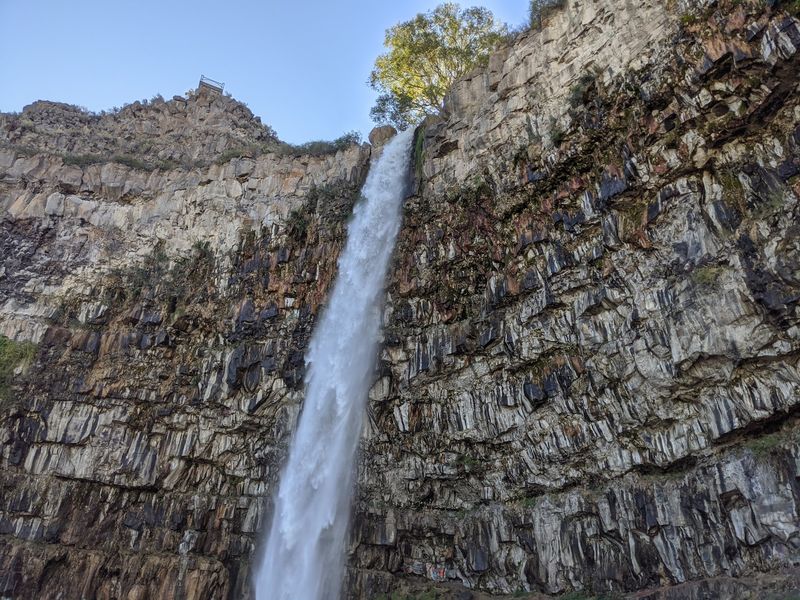
Shoshone Falls gets most of the attention in Twin Falls. Perrine Coulee Falls offers a different kind of experience just across town.
Shoshone is the big, famous drop with a full park setup. Perrine Coulee is smaller, more casual, and lets you get right up close.
Plenty of visitors say they enjoyed this one even more. Walking behind the water is a big reason why.
It also isn’t an official tourist destination with a gate or big facilities. That gives the stop a more relaxed, roadside feel.
Crowds tend to be light compared to the main attraction. Some people arrive to find only a few others around.
Of course, there’s no need to pick just one. Seeing both in a single day makes a solid Magic Valley waterfall tour.
Shoshone delivers the scale, and Perrine Coulee delivers the closeness. Together they show two sides of the same canyon.
Which one wins? That debate might be the most fun part of the trip.
Starting Points And Rentals In Twin Falls
Most rim walks begin at the Twin Falls Visitor Center, 2015 Nielsen Point Place, Twin Falls, Idaho 83301. It sits right on the canyon edge with the Perrine Bridge in view.
Bike rentals are available there, which makes covering five miles even easier. Rolling along the rim feels like a breeze on a flat path.
Restrooms at the visitor center are a nice bonus before you set out. You’ll also find them at Shoshone Falls Park and Centennial Waterfront Park.
Centennial Waterfront Park is another popular hub down in the canyon. It offers seasonal kayak and paddleboard rentals, zip-lining, and picnic areas.
That makes it easy to build a full day around the falls. Walk the rim, see the waterfall, then paddle the river below.
Picnic spots there come with big canyon and bridge views. Packing lunch is an easy win.
Rental options can change with the seasons. Check ahead before driving if a kayak or bike is part of your plan.
Finding The Trailhead Without Getting Lost
Directions trip up more people than the trail does. Typing only the waterfall’s name into a map app can send you to the wrong overlook.
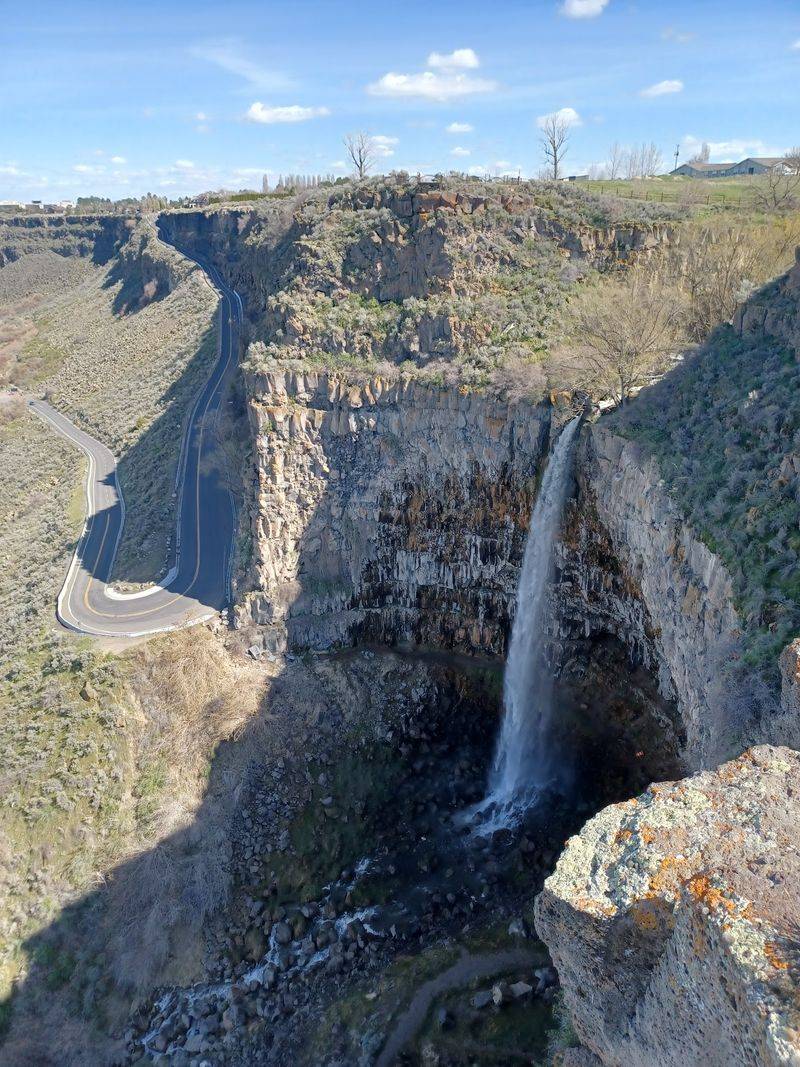
Instead, head north on US-93 from Twin Falls and cross the Perrine Bridge. Then turn right onto Canyon Springs Road toward Centennial Waterfront Park.
The road drops into the canyon at a steep 10 percent grade. The falls sit near the first switchback.
A small pullout on that hairpin turn marks the short path behind the falls. It fits only about four or five cars.
Parking sits along the right side when heading uphill. If you’re driving down, continue to a spot where you can turn around safely.
Pay attention to posted signs, since some areas don’t allow parking. Extra spaces are available farther down at Centennial Waterfront Park.
Parking along the road is free. A little patience helps when the pullout is full.
Looking up the trail itself, not just the falls, saves plenty of confusion. A quick map check goes a long way.