This Kentucky Park Tells The Story Of Thousands Of Men Who Walked Here To Claim Their Freedom
More than 10,000 African American men enlisted at one Union Army camp in central Kentucky. Many of them arrived after escaping slavery, walking toward a uniform and a future.
Women and children came too. By July 1865, the refugee population at the camp had climbed to 3,060 people.
I can’t imagine the courage it took to make that walk. I admire how the land still holds the story, with old earthworks and fortifications you can see in rolling Bluegrass fields.
Today, the site is quiet, free, and open for anyone curious enough to explore it. Rangers share the history, trails lead across the pastures, and the barracks tell soldiers’ stories by name.
Why do so few people know about it?
Thousands Of Freedom Seekers Changed History On This Ground
Camp Nelson National Monument sits on ground where ordinary people made extraordinary choices. The Union Army set up the camp in April 1863 in central Kentucky.
At first, it served as a fortified supply depot, a forward operating base, and a hospital. Then it became something much bigger.
It grew into one of the largest recruitment and training centers for United States Colored Troops in the nation.
More than 10,000 African American men enlisted here. That made it the largest USCT recruitment center in Kentucky and the third largest in the country.
Many of those men had escaped slavery to get here. Signing up meant risk, but it also meant a real shot at freedom.
Their families followed, and that’s where the story gets even more powerful. Wives and children arrived seeking safety, though at first they weren’t eligible for emancipation.
Events here helped push Congress to act. On March 3, 1865, a new law freed the wives and children of USCT soldiers.
Knowing that before you visit changes everything. Those quiet fields stop looking like simple farmland. They start looking like a doorway thousands of people bravely walked through.
Finding the place is simple. Camp Nelson National Monument is at 6614 Danville Road, Nicholasville, Kentucky, in Jessamine County.
Start Your Visit With A Short Film That Sets The Scene
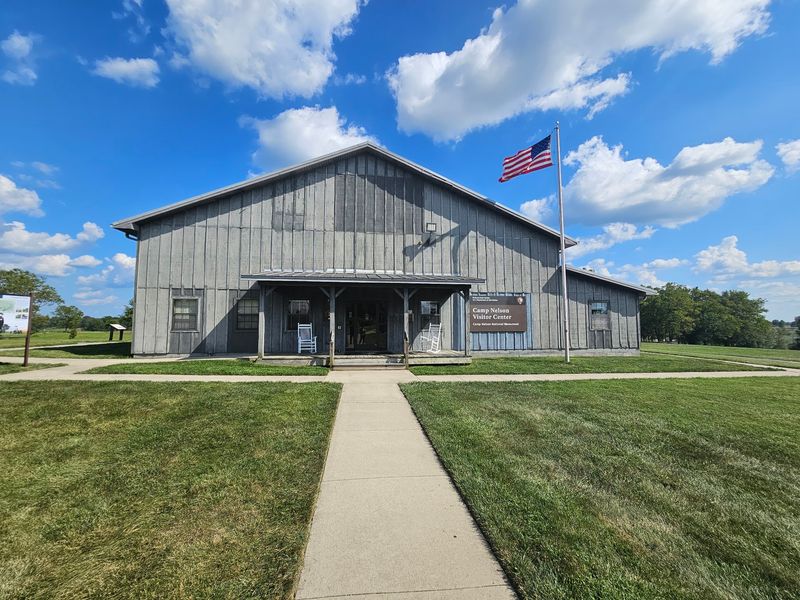
Seventeen minutes. That’s all the orientation film takes, and it’s a smart way to begin.
The Visitor Center and Museum give you the big picture before you head outside. New exhibits were recently designed and installed, so the displays feel fresh.
They walk you through the camp’s role in the Civil War and the people who passed through.
Plan your timing carefully, though. The Visitor Center, Museum, and Reconstructed Barracks open Wednesday through Sunday from 9 a.m. to 5 p.m.
Show up on a Monday or Tuesday, and you’ll find those doors closed. The grounds and trails stay open daily from sunrise to sunset, so the outdoor part still works.
A bookstore inside offers keepsakes to remember the trip. It’s a nice spot to grab something for a history-loving friend.
The Visitor Center also has paved sidewalks and handicap parking. That makes the indoor part of the visit easier for many guests.
Watch the film first, then explore. The fields outside will make a lot more sense once you know what happened on them.
The Barracks Put Real Names And Faces On The Story
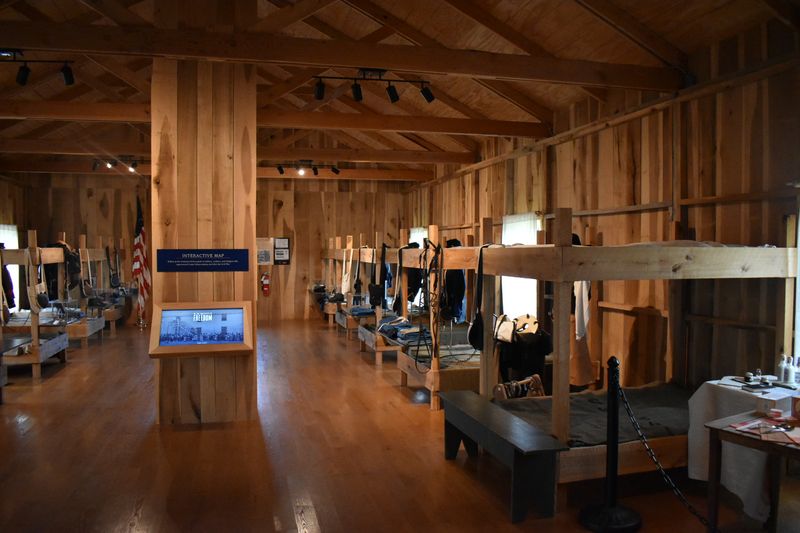
History hits harder when it has a name attached. The Reconstructed US Army Barracks, right next to the Visitor Center, makes that happen.
Exhibits inside focus on the military service and experiences of the United States Colored Troops. You’ll find biographies of individual soldiers.
Suddenly, a huge number like 10,000 turns into real people with real stories.
Two more exhibits live in the building. One covers the Underground Railroad Network to Freedom, a program that includes this site.
The other is called In the Footsteps of Freedom. It includes an interactive touchscreen and a genealogy workstation.
That genealogy station deserves extra attention. Families researching their roots might find it especially meaningful.
Even if you aren’t searching for an ancestor, it shows how these records still matter today.
The building itself is a reconstruction, not an original structure. Still, it helps you picture daily life for the men who trained here.
Give yourself time in this space. Reading even a few soldier biographies makes the walk across the fields afterward feel much more personal.
Lace Up For Five Miles Of Trails Across Rolling Bluegrass
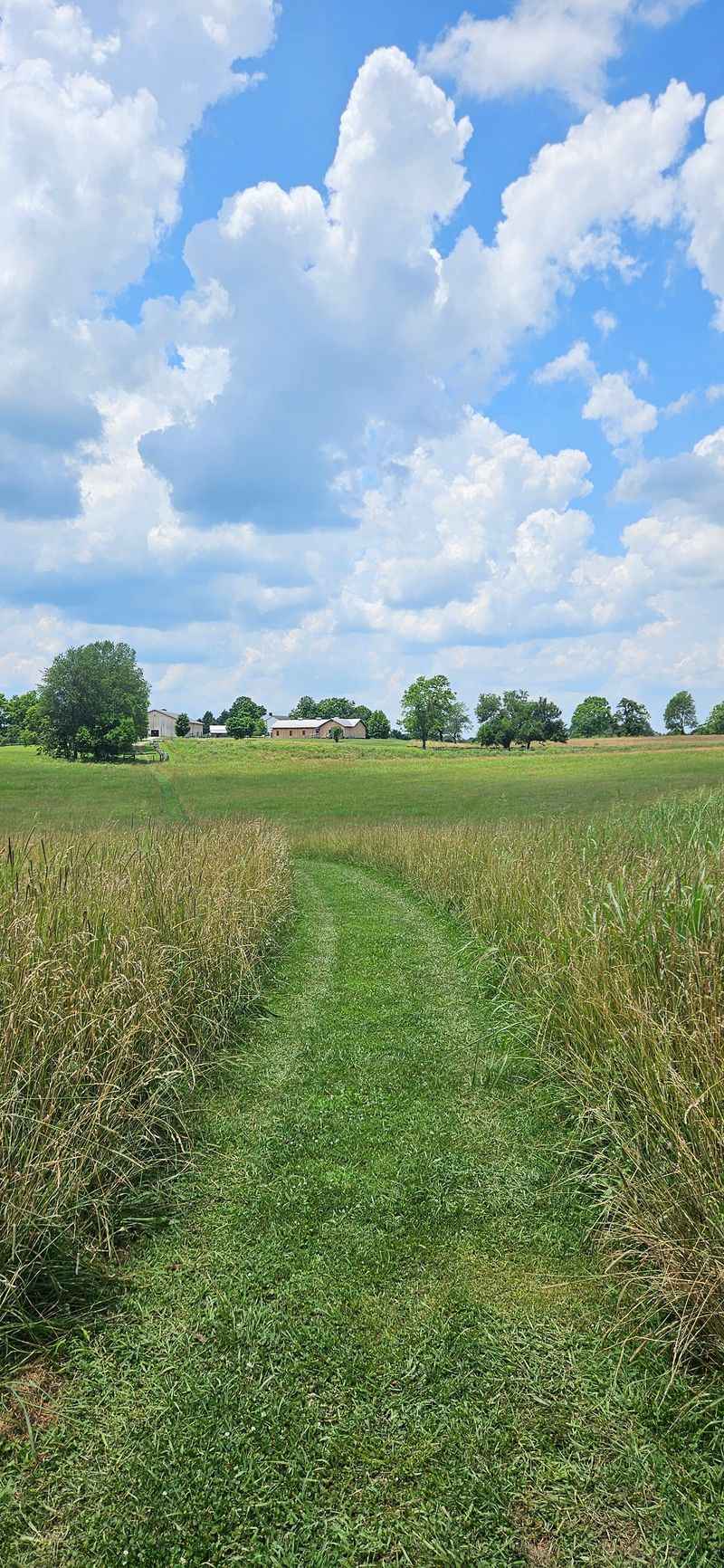
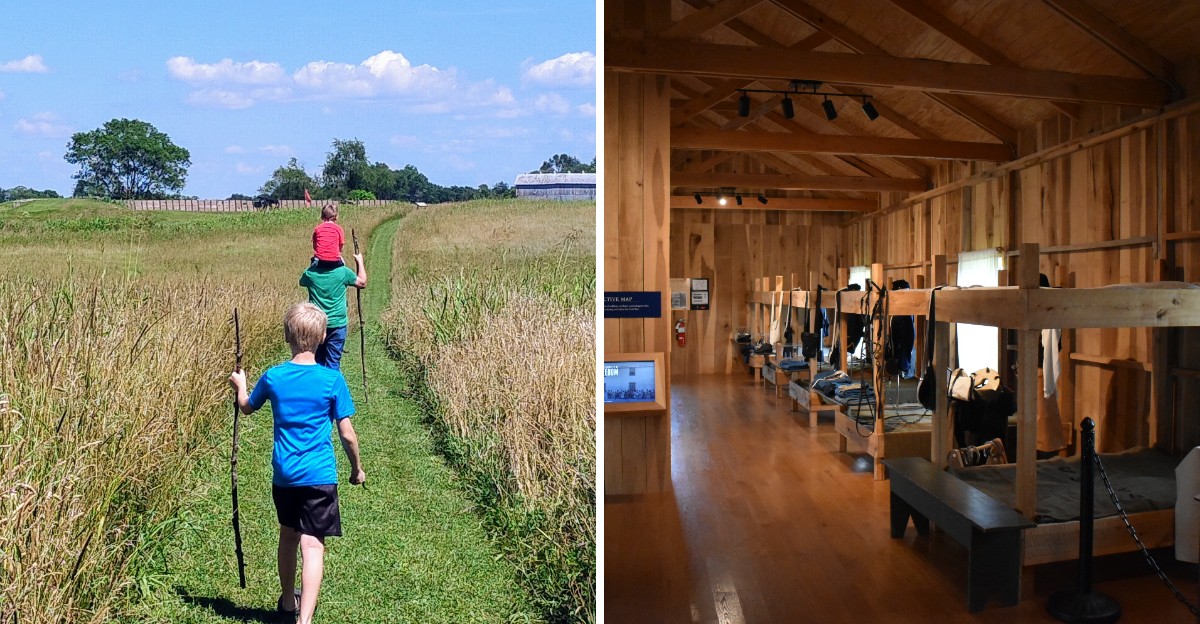
Good shoes are your best friend here. More than five miles of walking and hiking trails wind across the rolling pastoral landscape.
Camp Nelson National Monument shows off the classic look of Kentucky’s Bluegrass region. Wide fields roll toward the horizon.
Interpretive markers along the way explain what once stood or happened at each spot.
Many of the trails are considered easy. Some areas might be challenging for wheelchair users, so plan with that in mind.
Want a guide in your ear? An optional self-guided audio tour lets you learn while you walk.
Much of the route crosses open ground. On sunny days, a hat and water are smart choices, and an earlier or later walk helps.
The trails stay open daily from sunrise to sunset. That means you can stroll even when the indoor exhibits are closed.
Walking these paths feels different once you know the history. Thousands of people crossed this land hoping for freedom.
Following their footsteps, even loosely, gives the visit real weight.
Look Closely And The Old Forts Still Rise From The Fields
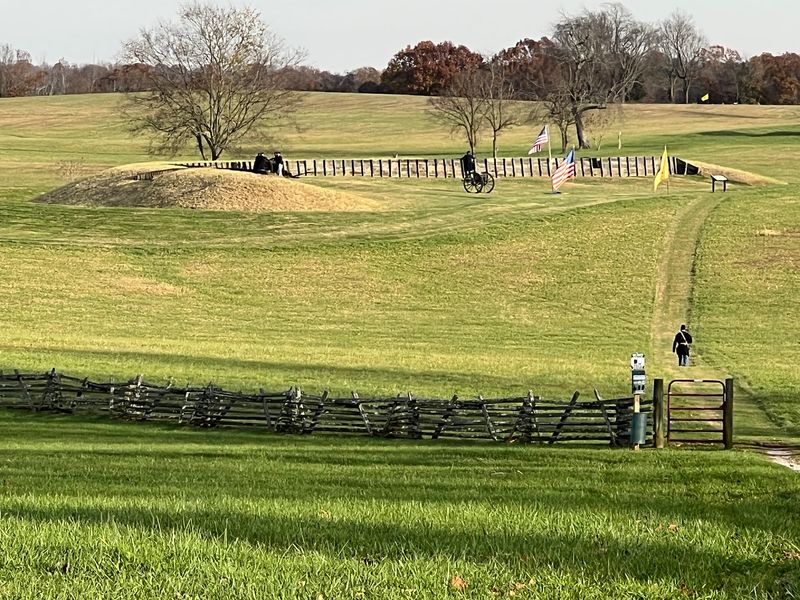
Those grassy bumps aren’t random. They’re Civil War earthworks, fortifications, and entrenchments that still shape the land today.
Camp Nelson National Monument preserves one of the best-preserved landscapes tied to USCT recruitment camps. It’s also an important archaeological site connected to the African American refugee experience.
The original camp covered more than 4,000 acres. Today, the monument protects several hundred acres of that property, and much of it remains relatively undisturbed.
That’s rare. Plenty of historic sites have been paved over or built on, but this one still holds its shape.
The trails lead right past these features. Markers help you understand how the forts protected the camp and its supplies.
Kids might see little more than hills at first. Ask them to picture soldiers digging these by hand, and the mounds start to look impressive fast.
Take a moment to stand on high ground and look around. The view helps explain why the Union Army chose this spot in Kentucky for a fortified depot in the first place.
Keep An Eye On The Only Building That Survived The Era
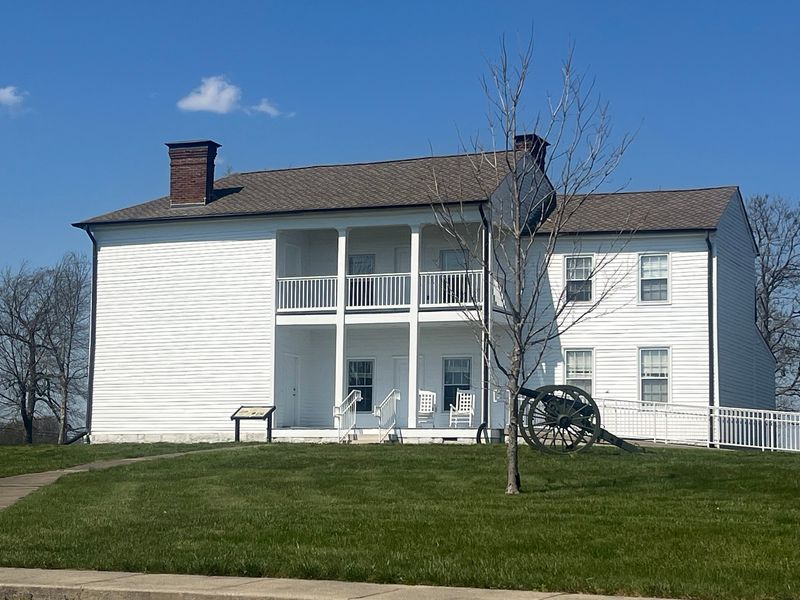
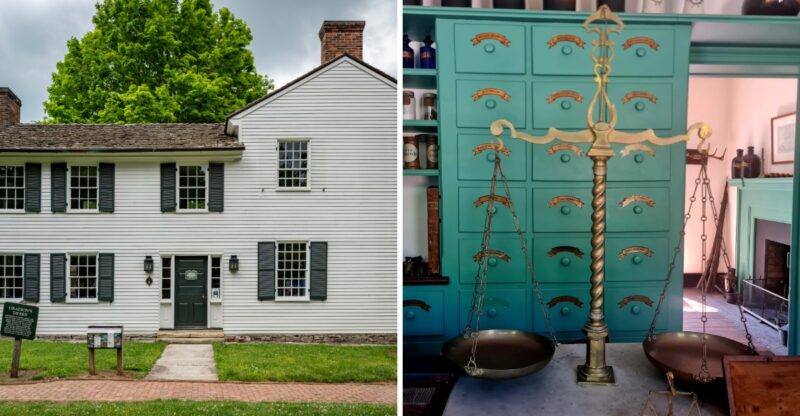
Built around 1855, the Oliver Perry House is the only original Civil War-era building left on the site. Many people call it the White House.
During the war, the U.S. Army used it as officers’ quarters.
That gives it a direct link to the people who ran the camp.
Right now, the house is undergoing renovation and is closed to the public. So don’t plan your trip around a tour inside.
You can still appreciate it from the grounds. Seeing a real structure from the 1850s helps anchor the whole landscape in time.
Everything else on the property, from the barracks to the trail markers, helps tell the story. This house actually lived through it.
When it reopens, it should be a highlight of any visit. The house is listed among the accessible buildings, with paved sidewalks and handicap parking.
For now, consider it a reason to come back. Some places reward a second trip, and this one has a pretty good excuse built right in.
A Community Built On Hope Still Has A Church Standing
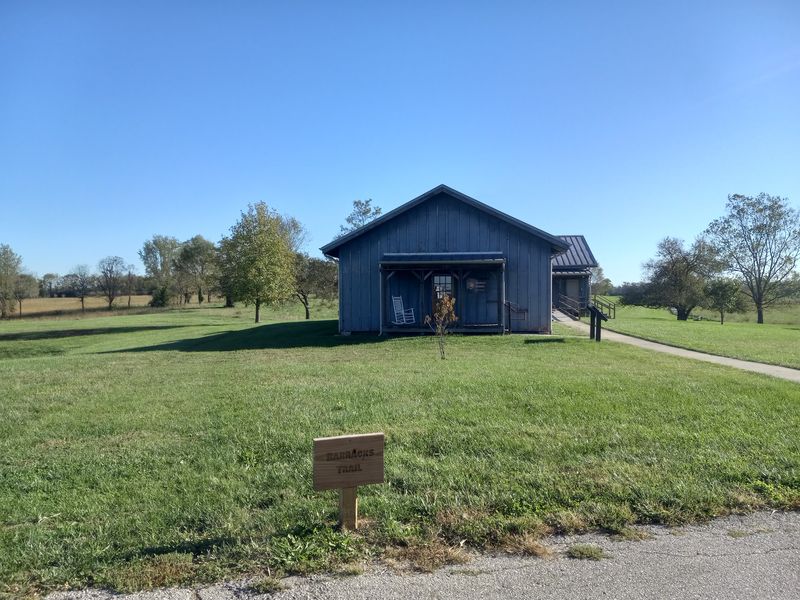
Freedom was only the first step. After the war, formerly enslaved people had to build new lives, and the Hall community grew from that effort.
The community formed as these residents made the move toward full citizenship. It’s a part of the story that often gets skipped in history books.
The Reverend John G. Fee Memorial Church stands on this parcel.
It was built around 1910 and served the congregation of these families and their descendants.
Think about what that means. Generations gathered in this church, carrying forward the hope that first brought their ancestors here.
It adds a powerful layer to the monument. Camp Nelson wasn’t just a place people passed through during a crisis.
It became home for many who stayed and built something lasting.
Visiting this part of the site rounds out the story nicely. You see the escape, the service, the fight for family freedom, and then the community that followed.
That full arc makes Camp Nelson feel less like a single chapter. It reads more like a whole book about courage and new beginnings.
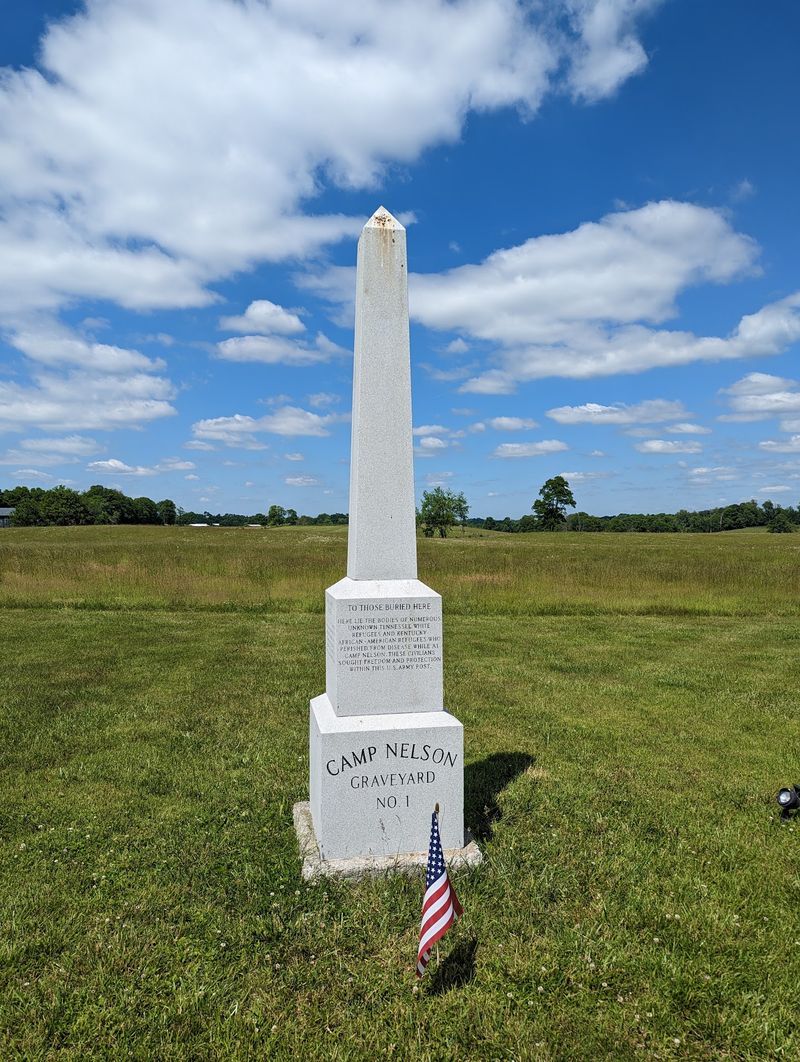
Rows Of White Stones Offer A Quiet Place To Reflect
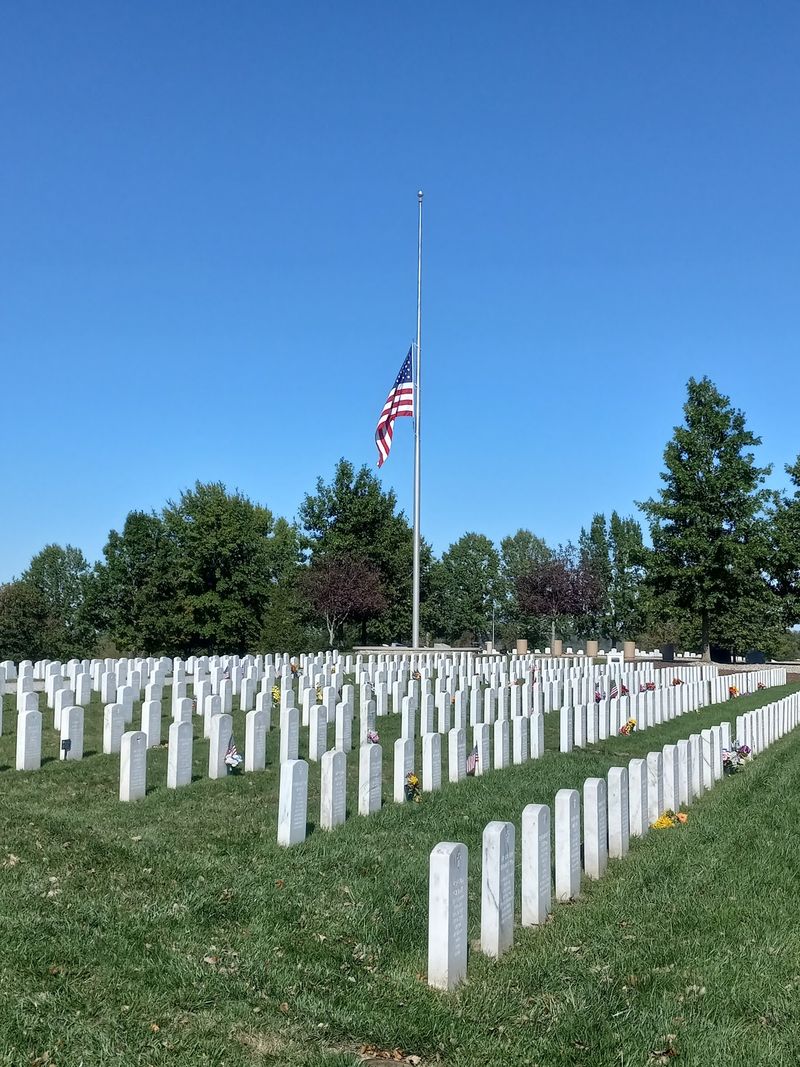
Just next door sits Camp Nelson National Cemetery. It’s open daily from dawn to dusk.
The cemetery holds the graves of people who passed away at Camp Nelson. It also includes more than 2,000 remains brought in from other Kentucky locations after the war.
Neat rows of headstones stretch across the grounds. The scene feels calm and respectful, and it gives the visit a thoughtful pause.
Many visitors pair the monument and the cemetery on the same trip. Both sit along the same stretch of road, so it’s an easy add.
Bring a little quiet with you here. Kids can learn a lot, too, especially after seeing the soldier biographies in the barracks.
Honoring service is part of what this whole area is about. The cemetery makes that idea visible in a simple and moving way.
Don’t rush through this stop. Even ten slow minutes walking among the rows can tie the entire day together.
It’s a gentle reminder that the history here belongs to real families.
Junior Rangers And Easy Directions Make Planning A Breeze
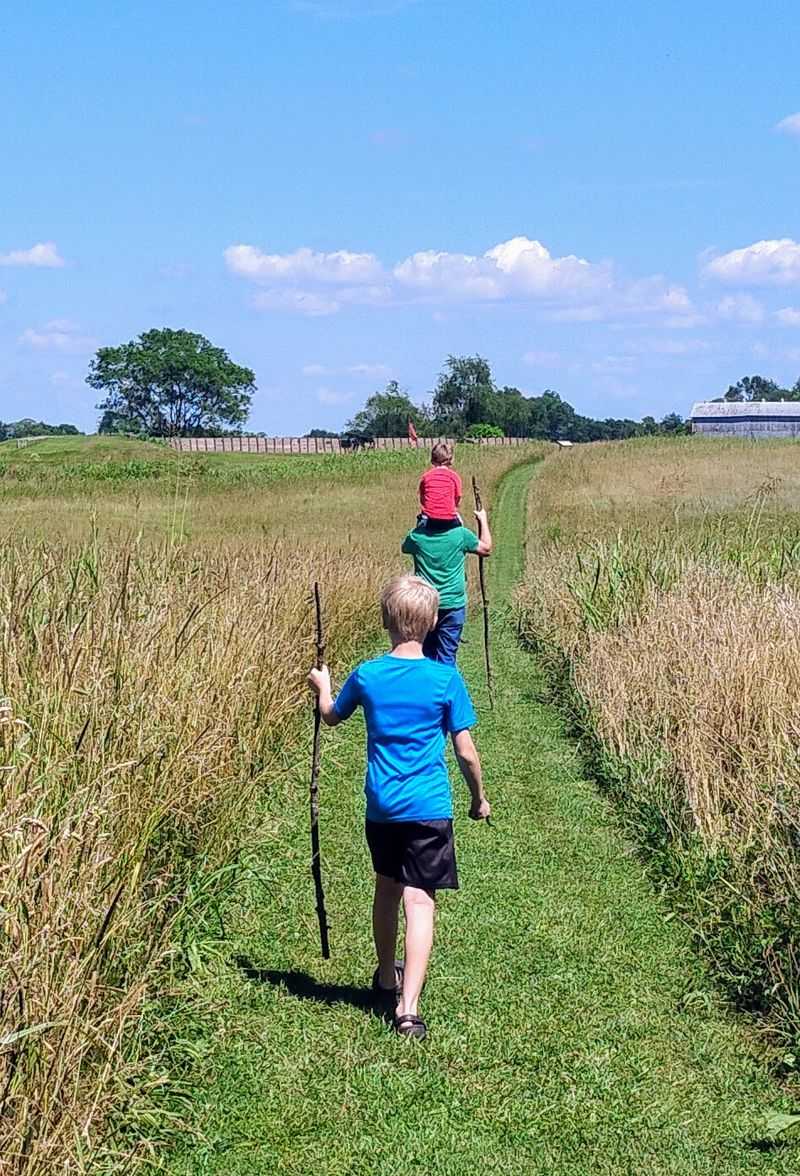
Got young explorers? Junior Ranger booklets are available, giving kids a fun way to learn while they wander.
Park rangers also lead guided tours of the grounds. They share the trail system and special programs, so ask what’s happening during your visit.
It’s about 20 miles south of Lexington. That makes it an easy half-day trip from the city or a solid stop on a wider Kentucky road trip.
The site has big credentials, too. It became a national monument on October 26, 2018, making it the 418th unit of the National Park Service.
It’s also part of the National Underground Railroad Network to Freedom. That recognition shows how much this land matters nationally.
Check the Wednesday through Sunday indoor hours before you go. Then bring comfortable shoes, curious kids, and plenty of questions.
The rangers and the land itself will happily do the rest of the storytelling.