10 Unique Destinations To Visit In Washington State At Least Once
Washington has an official state waterfall, and I really want to know who held that vote.
My usual rule for a great trip is simple. Give me one huge mountain and a clear sky, and I’m happy.
Then I learned the state also has an official gem, and it’s petrified wood.
Ancient trees turned to stone and got a state title, which is a pretty impressive career move for a log. My mountain rule might need a few footnotes.
The best part is how wildly different these spots feel from each other.
One stop is soaked in moss, another is a glass floor high above a city, and another is a giant wall of concrete. Which one gets your first tank of gas?
1. Mount Rainier National Park
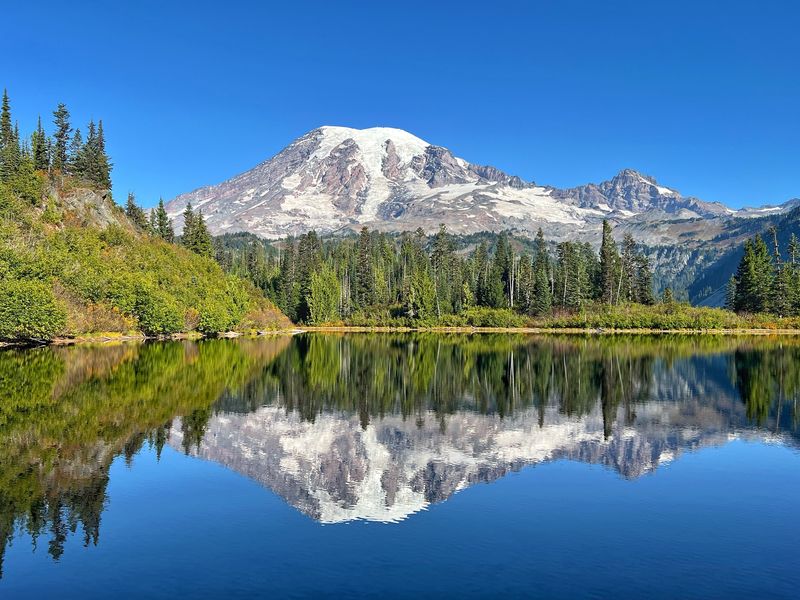
Some mountains sit politely on the horizon, but this one acts like it owns the whole sky. Mount Rainier rises 14,410 feet, and it’s an active stratovolcano wearing a thick coat of glaciers.
It also holds the title of tallest peak in the entire Cascade Range. So you’re not visiting an opening act here, you’re visiting the headliner.
The park around it covers roughly 236,000 acres, including old-growth forest, subalpine meadows, and rocky volcanic slopes.
Summer wildflowers turn Paradise and Sunrise into colorful places to explore, while waterfalls and glacier-fed streams keep the scenery changing.
You don’t need climbing equipment to enjoy Washington’s towering landmark. Short trails near Longmire and Paradise offer ways to experience the landscape without attempting the summit.
The Trail of the Shadows circles a meadow with mineral springs and reminders of the park’s early visitor history.
Bring lunch and an extra layer. High-elevation weather can change quickly, even when nearby towns are sunny.
The park stays open year-round, but its roads don’t. Sunrise Road and Stevens Canyon Road are closed for the season in November 2026, and access toward Paradise is managed according to winter conditions.
2. Hoh Rainforest Visitor Center, Forks
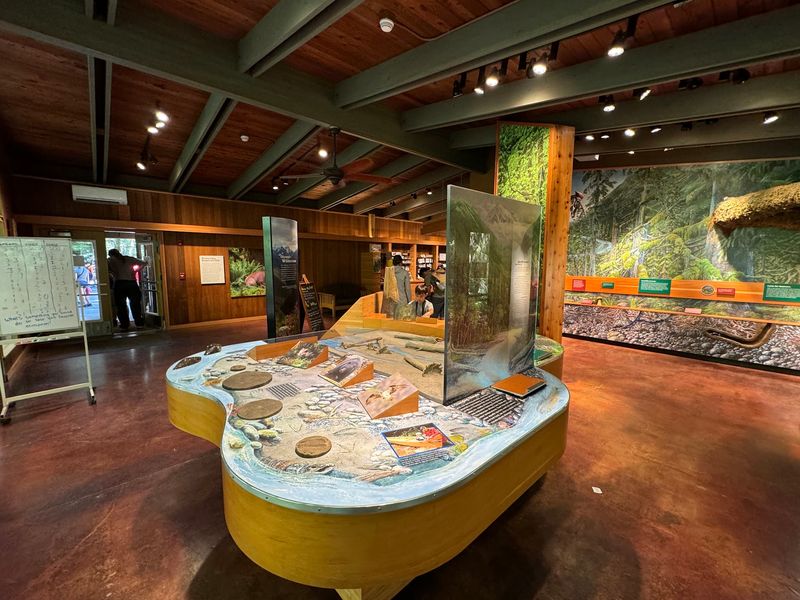
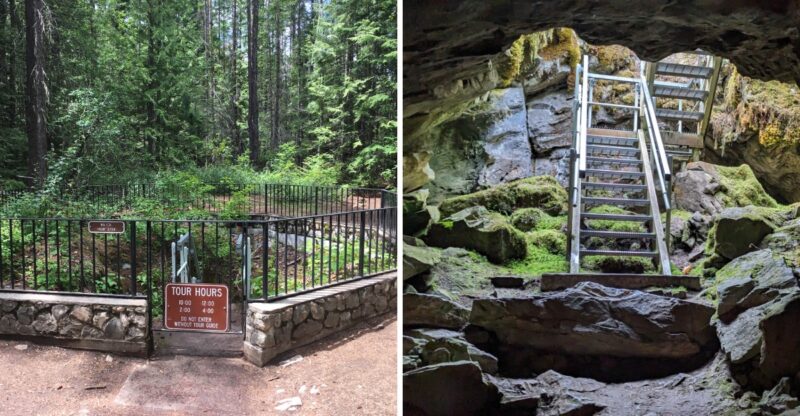
Moss doesn’t just grow here, it practically decorates the place like it hired an interior designer.
The Hoh Rain Forest sits deep in Olympic National Park, and it’s one of North America’s best-known old-growth temperate rainforests.
Your adventure starts near the visitor center at the end of Upper Hoh Road. When staffed, the building offers information about the forest, trail conditions, and the remarkable plants found in this rain-soaked valley.
The Hall of Mosses is the trail most folks have seen in photos. Its 0.8-mile loop passes enormous maples draped in moss, with ferns carpeting the forest floor.
Nearby, the 1.2-mile Spruce Nature Trail reaches sections of the Hoh River and moves through stands of towering conifers.
For a longer walk, the Hoh River Trail begins from the same trailhead and follows the valley toward the mountains. Roosevelt elk sometimes appear in the area, so give wildlife plenty of space.
Find the trailhead at 18113 Upper Hoh Rd., Forks. The visitor center is closed throughout November 2026, although trails, parking, and restrooms remain accessible.
Beginning December 4, it is scheduled to reopen Friday through Sunday, 9 a.m. to 4 p.m.
3. Palouse Falls State Park Heritage Site, LaCrosse
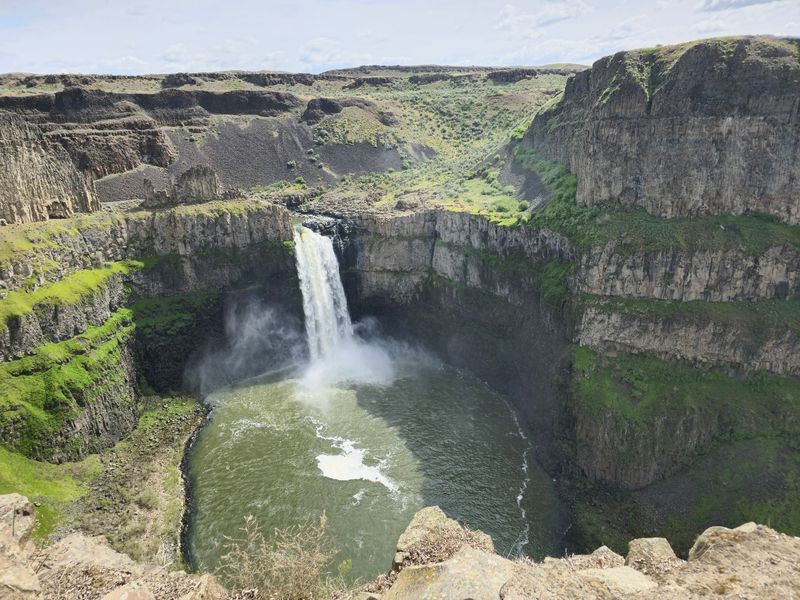
Yes, Washington really has an official state waterfall, and this is the winner. Palouse Falls drops a dramatic 198 feet into a deep basalt canyon.
The surprise factor is a big part of the fun. You drive through gentle rolling hills of the Palouse, and suddenly the ground opens into a rugged, rocky gorge.
Its dramatic shape comes partly from enormous Ice Age floods that swept across eastern Washington.
The Palouse River now drops into a bowl enclosed by dark, layered rock, making the surrounding plateau seem almost impossibly flat by comparison.
You can admire the waterfall from developed viewpoints, including a paved interpretive path and a higher overlook.
There’s no need for a demanding hike to enjoy the scenery. Trails descending into the canyon or approaching the base of the falls are permanently closed, so remain on designated routes.
Palouse Falls State Park is a day-use destination, not an overnight campground. Picnic tables, grills, and restrooms are available, but potable water is currently unavailable because of water-system maintenance. Bring everything you’ll need for the visit.
Winter access begins at 8 a.m. and continues until dusk; summer opening is earlier. The park is remote, and cell service can be unreliable.
Use Palouse Falls Rd., LaCrosse, for navigation. Give yourself time for the approach, and let that first view over the canyon be the reward.
4. WA Parks Mt Saint Helens Interpretive Center, Castle Rock
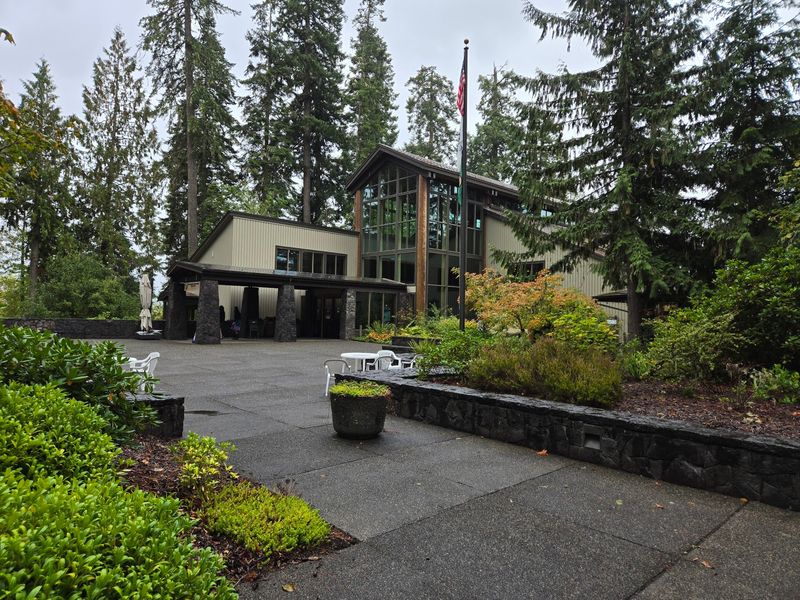
A working seismograph is not your usual roadside attraction, but this stop is anything but usual.
The interpretive center explores the restless geology of Mount St. Helens through exhibits, demonstrations, and the story of its 1980 eruption.
You’ll find it at 3029 Spirit Lake Hwy., Castle Rock, near Silver Lake. It sits on the western route toward the volcano, making it a natural introduction before continuing farther into the region.
The building reopened with refreshed exhibits in 2025. Inside, displays explain the mountain’s changing shape, volcanic activity, and how nearby ecosystems have recovered over time.
Indigenous perspectives also help explain the mountain’s cultural importance.
Don’t skip the theater. A film adds context to the objects and diagrams, and the working seismograph offers another way to think about activity beneath the Earth’s surface.
Outside, the accessible Wetland Haven Trail follows a short route through the Silver Lake wetlands.
Boardwalk sections bring you close to water-loving plants and birds without requiring a mountain hike. Silver Lake reflects the surrounding trees on especially calm mornings.
From November through March 2027, the center opens Wednesday through Sunday from 10 a.m. to 4 p.m. Parking is available beside the building.
The volcano itself is farther up the highway, so consider this the first chapter rather than the summit view. It’s a fascinating one to begin with.
5. Diablo Lake Vista Point, Rockport
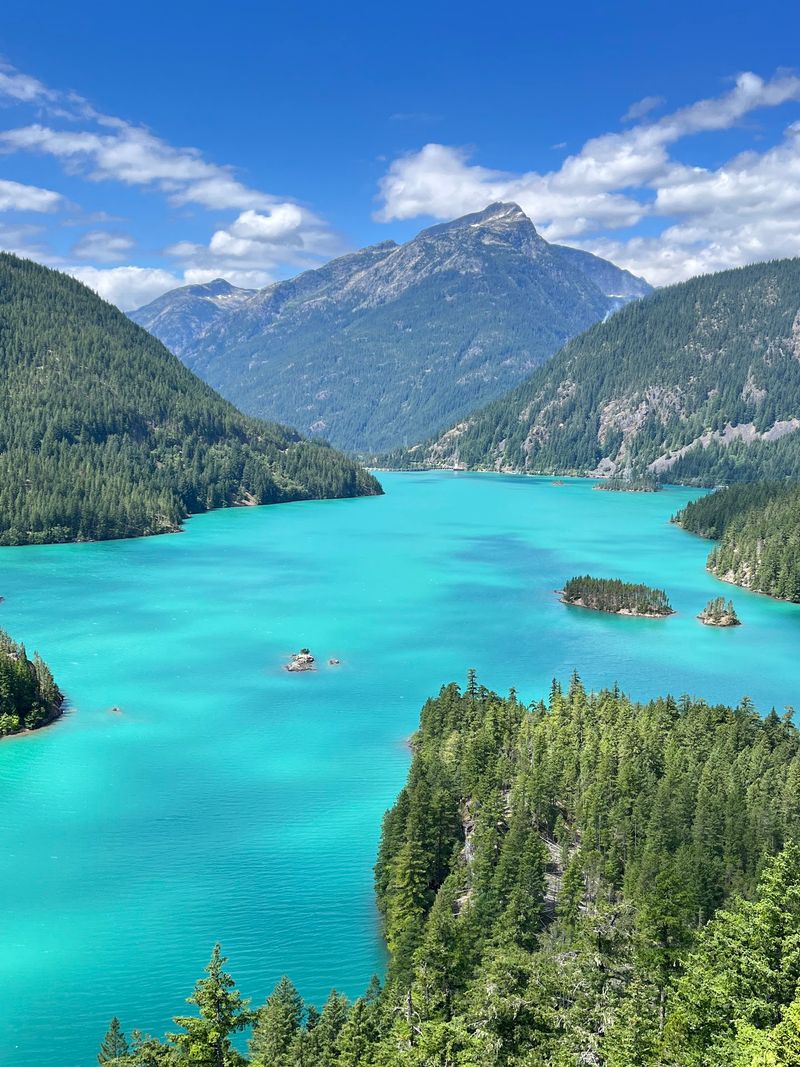
That turquoise color looks like someone turned up the saturation, but nobody touched a filter. Diablo Lake gets its bright blue-green shade from glacial flour, which is rock ground super fine by glaciers.
Those tiny particles remain suspended in the water, scattering light and giving the lake its remarkable color. The effect is especially vivid during sunny summer days when glacier-fed streams carry more fine sediment.
The overlook sits near Rockport, along the North Cascades Highway, State Route 20, at milepost 131.7. One quick stop brings a panoramic view of the lake, forested slopes, and rugged peaks surrounding the valley.
Interpretive signs explain how ice and water shaped this mountain landscape. Viewing areas provide several angles, and nearby picnic tables make it possible to enjoy lunch without leaving the scenery behind.
The site includes parking, accessible facilities, and vault restrooms. Winds sweep across the overlook, so bring a jacket.
The viewpoint is part of the North Cascades National Park Service Complex. Check the route before leaving home. Highway 20 closes seasonally at higher elevations, and winter gates may restrict access to the overlook itself.
Unlike a lengthy mountain trail, this stop rewards a short walk from the car. The water can look different with every passing cloud or shift in sunshine, making a second glance just as satisfying as the first.
6. Space Needle, Seattle
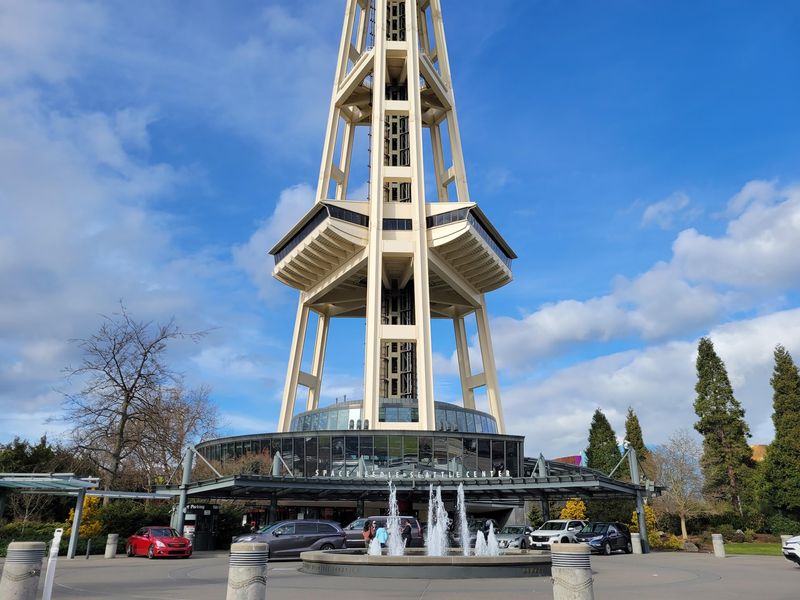
Standing on a glass floor hundreds of feet in the air sounds like a dare, yet thousands of people do it on purpose. The Space Needle turns that wobbly-knee moment into one of Seattle’s most famous experiences.
The tower at 400 Broad St., Seattle, rises 605 feet above Seattle Center and has defined the city’s skyline since the 1962 World’s Fair. Its observation experience includes two levels, each with a completely different way of enjoying the view.
The upper level features floor-to-ceiling glass and an open-air observation deck. On a clear day, the panorama stretches across Elliott Bay toward the Olympic Mountains, with the Cascades and Mount Rainier visible in other directions.
Then comes The Loupe, the rotating glass floor one level below. It moves gradually beneath your feet, revealing the structures and streets far below while you remain inside the tower.
The exterior viewing area also includes glass benches that tilt back toward the skyline. You can enjoy the scenery from a comfortable seat or choose a spot near the railing.
Admission is timed, and opening hours vary by date, so select your visiting window before heading downtown.
Seattle Center’s historic Monorail provides an easy connection with downtown, especially for travelers arriving without a car. Seeing the city from this height makes its mix of water, neighborhoods, and mountains feel wonderfully close together.
7. Front Street Park, Leavenworth
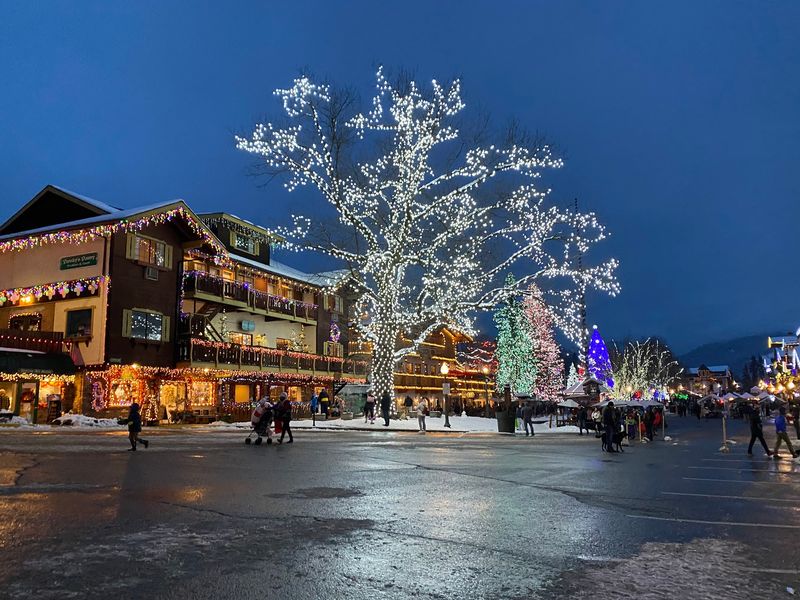
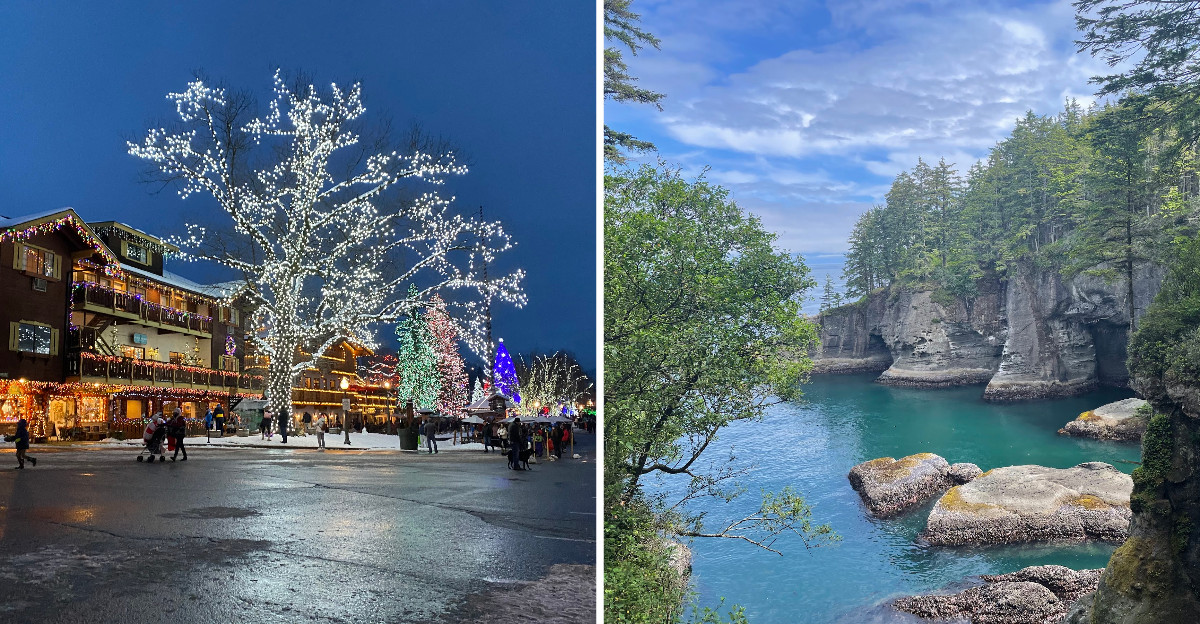
Trees wrapped in lights from top to bottom are a pretty bold decorating choice for a town park. In Leavenworth, that sparkle is part of the plan, and this small park sits at the center of the show.
Front Street Park, at 820 Front St., Leavenworth, anchors the Bavarian-themed downtown in the Cascade foothills. Alpine-style storefronts surround its lawns, gazebo, and traditional maypole, creating a scene unlike most places in Washington.
During warmer months, the gazebo hosts musical performances and community gatherings. Art in the Park brings artists and displays into the adjoining plaza, while flower beds and shade trees make the lawns a pleasant place to rest.
Winter is when the park really changes character. Leavenworth’s Village of Lights illuminates downtown nightly from November 26, 2026, through February 28, 2027.
Instead of one brief switch-on ceremony, the lighting remains part of the town’s seasonal atmosphere.
When snowfall allows, the park’s hillside becomes a popular sledding spot. Bring your own sled, then pause beside the gazebo to watch the town glow.
The park opens daily from 6 a.m. until midnight. Public restrooms are nearby, and downtown parking arrangements change with demand and special events.
The Leavenworth Nutcracker Museum is only a short walk away, with thousands of unusual nutcrackers inside. One downtown block can turn into a surprisingly memorable winter afternoon.
8. Cape Flattery, Neah Bay
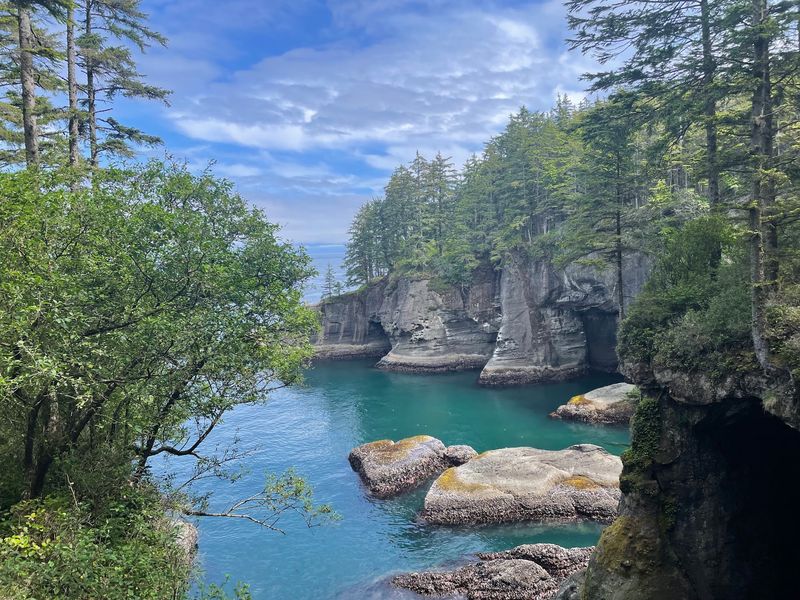
Bragging rights don’t get much more literal than this. Cape Flattery marks the northwesternmost point of the contiguous United States, so you can stand at the very corner of the map.
The cape sits on the Makah Reservation near Neah Bay. It’s a long drive to the Olympic Peninsula’s tip, but the distance is part of the magic. Follow Cape Flattery Road toward Cape Loop Road, Neah Bay.
The trail measures three-quarters of a mile each way, passing through coastal forest on dirt paths, stairs, and sections of wooden boardwalk. It descends about 200 feet toward several viewing platforms, which means an uphill return to the parking area.
At the outer viewpoints, cliffs give way to open Pacific water, sea caves, and rocky islands. Tatoosh Island and its lighthouse stand offshore, making the scene even more remarkable.
Watch for eagles and seals, although wildlife sightings vary. The surrounding ocean and forest are reason enough to take the walk slowly.
A Makah recreation permit is required for vehicles visiting the trail. Day parking, restrooms, and limited RV spaces are available at the trailhead, and picnic tables stand near one of the viewpoints.
The trail opens at dawn and closes thirty minutes after sunset throughout the year.
Take your time at the final platform. That ocean horizon feels wonderfully far from everyday life.
9. Lime Kiln Point State Park, Friday Harbor
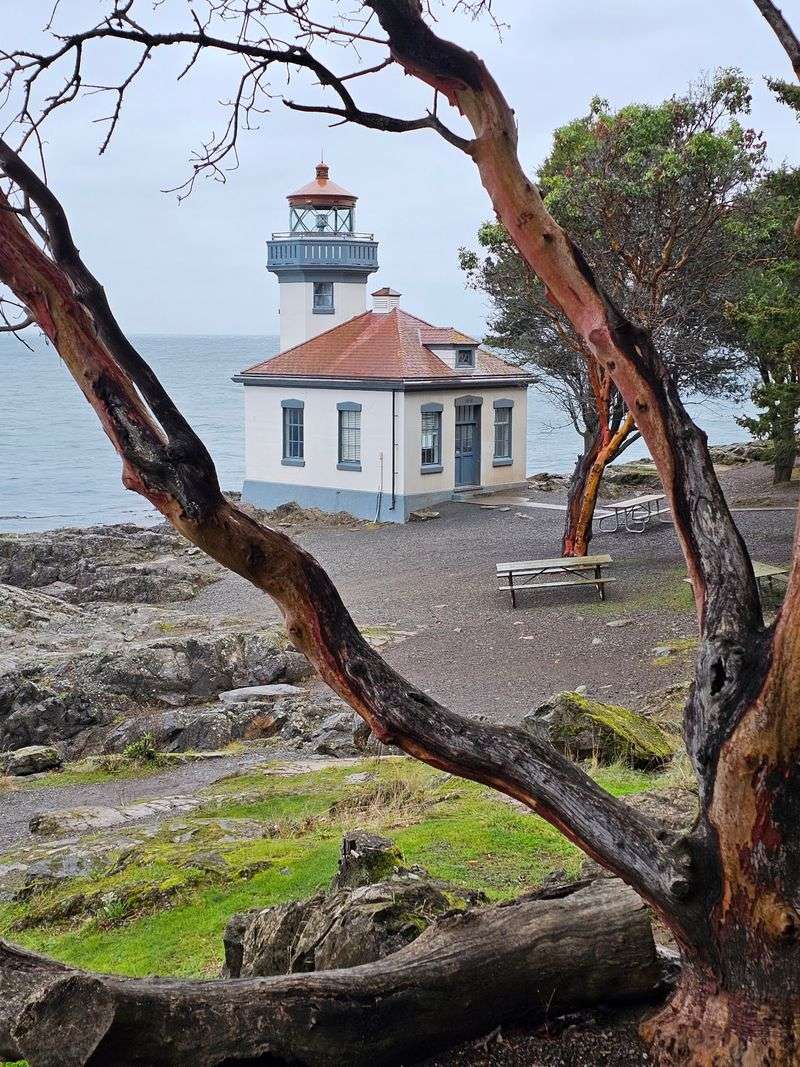
Whale watching usually means a boat, a jacket, and some seasickness pills. At this park, you can try it with your feet planted firmly on a rocky shoreline.
Lime Kiln Point State Park is a well-known shore-based whale-watching location. Its western edge overlooks Haro Strait, where orcas and other marine mammals sometimes travel close enough to be spotted from shore.
The 1919 lighthouse stands above the water on the rocky point. It’s an especially memorable landmark when the low afternoon sun lights the white tower and surrounding grass.
Look offshore for porpoises, seals, and passing birds. Orca sightings depend on season and animal movements, so binoculars and patience are more useful than expecting a particular show.
From 1567 Westside Rd., Friday Harbor, short trails connect the viewing areas, and interpretive displays explain the marine ecosystem. An old lime kiln on the property recalls the industry that gave this part of San Juan Island its name.
Interpretive-center programs and guided lighthouse visits generally operate from late spring through summer, rather than year-round.
This is a day-use state park, and a Discover Pass or qualifying park pass is required for vehicle parking. Picnic facilities and restrooms make it comfortable to spend time on the shoreline.
Even when the whales are elsewhere, the view across the strait is a fine reason to stay awhile.
10. Grand Coulee Dam Visitor Center, Coulee Dam
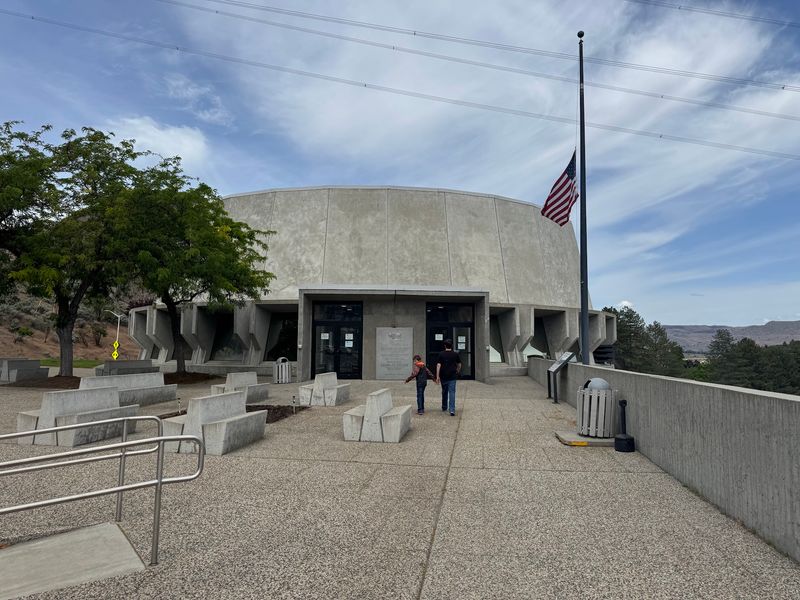
Concrete might not sound exciting until you see enough of it to hold back the Columbia River. Grand Coulee Dam ranks among the largest concrete dams in the world, and the scale is hard to believe.
The visitor center sits along State Route 155, Coulee Dam, WA 99116, below the dam and overlooking the huge structure and river.
Displays explore the construction project, the Columbia Basin’s irrigation system, and the machinery that produces hydroelectric power.
The dam measures more than 5,200 feet across and stands about 550 feet tall. The reservoir behind it stretches far upstream into the Columbia River valley.
Its generating facilities form America’s largest hydropower complex by installed capacity, making those concrete walls more than scenery.
Inside, hands-on exhibits and a film explain how water moves through the enormous project. It’s fascinating for anyone curious about engineering and regional history.
The visitor center opens daily from 8:30 a.m. to 5 p.m., apart from major holiday closures. Parking is available near the entrance.
Seasonal plant tours ran on selected days from May 22 through October 31 in 2026. The outdoor laser light show is also a warmer-season attraction, ending in September rather than continuing through winter.
Make time to admire the dam from several different viewpoints after exploring the exhibits. The scale is impressive even after you understand how it works.