Kentucky’s First Hyperscale Data Center Is Rising In This City, And It Covers 1.6 Million Square Feet
A single campus being built near the Ohio River could use as much power as roughly 400,000 homes. That number stopped me cold.
It’s a data center, and it’s the first hyperscale project Kentucky has ever seen.
The price tag is reported at around $11 billion. The plans call for seven buildings spread across about 155 acres.
Altogether, that adds up to 1.6 million square feet of computer-packed space.
This story mixes big tech with a very old river. The water nearby matters as much as the wires.
So do the tax rules, the power lines, and the neighbors who have plenty to say.
I think most people scroll past news like this. But these buildings could shape how your phone, your apps, and AI tools work.
Let’s find out what exactly is going up, and why here?
The Biggest Tech Build Kentucky Has Ever Attempted
Some projects make headlines, and some make history. PowerHouse Data Centers – Louisville (Camp Ground Road) is being called the largest technology infrastructure project in Kentucky history.
That’s a big title for a place most people have never heard of. The campus is also the state’s first hyperscale data center, which puts it in a whole new league.
So what does hyperscale mean? It describes a facility built for massive storage, computing, and cloud services.
These are the places that keep apps, websites, and AI tools running every second.
Your photos in the cloud live somewhere like this. So do the streaming shows you binge on a rainy weekend.
The project is a joint venture between two companies. Poe Companies is a Louisville real estate firm with deep local roots.
PowerHouse Data Centers is based in Virginia and is a division of American Real Estate Partners. Virginia happens to be famous for data centers, so the team brings serious experience.
I like that a hometown company is part of the story. It gives this giant project a local face and a local stake.
Keep that partnership in mind. It explains a lot about why Louisville landed this one.
Seven Buildings, 1.6 Million Square Feet, And Room To Spare
Here’s a fun way to picture the size. Plans call for 1.6 million square feet spread across seven buildings.
An American football field covers about 57,600 square feet with the end zones. That means this campus equals roughly 27 football fields of indoor space.
The land itself is huge too. The site covers about 153 to 157 acres, depending on which report you read.
Some early reports described up to six buildings totaling 1.8 million square feet on 154 acres. Plans for big projects often shift as designs get refined.
Either way, this is not a cozy office park. Data centers are mostly packed with rows of servers, cooling systems, and power equipment.
They don’t need fancy lobbies or big windows. They need space, steady power, and strong security.
Spreading the work across several buildings also makes sense. Construction can happen in phases, so the first building can open while others are still rising.
That step-by-step approach helps the developers match demand. It also means the campus will keep growing for years.
Think of it as a tech neighborhood being built one block at a time.
You Can Find It Just Off Camp Ground Road
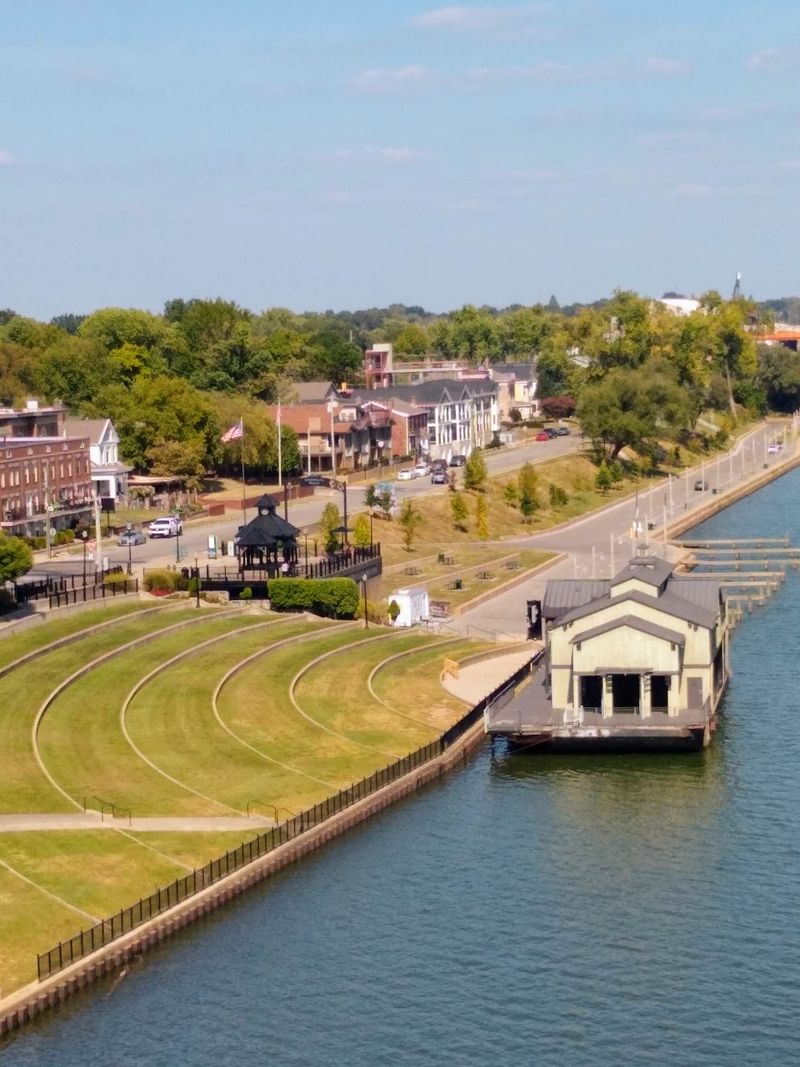
Location tells you a lot about a project like this. The campus sits at 6001 Camp Ground Road, Louisville, KY, in the western part of the city.
It lands just west of Shively and near the Rubbertown industrial district. It’s also less than a mile from the Ohio River.
Rubbertown has a long industrial history in Louisville. The area has hosted chemical and manufacturing plants for decades.
That background matters for a data center. Industrial zones often already have heavy-duty power lines, roads, and utility access.
Building where infrastructure already exists can save time. It also keeps a giant project away from quiet residential streets, at least in theory.
Still, west Louisville neighborhoods sit fairly close by. That closeness has become a big part of the public conversation, which we’ll get to.
If you’re driving through, don’t expect a gift shop. Data centers are private, secure facilities, and this one is still under construction.
The best view for now is probably on a map. Zoom in, and you’ll see just how much open land the developers had to work with.
Prepare To Be Stunned By The Power Numbers
Four hundred and two megawatts. That’s how much power the campus could need when it’s running at full capacity.
For comparison, that’s about enough to power around 400,000 homes. Louisville itself doesn’t even have that many households.
Louisville Gas and Electric, known as LG&E, is handling the power side. The utility is building a new switch station, expected to be finished in September 2026.
A dedicated substation will also sit right on the site. That’s like giving the campus its own private electrical front door.
Initial power of 130 megawatts is expected by October 2026. That first chunk will help bring the opening building to life.
LG&E officials have said the local grid can handle this project. They’ve also said more data centers would need extra power generation.
I find that honest detail pretty helpful. It shows this campus uses a big slice of what the system can spare.
So the next time you flip a light switch in Kentucky, give a thought to the servers. They’ll be pulling from the same grid, just on a much bigger scale.
The Ohio River Plays A Surprisingly Big Role

Computers get hot. Really hot, especially when thousands of them are crunching AI tasks around the clock.
That heat has to go somewhere, and cooling often depends on water. Being near the Ohio River gives this site a real edge.
The Louisville Water Company also brings strong infrastructure to the table. Reliable water service helps support the cooling needs of high-density computing.
Louisville Water has been around since the 1800s and is well known locally for its quality. Its tap water was even branded and sold as Louisville Pure Tap.
Water is only part of the appeal, though. The city also offers plentiful electricity at attractive rates and existing fiber connections.
Fiber matters because data has to travel fast. Without good connections, even the biggest servers would feel sluggish.
Louisville also carries a fairly low risk of major natural disasters. Data centers love stability, since downtime can be costly for tech companies.
Put those pieces together and the choice starts to click. It’s a mix of river, wires, water pipes, and steady ground.
The river that once carried steamboats now helps cool the cloud.
A 2024 Law Helped Open The Door
Big projects rarely happen by accident. In 2024, the Kentucky General Assembly approved tax incentives for data center projects in Jefferson County.
Jefferson County is home to Louisville. That law made the area far more attractive to developers shopping for a site.
Tax breaks can feel like a dull topic. But for a project reported at $11 billion, they can tip the scales.
Companies compare states the way shoppers compare prices. Kentucky’s move put it on the list alongside places with more data center history.
Of course, tax incentives work both ways. Communities give something up, and they hope to gain more in return.
Supporters point to future tax revenue as the payoff. Some reports suggest the project could bring nearly $70 million for schools, metro government, and other local needs.
That’s a meaningful amount for a city budget. Schools especially could feel the difference over time.
Here’s a practical tip if you live nearby. Following Metro Council and state legislative news helps you understand how deals like this work.
Those meetings shape what gets built in your backyard, sometimes literally.
Jobs Are Coming, Starting With Hard Hats

Picture cranes, concrete trucks, and a sea of safety vests. Developers expect up to 1,000 construction workers during the building phase.
That’s a lot of paychecks for electricians, welders, and equipment operators. Local diners and gas stations near the site may notice the bump too.
Once the campus opens, the work shifts. Developers anticipate hundreds of full-time jobs, though formal projections aren’t always available.
Data centers need technicians, security staff, and engineers. They also need people who can keep cooling and power systems running smoothly.
If you’re a student, this is worth paying attention to. Skills in electrical work, IT, and HVAC could lead to steady careers.
Local trade programs and colleges often adjust training when new industries arrive. Keeping an eye on those programs could pay off.
Millions of dollars a year in property and other taxes are also expected. That money flows to local and state coffers.
I can’t imagine a better reason for a teenager to take that shop class seriously. The cloud needs plumbers and electricians just as much as coders.
Not Everyone Is Cheering, And Their Concerns Matter

Every big project has a flip side. This one has faced organized local opposition, especially from people near the Rubbertown area.
Residents have raised worries about environmental impacts. They’ve also questioned strain on local utilities and possible health effects for nearby families.
Those concerns come from real experience. Rubbertown neighborhoods have lived beside heavy industry for generations.
So when a new giant facility arrives, people want answers. How much water will it use, and how loud will the equipment be?
Power use is another sore spot. When one site needs as much electricity as 400,000 homes, folks naturally wonder about their own bills.
I believe both sides deserve a hearing. Economic growth matters, and so does the health of the people living closest.
If you want a voice, show up. Public meetings and comment periods give neighbors a real chance to be heard.
Asking good questions is never a bad move. Clear answers can build trust, and pushback can lead to better plans.
That kind of back-and-forth is how a city grows up without leaving people behind.
Guess Who Might Move In By Late 2026
The big mystery is the tenant list. Officials have reportedly talked with major tech companies, including Google, Amazon, and Microsoft.
No final names have been made public yet. Still, just being in those conversations says plenty about Louisville’s new status.
These companies are often called hyperscalers. They run the giant clouds behind email, online shopping, video streaming, and AI chatbots.
A spot in Kentucky could help them serve customers across the Midwest and South. Faster service closer to users is a real advantage.
Timing is tight, too. The first building is scheduled to be operational by the fourth quarter of 2026.
That puts PowerHouse Data Centers – Louisville (Camp Ground Road) on a fast track. Construction was expected to start in 2025, so things are moving quickly.
Louisville is already famous for the Kentucky Derby and Louisville Slugger bats. Adding cloud computing to that list feels like a fun twist.
Watch the news as 2026 winds down. The day a famous tech name gets announced, this quiet stretch of Camp Ground Road will suddenly be very popular.