National TV Crews Keep Coming Back To This Idaho Stadium Where The Blue Field Became A Legend
A college football field turned bright blue in 1986, and the sports world has been doing double takes ever since.
It became the first non-green artificial turf anywhere in the world.
The color was a deliberate gamble. An athletic director figured that if the school was paying for new turf anyway, it should match the team colors.
Nobody else had tried it, and plenty of folks probably thought it was a little nuts.
That bold choice gave Idaho one of the most recognizable sights in all of college sports. TV cameras pick it out instantly, and so do viewers flipping channels on a Saturday night.
I like how one simple color decision turned a campus corner into a national landmark.
So what sits along that famous street, and why does the spotlight keep finding its way back?
A Quiet Athletic Field On The Loudest Street In Town
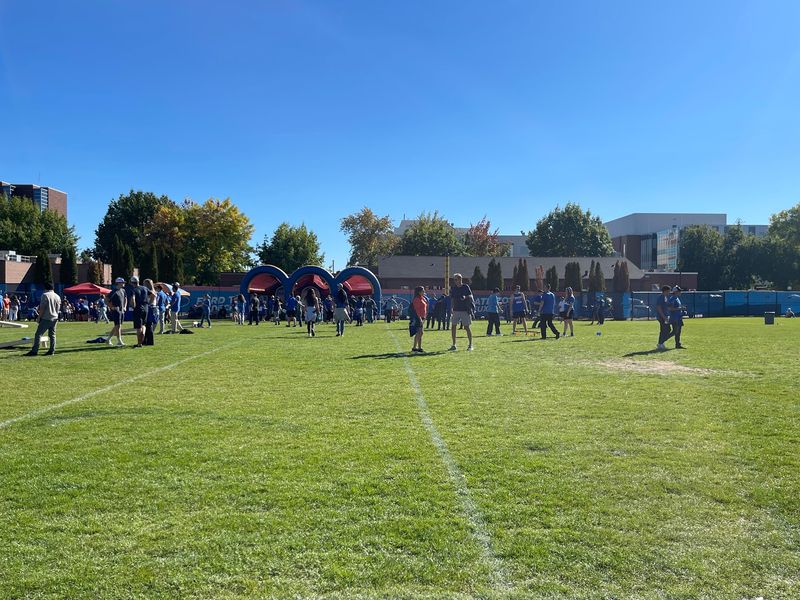
Street names rarely carry this much weight. DeChevrieux Field sits on Bronco Lane in Boise, the same road that funnels crowds toward the most famous blue turf in America.
Officially, DeChevrieux Field is listed as an athletic field. That sounds modest, and honestly, it is, but its neighborhood is anything but ordinary.
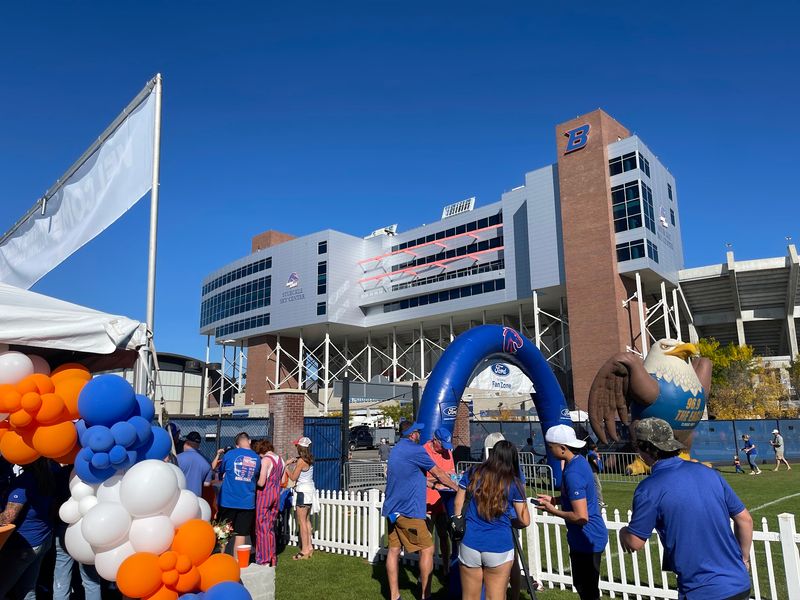
The field lives on the Boise State University campus, a short stroll from Albertsons Stadium. That stadium is home to the Broncos and the blue playing surface that put the school on the national map.
Being this close to a sports landmark changes how a place feels. Every walk down Bronco Lane comes with a view of history in the making, even on a quiet weekday.
So think of DeChevrieux Field as your doorway into a bigger story. The blue field gets the headlines, but the whole campus corner shares in that famous energy.
Idaho has plenty of scenic spots, yet few streets carry this kind of name recognition. Anyone who has caught a Broncos game on TV has already seen this neighborhood, maybe without realizing it.
That alone makes a stroll down Bronco Lane feel a bit like stepping onto a familiar set.
Blame One Bold Athletic Director For All That Blue
Most people buying new carpet pick something safe. Gene Bleymaier, the Boise State athletic director in 1986, went the other direction.
The stadium needed new synthetic turf that year. His thinking was simple: if the school was spending serious money, the field should look distinctive and match the team colors.
So the turf came in blue. It became the first non-green artificial turf anywhere in the world, which is a pretty big claim for one purchase order.
The blue surface debuted on September 13, 1986. Boise State christened it with a 74-0 win over Humboldt State, now known as Cal Poly Humboldt.
Talk about a housewarming party. A shutout on day one probably helped convince doubters that the color was not a jinx.
What started as a budget decision quickly became a calling card. The field turned into a recruiting tool and an instant symbol that nobody could mistake for any other stadium.
I believe that kind of nerve is worth celebrating. Plenty of schools could have done it first, but only one actually did.
Every blue field you see today traces back to that one choice in Boise.
Yes, A University Can Trademark A Color
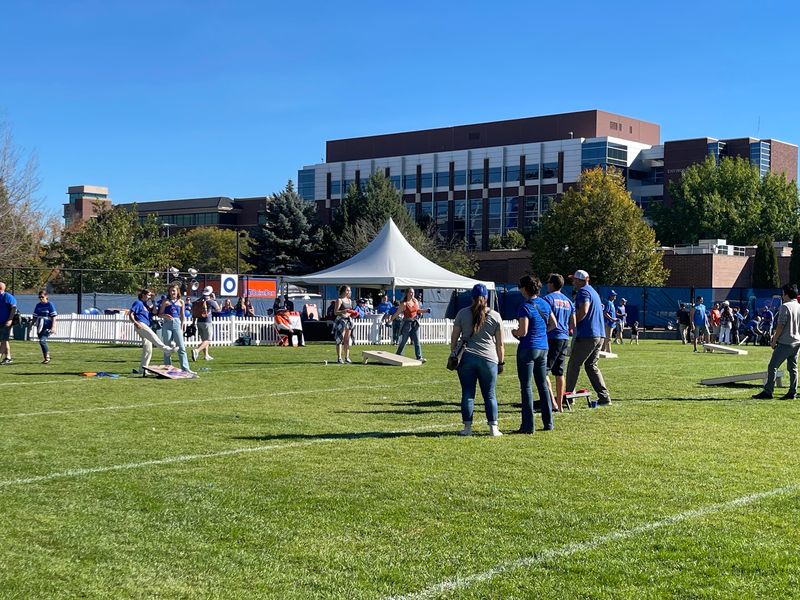
Owning the color blue sounds like a joke. Boise State actually holds a federal trademark on blue as applied to artificial turf.
That protection covers the look of a blue playing surface in the football world. It shows just how tightly the school’s identity is tied to that field.
Fun fact for your next trivia night. A popular myth claims the NCAA banned colored fields after Boise State’s installation, but that story is not true.
The NFL tells a different tale. The league has a rule requiring green fields, sometimes nicknamed the Boise Rule, though the Broncos play college ball and were never affected.
The trademark also explains why you won’t see a parade of copycat blue fields. Other schools have experimented with colors, but the blue look stays closely linked to Boise.
For Idaho fans, this detail feels like a point of pride. The state’s biggest city owns a slice of sports history that literally cannot be borrowed without permission.
It’s a small legal footnote with a giant payoff. Every blue yard line is a reminder of who got there first.
Not bad for a decision made over a turf order.
Why TV Cameras Can Find This Field In Half A Second
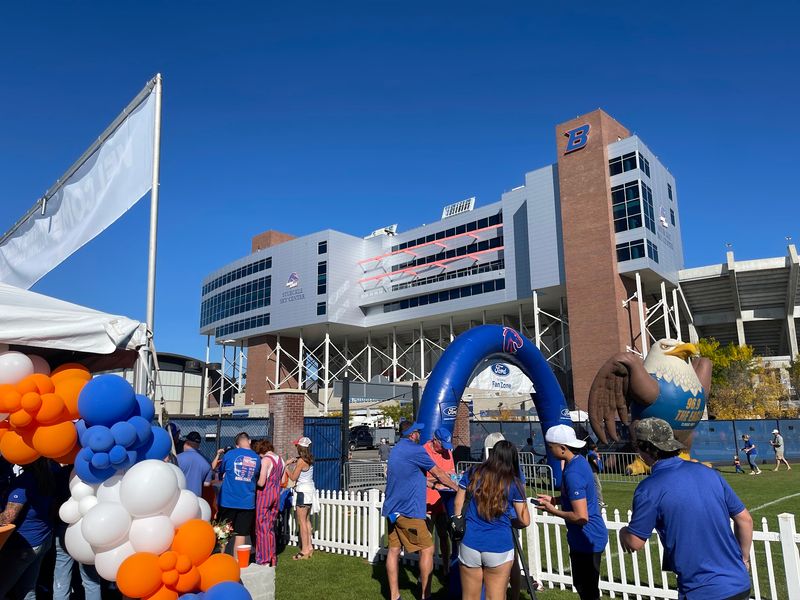
Channel surfers have it easy here. One flash of blue on the screen and everybody knows exactly where the game is being played.
That instant recognition is gold for broadcasters. The field works like a visual shortcut, telling viewers the location before any announcer says a word.
The nicknames helped too. Fans and sports media have called it the Smurf Turf, and ESPN’s Chris Berman famously dubbed it the Blue Plastic Tundra.
National attention has followed the Broncos for decades. ESPN’s College GameDay set up on campus in 2010, a moment that put Boise squarely in front of a coast-to-coast audience.
Night games make the color pop even more. Under the lights, the blue glows against the stands, which might explain why producers seem to love the shot.
Visibility like this has lifted Boise State’s profile far beyond Idaho. A program from a mid-sized city earned a spot in conversations usually reserved for much bigger schools.
Good luck finding another field that sells itself this fast. Most stadiums need a graphic on screen, and this one just needs a camera angle.
Same Blue Turf, A Few Different Names Over The Years
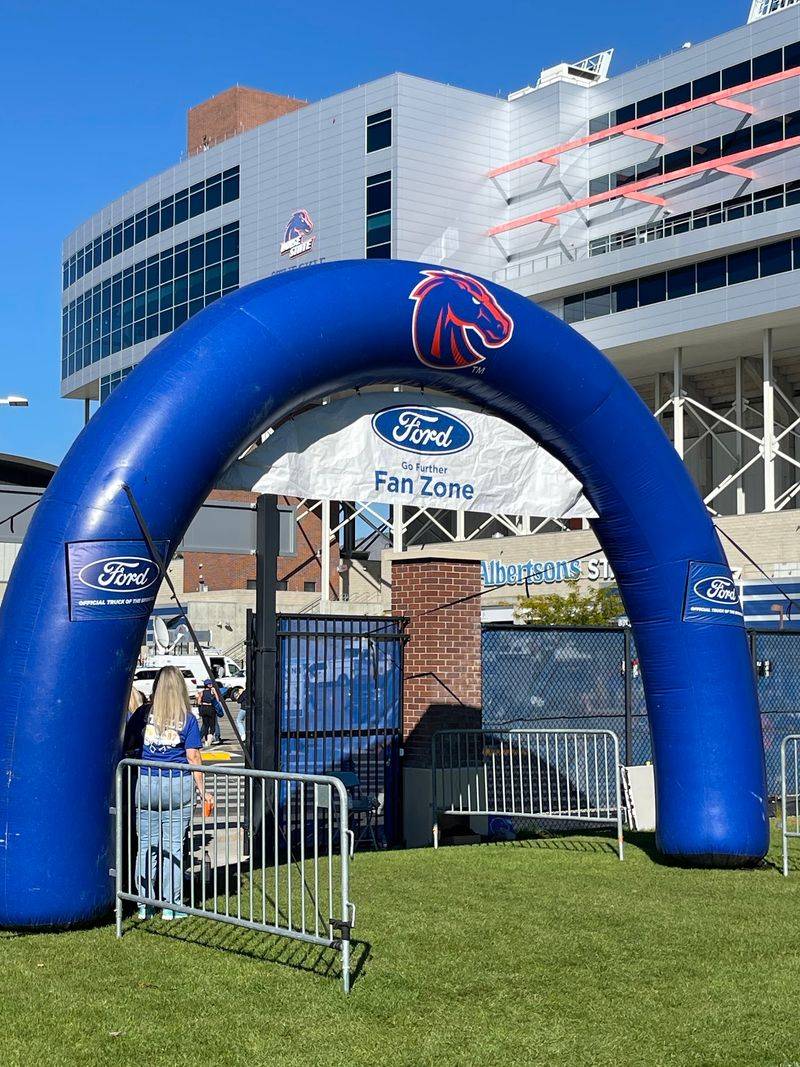
Back in 1970, the stadium had a much simpler name. It opened as Bronco Stadium on September 11 of that year.
The playing surface later honored Lyle Smith, a longtime Boise State coach and athletic figure. That’s why the official name begins with Lyle Smith Field.
Then came a big change in May 2014. A 15-year naming rights agreement with Albertsons, the grocery company founded in Boise, created the name Albertsons Stadium.
Put it all together and you get Lyle Smith Field at Albertsons Stadium. Fans, of course, often just call it The Blue and move on with their day.
The Albertsons connection feels fitting for an Idaho landmark. The company started in Boise in 1939, so the stadium name carries a hometown story of its own.
Names come and go, but the turf color never budged. Through every rebrand, the field stayed blue, and that consistency is part of the legend.
It’s a little like a friend who changes hairstyles but keeps the same laugh. You always recognize them anyway.
And on Bronco Lane, that laugh happens to be bright blue.
A Winter Bowl Game Named After The Famous Spud
Only in Idaho would a bowl game honor a potato. The Famous Idaho Potato Bowl plays its postseason matchup right on the blue turf each December.
That gives the stadium a second spotlight every year. College teams from around the country travel to Boise for a game that’s broadcast nationally.
December in Boise can bring cold air and the occasional snowfall. White flakes on blue turf make for a picture that’s hard to forget.
The game also sends the state’s most famous crop onto national television. Few places get to show off their farm pride and their football field at the same time.
Football is the main act, but the stadium wears other hats too. Over the years, it has hosted concerts, youth camps, and community gatherings.
That variety means the blue field isn’t just a fall Saturday thing. The venue stays part of Boise life through more of the calendar than many people realize.
I can’t imagine a more Idaho way to wrap up a season. A potato-themed bowl on a one-of-a-kind field sounds about right.
Somewhere, a spud farmer is grinning at the TV.
Fresh Turf And Fancy Seats Keep The Legend Current
Turf doesn’t last forever, even legendary turf. The blue surface has been replaced several times, including in 1995, 2002, 2008, 2010, and 2019.
Each new version keeps the playing field in top shape. The color stays the same, while the technology underneath keeps improving.
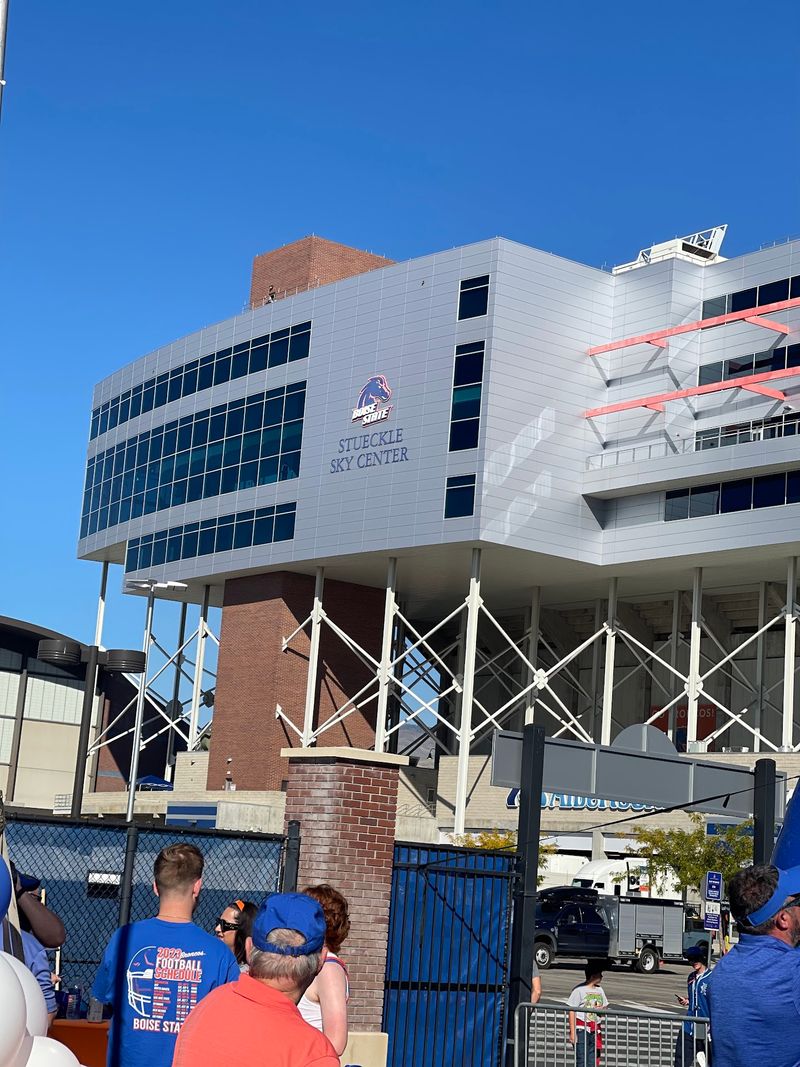
The west side got a major upgrade with the Stueckle Sky Center. It holds luxury suites, club seating, and the press box where broadcasters and writers work.
That tower changed the stadium’s skyline. It also gave media crews a modern home base, which matters for a venue that draws so many national broadcasts.
More recent work brought LED lighting and an updated videoboard in the south end zone. Brighter lights make that blue shine even harder on television.
The north end zone has also seen renovation work aimed at premium seating and better fan flow. Projects like these show the school isn’t treating the stadium as a museum piece.
Here’s my take on it. A legend only stays a legend if people keep showing up, and upgrades help make sure they do.
The blue field gets the fame, but the hard work happens behind it.
Finding Your Way To Bronco Lane
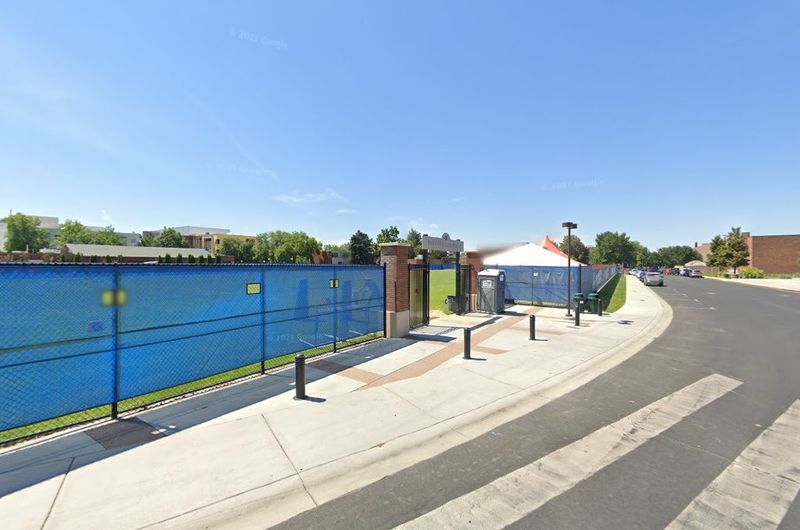
Getting here is refreshingly simple. DeChevrieux Field is located on Bronco Ln, Boise, ID 83706, right on the Boise State University campus.
The campus sits just south of downtown Boise, across the Boise River. That puts the blue turf neighborhood close to restaurants, parks, and the Capitol area.
The Boise River Greenbelt runs nearby along the water. A walk or bike ride along the path makes an easy add-on before or after a visit.
Game days are a different story than quiet weekdays. Plan ahead for parking and crowds when the Broncos play at home, since the area fills with fans.
Tickets for games and events go through Boise State Athletics. Schedules change each season, so check before heading out rather than guessing.
Families on a budget can still enjoy the setting without a game ticket. Walking the campus and seeing the stadium from outside costs nothing and still delivers the bragging rights.
For day-trippers from elsewhere in Idaho, Boise makes a natural stop. Pair a campus visit with downtown and the Greenbelt for a full, easy afternoon.
Wear some blue for good measure.