This Connecticut Mansion Has 62 Rooms, Marble Fireplaces And A Grand Skylit Rotunda You Can Explore On A Guided Tour
Sixty-two rooms. That’s enough space to make finding your way to breakfast feel like a small expedition.
And that’s before you consider the marble fireplaces and grand architectural details.
Historic mansions have a special way of making everyday modern houses seem rather modest.
The appeal isn’t just about the wealth required to build them, though.
A remarkable Connecticut mansion invites visitors to explore its historic interiors and impressive skylit rotunda through guided tours, although not all 62 rooms are open to the public.
Walking through such a building offers a chance to appreciate the craftsmanship behind its elaborate design.
And a guided visit can help explain details you might otherwise walk straight past.
Why were certain rooms arranged the way they were? How did the household function?
Those questions make the experience more interesting than simply admiring beautiful interiors.
Of course, the architecture alone provides plenty to look at.
But understanding the lives once connected to the mansion adds another dimension to its remarkable appearance.
1. A Railroad Tycoon Dreamed Up A House That Was Way Ahead Of Its Time
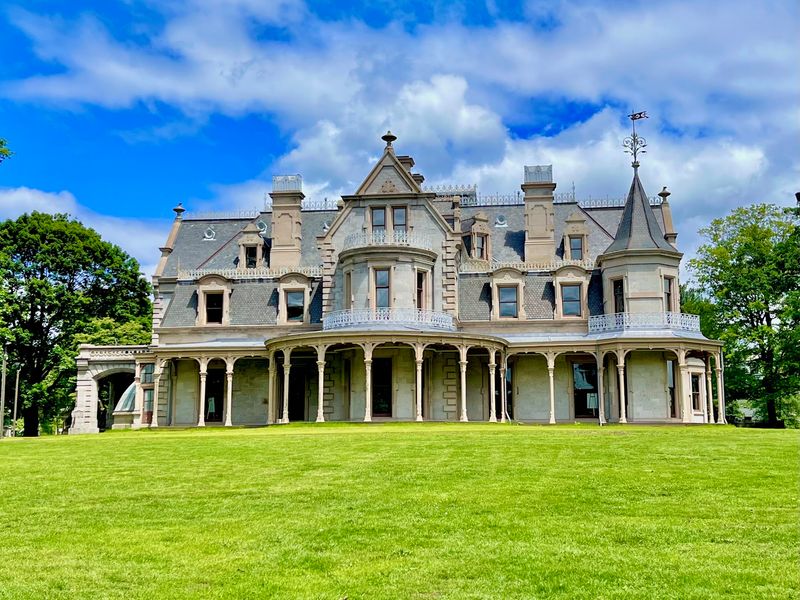
This mansion almost disappeared forever. Hard to believe when you see how grand it is.
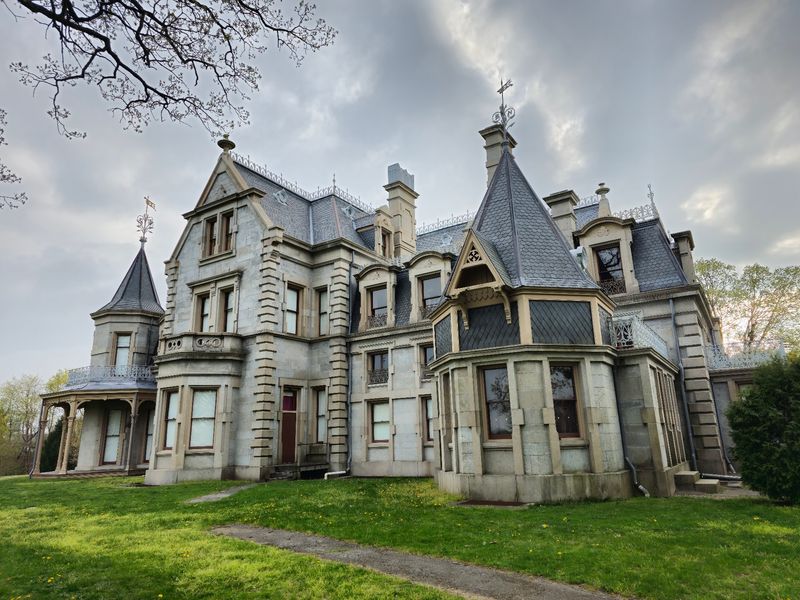
With 62 rooms and an incredible 44,000 square feet of space, it’s the kind of house that makes you wonder how anyone could have lived so extravagantly.
The story of the Lockwood-Mathews Mansion Museum begins with LeGrand Lockwood, a wealthy railroad and banking businessman who wanted an impressive country estate.
Between 1864 and 1868, he built a spectacular French Second Empire mansion known as Elm Park. Architect Detlef Lienau designed the residence, bringing European influences to one of America’s most elaborate private homes.
But Lockwood’s financial success didn’t last. The estate was lost to foreclosure in 1874, just six years after construction ended.
Merchant Charles Drelincourt Mathews purchased the property in 1876, and his family remained there until 1938.
In 1941, the City of Norwalk acquired the estate, but the mansion’s future remained uncertain. Plans to demolish it eventually brought local preservationists together.
Their efforts paid off. The house opened as a museum in 1967 and received National Historic Landmark status in 1971.
It’s remarkable that a building once considered for demolition became such an important piece of local history.
2. Granite Walls Twenty Inches Thick Mean This House Wasn’t Going Anywhere
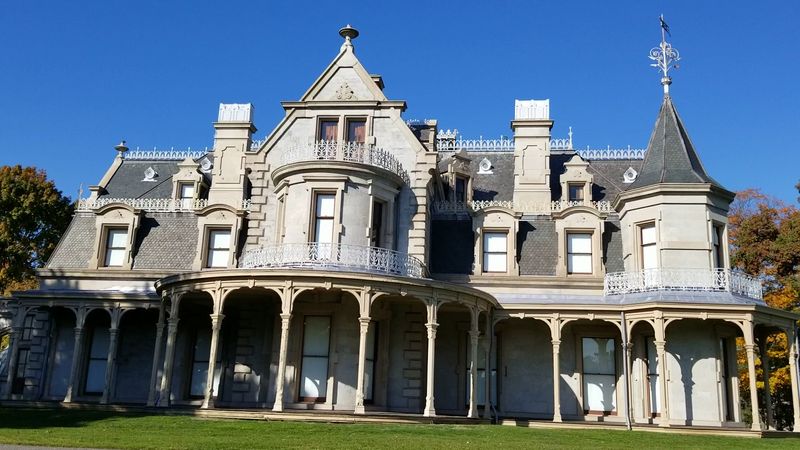
Twenty inches of granite. That’s how thick the stone blocks are on this mansion’s walls, which makes most modern houses look a little flimsy.
The building follows the shape of a Greek cross. Four arms stretch out from a center point, giving the house its balanced, grand footprint.
Look up as you approach. You’ll spot overhanging eaves, rectangular towers, and bays that push outward from the main walls.
The doors and windows are ornate, too. Experts call it one of the earliest and finest surviving Second Empire country houses in the United States.
That style became a big deal in America after the Civil War era. Plenty of fancy homes copied it later, but this one was out front early.
Here’s a fun angle for your visit. Walk around the outside before your tour starts, and count how many different window shapes you can find.
It’s a free bonus activity that kids usually enjoy. It also helps you notice details you’d otherwise hurry past.
Bring a camera for the exterior shots. The gray stone looks especially sharp against a blue sky, and the towers make great framing for photos.
3. Look Up In The Rotunda And Try Not To Gasp
Lions guard the staircase. Carved lion heads sit on the posts of the grand staircase inside the mansion’s famous skylit rotunda.
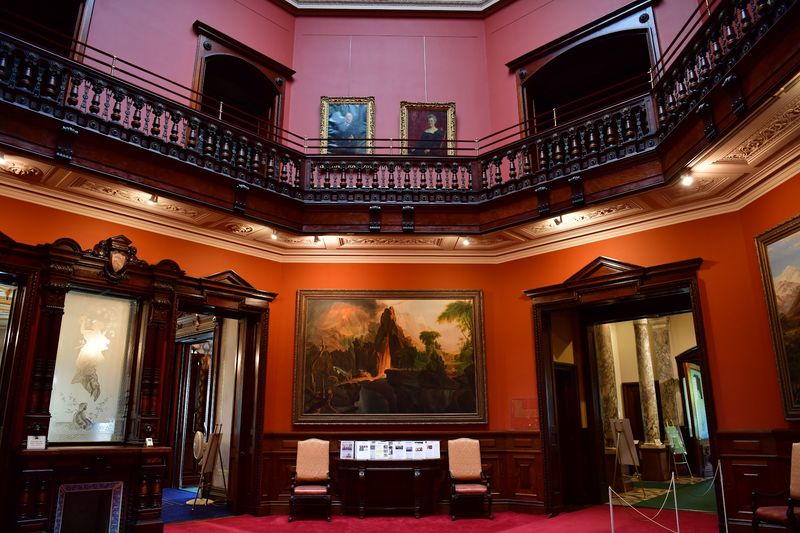
This soaring space sits at the heart of the Lockwood-Mathews Mansion Museum. Light pours down from above, which explains why it first served as an art gallery.
Lockwood wanted his paintings to shine. A big skylight was the smartest way to do that before electric bulbs came along.
The colors have changed over the years, too. At first, the walls wore neutral tones with touches of lavender, rose, and gold.
Later, the Mathews family painted the walls and cove ceiling a deep red. That’s a bold choice, and I believe it works beautifully under natural light.
The rotunda also got attention during the recent restoration. So it’s looking sharper now than it has in quite a while.
Give yourself a moment here. Stand in the center, tilt your head back, and take in the height of the room.
Then check out those lion heads up close. Each one shows off the carving skill that went into nearly every corner of this Connecticut showplace.
4. Book Lovers Will Want To Move Into The Black Walnut Library
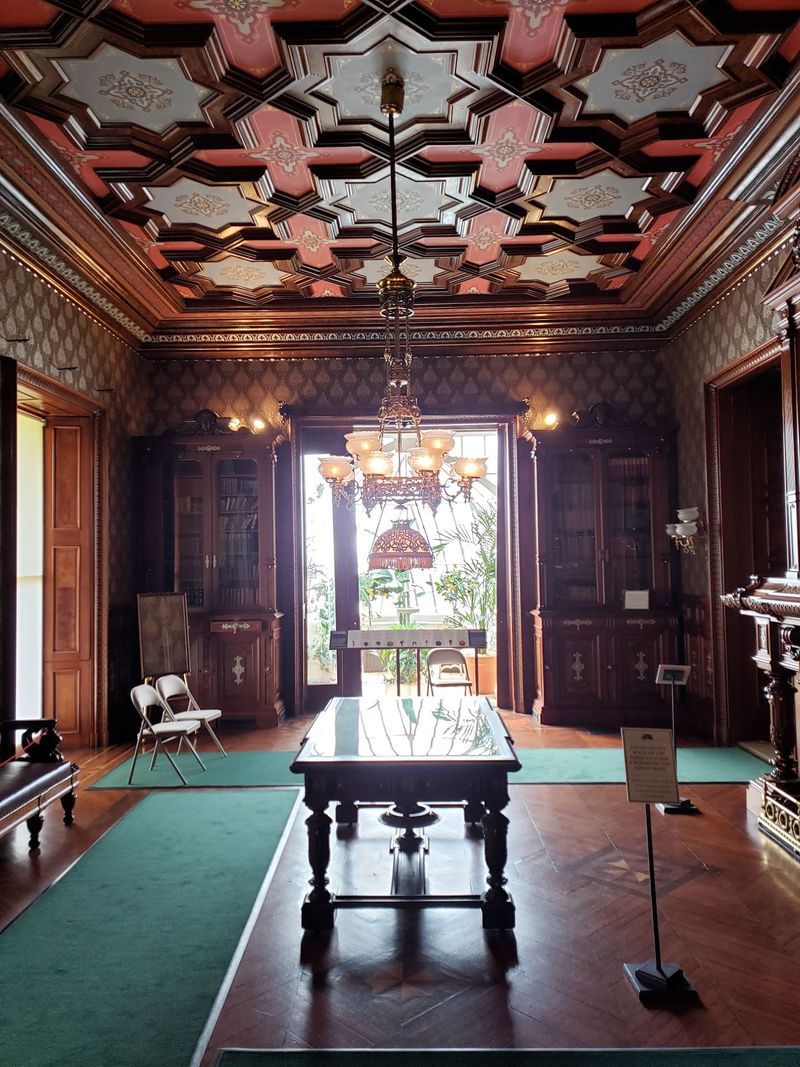
Three thousand books. That’s how many volumes the Library was designed to hold, and it still looks ready for a serious reading marathon.
Designer Leon Marcotte created this room in an Elizabethan style. It’s one of the most impressive rooms on the first floor.
Hand-carved English and American black walnut covers the mantel, door frames, and bookcases. Even the ceiling is coffered black walnut, so the wood wraps around you.
The wallpaper deserves a close look. It was embossed to look like Moroccan leather, and the original pattern has been reproduced.
Now for the secret-agent stuff. The Library includes a rare-book vault, plus special drawers for manuscripts and maps.
Can you blame Lockwood for protecting his treasures? A vault in your library sounds like something from an adventure movie.
Right next door, the Conservatory adds a totally different mood. It has a ribbed half-glass dome and colorful Minton tiles.
It’s an early example of a home conservatory in America. Plants once soaked up the light there, just steps from all those walnut shelves.
Spend an extra minute in both rooms if your docent allows it. The contrast between dark wood and bright glass is a treat.
5. Fancy Woodwork And Painted Ceilings Will Have You Staring Upward All Day
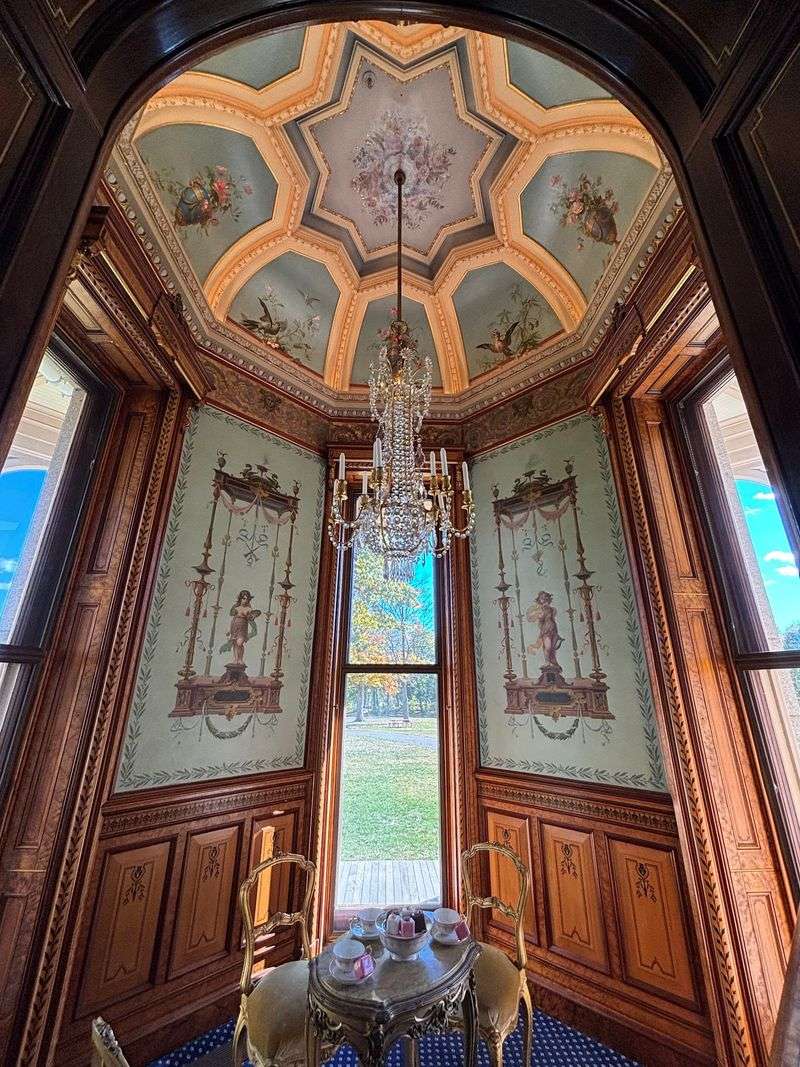
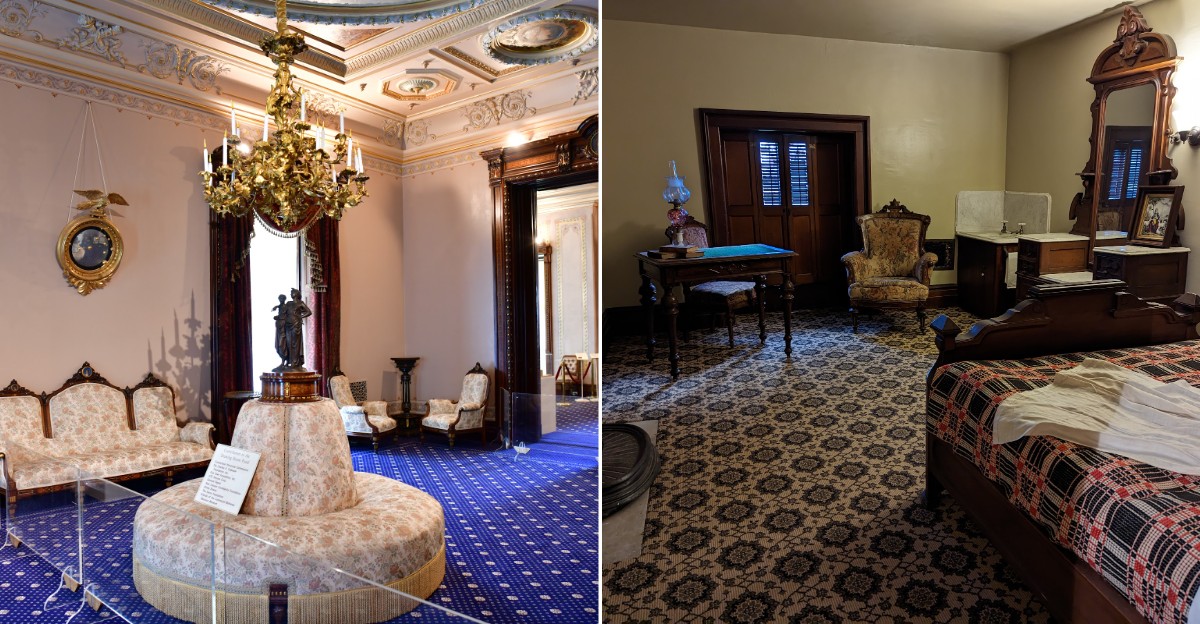
Rosewood inlaid with boxwood, ebony, and cedar of Lebanon. That’s the woodwork recipe in the Drawing Room and Card Room, both designed by the famous Herter Brothers.
The ceilings in those rooms feature paintings by French artist Pierre-Victor Galland. You’ll want to keep looking up, so watch your step.
Speaking of steps, check the floors. Parquet made from different imported woods often forms an eight-pointed star pattern.
The Music Room is another showstopper. It keeps its original vine and rosette designs on the walls, plus a frescoed, paneled ceiling from 1868.
Its bird’s eye maple doors have been called a magnificent achievement in marquetry. That’s a fancy word for fitting tiny wood pieces together like a puzzle.
Then there’s the dining room by George Platt. Its frescoed ceilings show fruits and carved garlands, in a French Renaissance Revival style.
It once held two tables, each seating twelve guests. A silver vault with a wood and iron double door protected the family’s fancy silverware.
Marble fireplaces and stenciled walls appear throughout the house, too. Every room tries to outdo the last one, and honestly, most of them succeed.
6. Hot Showers And Burglar Alarms In The 1860s? You Read That Right
Most families in the 1860s didn’t have indoor plumbing at all. Lockwood’s house had 14 bathrooms and 12 water closets, which was practically unheard of.
Hot and cold running water flowed through the mansion. Gas lighting, ventilation, and a central heating system made life here surprisingly comfortable.
Security got high-tech attention as well. An advanced battery-powered burglar alarm protected the house, and you can still spot its wires on the second floor.
Fun, right? Somebody in 1868 was worried about thieves and decided batteries were the answer.
The house keeps revealing secrets, too. During the recent renovations, workers found a rare cast-iron Beebe stove dated 1867.
It was hidden under a bookshelf in a room believed to be the servants’ dining hall. Imagine moving furniture and discovering something that old.
The mansion also once had two billiard rooms. Add a private theater in the attic, and you’ve got the ultimate 19th-century fun house.
Ask your docent about these features during the tour. The tech side of the Lockwood-Mathews Mansion Museum surprises many people more than the gold and marble do.
7. Pick Your Tour Length Before You Show Up
Short on time or ready to see everything? The museum offers two main guided tours, so you can choose what fits your day.
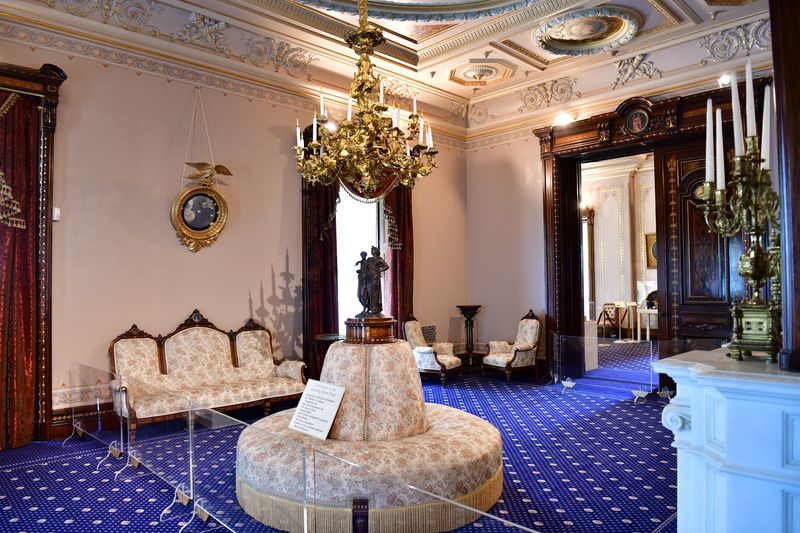
The 45-minute tour covers the stunning first-floor period rooms. It also includes the award-winning servants’ quarters, which show a very different side of mansion life.
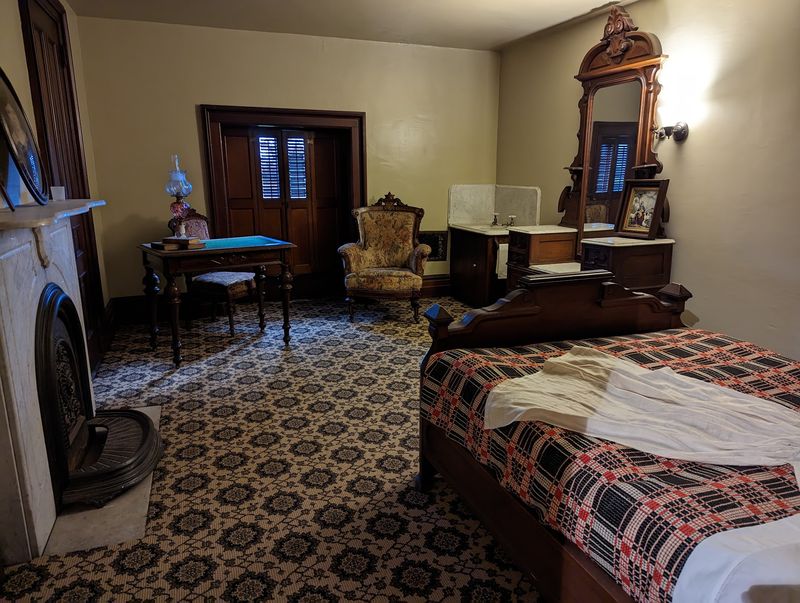
The 90-minute tour adds the second-floor bedrooms. If you love details, that longer option gives you the fullest picture of the house.
Trained docents lead every tour. They explain the decorative art, the architecture, and those clever technology features along the way.
On some days, the museum offers Mini Tours instead. You explore the first floor at your own pace, with docents stationed in each room to answer questions.
My advice is simple. Buy tickets ahead of time, because tours tend to sell out.
The museum is open Wednesday through Sunday from noon to 4 p.m. It’s closed Monday and Tuesday, so plan around that.
Arrive a little early, too. That gives you time to admire the outside before your group heads in, and nobody likes rushing past marble fireplaces.
8. Fresh Upgrades And New Exhibits Give You Reasons To Come Back
June 4, 2025 was a big day in Norwalk. The Lockwood-Mathews Mansion Museum reopened after a two-year closure for major restoration and upgrades.
The work wasn’t just cosmetic. Crews added an HVAC system, fire suppression, new lighting, and Wi-Fi, which helps the house stay open year-round.
Air conditioning in a Victorian mansion? That’s great news for anyone touring on a muggy summer afternoon.
The project also created new archival storage and an educational center. The gift shop, rotunda, and several exhibition spaces got improvements as well.
Newly discovered artifacts were revealed with the reopening. So even past visitors have fresh things to see.
Exhibitions keep rolling in, too. Revolutionary Roots runs from June 11, 2026, to January 24, 2027.
The Evolving Icon follows from October 7, 2026, to January 3, 2027. Some tour types may include these shows, so ask when booking.
The museum also plans concerts, community events, and educational programs. I like that this old house keeps finding new ways to stay lively.
9. Holiday Sparkle And A Whole Park Make The Trip Even Better
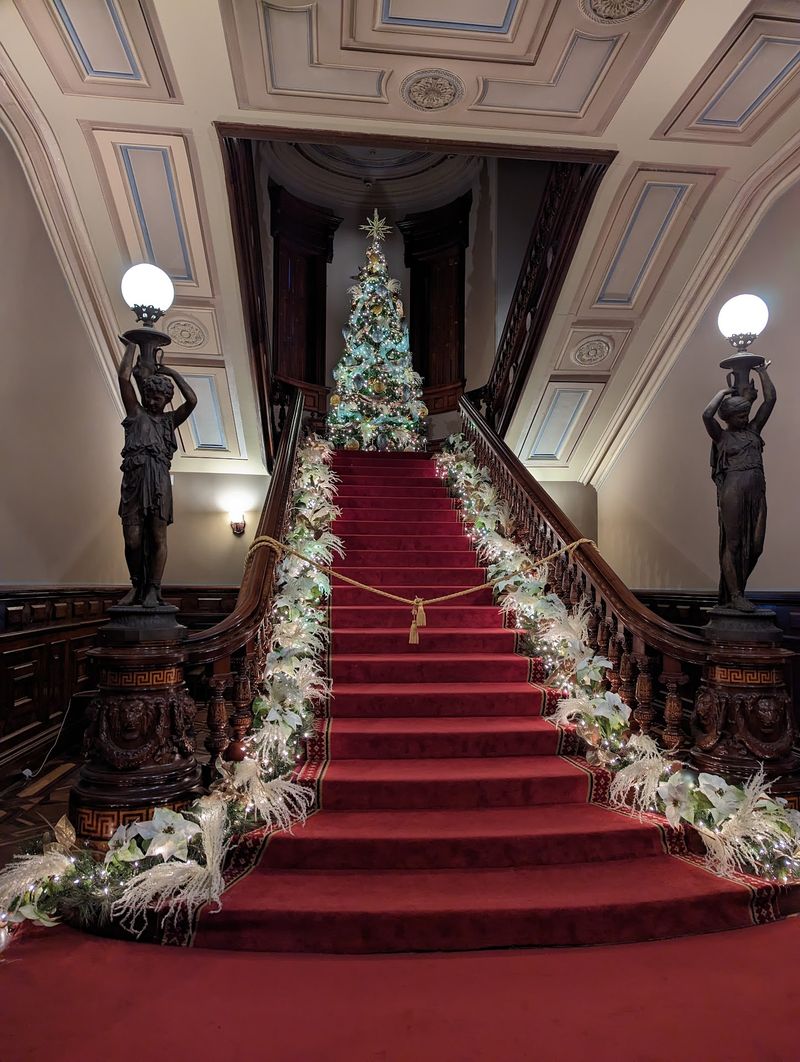
Christmas decorations look even more impressive inside a grand old mansion. Especially when the rooms already have so much character.
Add some festive music and a visit from Santa, and the whole experience starts feeling like a holiday tradition worth keeping.
That’s part of the seasonal appeal of the Lockwood-Mathews Mansion Museum, where decorators have historically transformed around a dozen rooms into elaborate holiday displays.
The mansion has also hosted community celebrations featuring Christmas music and refreshments, giving families another reason to visit during the festive season.
History lovers have something else to appreciate here. An annual antique show, first held in 1978, became another longstanding museum tradition.
The surrounding grounds are worth exploring, too. Mathews Park includes a playground, tennis courts, picnic areas, and a historic cemetery.
Families can also visit the nearby Stepping Stones Museum for Children, while an arts center adds another interesting stop.
The mansion stands at 295 West Avenue, Norwalk, CT 06850, making it easy to combine several attractions in one outing.
You could spend time exploring the historic property before enjoying a relaxing walk through the park.
With so much to see nearby, the mansion makes an interesting starting point for a day in Norwalk.