The Longest Stretch Of Victorian-Era Homes In America Is In Minnesota, And It Feels Like Another Century
Three hundred seventy-three historic homes still line one single avenue.
That number made me grin, because old neighborhoods usually lose houses the way dryers lose socks.
The reason it matters is pretty simple. Plenty of cities saved a famous mansion or two.
This street saved the whole parade, with turrets, stone arches, and grand porches standing shoulder to shoulder.
Then there’s the length. The stretch runs about four and a half miles in Minnesota.
It’s often called the longest continuous line of Victorian-era homes in the country. Railroad tycoons and lumber barons built many of them.
A famous young novelist once finished his first book here. A sitting governor still lives here today.
Big money, big dreams, and everyday sidewalks all share the same blocks, which is exactly why it still feels lived in.
Four And A Half Miles Of Turrets Is A Lot Of Turrets
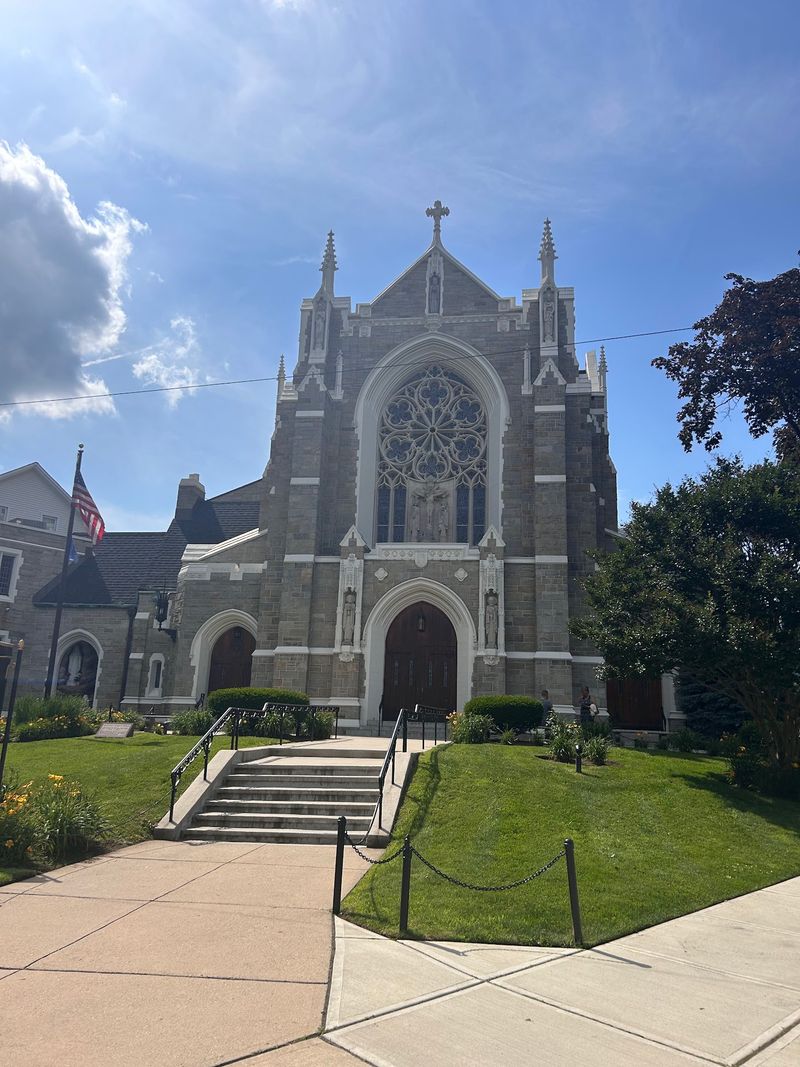
Summit Avenue in St. Paul is the star of this whole story. It runs roughly four and a half miles, from the Cathedral of Saint Paul near downtown to the bluffs above the Mississippi River.
Along the way, 373 of the original 440 historic homes still stand. That’s a remarkable number for one street, especially in a city that kept growing and changing for more than a century.
Minnesota doesn’t usually brag loudly, but this architectural achievement is worth celebrating.
Residential development began in the 1850s, with the first major wave of mansion construction taking place during the 1880s. The elevated eastern section offered attractive views and some distance from the busy downtown below.
Today, Summit Avenue is still a working neighborhood street. People live in these houses, walk dogs past them, and rake leaves off their lawns every fall.
That’s what makes the place feel special instead of staged. You’re not touring a museum village behind a fence. You’re strolling through real blocks where history simply never moved out, and the mailboxes prove it.
The Railroad King Built A House That Could Swallow Your Whole Block
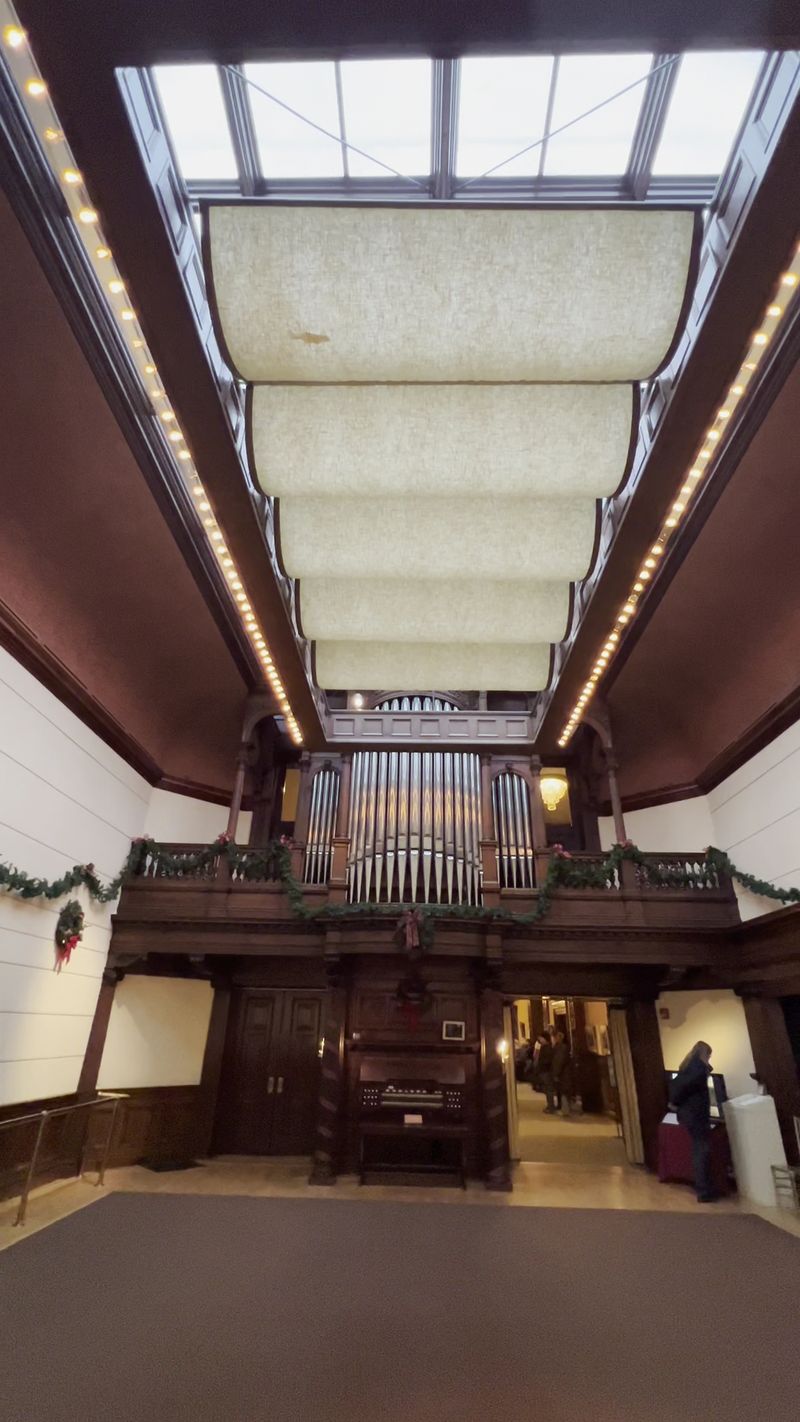
Some people buy a big house. James J. Hill, the railroad tycoon behind the Great Northern Railway, built one that covers approximately 36,500 square feet across five floors.
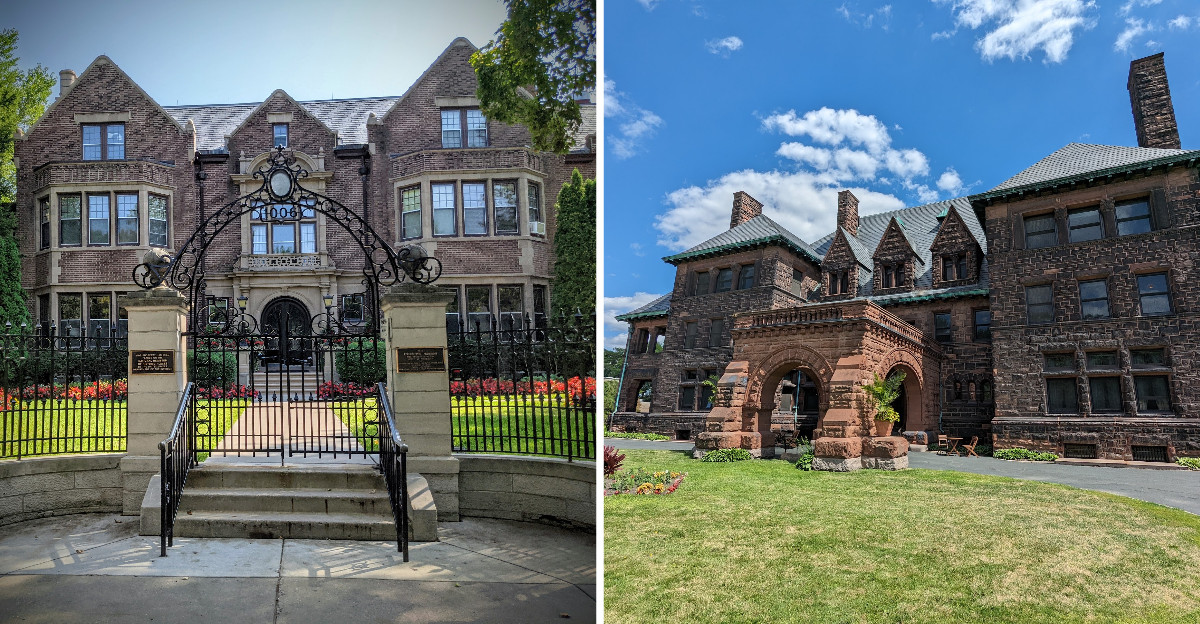
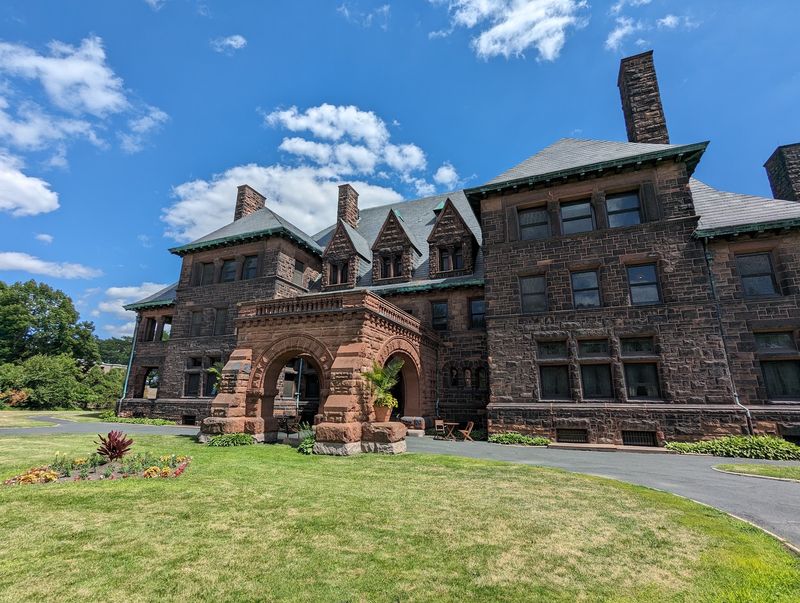
The James J. Hill House was completed in 1891. It’s made of rugged red sandstone in the Richardsonian Romanesque style, with heavy arches that look ready to outlast a few more centuries.
Inside, the mansion held features that were remarkably advanced for the time. Think hand-carved woodwork, a two-story art gallery, elaborate chandeliers, and sophisticated systems for heating, lighting, and ventilation.
The mansion also contains 22 fireplaces and 13 bathrooms, which certainly puts ordinary household cleaning into perspective.
You’ll find it at 240 Summit Avenue, St. Paul, MN 55102. The Minnesota Historical Society operates the property, offering guided tours that introduce visitors to the mansion’s architecture and family history.
The house sits near the eastern end of Summit Avenue, making it a convenient starting point for exploring the neighborhood.
Begin with this enormous mansion and then compare the other houses to it. Few can compete with its sheer size.
A Giant Copper Dome Keeps Watch Over The Whole Street
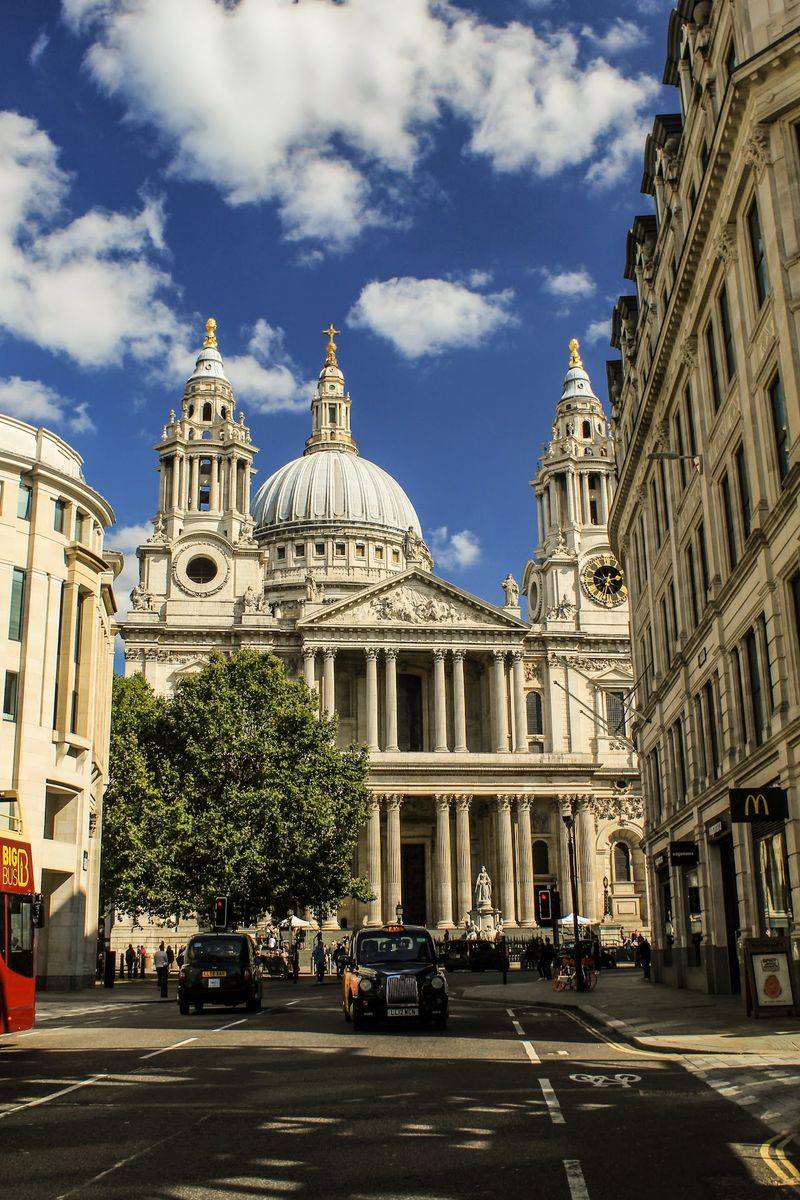
Talk about a grand front door. Near the eastern end of Summit Avenue stands the Cathedral of Saint Paul, one of the most recognizable buildings in Minnesota.
Its huge copper dome rises above the hill and can be seen from many spots around the city. Construction began in 1906, and the building held its first Mass in March 1915.
The cathedral was designed by French architect Emmanuel Louis Masqueray. Its architecture draws heavily from classical European traditions, incorporating symmetry, monumental columns, rounded arches, and an enormous central dome.
Inside, marble surfaces, stained-glass windows, and intricately decorated chapels offer plenty of details to admire.
For a Summit Avenue visit, the cathedral works as a natural landmark. It’s easy to spot, easy to meet friends near, and hard to lose track of while exploring.
Self-guided visits are welcome when religious services and other church activities permit.
The view from this part of the avenue is a treat, too. Downtown unfolds below, while historic residential blocks extend westward. It’s like standing at the opening scene of a long, leafy history book.
A Famous Writer Sat In An Upstairs Room And Changed His Life
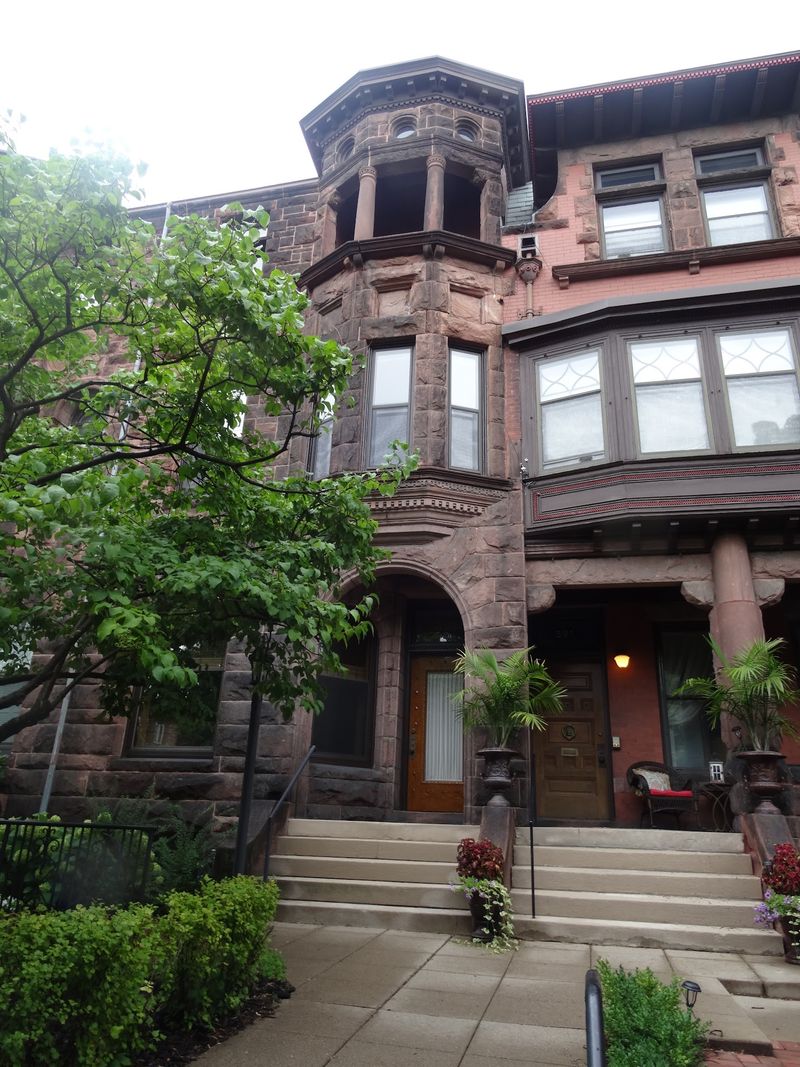
Before he wrote The Great Gatsby, F. Scott Fitzgerald was a young man living with his parents. Their home was a brownstone rowhouse within Summit Terrace, at 599 Summit Avenue.
In 1919, he completed the manuscript that became his first published novel, This Side of Paradise. The book came out in 1920 and brought him widespread literary recognition.
Fitzgerald was born in St. Paul in 1896. He lived at several addresses around this neighborhood, including another residence within the same row of houses.
His former home became a National Historic Landmark in 1971, recognizing its importance to American literary history.
Summit Terrace remains a private residential property. That means you can admire it from the sidewalk while respecting the occupants’ privacy.
It’s an interesting stop for students who’ve read The Great Gatsby in English class. Standing outside the building gives his early writing career a tangible connection to the neighborhood.
The rowhouse also demonstrates the variety of residential architecture along Summit Avenue. A young writer pursuing a literary career belongs in its history just as much as a railroad magnate.
Spot The Styles And Turn Your Walk Into A Game
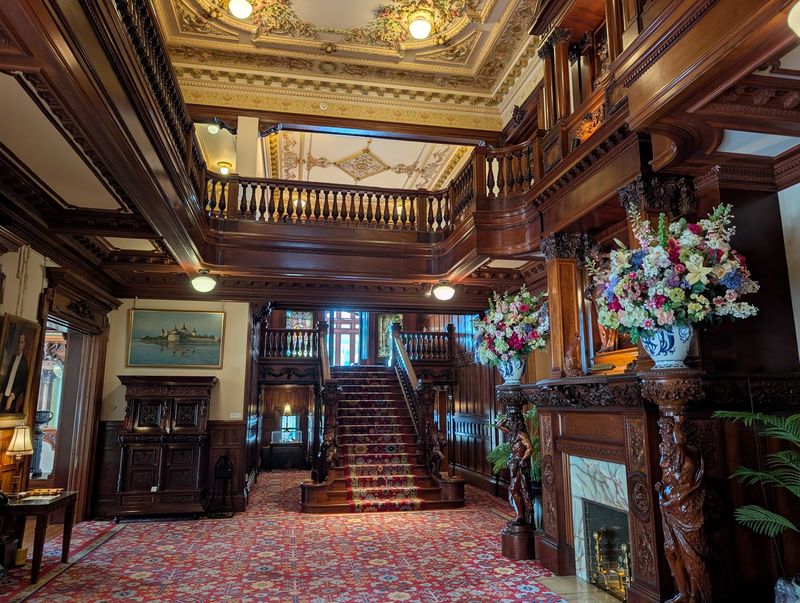
Ready for a scavenger hunt with no prizes except bragging rights? Summit Avenue mixes several architectural styles, and picking them out makes a long walk fly by.
Queen Anne houses are the show-offs. Look for round towers, wraparound porches, fancy trim, asymmetrical rooflines, and walls covered in different textures.
Romanesque Revival homes have a more substantial appearance. They often incorporate thick masonry, wide rounded arches, and recessed doorways, like the James J. Hill House near the eastern end.
You’ll also spot Colonial Revival and Tudor-inspired residences. Their distinctive features illustrate how architectural preferences evolved as the nineteenth century gave way to the twentieth.
Second Empire architecture adds another interesting variation, with its recognizable mansard roofs and decorative details.
A simple trick helps beginners. Look at the roofline first, then the windows, then the porch. Those three features often provide useful clues about a building’s architectural influences.
Bring a camera, but remain on public sidewalks. Most of these properties are private homes rather than public attractions.
By the end, you may start noticing turrets in your own town. Consider that a happy side effect of spending an afternoon in St. Paul.
The Governor Lives Right Here, Like A Very Official Neighbor
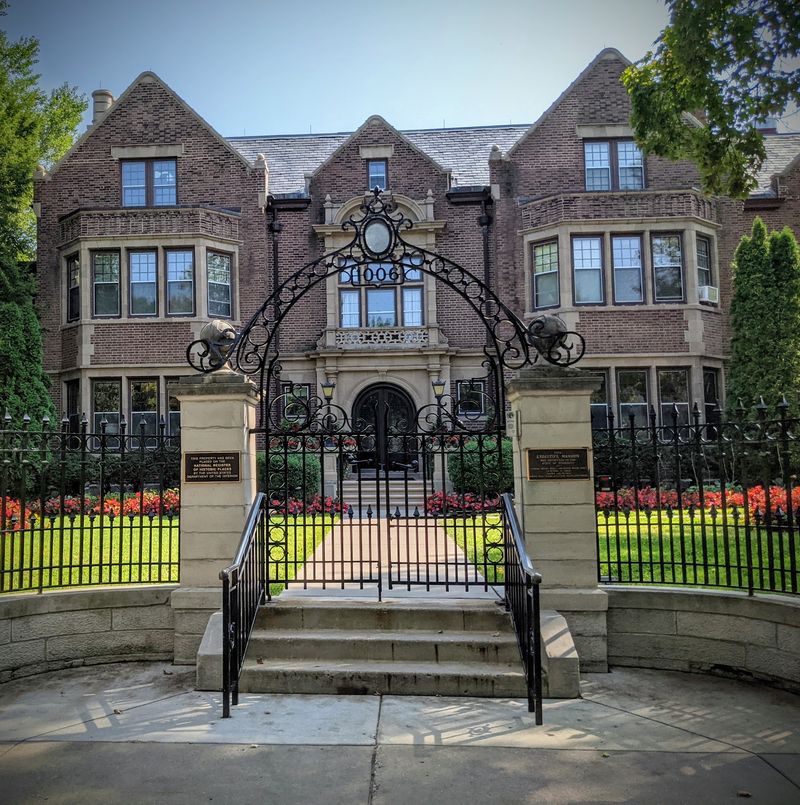
Among the avenue’s collection of historic houses stands one residence with an especially important modern purpose.
The Minnesota Governor’s Residence occupies 1006 Summit Avenue. It’s a stone-and-brick mansion inspired by English Tudor country estates, completed in 1912 for the Irvine family.
The residence originally belonged to a prominent lumber businessman and lawyer. Its architecture incorporates both Tudor influences and elements of the Beaux-Arts tradition.
In 1965, two of the Irvine daughters donated the house and surrounding property to the state. Since then, it has served as the governor’s official residence and a setting for ceremonial functions.
The building now encompasses slightly more than 16,000 square feet, including seven bedrooms, ten bathrooms, and nine fireplaces.
Public tours have occasionally taken place, although there is no regular walk-in sightseeing schedule. Visitors can appreciate the property’s exterior from public areas.
The residence demonstrates how Summit Avenue continued developing after the Victorian era. More than a century after its construction, the former family mansion remains an active part of state government.
Your Sneakers Are The Best Way To See It All
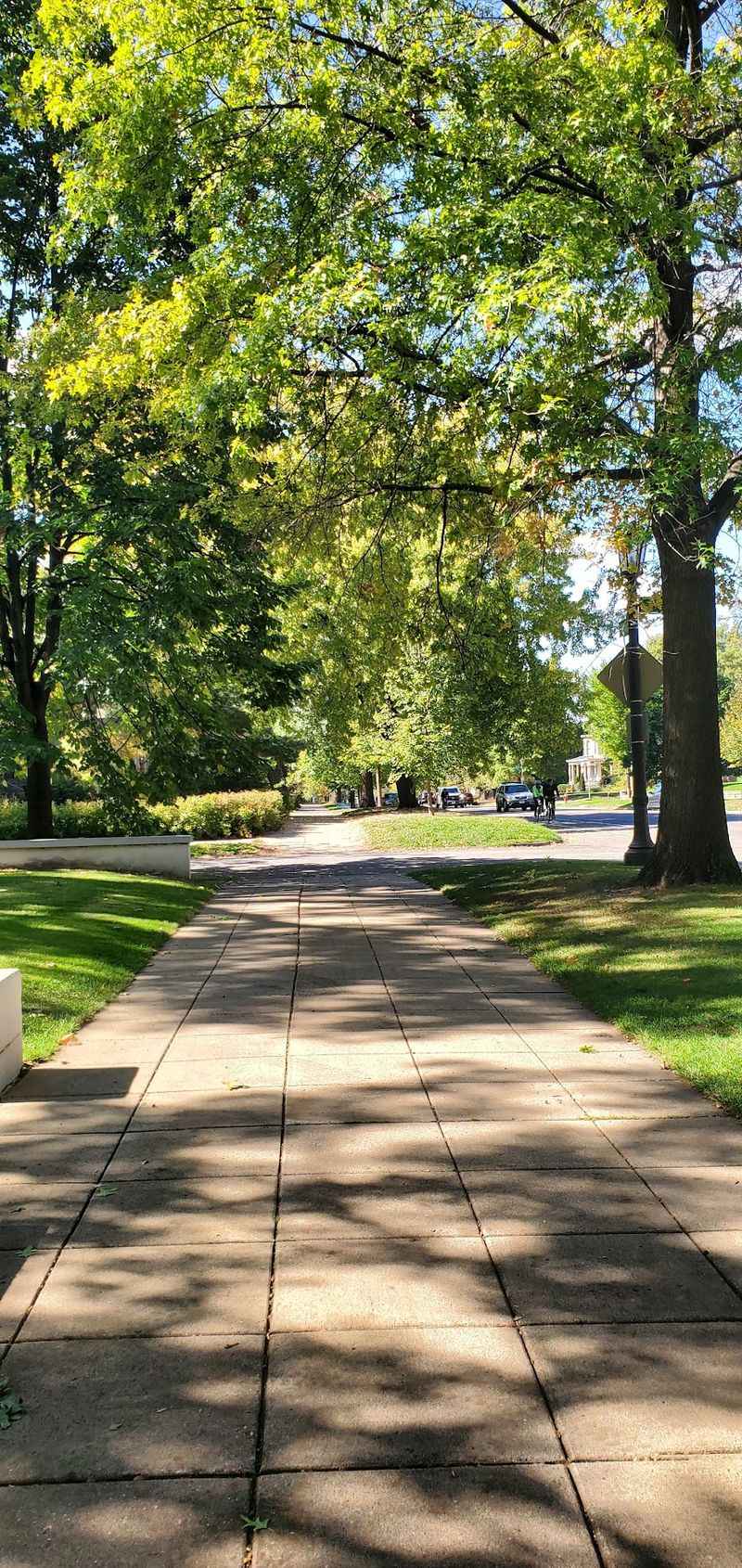
Cars pass too quickly to appreciate the details. Summit Avenue really shines when you explore it on foot or by bicycle.
West of Lexington Parkway, the avenue opens into a broad boulevard with a landscaped central median. Mature trees contribute to its park-like appearance.
Summit Avenue also has bicycle lanes along much of its length, providing connections between several St. Paul neighborhoods.
Planning helps a lot here. The full stretch is approximately four and a half miles, so choosing one section at a time makes the experience more manageable.
Start near the cathedral, where several particularly elaborate mansions stand close together. Summit Overlook Park provides another worthwhile stop, offering views across downtown and the surrounding landscape.
Comfortable shoes are a must, and drinking water is useful in summer. Fall brings colorful foliage, creating a particularly attractive backdrop for the historic homes.
Seasonal guided walking tours depart from the James J. Hill House between June and October.
These tours last approximately 90 minutes and cover one and a half miles, introducing participants to the neighborhood’s architecture, former residents, and preservation history.
A Community Came Together To Keep These Houses Standing
Old houses don’t survive by luck alone. Throughout the twentieth century, changing development patterns transformed many historic residential neighborhoods across America.
Summit Avenue experienced similar pressures. Maintaining enormous nineteenth-century residences became increasingly challenging, and some properties acquired different uses over time.
Neighbors and preservation organizations helped protect the avenue’s architectural character.
The Historic Hill District, which includes Summit Avenue’s eastern section, joined the National Register of Historic Places in 1976. The West Summit Avenue Historic District followed in 1993.
By 1990, the entire avenue was covered by local historic preservation designations. These protections established a framework for reviewing alterations and preserving significant architectural features.
A neighborhood planning initiative adopted in 1986 also emphasized maintaining the avenue’s predominantly residential character.
Property owners continue carrying a substantial share of the responsibility. Maintaining slate roofs, historic windows, masonry, and intricately carved trim requires patience and specialized craftsmanship.
Next time you admire a freshly painted porch, remember the work involved in preserving it. Those individual efforts help explain why such an extraordinary collection of historic homes remains together today.