Perched On A Mountainside Since 1908, A Japanese-Style Pagoda Glows Over A Pennsylvania City
A 1739 bronze bell from a Buddhist temple near Tokyo hangs inside a seven-story pagoda in Pennsylvania. Yes, really.
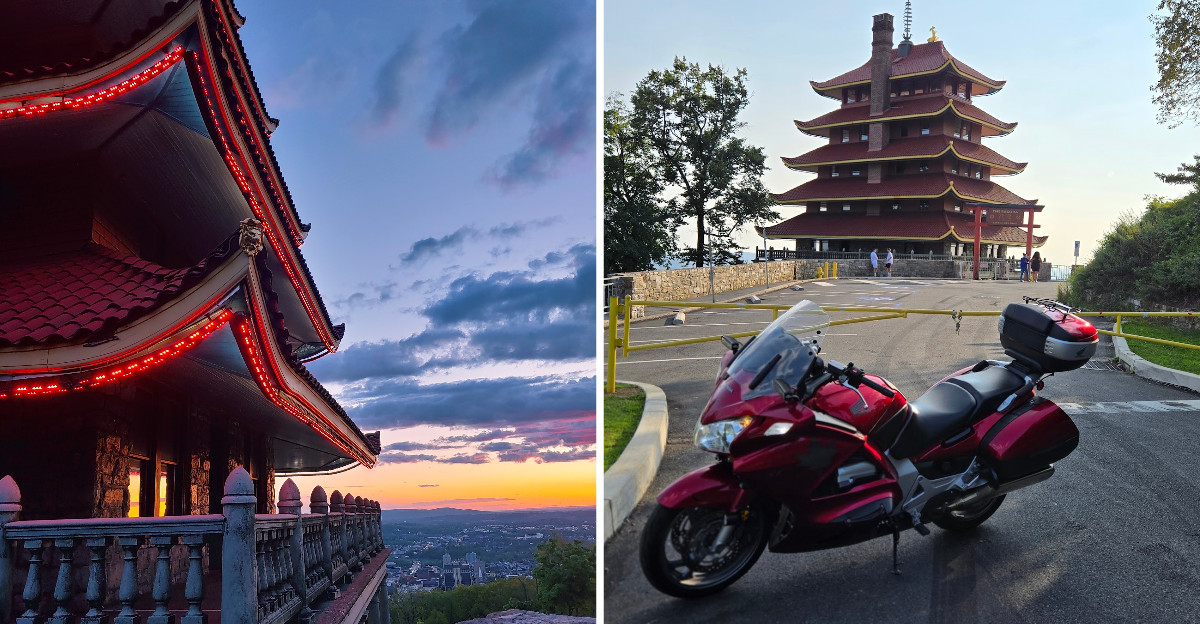
It sits on a mountainside, high above a busy city, glowing red after dark.
The story gets stranger.
A local businessman built it as the centerpiece of a fancy resort. The resort plan fizzled, and the whole thing ended up in public hands for one dollar.
I like how the building makes zero geographic sense and still feels completely at home.
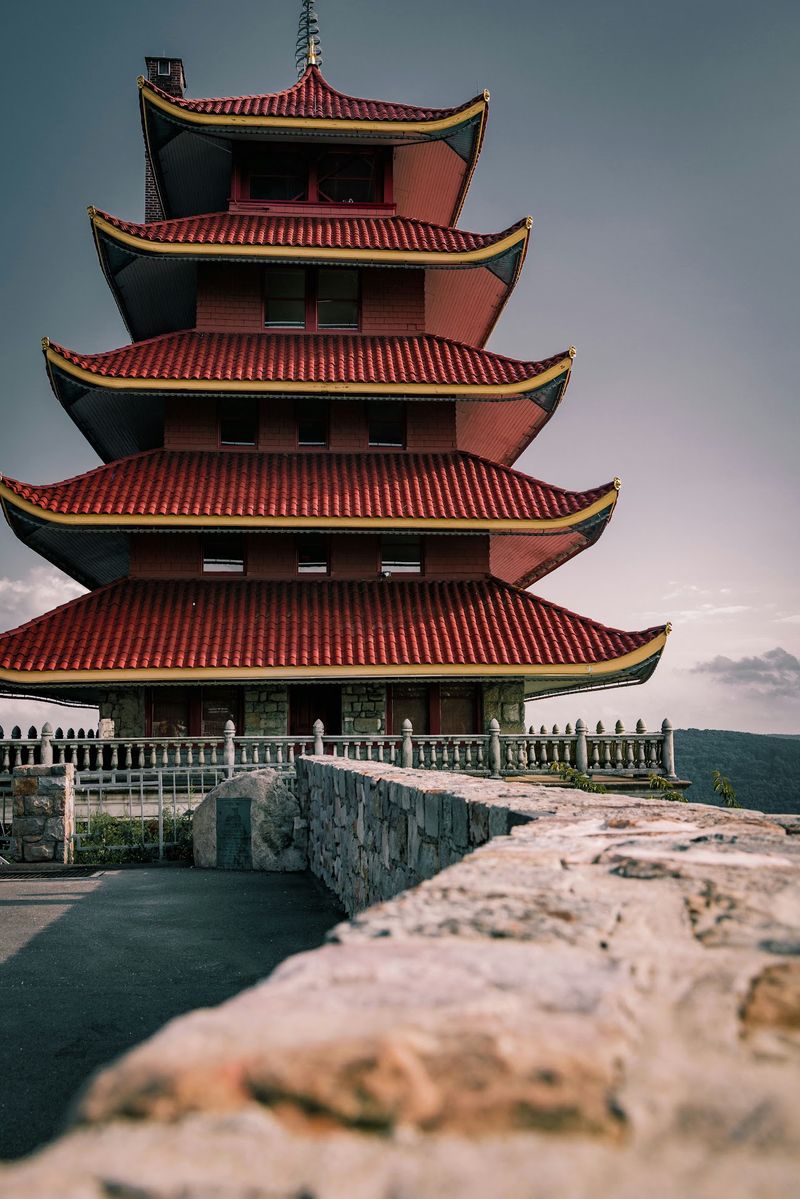
Five red roofs curl upward over the treetops. A torii gate stands at the entrance, like a polite welcome mat from across the world.
Then there’s the view, stretching for miles over rooftops and farmland. Sunset turns the sky orange while the city lights flicker on below.
So how did a Japanese-style pagoda end up here, of all places?
A Red-Roofed Surprise On The Side Of A Mountain
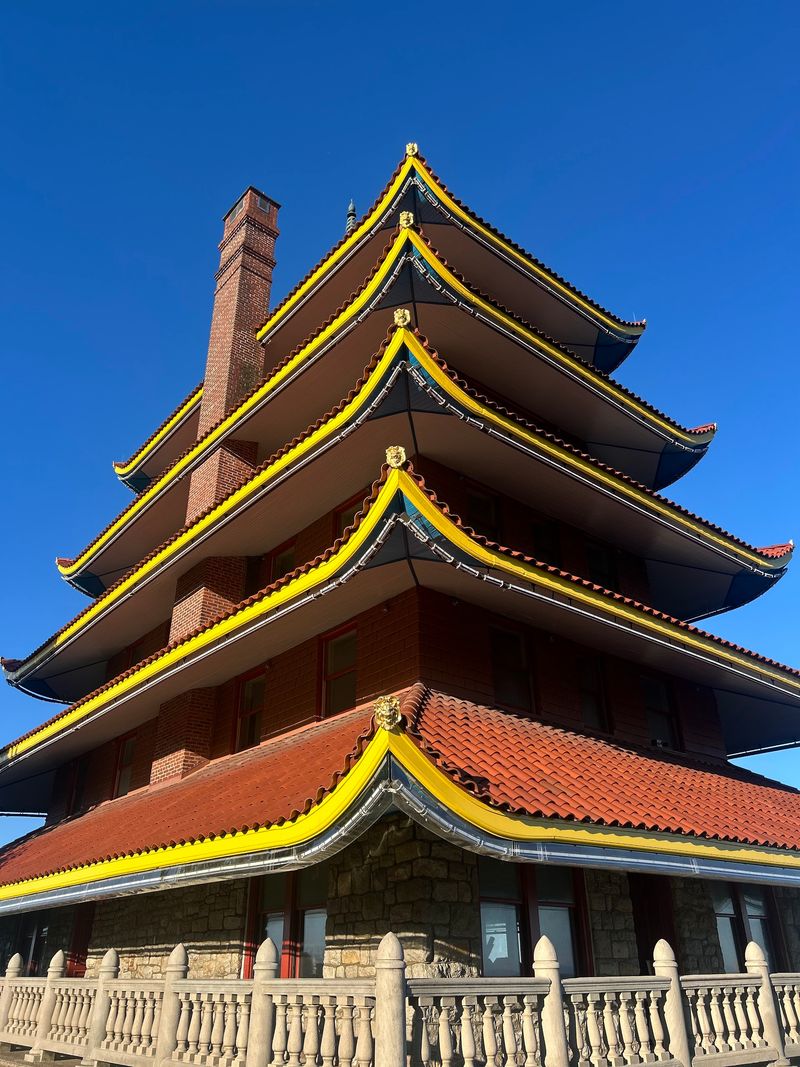
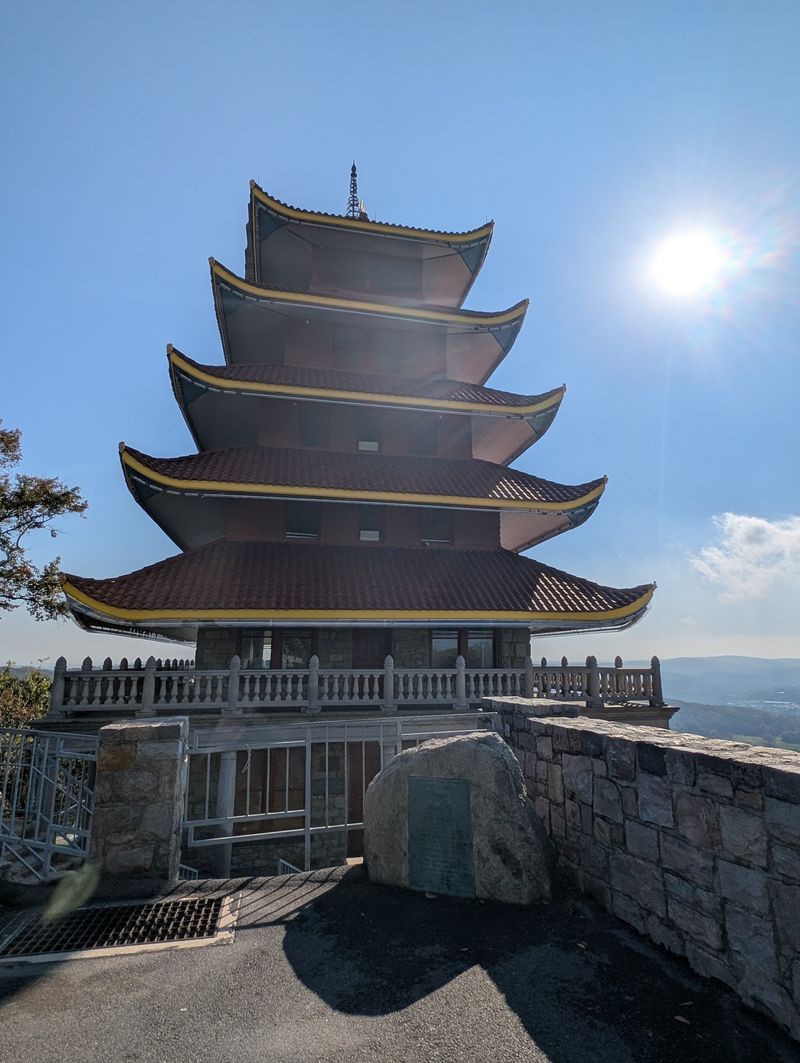
Drive up the slopes of Mount Penn and the treeline suddenly gives way to five sweeping red roofs. The Reading Pagoda has watched over the city of Reading since 1908.
It stands at 98 Duryea Drive, Reading, PA 19602, about 620 feet above the city below. The building rises 886 feet above sea level, which explains why you can spot it from all over town.
Officially, it’s a historical landmark owned by the City of Reading. The Foundation for the Reading Pagoda helps care for it, working alongside Pagoda Skyline Inc. That’s a lot of people looking after one very unusual building.
Here’s what makes it such a fun Pennsylvania stop. You don’t need a passport or a long flight to see Japanese-style architecture on a dramatic scale.
You just need a car, a bit of patience on the curvy roads, and some curiosity.
The pagoda measures 72 feet tall, 50 feet long, and 28 feet wide. Seven stories stack up toward the sky, crowned by those famous upswept eaves.
Each roof sits about two feet back from the one beneath it.
Honestly, it looks like it wandered off a postcard and decided to stay. Good luck driving past without staring.
The Resort Dream That Never Quite Happened
William A. Witman Sr. had big ideas for Mount Penn in the early 1900s.
He was a local businessman, and he wanted a luxury resort with a showpiece pagoda at its heart.
Construction ran from 1906 to 1908. Building something this elaborate on a mountainside back then took serious nerve.
Workers didn’t have modern machinery to haul materials up those slopes.
The resort itself never came together, though. Witman couldn’t secure the license he needed for the business, and his plans stalled.
The pagoda was finished, but the grand getaway around it never followed.
So what happens to a seven-story pagoda without a resort? It changes hands, of course.
In 1910, businessman Jonathan Mould bought the building along with ten acres of land.
That sale set the stage for the next twist in the story. Mould didn’t hold onto it for long.
His decision would shape how the pagoda is enjoyed today.
I can’t imagine pouring that much effort into a dream and watching it drift away. Still, the failed resort gave Pennsylvania something better than a private retreat.
It gave everyone a landmark they could actually reach.
One Dollar Bought The Whole City A Landmark
Talk about the deal of the century. In 1911, Jonathan Mould and his wife gifted the pagoda and its land to the City of Reading for just one dollar.
That symbolic sale changed everything. Instead of becoming a private estate, the pagoda turned into a public landmark.
Families from Reading and beyond have been able to visit ever since.
Recognition followed decades later. The pagoda joined the National Register of Historic Places in 1972.
That listing honors both its design and its place in local history.
Then there’s a delightfully odd claim to fame. The Reading Pagoda is described as the only pagoda in the world with a fireplace and chimney.
Apparently, Pennsylvania winters demanded a few adjustments to traditional design.
That detail makes me smile every time. Picture an elegant Japanese-style tower quietly hiding a very practical heating plan.
It feels like such a Pennsylvania compromise.
The city still owns it more than a century later. Every sunset view and every photo snapped from the hilltop traces back to that tiny one-dollar handshake.
Not bad for pocket change.
A Temple Bell That Crossed An Ocean
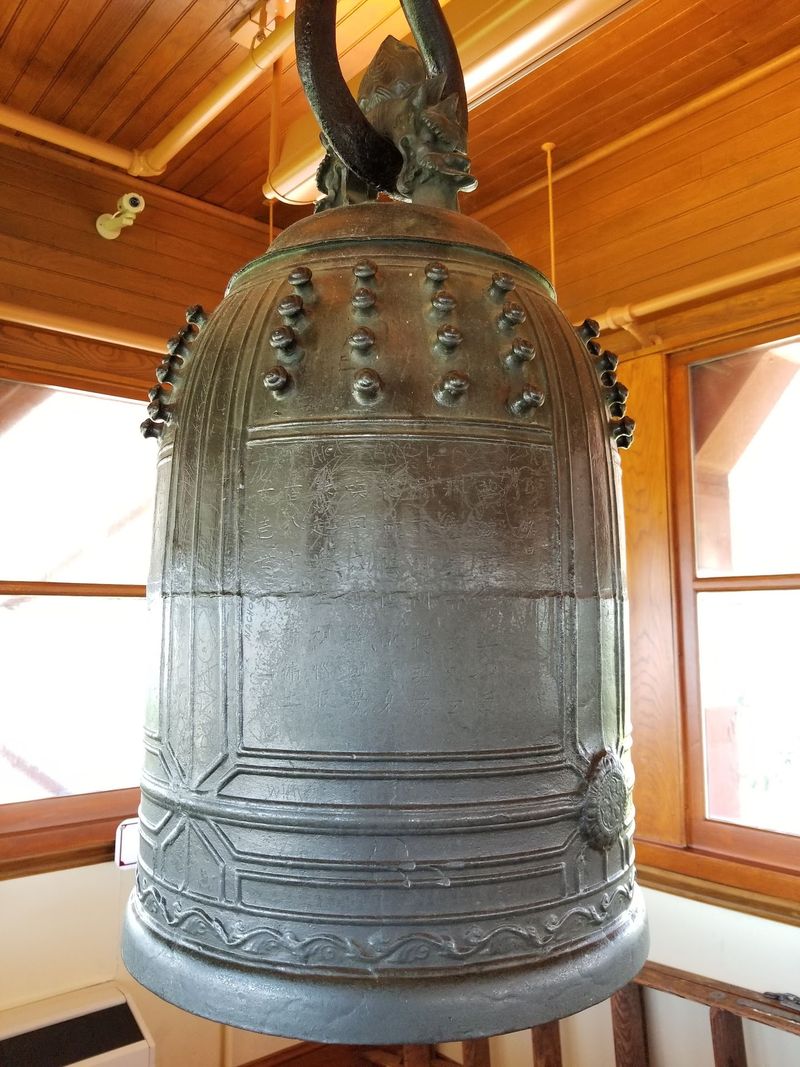
Cast in 1739 in Obata, in Japan’s Mie Prefecture, the pagoda’s bell is older than the United States. That fact alone deserves a moment of respect.
The bell once hung in a Buddhist temple near Tokyo. Witman purchased it in 1906 while his pagoda was taking shape.
It arrived in Reading in 1907, ready for its new home on the mountain.
Today it hangs in the top story of the Reading Pagoda. The bell is a tocsin, a type traditionally used to sound signals.
Its journey from a Japanese temple to a Pennsylvania hilltop is one of the best stories here.
Think about the logistics for a second. Shipping a massive bronze bell across the Pacific and up a mountain in the early 1900s was no small task.
Somebody really wanted this pagoda to feel authentic.
The bell connects the building to something genuinely Japanese, not just Japanese-inspired. It gives the whole structure a deeper sense of history.
Every roofline suddenly feels a little more meaningful.
Interior access is limited right now because of renovations. Even so, knowing that centuries-old bell rests up top makes the view from outside feel richer.
Flashing Lights Once Sent Messages Across Town
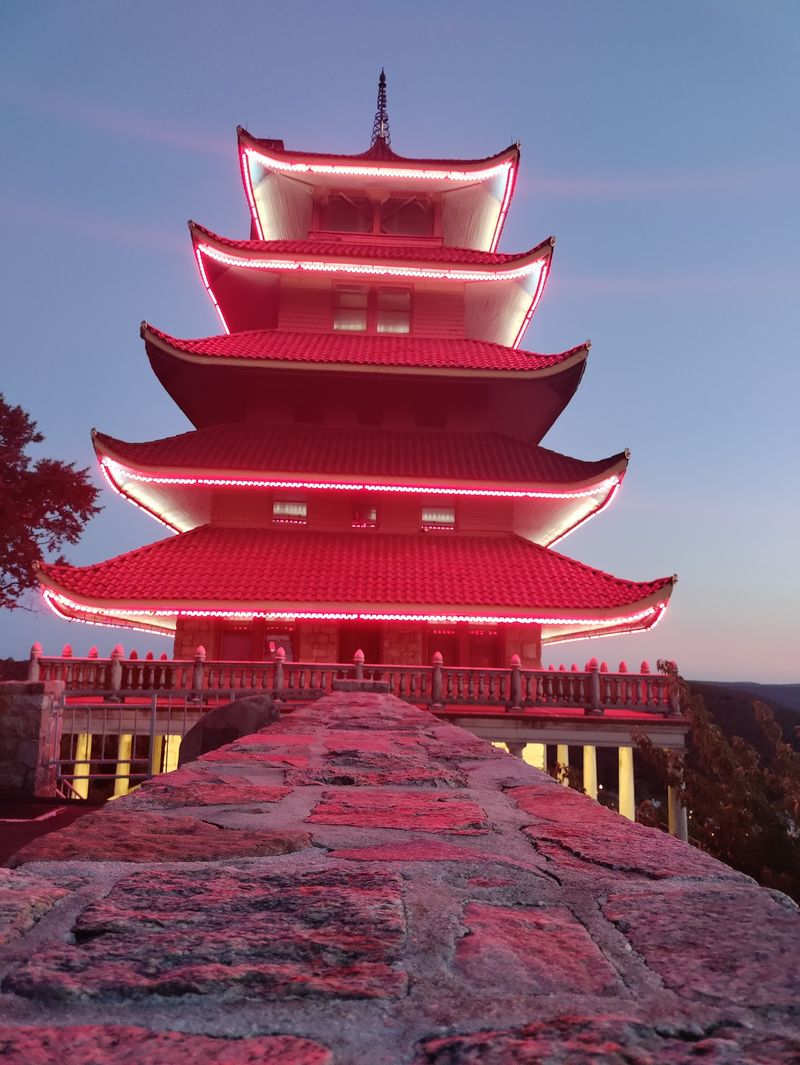
Long before radio, the pagoda doubled as a giant signal lamp. Lights atop the building sent Morse code messages down to the city.
Those flashes reportedly helped direct firefighters toward blazes around Reading. They also shared results from sporting events.
Imagine checking the score by looking up at a mountain.
That practical role turned the pagoda into more than decoration. It became part of how the city communicated.
Not many landmarks can claim both beauty and a day job.
The lighting tradition never really went away. Around the holidays, the pagoda’s red glow ties into a local custom.
Children in Reading are told the lights mean Santa is on his way.
I love that the same building once relayed fire calls and now helps with holiday magic. It shows how a city can adopt a landmark and keep finding new uses for it.
The pagoda simply keeps adapting.
Today, its lights make it easy to spot after dark from miles around. Some find the modern LED glow a bit flashy for such a historic structure.
Either way, it’s hard to miss once night falls.
Sunsets Here Do Most Of The Talking
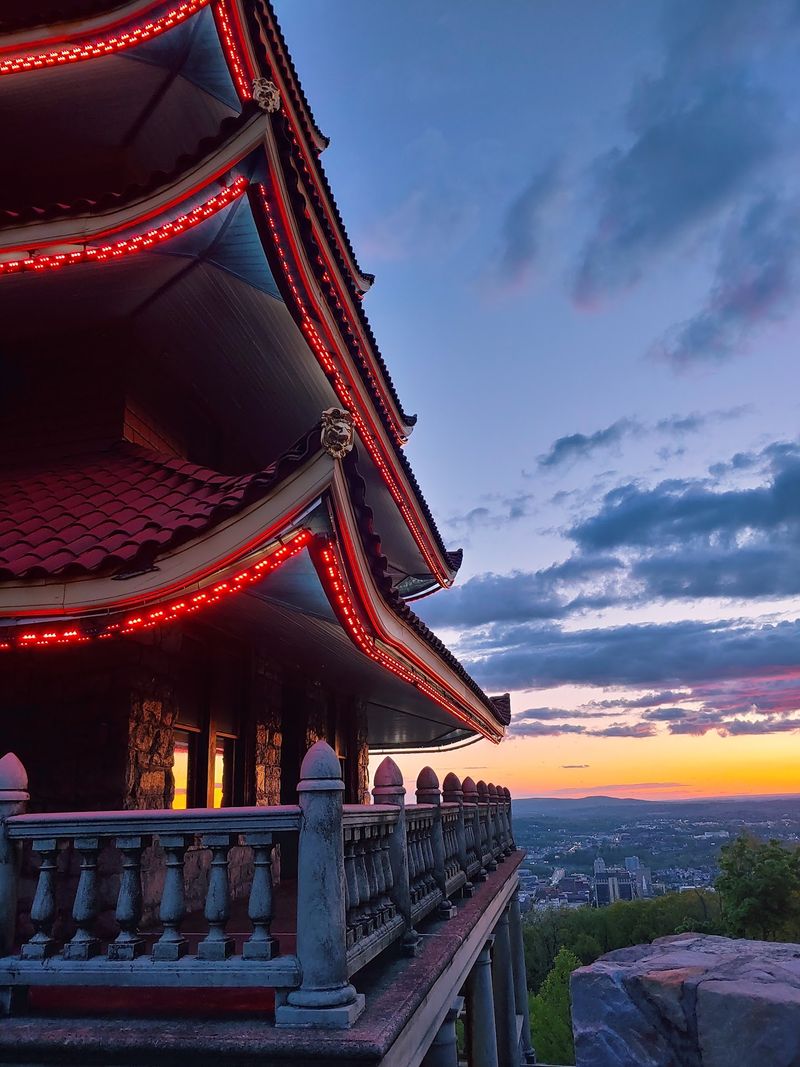
Views are the headliner on Mount Penn. From the pagoda grounds, the scenery stretches across Reading and out over Berks County countryside for up to 30 miles.
Sunset is the crowd favorite, and it’s easy to see why. The sky turns gold and orange over the hills.
Then the city lights blink on one neighborhood at a time.
Early risers get rewarded too. Sunrise from the hilltop offers a quieter, softer show.
The grounds open early in the morning, so catching first light is realistic.
You don’t need fancy gear to enjoy it. A phone camera captures plenty, but your eyes will do the best work.
Bring a jacket, since mountaintop breezes can feel cooler than the city below.
The pagoda itself adds a great foreground for photos. Those red roofs against a fiery sky look almost too perfect.
It’s the kind of picture that gets friends asking where on earth you went.
Arriving a bit before sunset and staying a little after makes sense. The evening glow lingers, and the city sparkle gets better as darkness settles.
Patience pays off here in a big way.
Big Repairs Are Happening Behind Those Red Roofs
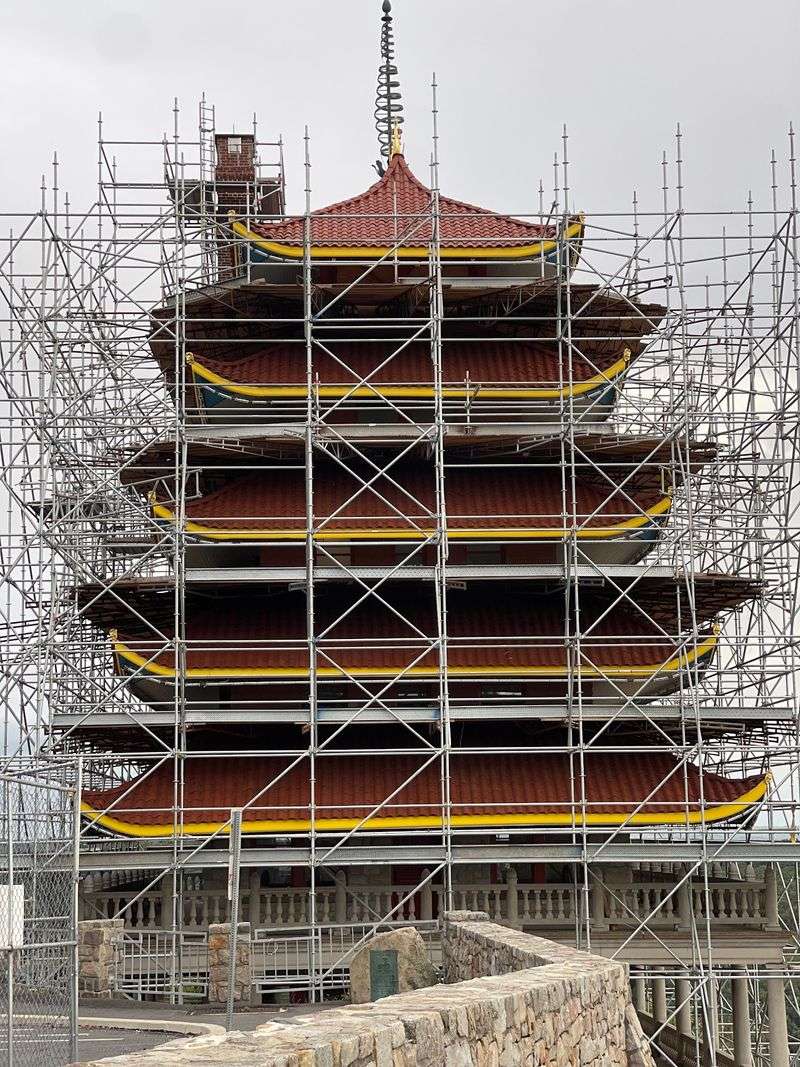
More than a century of weather adds up. The Reading Pagoda is in the middle of a major renovation that began around 2023.
Crews are updating the heating and cooling, plumbing, and electrical systems to meet modern standards. This phase carries a price tag of roughly 4.8 million dollars.
Painting and wood refinishing are part of the plan as well.
The goal is protecting the building’s historic character while making it ready for the future. That balance isn’t easy with a structure this old.
Every fix has to respect the original design.
Regular interior operations are projected to resume in 2027. Until then, the inside is mostly off-limits for casual visits.
Plans can shift, so it helps to stay flexible.
Some special openings have popped up during the work. Limited public walkthrough dates have been offered, and tickets for those can go quickly.
Group tours by appointment have also been available for groups of 15 to 40 people.
A modern touch hides here too. A webcam on the third floor periodically records weather atop Mount Penn.
Even under renovation, the pagoda keeps an eye on the sky.
Curvy Roads, Timed Gates, And Smart Planning
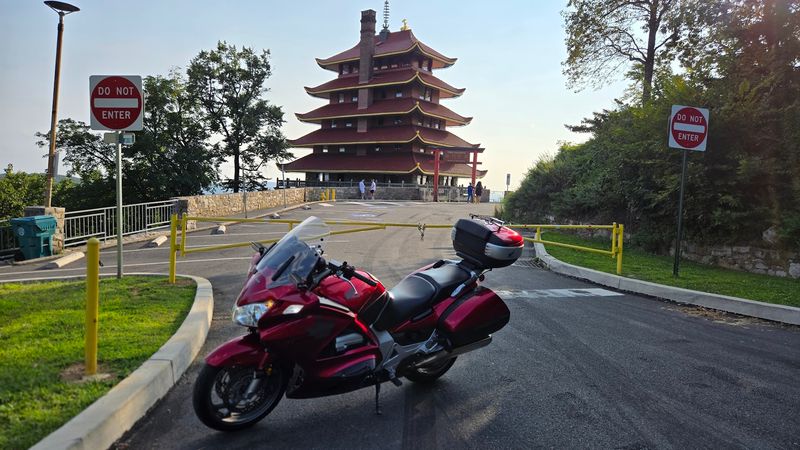
Getting there is half the adventure. The roads up Mount Penn twist and turn with some sharp curves, so take them slowly.
A GPS app helps a lot, especially on a first trip. Missing a turn on the mountain is easy if you’re distracted by the scenery.
Keep your eyes on the road until you park.
The grounds are open daily, with security gates controlling access to the roads. Those gates open in the morning and close automatically at night.
Arriving too early or staying too late means a locked road, so plan around it.
Visiting the grounds and soaking in the view is free. That makes it a great Pennsylvania outing for families and retirees watching their budgets.
Special interior walkthroughs may involve tickets.
Parking near the pagoda can be limited during busy times. Weeknights may feel roomier than peak sunset hours on weekends.
Arriving with a little extra time takes the stress out of finding a spot.
Hours and access can change with renovations and seasons. Checking ahead before making the drive is a smart move.
Nobody wants to reach the top only to meet a closed gate.