A Massive Buddhist Temple Is Hiding In Minnesota, And It’s More Stunning Than You’d Expect
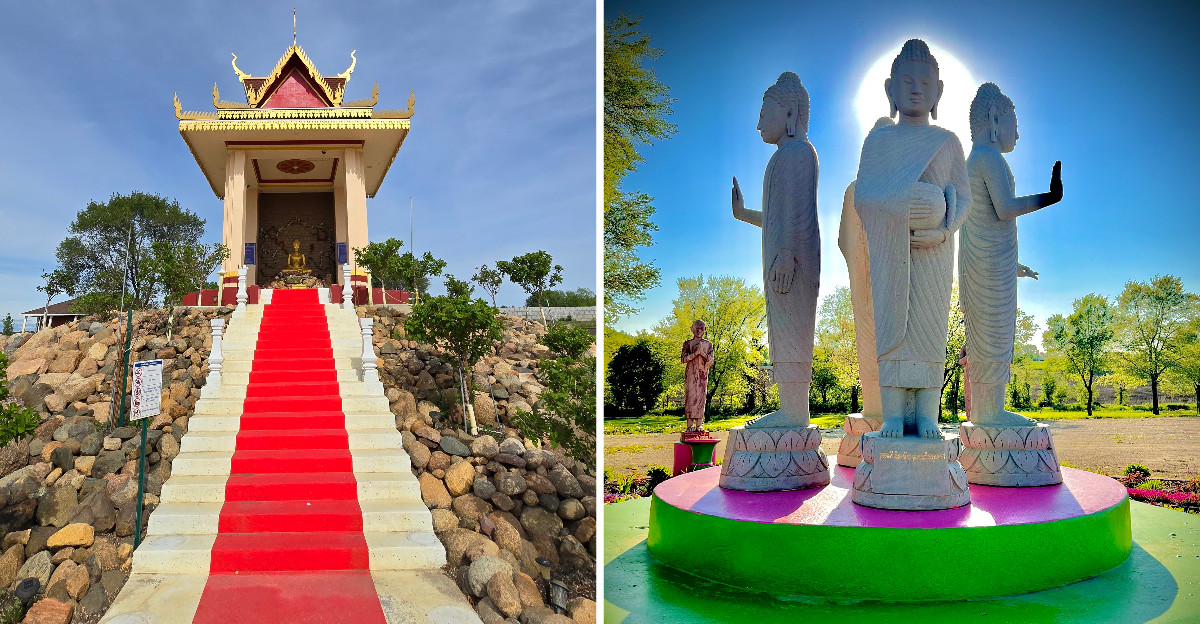
First comes farmland. Then comes a roofline that seems completely out of place. That sudden contrast gives this Minnesota destination much of its power.
The surroundings prepare you for one kind of drive, then the landscape delivers something entirely different.
Once inside the grounds, surprise gives way to quiet. The architecture rewards slow attention. So do the peaceful spaces between buildings.
Visitors do not need deep knowledge of Buddhism to appreciate the care and meaning around them. Respect matters more than expertise.
What begins as an unexpected roadside sight quickly becomes a place where slowing down feels like the natural thing to do.
Golden Rooflines Above Farm Country
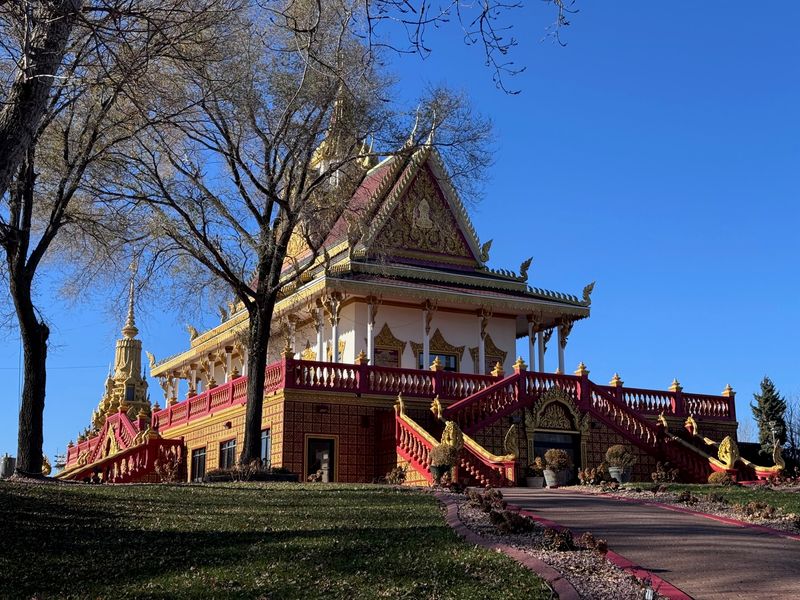
Nothing prepares you for that first glimpse from the road. One minute it is soybean rows, and the next, a tiered golden roof climbs into the sky.
Watt Munisotaram sits on forty acres of countryside between Hampton and Farmington, in southern Minnesota. The main temple stands two stories tall, roughly fifty feet high, covering about 10,000 square feet.
Cambodian architect Yav Socchea designed it using traditional Khmer arts. Construction started in 2002, and the building was consecrated in 2007.
Red, gold, and white surfaces cover nearly every inch. Carved details wrap around doorways, pillars, and roof edges.
The elaborate exterior rewards a close look, with Khmer decorative details continuing around the building.
The contrast is what sticks with you. Behind the spires, you can still spot barns and grain bins in the distance.
A large parking area completed in 2020 provides space for about 260 vehicles. Photography is permitted inside and outside the temple buildings, provided visitors remain discreet.
The current official address is 2925 220th Street East Empire in Farmington, about 30 minutes south of the Twin Cities.
Built By A Resettled Community Over Decades
Back in 1982, a small group of Cambodian refugees in Minnesota wanted a monastery of their own. They had arrived in the United States after enormous upheaval in Cambodia, carrying their faith with them.
The Minnesota Cambodian Buddhist Society formed as a nonprofit to make that dream real. Services started in rented homes, first in Minneapolis, then St. Paul, later Eagan.
The moves reflected changing needs, including public-transit access, growing attendance, and space for larger gatherings.
In 1988, they purchased forty rural acres south of the metro. The land held one house and two barns, nothing more.
That modest start eventually became what the temple now describes as the largest Cambodian Buddhist temple in the country.
Most major campus projects were supported through donations from Cambodian Buddhist communities in Minnesota and other states. Construction stretched across decades, and work continues even now.
The gradual expansion reflects decades of community support and long-term planning.
The temple’s published timeline traces how the original rural property developed into today’s larger religious campus.
Understanding that backstory changes how the gold roofs look. They stop being decoration and start feeling like proof of persistence.
Four Buddhas And Their Hand Signs
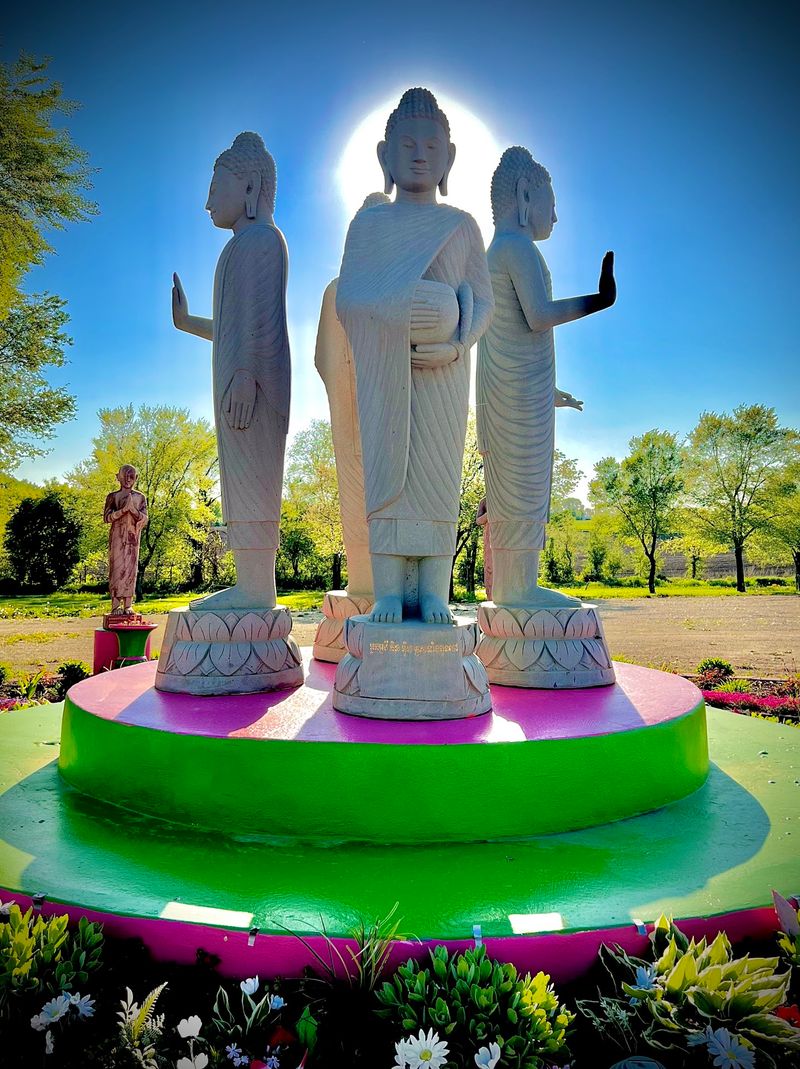
Shoes should be removed before entering sacred interior spaces. On the lower level of the stupa, four large Buddha statues represent Buddhas from different eras.
Each one holds a different mudra, or hand gesture. They are not random poses.
Dhyana signals meditation, with hands resting in the lap. Dharmachakra represents teaching, the fingers forming a wheel shape.
Abhaya means fearlessness, palm raised outward like a gentle stop sign. Bhumisparsha shows a hand touching the earth, marking the moment of enlightenment.
The same symbolic hand gestures appear on several other Buddha statues around the campus.
Painted scenes from the Buddha’s life cover walls in the main temple, while the stupa uses statues, geometric details, and decorative lighting.
Photography is allowed inside and outside, but visitors should ask permission before photographing prayer, chanting, meditation, or ceremonial activities.
During chanting or ceremonies, remain quiet and follow guidance from monks, staff, or volunteers.
Socks can be useful during colder visits because footwear must be removed in sacred interior spaces. Small details like that make a visit far more comfortable.
The hall rewards slow looking, so resist the urge to breeze through.
Five Thousand Tiny Buddhas Inside
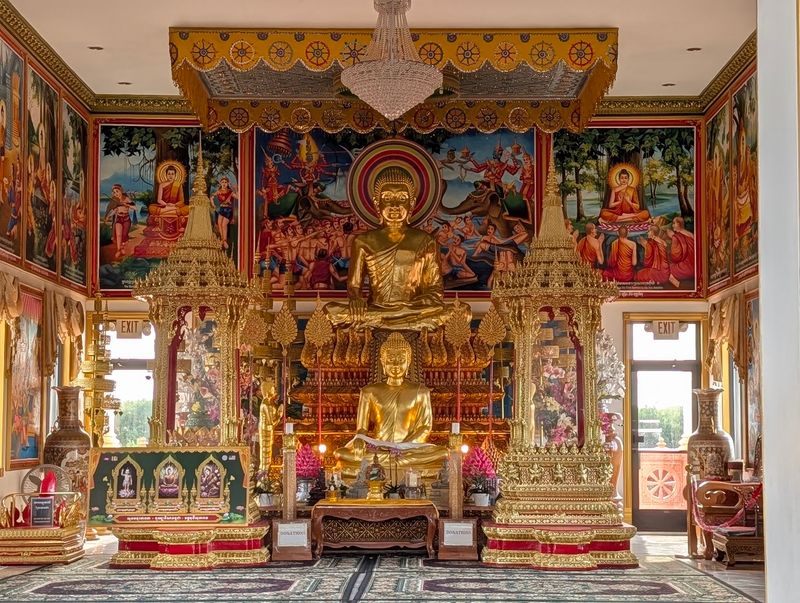
The stupa contains 5,000 small Buddha statues arranged across its interior levels.
All 5,000 statues were hand-painted on site, with monks and volunteers documented taking part in the work.
Together they represent 5,000 years of Buddhist history. Each statue was associated with a donation, and donor names were placed on their bases.
The stupa serves as a meditation space and houses relics of the Buddha and two disciples. It is smaller than the main hall but feels denser somehow.
Their hand-painted finish reflects the extensive community work that went into decorating the stupa.
Rows of small statues line multiple levels of the stupa, creating a highly repetitive visual pattern.
Voices carry inside, so keep conversation to a whisper. Others may be meditating nearby.
Access can vary depending on ceremonies or maintenance work. If a door is closed, respect it and move along.
The stupa sits within easy walking distance of the main temple. Sturdy shoes help, since paths connect across grass and pavement.
The 5,000 hand-painted figures make the stupa one of the campus’s most distinctive interior spaces.
Where Koi And Dragonflies Gather
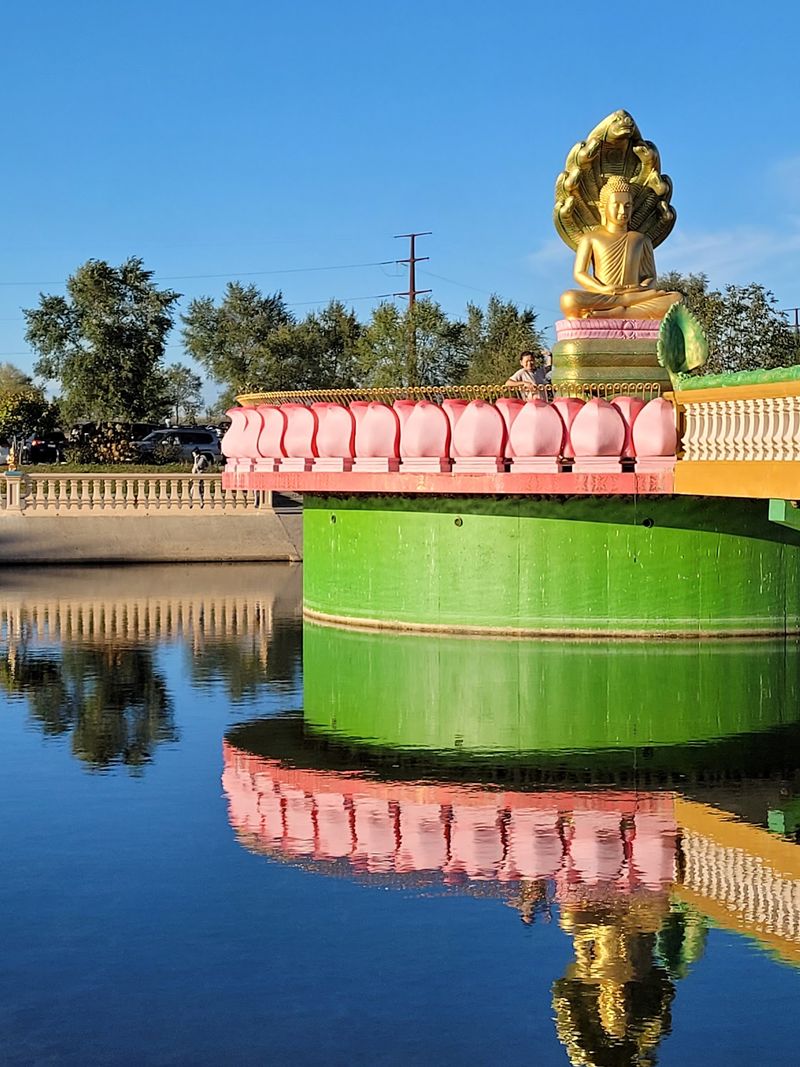
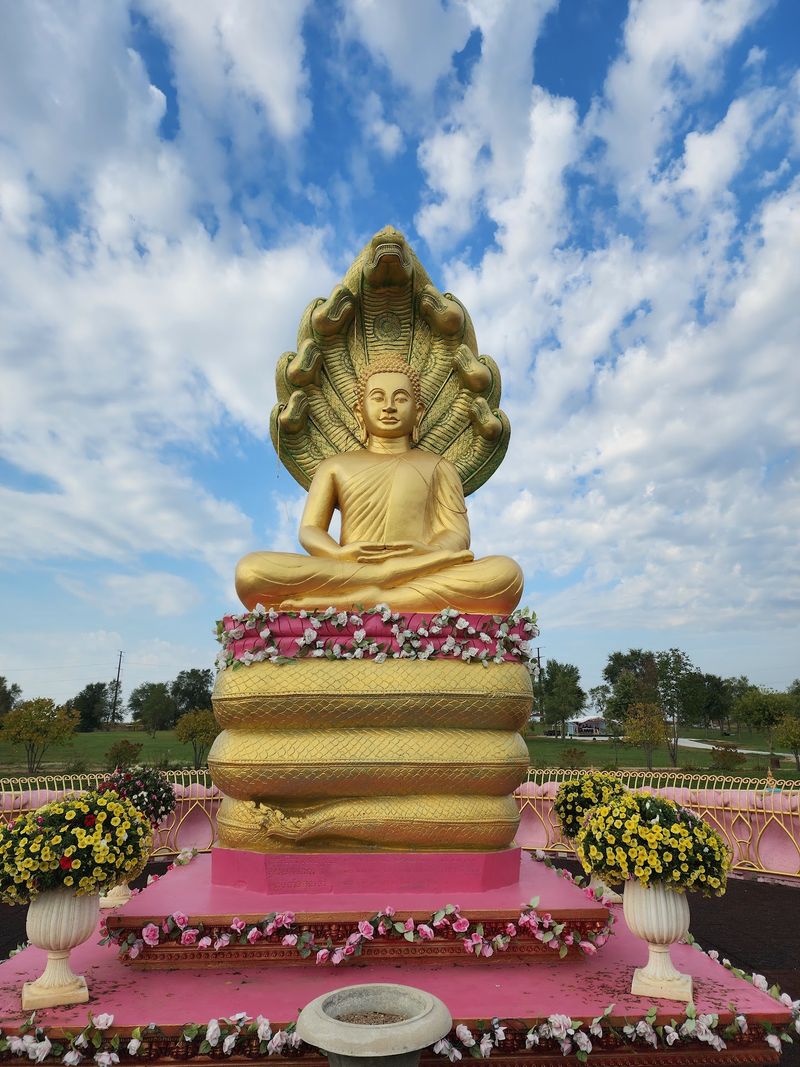
One of the campus’s major outdoor features is the Mucalinda Reflection Pond. The Mucalinda Reflection Pond opened in 2017 and nearly matches the main temple in size.
Ponds are traditional at Cambodian temples, and this one takes the idea seriously. The Abbot drew inspiration from a pond he saw during a trip to India.
At its center sits a Buddha statue sheltered by Mucalinda, a serpent-like being. According to tradition, Mucalinda shielded the Buddha from a storm after his enlightenment.
Japanese lilacs line the pond, and a bridge leads toward the central statue. The space was designed for meditation, reflection, and prayer.
The pond’s appearance changes with Minnesota’s seasons while remaining one of the campus’s central outdoor features.
The reflection pond is one of the campus’s major landscaped features and deserves time alongside the main temple and stupa.
Cambodian New Year Fills The Fields
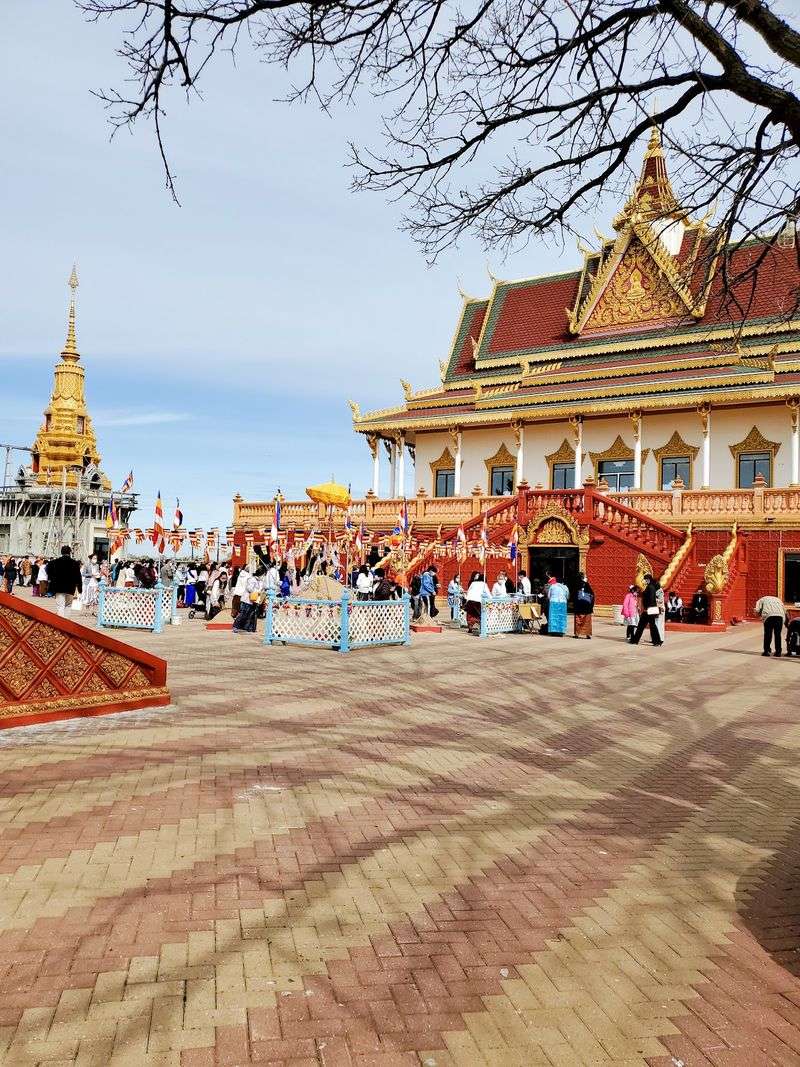
Cambodian New Year is a major April celebration that has historically drawn thousands of attendees to the temple.
Vendor tents appear behind the temple, selling cultural items and plenty of food. Traditional Cambodian dishes draw long, happy lines.
Music plays, dancers perform in ornate costumes, and families spread out across the lawns. Crowd levels vary across the celebration, so visitors should check the current year’s program before arriving.
Festival days offer a very different experience from ordinary public visiting hours. Festivals show the temple functioning as a community anchor, not just a landmark.
The celebration combines religious ceremonies, family gatherings, cultural traditions, and community activities across the campus.
Everyone is welcome, regardless of background or belief. Nobody pressures visitors to join anything.
Check the current festival program before visiting, since schedules, vendors, and event logistics can change from year to year.
Other ceremonies happen throughout the year, including late summer observances. Checking the temple website before driving out saves disappointment.
During major festivals, the temple functions as both a religious center and a large Cambodian cultural gathering place.
Simple Manners That Matter Here
Remember one thing above all: this is an active monastery. People live, pray, and meditate here every day.
Dress modestly, covering shoulders and knees. A light scarf in your bag solves most wardrobe problems.Remove shoes before entering the main temple hall, shrines, and meditation room. Shoe racks sit near the doors, and socks are perfectly fine.
Keep your voice low and silence your phone. Ringtones cut through a meditation hall like nothing else.
Photography is allowed inside and outside, but visitors should ask permission before photographing prayer, chanting, meditation, or ceremonial activities.
Inside sacred spaces, visitors should avoid pointing their feet toward Buddha images, monks, or altars.
Avoid pointing your feet toward Buddha images, monks, or altars, and sit cross-legged or with your legs tucked to the side.
Women should avoid physical contact with monks. A traditional Cambodian Sompeah, with palms together, is an appreciated greeting.
Donations are accepted in designated boxes and help support temple upkeep, ceremonies, and community programs.
The current site lists public hours from Thursday through Sunday, 9 a.m. to 5 p.m., while its contact guidance says access can vary by season and visitors should review the current schedule before arriving.
Hidden Corners Past The Main Hall
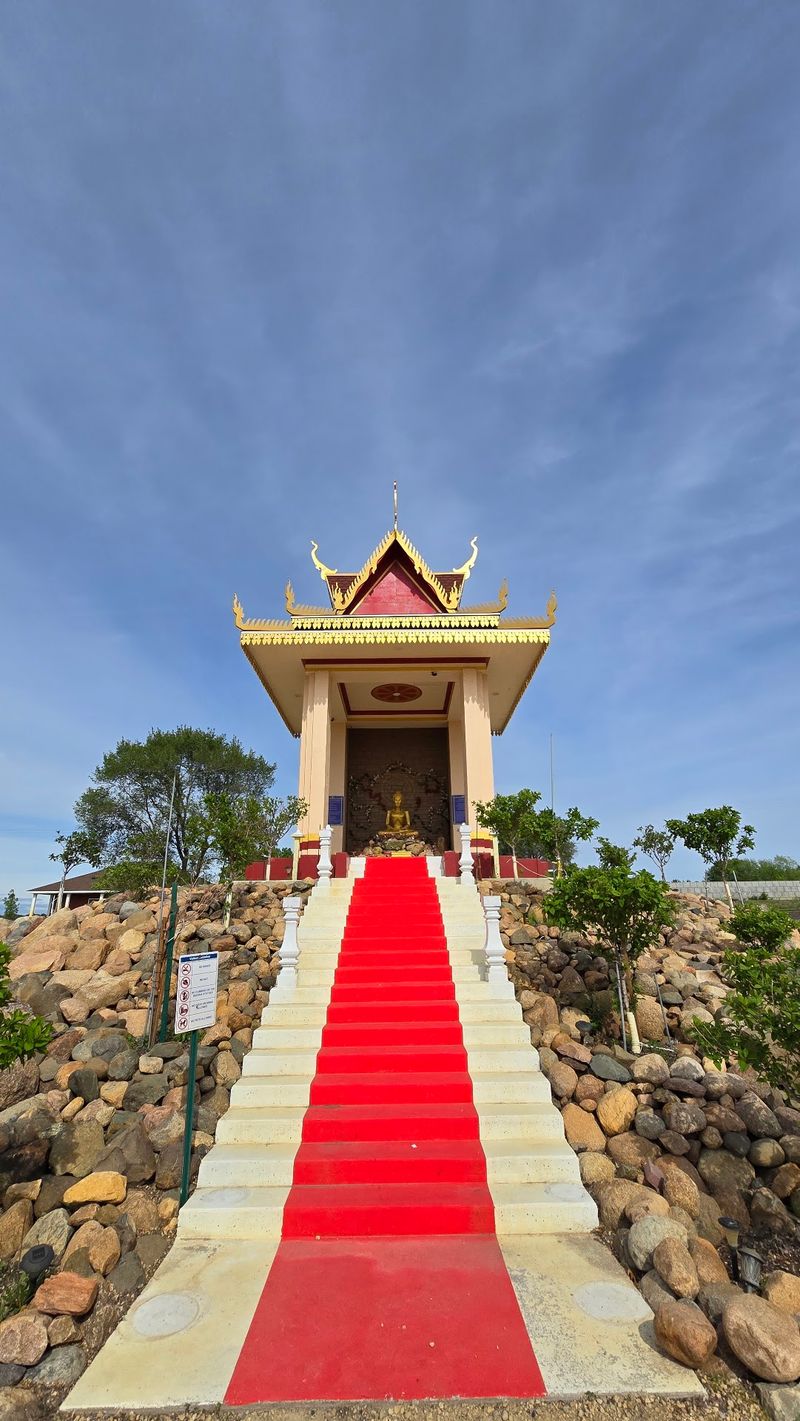
The main temple is only one part of the 40-acre campus.
Scattered across the campus are structures with their own purpose. The two-story clapboard house, built in 1977, came with the original property.
Known as the old temple, it now serves as year-round housing for the monks and priests. Their presence keeps the site spiritually active all year.
The Red Building once functioned as the congregation social hall. It has since reopened as a community center.
The Great Gate became another major campus feature and received its formal inauguration in 2025. Carvings cover the structure, and naga serpent details guard the approach.
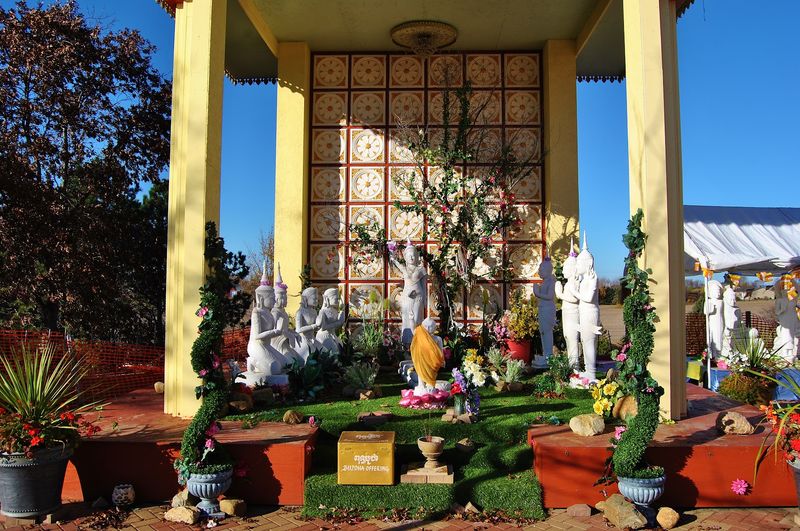
Smaller outdoor shrines tell stories through sculpture. One scene depicts Sujata offering food to Prince Gautama before his enlightenment.
Shrines, statues, and ceremonial structures are distributed across the grounds beyond the main temple.
The campus has continued to change over time, with major additions including new parking, public restrooms, and the recently inaugurated Great Gate.
Allow enough time to see more than the main temple, since the 40-acre campus contains several separate religious and cultural structures.