A Quick Connecticut Hike That Delivers Scenic Views Without The Struggle
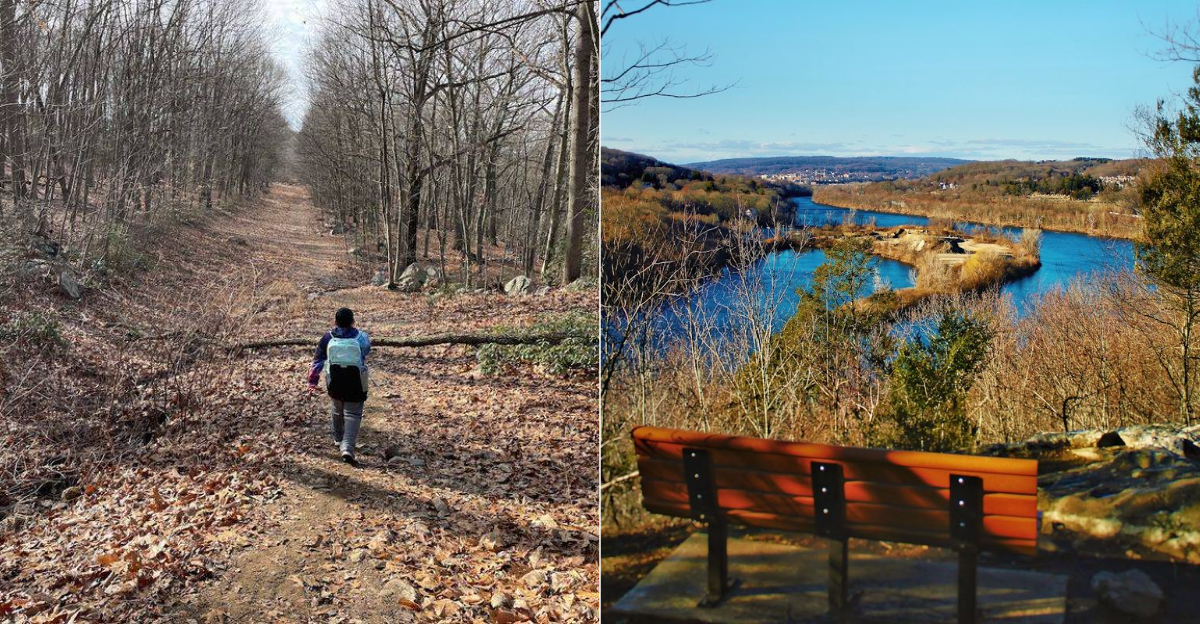
Not every scenic payoff needs sore legs and a heroic story afterward. This short trail gets to the good part surprisingly fast.
The path begins near the viewpoint, so the landscape opens up before you have time to wonder how much farther remains. That feels almost like cheating, in the best possible way.
A quick Connecticut hike can deliver broad river views without demanding a punishing climb or an all-day commitment. From the rocky ridge, the water curves through the valley while wooded hills rise beyond it.
The view feels wide and peaceful. You can linger for a bit, then continue along the ridge if your feet are asking for more.
There are roots underfoot and a few uneven sections, but nothing here turns the outing into a serious test. It works beautifully when you want fresh air without turning the day into an expedition.
The scenery arrives quickly, yet the calm sticks around much longer.
1. Tucker’s Ridge Hides A View Above The Western Woods
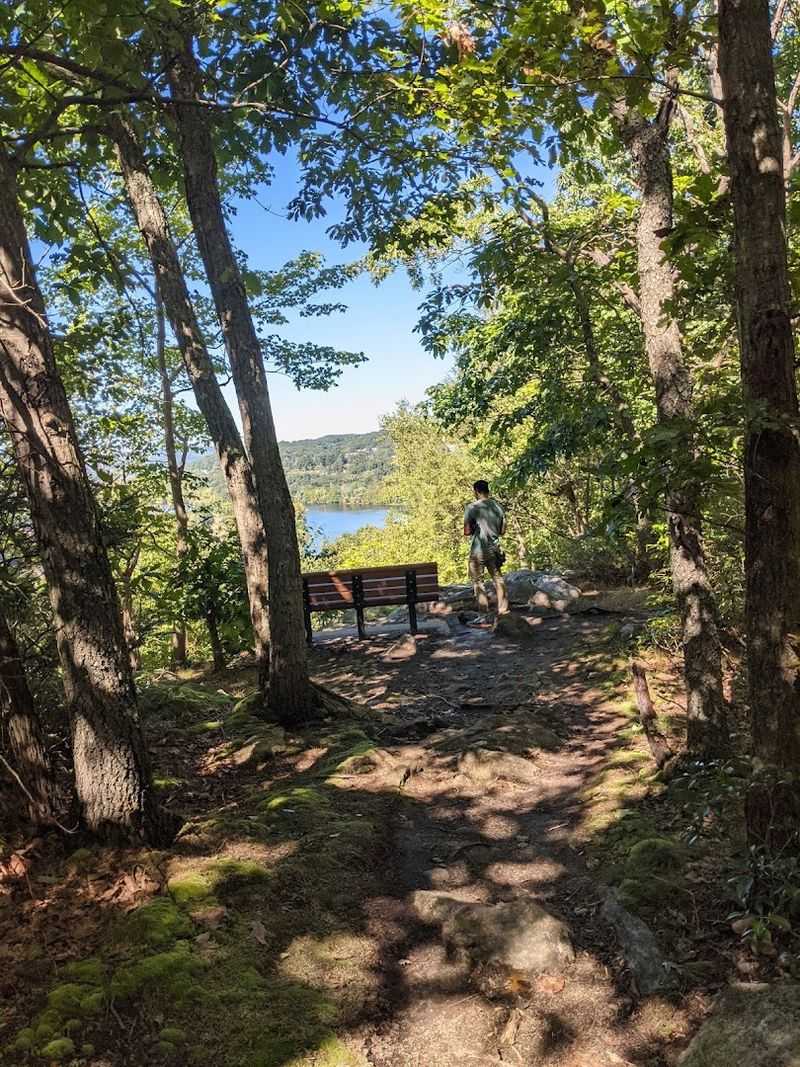
A dramatic river view arrives quickly at this compact Orange preserve. Tucker’s Ridge forms the high spine of Housatonic Overlook, rising roughly 200 feet above the Housatonic River and giving the property its rugged personality.
Rocky ledges, hardwood forest, mountain laurel, and small wetland areas keep the trail network varied.
The Town of Orange acquired the property in 2001 through a state-supported open-space program. Additional acreage was later protected by the Orange Land Trust, expanding the preserved landscape and helping maintain public access for quiet recreation.
From the northern trailhead, hikers reach the ridge almost immediately. A bench near the overlook provides a broad view across the river valley toward Two Mile Island, Shelton, and Derby.
Because the climb is brief, the scenery feels rewarding for visitors seeking a shorter outing.
Local residents explored these woods long before formal protection, and that history still adds character to the route. Trails pass rocky outcrops and shaded pockets before connecting with flatter sections below.
Access from the end of High Ridge Road places visitors close to the upper ridge, making this an appealing choice for an easy-to-moderate walk with a memorable payoff.
2. A Short Trail Leads Toward The Rocky Overlook
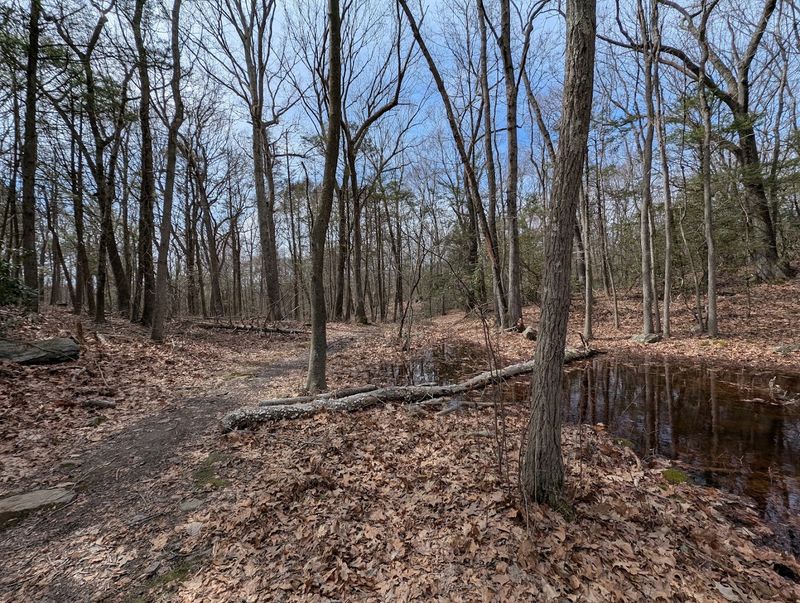
Getting to the main viewpoint at the Housatonic Overlook does not require a full day or a high fitness level.
The primary trail option is a 1.3-mile route that typically takes around 33 minutes to complete, with an elevation gain of just 35 feet, making it one of the more approachable hikes in the region.
The preserve offers multiple entry points, giving hikers flexibility depending on how they prefer to start. Parking at the end of High Ridge Road drops visitors almost immediately onto the ridge, where the Red Trail begins with river views appearing shortly after the first few steps.
The Cedar Grove entrance at 671 Cedar Grove, Orange, CT 06477, offers a more secluded approach through the woods before arriving at the same overlook.
Color-coded blazes mark the main routes throughout the property, including red, blue, yellow, and green options. The variety of trails means return visitors can explore a slightly different path each time without feeling like they are repeating the same experience.
For a first visit, following the Red Trail from the High Ridge Road side tends to offer the most immediate and rewarding connection to the ridge and its views.
3. Stone Outcrops Add Character Without A Punishing Climb
Rocky terrain does not have to mean a brutal workout, and the stone outcrops along the Housatonic Overlook trails prove that point clearly.
Scattered sections of exposed bedrock appear throughout the preserve, particularly in areas where mountain laurel grows thickly beneath the tree canopy, creating a layered and visually interesting forest floor.
The overall elevation change across the trail system remains minimal, so the rocky patches feel more like natural punctuation marks than obstacles.
Hikers who take their time on these sections tend to notice the texture and color variation in the stone, which shifts between mossy patches and dry, sun-warmed surfaces depending on the season and surrounding tree cover.
Some sections do involve brief ups and downs, and loose rocks on certain slopes are worth watching underfoot, especially on the descent. Wearing shoes with decent grip makes a noticeable difference in comfort and confidence on these stretches.
The outcrops give the trail a genuinely wild and natural feel that contrasts pleasantly with the surrounding suburban landscape, offering a sense of real outdoor terrain without requiring technical skill or advanced hiking experience to navigate safely and enjoyably.
4. The Housatonic River Appears Beyond The Trees

Few moments on a short hike feel as rewarding as when trees suddenly part and a wide river valley appears below.
At the main overlook on Tucker’s Ridge, the Housatonic River stretches out in a broad sweep that includes Two Mile Island in the foreground and the town of Shelton visible across the water to the west.
Looking north from the same vantage point, the city of Derby comes into view, adding a sense of geographic scale that feels surprising given how compact the preserve actually is.
The elevated palisade sits roughly 200 feet above the river, giving the overlook a genuinely commanding perspective over the valley below.
Historically, this ridge offered a strategic sightline over the river, and it is easy to understand why the location held significance long before modern trails were established.
As the Red Trail continues south from the main overlook, partial glimpses of the river filter through the trees at various points, keeping the water present as a backdrop even when the full panoramic view is no longer visible.
These filtered sightlines add a sense of ongoing connection to the landscape rather than limiting the river view to a single spot.
5. Quiet Forest Sections Make The Approach Feel Longer
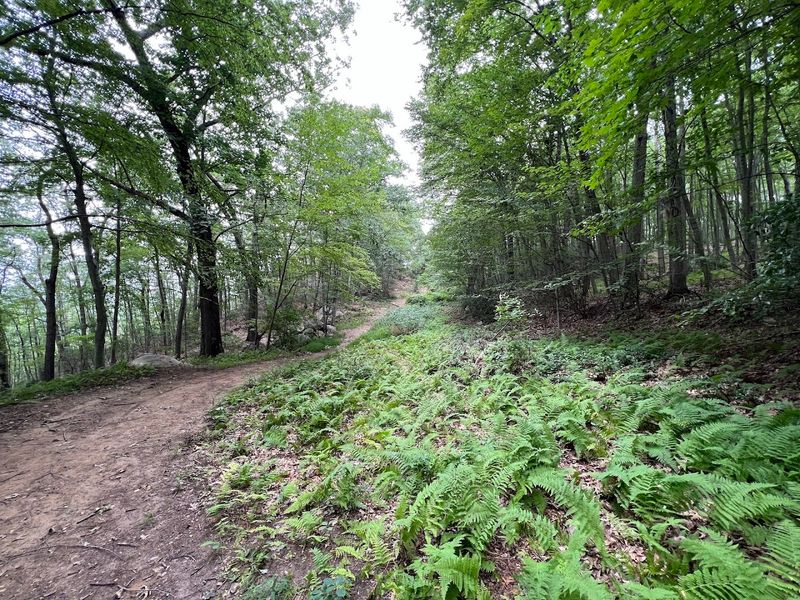
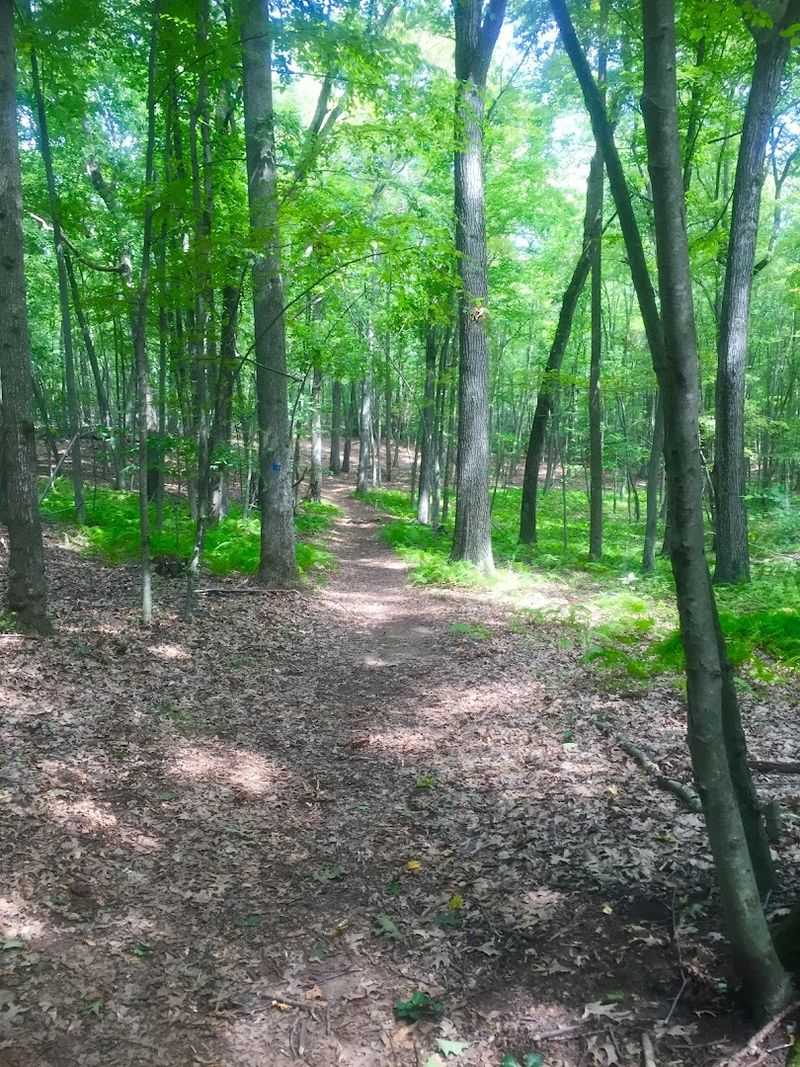
Everyday noise begins to soften once the trail slips beneath the trees at Housatonic Overlook. The preserve’s wooded interior offers a quiet contrast to its broad river views, especially where the blue-blazed route crosses level ground through the center of the property.
Oak trees and thick patches of mountain laurel frame parts of the path, occasionally forming a leafy corridor that feels secluded. Rocky outcrops break up the woods, while lower sections approach wetland habitat and may hold puddles or mud after rain.
These shifts in terrain add interest without turning the outing into a demanding hike.
The forest has its own gentle soundtrack. Birds call from the canopy, branches move overhead, and fallen leaves crunch beneath each step.
Traffic or river noise may still carry into the preserve, but it often becomes less noticeable farther among the trees.
That calm middle stretch gives the walk a satisfying rhythm. Rather than heading directly toward the main viewpoint, hikers can slow down and appreciate the smaller details along the way.
By the time the trail reaches the overlook, the transition from enclosed woodland to an open view across the Housatonic River feels especially rewarding, even though the overall route remains pleasantly short.
6. Unmarked Details Reward Hikers Who Slow Their Pace

Moving quickly through a short trail means missing the smaller moments that give a place its real character.
Along the Housatonic Overlook paths, slowing down reveals details that a brisk walk would easily skip past, from the texture of bark on aging oaks to the way light filters differently through mountain laurel versus taller canopy trees.
Spring brings one of the more unexpected highlights of the preserve, when low-lying areas near the trail fill with vernal pools that become active with amphibians.
These seasonal wetlands appear briefly each year and serve as important breeding habitat, making early spring visits feel distinctly different from summer or fall outings on the same route.
Old stone walls also appear at certain points along the trails, remnants of earlier land use that add a quiet historical layer to the walk.
Some trail junctions within the preserve are not heavily signed, which can feel disorienting at first but also encourages a slower, more attentive approach to navigation.
Carrying a simple trail map downloaded in advance helps avoid any confusion while still leaving room to notice the smaller, unhurried details that make this modest preserve feel richer than its acreage might initially suggest.
7. The Return Walk Keeps The Outing Easy And Manageable

One of the quiet advantages of a short loop trail is that the return journey rarely feels like a chore.
At the Housatonic Overlook, the trail system is compact enough that heading back to the parking area takes roughly the same amount of time and effort as the approach, keeping the overall outing well within an hour for most visitors.
Color-blazed markers remain consistent throughout the trail system, so navigation on the return does not require retracing every step from memory.
Hikers who entered from the Cedar Grove side and walked the full loop can exit back the same way or connect to a different color trail for a slightly varied return path through the forest.
The gentle gradients that define most of this trail system mean that legs rarely feel heavy by the end of the walk.
A few downhill sections near rocky outcrops are worth taking slowly, particularly when the ground is damp or leaf-covered, but nothing on the return route demands serious caution or extra exertion.
Dogs on leashes are welcome throughout the preserve, and the manageable distance makes this a comfortable outing for them as well. The overall experience wraps up feeling refreshing rather than draining, which is part of what makes the preserve such a reliable local option.
8. A Small Orange Preserve Delivers A Surprisingly Wide View
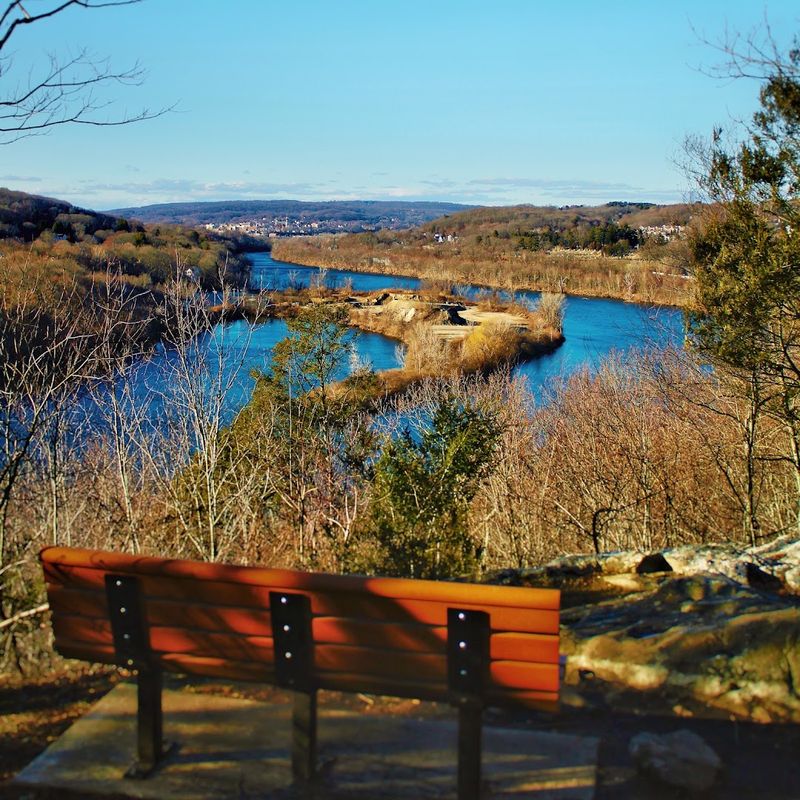
At just around 33 acres, the Housatonic Overlook preserve covers a modest footprint, but its position along a 200-foot eastern palisade of the Housatonic River gives it a visual reach that feels far larger than the acreage implies.
The main overlook delivers one of the more expansive river valley views available from a publicly accessible trail in this part of Connecticut.
Recognized as one of five nature trail sites in Orange, the preserve is open daily from dawn to dusk without requiring permits or fees.
The combination of easy access, multiple color-coded trail options, and a genuinely dramatic viewpoint makes it a reliable destination for both first-time visitors and those returning for a familiar outdoor reset.
Community investment in this land through the Town of Orange and the Orange Land Trust has kept the preserve well-maintained for passive recreation over the years. Bicycles and dangerous weapons are not permitted on the trails, keeping the atmosphere calm and pedestrian-friendly.
The preserve sits close enough to residential streets that it can feel almost hidden until the trees open up and the river appears below the ridge.
That contrast between the ordinary surroundings and the wide-open view is exactly what gives the Housatonic Overlook its lasting appeal among those who have discovered it.