A Ten-Story Tower Of Glass Rises Over This Desert Dome In Nebraska
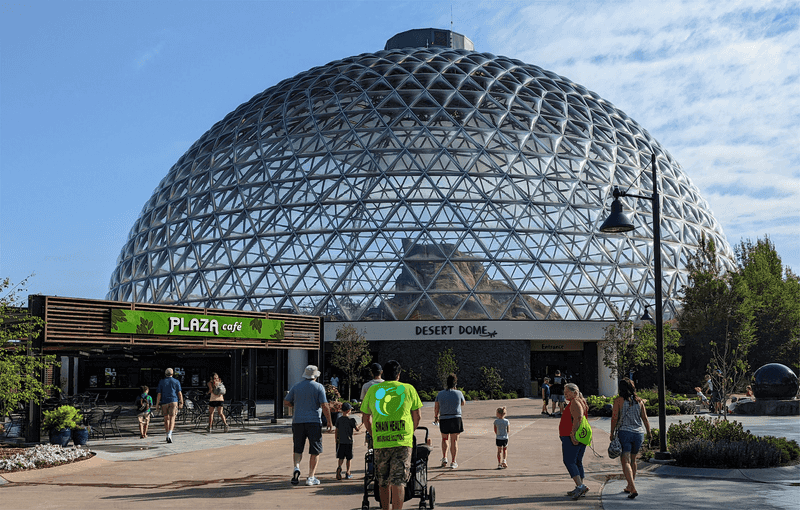
Three hundred tons of red sand sit under a glass roof in Nebraska, piled into a dune 30 feet tall. Outside, it might be snowing sideways.
Inside, the air stays in the low 70s all year long.
The roof itself is made of 1,760 acrylic windows. They come in different shades to help control light and heat.
Together they form the largest glazed geodesic dome in the world, which still sounds made up to me.
I love that one building packs three deserts from three continents into a single loop. Meerkats, klipspringers and rattlesnakes all share the same address.
And the walk doesn’t end at the dune. Somewhere below your feet, a whole second world is waiting in the dark.
Who knew a winter day trip could cover an African desert and a swamp before lunch?
The Giant Glass Bubble You Can Spot From Across The Zoo
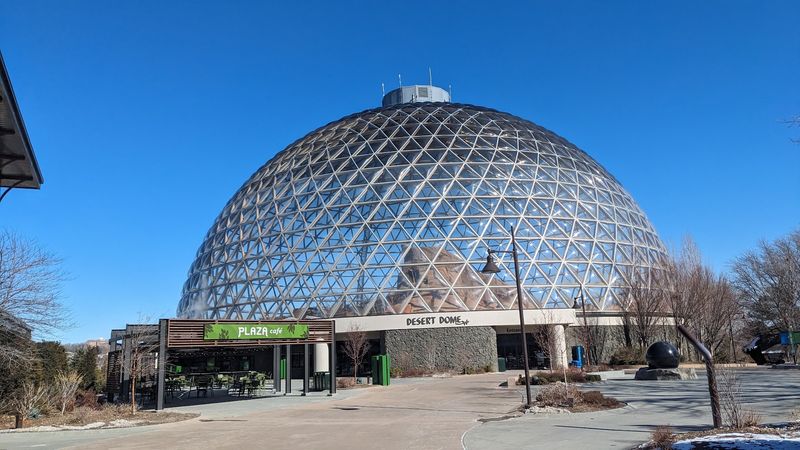
Start with a landmark that refuses to hide. The Desert Dome sits inside Omaha’s Henry Doorly Zoo and Aquarium, and its glassy curve is one of the easiest things to spot on the grounds.
It’s an indoor desert exhibit, but calling it a building feels a little too modest. The structure is the world’s largest glazed geodesic dome, and it holds the world’s largest indoor desert under one roof.
That makes it a big deal well beyond Omaha. Nebraska rarely gets credit for deserts, yet this one draws attention from zoo fans around the country.
The zoo itself spreads across more than 130 acres. It houses more than 9,000 animals from hundreds of species, so the dome has plenty of famous neighbors.
Still, few exhibits announce themselves quite like this one. Its faceted roof rises above the treetops and practically waves you over from the main paths.
Once you step through the doors, the plan gets clever. The upper level covers three deserts from different continents, while a nocturnal world waits underneath.
So the trip covers two very different moods in one stop. Bright sand and sunshine come first, then cool darkness and glowing eyes below.
A Riverside Park Zoo That Grew Into A Record Breaker
Long before anyone stacked red sand under glass, this zoo started small. It began in 1894 as the Riverview Park Zoo in Omaha.
The name changed in 1963 to honor Henry Doorly. Over the decades, the zoo kept growing into one of the most ambitious animal parks in the country.
Big indoor habitats became a calling card along the way. The Lied Jungle opened in 1992 and is considered America’s largest indoor rainforest.
Then came the next leap. The Desert Dome opened in April 2002 as a major, multimillion-dollar project paired with a nocturnal exhibit below it.
That lower level, Kingdoms of the Night, followed in April 2003. Combined, the two floors cover 84,000 square feet of themed habitat.
The ambition paid off in the spotlight too. In August 2014, TripAdvisor named Omaha’s Henry Doorly Zoo and Aquarium the world’s best zoo.
Today the zoo holds accreditation from the Association of Zoos and Aquariums. It’s also a member of the World Association of Zoos and Aquariums.
Its mission focuses on conservation, research, recreation and education. The Desert Dome fits that mission neatly, teaching how animals and plants handle some of Earth’s harshest landscapes.
Count The Windows If You’ve Got A Spare Afternoon
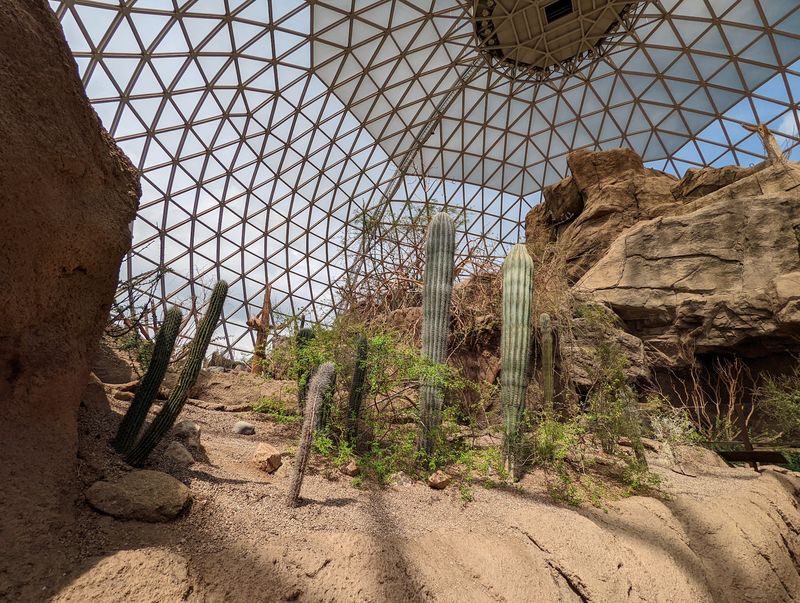
Here’s a fun math problem for the kids. The roof holds 1,760 acrylic windows, and good luck counting them before someone wants a snack.
The panels aren’t all identical. They come in varying shades that help manage light and temperature inside the exhibit.
Size is where the numbers get wild. The dome reaches 137 feet high, which works out to roughly 13 stories.
So the famous ten-story description actually sells it short. Across the base, the dome measures 230 feet in diameter.
Those triangles lock together into the geodesic pattern that gives the building its signature look. It’s the largest glazed geodesic dome on the planet.
From the paths outside, the shape reads almost like a giant jewel. From the inside, the framework turns into a sky full of geometry above the sand and rock.
I like how the engineering stays visible instead of hidden. You get to see exactly how the whole thing holds itself up while you watch the animals.
Take a moment to look straight up during your loop. The view overhead is half the fun, and it costs nothing extra to tilt your head back.
Desert Weather Without The Scorching Part
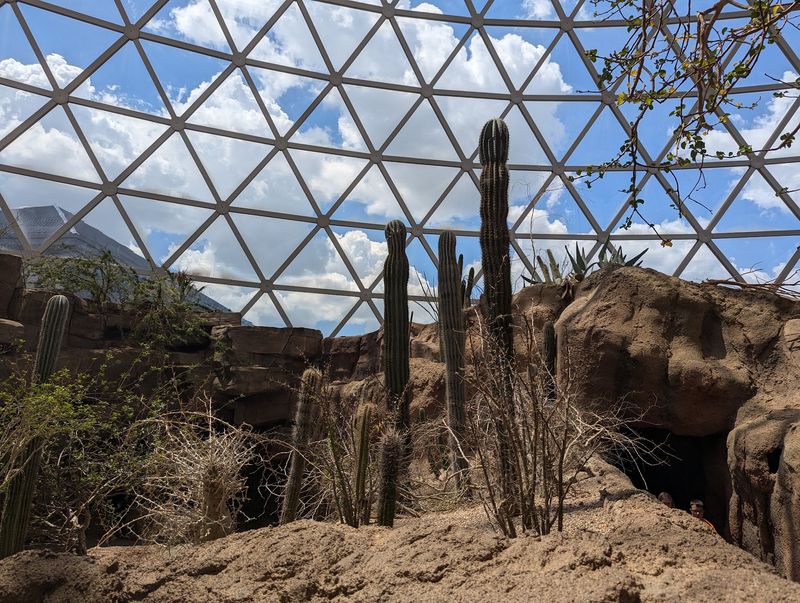
Nebraska winters can feel endless by February. Inside the Desert Dome, the temperature holds steady between 72 and 75 degrees all year.
That’s a pretty sweet deal for a desert. The real Namib or Sonoran would never be so polite about the thermostat.
The climate feels dry rather than sticky. It’s comfortable enough for a slow loop, even for little ones who wilt in summer heat.
Timing makes the contrast more dramatic. Coming in from a cold, gray afternoon, the warm air and bright light can feel like a quick vacation.
Summer visits get a different perk. When outdoor temperatures climb, the dome offers a steady, mild break from the blazing sun on the zoo paths.
The upper level covers about 42,000 square feet. That gives you room to wander without feeling packed into a hallway.
Real and exotic desert plants grow throughout the space. Take a good look at the faux rock formations too, because the detail work is impressive.
Plan to stay on the walking paths, naturally. The animals get their space, and you get front-row views without needing sunscreen or a canteen.
Red Sand, Meerkats And A Dune Taller Than A House
Three hundred tons of red sand did not arrive by accident. Crews shaped it into a 30-foot dune that anchors the African side of the exhibit.
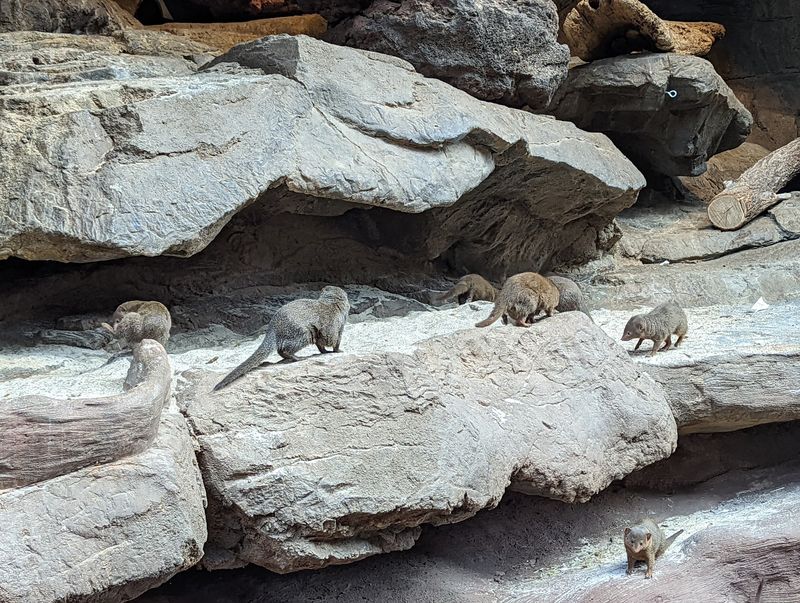
That zone represents the Namib Desert of Southern Africa. It’s one of three desert regions packed into the upper level.
Meerkats bring the comedy here. Watching them pop up and stand guard is a favorite pastime for kids and grown-ups alike.
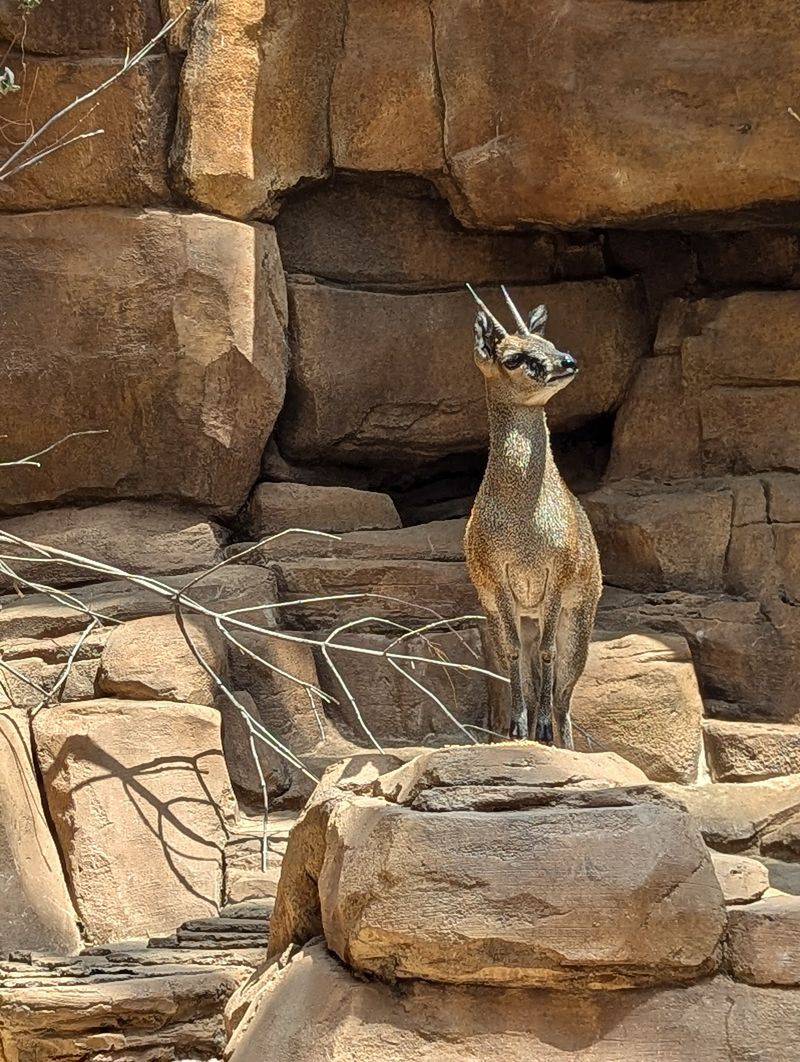
Klipspringers deserve their own fan club. These small antelope are built for rocky ground, and their nimble jumps are a highlight.
Bat-eared foxes add a dose of cuteness with those oversized ears. African wild cats round out the cast with a quieter, sharper presence.
I can’t imagine a better classroom for learning how animals handle dry country. Every species here is suited to life where water is scarce.
Signs and displays explain how each animal survives. Kids tend to soak up the facts faster when a meerkat is staring right back at them.
Give this area a few extra minutes. The longer you watch, the more behavior you’ll catch, from digging to lookout duty on the sand.
Rattlers, Rock Walls And A Mountain In The Middle
Right in the center of the dome, a mountain rises about 15 meters high. It splits the space and helps carry you from one continent to the next.
Australia’s Red Center gets its own stretch of the loop. Rusty rock tones and desert plants set the scene for the Outback section.
Then the trail swings toward the Sonoran Desert of the Southwest United States. Suddenly you’re surrounded by a landscape closer to Arizona than Africa.
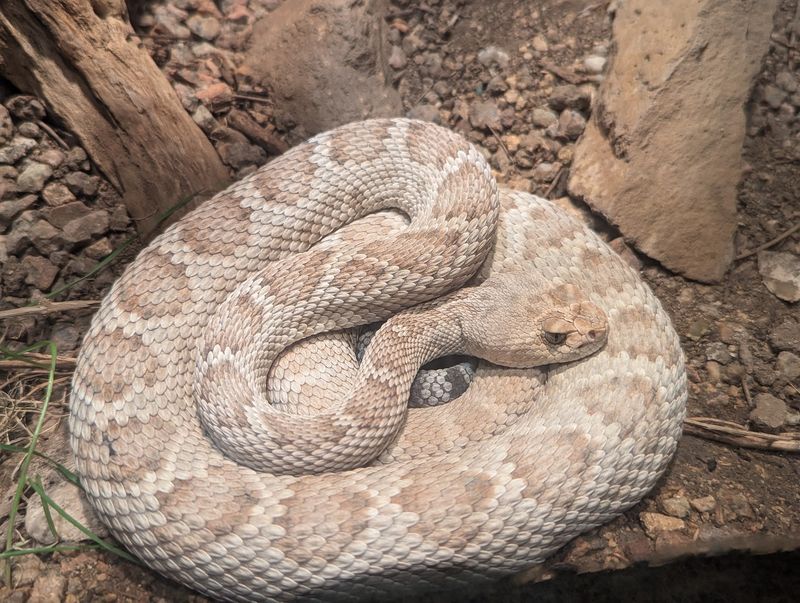
Reptile fans, this is your moment. Several snake species live in the dome, including a rattlesnake that steals plenty of attention.
Birds bring motion overhead and around the plants. Hummingbirds are part of the exhibit, so keep your eyes ready for tiny bursts of color.
Waterfalls and ponds break up all that sand and stone. They add sound, sparkle and a reminder that even deserts hold hidden water.
The mountain also creates tucked corners worth checking. Some animals settle into rocky spots, so slow down and scan every ledge.
That variety keeps the walk from ever feeling repetitive. In one building, you’ve crossed three deserts on three continents without a single passport stamp.
Head Downstairs Where The Lights Go Low
Most visitors finish the desert and expect an exit. Instead, the path heads down into the Eugene T.
Mahoney Kingdoms of the Night.
It’s the world’s largest nocturnal animal exhibit. Like the dome above it, the space covers about 42,000 square feet.
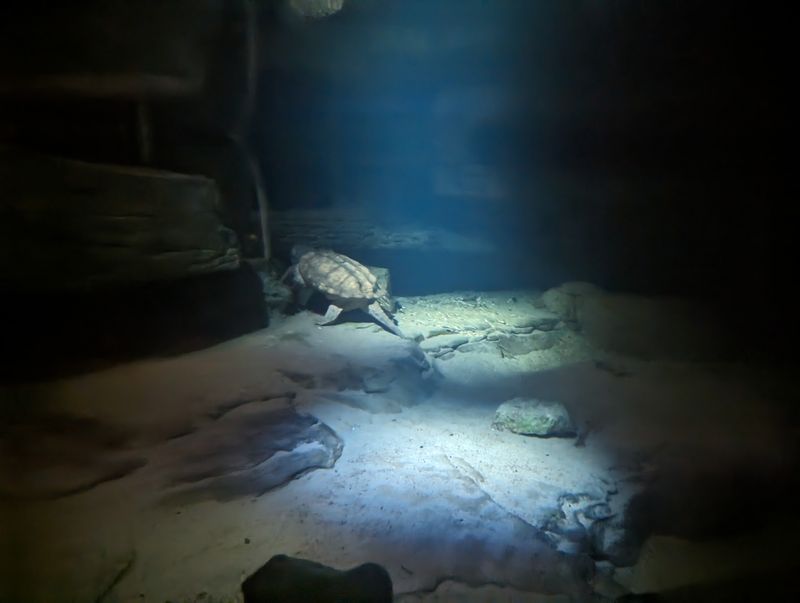
The lighting stays dim so the residents behave like it’s nighttime. Your eyes adjust slowly, and then the details start appearing.
Each zone feels like a new scene. There’s a wet cave, a canyon, an African diorama, a eucalyptus forest and a dry batcave.
Bats are a huge draw down here. Flying foxes and other species swoop and hang just beyond the glass.
Naked mole rats are wonderfully strange to watch. They tunnel and scurry through their habitat like a tiny underground city crew.
Keep an eye out for the fossa too. This Madagascar predator is a rare sight at most zoos, so seeing one is a treat.
Photography gets tricky in the low light, so don’t fight it. Put the phone away for a minute and let the darkness do its job.
Yes, There’s A Swamp Under The Desert
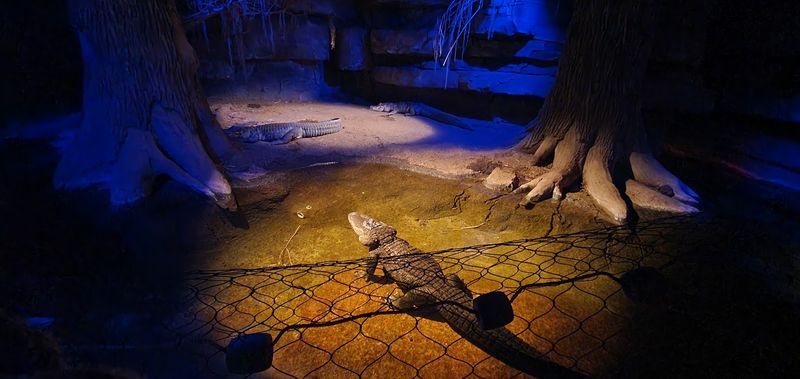
Deserts and swamps don’t usually share a building. Under the dome, Nebraska pulls it off anyway with the world’s largest indoor swamp.
The swamp holds 160,000 gallons of water. A boardwalk stretching across about a quarter acre carries you through it.
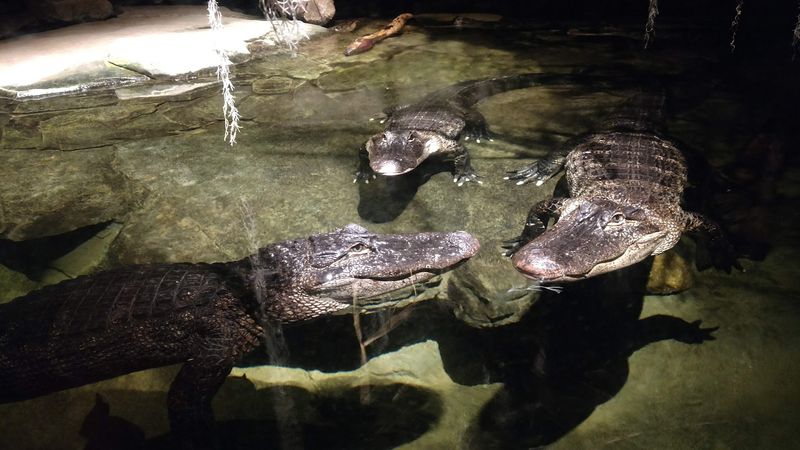
American alligators are the headliners. An albino alligator has drawn attention here in the past, so watch the water closely.
American beavers and nutria also call this wetland home. Their busy habits make a great contrast to the still, patient gators.
The atmosphere leans moody in the best way. Low light and quiet water give the boardwalk a storybook, slightly mysterious feel.
Kids usually treat this stretch like an adventure trail. Grown-ups tend to slow down too, scanning the shadows for one more set of eyes.
It also shows how different habitats connect. You move from dry sand upstairs to soggy wetlands downstairs in just a few minutes.
Save some energy for this finale. After the bats and caves, the swamp makes a memorable last scene before you head back into daylight.
Easy Logistics Make This A No-Stress Outing
Good news first: parking at the zoo is free. That’s one less thing to budget for on a family trip.
You’ll find the Desert Dome inside Omaha’s Henry Doorly Zoo and Aquarium at 3701 South 10th Street, Omaha, NE 68108. The zoo sits just off Interstate 80, making it simple for day-trippers to reach.
The zoo stays open year-round. It closes only on Thanksgiving Day and Christmas Day.
Hours shift with the seasons. Winter days run shorter than summer ones, so check the zoo’s schedule before you leave home.
Admission to the zoo covers the dome and the nocturnal level below. Tickets are sold for the zoo as a whole rather than per exhibit.
Strollers and wagons are allowed inside the grounds. The zoo also rents them, along with electric scooters for anyone who wants help covering ground.
Busy days can mean lines at popular buildings. Arriving early gives you a better shot at a relaxed loop through the dome.
Plan for some time too. Between the desert, caves and swamp, this stop easily fills a good chunk of a zoo day.
Why This Glass Giant Belongs On Every Nebraska Bucket List
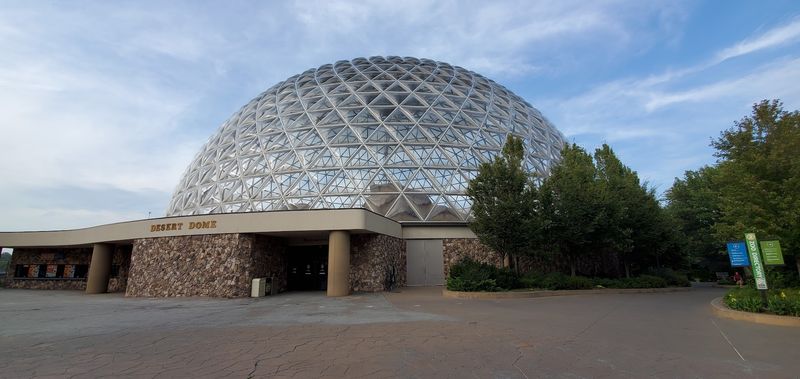
Few buildings can claim two world records stacked on top of each other. The Desert Dome holds the largest indoor desert above and the largest nocturnal exhibit below.
That combo makes it one of Nebraska’s proudest attractions. It’s a place that gives Omaha bragging rights far beyond state lines.
Families get an easy win here. The mild climate, close-up animals and changing scenery keep young explorers curious from start to finish.
Science lovers will find plenty to chew on too. Geodesic engineering, desert survival and nocturnal behavior all land in a single visit.
Photographers should budget time upstairs in the bright light. Downstairs is better for simply watching and listening.
I believe the best plan is pairing it with the zoo’s other giants. The Lied Jungle, the Suzanne and Walter Scott Aquarium and Hubbard Gorilla Valley all make strong next stops.
Winter might be the sneakiest time to go. Swapping snow for warm sand feels like a small, affordable escape.
However you schedule it, look up at least once on the way out. Those 1,760 windows catching the light make a pretty perfect goodbye.