This Abandoned Mansion In Georgia Is So Mysterious, You’ll Feel Like You’re In The Twilight Zone
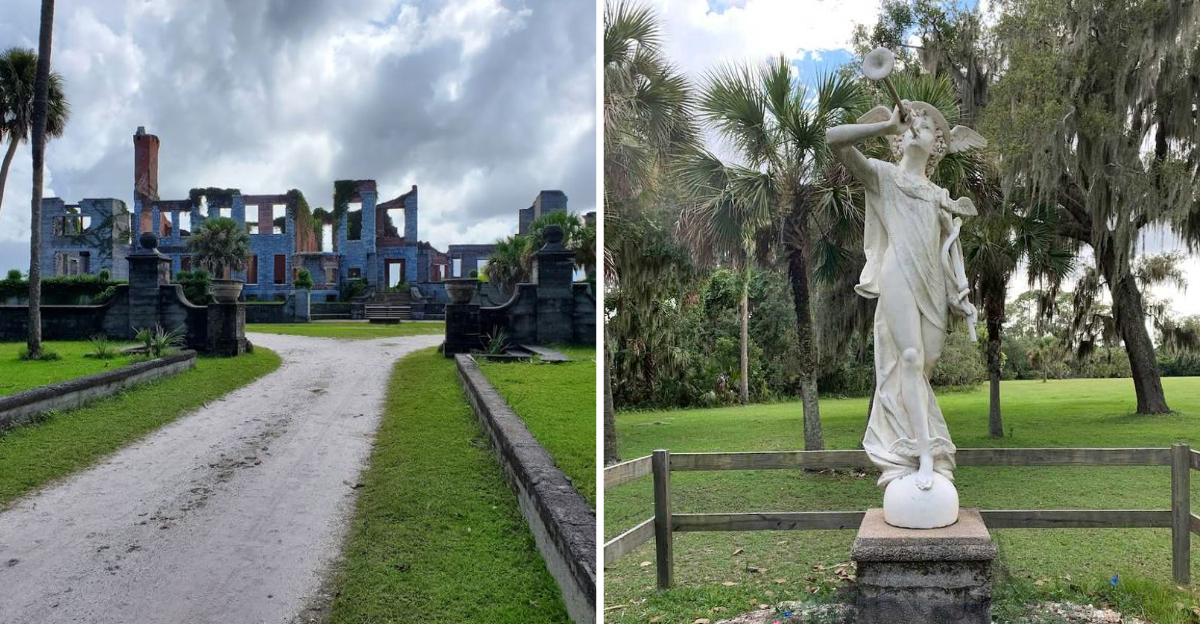
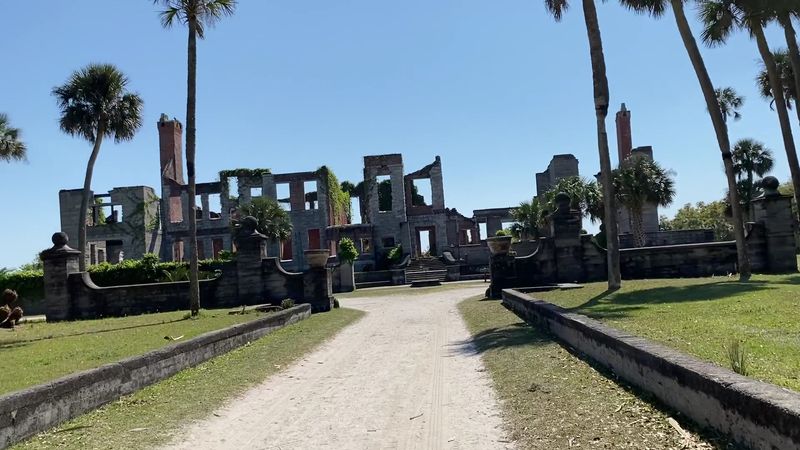
Walls rise where rooms once stood, open to the sky and slowly reclaimed by nature. The Dungeness Ruins on Cumberland Island, Georgia carry a presence that feels both powerful and quiet at the same time, like a place that remembers everything but no longer needs to explain it.
What was once a grand 59-room mansion now stands as a skeletal outline, with brick arches, broken stairways, and ivy-covered walls telling the story of a different era. Spanish moss drapes overhead, and wild horses often wander nearby, adding to the feeling that this place exists on its own terms.
The setting deepens the experience. Surrounded by maritime forest and coastal wilderness, the ruins feel isolated in the best way, where history and nature have blended into something almost surreal. It is not polished or restored, and that is exactly what makes it so striking.
Exploring here is less about checking off a landmark and more about taking in the atmosphere. Every angle feels like a photograph, every step like part of a story still unfolding.
For anyone drawn to places that feel forgotten yet unforgettable, the Dungeness Ruins offer an experience that is haunting, beautiful, and absolutely worth the journey.
1. Historical Significance That Goes Back Centuries
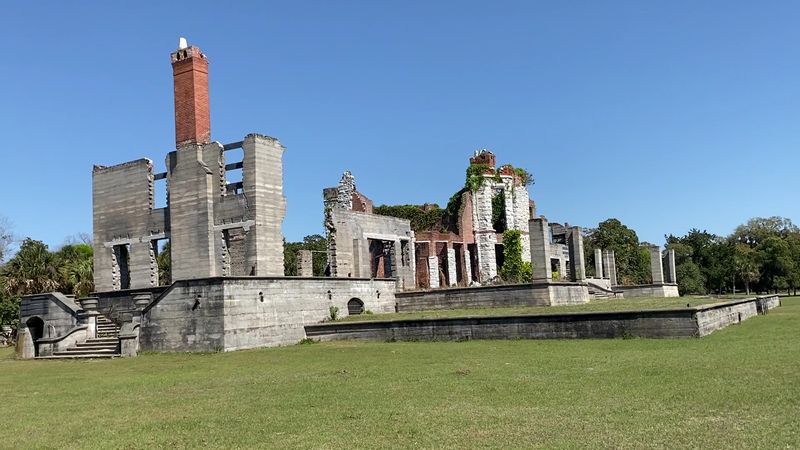
Few places carry the weight of history quite like Dungeness. The very first structure on this site was built in 1803 by Catherine Greene Miller, widow of Revolutionary War hero General Nathanael Greene, making it one of Georgia’s oldest estate landmarks.
Long before tourists arrived, this land was a symbol of power, resilience, and ambition. The estate changed hands multiple times over the decades, each owner leaving their own mark on the property and the surrounding island.
Standing among the ruins today, it is easy to feel the layers of history pressing in from every direction. Crumbling archways and moss-covered walls serve as quiet witnesses to centuries of stories. For anyone passionate about American history, this site delivers a deeply personal and moving experience that no museum exhibit can fully replicate.
Cumberland Island, GA is the address you will want to bookmark before the trip.
2. Scenic Beauty That Feels Almost Surreal
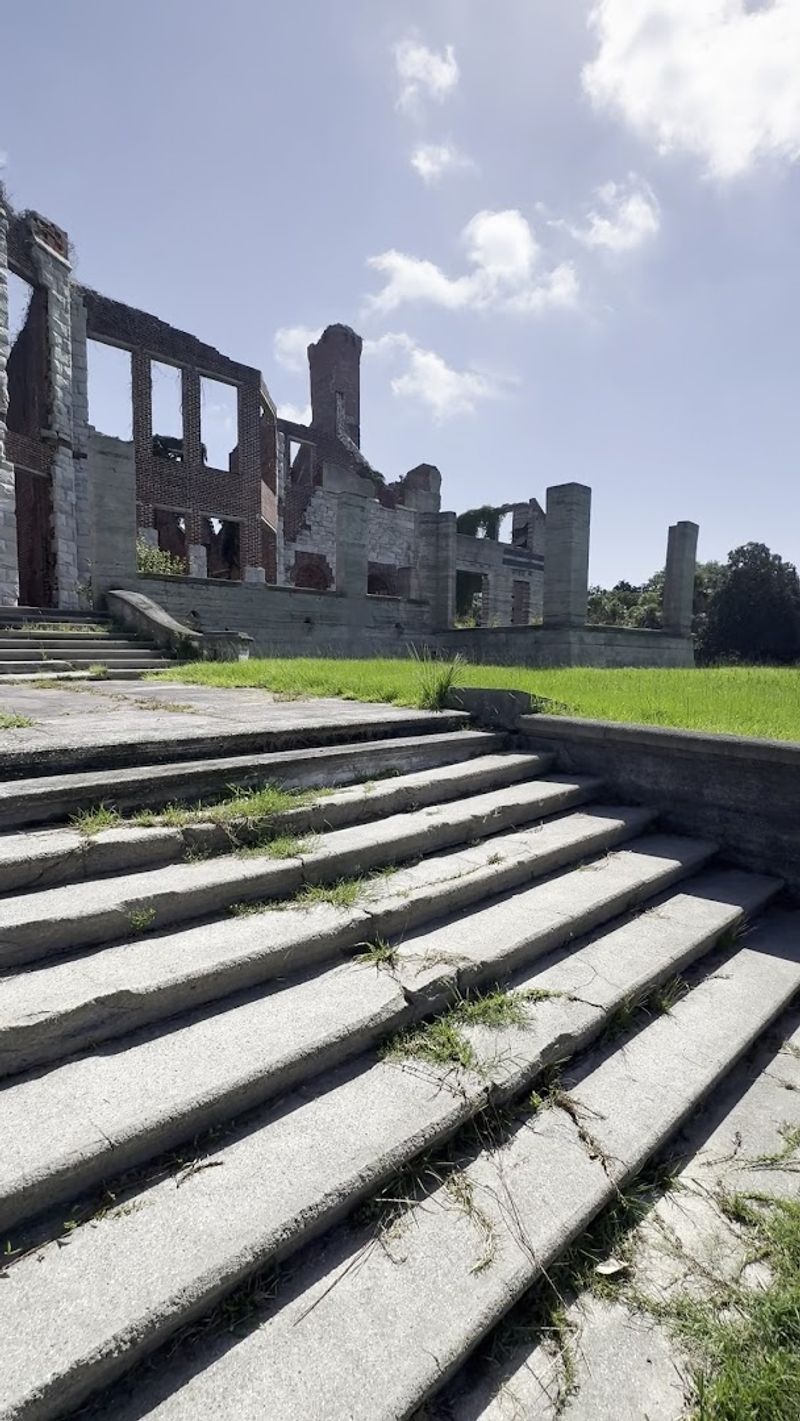
Marshes stretch out in every direction, the Atlantic Ocean glimmers just beyond the tree line, and the ruins rise up like something out of a fairy tale gone dark. The setting around Dungeness is the kind of scenery that makes people stop mid-step and just stare.
Cumberland Island National Seashore, Cumberland Island, GA 31558, protects this entire landscape, ensuring that the natural backdrop remains unspoiled and wild. There are no resort hotels nearby, no strip malls, and no crowds of souvenir shops cluttering the view.
Early morning visits tend to reward travelers with soft golden light filtering through the live oaks and Spanish moss, creating an almost dreamlike atmosphere. The combination of crumbling stone architecture against vibrant green marshland is a visual contrast that photographers and casual visitors alike find genuinely stunning. Bring comfortable shoes because the scenery begs to be explored slowly and on foot.
3. Wild Horses Roaming Freely Around the Ruins
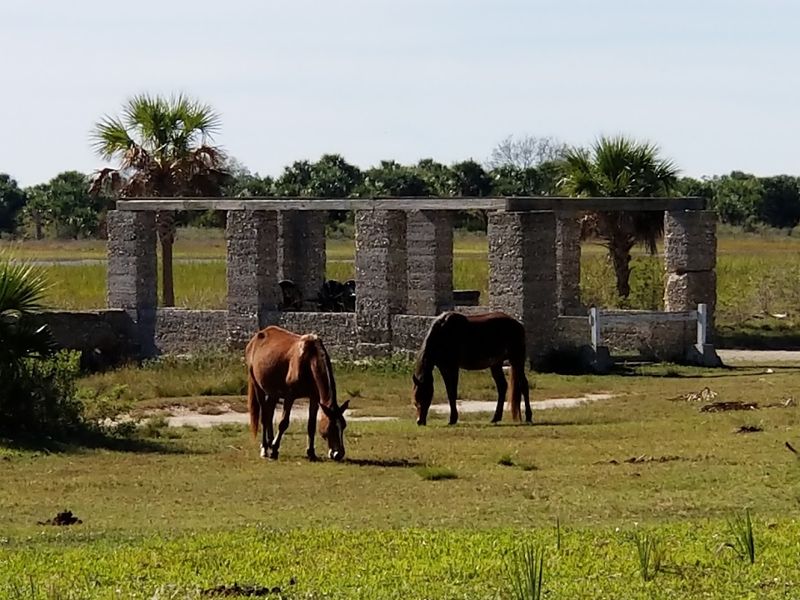
Imagine rounding a bend in the trail and coming face to face with a wild horse grazing just a few feet away from a crumbling stone wall. On Cumberland Island, that moment is not a fantasy but a genuine possibility that keeps visitors talking long after they return home.
The island is home to a well-known population of feral horses that have lived here for centuries, roaming freely across beaches, forests, and historic ruins alike. Cumberland Island National Seashore, Cumberland Island, GA 31558, is one of the only places in the eastern United States where visitors can observe wild horses in such close proximity to significant historic structures.
Wildlife officials ask that visitors keep a respectful distance and never attempt to feed or touch the horses. Watching them move calmly around the ruins adds a layer of wild, untamed magic to the visit that simply cannot be manufactured or staged anywhere else.
4. The Grave of a Revolutionary War Legend
Not many travel destinations can claim they are the final resting place of a celebrated Revolutionary War general, but Cumberland Island holds that distinction with quiet dignity. General Henry “Light-Horse Harry” Lee, father of Confederate General Robert E. Lee, died on the island in 1818 and was originally buried here.
The grave site is located near the Dungeness area on Cumberland Island, GA 31558, and remains one of the most historically significant spots on the entire island. His presence connects this remote Georgia barrier island to the very founding of the United States in a remarkably direct way.
History enthusiasts often find this stop particularly moving, standing at the grave of a man who rode alongside George Washington during the Revolutionary War. The peaceful, tree-shaded setting adds a solemn beauty to the experience. Visiting the grave alongside the ruins creates a powerful historical narrative that spans more than two centuries of American life.
5. Exploring Servant Quarters and Forgotten Structures
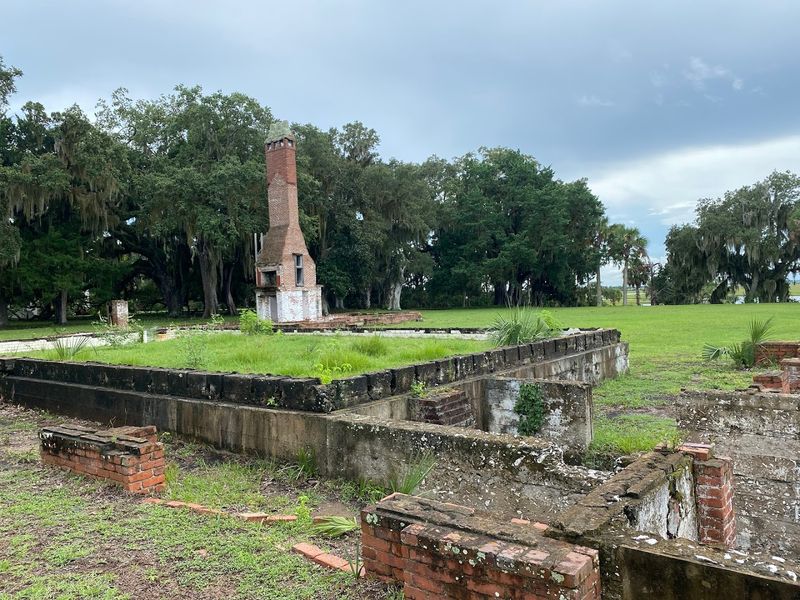
Beyond the main mansion walls, a whole network of supporting structures once kept the Dungeness estate running. Servant quarters, stables, a carriage house, and various outbuildings were all part of this sprawling compound, and their remains are still scattered across the grounds today.
Walking through these secondary ruins on Cumberland Island, GA 31558, offers a more complete picture of what daily life actually looked like for the dozens of people who lived and worked on the estate. It shifts the story from one of elite luxury to a broader, more honest human narrative.
Some of the foundations are barely visible beneath layers of moss and soil, while others still have partial walls standing. Each fragment tells a different chapter of the estate’s story. Taking time to wander beyond the main ruins and explore these quieter corners of the property rewards curious visitors with details that most casual tourists never notice or appreciate.
6. Ranger-Led Tours That Bring History to Life
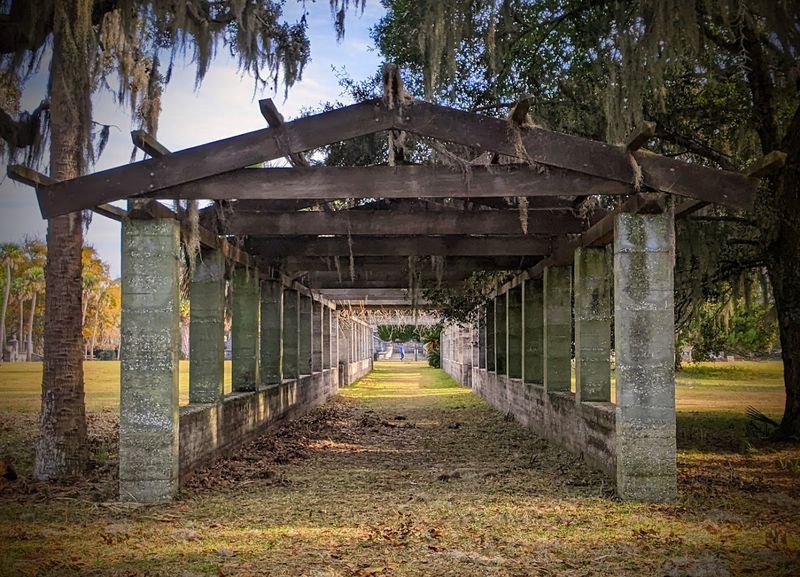
There is a big difference between wandering the ruins on your own and having a knowledgeable National Park Service ranger walk you through centuries of layered history. The ranger-led tours available at Cumberland Island National Seashore are genuinely excellent and well worth planning around.
Tours depart from the dock near the Sea Camp area on Cumberland Island, GA 31558, and rangers guide groups through the ruins while sharing stories about the Carnegie family, the island’s Indigenous history, and the natural ecosystem surrounding the estate. The commentary is detailed, accurate, and delivered with real enthusiasm.
Tour schedules can vary by season, so checking the National Park Service website before visiting is always a smart move. Groups tend to be small, which means there is usually plenty of opportunity to ask questions and have genuine conversations with the ranger. For first-time visitors especially, joining a guided tour transforms the experience from interesting to truly unforgettable.
7. Photography Opportunities That Are Genuinely World-Class
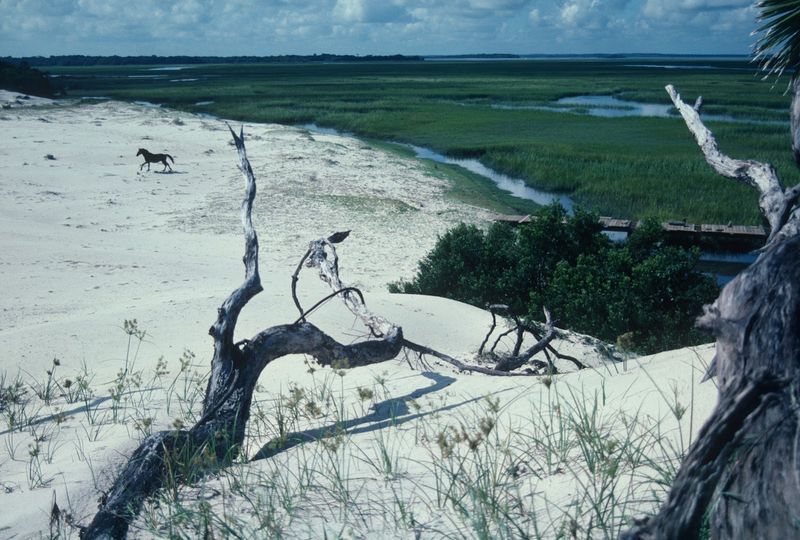
Photographers from across the country make the ferry trip to Cumberland Island specifically to capture the Dungeness Ruins, and it is not hard to understand why. The combination of crumbling Gilded Age architecture, subtropical vegetation, wild horses, and dramatic coastal light creates a layered visual environment that rewards both beginners and seasoned professionals.
Cumberland Island National Seashore, Cumberland Island, GA 31558, offers no shortage of compelling compositions. Stone archways draped in vines, roofless rooms with sky ceilings, and overgrown staircases leading nowhere all make for striking subjects at any hour of the day.
Golden hour and early morning tend to produce the most atmospheric results, with soft light filtering through the live oaks and long shadows stretching across the ruins. Wide-angle lenses capture the scale, while close-up shots reveal the fine textures of weathered stone and creeping moss. Even a smartphone camera can produce remarkable images in this setting without any special effort.
8. A Peaceful Escape From Overcrowded Tourist Traps
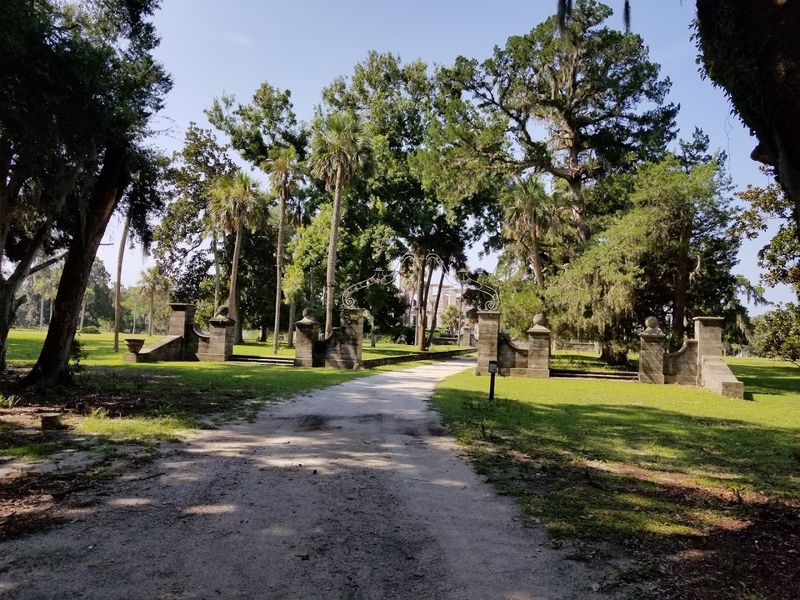
Cumberland Island is not easy to reach, and that is honestly part of its charm. The only public access is via a passenger ferry from St. Marys, Georgia, and the National Park Service limits the number of visitors on the island each day, which keeps the atmosphere genuinely calm and unhurried.
The Cumberland Queen ferry departs from St. Marys, GA 31558, and the ride itself takes about 45 minutes across the waterway. Once on the island, the absence of cars, chain restaurants, and tourist kiosks is immediately noticeable and deeply refreshing.
Visitors who are tired of fighting for parking spots and elbow room at overhyped attractions will find Cumberland Island to be a genuine breath of fresh air. The pace here is slow by design. People read on the beach, watch horses graze, and sit quietly among the ruins without the pressure of a packed itinerary.
It is the kind of calm that actually sticks with you after the trip ends.
9. Cultural Insights Into Enslaved Communities and African American Heritage
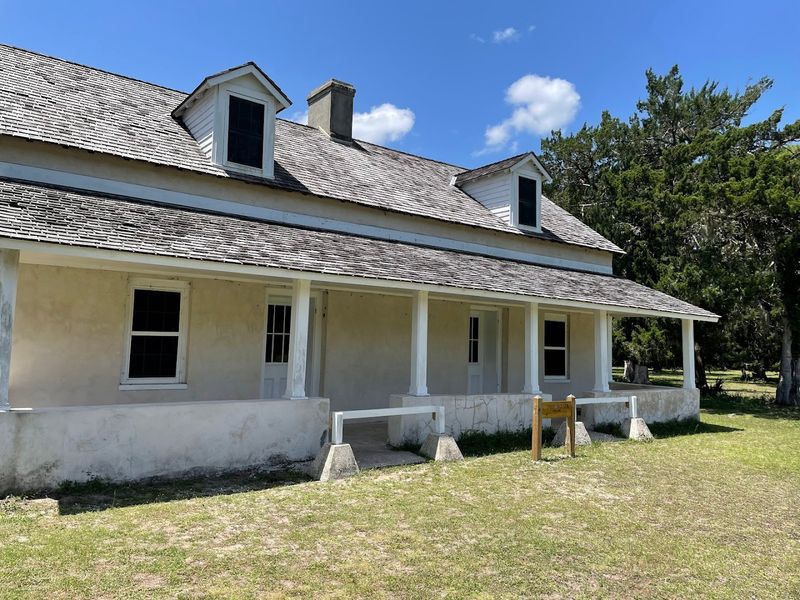
Any honest visit to Dungeness must include an acknowledgment of the people whose labor built and maintained the estate. Enslaved men and women were central to the operation of the property throughout much of its history, and their stories deserve to be heard alongside those of the Carnegie and Greene families.
The First African Baptist Church and the nearby Settlement community on Cumberland Island, GA 31558, represent the enduring presence and resilience of the African American community that developed on the island over generations. These sites are accessible to visitors and carry tremendous historical and cultural weight.
Ranger programs and on-site interpretive materials help visitors understand this fuller picture of the island’s past. Learning about the Settlement community and the church, which is one of the oldest African American churches in the country, adds a profound layer of meaning to the visit. History here is complex, and engaging with all of it honestly makes the experience far more valuable.
10. Maritime Forest and Tidal Creek Ecosystem
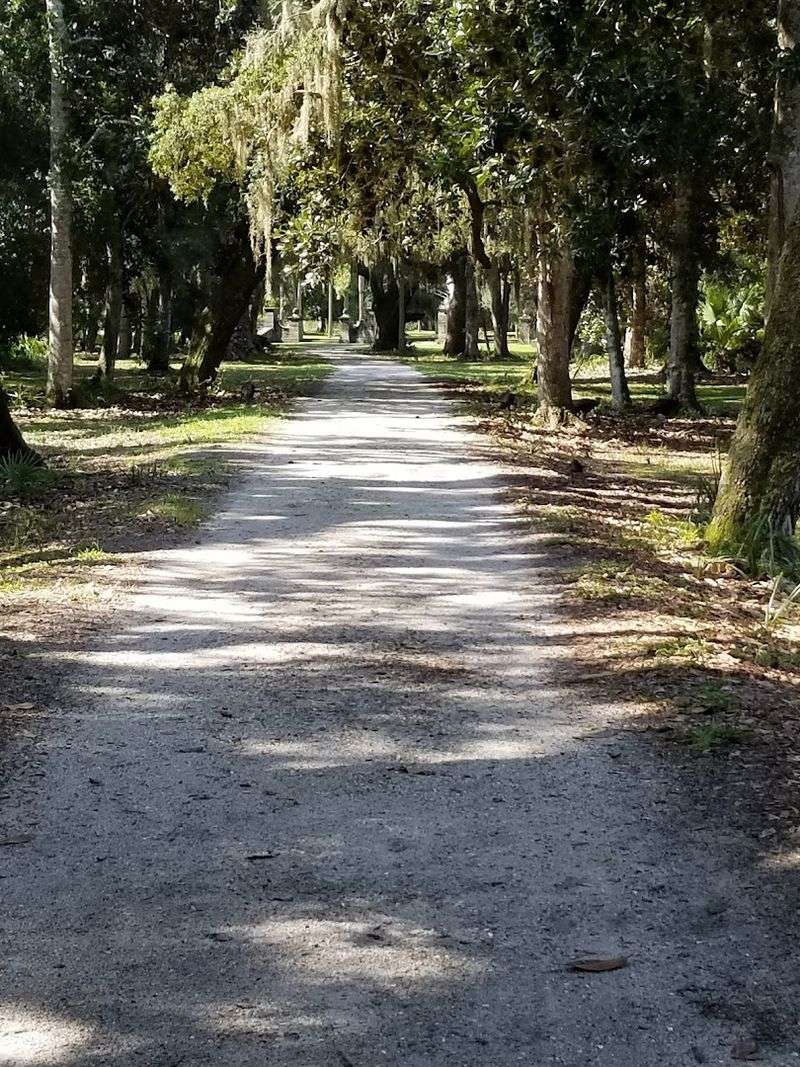
The natural environment surrounding Dungeness is as compelling as the ruins themselves. Cumberland Island is home to one of the most intact maritime forests on the entire East Coast, a dense canopy of live oaks, magnolias, and sabal palms that creates a world unto itself just steps away from the crumbling mansion walls.
Cumberland Island National Seashore, Cumberland Island, GA 31558, encompasses roughly 17,500 acres of land and water, including tidal creeks, freshwater ponds, and salt marshes that support an extraordinary range of wildlife. Deer, armadillos, wild turkeys, and dozens of bird species are regularly spotted throughout the forest.
Walking the trails through this ecosystem feels like moving through a living museum of coastal Georgia nature. The air smells of salt and pine, the ground is soft with decades of fallen leaves, and the light through the canopy shifts constantly throughout the day. Nature enthusiasts could spend an entire day exploring without ever feeling like they have seen enough.
11. The Ice House Museum and On-Site Exhibits
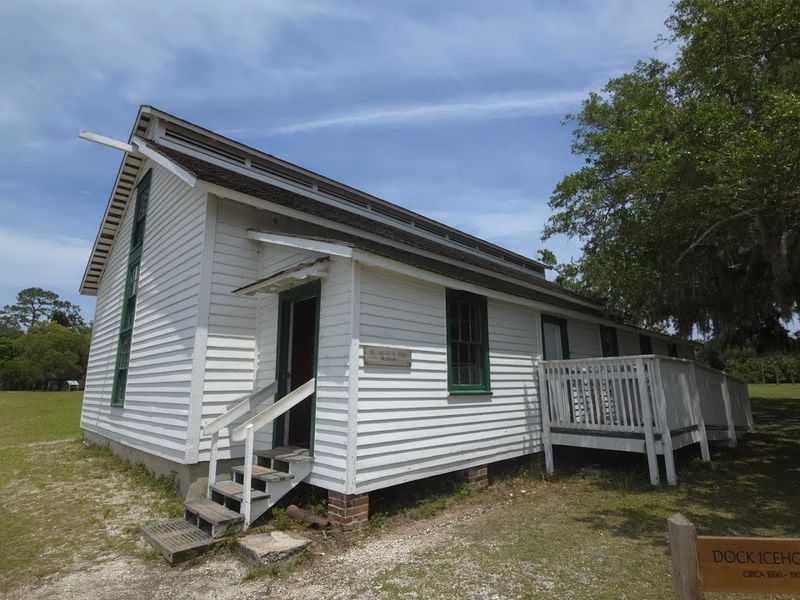
Right near the Dungeness dock, a small but genuinely informative museum occupies what was once the Carnegie estate’s ice house. It is easy to walk past it quickly, but slowing down to spend time inside pays off in a big way for anyone who wants to understand the full story of the island.
The Ice House Museum is located at the Dungeness Dock area, Cumberland Island, GA 31558, and is operated by the National Park Service as part of Cumberland Island National Seashore. Exhibits cover the island’s natural history, the Carnegie family’s influence, Indigenous habitation, and the ecology of the surrounding coastal environment.
The displays are well-organized and genuinely engaging without being overwhelming. Artifact collections, historical photographs, and interpretive panels give visitors a strong foundation before heading out to explore the ruins. Many visitors recommend stopping here first to get oriented before wandering the grounds, since the context makes everything else feel more meaningful and connected.
12. Architectural Grandeur of the Carnegie Era
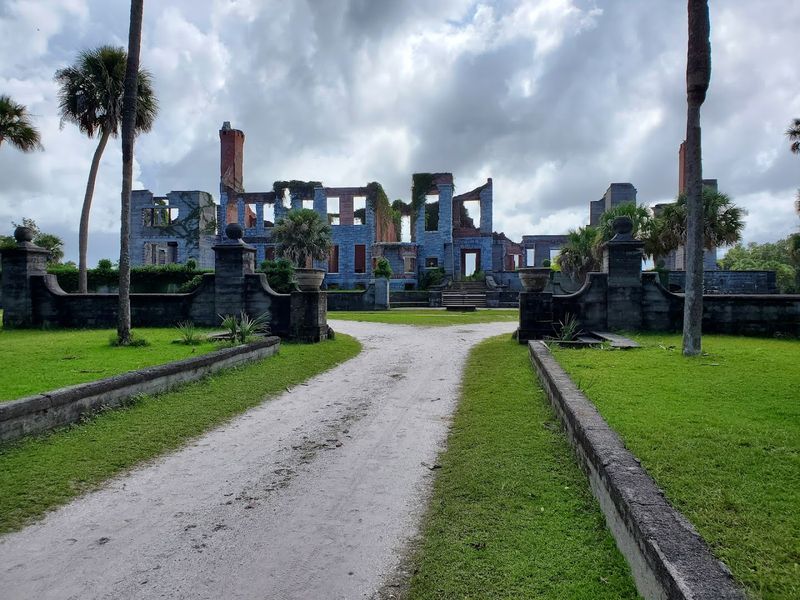
When Thomas and Lucy Carnegie rebuilt Dungeness in 1884, they did not hold back. The result was a jaw-dropping 59-room Queen Anne-style mansion that became one of the most extravagant private estates of the entire Gilded Age, rivaling properties found in Newport and the Hudson Valley.
Located at the southern end of Cumberland Island, GA, the mansion featured elaborate woodwork, soaring chimneys, and sweeping verandas that overlooked the Atlantic Ocean. Servants, guests, and Carnegie family members filled its halls with a lifestyle of extraordinary luxury.
Today, even in its ruined state, the sheer scale of the structure is breathtaking. Visitors can walk through roofless rooms and imagine the chandeliers, the dinner parties, and the laughter that once echoed here. The skeletal grandeur of what remains makes it one of the most photogenic and architecturally fascinating ruins anywhere on the East Coast.
13. 17 Miles of Pristine Undeveloped Beach
Seventeen uninterrupted miles of Atlantic coastline with no hotels, no beach bars, and no umbrella rental stands sounds like something from a fantasy, but Cumberland Island delivers exactly that. The beaches here are among the most pristine and undeveloped on the entire Eastern Seaboard, and they are technically accessible to anyone willing to make the ferry trip.
Cumberland Island National Seashore, Cumberland Island, GA 31558, protects the entire beach corridor, keeping it free from commercial development indefinitely. Wide stretches of white sand are typically shared with shorebirds, ghost crabs, and the occasional wild horse wandering down to the water’s edge.