10 Arizona Churches With Architecture So Stunning They Feel Worlds Away
Look up. That is the best advice for this road trip.
Towers, domes, carved stone, stained glass, and dramatic ceilings appear in places where desert scenery normally steals the attention.
Arizona holds religious buildings that feel unexpectedly grand, especially against such rugged surroundings. Their beauty is only one layer.
Many also carry stories of migration, craftsmanship, faith, and communities determined to build something lasting.
A quick roadside glance will not do them justice. Slow down and go inside when visitor access is available. The details often become more impressive the longer you stand still.
Some buildings deserve more than a photograph from the parking lot.
1. Mission San Xavier Del Bac, Tucson
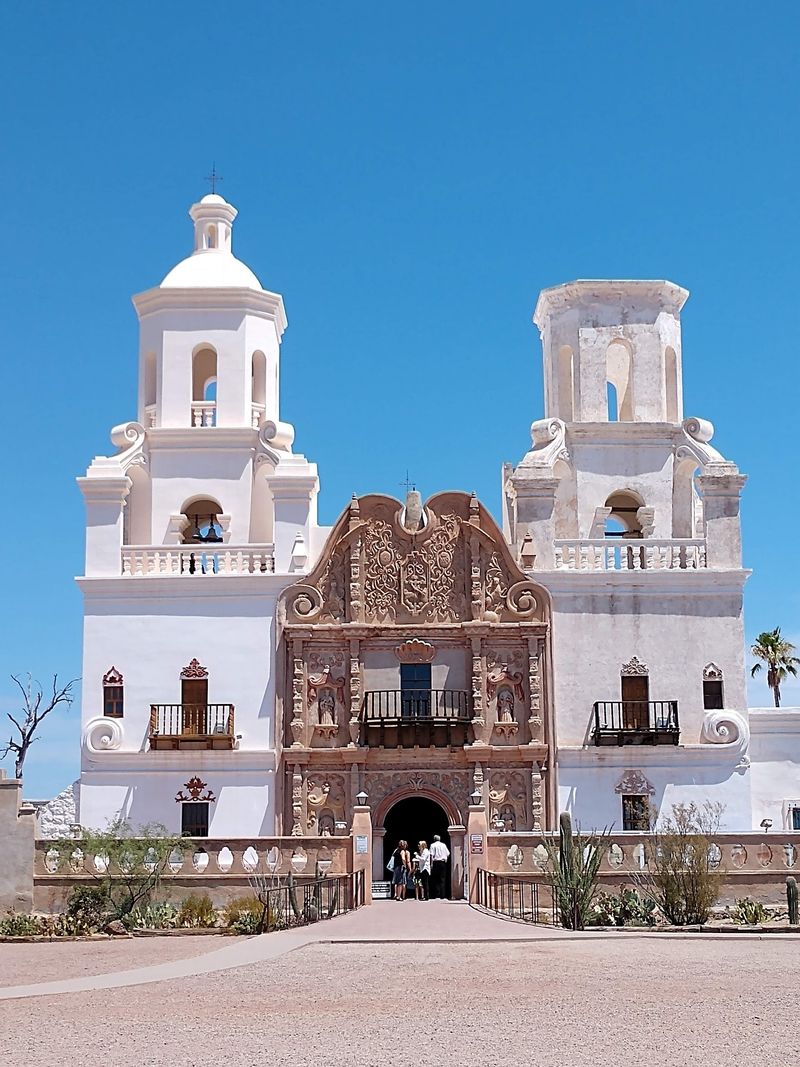
Its bright stucco facade rises above the surrounding desert, earning the long-standing nickname White Dove of the Desert.
Mission San Xavier del Bac sits just south of Tucson and was completed in 1797. That makes it the oldest intact European building anywhere in Arizona.
Spanish Colonial and Baroque details cover nearly every surface inside. Statues, hand-painted murals, and carved wooden figures fill the sanctuary with color and motion.
Builders used low-fire clay brick, stone, and lime mortar for the thick, cooling walls. A rare vaulted masonry roof spans the whole structure without modern supports.
Look closely at the twin towers and you will notice they do not match. The east bell tower was never completed.
The bright facade stands out strongly against the surrounding desert landscape. Restoration artisans have spent decades stabilizing the murals, and their work continues today.
The mission still serves the Tohono O’odham community as an active parish church. Respectful quiet inside goes a long way, especially during services.
Grotto Hill, topped by a white cross and shrine, stands a short distance east of the church.
Find this landmark at 1950 W San Xavier Rd. Few buildings in the Southwest reward slow looking quite this generously.
2. Chapel Of The Holy Cross, Sedona
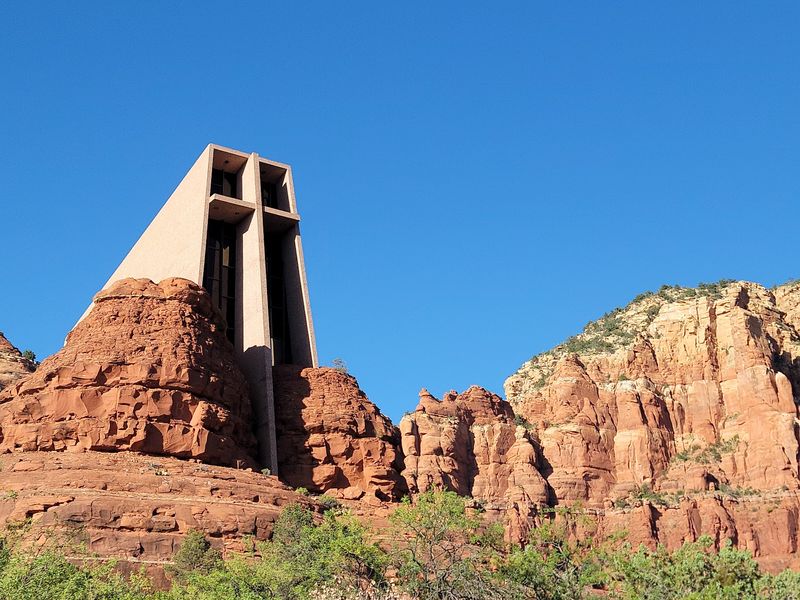
Does that building appear to grow straight out of the sandstone? Red rock and poured concrete rarely agree, yet here they do.
The Chapel of the Holy Cross is a striking example of midcentury modern design adapted to Sedona’s red-rock setting. A colossal 90-foot iron cross serves as both artwork and structural spine.
Designers drew inspiration from the Empire State Building in New York City. Coarse-grained concrete and smoky-gray glass help the chapel blend with surrounding cliffs.
The chapel sits on a twin-pinnacled rock spur roughly 250 feet high. Its silhouette against a bright desert sky is unforgettable.
Construction moved fast for such an ambitious design, wrapping up in just 18 months during 1956. The steep rock setting presented significant construction challenges during the project.
Inside, the compact chapel is brightly lit by large glazed walls at its front and rear. Benches face the broad western window and the landscape beyond.
Parking is limited to about 45 spaces, and the chapel can become busy during peak travel periods. The short uphill walk from parking is paved but steep.
The chapel grounds also open onto broad views across Sedona’s red-rock landscape.
The address is 780 Chapel Rd, tucked into a quiet residential road. Quiet reflection and panoramic scenery arrive together here, which is a rare combination.
3. St. Mary’s Basilica, Phoenix
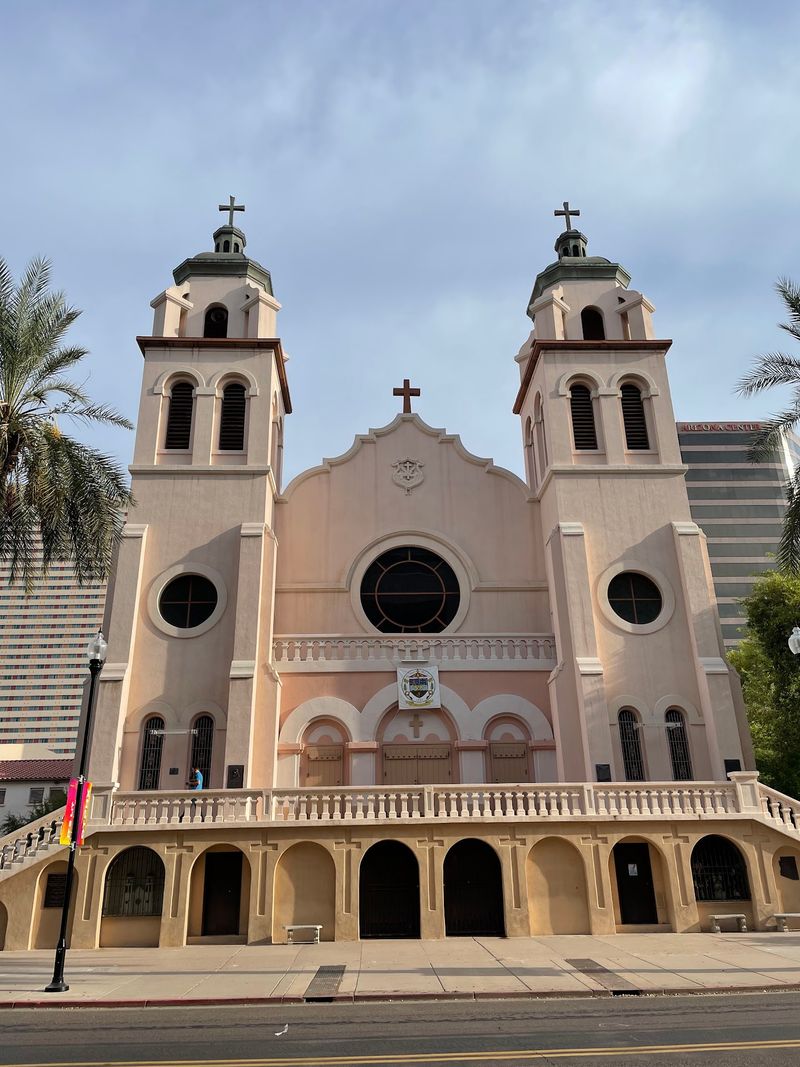
Its twin bell towers are capped by onion-shaped domes associated with churches in Bavaria and Austria.
St. Mary’s Basilica anchors a busy block in central Phoenix. Mission Revival defines the exterior, while Romanesque features appear in the arches and interior.
The twin towers and their distinctive domes give the facade much of its vertical emphasis.
Step through the doors and Romanesque arches sweep overhead. Ornate domes and finely carved statues fill the sanctuary.
The basilica houses Arizona’s largest collection of stained-glass windows, many shaped by a design tradition associated with the Munich school. Colored light spills across the pews on sunny mornings, which happens often.
Construction stretched from 1902 to 1914, replacing a smaller adobe church on the same ground. Pope John Paul II elevated it to minor basilica status in 1985.
Group docent tours explore the basilica’s history, architecture, art, and religious symbolism and are available by appointment.
A parish parking garage is available for visitors attending Mass and sponsored events. Combine your stop with the nearby heritage district for a full afternoon.
The basilica stands at 231 N 3rd St. Walking out into modern Phoenix afterward creates one of the strangest and best contrasts in the state.
4. Old Adobe Mission, Scottsdale
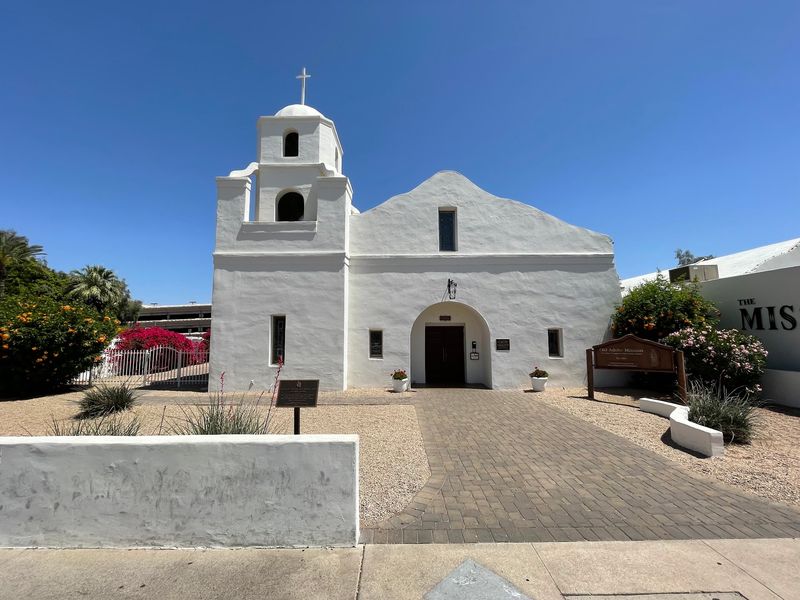
Imagine for a second shaping 14,000 bricks by hand, one at a time. That is exactly how this little sanctuary came together.
Old Adobe Mission hides in plain sight in Old Town Scottsdale. Spanish Colonial Revival lines give it a modest, sun-washed elegance.
Mexican families who settled in Scottsdale in the late 1910s later began building the mission in the early 1930s using locally made adobe. Their labor is still visible in the slightly uneven walls.
Fifteen handcrafted stained-glass panes brighten the interior. Each casts soft color across simple wooden pews.
Work finished in 1933, and the building became the oldest standing church structure in the city. Restoration beginning in the early 2000s stabilized the bell tower, repaired adobe brick, and restored stained glass.
There is no soaring nave or gilded altar here. The beauty comes from restraint, thick walls, and deep window wells.
Shaded benches in the small courtyard make a welcome break from gallery hopping nearby. From June through September, visits are by appointment; from October through May, the mission posts regular daytime hours.
Visitors should follow any photography guidance posted on site and check current opening hours before arriving.
You will find it at 3817 N Brown Ave, steps from Scottsdale’s art galleries. Anyone curious about how the desert was actually built should stop in and touch history.
5. Assumption Of The Blessed Virgin Mary Catholic Church, Florence
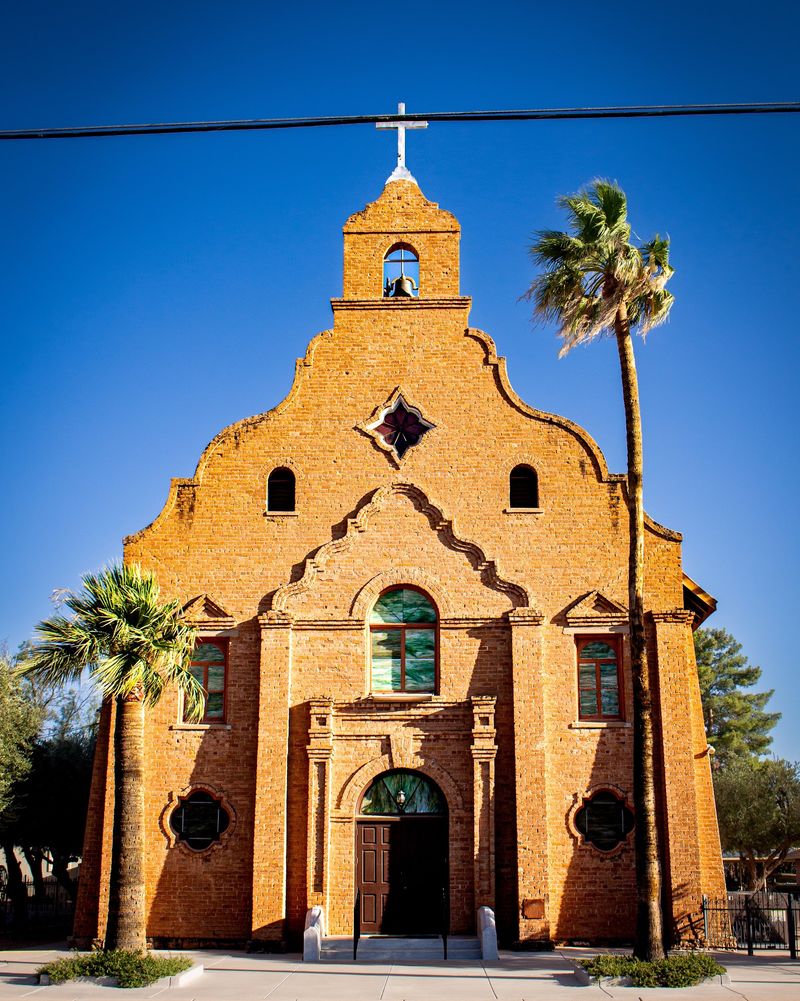
One of Arizona’s finest Mission Revival churches sits in a town most drivers speed past. Florence rewards anyone willing to slow down.
The current Mission Revival church was completed in 1911 and dedicated in 1912, the year Arizona became a state. Early twentieth-century craftsmanship shows in every curve.
The current structure became the parish’s third church and replaced an earlier building that had occupied the site.
Gentle scalloped parapets and smooth plaster walls define the exterior. Arched windows repeat in a calm, steady rhythm.
The church is recognized as a historical site by the Town of Florence and the Arizona Historical Society and is listed on the National Register of Historic Places. It remains one of the clearest landmarks in the old town grid.
Florence itself holds dozens of territorial-era buildings within walking distance. A self-guided historic district stroll pairs beautifully with this stop.
Cooler months are ideal, since summer afternoons here get genuinely fierce. Winter light also flatters the white facade.
Check the parish schedule if you hope to see the interior, as hours can vary. Interior access should be planned around the parish’s current service schedule.
The church stands at 221 E 8th St, near the courthouse district. Quiet dignity, not grandeur, is what lingers in your memory long after you drive away.
6. Sacred Heart Of Jesus Catholic Church, Nogales
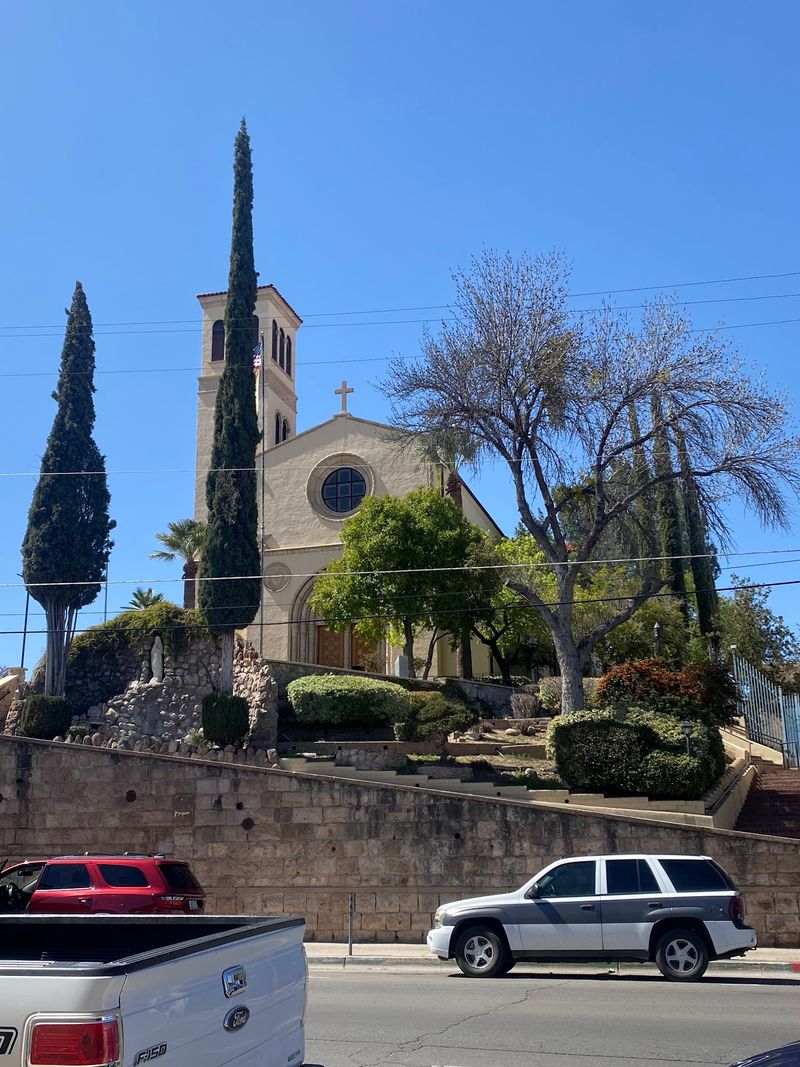
I’m right there with you, wondering what stories these walls could tell after more than a century on the border. The parish has served a cross-border community for well over a century.
Its history reaches back to an 1887 mission, with the parish established in Nogales in 1897.
An ambitious expansion began in 1928, and the enlarged church was finished in the early 1930s. Consecration followed in 1946.
English- and Spanish-language services remain part of the current parish schedule, reflecting its cross-border community.
Stained-glass windows add color throughout the sanctuary and complement the church’s Romanesque character. The effect is worth timing your arrival for.
Nogales itself rewards exploration, with historic downtown storefronts nearby. The church sits within Nogales’ historic downtown, close to older commercial blocks.
The parish calendar includes bilingual services and community celebrations throughout the year.
The church sits at 272 N Rodriguez St, a short drive from the port of entry. Come for the architecture and stay for the history of a parish shaped by its cross-border setting.
7. Holy Angels Catholic Church, Globe
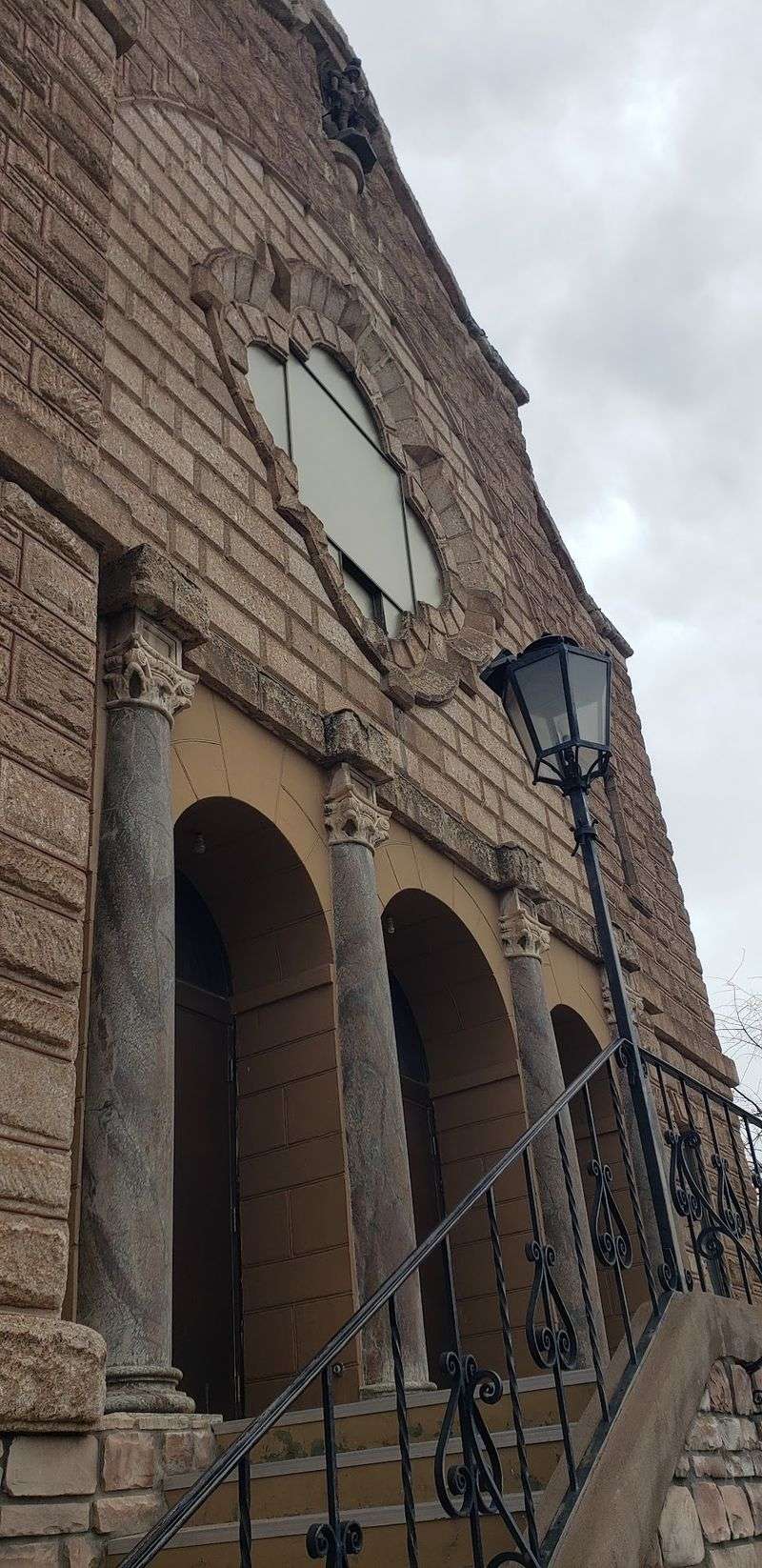
Romanesque Revival stonework rises prominently in Globe’s historic core, reflecting the town’s early twentieth-century growth.
Holy Angels Catholic Church rises above the streets of Globe with confident proportions. Subtle Mission Revival touches soften the heavier Romanesque forms.
Construction began in 1916 and continued into 1918, using gray tufa stone quarried near Rice. The pale, porous rock gives the walls a warm texture that changes with the light.
Stained-glass windows here came from Emil Frei and Associates. Their work floods the nave with layered color on clear afternoons.
A four-story bell tower dominates the exterior, with three bells cast in 1918 still housed in the belfry. Globe’s historic downtown surrounds the church, with older commercial blocks nearby.
The drive up from Phoenix climbs through rugged hills and old mining scars. Allow extra time for pullouts and photographs.
Cooler elevation makes summer mornings here more forgiving than in the valley. Autumn is especially pleasant.
Look for it at 201 S Broad St in the heart of town. The stonework, stained glass, and bell tower give the church a distinctive presence in Globe’s historic core.
8. St. Patrick Catholic Church, Bisbee
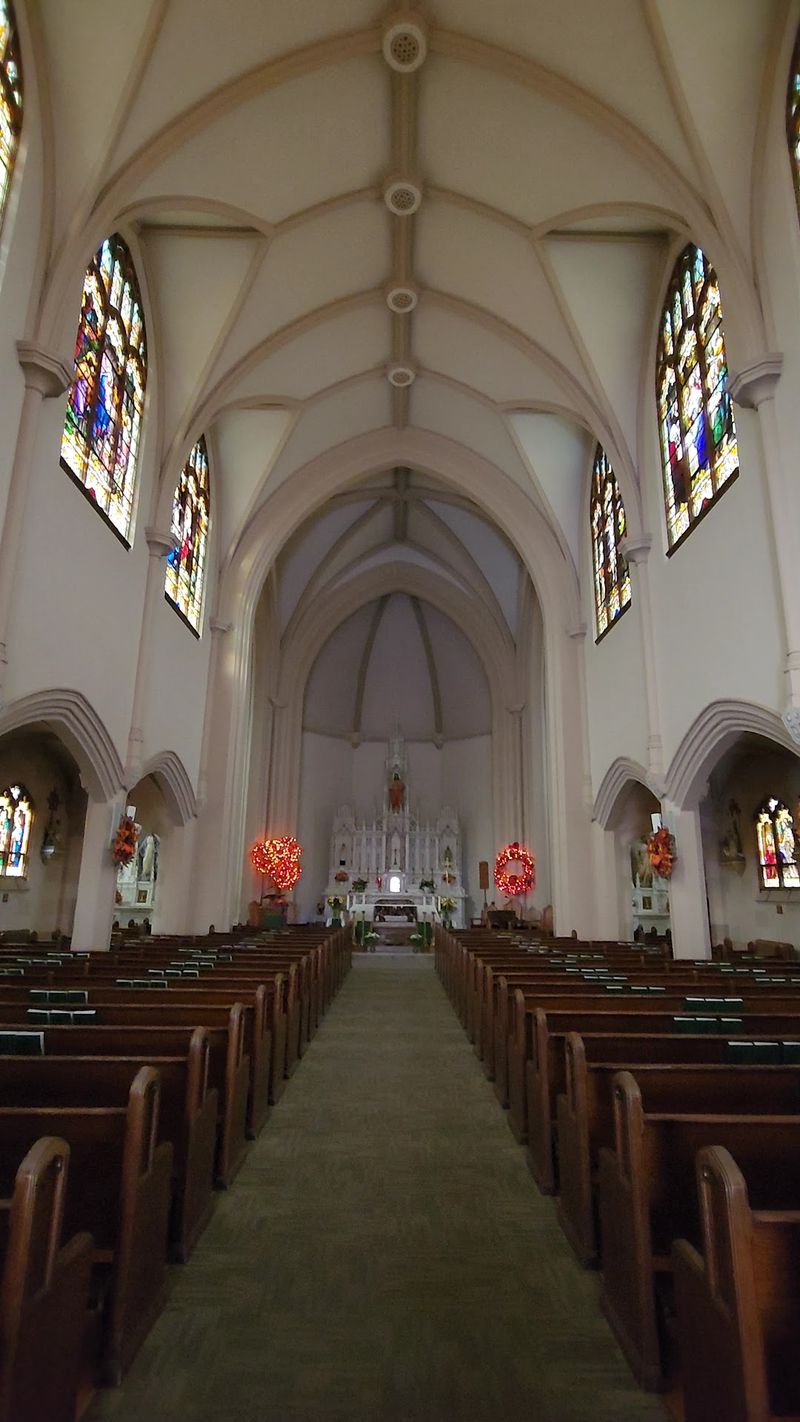
The glasswork in this hillside sanctuary belongs in a European cathedral. Bisbee keeps surprising people who come for the antiques.
St. Patrick Catholic Church brings Late Gothic Revival grandeur to a former copper mining town. Pointed arches and vertical lines pull your eyes upward.
Work began in 1915, and the current church was completed and consecrated in 1917. Local parishioners, including miners, contributed labor to the project, while construction materials arrived from several parts of the country.
Emil Frei and Associates designed the stained-glass windows. Their deep blues and reds turn the interior into a slow-moving light show. The original altars and statuary remain important parts of the church’s interior.
Parking areas are available behind the church, in front of the building, and west of the property.
The town’s narrow canyon setting keeps temperatures milder than the desert below. Spring and fall are especially comfortable for wandering.
Afterward, explore the historic downtown staircases and colorful storefronts. Mine tours operate nearby for anyone wanting the full story.
The church address is 100 Quality Hill Rd, perched above the old commercial district. After viewing the windows, the church’s elevated setting opens back toward Bisbee’s canyon.
9. Former Sacred Heart Catholic Church, Prescott
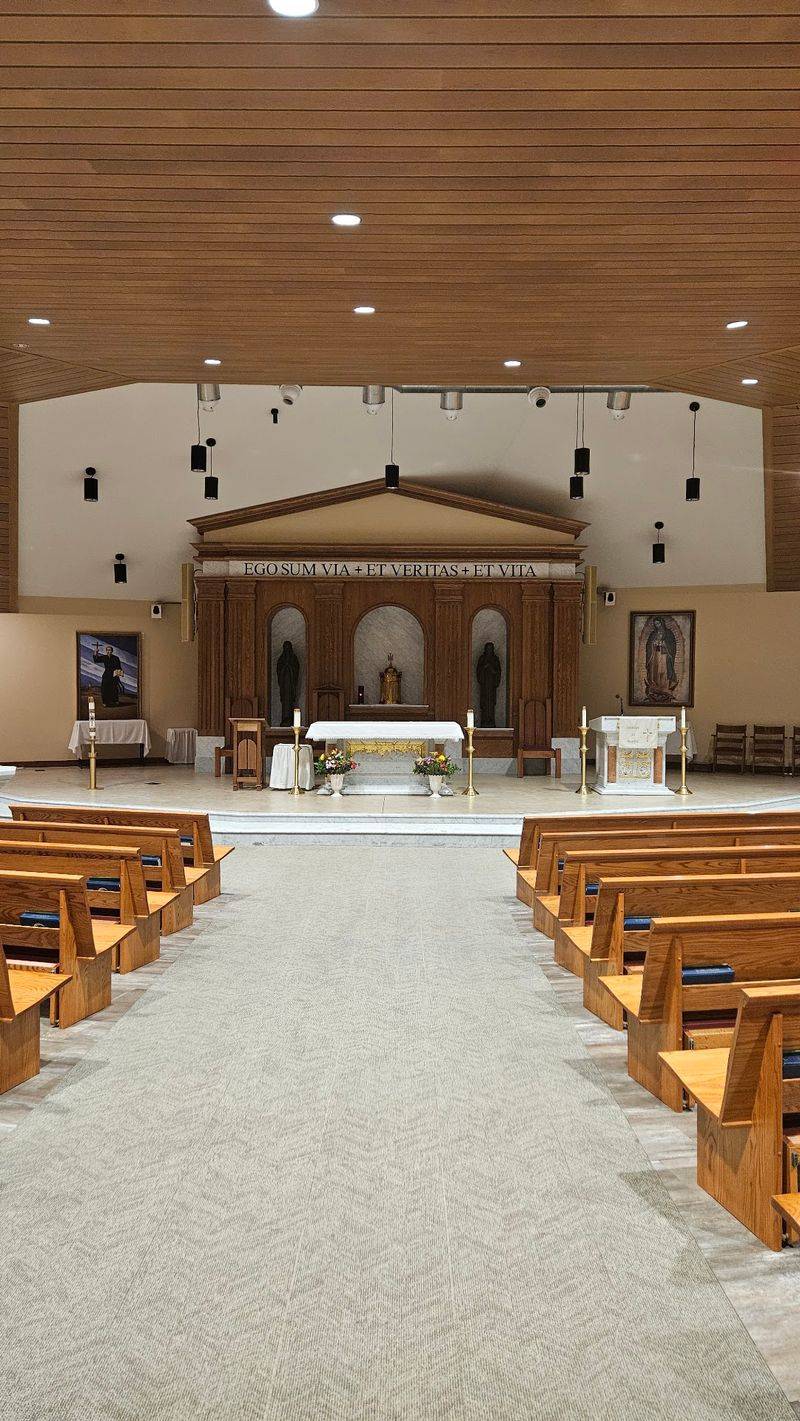
A nineteenth-century Gothic church that now hosts theater productions is a fantastic plot twist. Prescott pulled it off with style.
The former Sacred Heart church is a late nineteenth-century Gothic Revival building now used as a performing-arts venue. Architect Frank Parker gave it a restrained, sober Gothic character.
Construction began in 1891, and the first services were held in the completed church in 1895. Sturdy brick walls have handled more than a century of mountain weather.
Decorative brickwork frames gracefully pointed arches across the facade. The detailing rewards a close look from the sidewalk.
A 115-foot steeple once topped the structure and was removed in 1930 after repeated lightning strikes.
The parish used the building until 1969; today it operates as The Hazeltine, a performing-arts venue. Current performances and events provide opportunities to see the historic interior.
Downtown Prescott and its courthouse square sit just a short walk away. Pine-scented mountain air makes the stroll pleasant nearly year round.
The historic former church is at 208 N Marina St; the active parish is a separate building at 150 Fleury St. Historic architecture, a new purpose, and a continuing story give this building an unusual second chapter.
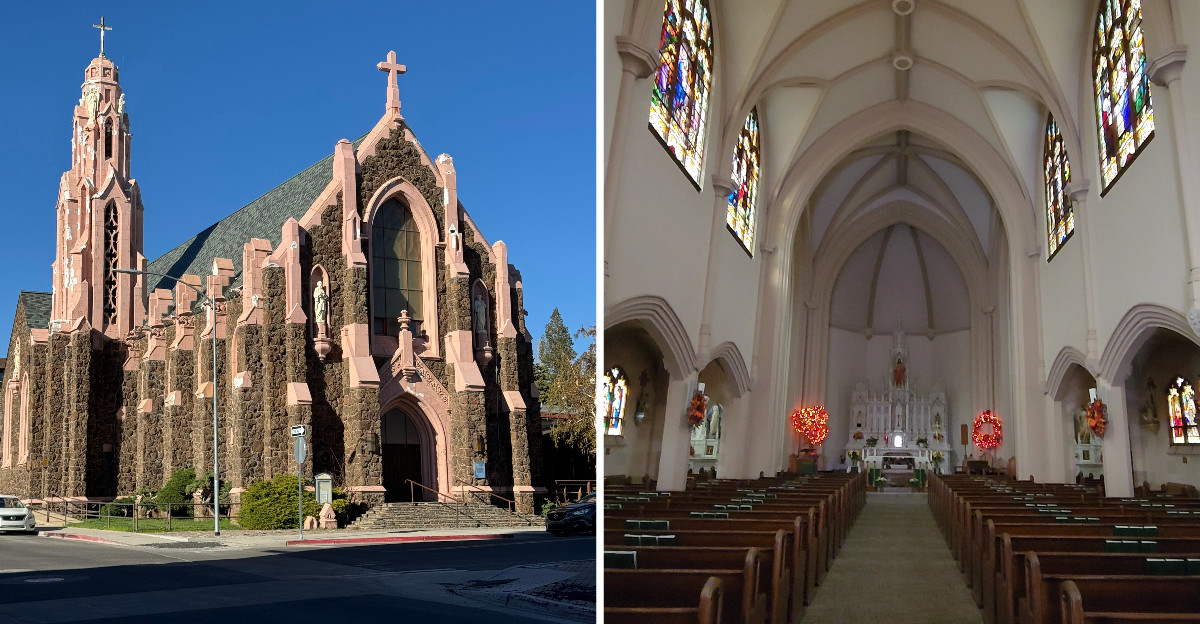
10. Nativity Of The Blessed Virgin Mary Catholic Church, Flagstaff
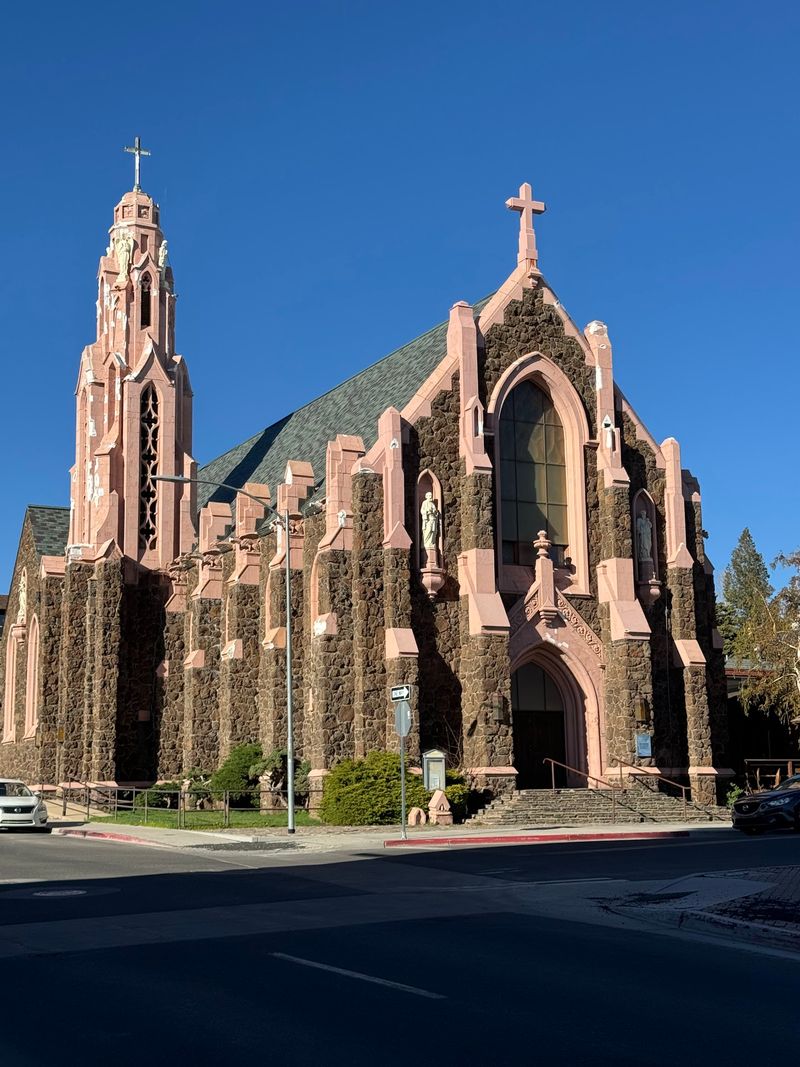
The church was designed with 16 gargoyles, though several have deteriorated or are now missing.
The Chapel-Gothic design pairs dark volcanic stone with contrasting pink-toned decorative concrete.
Workers completed the building in 1930 using local malpais volcanic rock. Parishioners themselves gathered much of the stone, hauling it in load by load.
Dark malpais stone forms the walls, while pink-toned decorative concrete provides the contrasting trim. Snow on the roofline makes the color pop even more.
Heavy stone buttresses lend structural muscle and visual rhythm. A 92-foot bell tower finishes the dramatic outline against the San Francisco Peaks.
Inside, Munich-style stained-glass windows crafted by Jesse Earl Fink glow with detailed figures. Winter afternoons light them beautifully.
Downtown Flagstaff sits only a few blocks away, though parking conditions vary with events and season.
At 7,000 feet, weather shifts quickly, so bring a layer even in summer. Winter visitors should check current road conditions before heading into central Flagstaff.
The address is 16 W Cherry Ave, right in the historic core. Look for the remaining gargoyle details, stained glass, and 92-foot bell tower, and the setting feels far removed from Arizona’s lower desert cities.