This Atlanta Georgia Museum Will Completely Blow Your Mind In The Best Way Possible
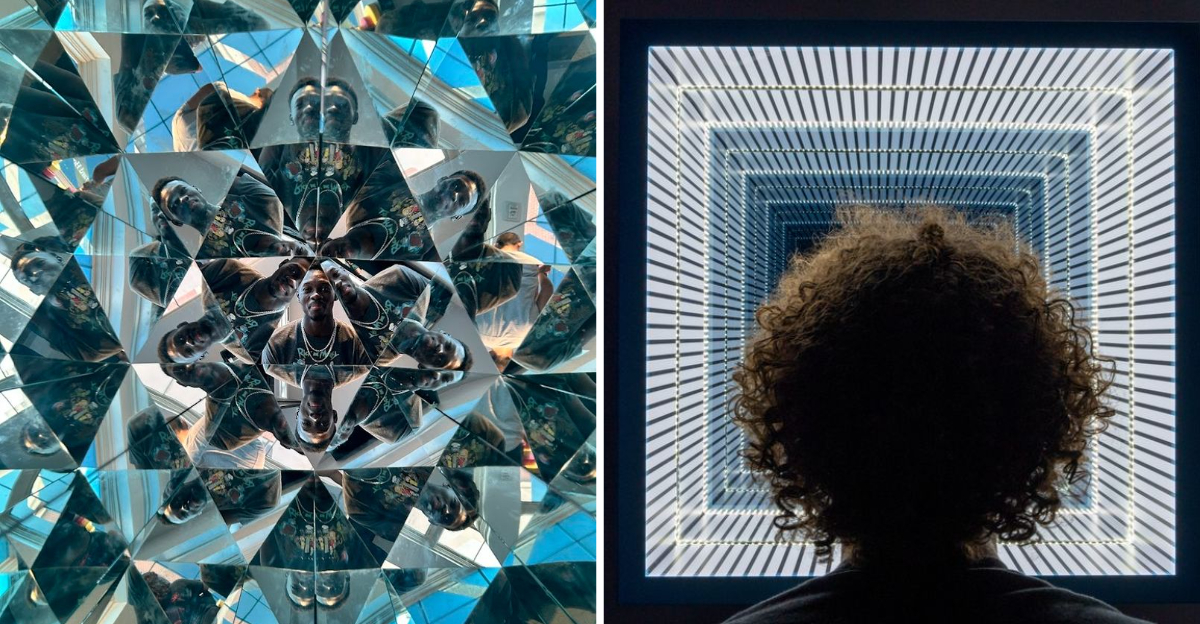
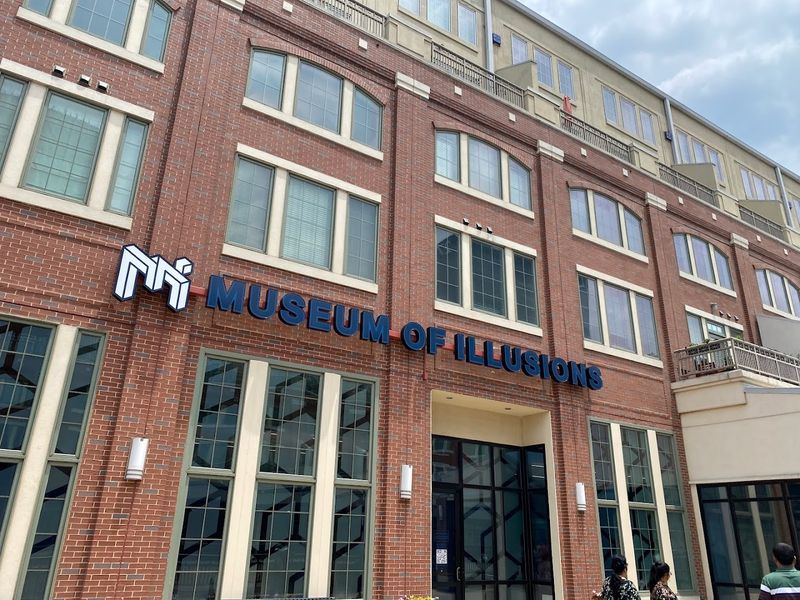
In the lively Atlantic Station district of Atlanta, one attraction invites visitors to see the world in a completely different way. The Museum of Illusions Atlanta is a playful and interactive space where science, art, and imagination come together to challenge the way people experience reality. Inside, guests move through a series of creative exhibits designed to confuse the senses and spark curiosity.
Rooms appear to tilt, mirrors create endless reflections, and visual tricks make ordinary spaces feel extraordinary. Every display encourages visitors to pause, look closer, and question what their eyes are telling them. The experience is both entertaining and surprisingly educational, offering insight into how perception and perspective shape what we see.
Whether visiting with friends, family, or on a unique date night, the museum offers a memorable adventure that stands out among Atlanta’s many attractions.
1. Diverse Illusion Rooms That Keep You Guessing
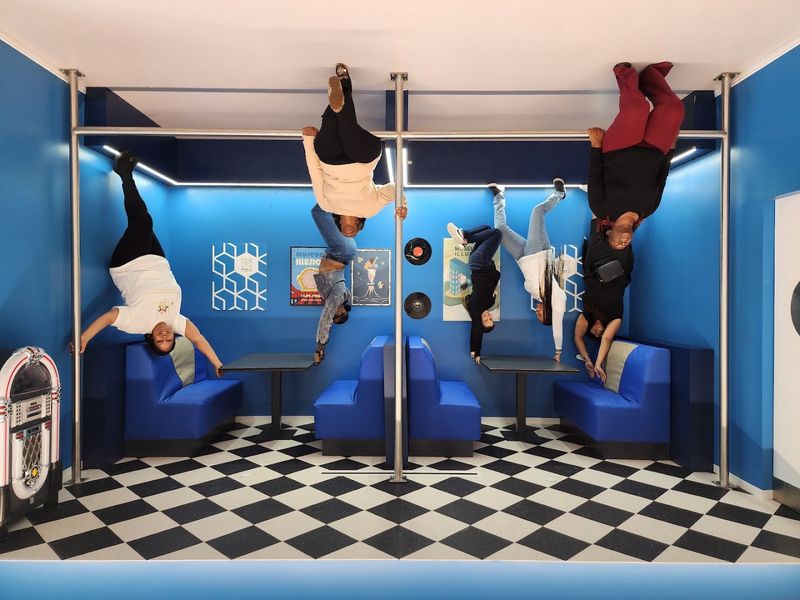
Walking into the Museum of Illusions Atlanta feels a little like stepping into a dream where nothing quite makes sense, and that is exactly the point. Located at 264 19th St NW, Atlanta, GA 30363, United States, the museum packs an impressive variety of themed rooms into one compact space. From the disorienting Tilted Room to the hypnotic Infinity Room, each space is carefully crafted to challenge the way your brain processes what your eyes see.
Every room offers a completely different experience, so boredom is practically impossible here. Some rooms play with gravity, others twist your sense of depth, and a few will have you laughing at how easily your mind gets fooled. The design team behind each exhibit clearly put serious thought into making every corner surprising.
Visitors often find themselves doubling back to rooms they already explored just to figure out how the trick actually works. That curiosity is exactly what makes this museum so memorable and worth every penny.
2. Interactive Exhibits That Put You in the Middle of the Magic
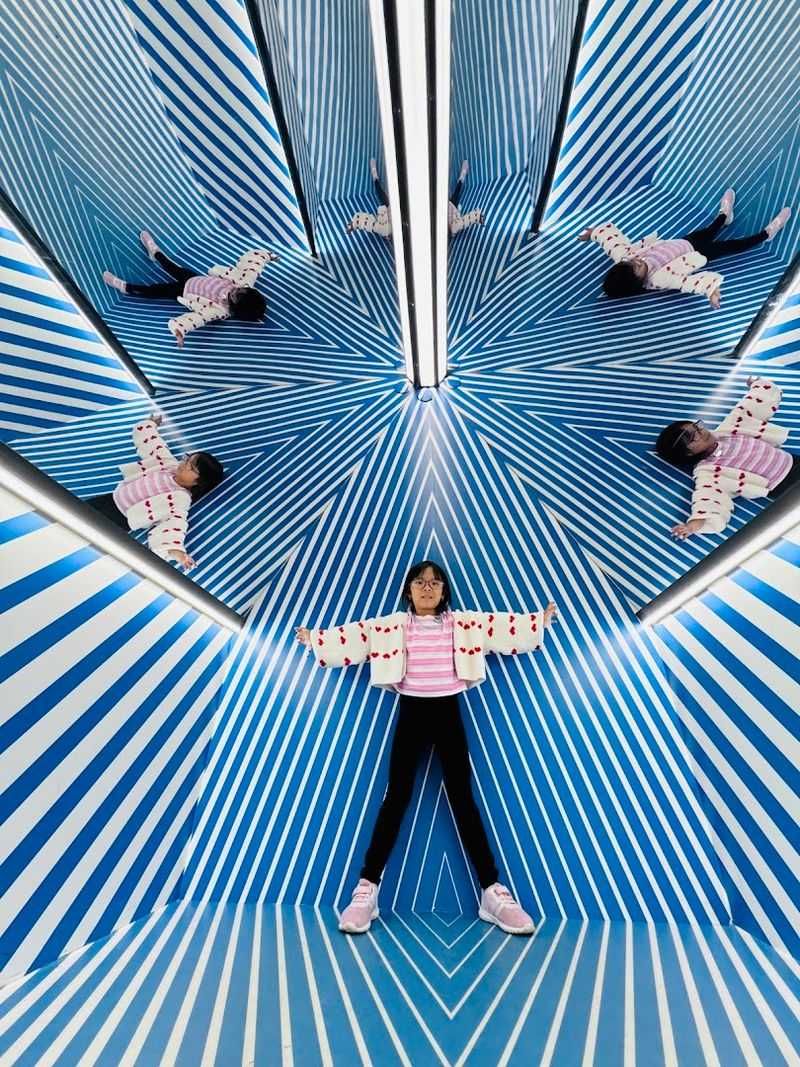
Most museums ask you to look but not touch. The Museum of Illusions Atlanta flips that rule on its head in the best possible way. Nearly every exhibit invites guests to become part of the illusion itself rather than just a passive observer standing behind a rope.
Touching, stepping into, and physically interacting with the displays is not just allowed here, it is the whole idea. That hands-on approach makes the science behind optical perception feel real and immediate rather than distant or textbook-dry. Kids especially tend to light up when they realize they get to actually be inside the exhibit.
Adults are not immune either. There is something genuinely thrilling about standing in a room and feeling your brain short-circuit trying to reconcile what your eyes see with what your body feels. The interactive format transforms a simple museum visit into a full-body sensory experience that sticks with you long after you leave.
3. Educational Value That Sneaks Up on You
Here is something unexpected about the Museum of Illusions Atlanta: you might actually learn something without even trying. The museum weaves real science into every exhibit, covering topics like optical phenomena, cognitive biases, and how the human brain processes visual information.
Explanatory panels placed near each exhibit break down the psychology and physics at play in plain, easy-to-understand language. So after your brain gets thoroughly tricked, you can read exactly why it happened and what that says about human perception in general.
Teachers and parents have praised this blend of entertainment and education, noting that kids absorb the concepts more easily when they experience them firsthand rather than reading about them in a textbook. The museum essentially turns complex neuroscience into something approachable and genuinely fun. It is the kind of place that sparks real curiosity, the sort that follows kids home and turns into fascinating dinner table conversations.
4. A Family-Friendly Atmosphere That Works for Every Age
Finding an activity that genuinely works for a five-year-old and a fifty-year-old at the same time is no small feat, but the Museum of Illusions Atlanta pulls it off with ease. The museum is designed with all ages in mind, offering exhibits that are visually exciting for young children while also intellectually engaging for teenagers and adults.
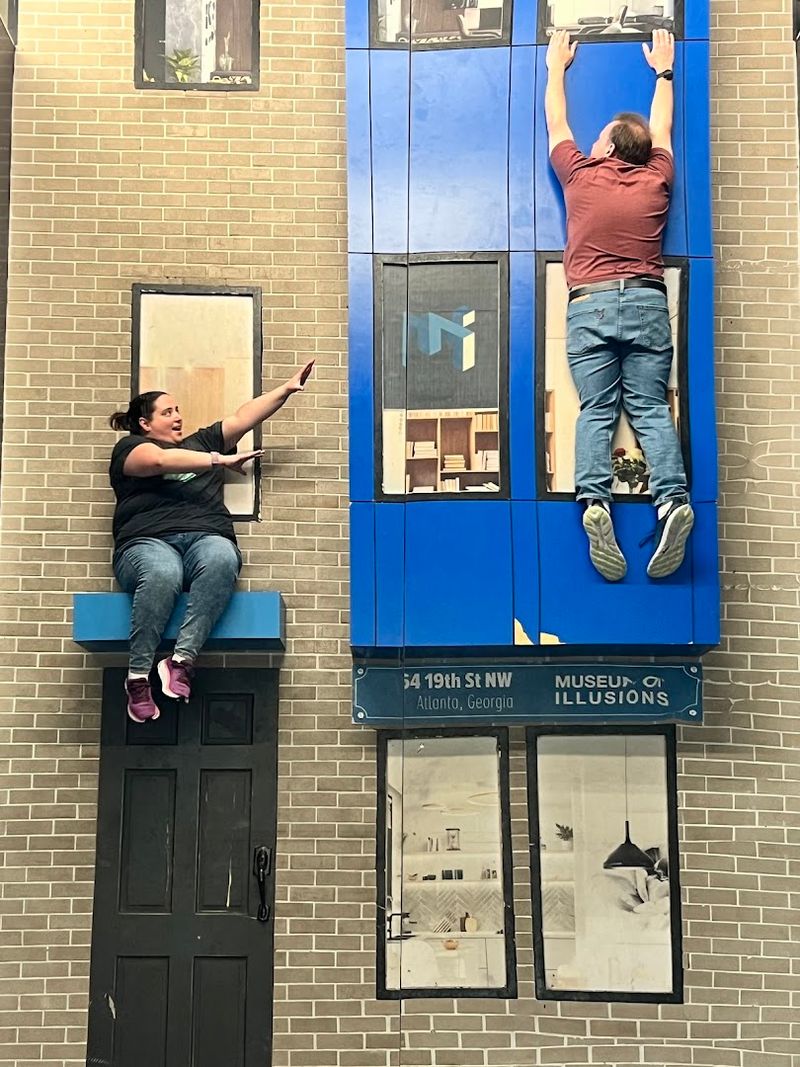
There are no age restrictions on fun here. Toddlers giggle at the giant-looking people in the Ames Room, teens compete to figure out the tricks fastest, and grandparents get a kick out of posing for photos in rooms that make them look like they are floating. The energy inside tends to be lively and cheerful without feeling chaotic.
Groups of all kinds, from birthday parties to school field trips to multi-generational family outings, tend to thrive in this environment. It is one of those rare spots where the whole group agrees it was worth the trip.
5. Unique Photo Opportunities You Cannot Get Anywhere Else
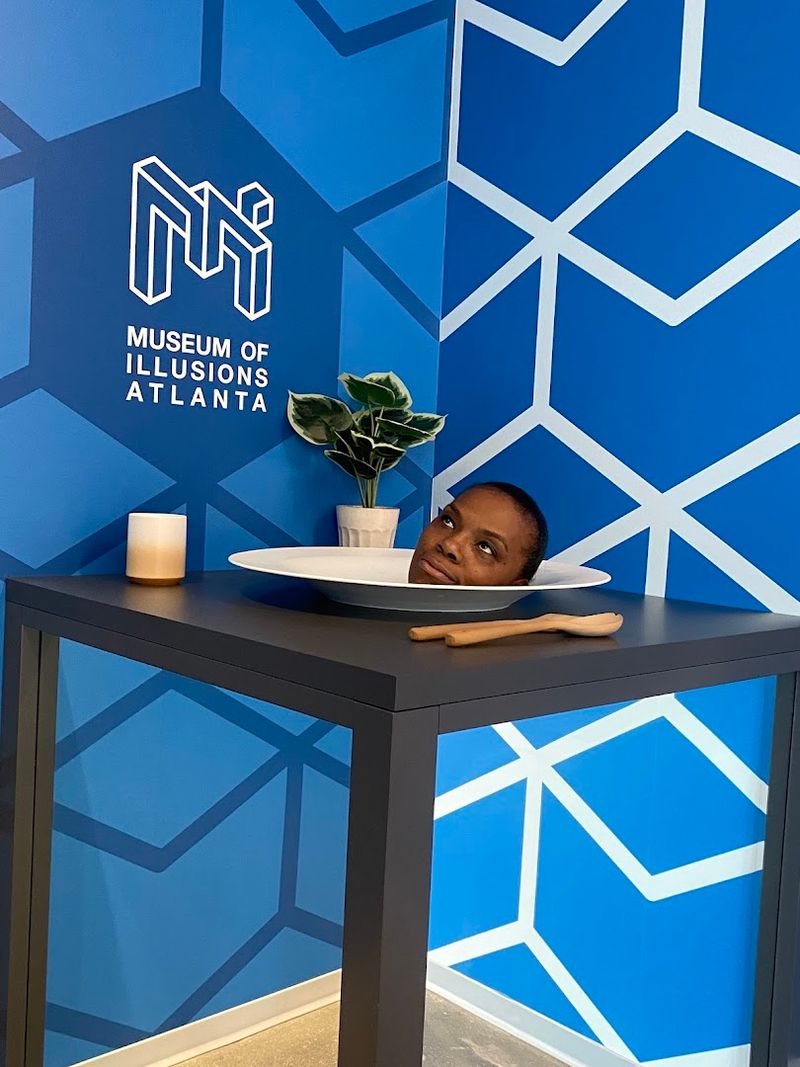
Social media feeds get a serious upgrade after a visit to the Museum of Illusions Atlanta. Every single room in this spot, doubles as a photo set that produces images so strange and fun they practically beg to be shared online.
Guests can appear to shrink or grow dramatically, float in mid-air, or stand inside what looks like infinite space stretching in every direction. The illusions are so convincing that photos taken here genuinely puzzle people who were not there to see how it was done.
Staff members are generally happy to help snap group shots, which is a thoughtful touch that makes the experience feel welcoming rather than rushed. Unlike filtered selfies or digitally edited photos, these images are achieved purely through clever room design and perspective tricks. The result is a collection of photos that are conversation starters every single time someone scrolls past them.
6. The Vortex Tunnel Experience
Few things in the museum world produce a physical reaction quite like the Vortex Tunnel. At the Museum of Illusions Atlanta, this exhibit creates a genuinely disorienting sensation that makes your body feel like it is tipping sideways even though the floor beneath your feet is completely flat and stable.
The tunnel works by spinning a large cylindrical structure around a stationary walkway. Your eyes interpret the rotation as movement of your body, sending mixed signals to your brain that throw off your balance in a surprisingly convincing way. Most visitors instinctively reach out to grab the handrails, even knowing full well they are not actually moving.
It is one of those experiences that sounds simple in description but feels genuinely wild in person. First-timers often laugh out loud from the sheer unexpectedness of it, and many circle back for a second pass just to try to outsmart the sensation. Spoiler: the tunnel usually wins.
7. The Ames Room and Its Jaw-Dropping Size Distortions
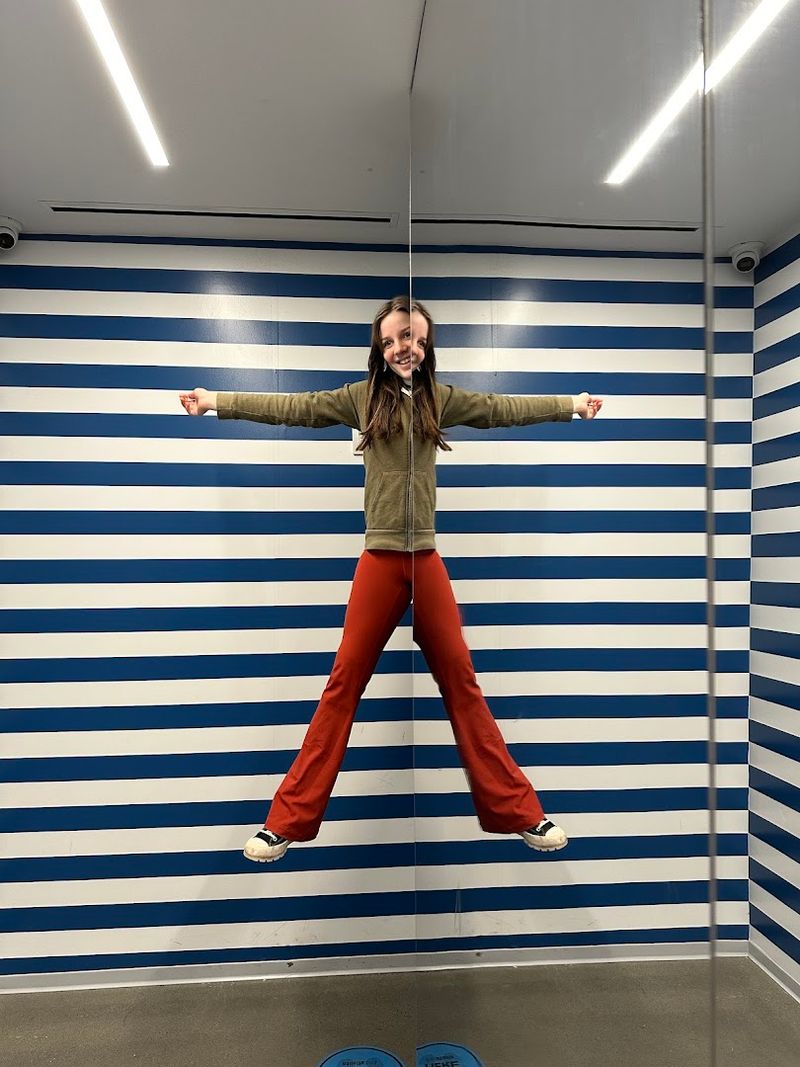
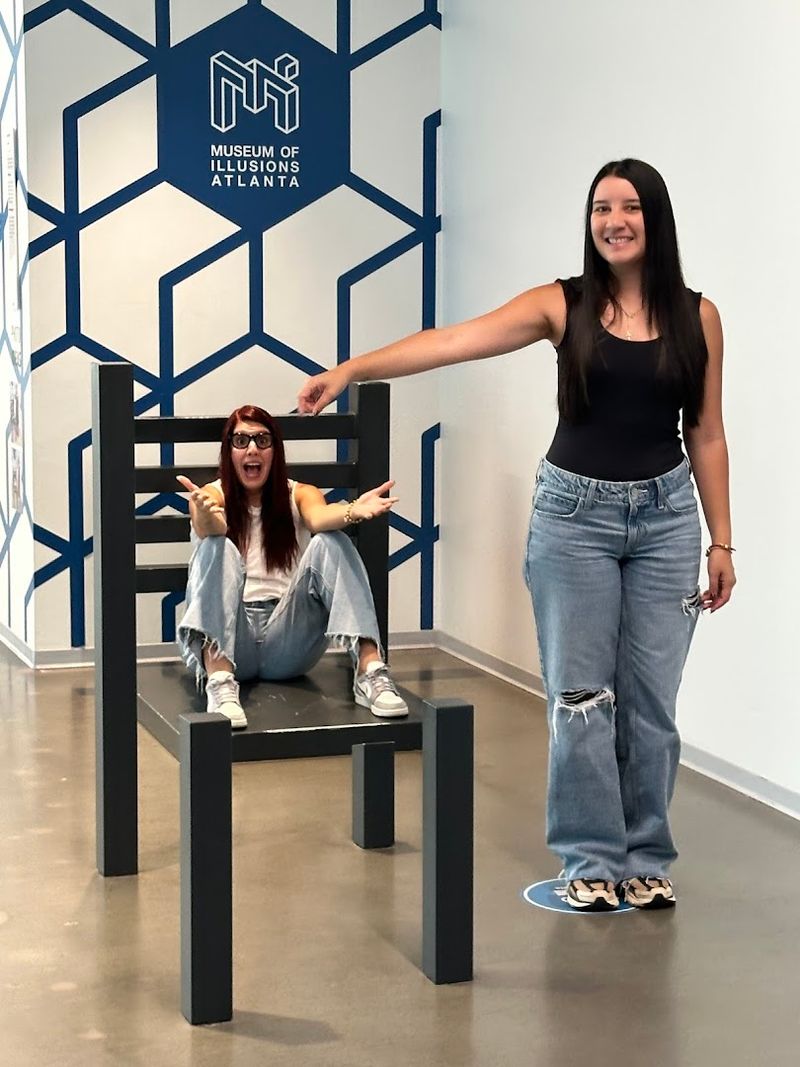
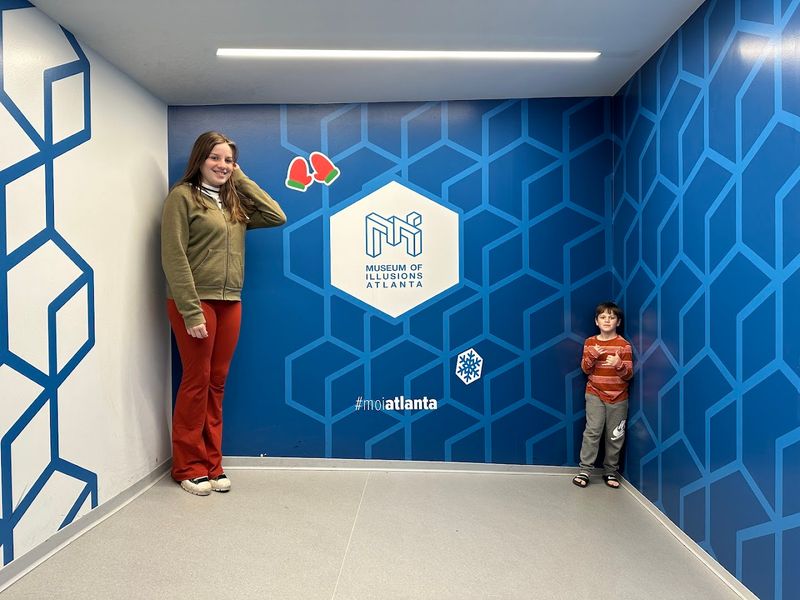
Named after American ophthalmologist Adelbert Ames Jr., the Ames Room is one of the most famous optical illusions ever built, and the Museum of Illusions Atlanta has a fantastic version of it. Visitors can step inside this cleverly constructed room and watch as people appear to shrink or grow like characters in a fantasy story.
The secret lies in the room’s trapezoidal shape, which is designed to look perfectly rectangular when viewed through a specific peephole or camera angle. Because the brain assumes the room is a normal square shape, it compensates for the visual discrepancy by distorting the perceived size of the people inside instead.
The effect is so convincing that even after learning exactly how it works, the illusion still fools the eye completely. Photos taken in the Ames Room tend to be among the most shared from any museum visit, because they look genuinely impossible and absolutely hilarious at the same time.
8. The Infinity Room and Its Endless Reflections
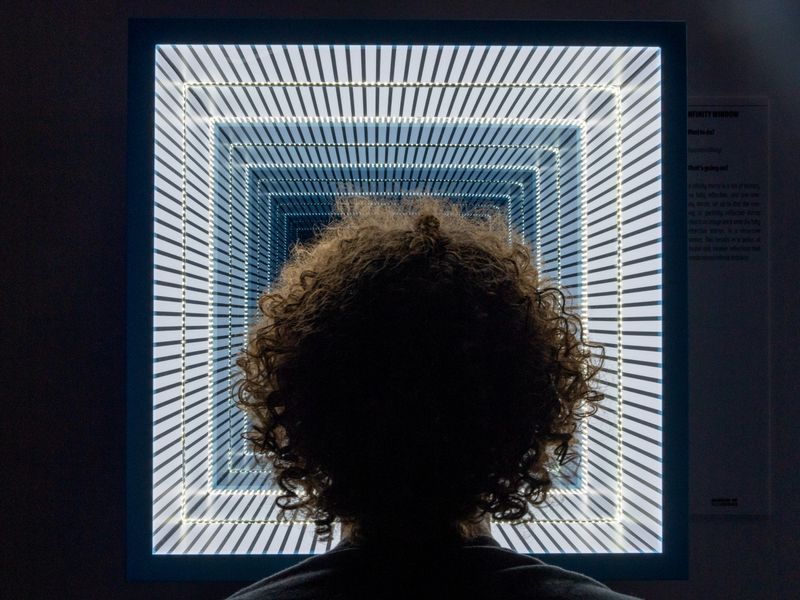
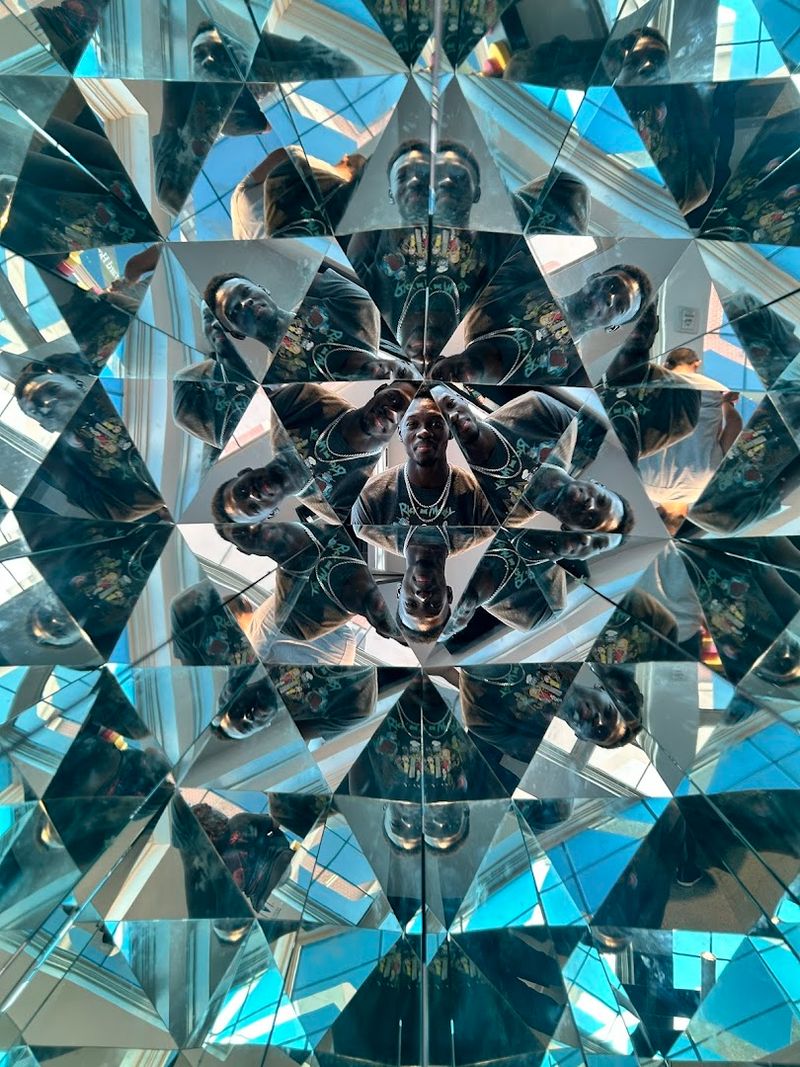
Stepping into the Infinity Room at the Museum of Illusions Atlanta is one of those moments that genuinely stops people in their tracks. This mirror-lined room uses carefully angled reflective surfaces to create the appearance of a space that stretches on forever in every direction, with no visible end point.
The effect is both calming and slightly unnerving in equal measure. Some visitors describe it as meditative, a rare quiet moment in the middle of a buzzy, active museum. Others find the endless repetition of their own reflection a little eerie, which honestly just adds to the appeal.
Photographers tend to spend extra time in this room because the images it produces are genuinely stunning. The layered reflections create a visual depth that looks spectacular on camera. Whether someone visits for the science, the photos, or just the sheer novelty of it, the Infinity Room consistently ranks as one of the most talked-about stops in the entire museum.
9. Holograms and Stereograms That Feel Like the Future
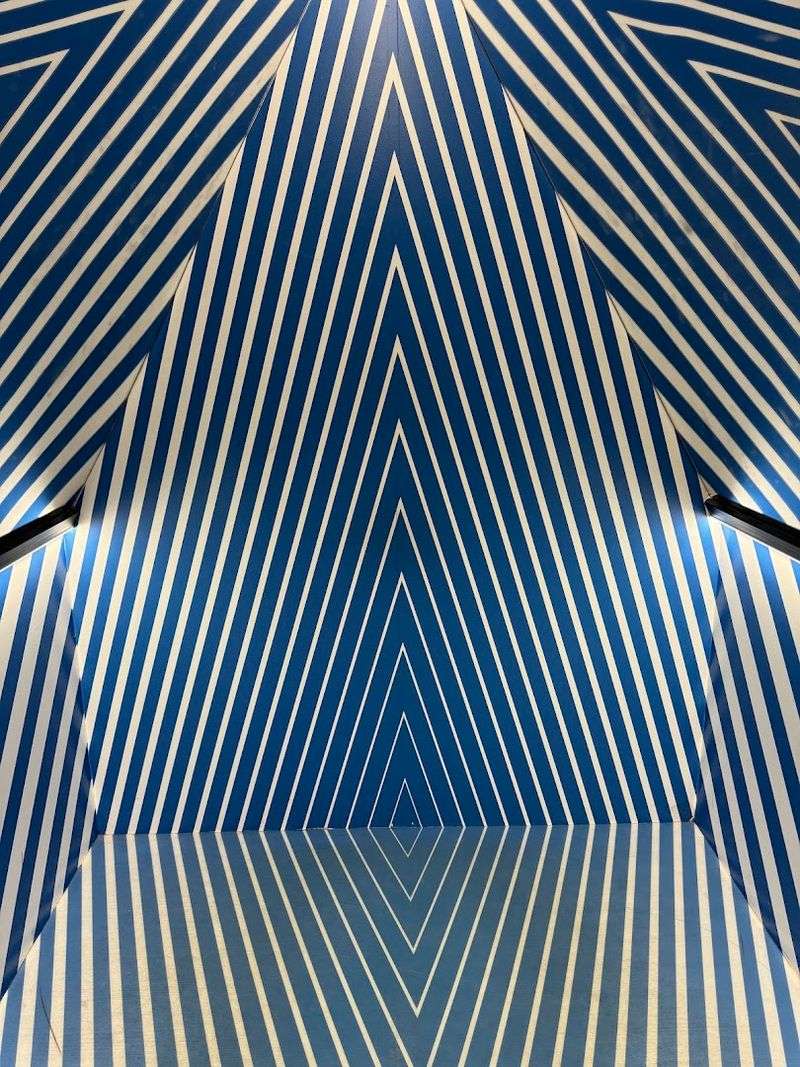
Not everything at the Museum of Illusions Atlanta requires walking through a room or posing for a photo. Some of the most fascinating exhibits are the ones you simply stand in front of and stare at. The hologram and stereogram displays offer a quieter but equally mind-bending experience that rewards patience and a little focus.
Holograms use light diffraction to create images that appear to have genuine three-dimensional depth, while stereograms hide a 3D image inside what looks like a flat, repeating pattern. Cracking the stereogram code and suddenly seeing the hidden image pop forward feels like a small but genuinely satisfying victory.
These exhibits appeal especially to visitors who enjoy a slower, more contemplative kind of wonder. They also offer a peek at where visual technology has been and where it might be heading. For anyone curious about how light and the human eye interact, this section of the museum is quietly spectacular and worth lingering over.
10. Mirror Mazes That Challenge Your Sense of Direction
Mirror mazes have a way of humbling even the most spatially confident people, and the one at the Museum of Illusions Atlanta is no exception. The mirror maze challenges guests to navigate through a disorienting labyrinth of reflective surfaces that make it genuinely difficult to tell a wall from a passageway.
The experience is playful and a little bit frustrating in the best possible way, like a puzzle your whole body has to solve. Kids tend to find it hilarious when adults walk confidently into a mirror they were sure was an open path. Groups of friends often dissolve into laughter as they bump into their own reflections trying to find the exit.
Practical tip: moving slowly and keeping one hand lightly in front of you makes navigation easier and reduces the chance of a forehead-to-mirror encounter, which the staff has definitely seen happen before. The maze is short enough to feel fun rather than exhausting, making it a crowd-pleasing highlight.
11. The Anti-Gravity Room and Its Impossible Angles
Gravity is supposed to be non-negotiable, but the Anti-Gravity Room at the Museum of Illusions Atlanta makes a compelling case otherwise. This cleverly built space uses a tilted floor and carefully aligned walls to create the convincing illusion that objects and people are defying the basic laws of physics.
Visitors standing inside the room feel a persistent pull in an unexpected direction, and watching other guests try to stand or walk normally while leaning at seemingly impossible angles is endlessly entertaining. The room works because the brain uses surrounding visual cues like walls and floors to determine what is vertical, and when those cues are deliberately misleading, the brain gets thoroughly confused.
Photography in this room produces some of the most dramatic and shareable results in the whole museum. People appear to hang sideways off walls or stand at angles that should be physically impossible. For anyone who has ever wanted photographic proof of defying gravity, this room delivers that fantasy convincingly.
12. Educational Programs for Students and School Groups
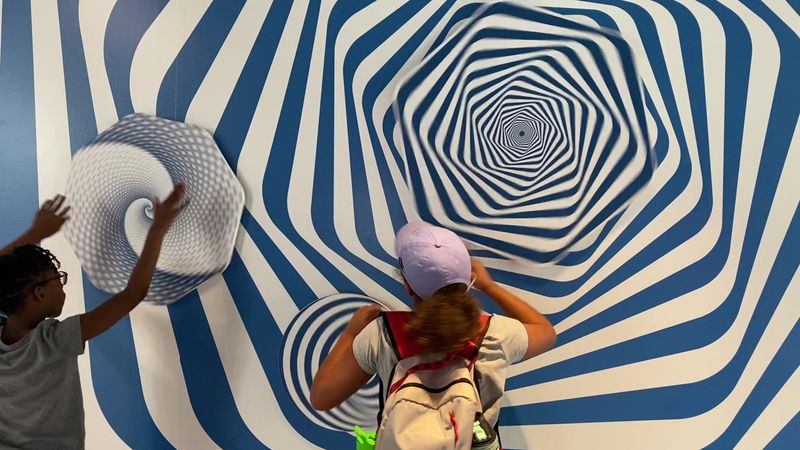
The Museum of Illusions Atlanta is not just a fun day out; for educators, it can actually be a classroom extension that students genuinely look forward to. The museum offers educational programs designed to align with school curricula, connecting the exhibits to real concepts in science, psychology, and critical thinking.
Field trip groups benefit from guided experiences that frame the illusions within an educational context, helping students connect what they see and feel to what they are studying in class. The approach makes abstract concepts like perception, light refraction, and cognitive bias feel tangible and exciting rather than theoretical.
Teachers who have brought classes here often note that students retain the concepts better when they experience them physically rather than reading about them from a textbook. The museum staff is accustomed to working with school groups and tends to be patient and engaging with younger audiences. Booking in advance for group visits is strongly recommended, especially during the school year when slots fill quickly.
13. A Gift Shop Full of Brainy Souvenirs
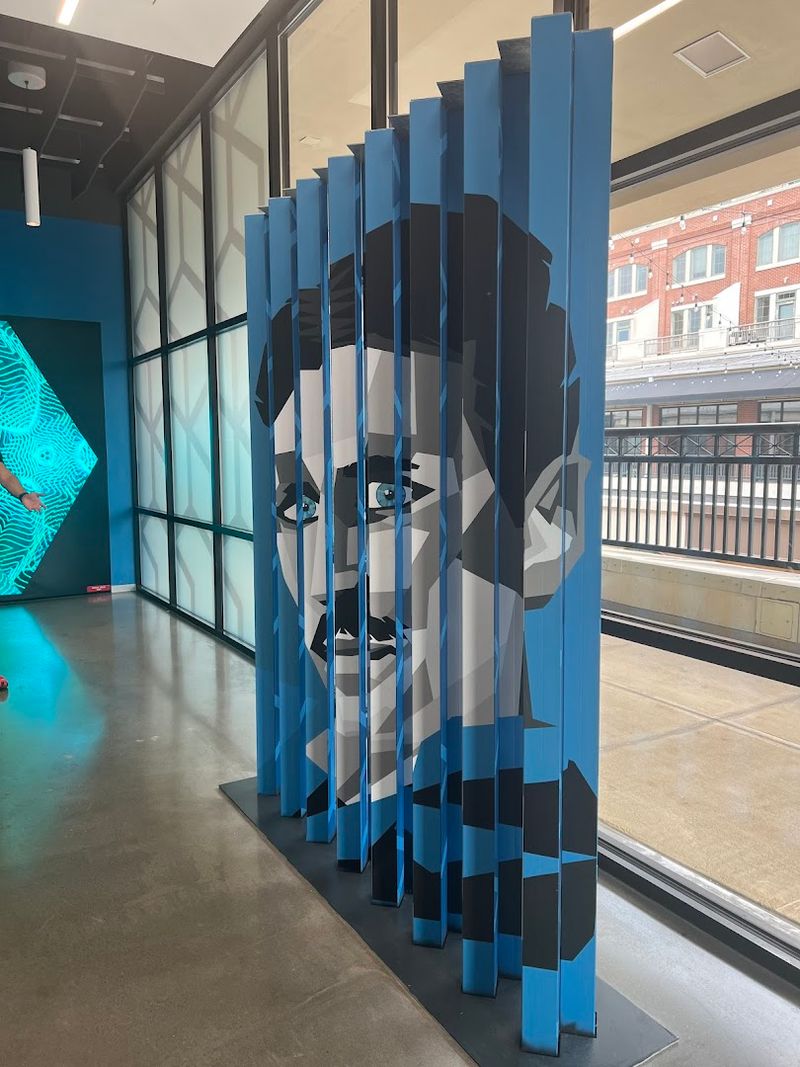
The fun does not have to stop when the visit ends, thanks to the gift shop at the Museum of Illusions Atlanta. The shop is stocked with a curated selection of items that extend the illusion-themed experience right into everyday life at home.
Shoppers can browse optical illusion books, brain teasers, puzzle games, holographic prints, and a variety of novelty items that make for genuinely thoughtful and unusual gifts. These are not the generic tourist trinkets found in most museum stores; the selection tends to feel intentional and connected to the themes explored throughout the exhibits.
Parents often find the brain teasers and puzzle kits to be solid picks for kids who clearly enjoyed the interactive exhibits and are hungry for more mental challenges at home. The shop is compact but well-organized, making it easy to browse without feeling overwhelmed. Budget a few extra minutes at the end of the visit to look around properly.
14. Accessibility Features That Welcome Everyone
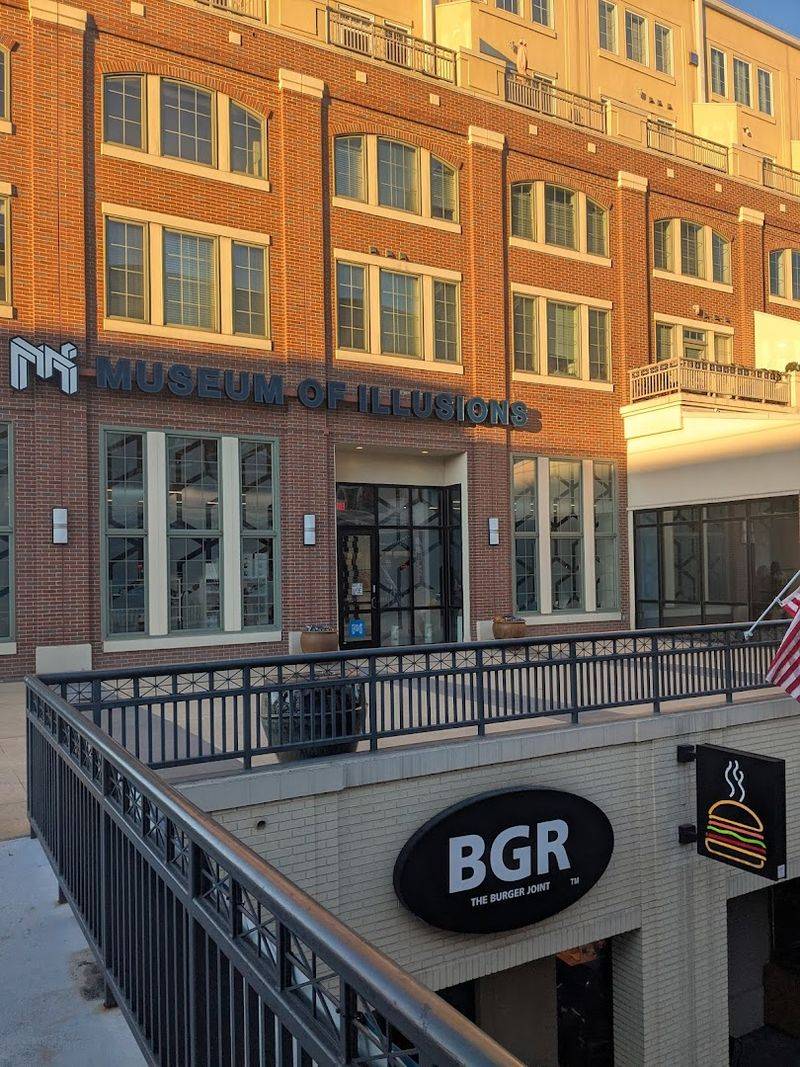
A great museum experience should be available to everyone, and the Museum of Illusions Atlanta takes that seriously. The museum is wheelchair accessible, with pathways and layouts designed to accommodate guests with mobility considerations without making them feel like accessibility was an afterthought.
Some of the more physically intense exhibits, like the Vortex Tunnel, do offer bypass options for visitors who prefer to skip them due to mobility concerns, motion sensitivity, or other personal reasons. The staff is generally attentive and happy to help guests navigate the museum in a way that works best for their individual needs.
Families with strollers, older visitors, and guests with physical disabilities can all enjoy the majority of what the museum has to offer. This inclusive approach reflects a genuine commitment to making the experience welcoming rather than restrictive. Checking the museum website ahead of the visit for the most current accessibility details is always a smart move before arriving with guests who have specific requirements.
15. A Central Location That Makes Planning a Full Day Easy
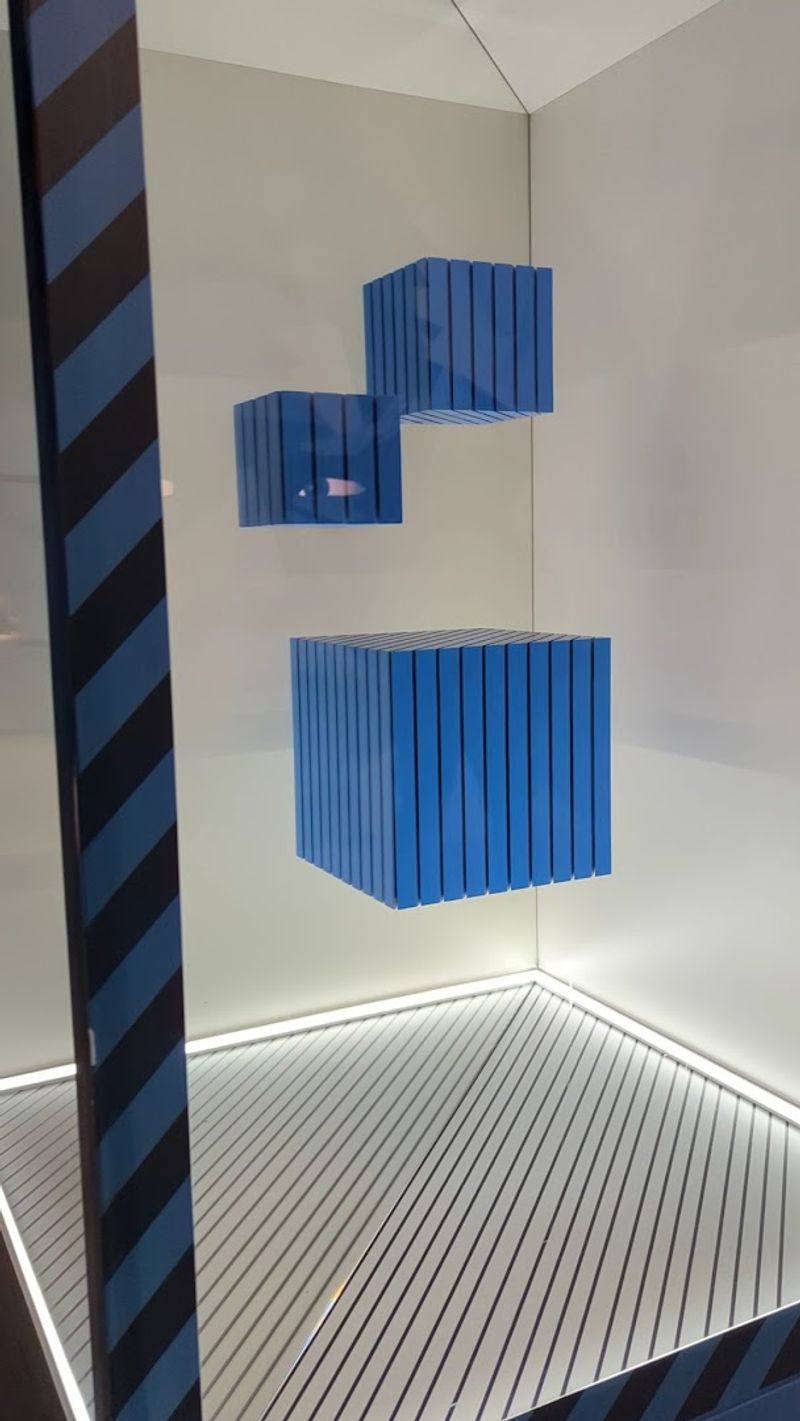
Location matters when planning a day out, and the Museum of Illusions Atlanta earns high marks on that front. The museum is nestled inside Atlantic Station, a bustling mixed-use district that combines shopping, dining, entertainment, and green space all within comfortable walking distance of each other.
Before or after the museum, visitors can grab a meal at one of the many nearby restaurants, browse retail shops, or simply enjoy the open-air layout of the development. Atlantic Station is also conveniently accessible by public transit and offers parking on-site, which takes some of the logistical stress out of the visit.
Weekdays tend to be quieter than weekends, which is worth keeping in mind for anyone who prefers a more relaxed pace with shorter wait times at popular exhibits. Pairing the museum with a meal and a stroll around Atlantic Station makes for a well-rounded afternoon that feels complete and satisfying without requiring a complicated itinerary or a long drive across the city.