10 Beautiful Florida Spots That Rarely Make The Travel Guides
Most people arrive to Florida with a mental image built entirely from theme park advertisements and spring break footage.
That is understandable but also a genuine shame, because the real Florida is quieter, stranger, and honestly far more interesting than anything a brochure has ever managed to capture.
I have spent years wandering off the well-worn tourist trail in this state, following hunches down unmarked roads and stopping at places that looked interesting for reasons I could not immediately explain.
What I found on the other side of those decisions made me wish someone had handed me a list like this one considerably sooner.
These spots are the ones locals whisper about and visitors stumble onto by happy accident.
The kind of places that make you feel like you accidentally discovered something the rest of the world has not caught up with yet.
1. Devil’s Den Prehistoric Spring
Picture swimming inside a prehistoric cave while ancient fossil bones rest in the limestone walls around you.
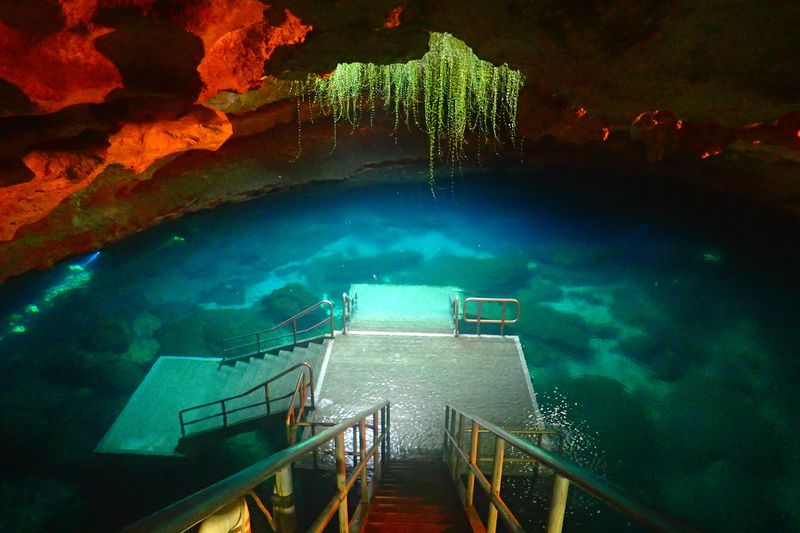
That is exactly what happens at Devil’s Den, a dry cave sinkhole near Williston that looks like something out of a fantasy novel.
The water stays at a steady 68 degrees year-round, which feels shockingly cold in summer and wonderfully warm in winter.
The entrance is a narrow staircase carved into the earth. Once you step down and see that glowing turquoise water lit by a hole in the cave ceiling, your jaw drops on instinct.
Snorkeling here means floating above fossils from extinct Pleistocene-era animals, including mammoths and giant ground sloths. Scientists have found over 50 species of prehistoric creatures in this spring.
Scuba divers also love this spot because the visibility is nearly perfect. Reservations are required and spots fill up fast, especially on weekends.
Located at 5390 NE 180th Ave, Williston, Devil’s Den is the kind of place that makes you feel like a time traveler with swim fins. Bring a wetsuit if you run cold, and bring a camera because no one will believe you without photos.
2. Weeki Wachee Springs State Park
There is a real live mermaid show in Florida, and it has been running since 1947.
Weeki Wachee Springs State Park in Spring Hill is where professional performers in mermaid tails put on underwater shows inside a natural spring theater, watched through massive glass windows by a delighted audience.
It sounds kitschy. It absolutely is, and that is precisely why it works.
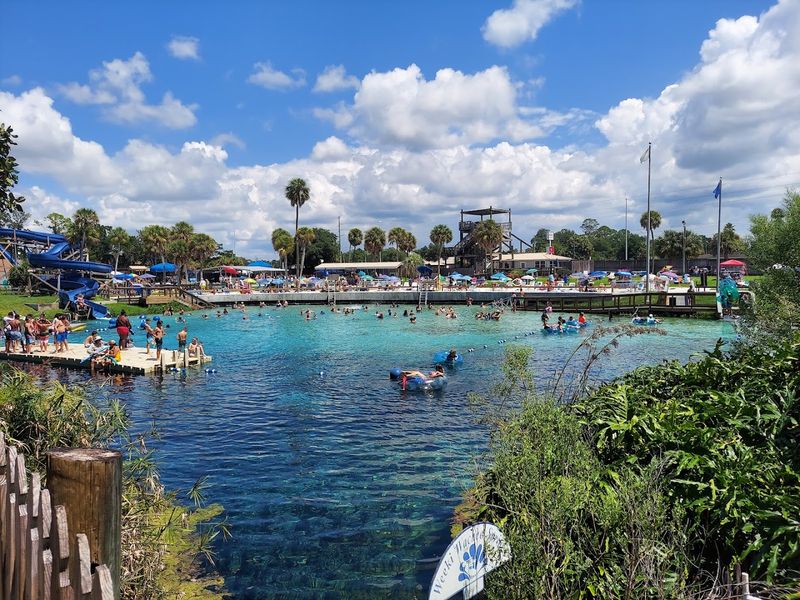
The spring itself pumps out 117 million gallons of fresh water every single day. Beyond the mermaid theater, there is a water park, a lazy river, and kayak rentals on the Weeki Wachee River.
Manatees sometimes drift through in cooler months, which feels like a bonus gift from nature.
Families with kids lose their minds here in the best possible way. Adults get a dose of pure Florida nostalgia that feels genuinely earned.
The park sits at 6131 Commercial Way, Spring Hill, and admission is very reasonable for everything included.
Go early on summer days because the crowds grow by midmorning. The mermaid show alone is worth the drive, but the whole park is one of those rare places where the reality actually exceeds the expectation.
3. Venetian Pool
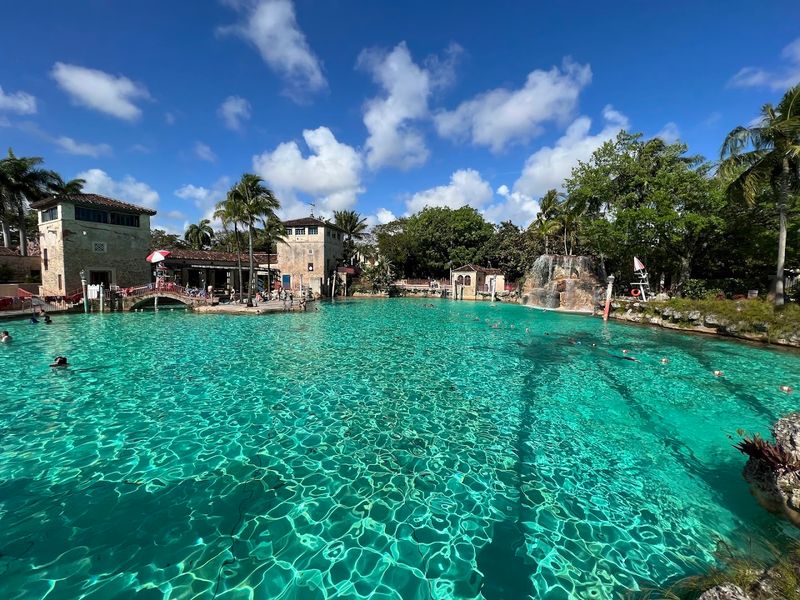
Most public pools are forgettable. The Venetian Pool in Coral Gables is not most public pools.
Built in 1923 from a coral rock quarry, this place looks like a Venetian lagoon dropped into the middle of a Miami suburb, complete with caves, grottos, a waterfall, and a Spanish-style tower.
It made the National Register of Historic Places, which is not something your average neighborhood splash pad can claim.
The pool holds 820,000 gallons of spring-fed water that gets drained and refilled daily during peak season. That means the water is genuinely clean and remarkably refreshing.
Johnny Weissmuller, the original Tarzan actor, trained here. Esther Williams filmed here too.
The history of this pool is as impressive as its looks.
Admission is affordable and the vibe is relaxed and genuinely beautiful. Kids love the waterfall and the shallow areas, while adults tend to just float around looking pleasantly stunned.
Find it at 2701 De Soto Blvd, Coral Gables. Parking is street-side and manageable on weekdays.
Bring sunscreen, a towel, and possibly a wide-angle camera lens, because fitting this whole gorgeous place into one photo is a genuinely enjoyable challenge.
4. Bok Tower Gardens
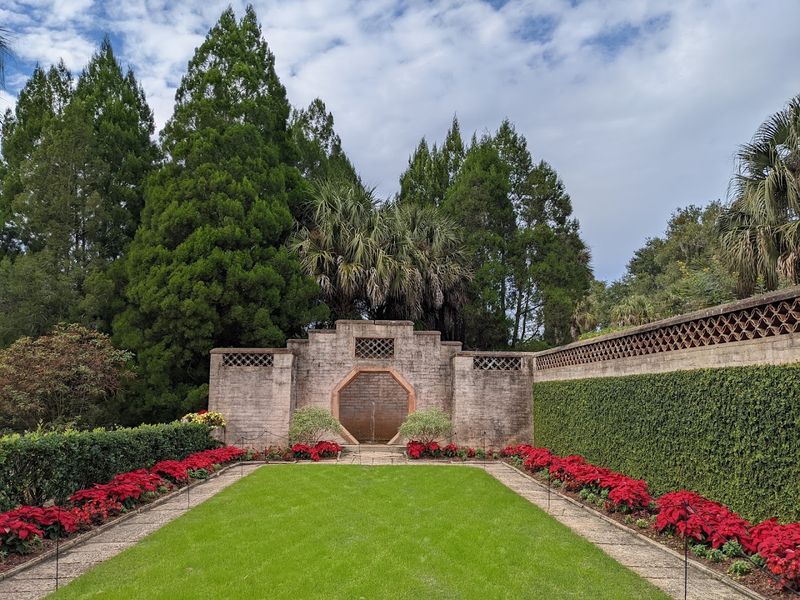
Edward Bok was a Dutch-American magazine editor who decided to give America something beautiful as a thank-you for the opportunities it gave him.
What he built at the highest point on the Florida peninsula is one of the most peaceful places I have ever stood.
Bok Tower Gardens in Lake Wales is a 250-acre sanctuary of flowering plants, ancient oaks, and a stunning 205-foot carillon tower that plays music twice daily.
The tower itself is a masterpiece of Gothic and Art Deco design, built from pink and gray Georgia marble and Florida coquina stone.
The carillon has 60 bronze bells ranging from 17 pounds to nearly 12 tons. When those bells ring out across the gardens, the sound travels through you in a way that is hard to describe without sounding overly dramatic.
The gardens bloom differently by season, so repeat visits always offer something new. There is also a 1930s Mediterranean Revival home called Pinewood Estate on the grounds, which is open for tours.
Located at 1151 Tower Blvd, Lake Wales, the gardens open daily. This is the kind of place that slows your pace down within five minutes of arriving, and that alone makes it worth every mile of the drive.
5. Coral Castle Museum
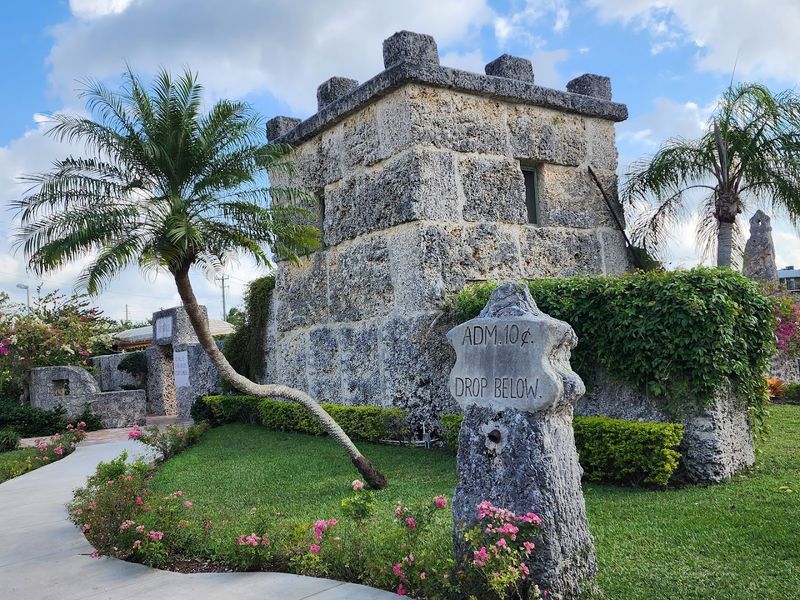
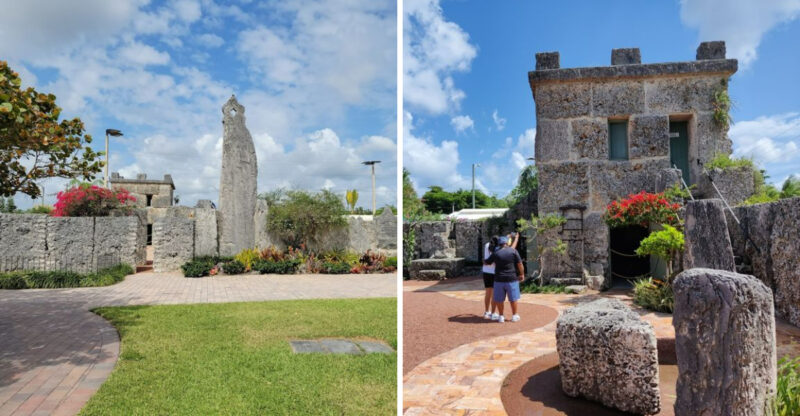
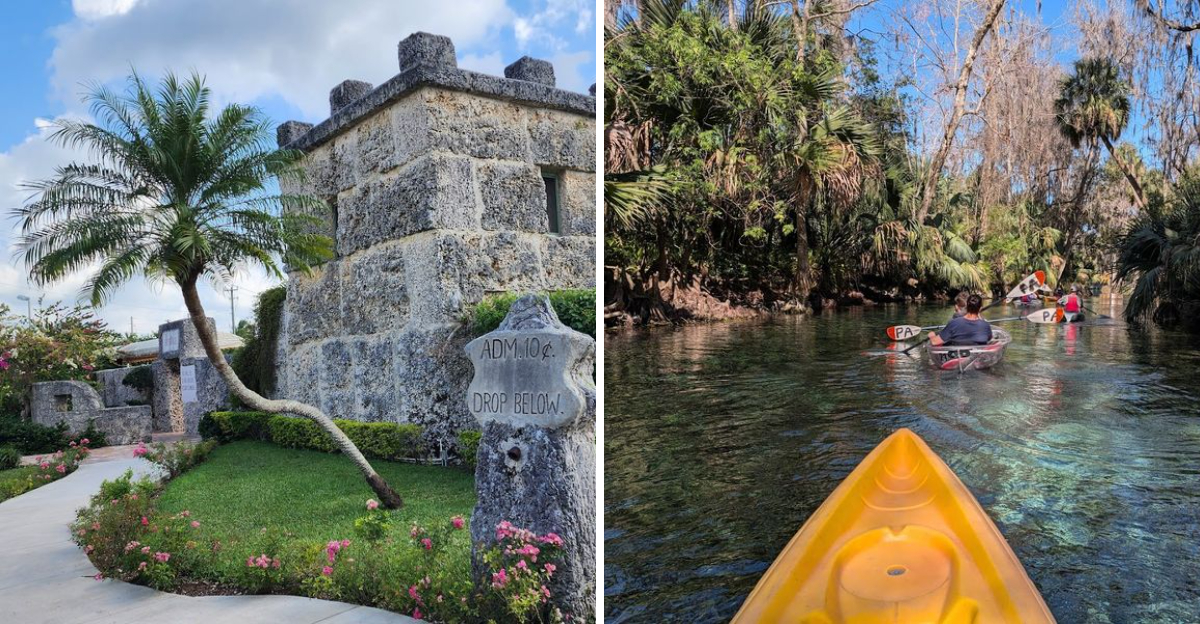
One man, working entirely alone and mostly at night, carved and moved over 1,100 tons of coral rock using only hand tools.
Ed Leedskalnin built the Coral Castle in Homestead between 1923 and 1951, and to this day no one has fully explained how he did it. Engineers, physicists, and curious visitors have all come up short.
The mystery is the whole point, and it never gets old.
The structures include a nine-ton gate that once swung open with a single finger touch, a working sundial, a stone crescent moon, and a rocking chair carved entirely from rock.
Leedskalnin claimed he rediscovered the secrets of how the ancient Egyptians built the pyramids. Whether you believe that or not, the craftsmanship is undeniably extraordinary.
Guided tours run daily and the guides do a fantastic job of building the suspense without overselling the mystery.
The site at 28655 S Dixie Hwy, Homestead is quirky, strange, and genuinely unlike anything else in Florida. Kids find it fascinating and adults find it puzzling in the best way.
Budget about 90 minutes here.
You will leave with more questions than you arrived with, which honestly makes it one of the most memorable stops on this list.
6. Silver Springs State Park
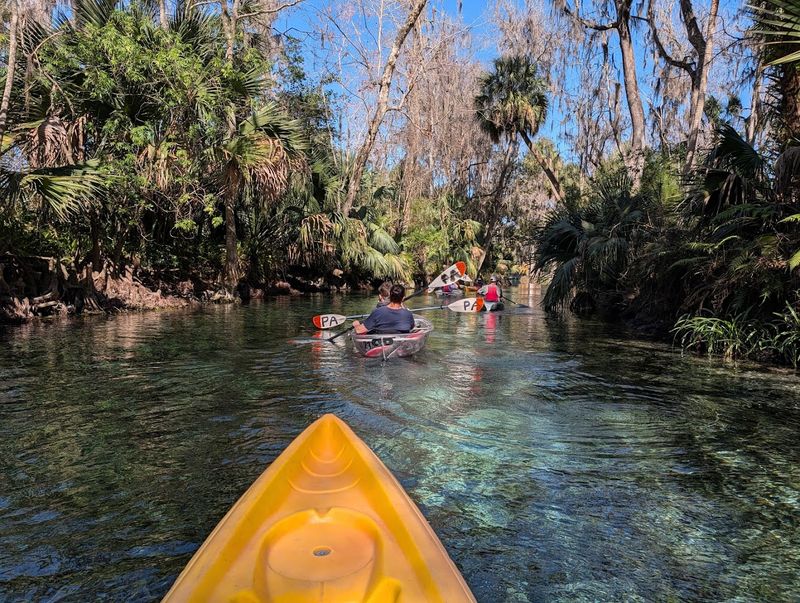
Glass-bottom boats were invented here. Silver Springs State Park has been operating those iconic tours since the 1870s, making it one of the oldest tourist attractions in the entire United States.
The spring system pumps out 550 million gallons of fresh water daily, creating water so clear that the glass-bottom boats almost feel unnecessary because you can see straight to the bottom with your naked eye.
The park at 5656 E Silver Springs Blvd, Silver Springs is also a wildlife sanctuary.
River otters, turtles, herons, and the famous rhesus monkeys that escaped from a 1930s Tarzan film set now live in the trees along the riverbanks. Spotting them feels like a genuine wildlife surprise every single time.
Kayaking and canoeing are excellent options if you prefer self-guided exploration. The water is calm, the scenery is stunning, and the fish swimming below your kayak are visible in vivid detail.
Manatees visit in cooler months, often resting in the warm spring water near the boathouse. The park also has a swimming area, nature trails, and a campground.
Arrive early on weekends because this place draws a crowd, and for very good reason. It earns every bit of the attention it gets.
7. Cedar Key Museum State Park
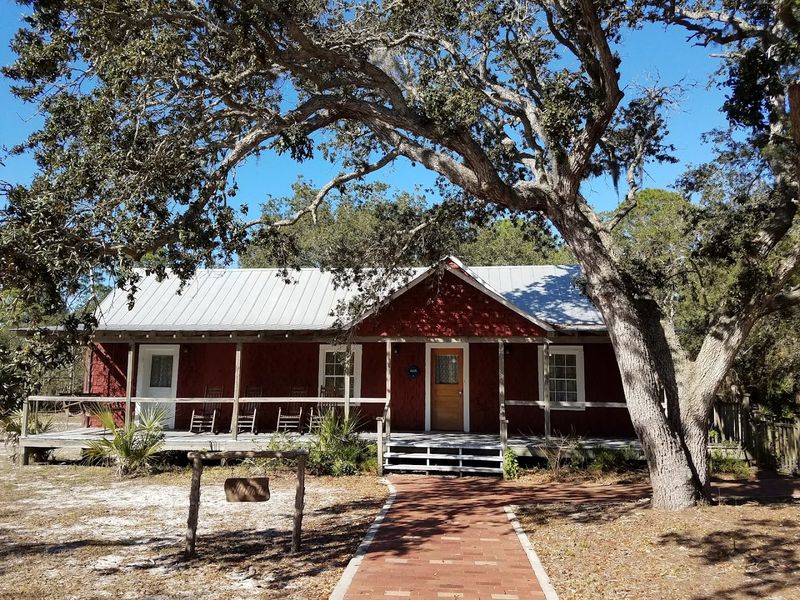
Cedar Key feels like Florida before Florida became Florida.
This tiny Gulf Coast island town moves at its own pace, and the Cedar Key Museum State Park at 12231 SW 166th Ct is the perfect introduction to why this place matters.
The museum holds a remarkable collection of shells, Native American artifacts, and local history that tells the story of a town that was once one of Florida’s busiest ports.
In the 1800s, Cedar Key was a major pencil-manufacturing hub because of its abundant red cedar forests. John Muir, the famous naturalist, ended his 1,000-mile walk from Indiana to the Gulf of Mexico right here in 1867.
That alone gives this small island an outsized place in American history.
The museum is small but thoughtful, and the real reward is stepping outside and exploring the town itself.
The waterfront is lined with seafood restaurants serving fresh local catch, and the views across the Gulf are genuinely stunning at sunset.
Artists and writers have called Cedar Key home for decades, and you can feel that creative, unhurried energy in every corner of the island.
If you want to feel like you found a Florida that most people drive past without stopping, Cedar Key is exactly it.
8. Tarpon Springs Sponge Docks
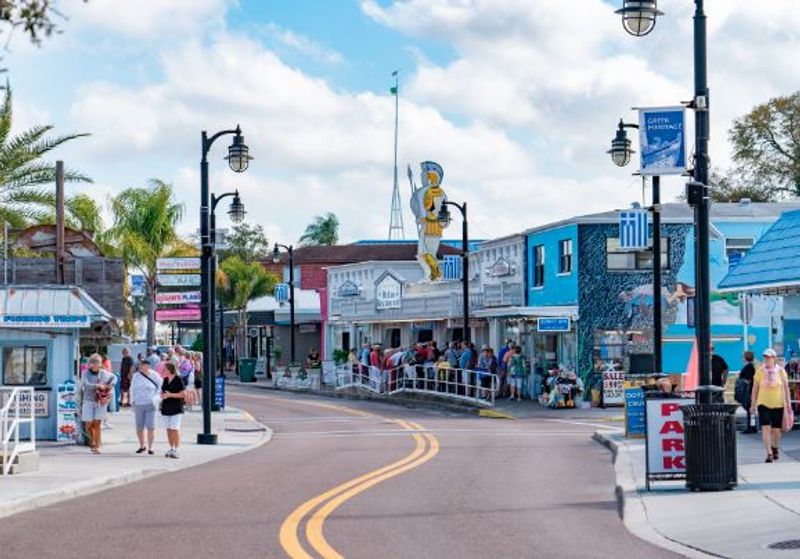
Tarpon Springs has a higher percentage of Greek Americans than any other city in the United States.
That cultural identity is everywhere at the Sponge Docks, from the smell of fresh-baked spanakopita drifting out of bakeries to the sound of Greek music playing along the waterfront.
This is not a manufactured cultural experience. It is the real thing, built over a century of genuine community.
Greek sponge divers arrived here in the early 1900s because the Gulf of Mexico floor was rich with natural sponges.
The industry boomed, and the community planted roots so deep that the culture has never left.
Today, working sponge boats still go out from 735 Dodecanese Blvd, and you can watch divers demonstrate traditional harvesting techniques.
The shops sell real natural sponges, Greek ceramics, and handmade goods that make excellent souvenirs. The food is exceptional.
Greek pastries, fresh grilled fish, and strong coffee are available at multiple spots along the dock. Take a boat tour of the sponge beds if the timing works out.
The whole area is walkable, colorful, and buzzing with authentic energy. Plan at least half a day here because rushing through Tarpon Springs feels genuinely disrespectful to how good it actually is.
9. Apalachicola Historic District
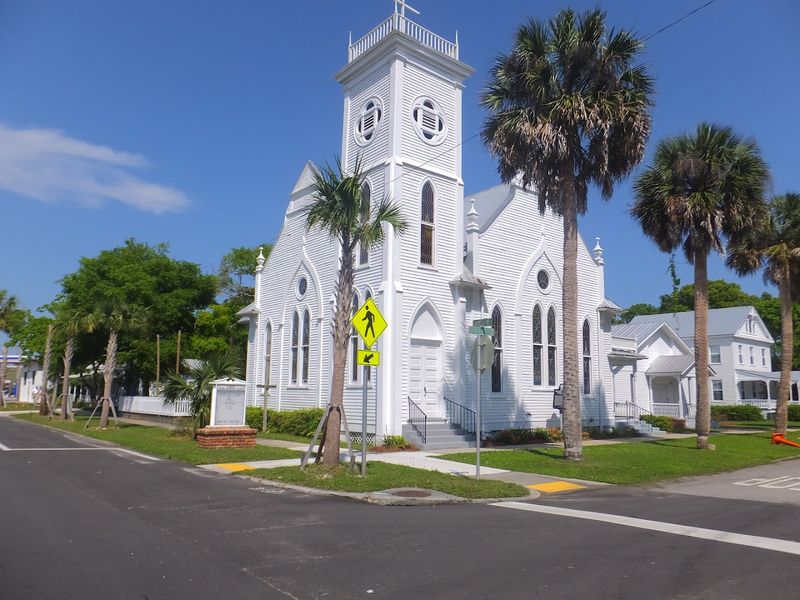
Some towns age beautifully and Apalachicola is one of them.
This small Panhandle port city on the Gulf Coast has over 900 buildings listed on the National Register of Historic Places, most of them dating from the 1800s when Apalachicola was the third-largest port on the Gulf of Mexico.
Walking through the historic district at 76 Market St feels like stepping into a 19th-century postcard that someone forgot to mail.
The town is also legendary for its oysters. Apalachicola Bay has long been considered one of the finest oyster-producing waters in the country, and locals take that reputation seriously.
The oyster shacks and waterfront seafood spots are unpretentious and excellent.
Spanish moss drapes over live oaks lining the streets, and the architecture ranges from Greek Revival to Victorian without ever feeling chaotic.
Independent bookshops, art galleries, and small cafes fill storefronts that have been in use for over a century.
The pace here is genuinely slow in the best possible sense. Nobody seems to be in a rush, and that relaxed energy is contagious.
If you visit the Florida Panhandle and skip Apalachicola, you have made a mistake that deserves correcting on your next trip. Plan an overnight stay if you can manage it.
10. Rainbow Springs State Park
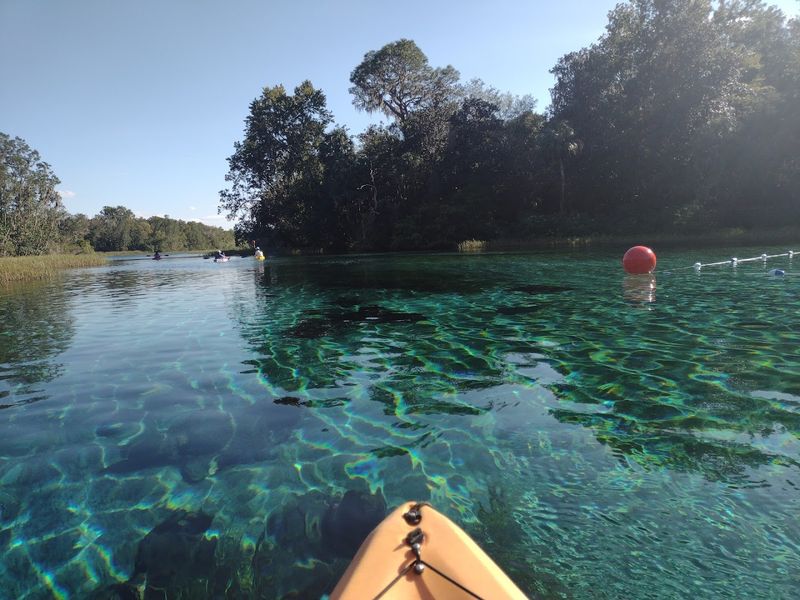
The water at Rainbow Springs runs in shades of green, blue, and aqua that look digitally enhanced until you are actually standing in it.
Rainbow Springs State Park in Dunnellon is one of Florida’s original four first-magnitude springs, producing over 400 million gallons of fresh water daily.
The spring-fed swimming area is one of the most beautiful natural swimming holes in the entire state.
The park at 19158 SW 81st Place Rd, Dunnellon also has a tubing run along the Rainbow River that is deeply popular and totally worth it.
You float downstream through crystal-clear water with fish visible below you the whole way, surrounded by cypress trees and blooming aquatic plants. It is relaxing in a way that no pool or resort can replicate.
History adds another layer here. The springs were a commercial attraction in the mid-1900s with glass-bottom boat rides and elaborate gardens.
Those original gardens still exist within the park and bloom with azaleas, bougainvillea, and tropical plants.
Waterfalls built during the attraction era still run, giving certain corners of the park a surprisingly lush, almost jungle-like feel.
Arrive early because the tubing spots and swimming areas fill up on weekends. Weekday visits are genuinely peaceful and feel almost private, which is a rare thing for a place this spectacular.