10 Beloved Oregon Destinations Locals Would Instantly Miss If Gone
Some places in Oregon hold a deeper meaning for the people who know them well.
They become part of daily routines, familiar views, and shared habits that feel constant over time.
If they disappeared, the change would be noticed right away.
What gives a place that kind of importance? It often comes from repeated visits and personal connection rather than attention.
These destinations reflect that clearly. They aren’t defined by trends or outside recognition.
Instead, they matter because of how they fit into everyday life.
That lasting presence makes them hard to replace, leaving a gap that wouldn’t easily be filled by something new or different.
1. Washington Park, Portland
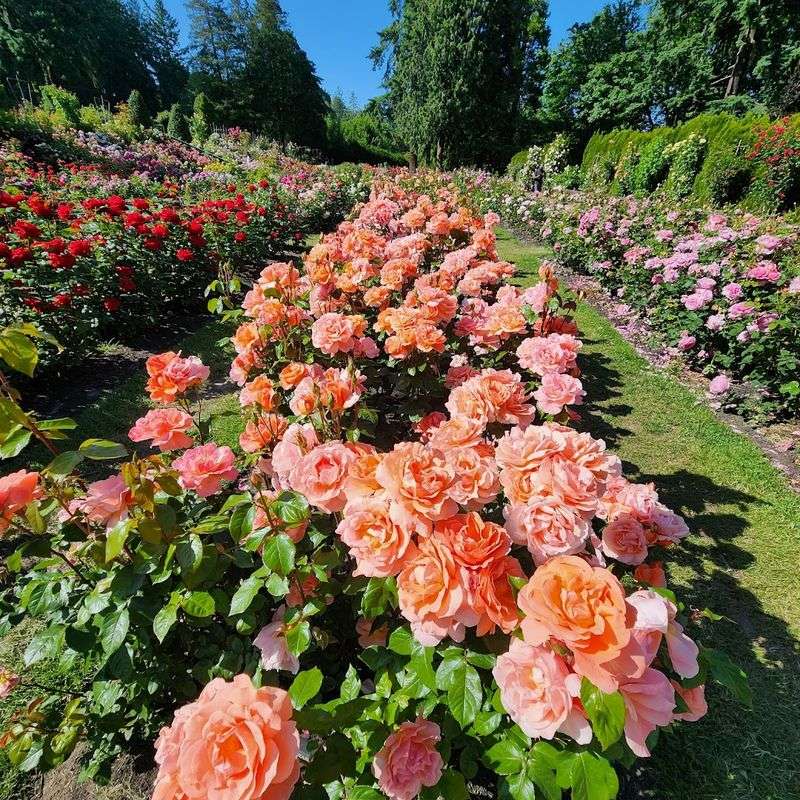
You can stand among ten thousand blooming roses and see the peak of Mount Hood all in one glance. It is the perfect place to just stop and breathe.
Not every park earns a reputation that stretches across state lines, but this one absolutely has. Tucked into the West Hills of Portland, Washington Park covers over 400 acres of gardens, forests, and family-friendly attractions.
The International Rose Test Garden sits at its heart and draws garden lovers every summer. Over 10,000 rose plants bloom here, and the view of Mount Hood on a clear day is something you don’t forget easily.
The Oregon Zoo and the Portland Japanese Garden are also located within the park’s boundaries. That means one afternoon here can include exotic animals, serene koi ponds, and towering Douglas firs.
It’s a lot of world packed into one hillside.
Locals use the park year-round for hiking, picnicking, and just breathing. The trails connect to Forest Park, giving the more adventurous a longer route through the trees.
Kids and dogs are welcome everywhere.
Parking can get tight on summer weekends, so taking the MAX light rail is a smart move. The park is accessible via MAX light rail and nearby stops on SW Canyon Rd.
2. Forest Park, Portland
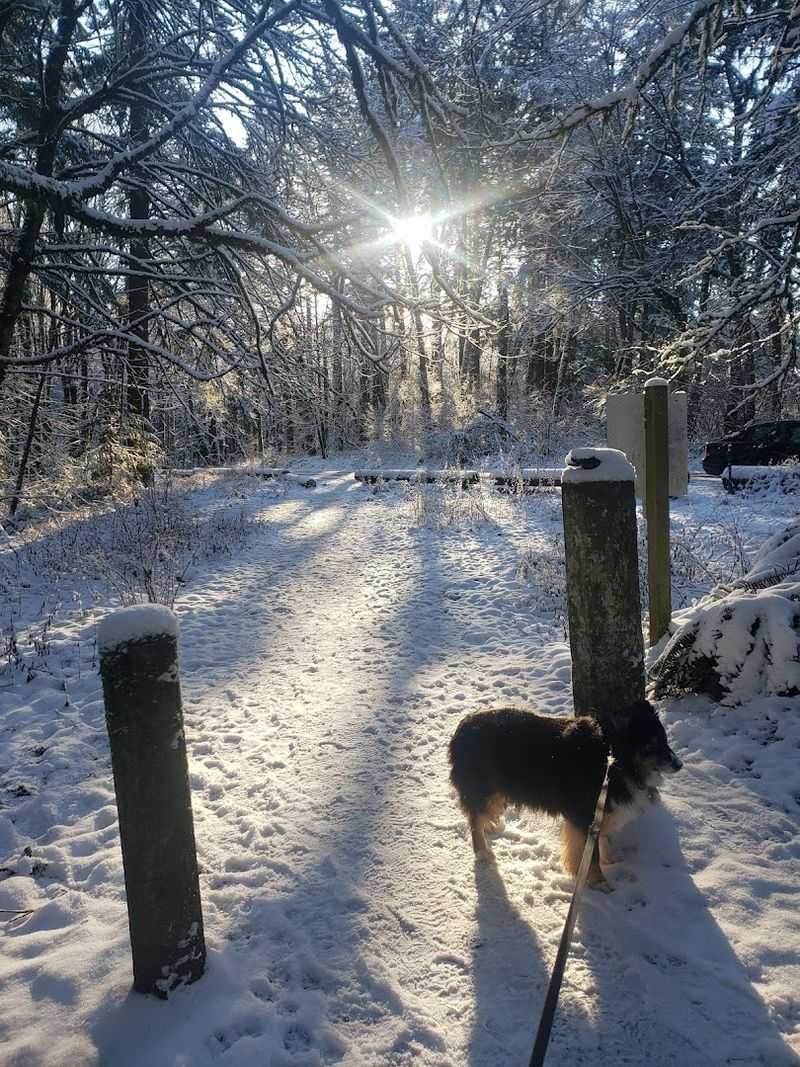
How incredible is it to have five thousand acres of deep, green wilderness right in the middle of a city?
Right inside a major American city, there is a forest so large it takes most people multiple trips to fully explore. Forest Park in Portland, Oregon, USA, stretches over 5,200 acres and is one of the largest urban forests in the country.
The main access area sits near NW Thurman Street, but trailheads are scattered throughout the park’s length. The Wildwood Trail alone runs over 30 miles through towering Douglas firs, red cedars, and bigleaf maples.
Wildlife sightings here are surprisingly common. Deer, coyotes, owls, and over 100 bird species call this forest home.
You can be in the middle of the city and feel completely surrounded by wilderness within minutes.
Trail conditions vary by season, so checking ahead before a hike is smart. Winter rains can make some paths muddy and slippery.
Sturdy shoes are always a good idea here, no matter the season.
Locals use Forest Park for trail running, birdwatching, mountain biking, and quiet solo walks. The park is free to enter and open year-round.
It’s the kind of green space that makes Portland residents fiercely proud of their city.
3. Multnomah Falls, Columbia River Gorge
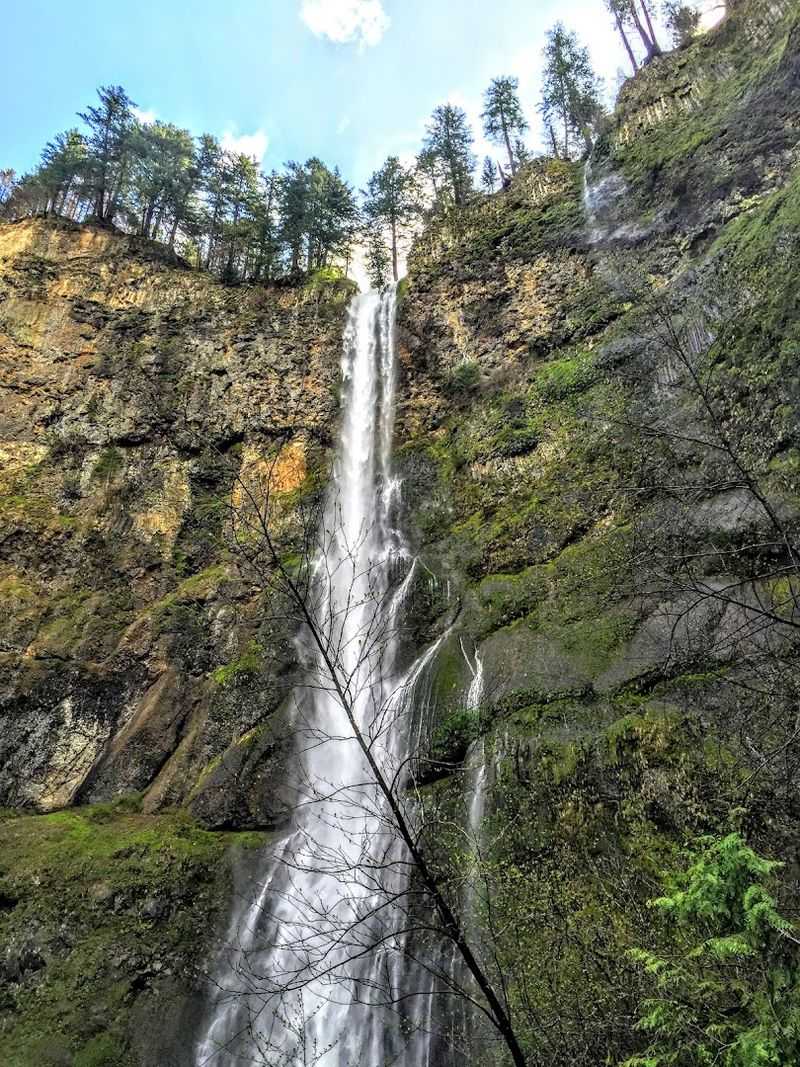
Trust me, the mist on your face as you stand on the Benson Bridge is something you’ll never forget. It is a powerful reminder of how beautiful the Columbia River Gorge truly is.
There are waterfalls, and then there are waterfalls that stop traffic on a major interstate. Multnomah Falls is one of the tallest waterfalls in the state at 620 feet.
The iconic Benson Footbridge arches across the lower falls and has been photographed millions of times. Standing on that bridge while water thunders past you on both sides is a genuinely humbling experience.
The mist alone is enough to cool you down on a hot summer day.
The trail to the top is steep but totally worth the effort. It’s about 2.2 miles round trip, gaining around 700 feet in elevation.
The view from the upper platform gives you the entire gorge stretching out below.
Timed entry permits are required during peak season, typically May through October. Winter visits are magical, especially when ice forms around the upper tier.
The historic Multnomah Falls Lodge at the base dates back to 1925. It houses a restaurant and a small interpretive center.
Arriving before 9 a.m. on weekdays nearly guarantees a peaceful and crowd-free experience.
4. Crater Lake National Park
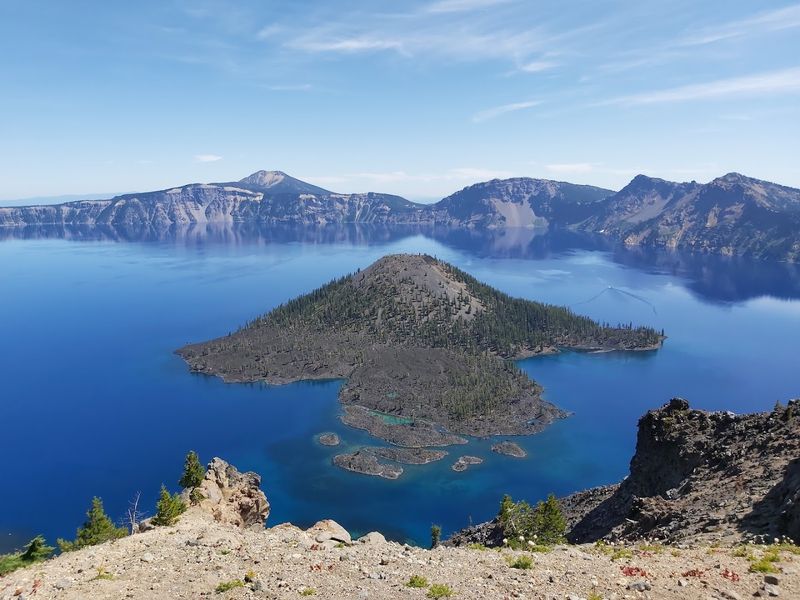
No photo can prepare you for that electric blue water. I honestly think seeing the reflection of the clouds in this ancient volcano is a life-changing experience.
No photograph fully prepares you for the color of this water. Crater Lake National Park sits inside the collapsed remains of an ancient volcano called Mount Mazama.
It is the deepest lake in the United States, reaching a depth of 1,943 feet. Because it has no inlets or outlets, the water comes entirely from snow and rain.
That purity is what gives it that unreal, almost electric blue color.
Rim Drive circles the entire caldera and stretches 33 miles with dozens of overlooks along the way. Each stop reveals a slightly different angle of the lake and surrounding peaks.
Many locals make the full loop a summer tradition.
Wizard Island rises from the middle of the lake and is accessible by boat tour during summer months. Spots sell out fast, so booking early is essential.
The hike to the island’s summit crater is short but steep and completely worth it.
Snow closes most park roads from late fall through late spring. The south entrance stays open year-round for snowshoeing and cross-country skiing.
July through September offers the most reliable access and the best weather for exploring the rim trails.
5. Pittock Mansion, Portland
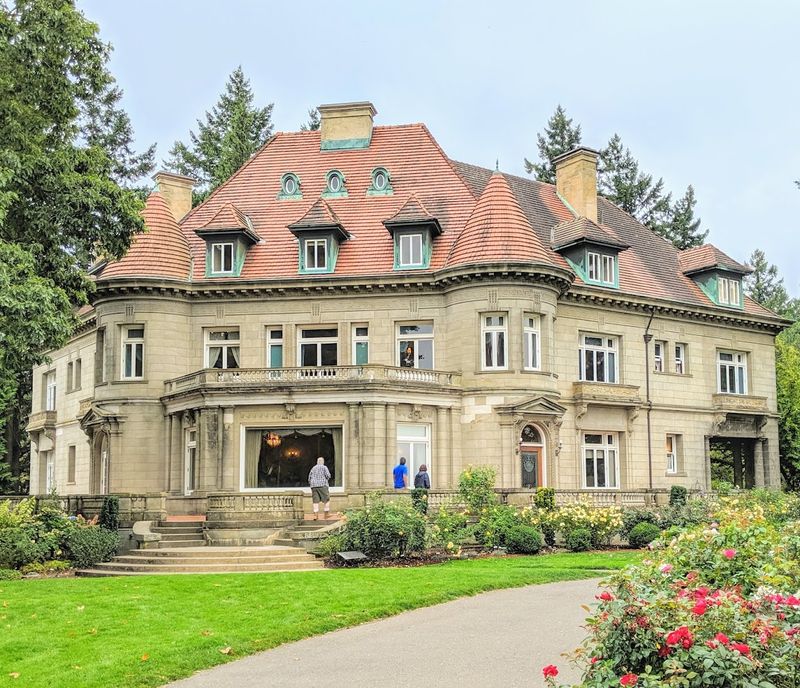
I suspect you’ll find the panoramic view from this century-old lawn to be the best in the city. The history inside is fascinating, but the golden hour outside is pure magic.
1,000 feet above the city, this grand estate watches over Portland like it has been doing for over a century. Built in 1914 for newspaper publisher Henry Pittock, the mansion sits in the West Hills of Portland, Oregon, USA.
The architecture is French Renaissance style, which means turrets, stone facades, and rooms that make you feel like you wandered into a history book. Inside, the 46-room home is fully restored and open for tours most of the year.
The views alone justify the uphill walk. On clear days, you can see Mount Hood, Mount St. Helens, and the Portland skyline all at once.
Photographers absolutely love Pittock Mansion at golden hour.
The grounds are free to enter, though the mansion tour at 3229 NW Pittock Dr has a small fee. Many locals simply hike up for the panoramic view and a picnic on the lawn.
The trails connecting to Forest Park start just steps away.
Spring and fall are the best seasons to go. The surrounding trees put on a real show in October, and the wildflowers near the entrance bloom beautifully in April and May.
Weekday mornings are peaceful and far less crowded than weekends.
6. Oregon Coast, Cannon Beach
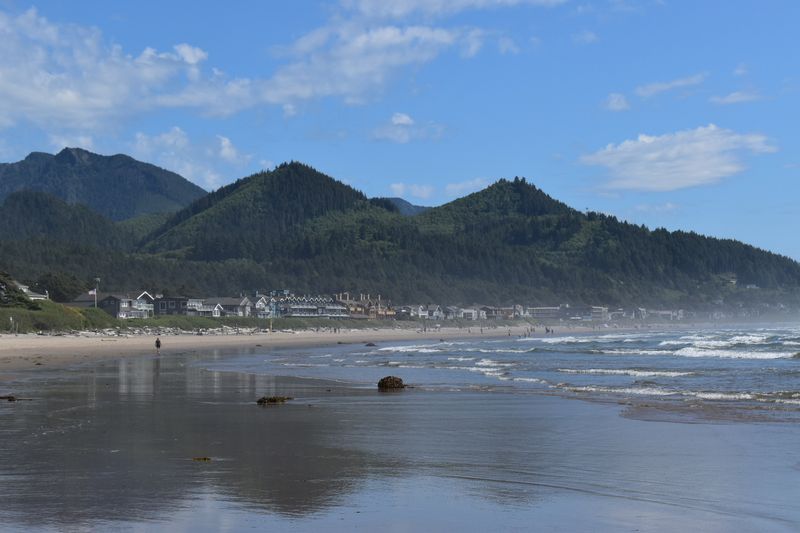
You won’t find private fences here, just miles of wild, untamed shoreline that belongs to everyone. I love how the Pacific air makes everything feel new again.
Rocky headlands, tide pools full of sea stars, and waves that never seem to run out of energy define this stretch of the Pacific. The Oregon Coast, with Cannon Beach as one of its most beloved towns, runs along the entire western edge of Oregon.
Unlike many American beach towns, the Oregon Coast has a wild, untamed character. The beaches are public under Oregon law, with generally open access along the shoreline.
Everyone gets a piece of the shoreline.
Cannon Beach sits about 80 miles west of Portland and draws artists, surfers, and nature lovers all year long. The town itself has galleries, bakeries, and cozy shops lining its main street.
It has a small-town feel that locals fiercely protect.
Tide pooling at low tide is one of the best free activities on the coast. Purple sea urchins, hermit crabs, and anemones pack the rocky pools near the base of the sea stacks.
Checking a tide chart before you go makes all the difference.
Storm watching season runs from November through February and is surprisingly popular. Watching massive Pacific swells crash against the headlands is both thrilling and humbling.
Bring a waterproof jacket and sturdy shoes for coastal trail hikes.
7. Powell’s City Of Books, Portland
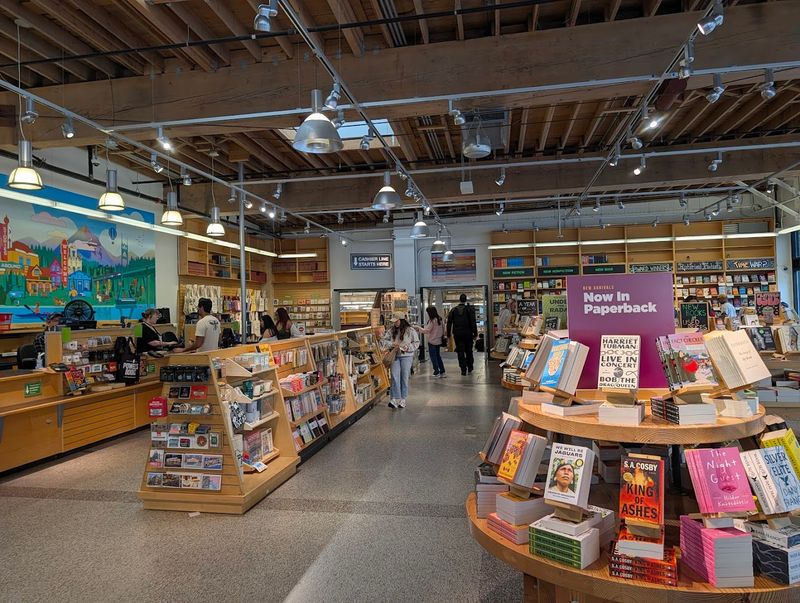
I’ve always felt that the best way to spend a rainy afternoon is getting lost in these color-coded rooms. You don’t just shop here, you find a new world on every shelf.
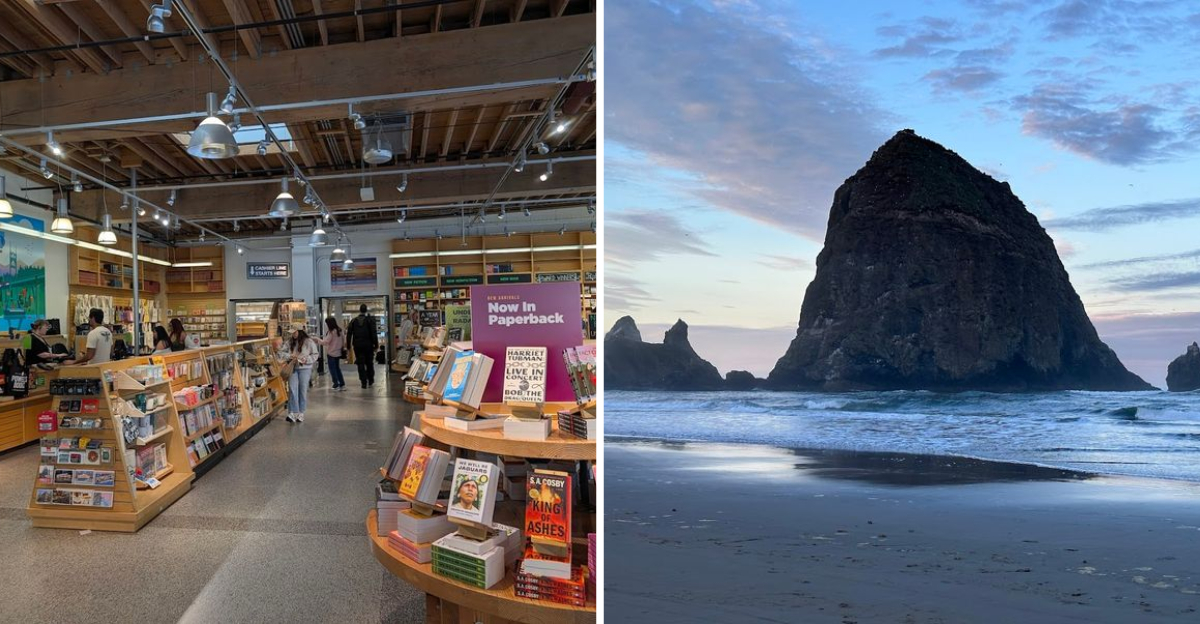
Some buildings have a heartbeat, and this one pulses with every dog-eared page inside it. Spread across a full city block, this legendary independent bookstore called ‘Powell’s City Of Books’ has been a cultural anchor since 1971.
The store is divided into color-coded rooms, each dedicated to a different subject. It stocks both new and used books side by side, which means you can find a rare first edition next to a fresh paperback.
Locals treat it less like a store and more like a library they actually own. On rainy Portland afternoons, you’ll find people camped out in aisles reading for hours.
No one rushes you out.
The rare book room upstairs is worth the trip alone. Some copies at 1005 W Burnside St are older than Oregon’s statehood.
It’s the kind of history you can hold in your hands.
First-timers should grab a store map at the entrance. The layout can be wonderfully confusing without one.
Plan at least two hours, because one is never enough here.
8. Haystack Rock, Cannon Beach
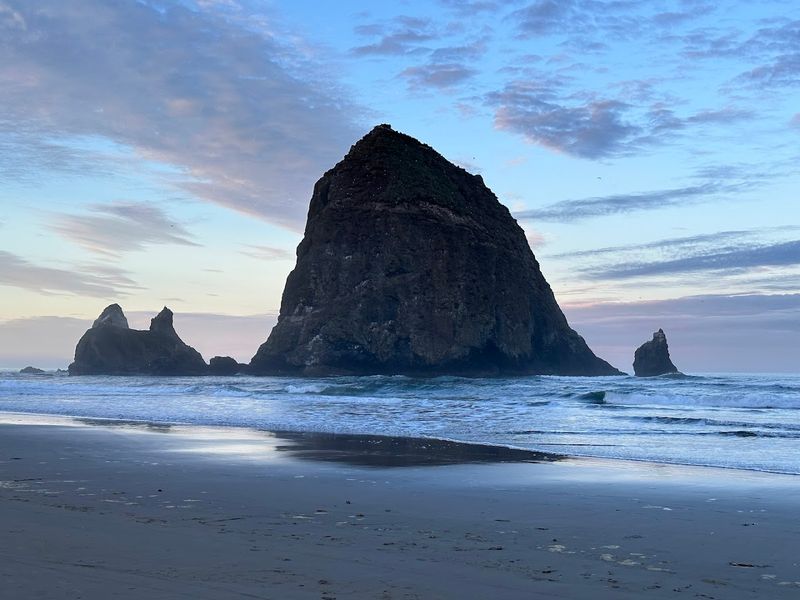
Is there anything more peaceful than exploring tide pools at the base of this massive landmark? Watching the puffins nest on the high ledges is a rare joy you have to see.
It rises 235 feet straight out of the sand like it has been daring the ocean to argue with it for centuries. Haystack Rock is one of the most photographed natural landmarks on the entire Pacific Coast.
The rock is a marine garden reef and protected wildlife habitat. Tufted puffins nest on its upper ledges from April through August, making it a serious birdwatcher’s destination.
You can spot them with binoculars from the beach without disturbing a single feather.
At low tide, the surrounding pools reveal an entire underwater world. Ochre sea stars, acorn barnacles, and aggregating anemones cling to every surface.
The incoming surf can be sudden and powerful, so watching the water and staying aware is important. Tide charts posted around town make planning easy.
Sunrise at Haystack Rock is a quiet, almost meditative experience. The early morning light turns the basalt a deep amber color.
Locals who make a habit of early beach walks say this is the best time to have the whole scene almost entirely to yourself.
9. Eugene Saturday Market
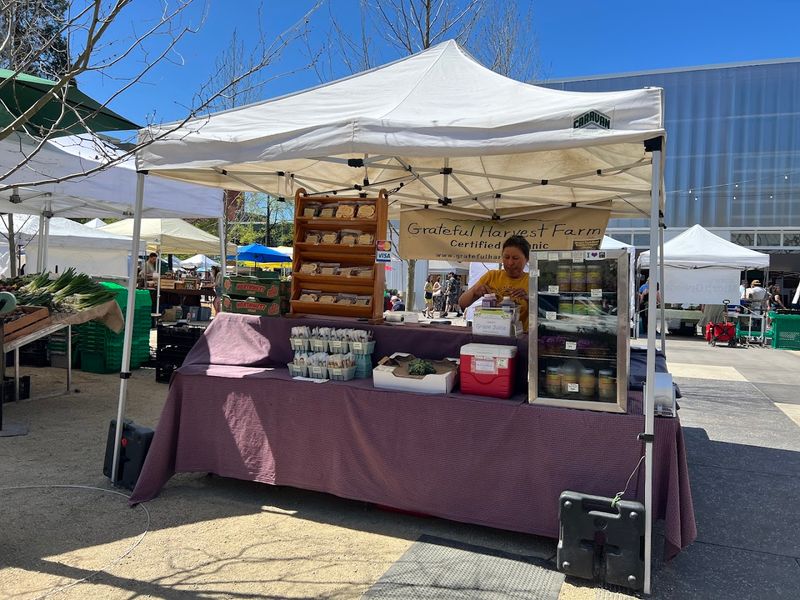
I’ve found that the true soul of the city comes alive every Saturday through local music and handmade crafts. You should definitely arrive hungry for the legendary food court.
Every Saturday morning, a corner of downtown Eugene transforms into something that feels like the soul of the city made visible. The Eugene Saturday Market, located along E 8th Ave has been running continuously since 1970.
It holds the distinction of being the oldest continuously operating outdoor arts and crafts market in the United States. That’s over five decades of hand-thrown pottery, woven textiles, hand-carved wood, and locally grown food in one place.
It’s a real living tradition.
The food court is legendary among regulars. Vendors rotate weekly and cover everything from wood-fired flatbreads to fresh tamales and roasted nuts.
Arriving hungry is strongly recommended by anyone who has been more than once.
Local musicians perform live throughout the market day, adding a soundtrack to the whole experience. The performances range from folk guitar to jazz to spoken word.
There’s no cover, no stage barrier, just music in the open air.
The market runs from April through the Saturday before Thanksgiving. Holiday Market season takes over indoors from November through December.
Locals treat both versions as annual rituals, not just shopping trips. Arriving by 10 a.m. beats the midday rush and gives you first pick of the freshest produce and newest crafts.
10. Mount Hood National Forest, Sandy
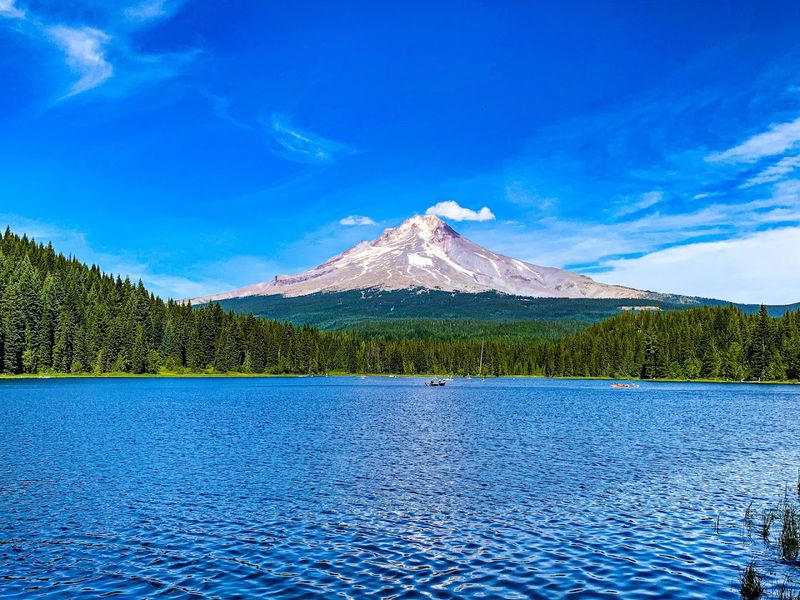
Your adventures here can range from wildflower meadows in August to deep powder skiing in January. It is an iconic playground that locals would truly be lost without.
Oregon’s most iconic peak doesn’t just sit there looking pretty. Mount Hood National Forest wraps around the 11,249-foot stratovolcano with over one million acres of trails, rivers, and alpine meadows.
Timberline Lodge, a massive hand-built structure completed by WPA workers in 1937, sits at 6,000 feet on the mountain’s south slope. It’s one of the finest examples of Cascadian architecture in the country.
Skiers and hikers use it as a base year-round.
The forest offers some of the best year-round outdoor recreation in the Pacific Northwest. Summer brings wildflower-covered meadows, huckleberry picking, and swimming in cold alpine lakes.
Winter delivers deep powder for skiers and snowboarders at four different ski areas.
The Mirror Lake Trail is a local favorite and leads to a glassy alpine lake that perfectly reflects the summit on calm mornings. It’s about 4.5 miles round trip with moderate elevation gain.
Wildlife in the forest includes black bears, elk, mountain goats, and golden eagles. The Sandy River and other waterways offer excellent fishing and swimming.