10 Best Solo Activities In New York City For A Day All To Yourself
What happens when nobody else gets a vote on your New York City itinerary?
The day suddenly becomes wonderfully selfish.
You can linger beside one painting, change neighborhoods on a whim, or sit in a quiet garden until you feel like moving again.
Nobody rushes lunch, questions the detour, or complains that the museum has taken too long. That freedom changes the city completely!
One hour can bring art, while the next can carry you over the water or into a place you never planned to visit.
Spending the day alone does not shrink the adventure. It gives you complete control over it.
1. The Metropolitan Museum Of Art, Manhattan
I have gotten happily lost in these halls more than once. Losing track of time never felt so educational.
The Metropolitan Museum of Art in Manhattan spans more than 5,000 years of art, which makes a solo visit especially easy to personalize.
One gallery can hold your attention for five minutes or an hour without affecting anyone else’s plans.
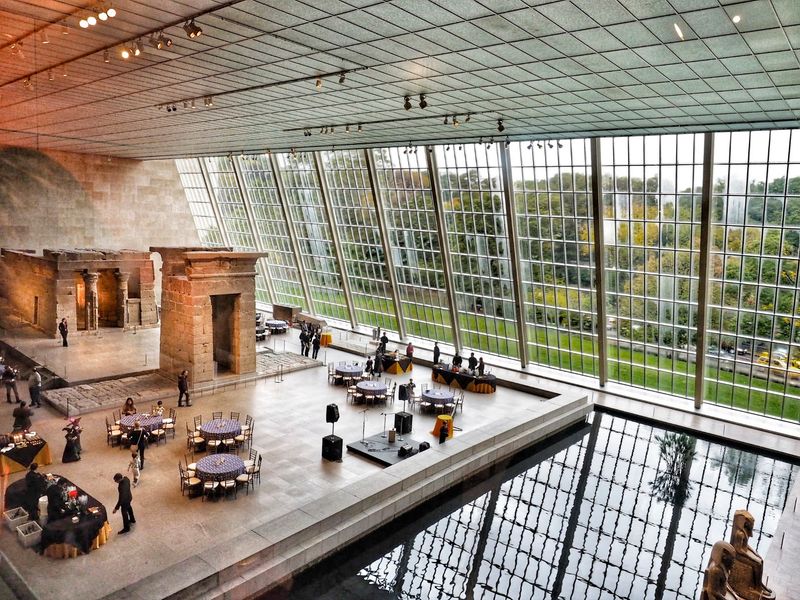
Start with the Temple of Dendur, an ancient Egyptian temple displayed beside a reflecting pool in a soaring glass-walled gallery. The setting is spacious enough to slow down and study the carved stone from several angles.
European paintings fill another major part of the museum, while the musical instruments galleries trace centuries of design and sound.
For a quieter pause, head to the Astor Chinese Garden Court. Built in a seventeenth-century Ming style, the courtyard combines stone, wood, water, and carefully framed views in one compact space.
New York rewards visitors who stop trying to see everything, and The Met proves why. Pick three or four areas that genuinely interest you instead of racing through dozens.
The museum is at 1000 Fifth Avenue. It opens most days at 10 a.m., stays open later on Friday and Saturday, and closes on Wednesday. Comfortable shoes matter more than an ambitious checklist.
2. The High Line, Manhattan
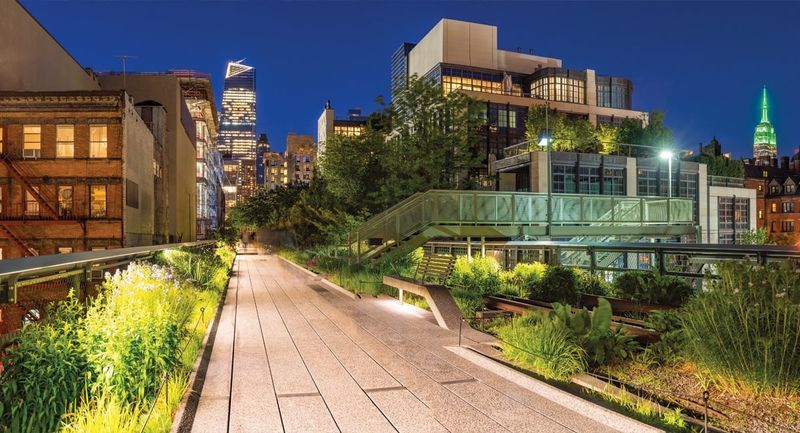
Someone turned an old train track into a sky-high garden? Yes, and it is every bit as cool as it sounds.
The High Line follows about 1.45 miles of former elevated freight railway along Manhattan’s West Side.
Today, gardens, preserved rail details, seating areas, and changing public art turn the old industrial route into an easy solo walk.
Starting near Gansevoort Street lets you move north through the Meatpacking District and Chelsea before reaching Hudson Yards. The neighborhoods shift gradually, so the walk feels different every few blocks without requiring a complicated route.
Plantings soften the old tracks with grasses, perennials, shrubs, and trees. Public artworks also rotate, which gives repeat visits a different focus even when the path itself stays familiar.
One advantage of going alone is the freedom to stop whenever a view opens toward the Hudson or a bench looks inviting. There is no reason to keep pace with anyone else.
The park opens daily, with closing times changing by season. A current 2026 map also notes temporary reconstruction in a few areas, so checking access updates before leaving is sensible.
The city has plenty of long walks, but this one packs architecture, gardens, art, and neighborhood views into a compact route. Finish near Hudson Yards or step off around Chelsea for a meal and continue the day at street level.
3. Brooklyn Botanic Garden, Brooklyn
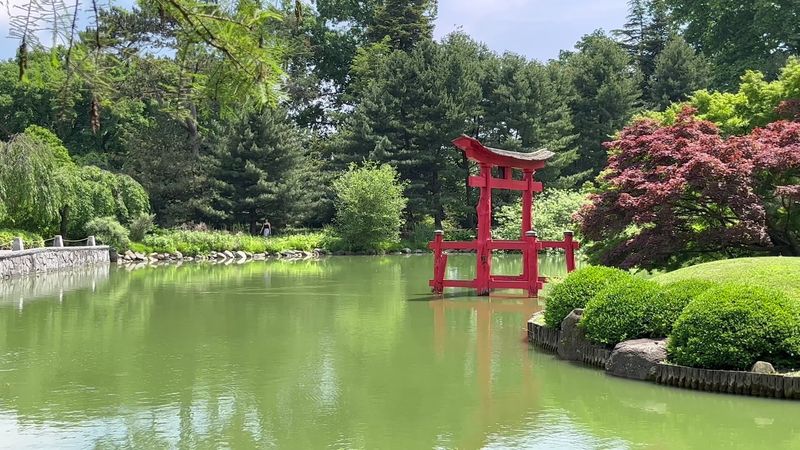
Let’s be real for a second, honking taxis get old fast. Sometimes you just need birdsong and petals instead.
Brooklyn Botanic Garden covers 52 acres beside Prospect Park, creating a calm place to spend several hours without building the day around a strict schedule. Solo visitors can follow the season rather than a checklist.
The Japanese Hill-and-Pond Garden is one of the oldest major features on the grounds and remains a strong place for a slow loop around water, stone, bridges, and carefully arranged plantings. Spring adds cherry blossoms across several parts of the garden.
The Cranford Rose Garden changes the mood again. Thousands of rose plants fill formal beds, arches, and latticework, with the strongest displays typically arriving around late spring and returning in smaller waves later in the season.
Inside the conservatory complex, the bonsai museum rotates selections from a collection of more than 400 trees. Other houses focus on tropical, desert, aquatic, and warm-temperate plants, making bad weather less disruptive.
Tickets are required for entry, and seasonal hours change through the year. As of October 2026, the Eastern Parkway entrance is temporarily closed, so use the entrances at 455 Flatbush Avenue or 990 Washington Avenue.
4. Museum Of The Moving Image, Queens

Seeing childhood heroes up close never gets old.
Museum of the Moving Image in Queens explores film, television, video games, animation, and the technology behind them.
The Astoria museum is especially well suited to solo visitors because many of its strongest exhibits are interactive.
Behind the Screen fills two floors with cameras, costumes, projectors, production material, arcade games, and hands-on stations.
Visitors can build a flipbook, make stop-motion animation, add sound effects to familiar scenes, or experiment with voice recording at their own pace.
A major puppetry exhibition adds nearly 300 objects, including dozens of recognizable puppets, sketches, scripts, costumes, and behind-the-scenes material.
Interactive stations also let visitors experiment with character design and on-screen puppeteering.
Tut’s Fever Movie Palace is another worthwhile stop. The small working theater doubles as an art installation inspired by elaborate early movie houses.
The newer MoMI LAB opened in 2026 as a public co-creation space focused on emerging technology. It is accessible during museum hours and adds another hands-on layer beyond the permanent galleries.
The museum is open Thursday through Sunday, with longer hours on Friday. General admission is waived on Thursday from 2 to 6 p.m., while special screenings may follow separate schedules.
Find the museum at 36-01 35th Avenue in Astoria. Going alone means every interactive station can take exactly as long as curiosity allows.
5. New York Botanical Garden, Bronx
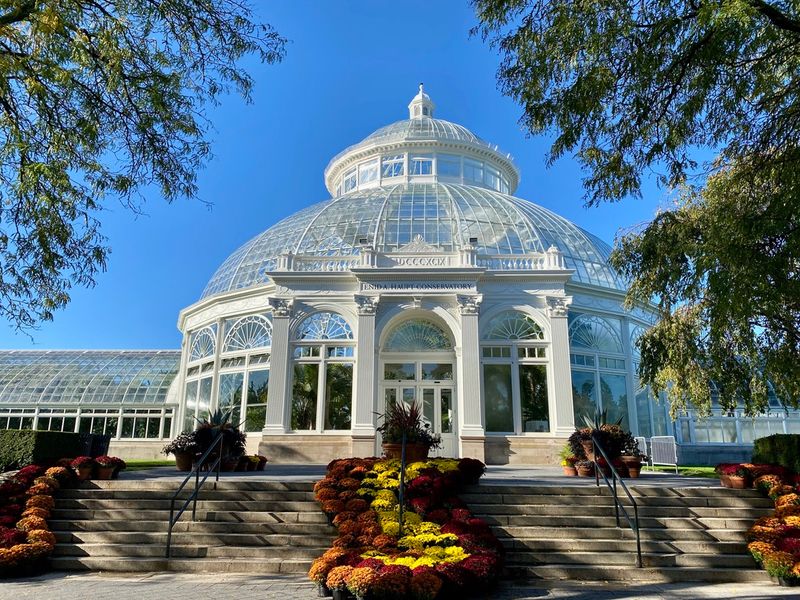
I had to do a double-take at the size of this green wonderland. Rolling hills and forest trails seem impossible inside a city.
The New York Botanical Garden in the Bronx spreads across 250 acres and has been a major botanical institution since the nineteenth century. Its scale suits a solo day built around long walks rather than crowded rooms.
The Enid A. Haupt Conservatory anchors the experience with tropical, desert, and seasonal displays beneath a landmark glass structure. Exhibition themes change, so checking the current calendar can shape the route before arrival.
The Thain Family Forest offers a completely different setting. This 50-acre old-growth woodland was never cleared for agriculture or major development, and trails pass mature trees, rocky terrain, and stretches of the Bronx River.
Formal collections, seasonal flower displays, and changing exhibitions add several more ways to explore without leaving the grounds.
The free Bloomberg Connects guide provides audio tours, plant information, and self-guided routes for visitors who want context without joining a group.
Regular hours are 10 a.m. to 6 p.m. Tuesday through Sunday, with selected Monday holidays also open. A valid admission ticket is required.
The main address is 2900 Southern Boulevard. Pack water, wear comfortable shoes, and choose only a few areas at first. Leaving something unseen gives you a good reason to return.
6. Staten Island Museum, Staten Island
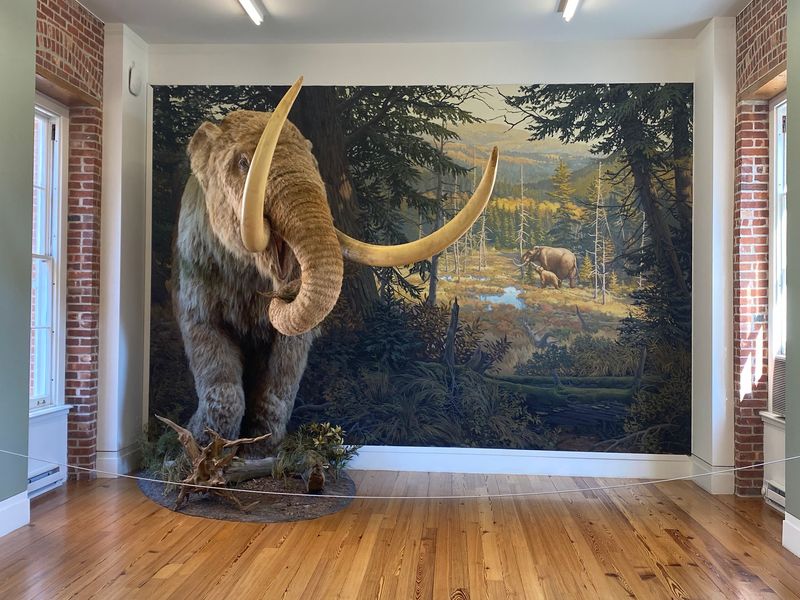
Sounds too good to be true, but a ferry ride leads to a quiet museum surprise. The boat trip there even sails past the Statue of Liberty.
Staten Island Museum occupies Building A at Snug Harbor Cultural Center, about two miles from the ferry terminal.
The 1879 Greek Revival building originally served as a residence for retired sailors before reopening as the museum’s flagship home in 2015.
The collection brings art, natural science, and local history together. Current galleries include displays on Staten Island history, world art, regional biodiversity, and changing work by contemporary artists.
That variety makes the museum easy to explore at an individual pace. One room may hold attention for twenty minutes, while another can pull you toward paintings, photographs, or archival objects.
The surrounding Snug Harbor campus extends the outing beyond the galleries. Gardens, historic architecture, and other cultural spaces sit within the same property, so the museum can become one stop in a longer New York afternoon.
Current hours are Wednesday through Sunday from 11 a.m. to 5 p.m. The museum is wheelchair accessible, and onsite parking is available, though construction can affect some internal campus roads.
From the Staten Island Ferry terminal, the S40 bus runs to Snug Harbor. The museum entrance is at 1000 Richmond Terrace, Building A. Going alone leaves room to follow whichever collection catches your attention first.
7. Roosevelt Island Tramway
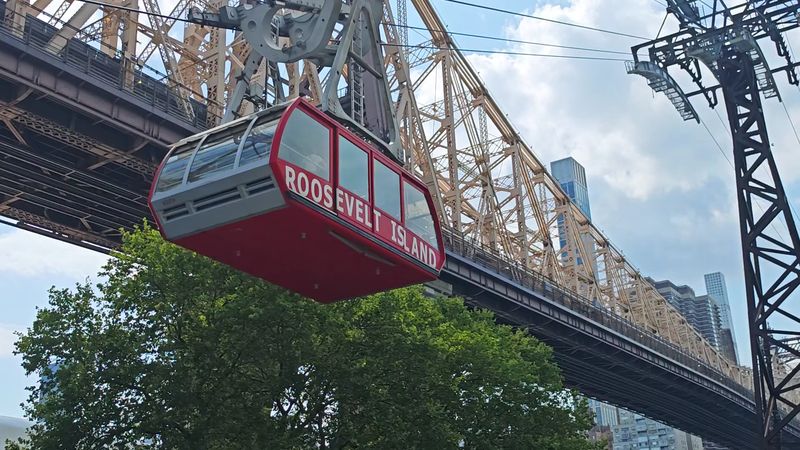
What if your commute came with a skyline show? For a few minutes, it actually can.
The Roosevelt Island Tramway rises above the East River and links Manhattan with Roosevelt Island in about four minutes.
At its highest point, the cabin reaches roughly 250 feet above the water, turning transportation into a sightseeing ride.
OMNY and MetroCard work on the tram just as they do across much of the transit system. Service runs year-round, with more frequent cabins during weekday rush periods.
A solo ride works best when you stay flexible. If one side of the cabin is crowded, the return trip offers another chance at the skyline and river views.
Once on the island, waterfront paths make it easy to continue without a complicated plan. Walking south leads toward Four Freedoms Park at the island’s tip, while other routes pass lawns and riverfront seating.
Four Freedoms Park is open most days from 9 a.m. to 5 p.m. and closes on Tuesday. Its broad lawn, granite paths, and framed city views create a slower experience than the tram ride.
The Manhattan tram station is at East 60th Street and Second Avenue. Avoiding peak commute periods usually leaves more room to enjoy the view.
8. Tenement Museum, Lower East Side
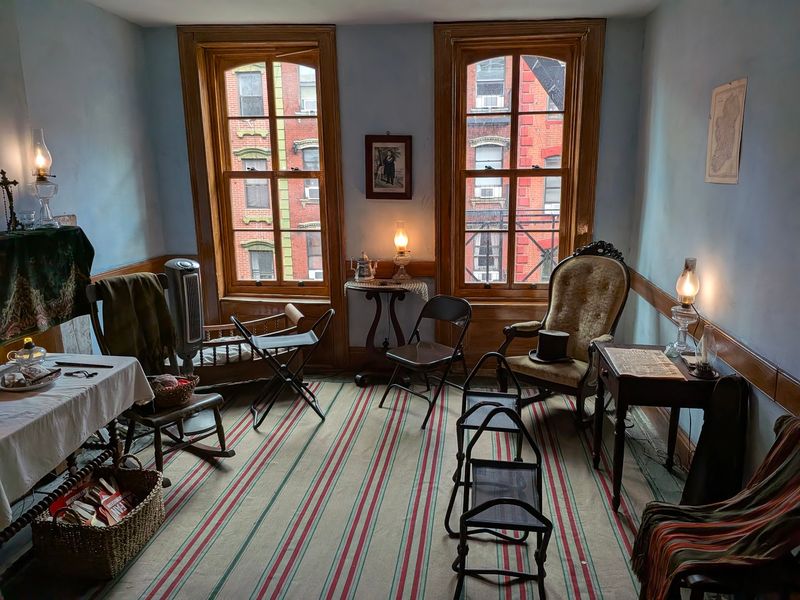
Have you given any thought to who lived in your building long ago? This stop answers that question in a powerful way.
The Tenement Museum on the Lower East Side explores immigrant and migrant life through recreated apartments and neighborhood walks.
Visitors do not wander the historic buildings independently; every apartment visit happens as part of a scheduled tour.
Current tours span several periods and communities, using documented family histories to explain home life, work, and neighborhood change.
Some programs focus on nineteenth-century households, while others move into the twentieth century.
That structure works well for a solo visit. Instead of deciding where to go next, you can concentrate on one story while an educator supplies context and connects the rooms to the larger neighborhood.
Walking tours add another option for anyone who wants more time outside. Routes examine architecture, businesses, public spaces, migration, and the ways Lower East Side streets changed over generations.
Most tours run about an hour to ninety minutes, and advance reservations are recommended. Accessibility differs by program because the historic tenement buildings include many stairs, while some walking tours are wheelchair accessible.
Every tour begins at the Visitor Center at 103 Orchard Street. The shop carries books and materials on city history, immigration, and tenement life.
9. The Cloisters, Washington Heights
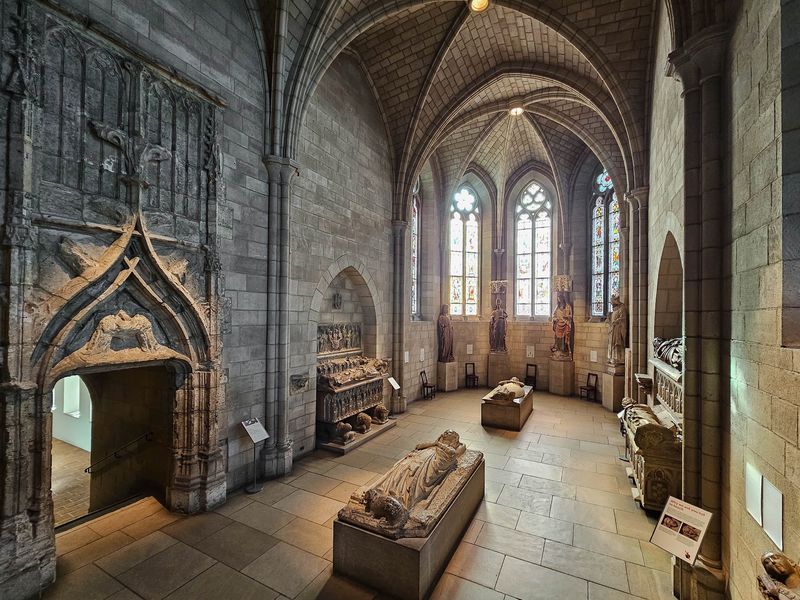
Call me crazy, but I found a medieval monastery in upper Manhattan. Okay, not exactly, but it sure looks like one.
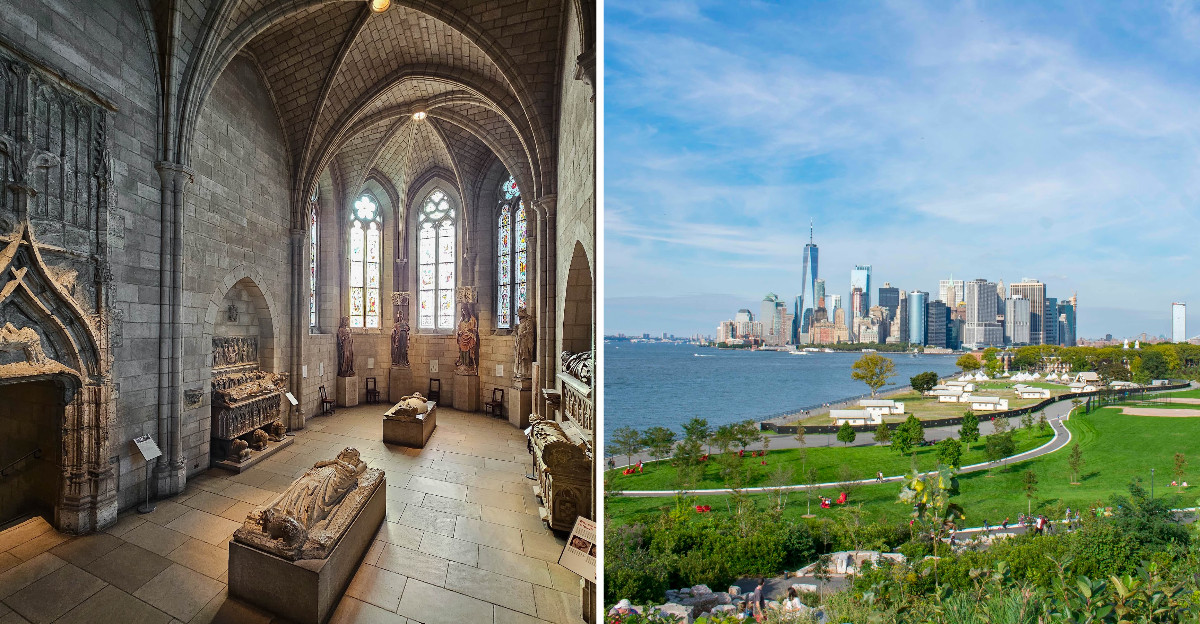
The Met Cloisters sits inside Fort Tryon Park and focuses on the art, architecture, and gardens of medieval Europe.
The building incorporates genuine architectural elements from European sites, including four reconstructed cloisters that give the museum its name.
Stone arcades, stained glass, sculpture, metalwork, manuscripts, and tapestries create a setting that rewards slow looking.
The famous Unicorn Tapestries remain a major draw, but smaller objects in side galleries can be just as absorbing without a group schedule.
The gardens add another reason to linger. Cuxa, Bonnefont, Trie, and other planted spaces use medieval sources and imagery to shape their herbs, flowers, fruiting plants, and enclosed courtyards.
A solo visit also pairs naturally with Fort Tryon Park. Paths outside the museum open toward the Hudson, and the surrounding greenery makes the trip feel removed from central Manhattan.
The museum is open Thursday through Tuesday from 10 a.m. to 5 p.m. and closes on Wednesday. Tickets include same-day entry to both Met locations, so an ambitious visitor can combine this stop with Fifth Avenue.
The entrance is at 99 Margaret Corbin Drive. The A train to 190th Street leaves about a ten-minute walk.
10. Governors Island, New York Harbor
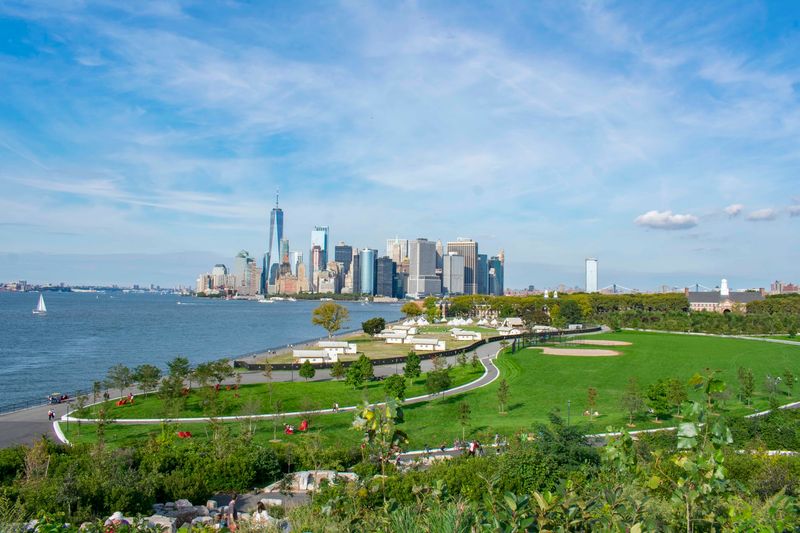
Governors Island in New York Harbor is a car-free escape. A short ferry ride leaves Lower Manhattan behind.
The 172-acre island combines 120 acres of open space with historic buildings, public art, walking routes, and harbor views. It is open every day of the year, although public hours shift with the season.
Hammock Grove is a good first stop for a solo visit. Bright red hammocks sit among a young urban forest, and nearby paths offer glimpses of the skyline and the Statue of Liberty.
Biking is another practical way to cover ground. Rental options and Citi Bike service make it possible to move between the historic district, waterfront paths, and the southern park without bringing equipment.
For the biggest view, climb Outlook Hill. Its accessible winding path rises to a 70-foot summit with broad sightlines across the harbor. Fort Jay and Castle Williams add historic architecture nearby, with access depending on National Park Service schedules.
Governors Island also hosts changing art, recreation, gardens, and guided activities, so the exact mix varies through the year. That flexibility suits a day with no fixed agenda.
Ferries depart from the Battery Maritime Building at 10 South Street, with additional seasonal Brooklyn service and NYC Ferry connections. In fall, public island hours are generally 7 a.m. to 6 p.m.