10 Best Things To Do In This Virginia City For An Unforgettable Day Trip
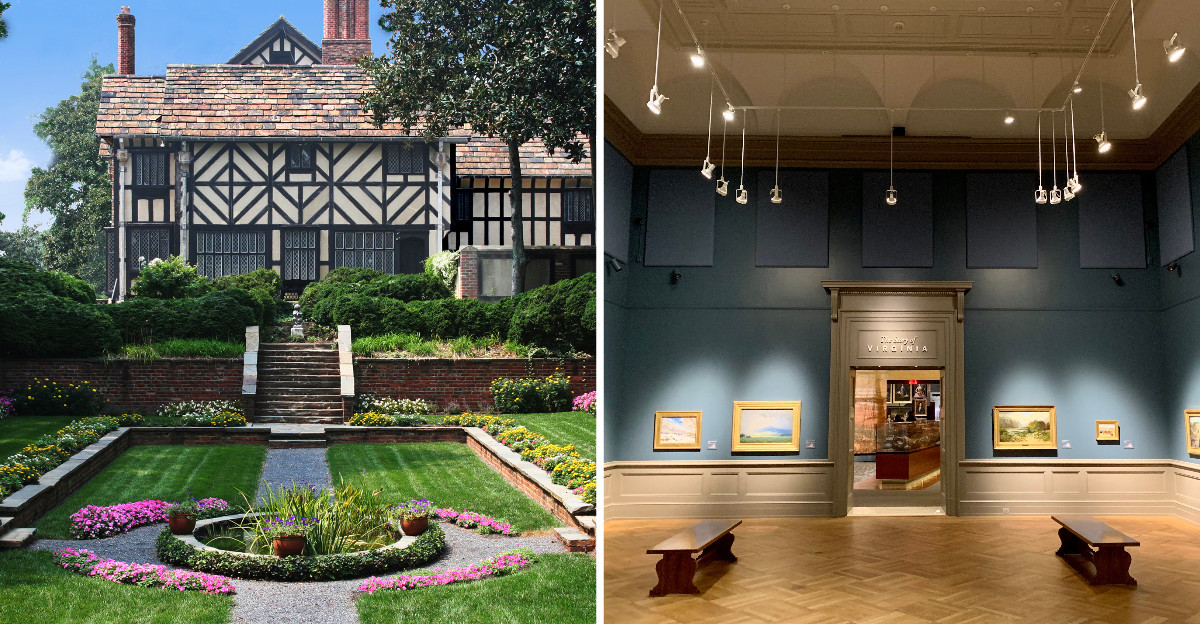
How much can one city pack into a single day? More than you might expect.
In Virginia, one compact getaway mixes grand architecture, riverfront scenery, beautiful gardens, unusual museums, and enough history to make an ordinary walk feel like a time jump.
The fun comes from how quickly the mood changes.
One hour can feel polished and cultural, while the next turns outdoorsy, mysterious, or completely unexpected.
You do not need an elaborate itinerary either. Comfortable shoes, a little curiosity, and a free day can go surprisingly far.
By evening, heading home may be the hardest part of the trip.
1. Virginia Museum Of Fine Arts
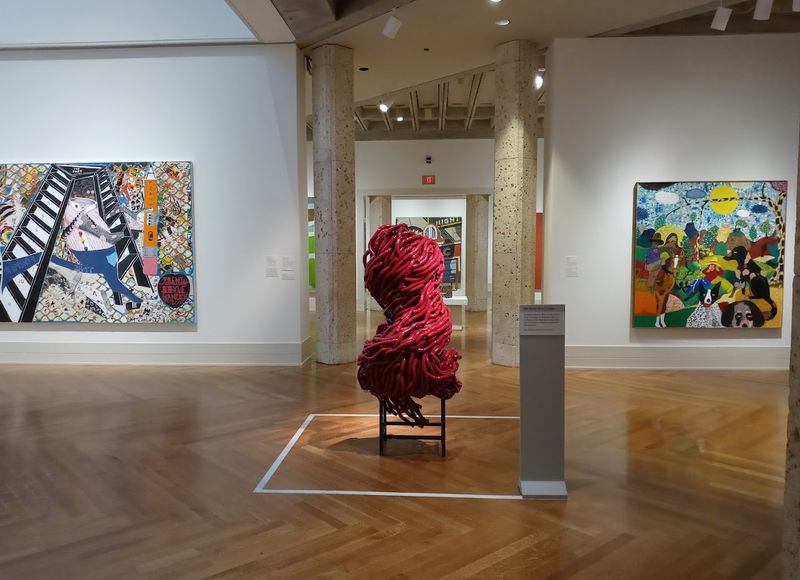
Art museums usually make you choose between your wallet and your curiosity. This one does not.
The Virginia Museum of Fine Arts keeps general admission free every day of the year, which makes wandering in for an hour almost dangerously easy.
There is plenty to keep you much longer. More than 50,000 works spanning roughly 6,000 years fill the collection, covering cultures from across the world.
Then comes the room that can stop people in their tracks. VMFA holds the largest public collection of Fabergé outside Russia, along with major holdings in Art Nouveau, American art, Impressionism, African art, South Asian art, and contemporary work.
The building itself feels bright and surprisingly relaxed for a museum of this size. Huge windows pull the sculpture garden into view, so the transition outside feels almost seamless.
Wednesday through Friday bring another advantage: the museum stays open until 9 p.m. That can turn it into an excellent final stop if the rest of the day runs long.
Expansion work is underway, so individual galleries can temporarily shift or close. The museum remains open throughout the project.
Find it at 200 N Arthur Ashe Blvd. Free admission, Fabergé, and enough art to make your original schedule completely irrelevant? Not a bad start.
2. Maymont
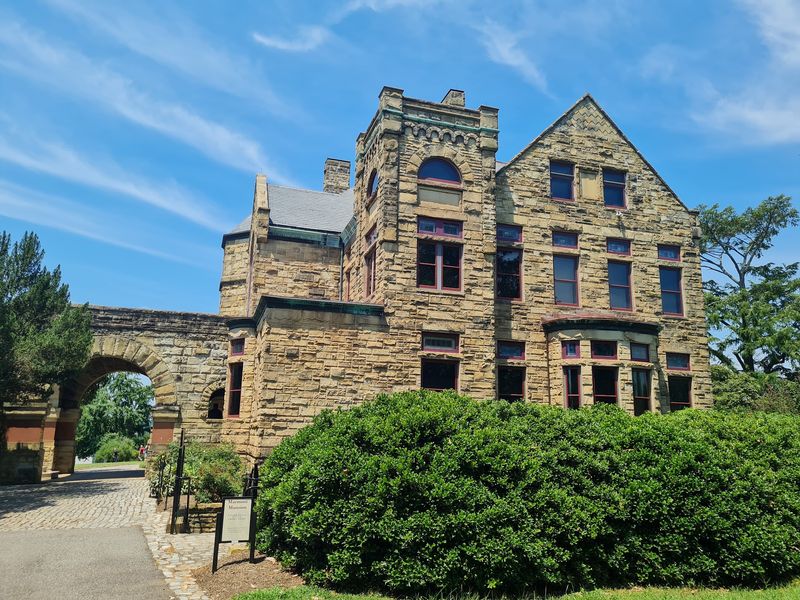
Imagine inheriting a 100-acre estate and deciding the whole city should get to enjoy it. That is essentially what happened at Maymont.
James and Sallie Dooley built their 33-room mansion in 1893, surrounded it with elaborate gardens, and eventually left the entire estate to Richmond for use as a public park and museum.
The grounds opened to the public in 1926, which means Maymont is celebrating 100 years as a public space in 2026.
The Italian Garden climbs across formal terraces, while the Japanese Garden heads in a completely different direction with water, stone, bridges, and thick plantings.
Then there is the mansion itself. After a major two-year preservation project, the house reopened in March 2026 with its Gilded Age interiors and collections back on view. The Virginia Wildlife Trail followed with its own reopening in April.
Maymont’s grounds remain free to enter, while mansion tours and certain indoor experiences require admission. Current mansion tours run Thursday through Sunday.
You could burn an entire afternoon here without realizing it. Head to 1700 Hampton St for the historic-estate entrance.
3. Virginia State Capitol
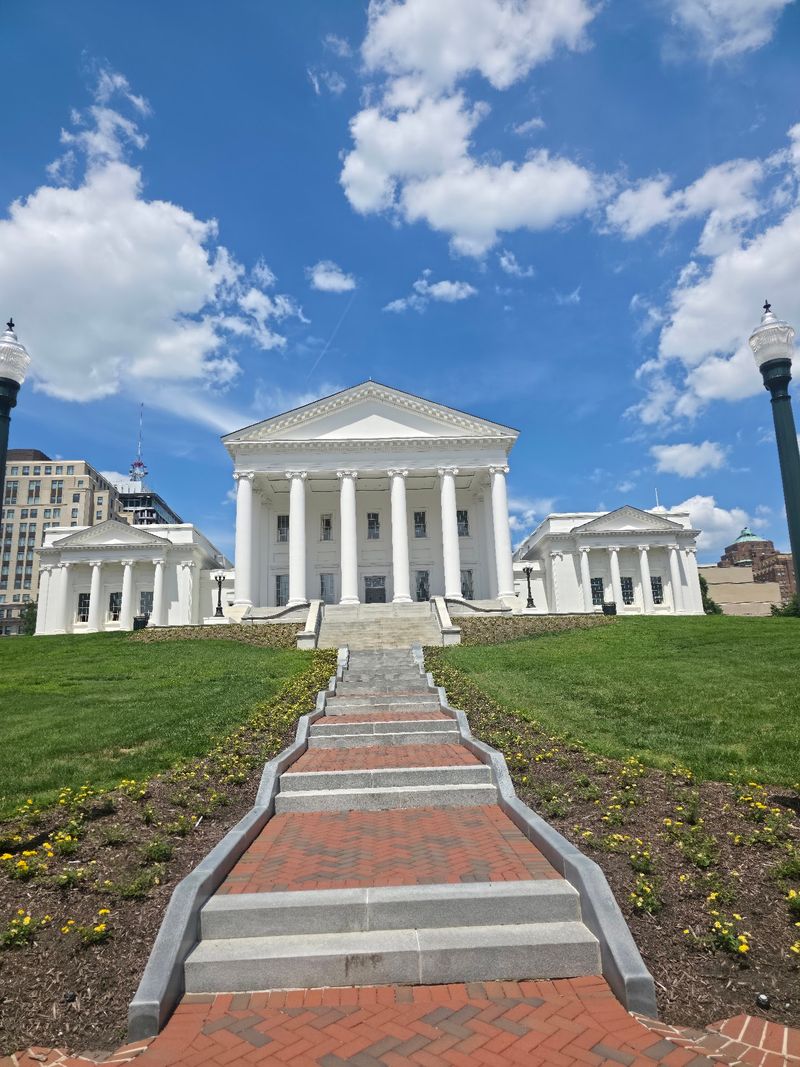
This is not a replica pretending to be important. Decisions have been happening here since the eighteenth century.
Thomas Jefferson designed the Virginia State Capitol in 1785, working with French architect Charles-Louis Clérisseau while serving as U.S. minister to France.
The General Assembly moved into the building in 1788.
Its design broke with the British-inspired government buildings Americans already knew.
Jefferson instead looked toward the classical Roman temple, creating what Virginia describes as the first American state capitol designed after the Revolution and the first New World public building built in that form.
Inside the Rotunda stands Jean-Antoine Houdon’s life-size marble statue of George Washington. Houdon had measured Washington himself, which adds another layer to an already unusual object.
The Old House Chamber, Old Senate Chamber, Jefferson Room, portraits, and historic artifacts keep the interior from feeling like an ordinary government building.
Best of all, guided tours are free and generally last about an hour. Self-guided visits are also available during regular Capitol hours.
Enter through 1000 Bank St. You may arrive expecting a quick government-building stop and leave wondering why more capitols do not look like this.
4. The Poe Museum
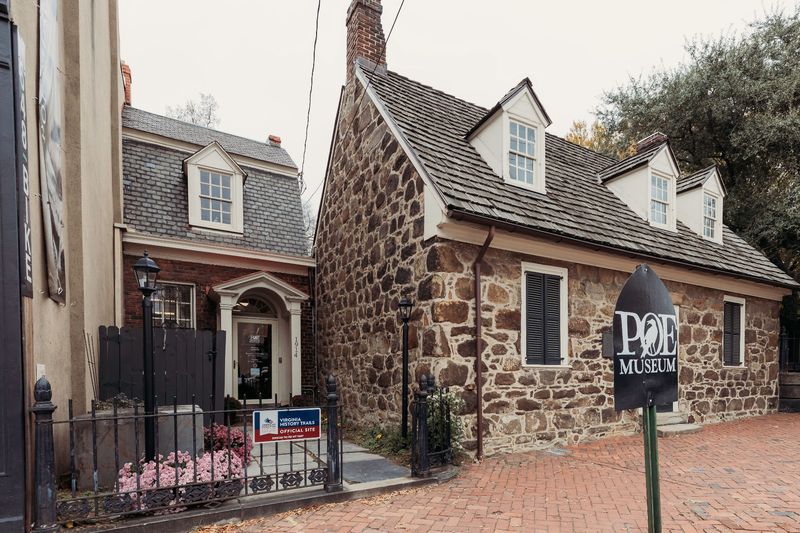
A garden inspired by Edgar Allan Poe sounds like it should come with fog.
The Poe Museum does not need artificial atmosphere.
Its collection is described by the museum as the most comprehensive Poe collection in the world, bringing manuscripts, belongings, letters, first editions, portraits, and objects connected with the writer into one compact Richmond property.
One building is especially deceptive. The Old Stone House is the oldest surviving residential building in Richmond, but Poe never actually lived there.
He did know the neighborhood, though. As a teenager in 1824, Poe served in an honor guard that escorted the Marquis de Lafayette through Richmond, including a stop at this very house.
Behind it waits the Enchanted Garden, created when the museum opened in 1922 and inspired by Poe’s poem To One in Paradise.
Even the landscaping contains connections to his life. Historic materials salvaged from buildings tied to Poe were incorporated into the grounds.
The museum currently opens Tuesday through Sunday, with last admission before the 5 p.m. closing. Look for 1914 E Main St. Yes, there are also resident black cats. A Poe museum almost had to have those.
5. Hollywood Cemetery
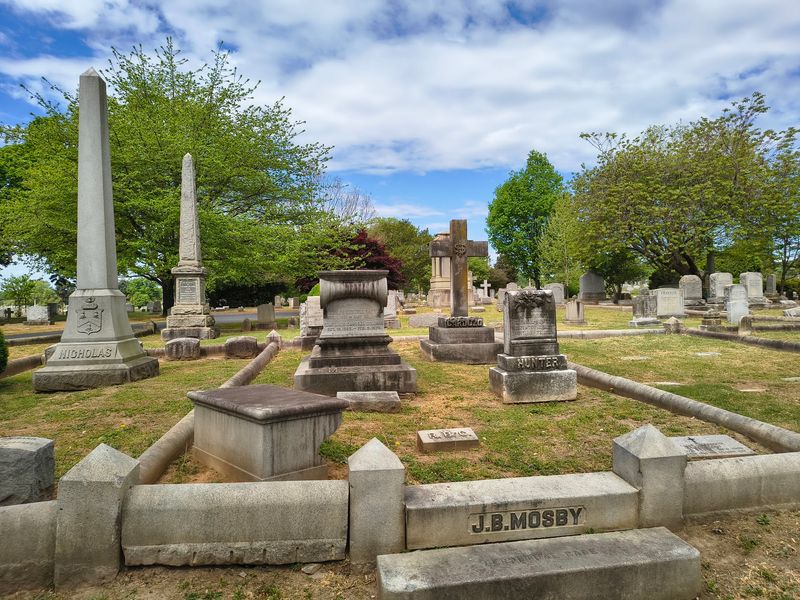
Calling this merely a cemetery misses half the story.
Hollywood Cemetery was designed in 1847 as a rural garden cemetery, with winding roads and paths following hills, valleys, enormous trees, and views toward the James River.
The property now covers about 135 acres and functions almost like a historic landscape park with graves woven through it. Two U.S. presidents rest here.
James Monroe’s grave is covered by an elaborate Gothic Revival cast-iron structure known locally as The Birdcage, while John Tyler’s monument stands nearby in Presidents Circle.
History is only part of what makes the walk memorable.
Hollywood is also a registered arboretum containing more than 2,000 trees, including enormous tulip poplars, oaks, bald cypress, and specimens older than the cemetery itself.
The changing canopy gives the grounds a different character from season to season, from fresh spring green to deep autumn color. Long sightlines between monuments also make the scale of the landscape easier to appreciate as you walk.
Entry is free, and public visiting hours currently run daily, extending to 6 p.m. during daylight saving time.
Start at 412 S Cherry St and wear shoes ready for hills. Few places make history, landscape, architecture, and silence work together this well.
6. American Civil War Museum At Historic Tredegar
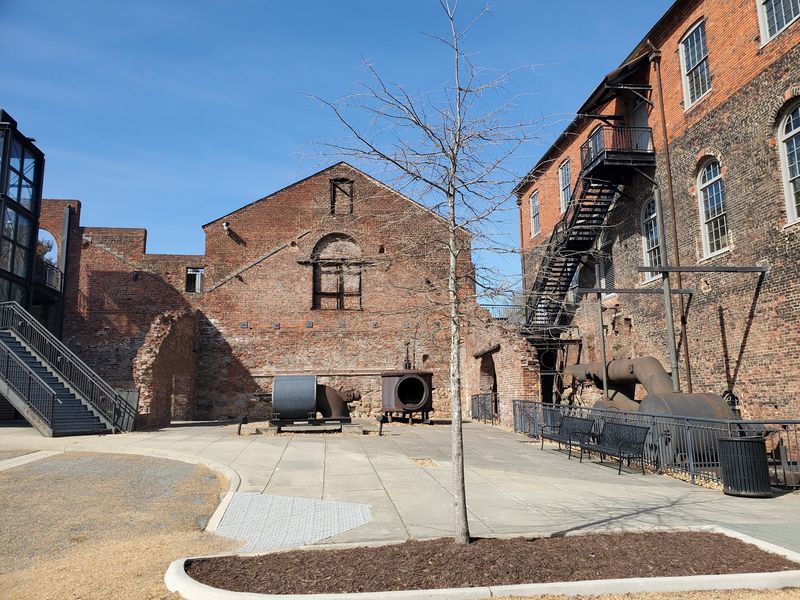
The brick buildings beside the James did not start life as museum galleries.
Tredegar Iron Works began here in 1837, eventually becoming one of the most important industrial sites in the South. Its Civil War role was enormous.
Cannons made at Tredegar fired during the opening attack on Fort Sumter, and the armor plating used on the Confederate ironclad CSS Virginia was rolled here.
Today, the American Civil War Museum uses the site to examine the conflict from its causes through Reconstruction and beyond.
Two floors of exhibits deal with soldiers, civilians, slavery, emancipation, politics, industry, and the enormous consequences of the war rather than reducing the story to battlefield maps.
The location adds something a purpose-built museum could never manufacture. When you leave the galleries, the old industrial landscape and James River are still outside.
Tredegar history tours and musket-firing demonstrations are currently included with museum admission, and the site is open daily from 10 a.m. to 5 p.m. Find it at 480 Tredegar St.
7. Belle Isle
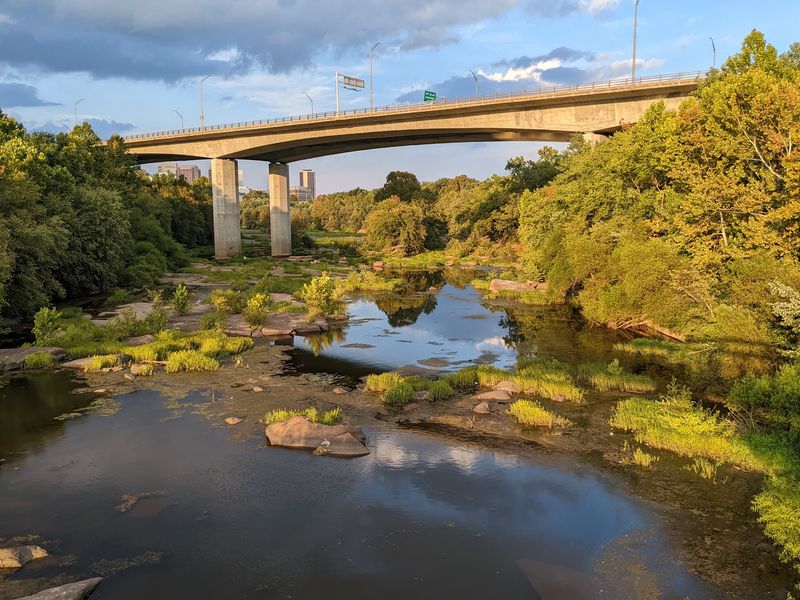
ou do not expect an island hike in the middle of a state capital. That is exactly why Belle Isle works.
A pedestrian bridge from the downtown side carries walkers and cyclists over the James to this 54-acre island, where pavement quickly gives way to wooded paths, old industrial remains, rocky river edges, and skyline views.
The island has worn a ridiculous number of identities over the centuries. Its history includes Indigenous use, industry, a Civil War prison camp, and later manufacturing. Today it belongs to the James River Park System.
Trails loop through the trees, mountain-bike routes cut across the interior, a quarry pond offers accessible fishing, and a granite wall attracts climbers. A new Nature Exploration Area also opened on Belle Isle in May 2026.
Those big river rocks look tempting on warm days, but the nearby Hollywood Rapids are powerful. Official visitor information specifically warns that the rapids are not suitable for swimming.
The park is open from sunrise to sunset. Use the pedestrian bridge from the Tredegar Street riverfront and suddenly downtown feels much farther away than it actually is.
8. Agecroft Hall & Gardens
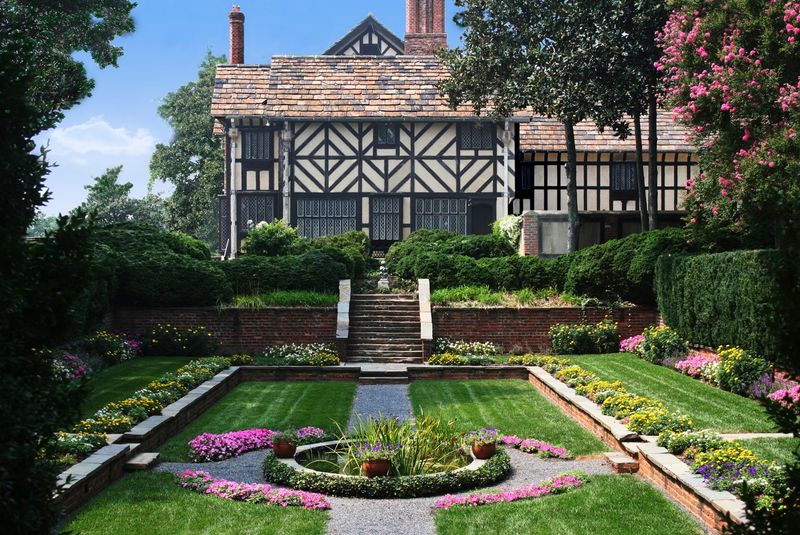
Someone once looked at a centuries-old English manor and decided moving it across an ocean sounded reasonable. Somehow, it worked.
Agecroft Hall began in Lancashire, England, with surviving sections dating largely to the late fifteenth and sixteenth centuries.
By the 1920s, the old manor was deteriorating. Richmond businessman T.C. Williams Jr. and his wife Elizabeth bought it in 1925, dismantled its most significant sections, packed them up, and shipped them across the Atlantic.
Reconstruction began overlooking the James in 1926. Architect Henry G. Morse did not simply rebuild the old quadrangle.
The Richmond version became roughly one-third the original size, combining genuine historic materials with a steel frame and conveniences expected in an American country house of the 1920s.
The surrounding 23-acre estate includes terraces, woodland paths, and a sunken garden developed with noted landscape architect Charles Gillette.
Agecroft is celebrating its Virginia centennial in 2026, exactly a century after reconstruction began. Current visiting hours are Tuesday through Sunday from noon to 5 p.m., with timed self-guided house entry.
This transplanted piece of England is at 4305 Sulgrave Rd.
9. Science Museum Of Virginia
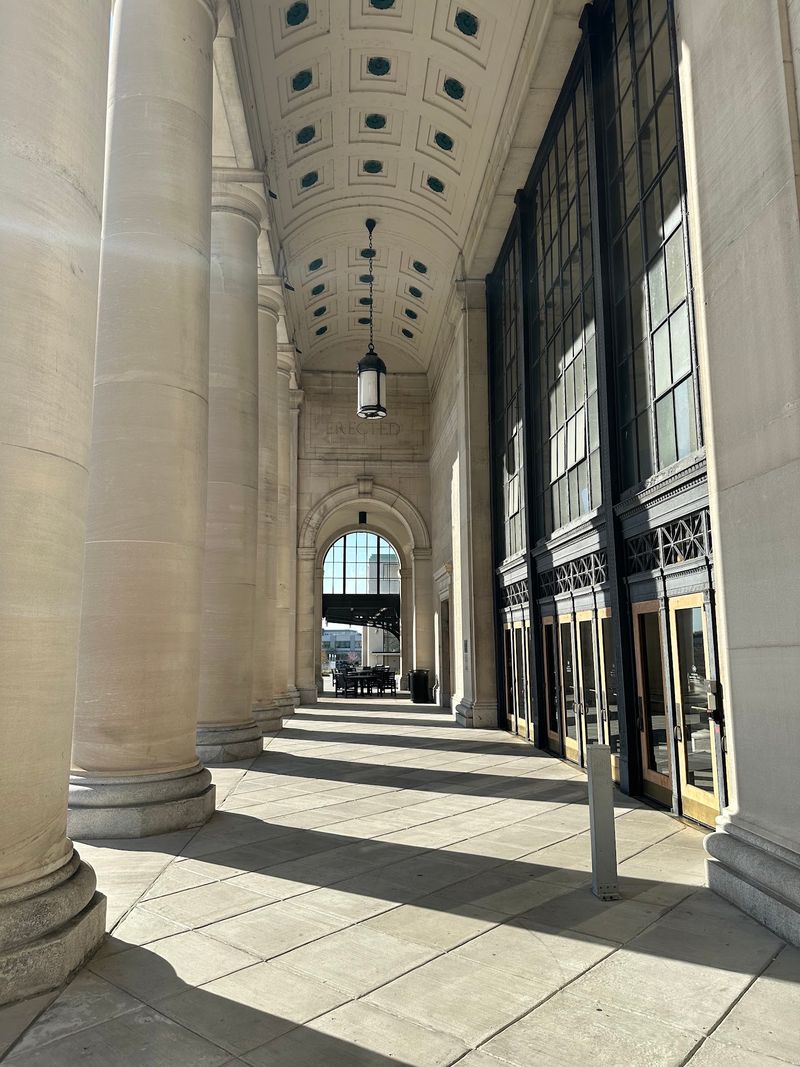
The first surprise comes before you see a single experiment. This building used to be a train station.
Broad Street Station opened in 1919, designed by architect John Russell Pope, whose later work included Washington landmarks such as the National Gallery of Art and Jefferson Memorial.
Passenger trains used the station until 1975. Two years later, the Science Museum of Virginia began turning the enormous neoclassical building into something completely different.
The transformation worked beautifully.
A SR-71 Blackbird hangs overhead, a 29-ton granite globe sits outside, makerspaces encourage hands-on building, and The Dome uses a screen covering nearly a quarter acre.
Live demonstrations change through the day, so this is not the kind of museum where every visitor follows exactly the same route.
As of October 2026, regular hours are Tuesday through Sunday from 9:30 a.m. to 5 p.m.
Pull up to 2500 W Broad St and look at the building before going inside. The old railroad station is part of the exhibit whether anyone labels it that way or not.
10. Virginia Museum Of History & Culture
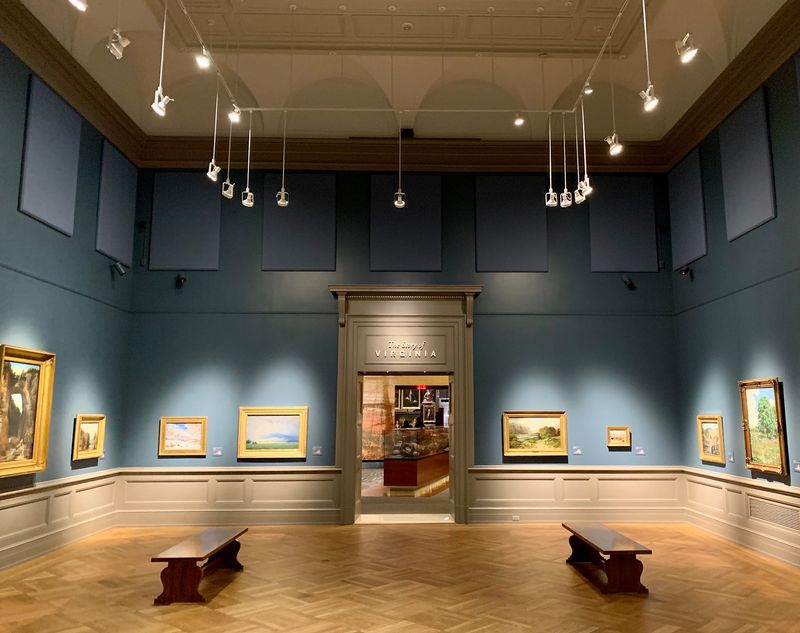
Saving this one for last makes sense because it tries to explain an entire state.
The organization behind the Virginia Museum of History & Culture began in 1831 as the Virginia Historical Society, making it the oldest museum and cultural organization in Virginia.
Its collection has grown to more than nine million items.
That means almost anything can turn up in the galleries: political documents, paintings, photographs, personal belongings, furniture, civil-rights artifacts, maps, manuscripts, and objects tied to everyday life.
One collection highlight is the Richmond Woolworth lunch counter associated with the 1960 sit-in movement. Other holdings include a George Washington diary and the writing desk of poet and activist Anne Spencer.
The museum does not tell Virginia history as one neat, comfortable storyline. Its newer exhibitions deliberately bring together different regions, communities, eras, and experiences.
That makes it especially useful near the end of a Richmond visit. Places you saw earlier suddenly connect to a much larger picture. Current galleries at 428 N Arthur Ashe Blvd are open daily from 10 a.m. to 5 p.m.
You probably will not make all ten stops in one day, which may be the best recommendation Richmond could possibly get.