11 California Beach Towns That Feel Far Too Crowded Once Summer Arrives
Everyone dreams about the perfect beach town until everyone else has the same idea.
Sunny weekends bring a familiar transformation. Parking spaces disappear before lunch, sidewalks fill with flip-flops and ice cream cones, and a quick stop for fish tacos turns into a forty-minute wait.
The ocean has not changed – only the number of people trying to enjoy it at the same time.
Summer has a remarkable talent for squeezing half of California toward the coastline.
That popularity is easy to understand. Beautiful beaches, waterfront restaurants, and postcard-worthy sunsets have been drawing visitors for decades.
The downside arrives with the traffic, crowded shorelines, long lines, and the constant search for somewhere – anywhere – to leave the car.
Have you ever spent more time hunting for parking than actually sitting on the sand? If so, at least you know you’re not alone.
These beach towns remain well worth visiting, but timing can make all the difference between a relaxing coastal escape and a day spent sharing every square foot of shoreline.
1. Laguna Beach
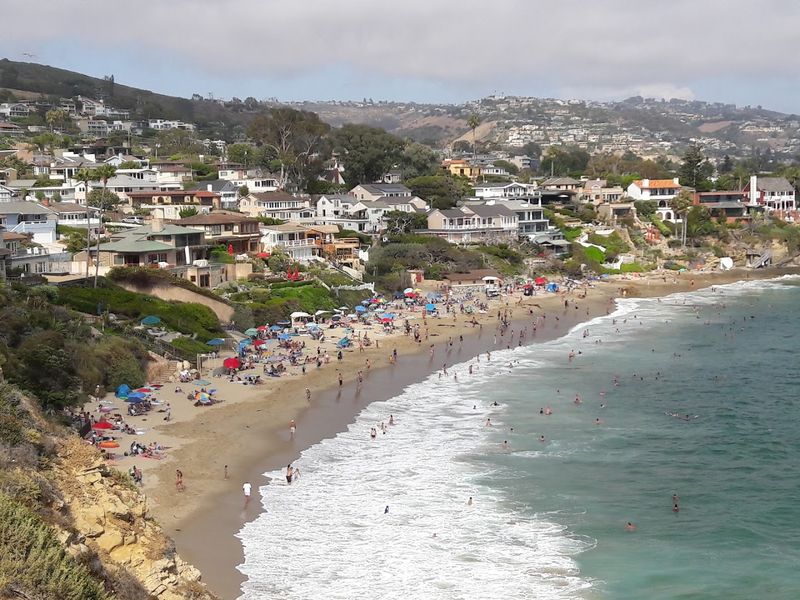
Few places along the Southern California coast carry as much visual drama as Laguna Beach, where rugged cliffs drop down to small coves and the water shifts between deep blue and clear green.
That scenery is precisely why summer crowds descend on it so reliably each year.
Main Beach, the most central and accessible stretch of sand, fills up with families, sunbathers, and photographers well before noon on most summer days.
The downtown area along Pacific Coast Highway becomes a slow-moving stream of pedestrians browsing art galleries, boutiques, and casual eateries.
Parking enforcement runs from 8:00 AM to 9:00 PM in some areas, and remote lots like the Act V lot on Laguna Canyon Road tend to fill faster than expected. Arriving by 9:00 AM on weekends could save considerable frustration.
Tide pool areas at places like Heisler Park attract curious visitors of all ages, but the pools tend to feel less serene when dozens of people are exploring them at once.
The walkability of the downtown core is genuinely excellent, though navigating through summer foot traffic slows things down considerably.
Visiting on a Tuesday or Wednesday morning tends to offer a noticeably calmer version of this otherwise stunning coastal town.
2. Santa Monica
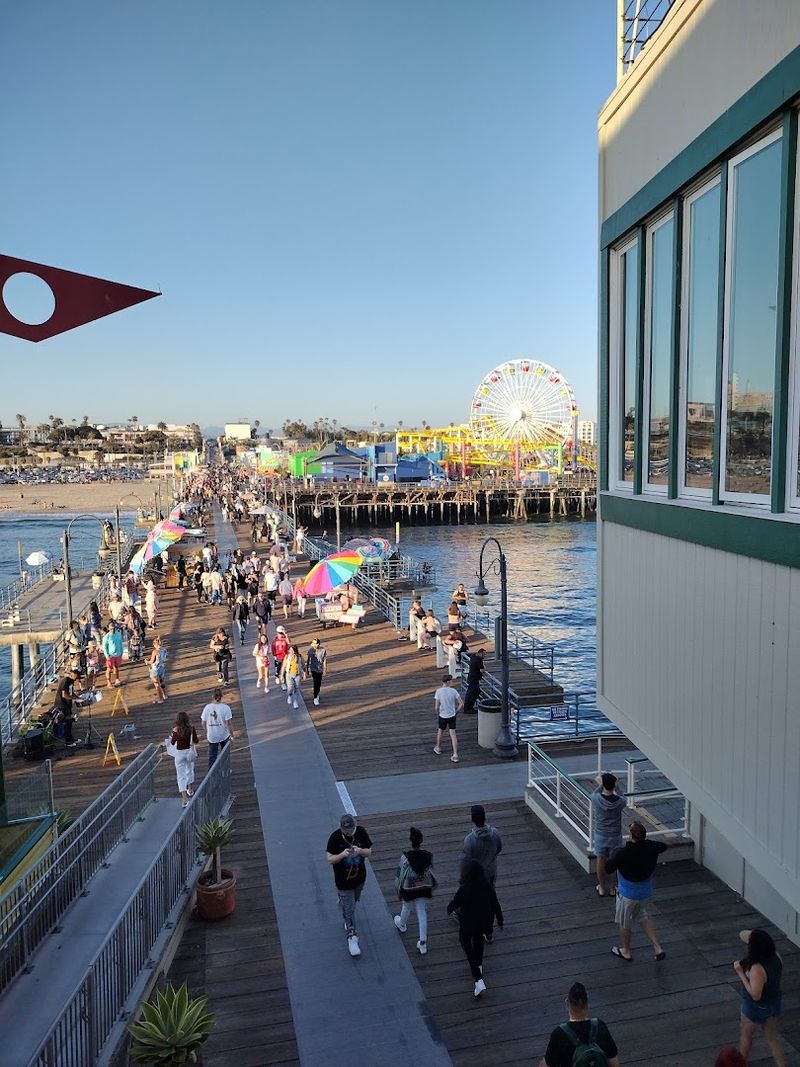
Standing at the end of the Santa Monica Pier on a July afternoon, the energy is almost impossible to ignore.
Amusement rides spin overhead, street performers compete for attention, and the wide sandy beach stretching in both directions is blanketed with umbrellas, towels, and people.
Santa Monica has long been one of the most visited coastal destinations in the entire state, and summer confirms exactly why that reputation holds.
The Third Street Promenade, just a short walk from the beach, draws its own steady stream of shoppers and diners throughout the day and well into the evening.
Beach parking lots along Appian Way fill up by mid-morning on weekends, and traffic on Lincoln Boulevard and Ocean Avenue tends to back up significantly.
Public transit options, including the Metro Expo Line, can make reaching the beach considerably easier than driving.
Despite the crowds, the sheer scale of Santa Monica’s beach means there tends to be more breathing room here than in smaller cove-style towns.
Walking north toward Will Rogers State Beach or south toward Venice can also help spread things out.
Still, anyone expecting a quiet seaside afternoon during peak summer months will likely need to reset their expectations before stepping out of the car.
3. Malibu
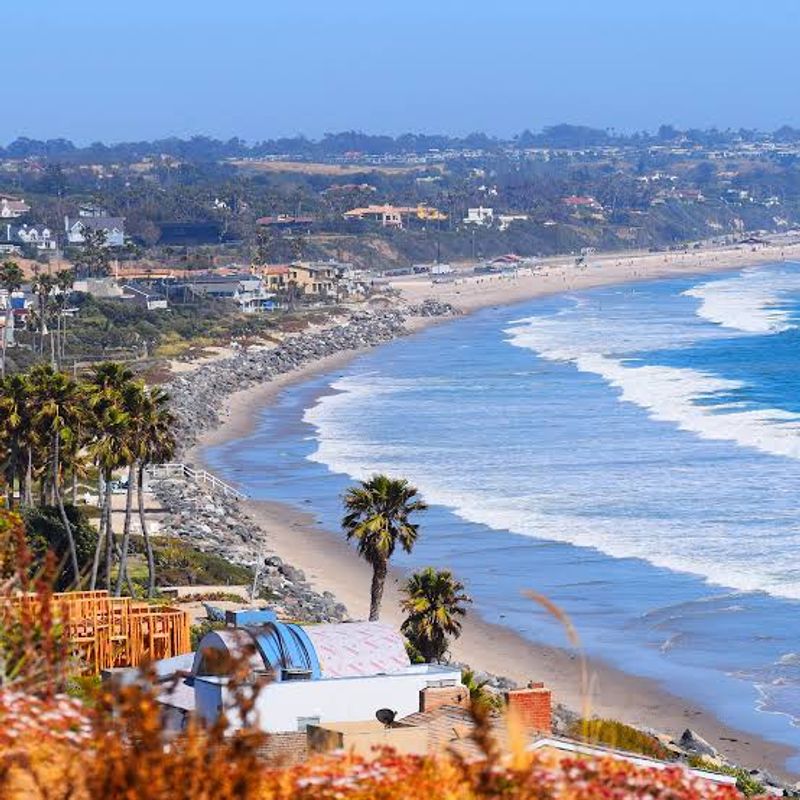
Malibu carries a reputation for exclusivity, and while much of its coastline is indeed privately held, the public beach access points that do exist tend to attract considerable summer crowds.
Surfrider Beach, situated near the Malibu Pier, is one of the most famous surf breaks in California and draws both experienced surfers and curious onlookers throughout the warmer months.
On a busy Saturday, the small parking areas near the pier fill up early.
The stretch of Pacific Coast Highway running through Malibu serves as both a scenic route and a source of significant summer congestion.
Traffic can slow to a crawl between Point Dume and the pier area, especially on weekend afternoons when beachgoers are heading home.
Zuma Beach, one of the larger public beaches in the area, offers more parking than most Malibu spots but still reaches capacity on hot summer days.
State beaches and parks along this corridor, including Leo Carrillo State Park, provide hiking trails and tidepools in addition to sandy beach access.
Those areas tend to attract a slightly different crowd than the surf-focused spots closer to the pier.
Arriving before 9:00 AM on weekends remains one of the most reliable ways to secure parking and find a comfortable amount of space on the sand.
4. Huntington Beach
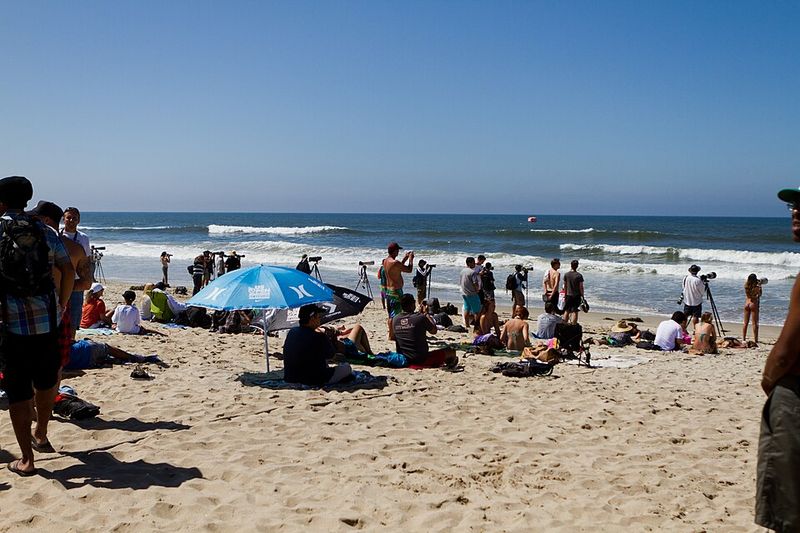
The title of Surf City USA comes with a lot of energy attached to it, and Huntington Beach delivers on that promise every single summer.
The Huntington Beach Pier stretches nearly 2,000 feet into the ocean and serves as the social and visual center of the beach scene here.
Surfers line up in the water on both sides of the pier while the boardwalk above them fills with walkers, cyclists, and people simply taking in the view.
Summer events like the US Open of Surfing regularly draw tens of thousands of additional visitors to an area that already sees high traffic.
Parking lots along Pacific Coast Highway fill quickly, and the surrounding residential streets become competitive for spots well into the afternoon.
The beach itself is wide and long enough to absorb large numbers of people, but the areas closest to the pier and lifeguard towers tend to feel particularly packed.
Beyond the immediate pier area, the stretch of beach running south toward Bolsa Chica State Beach sometimes offers a slightly less intense crowd experience.
The overall atmosphere here is upbeat and social, with a constant soundtrack of waves, music, and conversation.
Families with children tend to find the flat, calm sections of water near the pier ideal for swimming, which keeps those spots consistently busy throughout the summer season.
5. Newport Beach
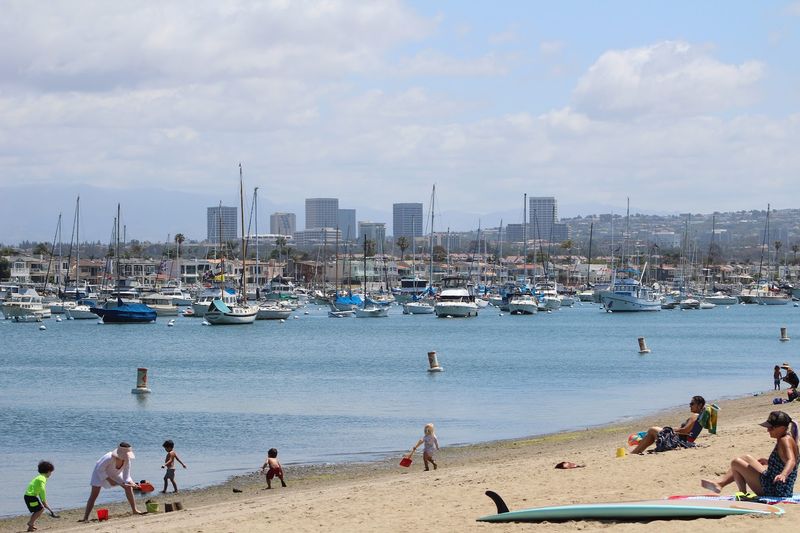
Newport Beach operates on a different social frequency than many of its Southern California neighbors, blending an upscale harbor atmosphere with a lively beach scene that peaks sharply in July and August.
The Balboa Peninsula, a narrow strip of land separating the Pacific Ocean from Newport Harbor, becomes one of the most densely visited stretches of coastline in the region during summer.
Both the Newport Pier and the Balboa Pier draw steady crowds for fishing, strolling, and watching the surf.
Getting around during peak season requires patience, particularly when it comes to parking.
The Balboa Pier Parking Lot operates around the clock and charges rates that vary seasonally, typically ranging between roughly $1.90 and $2.80 per hour with a daily cap.
Residential streets on the peninsula can offer some free parking, but checking signage for time restrictions is essential before leaving the car.
Major holidays like the Fourth of July tend to bring an especially large surge of visitors to this area, and the energy can feel overwhelming even for those who enjoy a lively beach atmosphere.
The harbor side of the peninsula, with its rental boats and waterfront dining, offers a slightly calmer alternative to the ocean-facing beach.
Still, summer in Newport Beach is unmistakably a high-energy, high-volume experience.
6. Pismo Beach
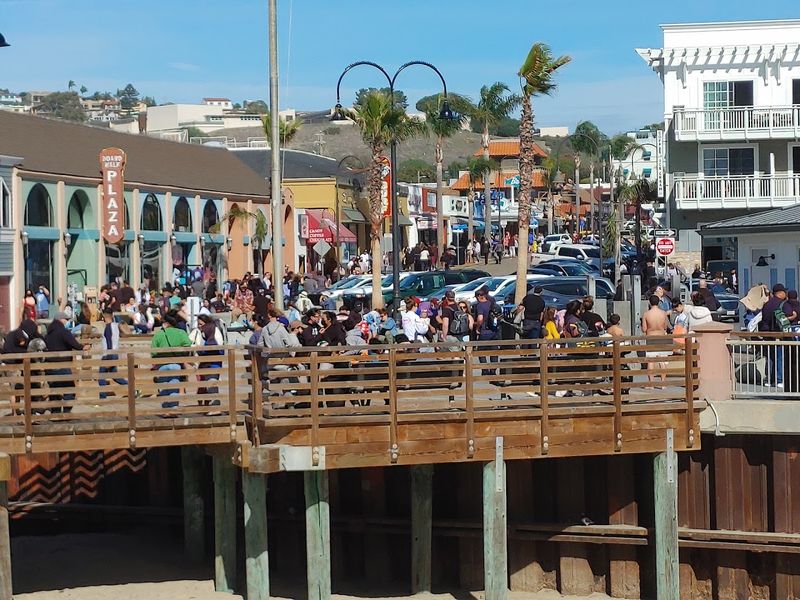
Holding a special place in Central Coast travel culture, offering a classic, unhurried beach town experience that draws visitors from across the state is Pismo Beach.
The Pismo Beach Pier anchors the downtown beach area and serves as a popular gathering point for families, anglers, and people who simply enjoy watching the ocean from a safe distance above the waves.
Summer brings a noticeable shift in pace as the surrounding streets and parking lots fill steadily throughout the day.
Paid parking in the core downtown area is enforced between 10:00 AM and 6:00 PM daily, including weekends and holidays.
The main paid lot at the base of the pier, situated between Pomeroy and Hinds Avenues, charges between $3 and $5 per hour depending on the day.
Free street parking exists on nearby streets like Pomeroy, Hinds, and Price, but those spots tend to disappear quickly on warm summer mornings.
The wide beach running along the downtown area is popular for walking, building sandcastles, and watching the waves roll in.
Pismo also sits within driving distance of the Oceano Dunes, which adds an extra layer of summer traffic to the broader area.
Arriving before 10:00 AM on weekdays tends to offer the most relaxed version of this town, with manageable crowds and easier access to parking near the waterfront.
7. Monterey
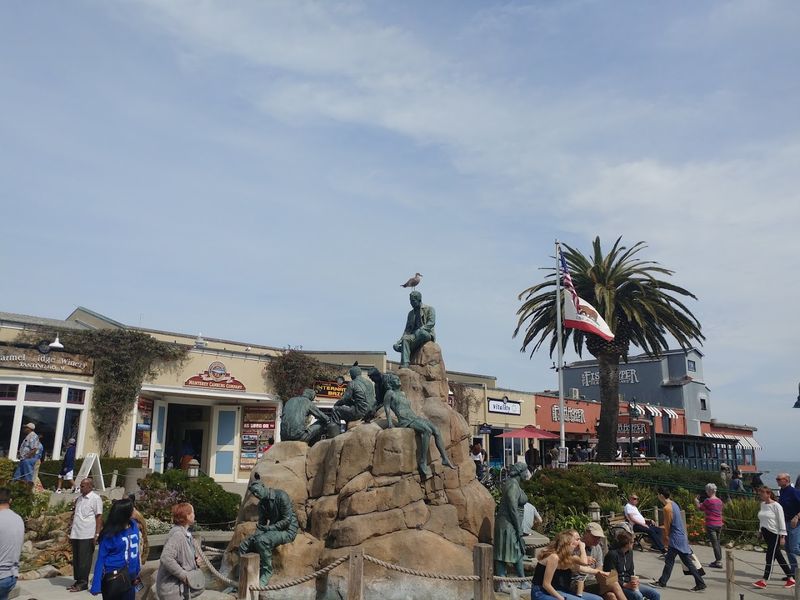
Cannery Row in Monterey carries the weight of literary history and natural wonder in equal measure, drawing visitors who come for the world-famous aquarium, the waterfront restaurants, and the marine life.
Summer pushes the volume on all of that activity considerably higher, turning the stretch of Cannery Row into a slow-moving pedestrian thoroughfare where shoulder-to-shoulder foot traffic becomes the norm.
The Monterey Bay Aquarium is one of the most visited aquariums in the United States, and summer is among its peak periods.
Purchasing tickets in advance online is strongly recommended, as walk-in availability can be limited on busy days.
Fisherman’s Wharf, a short walk from Cannery Row, adds another layer of summer congestion with its seafood vendors, harbor cruise operators, and sea lion sightings that reliably draw crowds to the railings.
Parking garages and surface lots near the waterfront do exist, but they fill quickly and rates tend to be higher during summer.
The Monterey Transit Plaza and regional bus services offer alternatives for those staying in nearby areas.
Walking is genuinely the best way to experience Cannery Row and the wharf, though the density of people on busy summer afternoons can make even a short stroll feel slow.
8. Santa Cruz
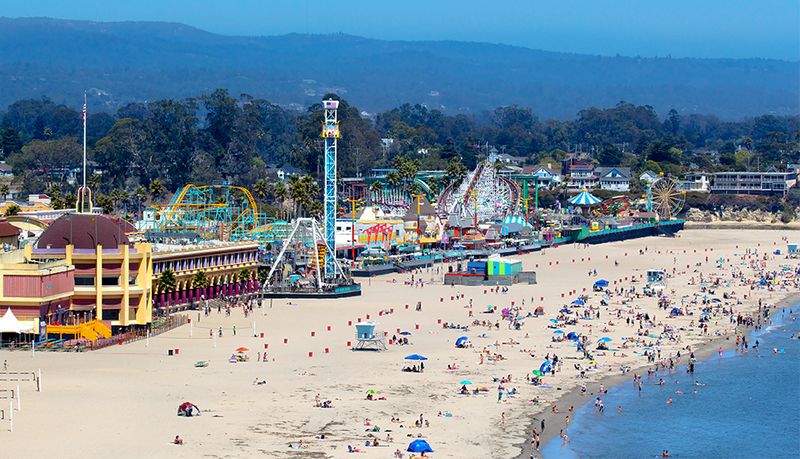
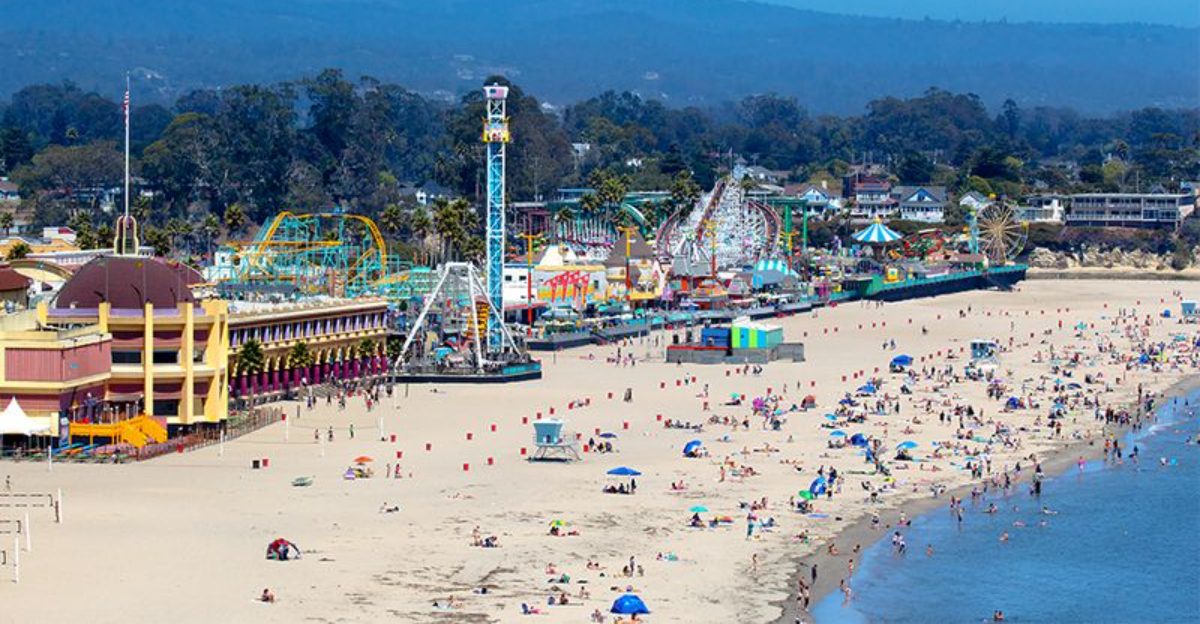
The Santa Cruz Beach Boardwalk has been drawing visitors since 1907.
Its combination of classic amusement rides, seaside games, and a wide sandy beach continues to make it one of the most beloved summer destinations in Northern California.
On a hot July weekend, the boardwalk and the adjacent beach can feel genuinely overwhelming, with the sounds of roller coasters, crashing waves, and excited families blending into a constant wall of summer noise.
Parking lots directly adjacent to the boardwalk fill up by late morning on busy days, and traffic along Beach Street and surrounding roads backs up considerably.
The city does offer some public transit options, and cycling into the beach area from nearby neighborhoods can be a practical alternative during peak season.
Surfers tend to favor spots like Steamer Lane near the lighthouse, which draws its own crowd of wave-watchers and photography enthusiasts throughout the summer.
Natural Bridges State Beach, located on the west side of Santa Cruz, offers a slightly different experience with its tidepools and seasonal monarch butterfly habitat, though it also sees increased summer visitation.
The overall character of Santa Cruz is bohemian and energetic, which suits the summer crowds well in terms of atmosphere, even if it means finding personal space on the sand requires some effort and patience.
9. Capitola
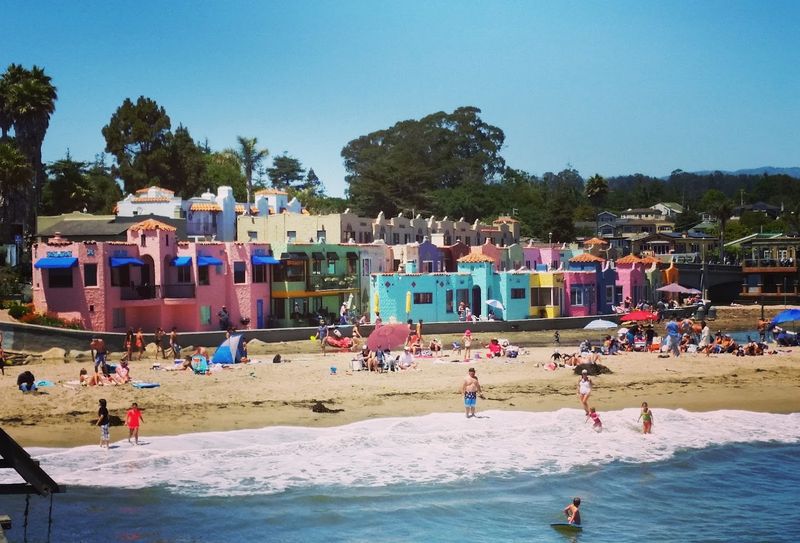
Capitola Village is one of those places that looks almost too charming to be real, with its row of brightly painted Venetian Court buildings sitting directly on the sand and a small beach curving around a calm inlet.
That postcard-worthy quality is also what makes it one of the most photographed and visited small beach communities on the Monterey Bay, particularly in summer when the colors pop against the blue water.
The village itself covers a very compact area, which means that even a moderate increase in visitors creates an immediate sense of fullness.
Parking in the village lots fills rapidly on summer weekends, often by mid-morning.
Many visitors end up parking several blocks away in surrounding neighborhoods and walking down to the beach, which is manageable but worth planning for in advance.
The Esplanade running along the water offers a pleasant walking route past shops and casual dining spots, though navigating it on a busy Saturday afternoon requires patience.
Capitola Beach is a popular spot for families with young children because the water tends to be calmer than open ocean beaches.
Arriving on a weekday, particularly in the morning hours, offers a noticeably more relaxed version of the village, with better parking access and a quieter atmosphere along the waterfront.
10. Avila Beach
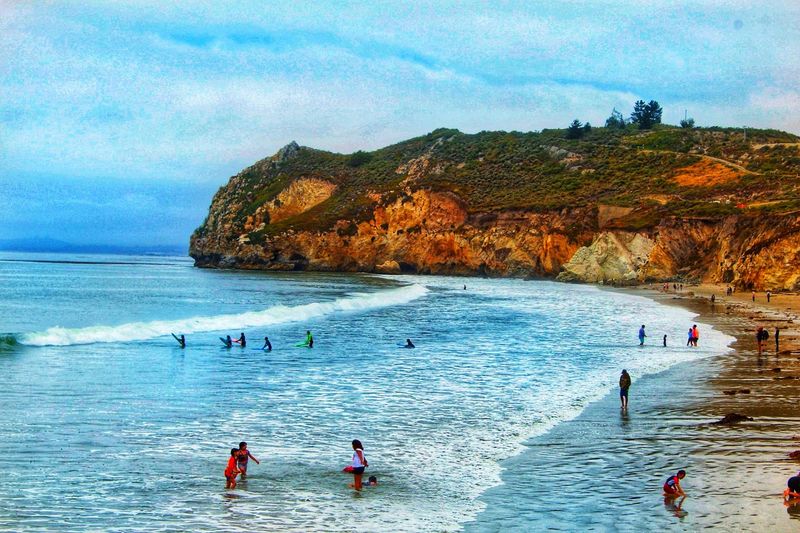
At a south-facing cove that shields it from much of the Central Coast fog, Avila Beach enjoys warmer and sunnier conditions than many of its neighbors, which makes it a consistently popular warm-weather destination.
That reliable sunshine draws visitors who might otherwise avoid foggier coastal towns, and the result is a summer crowd that can feel surprisingly large for a town of its modest size.
The promenade running along the beach becomes a lively corridor of activity on warm weekends.
The Avila Beach Pier extends from the promenade out over the water and is open for strolling and recreational fishing.
Nearby, the Harford Pier at Port San Luis offers a different kind of waterfront experience, with fishing boats and a working harbor atmosphere that feels distinct from the main beach area.
Olde Port Beach, situated near the Harford Pier, tends to attract fewer visitors than the main Avila Beach and offers free parking alongside calmer water conditions.
Midweek visits tend to offer a noticeably more relaxed experience, with easier parking and more room on the sand.
The water in the cove is often calmer than beaches exposed to open ocean swells, making it appealing for families with young children.
Summer weekends, however, can bring traffic backups on San Luis Bay Drive and limited parking availability throughout the immediate beach area.
11. Oceanside
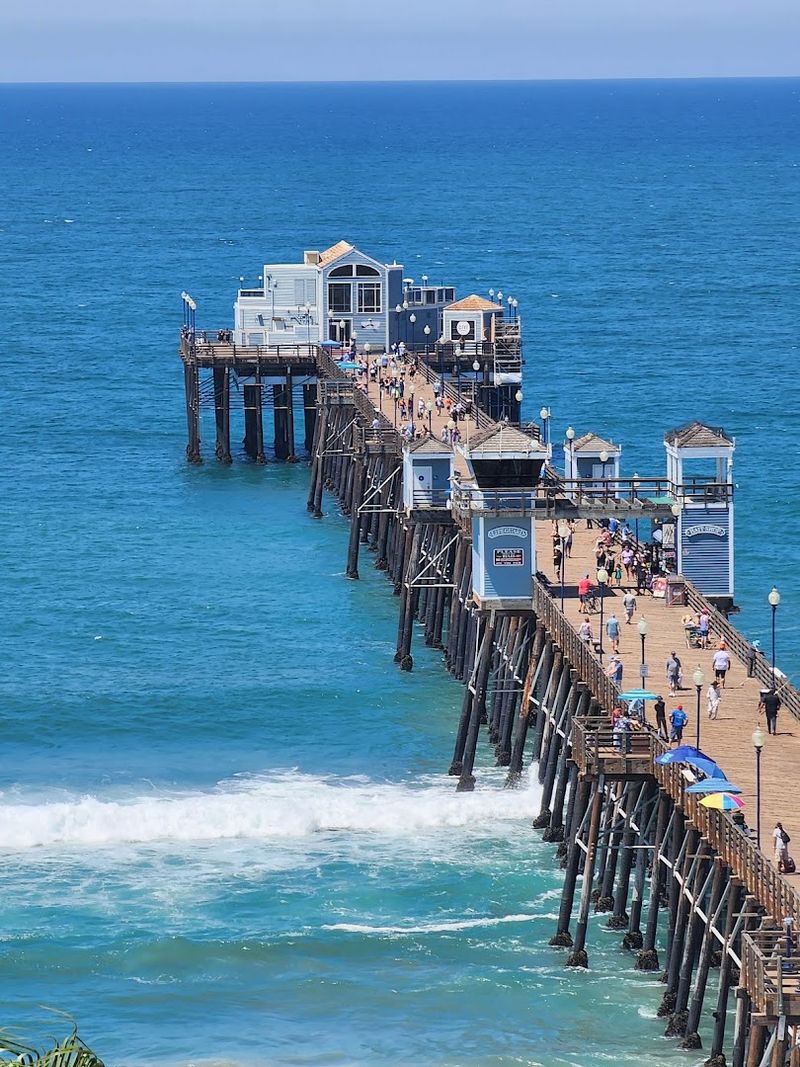
Stretching over 1,900 feet into the Pacific, the Oceanside Pier is one of the longest wooden piers on the West Coast and serves as the centerpiece of a beach scene that draws a steady stream of visitors throughout the year.
Surfers work the breaks on both sides of the pier while beachgoers spread across the wide sandy beach below, creating a layered, energetic atmosphere that defines the Oceanside summer experience.
The Oceanside Harbor Village, located a short drive north of the main pier, adds another layer of summer activity with its shops, boat rentals, and waterfront dining options.
Parking lots near the pier and harbor fill up on warm weekend days, and early arrival is consistently the most reliable strategy for securing a convenient spot.
The beach area nearest the pier tends to attract the densest crowds, while heading further south along the strand can offer marginally more breathing room.
The city has a genuine surf-town character that feels authentic rather than manufactured, which is part of what draws repeat visitors year after year.
Summer events and local competitions occasionally add to the seasonal crowd volume.
Families, surfers, and day-trippers from the broader San Diego region all contribute to the summer energy here, making Oceanside one of North County San Diego’s busiest coastal destinations.