10 California Beaches Where The Coastline Still Feels Quiet And Untamed
Most people think they know California’s coast. They don’t.
They know Highway 1 postcards and parking lots full of tourists fighting over the same stretch of sand. But the state has nearly 840 miles of shoreline, and somehow managed to keep some of it completely to itself.
I’ve driven past unmarked turnoffs, hiked trails that aren’t on Google Maps, and stood on beaches where the only footprints were mine. Some coastline here still holds secrets worth chasing.
If you thought the state’s wild shores were gone, buried under beach bars and surf schools, keep reading.
1. Hidden Beach, Klamath
Some beaches earn their names honestly. Hidden Beach delivers on every letter of it.
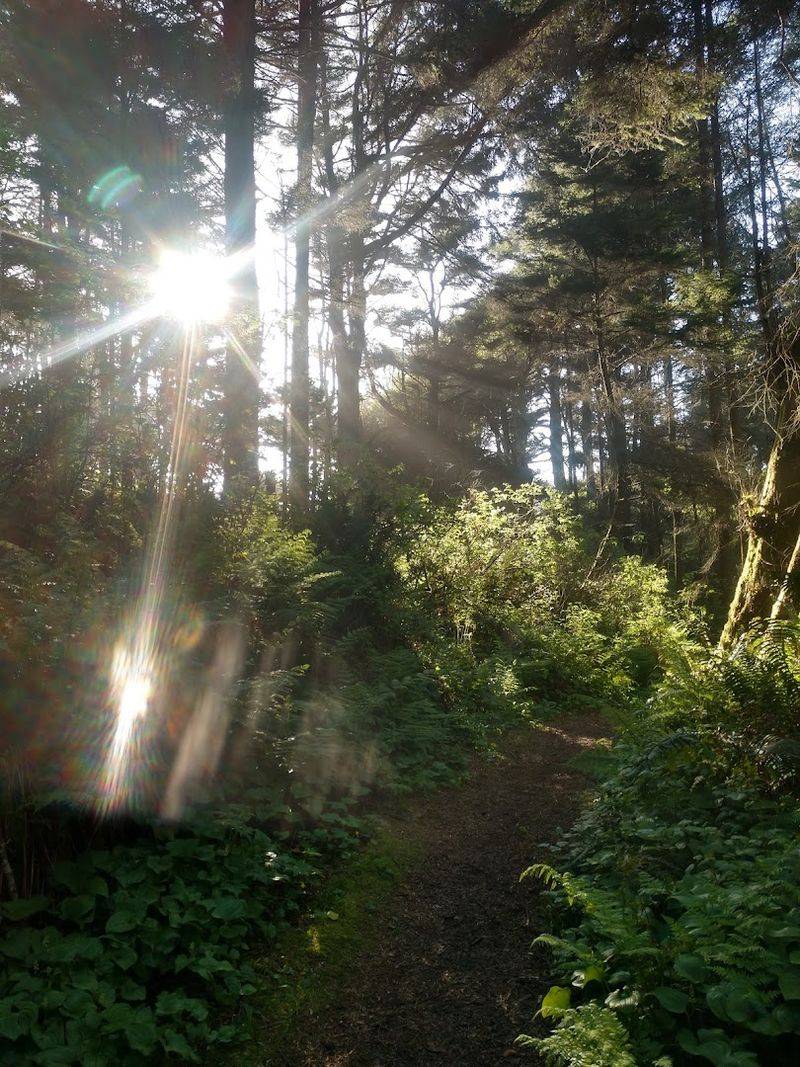
A short trail cuts through dense coastal forest, and the moment the trees finally break, you land on dark sand flanked by enormous sea stacks topped with wind-bent trees. Massive driftwood logs are scattered across the sand like natural furniture.
The whole scene has a raw, almost prehistoric feel. You half expect a pterodactyl to fly overhead.
The beach sits in Del Norte County near the small community of Klamath, deep in one of the most rugged and least-visited corners of the coast. Getting here feels like the journey is part of the reward.
The trail through the forest is easy enough for kids, but dramatic enough to feel like a real find. The kind of place you stumble onto and immediately want to keep to yourself.
There are no vendors, no lifeguards, no umbrellas for rent. The dark sand makes a striking contrast against the bright white foam of waves crashing hard into the rocks.
Salt and pine mix together in the air in a way that should probably be bottled and sold. Bring layers.
The marine air here bites, and it means it.
2. Bowling Ball Beach, Point Arena
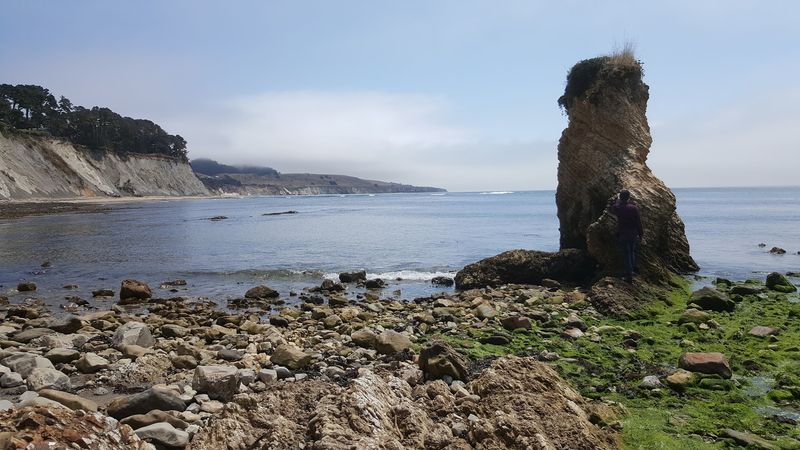
Picture a beach where the rocks look like a giant left a set of bowling balls scattered across the shoreline and never came back for them. That is not a metaphor.
Bowling Ball Beach at Point Arena, California is exactly that, and it is one of the most geologically fascinating stretches of coast in the entire state.
The perfectly spherical boulders are called concretions, formed over millions of years as minerals slowly cemented around a central point in the sedimentary rock. They only appear at low tide, so timing your visit matters.
Check the tide charts before you go or you will show up to a perfectly ordinary-looking beach and wonder what the fuss was about.
Bowling Ball Beach sits within Schooner Gulch State Beach, roughly three miles south of Point Arena along Highway 1. The trail down to the beach is short but steep, and the views from the top of the bluff before you descend are worth stopping for.
The cliffs here are dramatic and layered, like pages of a very old book.
The surrounding area stays quiet even on weekends. Bring a picnic, stay for the tide shift, and watch the boulders slowly emerge from the receding water.
It feels like watching a magic trick happen in slow motion.
3. Pacifica Esplanade Beach, Pacifica
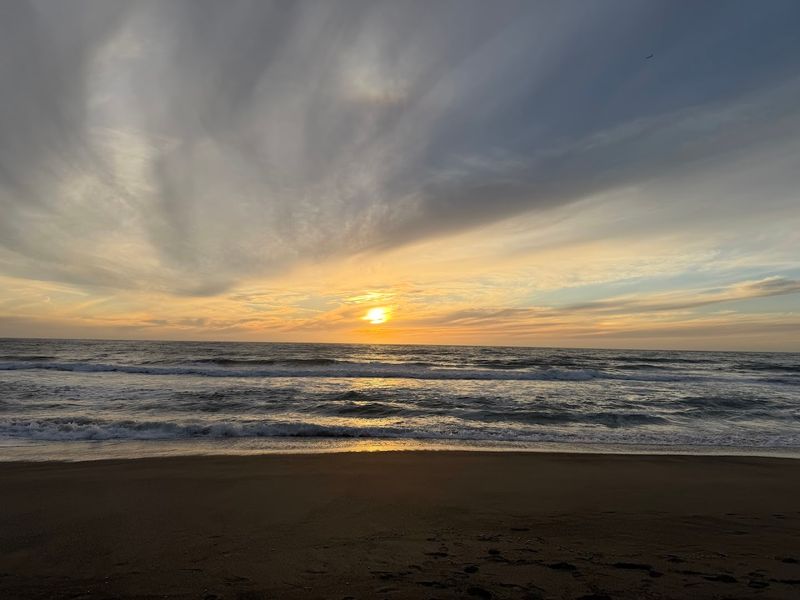
Pacifica gets overlooked because it sits just fifteen minutes south of San Francisco, and people assume anything that close to a major city cannot possibly feel remote. Esplanade Beach proves that assumption wrong in the best possible way.
The beach stretches along the base of eroding bluffs in a neighborhood that feels more working-class surf town than tourist destination. There are no massive parking structures, no souvenir shops, and no lines.
Just a long, wide strip of sand with consistent waves that local surfers have been quietly enjoying for decades.
The bluffs above the beach at Esplanade Avenue have experienced significant erosion over the years, which has actually kept development at bay and left the shoreline feeling genuinely natural.
The raw, crumbling cliffside above the sand gives the beach a rugged character that feels honest rather than manicured.
On foggy mornings, and Pacifica gets plenty of those, the beach feels almost cinematic. The mist rolls in off the water, surfers paddle out through the grey, and the whole scene has a moody, quiet energy that you rarely find this close to a major metropolitan area.
Esplanade Beach sits along Esplanade Avenue in Pacifica, and street parking is free and easy to find most days.
4. Marshall’s Beach, San Francisco
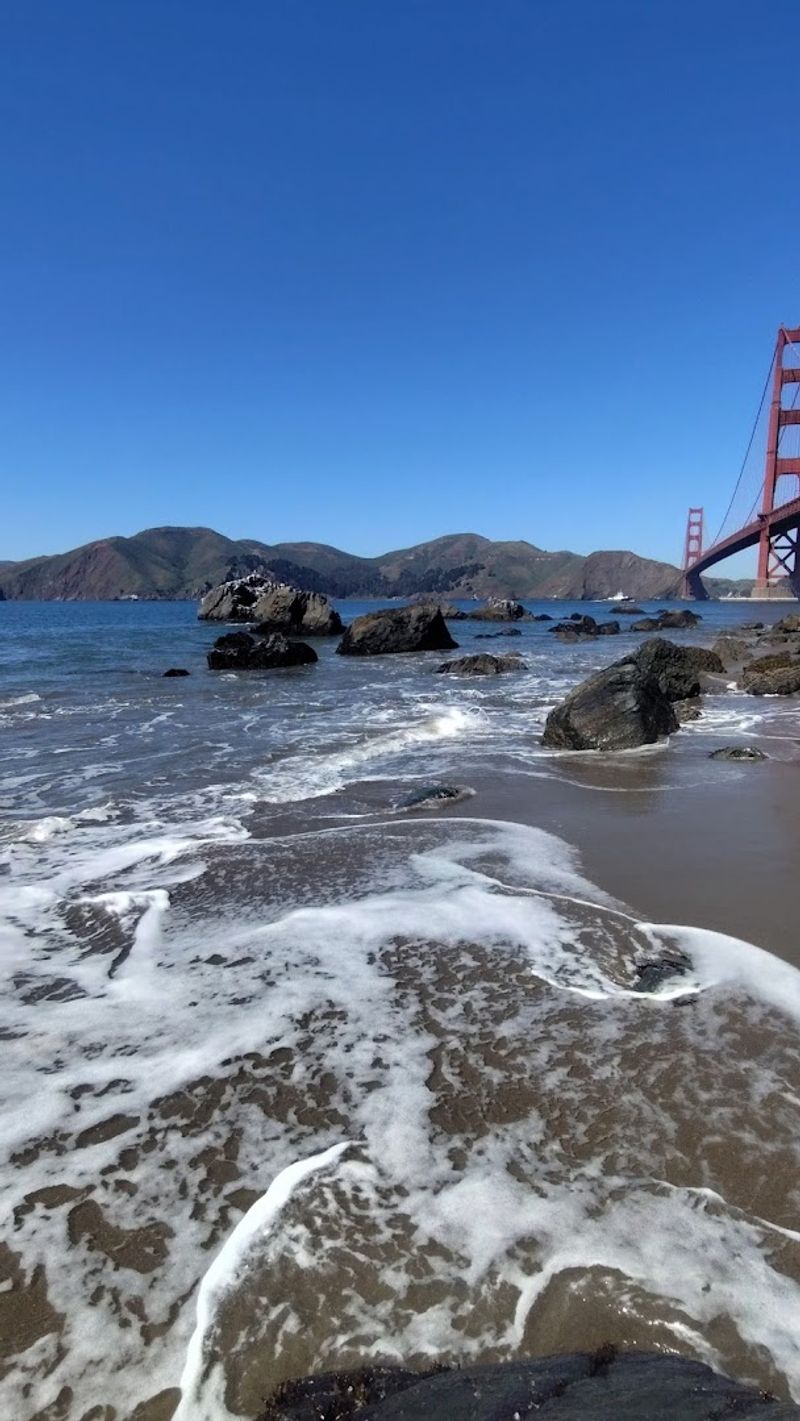
Most people who visit the Golden Gate Bridge see it from above.
Marshall’s Beach offers the version that makes your jaw drop because you are standing directly underneath it, looking up at one of the most iconic structures in the world from a wild, rocky shoreline that feels nothing like San Francisco.
Getting there requires a hike down a steep, unpaved trail from the Batteries to Bluffs trailhead in the Presidio. The path winds through coastal scrub and then drops down to a narrow, rocky beach where the views of the bridge are genuinely stunning.
The effort filters out anyone who is not serious about the experience.
Marshall’s Beach sits along the northern waterfront of the Presidio, technically within San Francisco city limits, which makes the wildness of it feel almost surreal. The shoreline is rocky rather than sandy, and the waves can be powerful, so you stay back from the water’s edge.
This is a beach for looking, breathing, and feeling small in the best way.
The light here in the late afternoon turns golden and warm, and the bridge catches it perfectly. Bring a camera, wear sturdy shoes for the trail, and give yourself more time than you think you need.
Very few spots in California offer this combination of accessibility and raw coastal drama.
5. Perles Beach, Angel Island
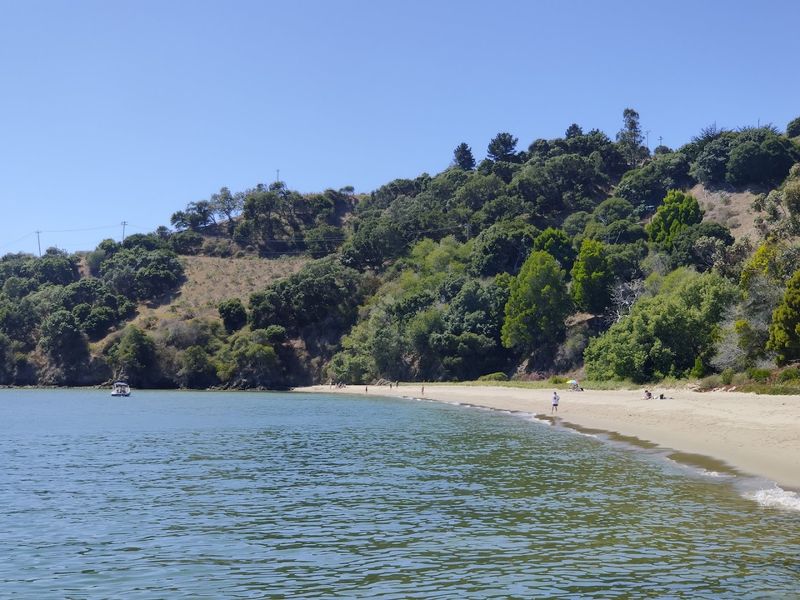
Angel Island sits right in the middle of San Francisco Bay, and most visitors who take the ferry over spend their time at the immigration station or biking the perimeter road. Perles Beach, tucked on the western side of Angel Island, tends to get skipped entirely.
That is a genuine mistake worth correcting.
The beach is small, sandy, and faces east toward the East Bay hills. On a clear day the views across the water are wide and peaceful, with the kind of quiet that feels earned because you had to take a ferry to get here.
No cars, no highway noise, just the lapping of bay water and the occasional ferry horn in the distance.
Angel Island State Park is accessible by ferry from Tiburon or San Francisco’s Pier 41. Once on the island, Perles Beach is reachable by trail or by the tram that circles the island.
The beach itself is not large, but it rarely gets crowded because most visitors do not know to look for it.
The water in the bay here is cold and the currents can be strong, so swimming is not the main attraction. But sitting on that sand with a view of the bay stretched out in every direction, surrounded by eucalyptus and coastal scrub, feels like discovering a quiet room in a very loud house.
Angel Island rewards the curious.
6. Stump Beach, Salt Point State Park
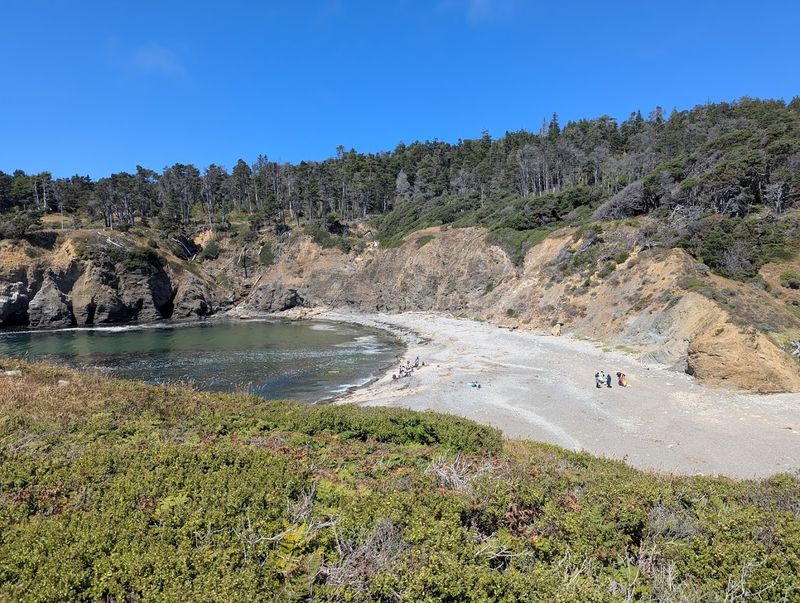
Salt Point State Park already sits near the top of the most underrated stretches of the Sonoma Coast, but Stump Beach inside the park takes the prize for the most unexpectedly calm and beautiful spot in the whole area.
The beach sits at the end of a short trail and opens into a sheltered cove with water that turns a striking shade of blue-green on clear days. Compared to the exposed, wave-battered rocks elsewhere in the park, Stump Beach feels almost gentle.
Almost. The coast never fully lets you forget it is in charge.
The name comes from the old-growth stumps visible along the shoreline, remnants of logging activity from the 1800s. The area around Salt Point has a long history of resource extraction, but the park has reclaimed that wildness beautifully.
Abalone divers have been coming here for generations, and the rocky reef just offshore is still rich with marine life.
The parking area is small and fills up fast on sunny weekends, so arriving early gives you the best experience. The beach sits about 20 miles north of Jenner along Highway 1.
Pack a lunch and sit on the rocks above the cove. The stillness here is the kind that actually quiets your mind rather than just surrounding it with silence.
7. Pelican State Beach, Crescent City
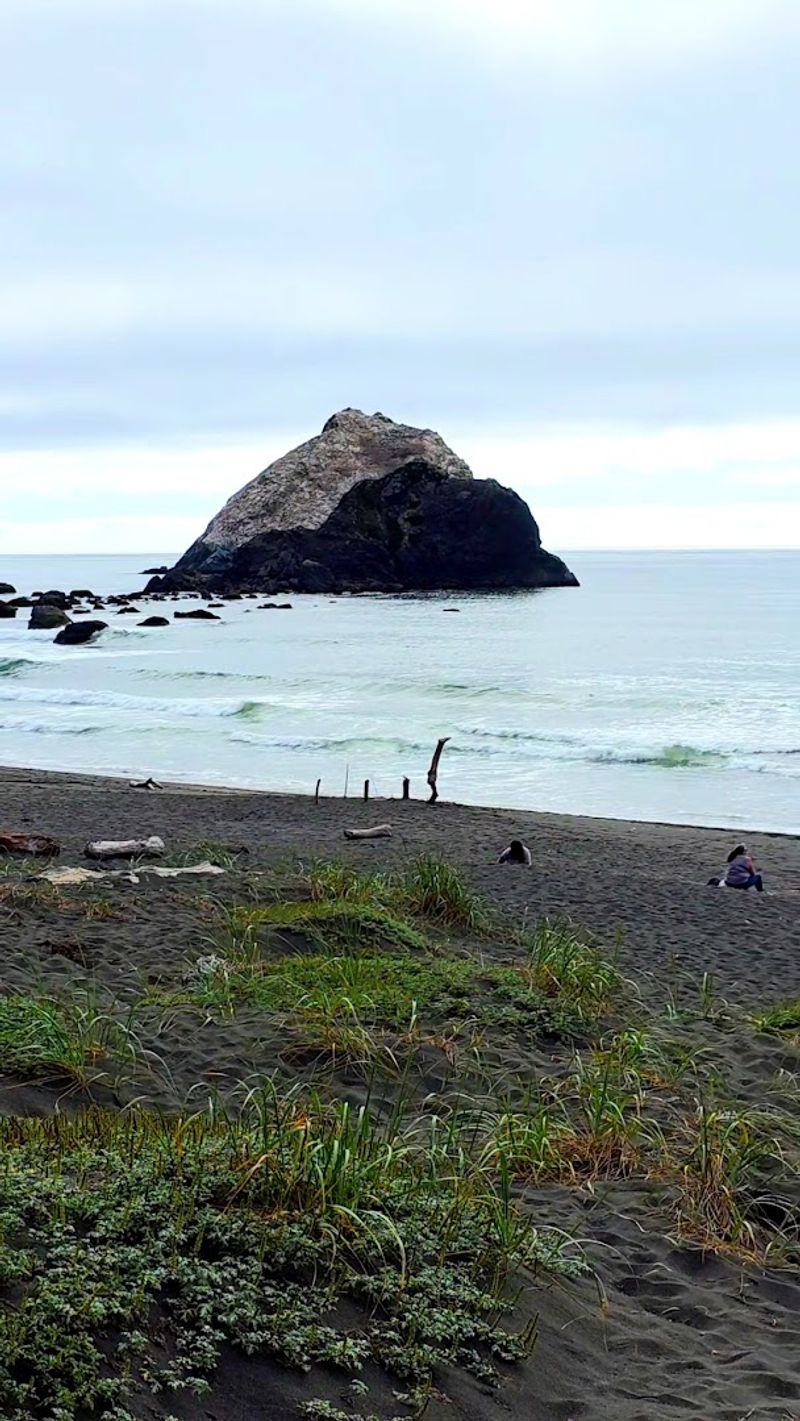
The northernmost beach in the state is also one of the most overlooked, which feels like a design flaw in every travel guide ever written. Pelican State Beach sits just two miles south of the Oregon border near Smith River, as far north as the coast goes.
The beach is wide, long, and almost always empty. Driftwood collects here in impressive quantities, piled up by storms and tides into natural sculptures that shift with every season.
The waves are powerful and the sky tends toward dramatic greys and silvers, but that is part of the appeal. This is not a sunbathing beach.
It is a thinking beach.
Managed by the state parks system and accessible along U.S. Highway 101, the beach is open year-round with free parking and straightforward access.
The surrounding area includes the Smith River, the only major undammed river system in the region, which adds to the sense of ecological richness all around it.
Birdwatchers will find plenty to look at along this stretch of coast. Shorebirds, pelicans, and occasional marine mammals make regular appearances.
The remoteness of the location means the wildlife here behaves as if humans are optional, which is exactly the kind of attitude a beach this good has earned.
8. San Carpoforo Creek Beach, Big Sur
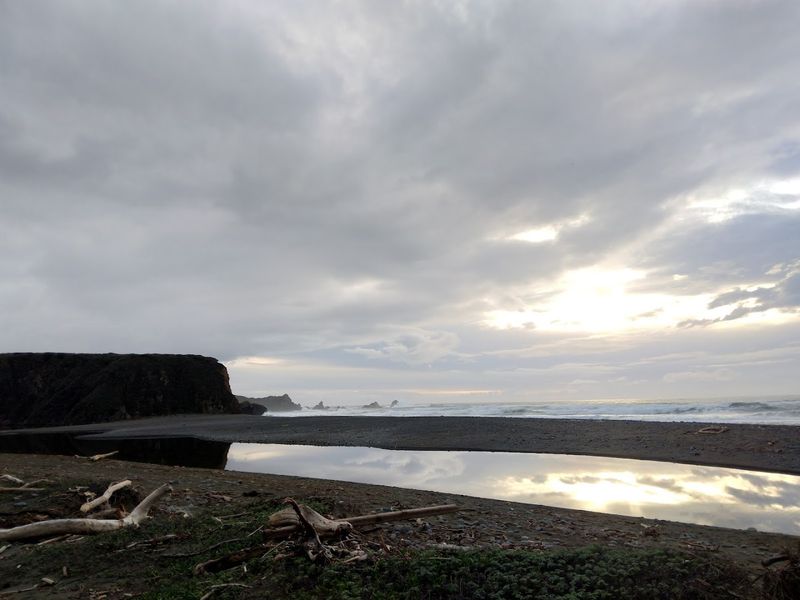
Big Sur gets plenty of attention, but most of that attention goes to the same overlooks and state parks everyone already knows. San Carpoforo Creek Beach sits near the southern edge of the Big Sur coast, where the creek meets the Pacific in a quiet, lightly visited cove.
The landscape on the way down is scrubby and golden, with the ocean appearing suddenly as you round a bend. That first glimpse never gets old.
The creek itself creates a small freshwater pool near the beach before it meets the saltwater, and the combination of the two ecosystems packed into one small stretch of coast makes for interesting wildlife watching.
Shorebirds, sea otters offshore, and the occasional harbor seal are all part of the scenery here.
The beach is small and the sand is coarse, but the seclusion is what people come for. There are no facilities, no signage, and no crowds.
Bring everything you need, pack out everything you bring, and stay aware of the tides. San Carpoforo Creek Beach rewards preparation with the kind of solitude that is genuinely hard to find anywhere along the California coast.
9. Caspar Headlands State Beach, Caspar
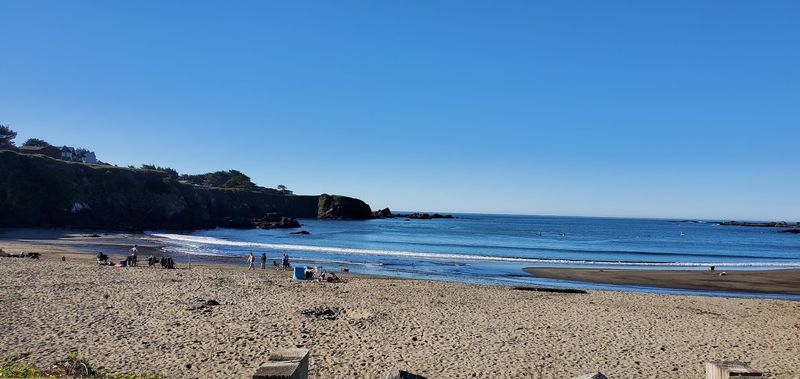
Between Mendocino and Fort Bragg sits the tiny coastal community of Caspar, and most drivers blow right past it on Highway 1 without a second thought. That is their loss and your gain.
Caspar Headlands State Beach is one of those places that rewards the people who actually stop.
The beach sits below dramatic headlands that jut out into the Pacific, creating a sheltered cove with rocky tide pools and kelp-filled water.
The surrounding coastline is classic Mendocino County, all jagged cliffs and wind-sculpted cypress trees and that particular shade of grey-green ocean that makes this part of the coast feel ancient.
Access is from Caspar Road off Highway 1. The trail down to the beach is short but gives you a panoramic view of the headlands and sea stacks before you descend.
The beach itself is narrow and rocky, but the tide pools are exceptional and packed with sea stars, anemones, and hermit crabs.
It stays quiet because it does not appear on most popular travel lists. The adjacent Caspar Headlands State Reserve protects the bluffs above the beach, which means the whole area has a preserved, undeveloped feel that is increasingly rare along this stretch of coast.
Come for the tide pools, stay for the view, and leave before sunset gets you stuck on Highway 1 in the dark.
10. Enderts Beach, Crescent City
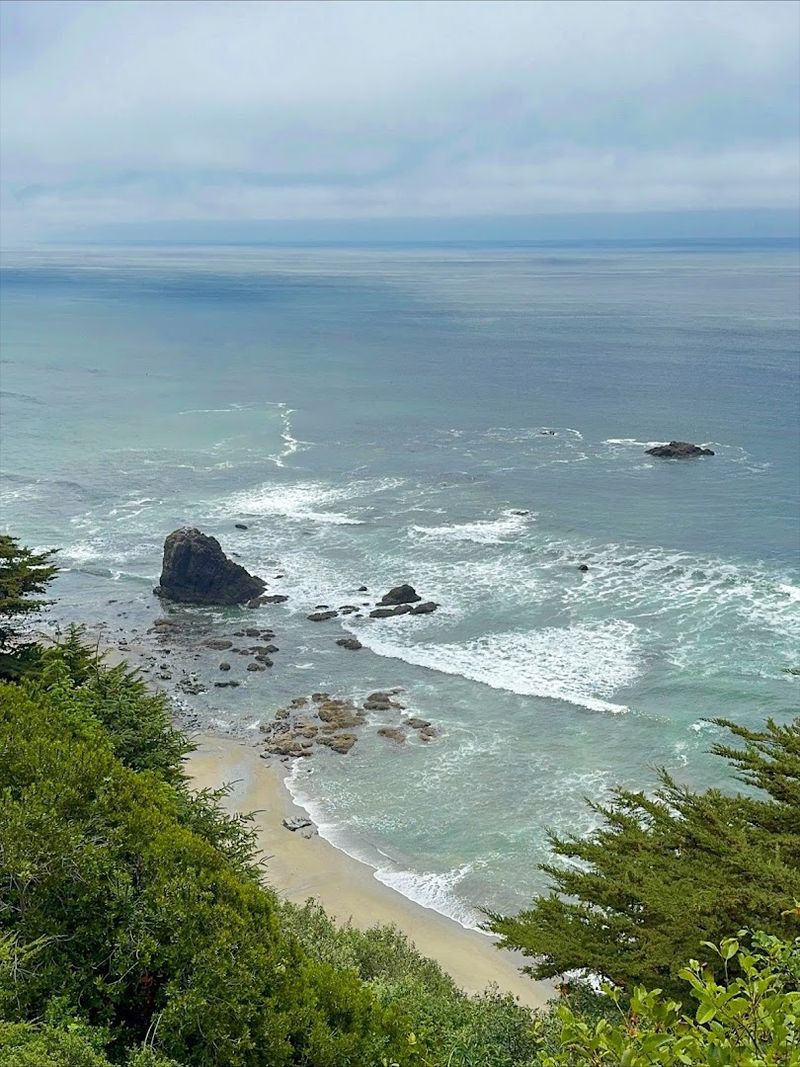
Ending this list at the northern edge of the coast feels right, because Enderts Beach near Crescent City is the kind of place that makes you reconsider every beach you have ever called your favorite.
It sits inside Redwood National and State Parks, and the combination of old-growth forest and wild Pacific coastline is unlike anything else up here.
The beach is accessible via a short trail from the Enderts Beach Road trailhead, about three miles south of Crescent City. The path winds through coastal scrub before opening onto a wide, sandy cove framed by sea stacks and backed by forested cliffs.
The scale of everything here, the trees, the rocks, the ocean, makes you feel appropriately small.
Tide pools at the southern end of the beach are some of the richest on the northern coast. Purple sea urchins, ochre sea stars, giant green anemones, and dozens of other species fill the rocky pools when the tide pulls back.
The park service asks visitors to look but not touch, and honestly the pools are so impressive that touching them would feel wrong anyway.
The beach can be foggy and cool even in summer, but that atmosphere adds to the drama rather than taking away from it. Enderts Beach is free to visit, open year-round, and consistently less crowded than the more famous stops inside the park.
If you only make one detour on a Northern road trip, make it this one.