12 California Creative Hideaways Where Famous Artists Went To Disappear, Reset, And Make Something Brilliant
Fame gets loud. Work gets louder. Sometimes the smartest move is leaving both behind for a while.
That is where creative hideaways come in.
A quiet room can change an idea. So can desert heat, ocean fog, or a small town where nobody really knows you.
California has long been a magnet for artists who needed space, not spectacle.
Writers came to clear their heads. Musicians stepped away from the noise.
Painters, actors, and restless makers found places where the pace felt different enough to matter.
Not every escape looked glamorous. Some were simple. Some were lonely.
Some probably involved bad coffee and unfinished notes. That makes them better.
Creative resets rarely look polished while they are happening. But more often than not, that’s exactly what makes them so special.
1. Henry Miller Memorial Library, Big Sur
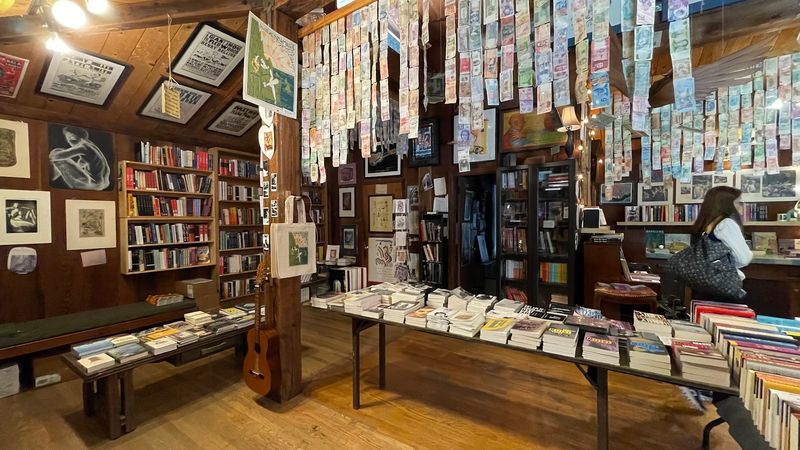
There is something about the coastal redwoods along Highway 1 that seems to slow time down, and the Henry Miller Memorial Library leans into that feeling completely.
Located at 48603 Highway 1 in Big Sur, this small non-profit bookstore and arts center was established in honor of the writer who called this stretch of California coast home from 1944 until the early 1960s.
The space feels lived-in and honest, with books stacked in corners, outdoor seating tucked under tree canopy, and a general atmosphere that rewards lingering.
The library hosts readings, concerts, and film screenings throughout the year, keeping the creative energy Miller described very much alive.
The surrounding landscape is what made this place matter to him in the first place, and that has not changed at all.
Tall redwoods filter afternoon light into something soft and shifting, and the sound of the nearby creek adds a quiet rhythm to the whole experience.
Visitors who spend time here tend to slow down without meaning to, which is probably the point.
This is not a polished museum stop but a genuinely functioning arts space that still feels like a discovery worth making.
2. Tor House and Hawk Tower, Carmel-by-the-Sea
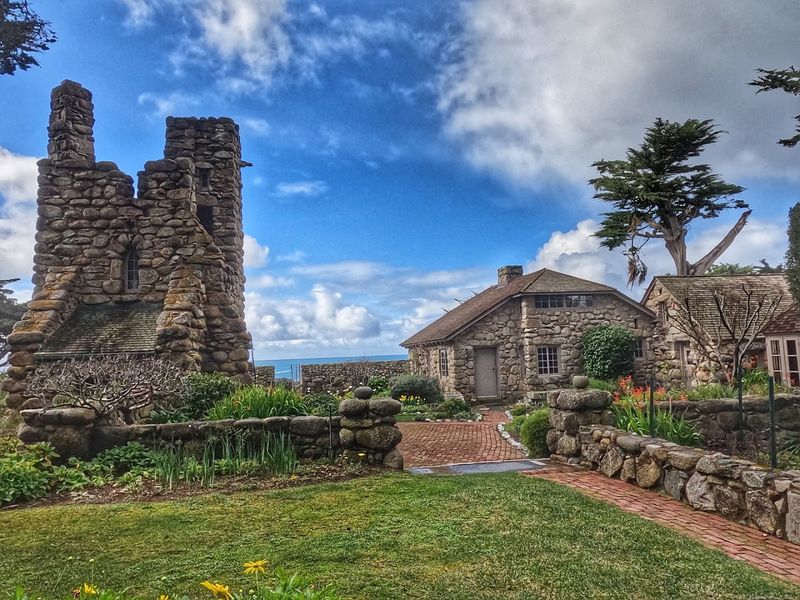
Built stone by stone directly on a rocky Carmel headland, Tor House and Hawk Tower stand as one of California’s most unusual monuments to the creative life.
The poet who constructed this place spent years hauling granite boulders up from the beach below, shaping a home and a tower that look like they belong to a different century entirely.
The result is a structure so personal and so physical that it feels less like a building and more like a life’s work made solid.
Located at 26304 Ocean View Avenue in Carmel-by-the-Sea, the property is now managed by the Tor House Foundation and offers guided tours on Friday and Saturday mornings by reservation.
The interior retains much of its original character, with low ceilings, handmade furniture, and walls that feel thick with history.
The tower, which took years to complete, offers views of the craggy Carmel coastline that inspired decades of poetry written right here on this land.
Tours are small and tend to book up, so planning ahead is genuinely worth the effort.
The surrounding neighborhood is quiet and walkable, and the short distance to Carmel Beach makes combining the two into a single afternoon easy to manage.
3. Jack London State Historic Park, Glen Ellen
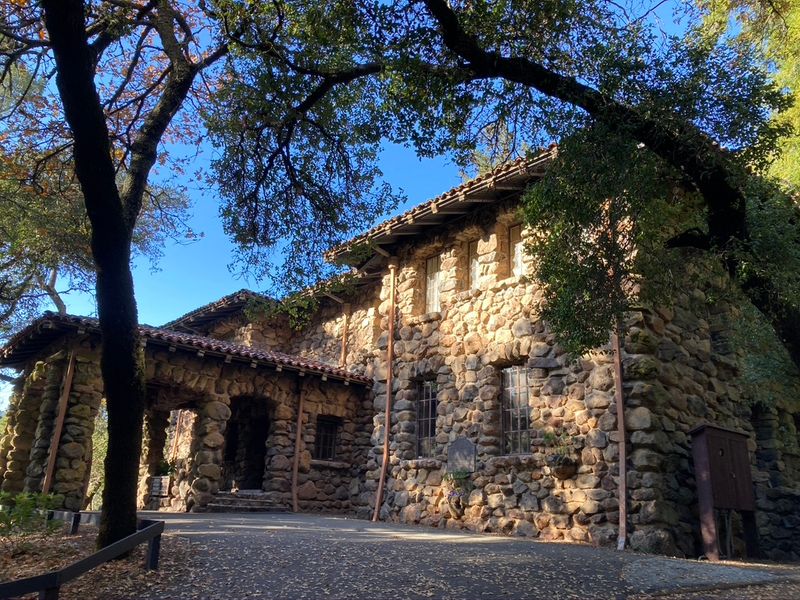
Few writers lived as loudly or worked as hard as the man whose ranch now sits quietly in the Sonoma Valley hills, waiting for visitors to piece together the story.
Jack London State Historic Park in Glen Ellen covers roughly 1,400 acres of oak woodland, meadow, and volcanic landscape, and it carries the feeling of a place that was genuinely worked and loved rather than just owned.
The park includes the ruins of Wolf House, a massive stone structure that burned down mysteriously just days before it was supposed to be occupied.
The House of Happy Walls, the home built after that fire, now serves as a museum filled with London’s writing desk, manuscripts, and personal artifacts.
Trails wind through the property and past the cottage where he actually lived and wrote during his most productive years on the ranch.
Reaching the park from Glen Ellen takes only a few minutes by car, and the entrance is located at 2400 London Ranch Road.
Weekday visits tend to feel more spacious and unhurried than weekends, when the trails attract more foot traffic.
The combination of literary history, working landscape, and genuine hiking makes this one of the more satisfying half-day stops in the Wine Country region.
4. Steinbeck Family Cottage, Pacific Grove
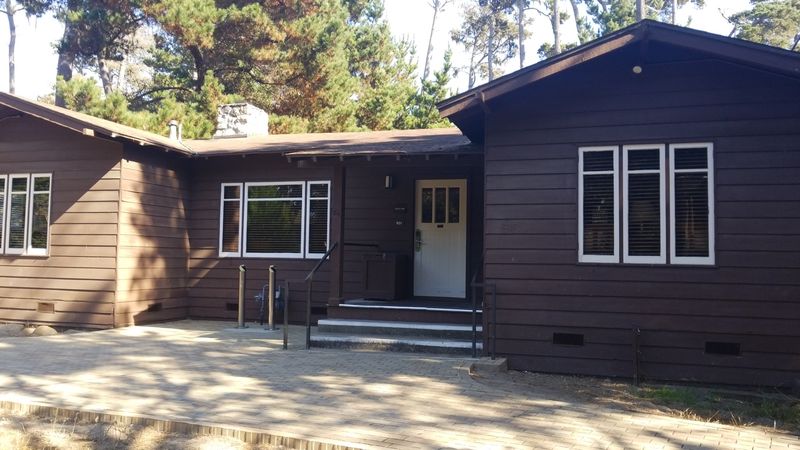
Pacific Grove sits at the edge of the Monterey Peninsula with a quietness that feels almost deliberate, and it was exactly that quality that made it meaningful to one of California’s most celebrated novelists during some of his most difficult early years.
The modest cottage where the Steinbeck family spent summers sits in a residential neighborhood just blocks from the bay, and its unpretentious exterior gives almost no hint of the literary history connected to it.
The writer used the space to work through early manuscripts during a period when recognition was still far from guaranteed.
The cottage is a private residence and not open for interior tours, but the exterior is visible from the street and the surrounding neighborhood rewards a slow walk.
Pacific Grove itself has the kind of unhurried, slightly old-fashioned coastal character that makes the Steinbeck connection feel entirely believable.
Victorian houses line quiet streets, monarch butterflies pass through in season, and the shoreline along Ocean View Boulevard offers a walk that feels genuinely restorative.
For context on the broader Steinbeck story, the nearby National Steinbeck Center in Salinas fills in the larger picture with exhibits and manuscripts.
Pacific Grove functions as a quieter, more atmospheric complement to that experience, offering the texture of the world the writer actually inhabited during those formative years on the coast.
5. Asilomar State Beach and Conference Grounds, Pacific Grove
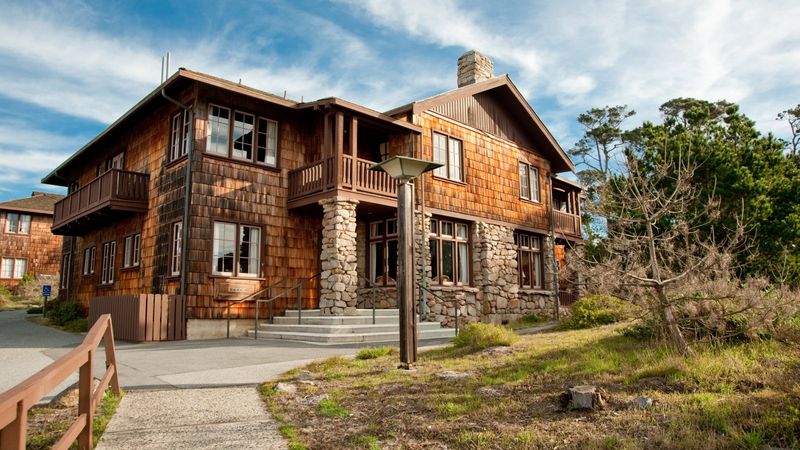
There is a particular kind of clarity that comes from working near the ocean, and Asilomar seems designed specifically to deliver it.
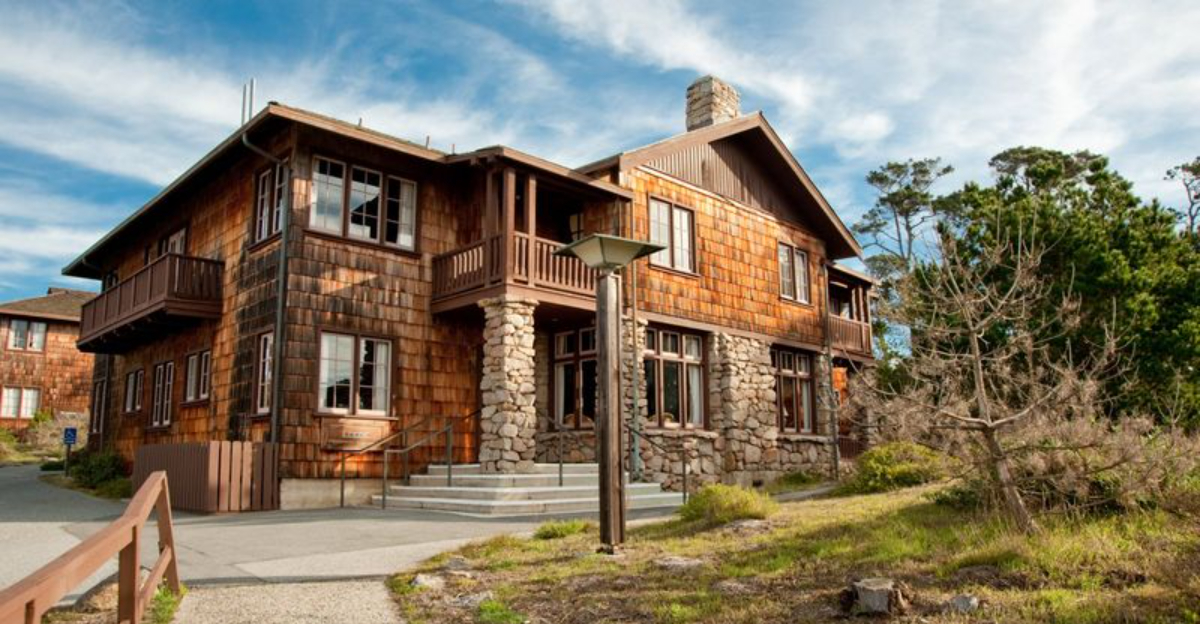
The conference grounds sit within a Monterey pine forest just steps from one of the most dramatic stretches of Pacific coastline in California.
The combination of historic architecture, natural landscape, and coastal sound creates an atmosphere that feels genuinely conducive to focused thinking.
The grounds were designed in the early twentieth century in an Arts and Crafts style that has aged beautifully into the surrounding pines.
Located at 800 Asilomar Avenue in Pacific Grove, the property is managed as a California State Park and still operates as a working conference and lodging facility.
Guests can stay overnight in the historic buildings, which means an extended creative stay here is genuinely possible rather than just a daydream.
The boardwalk trail that winds through the dunes to the beach is one of the quieter coastal walks on the Peninsula, particularly on weekday mornings.
The literary connection to this area runs deep, with the broader Pacific Grove coastline having drawn writers and thinkers for well over a century.
Asilomar offers something rare: a historically significant, naturally beautiful setting that you can actually sleep in and spend real time with rather than simply passing through.
6. Laurel Canyon Country Store, Los Angeles
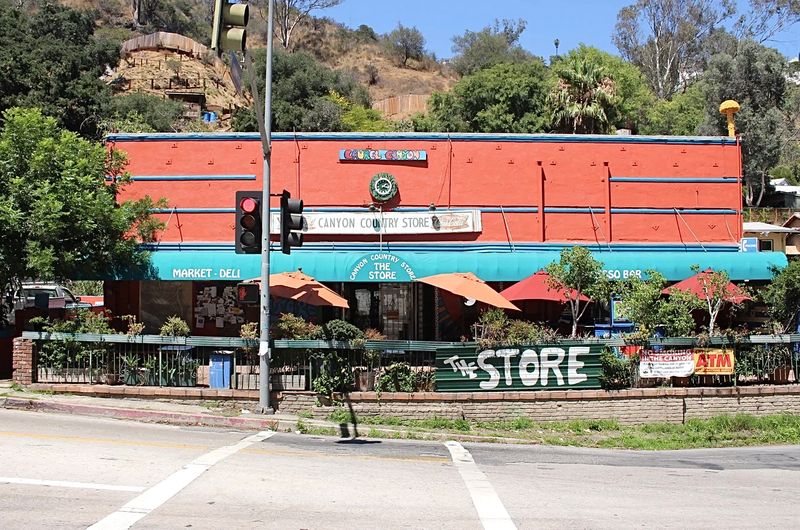
In a curve of Laurel Canyon Boulevard where the road narrows and the hillside closes in, the Laurel Canyon Country Store carries the weight of one of Los Angeles’s most mythologized creative periods without making a big show of it.
The store has operated continuously since 1901, making it one of the oldest continuously operating businesses in Los Angeles.
During the late 1960s and early 1970s it functioned as an informal gathering point for the musicians and artists who lived in the canyon’s secluded hillside homes.
The Doors, among others, were regulars at a time when Laurel Canyon was essentially a creative village hidden inside the city.
Found at 2108 Laurel Canyon Boulevard, the store today operates as a cafe and market with a back patio shaded by canyon vegetation.
The vibe is genuinely relaxed and neighborhood-oriented, and the physical setting along the winding road gives even a casual visit the feeling of stepping slightly outside of ordinary Los Angeles time.
The canyon as a whole rewards a slow drive or walk, with historic homes visible behind dense foliage and the general atmosphere of creative retreat still palpable in the hillside quiet.
For anyone interested in the intersection of place and musical history, this stop delivers something tangible and unhurried.
7. Noah Purifoy Outdoor Desert Art Museum, Joshua Tree
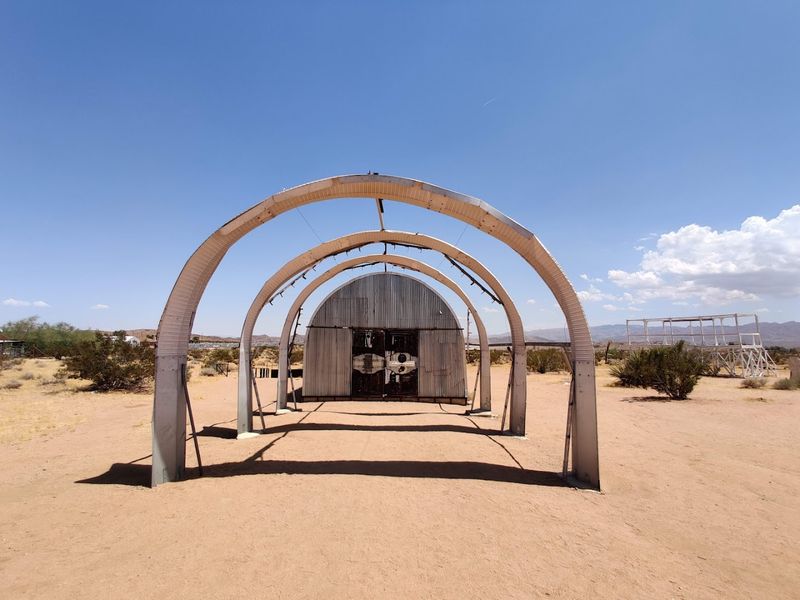
Walking through the Noah Purifoy Outdoor Desert Art Museum feels like entering a world that one person built entirely on their own terms, which is essentially what happened.
After decades working as an artist and arts educator in Los Angeles, Purifoy relocated to the high desert near Joshua Tree in 1989 and spent the remaining fifteen years of his life constructing an open-air museum of assemblage sculptures across ten desert acres.
The work is made from discarded materials and found objects, and the sheer scale of what was built out here alone is quietly astonishing.
Located at 63030 Blair Lane in Joshua Tree, the museum is free to visit and maintained by the Noah Purifoy Foundation.
The sculptures range from intimate to monumental, and the desert setting gives each piece a kind of stark drama that would be impossible to replicate indoors.
Afternoon light in particular does something remarkable to the surfaces of the work, casting long shadows across the sand and giving the whole landscape a shifting, theatrical quality.
Wear sturdy shoes and bring water because the terrain is uneven and the desert sun is real even in cooler months.
There are no concessions on site, so arriving prepared makes the experience much more comfortable.
This is genuinely one of the most unusual and rewarding art destinations in California, and it asks almost nothing of visitors except attention.
8. Watts Towers, Los Angeles
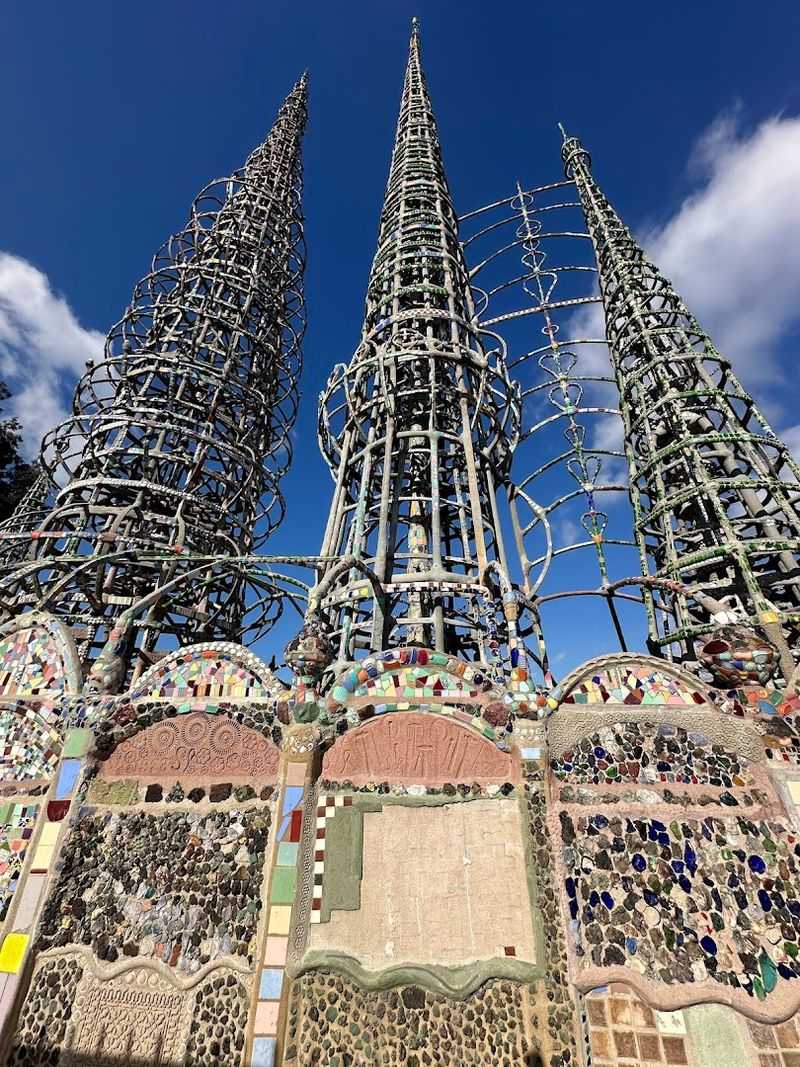
Something about the Watts Towers defies easy explanation, which may be exactly why they have fascinated visitors for decades.
Built over a period of roughly 33 years by a single Italian immigrant tile worker using steel rods, glass, and whatever else was available, the towers rise to nearly 100 feet in a South Los Angeles neighborhood.
The project was entirely self-funded and self-directed, with no architectural drawings and no outside crew, just one person and an extraordinary accumulation of time and intention.
The Watts Towers Arts Center Campus is located at 1727 East 107th Street in Los Angeles and includes both the towers themselves and a cultural arts center that hosts exhibitions and community programming.
Guided tours of the towers are available and provide context that makes the physical experience of standing next to the structures considerably richer.
The towers are a designated Los Angeles Historic-Cultural Monument and a National Historic Landmark, which means they carry official recognition alongside the more informal reverence they have always inspired.
Photography enthusiasts will find the towers endlessly rewarding at different times of day, as the light interacts with the mosaic surfaces in constantly changing ways.
Visiting on a weekday tends to allow for a more relaxed pace than weekend visits. This is folk art on a scale that genuinely earns the word monumental.
9. Beatrice Wood Center for the Arts, Ojai
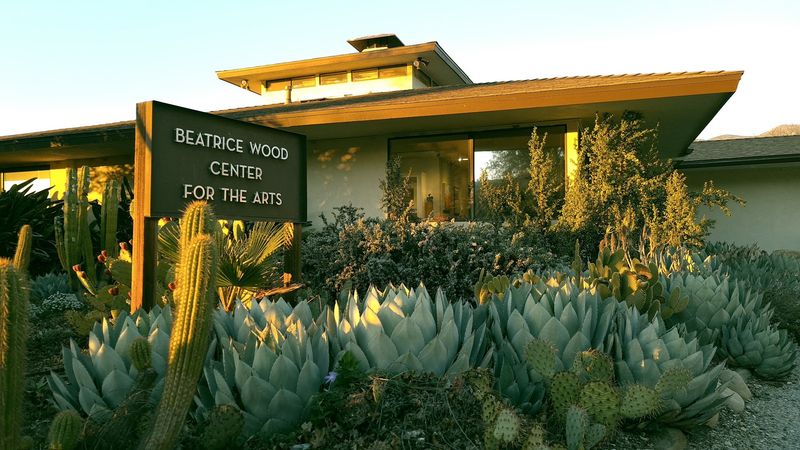
Ojai has a long reputation as a place that draws artists who need distance from the noise of larger cities, and the Beatrice Wood Center for the Arts sits at the heart of that tradition.
Wood herself lived and worked in Ojai for the last several decades of her life, producing ceramics and pursuing her artistic practice in the quiet hills above the valley floor until she was well past 100 years old.
Her studio and home became something of an informal gathering point for artists and thinkers drawn to the valley’s particular quality of light and pace.
The center is located at 8585 Ojai-Santa Paula Road and continues to operate as an active arts space hosting exhibitions, workshops, and events that reflect Wood’s commitment to handmade work and creative experimentation.
The building itself sits in a landscape of oaks and dry hillside vegetation that gives the surrounding area a distinctly unhurried, almost timeless quality.
Visiting the gallery is free, though donations support the center’s ongoing programming.
Ojai as a whole rewards spending more than a few hours, with galleries, studios, and the famous Arcade shopping district all within easy walking distance of the town center.
The light in the valley during late afternoon takes on a warm, amber quality that locals call the Pink Moment, and it is the kind of thing that makes the drive up from the coast feel entirely worthwhile.
10. The Ansel Adams Gallery, Yosemite Village
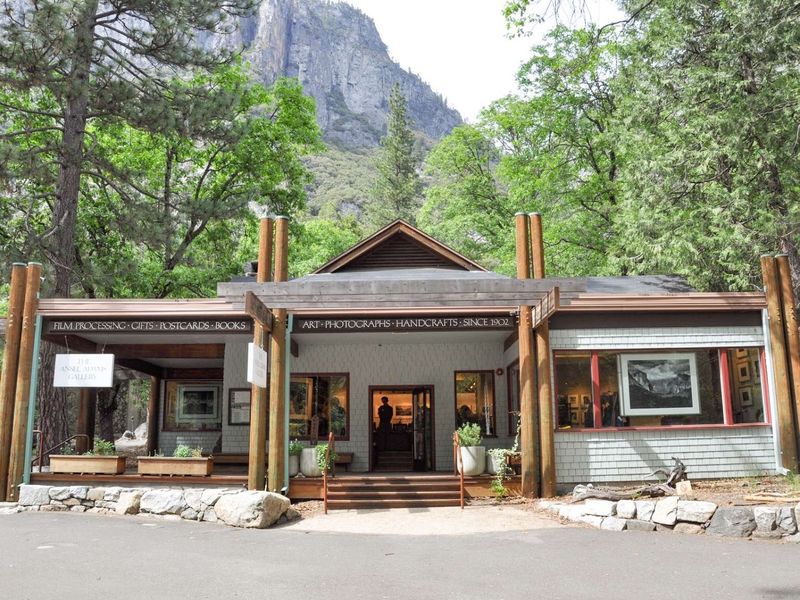
Yosemite Valley shaped one of the most recognizable bodies of photographic work in American history, and the gallery that carries that legacy is still operating in the heart of Yosemite Village today.
The photographer who built his career around this landscape spent enormous amounts of time here over decades.
He kept returning again and again to work with the light and the seasonal moods of the valley in ways that ultimately changed how Americans understood landscape photography.
The gallery at 9031 Village Drive in Yosemite Village continues to sell original Adams prints alongside work by other photographers.
Beyond the prints, the gallery offers photography workshops that take participants out into the valley with instruction, which is a genuinely unusual opportunity to learn in the exact landscape that shaped so much iconic work.
The shop also carries books, cards, and gifts, but the fine art photography is the real draw.
Walking through the gallery before heading out into the valley gives the surrounding landscape an extra layer of visual attention that tends to make the whole visit feel more intentional.
Yosemite requires advance reservations for vehicle entry during peak seasons, so checking the National Park Service website before planning a trip is essential rather than optional.
The village itself is easily walkable, and the gallery is a natural starting point for any visit that takes the creative history of the valley seriously.
11. Esalen Institute, Big Sur
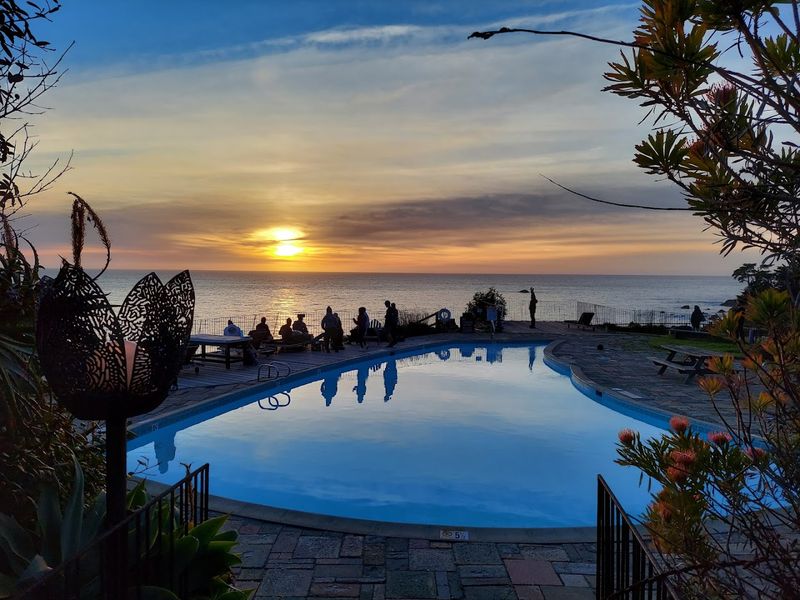
Perched on a cliff above the Pacific with the sound of waves below and redwood-covered ridges behind, Esalen has occupied one of the most dramatically situated pieces of land in California since the early 1960s.
Over the decades it has attracted an extraordinary range of creative and intellectual visitors, from musicians and writers to psychologists and philosophers.
They were all drawn by the combination of physical beauty and the institute’s commitment to human exploration and experimentation.
The hot springs that flow directly into pools at the cliff’s edge are fed by geothermal activity and have been used for centuries before the institute existed.
Located at 55000 Highway 1 in Big Sur, Esalen operates primarily as a workshop and retreat center, meaning most stays involve enrolling in a program rather than simply booking a room like a conventional hotel.
The catalog of workshops changes seasonally and covers an unusually broad range of topics including writing, movement, bodywork, and contemplative practice.
Day visitors can access the hot springs during specific overnight hours, though availability is limited and booking ahead is strongly recommended.
The drive to Esalen along Highway 1 is part of the experience, winding through some of the most visually arresting coastal scenery in the country.
The institute does not advertise heavily or chase trends, which gives the place a quality of intentionality that feels genuine rather than performed.
12. Mount Baldy Zen Center, Mount Baldy
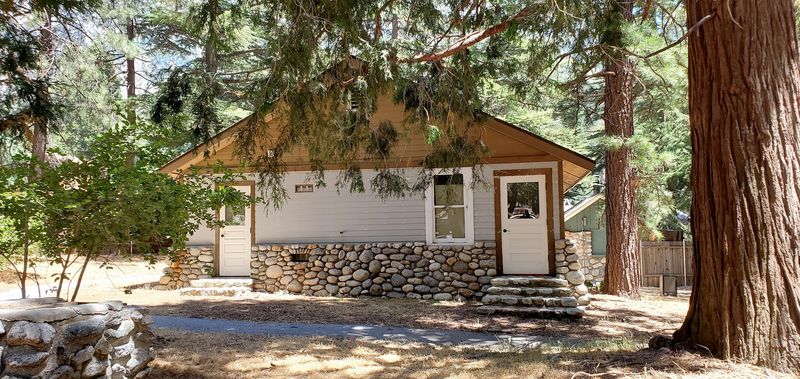
High in the San Gabriel Mountains above the Los Angeles basin, the Mount Baldy Zen Center sits in a pine forest at an elevation that puts it genuinely apart from the city sprawling below.
The center has operated as a traditional Zen monastery and retreat facility for decades, offering residential practice periods and shorter retreat programs for people seeking structured contemplative time.
The altitude and the surrounding forest create a physical and psychological distance from ordinary life that feels immediate upon arrival.
A celebrated musician and poet, Leonard Cohen, famously withdrew here for an extended period in the 1990s, spending years in residence and ordination practice before returning to public creative life.
That history gives the center a particular resonance for anyone interested in the relationship between creative work and periods of deep withdrawal and silence.
The center is located on Mount Baldy Road in the Mount Baldy Village area of the San Gabriel Mountains.
Visiting as a casual tourist is not really the purpose or spirit of this place, and prospective visitors should approach it with genuine interest in the practice rather than as a sightseeing stop.
Retreat and program information is available through the center directly.
The drive up Mount Baldy Road is scenic and winding, and the mountain village itself has a quiet, removed quality that makes the journey feel like a genuine departure from the ordinary.