12 California Drives That Feel Like A June Reset Before You Even Arrive
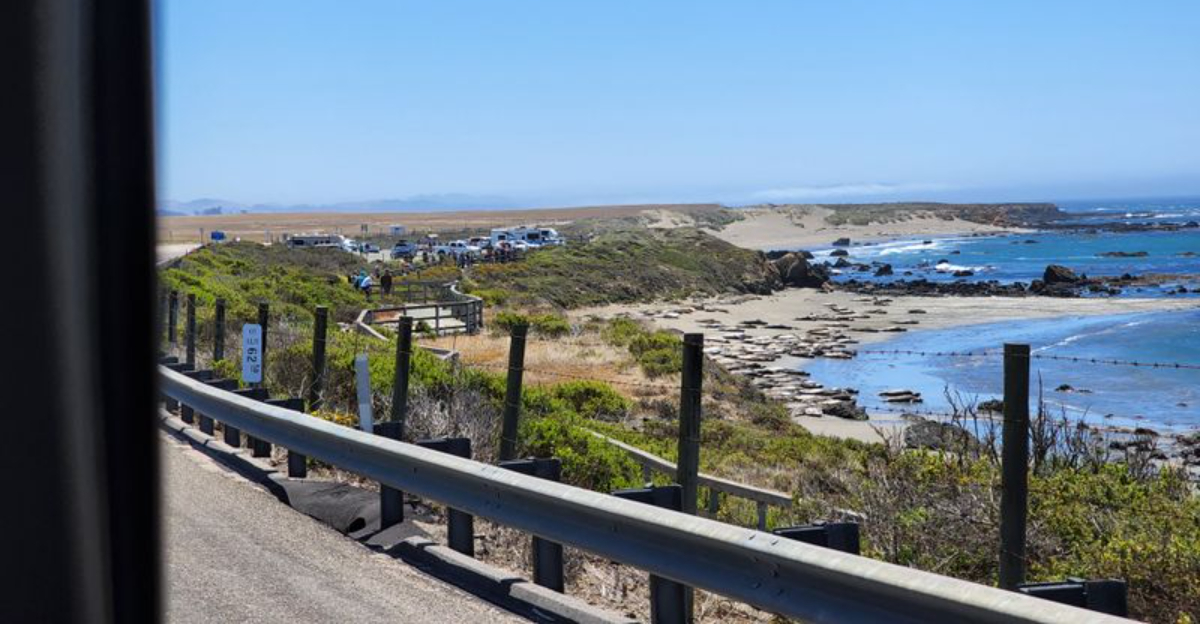
June makes a drive feel different before the destination even gets involved.
Windows come down. The playlist gets better.
A good California route can make the whole month feel freshly aired out.
That is the mood here.
No overstuffed itinerary needed. Just a road with enough scenery, sunshine, and curves to make the day feel lighter before anyone parks.
The best drives do not wait until arrival to pay off. They start working mile by mile.
One overlook helps. A quiet stretch helps more.
Then the road begins feeling less like transportation and more like the reset everyone needed.
1. Pacific Coast Highway Through Big Sur
Few roads in the world carry the kind of reputation that this stretch of California coastline holds.
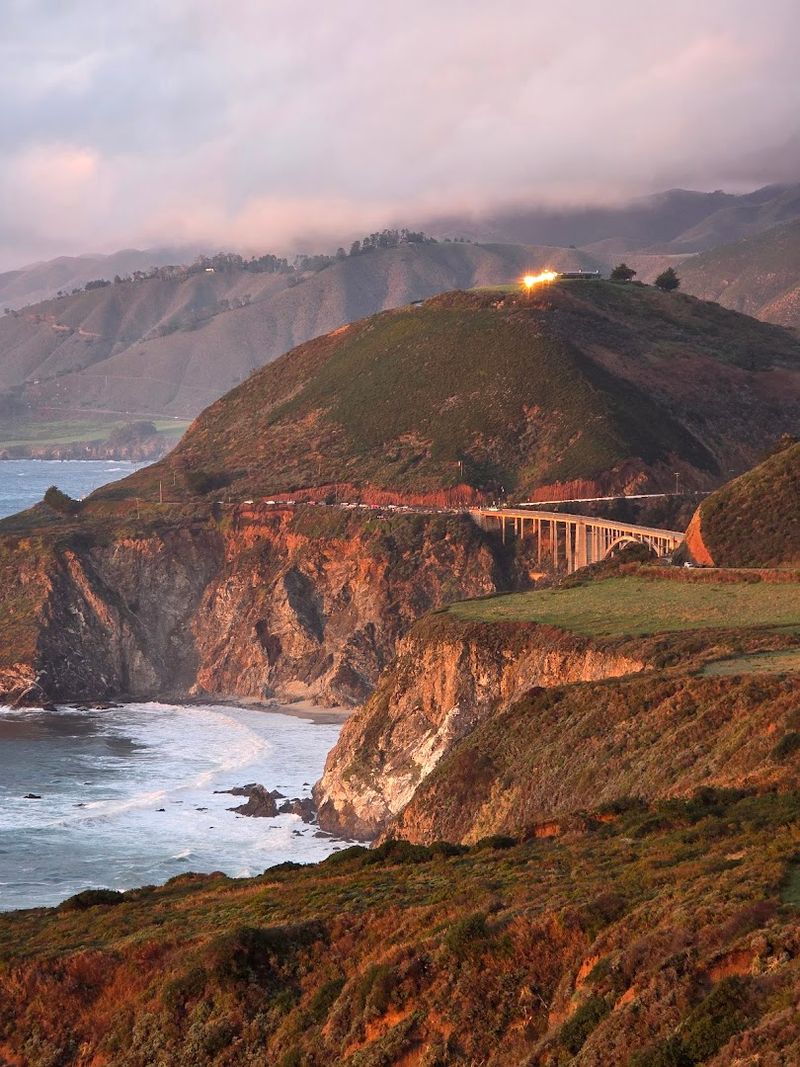
The Pacific Coast Highway through Big Sur offers cliffside views where the land drops sharply into the Pacific, and in June the light tends to hit the water at an angle that makes everything look slightly unreal.
Wildflowers linger along the roadside well into early summer, and mornings here tend to be rugged and quiet before the midday traffic picks up.
The highway through Big Sur fully reopened after extensive repairs, and visitor numbers are expected to be high during summer, so weekday drives tend to feel more spacious and unhurried.
Stopping at Bixby Creek Bridge or pulling off at one of the designated viewpoints gives a sense of scale that photos rarely capture accurately.
The ocean sounds carry up the cliffs in a way that feels grounding rather than dramatic.
Trail networks throughout the area open up in June, offering short hikes that branch off from the main road without requiring serious gear.
Bringing layers is a practical move since coastal temperatures can shift quickly between sun and fog, especially in the mornings.
2. Avenue of the Giants, Humboldt Redwoods State Park
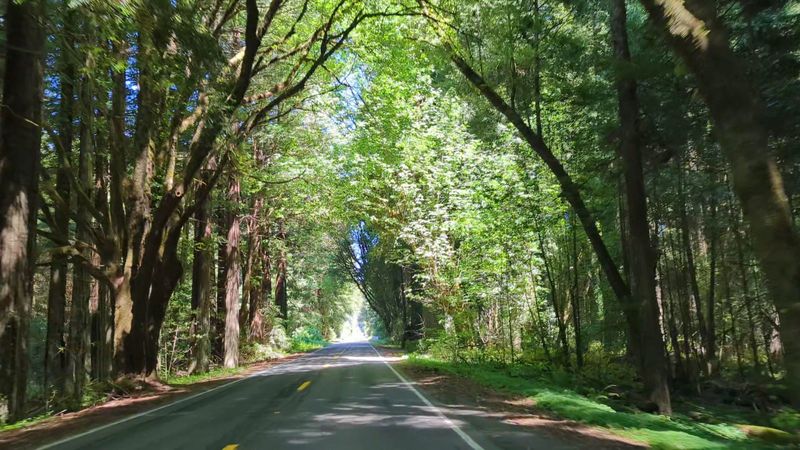
Driving beneath trees that are hundreds of feet tall and thousands of years old puts the pace of modern life into a very different perspective.
The Avenue of the Giants is a 31-mile scenic road that runs parallel to Highway 101 through Humboldt Redwoods State Park, threading between some of the largest living things on Earth.
The canopy overhead filters sunlight into soft green layers that feel almost like being underwater.
June is a comfortable time to visit because temperatures in the redwood corridor stay cooler than much of the state, and the forest floor tends to stay damp and fragrant even as summer warms up elsewhere.
The road is narrow in places and moves at a pace that naturally encourages slowing down, which turns out to be the whole point.
Pullouts along the route allow for short walks directly into the grove without needing a trail map.
Sound changes noticeably inside the forest, with road noise softening and bird calls becoming more distinct.
The Humboldt Redwoods Visitor Center near Weott provides maps and trail information for anyone wanting to extend the experience beyond the road itself.
3. June Lake Loop, Eastern Sierra
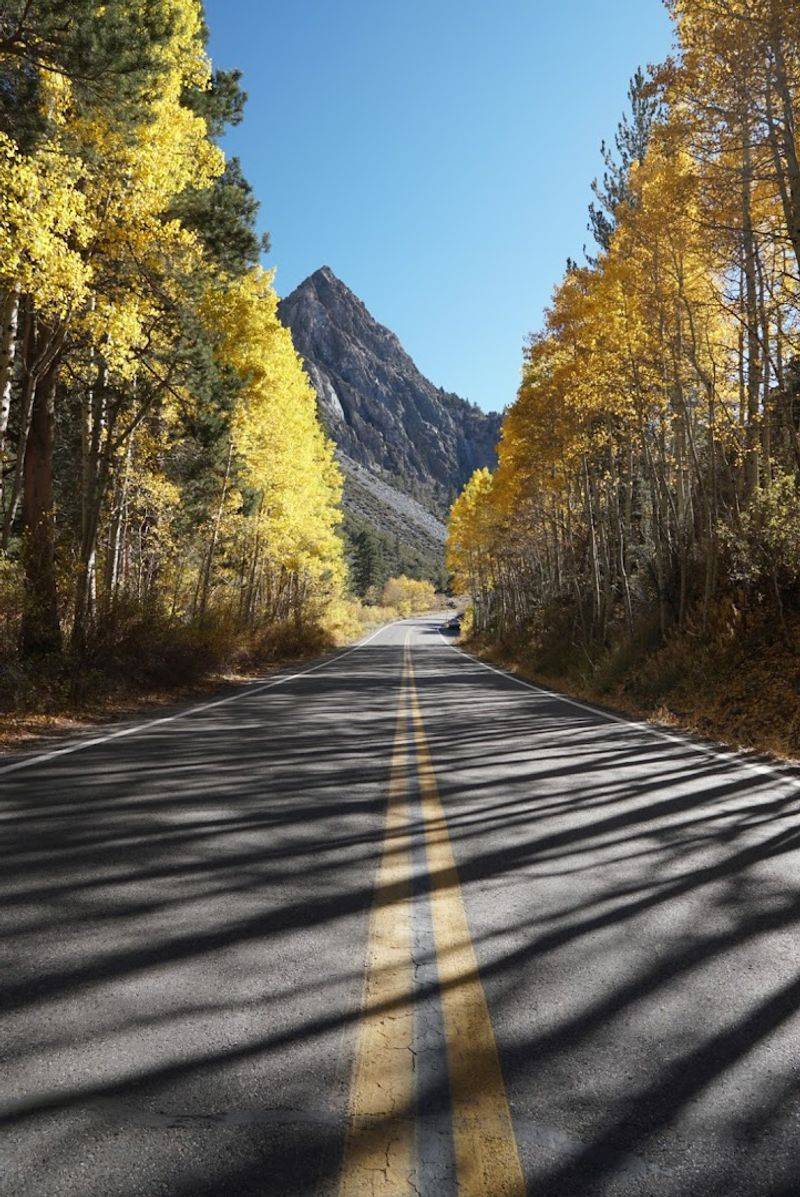
There is something almost storybook about a road that circles through four glacially carved alpine lakes with mountain peaks rising sharply on every side.
The June Lake Loop, also known as Highway 158, branches off from Highway 395 and covers roughly 13 to 17 miles depending on the entry point, making it one of the more manageable scenic detours in the Eastern Sierra.
June Lake, Gull Lake, Silver Lake, and Grant Lake each have their own personality and color depending on the time of day.
June is genuinely one of the better months to drive this loop because the snowmelt feeds the lakes to high levels, the surrounding meadows are green, and the crowds have not yet reached peak summer density.
Fishing is popular here, and several spots along the loop offer easy access to the water without requiring a long hike. The small town of June Lake itself has a relaxed, unhurried quality that suits the landscape well.
Photography tends to work especially well in the early morning when the lake surfaces stay calm and reflections of the peaks are clearest.
The loop connects back to Highway 395 on both ends, so it fits naturally into a longer Eastern Sierra drive.
4. Highway 395 Through the Eastern Sierra
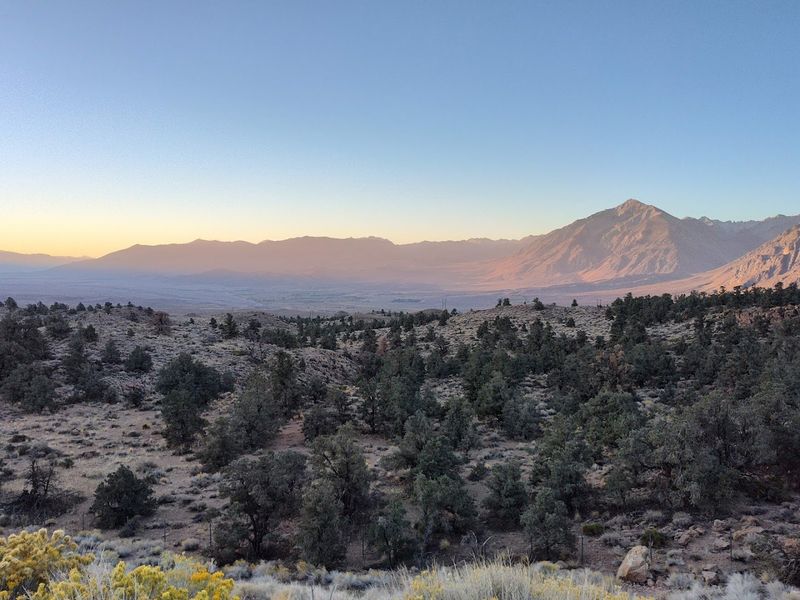
High desert sagebrush on one side and jagged granite peaks on the other create a visual contrast that is hard to find anywhere else in the state.
Highway 395 through the Eastern Sierra runs along the base of the Sierra Nevada range, passing through small towns like Lone Pine, Bishop, and Mammoth Lakes while the mountains shift and change with every mile.
The scale of the landscape here tends to make everything feel quieter and more open.
June brings consistently clear skies to this corridor, and the mountain passes that feed into the range from the west are often just reopening after winter closures, adding to the sense of a fresh start.
Roadside stops along the way include the Alabama Hills near Lone Pine, where rounded boulders frame views of Mount Whitney, and the Ancient Bristlecone Pine Forest accessible from Big Pine.
Towns along Highway 395 are practical and unpretentious, with diners and gas stations spaced at reasonable intervals.
Driving the full length of the Eastern Sierra stretch in a single day is possible but unhurried stops along the way tend to make the experience significantly more rewarding.
5. Lake Tahoe Scenic Loop Roads
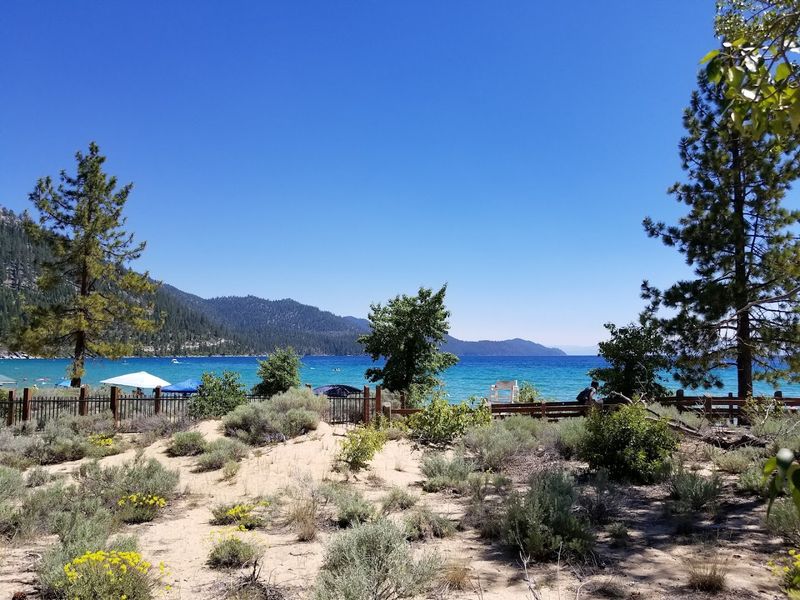
Circling one of the clearest and deepest lakes in North America by car is a reliable way to feel like the summer has officially started.
The roads around Lake Tahoe form a loose loop of roughly 72 miles that passes through resort towns, quiet beaches, and forested stretches where the lake appears and disappears between the trees.
The water color shifts between deep blue and green depending on depth and light, and June tends to bring clear conditions that show it off well.
Highway 89 along the western shore and Highway 28 along the north and east sides offer the most scenic segments, with numerous pullouts and beach access points along the way.
Sand Harbor on the Nevada side is one of the more visually striking stops, with clear shallow water and large granite boulders along the shoreline.
Weekday visits in June tend to be noticeably less crowded than the peak Fourth of July weekend.
The elevation around Lake Tahoe sits at roughly 6,200 feet, which keeps temperatures comfortable during June days while evenings cool down quickly.
Layering up for morning drives around the north shore pays off since the light on the water at that hour is genuinely worth the chill.
6. 17-Mile Drive, Monterey Peninsula
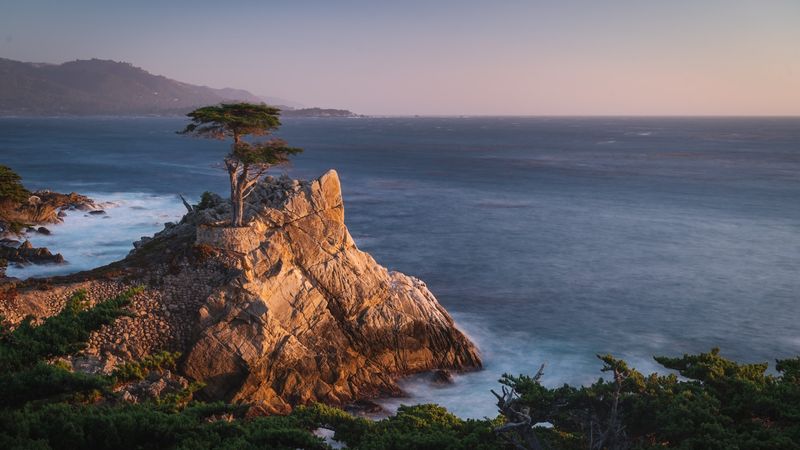
Not many toll roads earn a reputation for being worth every cent, but the 17-Mile Drive on the Monterey Peninsula has held that status for decades.
The route winds through the Del Monte Forest and along the Pacific coastline between Pacific Grove and Pebble Beach.
It passes landmarks like the Lone Cypress, Seal Rock, and the stretch of coast that lines some of the most photographed golf courses in the world.
Entry gates are staffed, and the current fee structure can be confirmed directly through the Pebble Beach Company website before visiting.
June mornings along this drive can carry a light coastal fog that tends to burn off by midday, leaving the afternoon light crisp and clear against the cypress trees and rocky outcrops.
The pace of the road naturally encourages stopping, and most visitors move through in a combination of short drives and brief walks to the various viewpoints.
Bird and marine life are consistently active along the shoreline, with sea otters, harbor seals, and shorebirds visible from several of the designated stops.
The road is privately managed, which keeps traffic relatively controlled compared to many California coastal routes. Arriving earlier in the day tends to make the experience feel more personal and less hurried.
7. Silverado Trail, Napa Valley
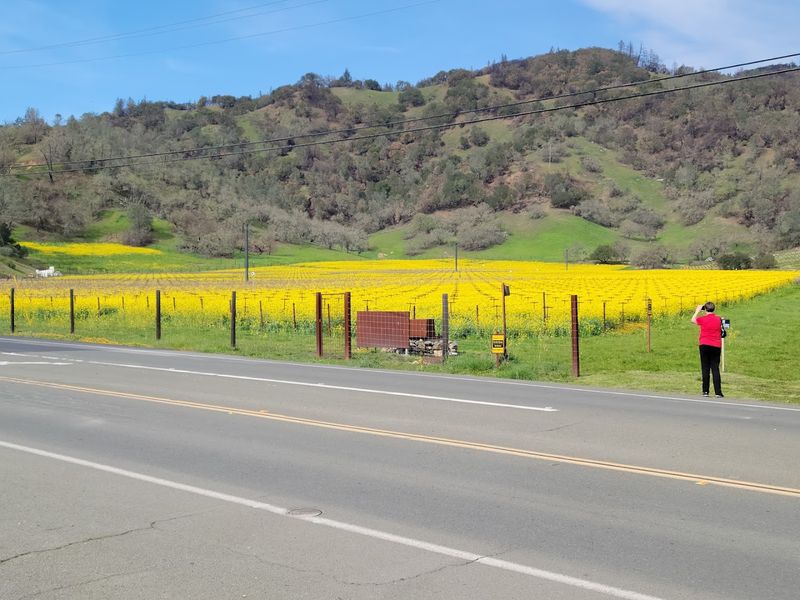
Running parallel to the more heavily trafficked Highway 29, the Silverado Trail offers a quieter and more visually open way to move through Napa Valley.
The road stretches roughly 29 miles from Napa in the south to Calistoga in the north, passing through vineyards, oak woodlands, and hillside properties with the Vaca Mountains rising to the east.
In June the valley is fully green and the grapevines are in active growth, which gives the landscape a lush and layered quality.
Traffic on the Silverado Trail tends to move at a relaxed pace, and the road itself has a pleasant rhythm of gentle curves and occasional rises that make for enjoyable driving.
Several farm stands and small markets operate along or just off the trail during summer months, offering local produce and a natural reason to stop and stretch.
The light in the late afternoon hits the vineyards from a low angle that makes even a slow drive feel photogenic.
Unlike the busier main corridor, the Silverado Trail rarely feels congested during weekday mornings in June.
Combining it with a short loop through one of the side roads connecting back to Highway 29 creates a satisfying and unhurried circuit through the valley floor.
8. Angeles Crest Highway, San Gabriel Mountains
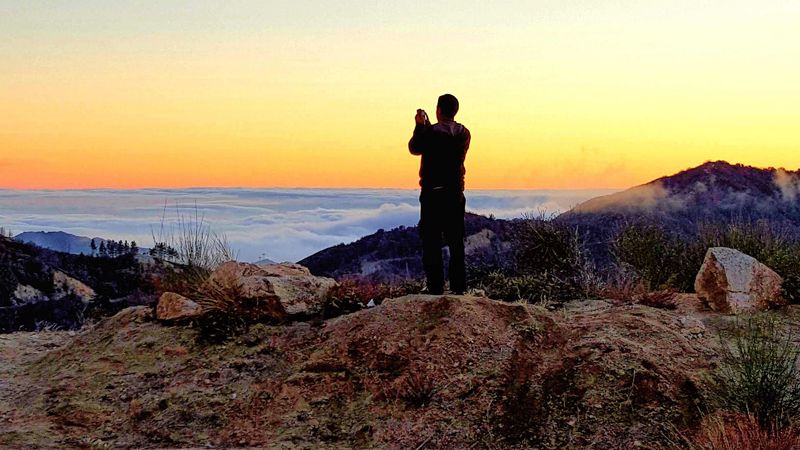
Just north of Los Angeles, a highway climbs into a mountain range that most people in the city never fully explore.
Angeles Crest Highway, also known as State Route 2, rises through the San Gabriel Mountains from La Canada Flintridge up to elevations above 7,000 feet.
The contrast between the urban sprawl below and the pine-covered ridges above is genuinely striking.
June is a reliable month for this drive because snow closures that affect the road during winter and spring are typically resolved by early summer, and the air at elevation stays noticeably cooler than the valley floor.
Sections of the highway pass through meadows and alongside small streams, and several trailheads branch off the road for those who want to combine driving with a short walk.
The road requires attentive driving due to its curves and elevation changes, which makes it a better fit for those who enjoy the active side of a scenic route.
Stopping at Chilao Flat or Charlton Flats provides picnic areas and restroom facilities along the way. Clear Air Quality Index days make the southward views from the high points especially rewarding.
9. Palms to Pines Scenic Byway, Palm Springs to Idyllwild
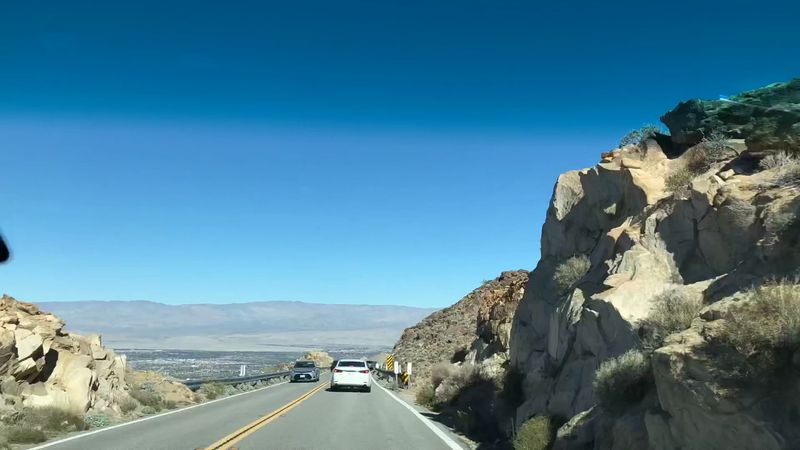
Few drives in California pack as much landscape change into a short distance as the Palms to Pines Scenic Byway.
Starting near Palm Springs in the low desert and climbing through the San Jacinto Mountains to the mountain town of Idyllwild, the route covers a vertical gain of several thousand feet.
Desert scrub gives way to chaparral, then pine forest, then the quiet streets of a small mountain community.
Highway 74 handles most of the ascent from the desert side, winding through switchbacks with views back toward the Coachella Valley that expand with every turn.
June brings comfortable temperatures to Idyllwild even as the desert below bakes, which makes the contrast feel almost theatrical.
The town of Idyllwild itself has a relaxed creative energy with small shops, cafes, and a central village area that rewards a slow walk after the drive up.
The descent back toward Palm Springs in the late afternoon light tends to feel different from the morning climb, with the shadows stretching across the desert floor and the temperature dropping noticeably as the elevation rises.
Checking road conditions before departure is practical since sections of Highway 74 can be affected by weather events.
10. Ebbetts Pass Scenic Byway, Alpine County
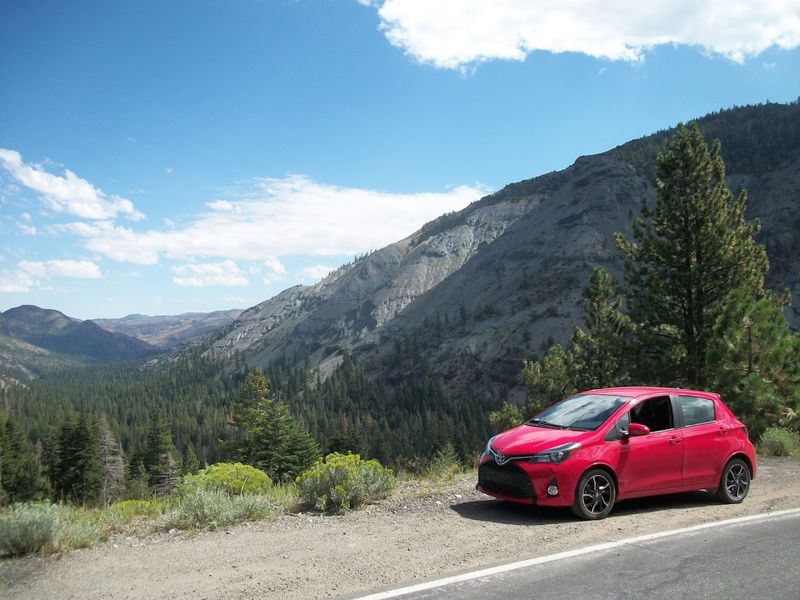
Alpine County is the least populated county in California, and the Ebbetts Pass Scenic Byway reflects that quietude in every mile.
Highway 4 climbs through terrain that shifts between dense conifer forest and dramatic volcanic rock formations that look like they belong in a completely different landscape than the forest surrounding them.
The byway reaches its highest point at Ebbetts Pass at 8,730 feet, and the views from that elevation on a clear June day are expansive and unhurried.
The road is narrow in sections and not recommended for large RVs or trailers, but for standard vehicles it offers one of the more adventurous and uncrowded drives in the Sierra Nevada.
June represents a sweet spot for this route because the pass typically reopens after winter closure and the snowfields are still visible on the higher ridges while the meadows below are actively greening.
Traffic is sparse compared to more popular Sierra crossings, which makes stopping anywhere along the route feel easy and unrushed.
The towns of Markleeville and Bear Valley bracket the most scenic section and provide fuel and basic services. Bringing snacks and water is practical since services along the byway itself are limited.
11. Anza-Borrego Desert Roads, Borrego Springs Area
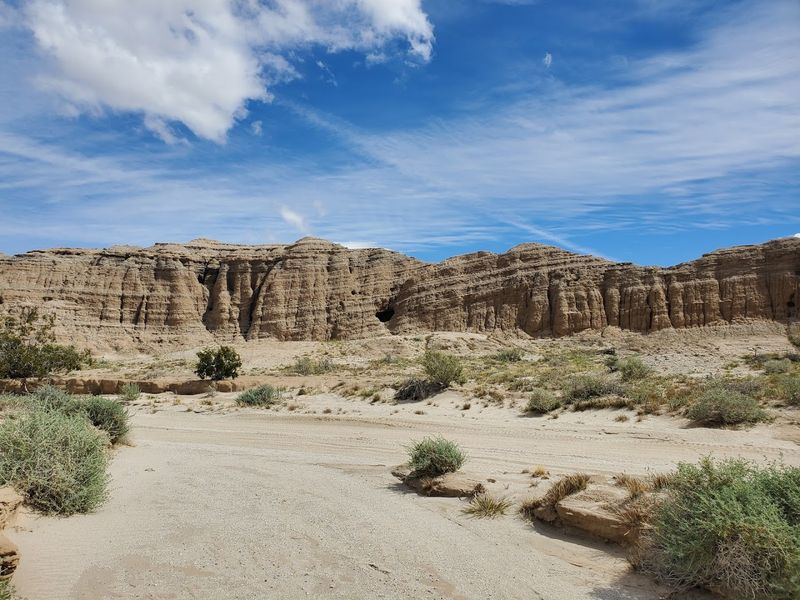
Anza-Borrego Desert State Park is the largest state park in California, and the network of roads through and around it offers a completely different kind of June drive than anything found on the coast or in the mountains.
The landscape near Borrego Springs is open, spare, and almost meditative, with badlands formations, ocotillo forests, and dry washes that carry a quiet intensity.
Early morning drives through the park in June can feel remarkably still before the heat of the day builds.
Highway S22, also called the Montezuma Valley Road, is one of the more scenic paved routes through the area, offering views across the desert floor toward the Santa Rosa Mountains with very little traffic.
The Borrego Badlands visible from the road have an eroded and layered texture that looks different depending on the angle of the light.
Arriving before 9 a.m. is genuinely practical here since afternoon temperatures in June can climb well above 100 degrees Fahrenheit.
The town of Borrego Springs is small and functional, with a few cafes and a market for resupply. Checking the National Weather Service forecast for the area before any summer desert drive is a sensible habit.
12. Highway 1 Through Mendocino County
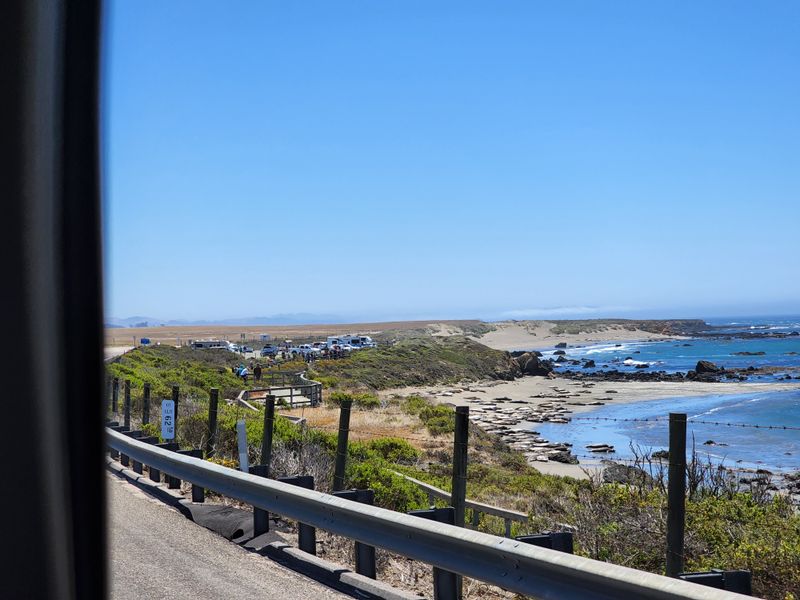
North of San Francisco, Highway 1 takes on a different character than its more famous Big Sur segment.
Through Mendocino County the road becomes narrower, the cliffs more jagged, and the towns smaller and more self-contained.
The coastal bluffs here are studded with sea stacks and rock arches that the ocean has carved over centuries, and in June the wildflowers along the roadside can still be holding on from the spring bloom.
The overall feel is quieter and less trafficked than the central coast.
The town of Mendocino itself sits on a headland above the water and has a weathered, unhurried quality that suits the landscape around it.
Fort Bragg a few miles to the north offers a more working-town atmosphere with practical services and Glass Beach, where decades of smoothed sea glass still wash up along the shoreline.
The drive between the two towns along the coast road takes less than fifteen minutes but passes through scenery that rewards a slower pace.
June Gloom, the coastal morning fog pattern common to California in early summer, tends to affect this stretch regularly but usually lifts by midday.