California Has A Hilltop Cathedral That Looks Straight Out Of Old Europe
Hilltop buildings already have an unfair advantage. They get the drama before anyone even reaches the door.
Add soaring stonework, grand arches, and a city view waiting outside, and suddenly a simple visit starts feeling much bigger.
That is the pull of a cathedral with old-world style.
It does not need to shout. The height does that. The architecture does the rest.
In California, the contrast is hard to miss. Outside feels pure West Coast, while the cathedral carries old-world confidence.
You get steep streets nearby. You get that city energy outside. Then the doors, towers, and quiet interior shift the mood fast.
A landmark like this gives people a reason to slow down and look up.
Not in a forced way. In the natural way that happens when a building has presence.
Nob Hill Gives The Cathedral Its Storybook Height
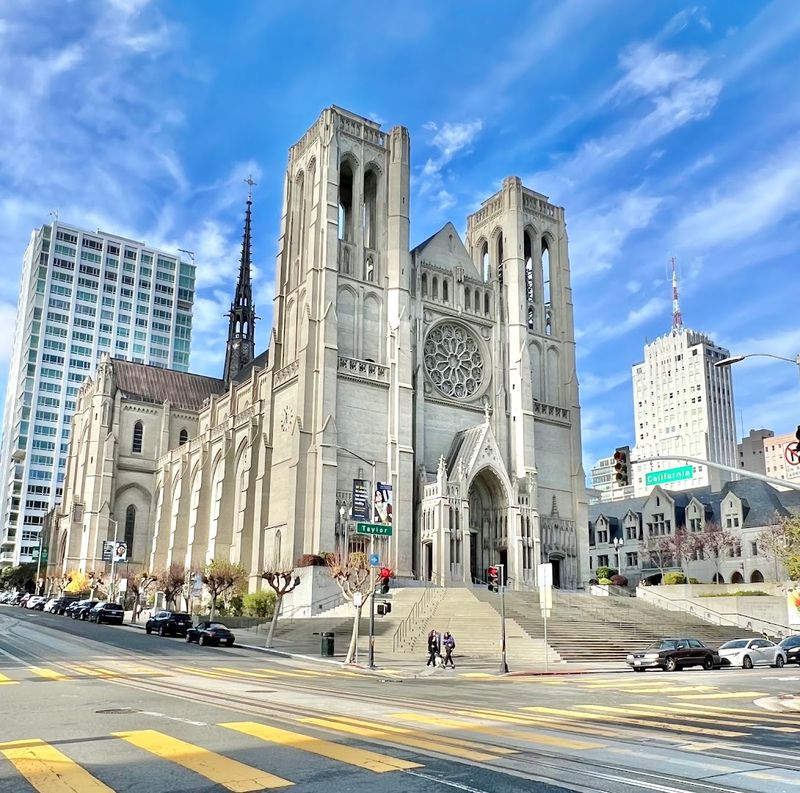
Standing at the top of Nob Hill with the city fanning out below, Grace Cathedral earns its dramatic presence through location alone.
The cathedral sits at 1100 California St, San Francisco, CA 94108, and the elevation of the hill adds a visual weight to the building that flat ground simply could not replicate.
Visitors climbing toward the entrance often pause midway just to take in the view behind them.
The hilltop position creates a sense of arrival that feels genuinely earned, especially for those who walk up from the cable car stop nearby.
San Francisco’s grid of streets drops away in every direction, giving the cathedral a skyline presence that rivals structures several times its size. On clear days, the bay is visible from the surrounding plaza area.
The height also means the twin towers catch natural light differently throughout the day, shifting from pale gray in the morning to a warmer tone by afternoon. F
or photographers and casual visitors alike, the elevated setting adds a layer of drama that makes the whole Old Europe comparison feel completely believable rather than overstated.
The French Gothic Bones Are The Main Part
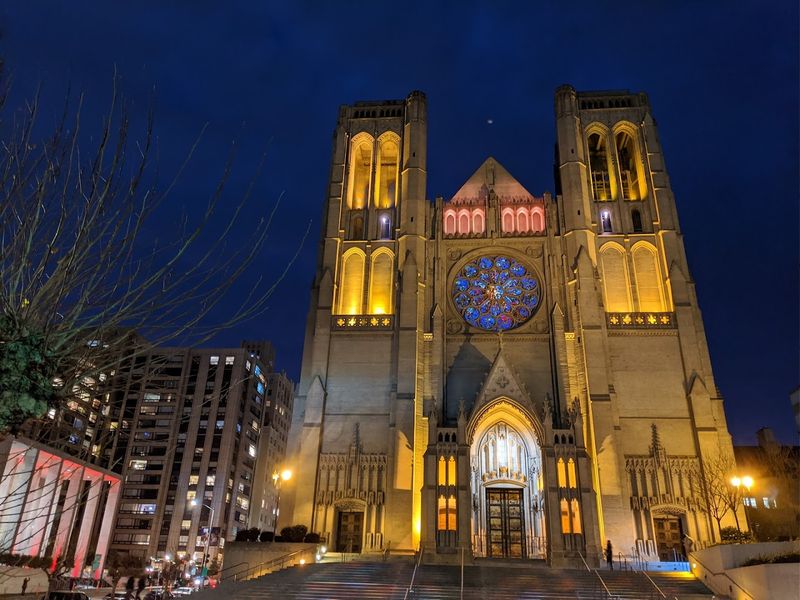
Architect Lewis Hobart drew direct inspiration from the great French Gothic cathedrals of Europe when designing Grace Cathedral, pulling references from Notre-Dame, Amiens, Beauvais, and Chartres.
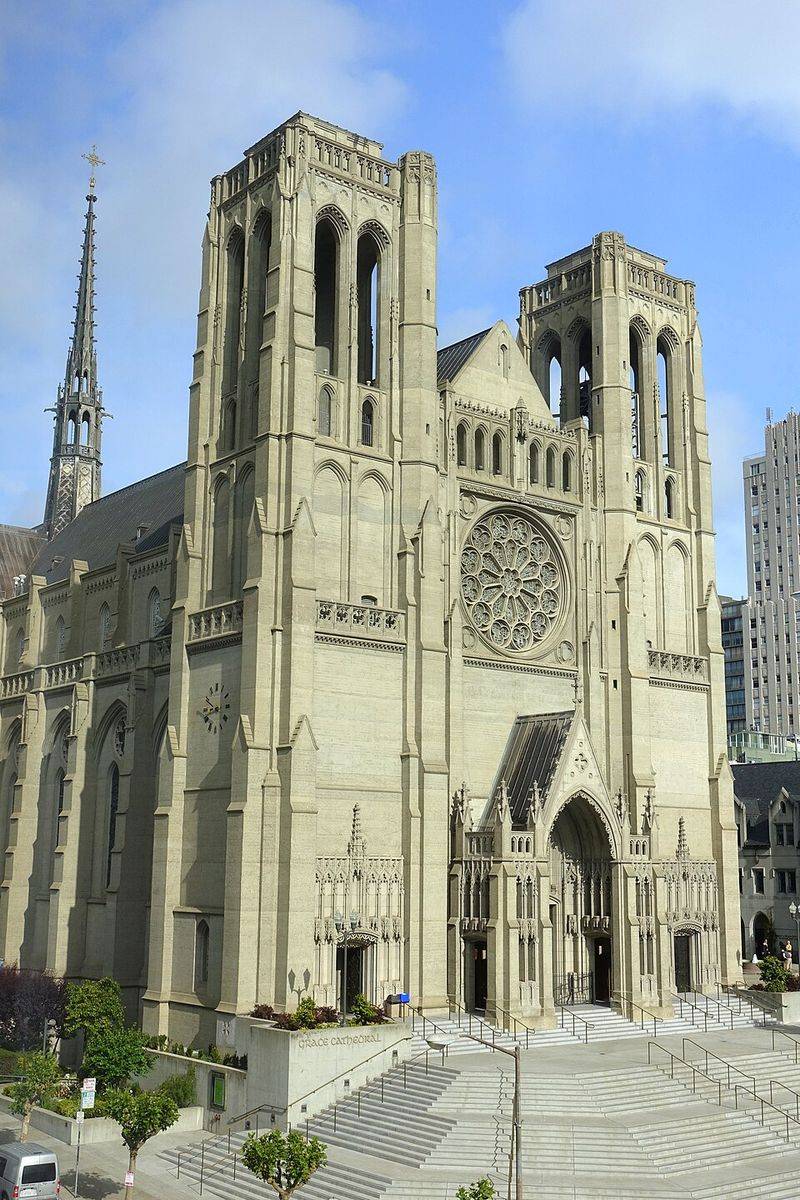
The result is a building that does not merely nod to that tradition but commits to it fully, with a cruciform floor plan, a polygonal apse, a central fleche, and a rose window that anchor the design in centuries-old European convention.
French Gothic architecture was built around the idea of reaching upward, using pointed arches and ribbed vaults to draw the eye and the spirit skyward.
Hobart applied those same principles to a California setting, which creates a genuinely unusual visual experience for anyone more accustomed to the region’s Spanish Colonial or mid-century modern buildings.
The stone exterior carries a textural richness that rewards close inspection, with carved details around the doorways and window frames that take time to fully absorb.
Each architectural element connects back to a specific European precedent, making the cathedral feel less like a copy and more like a sincere continuation of a long building tradition.
Twin Towers Make The First Impression Huge
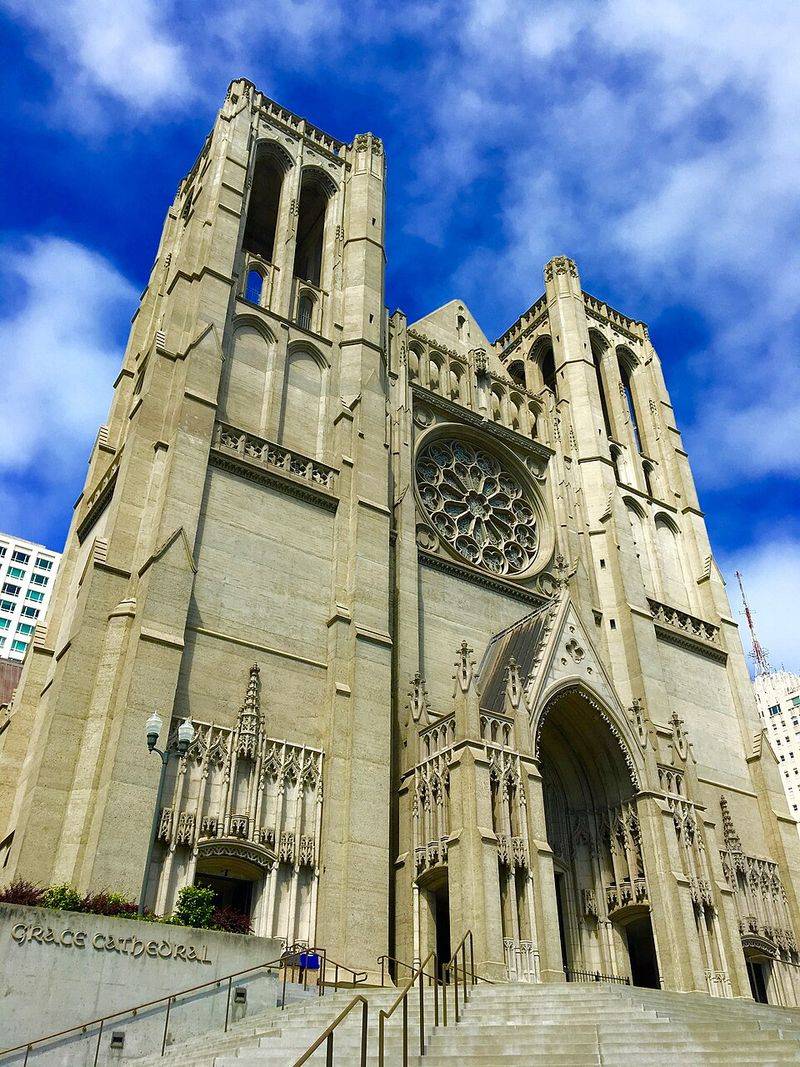
Few first impressions hit quite as hard as the moment the twin towers of Grace Cathedral come fully into view.
Rising 174 feet from street level, they frame the main entrance with a scale that signals immediately that the building inside will not disappoint.
The vertical emphasis of the towers is a deliberate Gothic device, pulling the eye upward before the visitor has even stepped through the doors.
At street level, the proportions can feel almost disorienting in the best possible way, since the towers dwarf the surrounding neighborhood and create a frame that looks almost cinematic.
From a distance, the silhouette of the two towers against the San Francisco sky is the image most people associate with the cathedral, and it photographs beautifully from several angles around the block.
Up close, the stone detailing between and around the towers reveals layers of carved ornament that reward slower looking.
The towers also serve a practical acoustic function, helping to project the sound of the carillon bells outward into the surrounding streets.
On days when the bells ring, the sound carries across Nob Hill with a resonance that feels genuinely old-world, connecting the visual grandeur of the towers to an auditory experience that matches it.
The Interior Feels Even Taller Than Expected
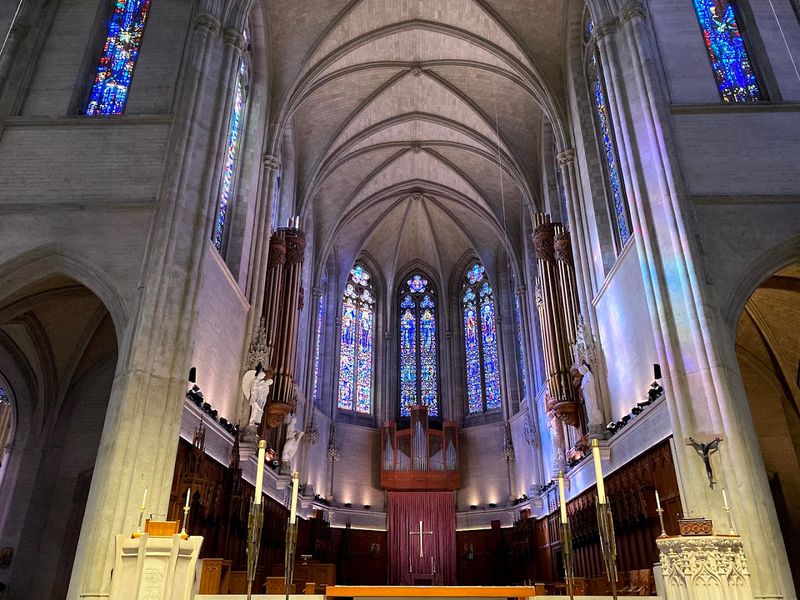
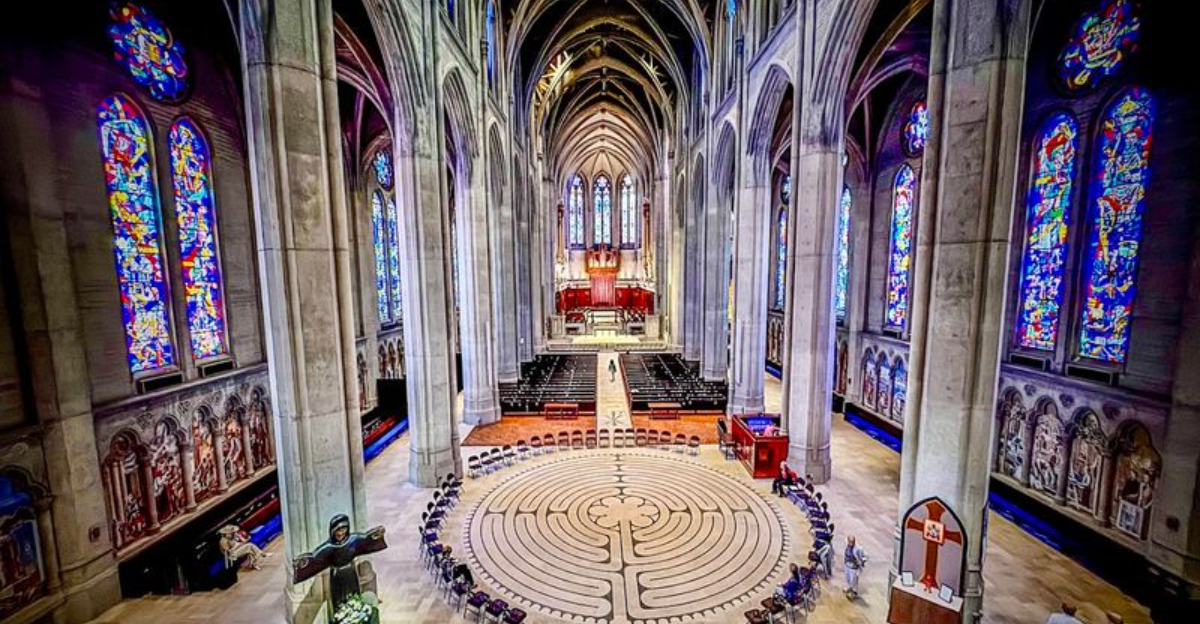
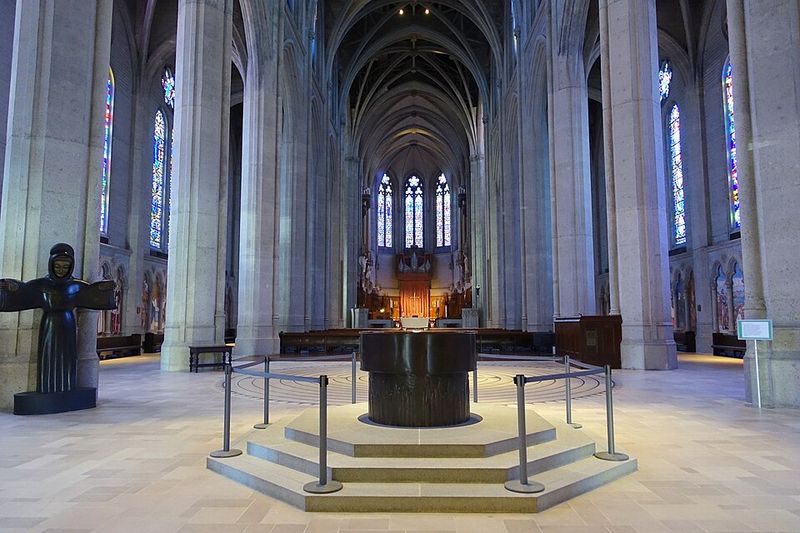
Walking through the main doors and into the nave of Grace Cathedral produces a genuine moment of spatial surprise.
The vaulting rises to 91 feet overhead, and the long central aisle stretches ahead in a way that makes the interior feel even more expansive than the exterior promises.
The rhythm of the columns lining the nave creates a steady visual beat that guides the eye naturally toward the altar.
The height of the vaulted ceiling plays with sound in interesting ways, giving footsteps and whispered conversations a soft reverb that adds to the contemplative atmosphere.
Natural light filters in from the stained glass windows along the side aisles, casting colored patches across the stone floor that shift gradually as the day progresses.
The effect is subtle but genuinely beautiful, especially in the late morning hours when the light angle is most favorable.
For visitors who have spent time in European cathedrals, the interior proportions will feel familiar in a comforting way.
Spending at least thirty minutes inside allows enough time to absorb the space without rushing past its quieter details.
The Ghiberti Doors Add A Direct Florence Connection
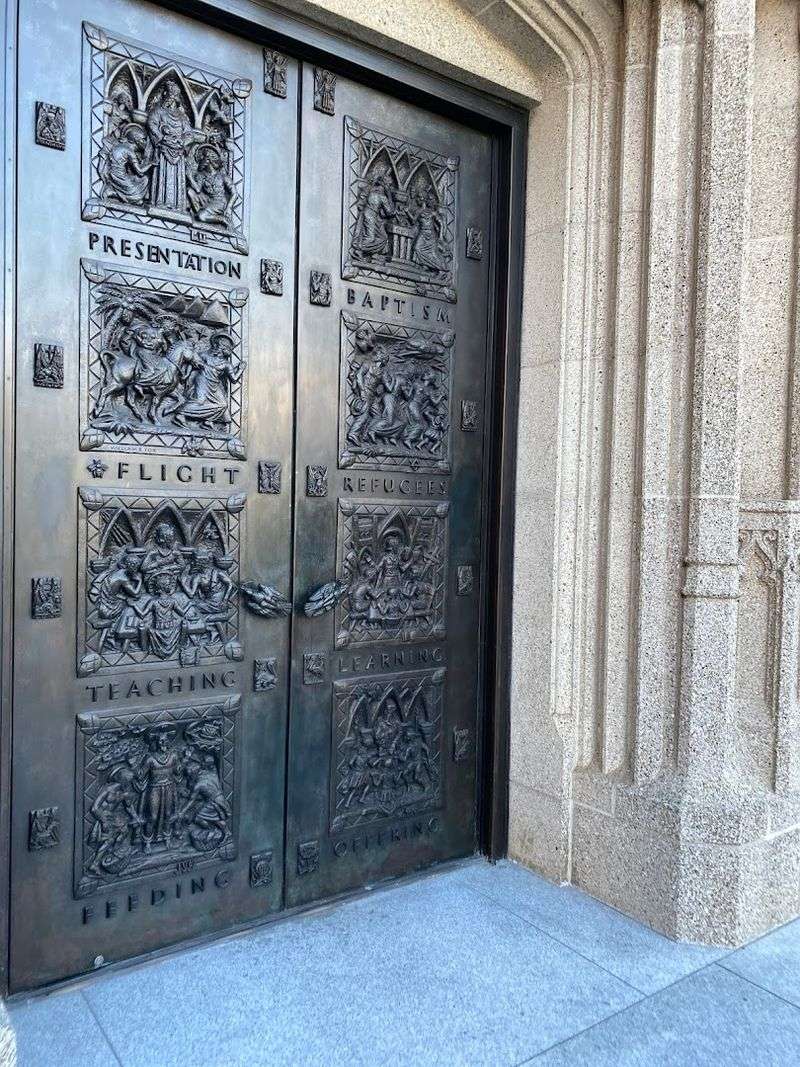
The main entrance to Grace Cathedral features a set of bronze doors finished in gold that replicate Lorenzo Ghiberti’s famous Gates of Paradise from the Florence Baptistery in Italy.
Ghiberti’s original doors, completed in the 15th century, are widely considered among the greatest achievements of Renaissance sculpture, and the decision to place replicas at the cathedral’s entrance was a deliberate gesture toward that European artistic heritage.
Each panel of the doors depicts a scene from the Hebrew Bible, rendered with the same level of relief detail and compositional sophistication as the Florentine originals.
The gilded finish catches light in a warm, almost luminous way that makes the doors stand out even on overcast San Francisco days.
Visitors who take the time to study each panel individually will find the craftsmanship genuinely rewarding rather than merely decorative.
The doors serve as both an artistic statement and a welcoming gesture, framing the act of entering the cathedral as something worth pausing over.
Many visitors photograph the doors before stepping inside, which is understandable given how much visual information is packed into the surface.
Stained Glass Turns The Stonework Into Color
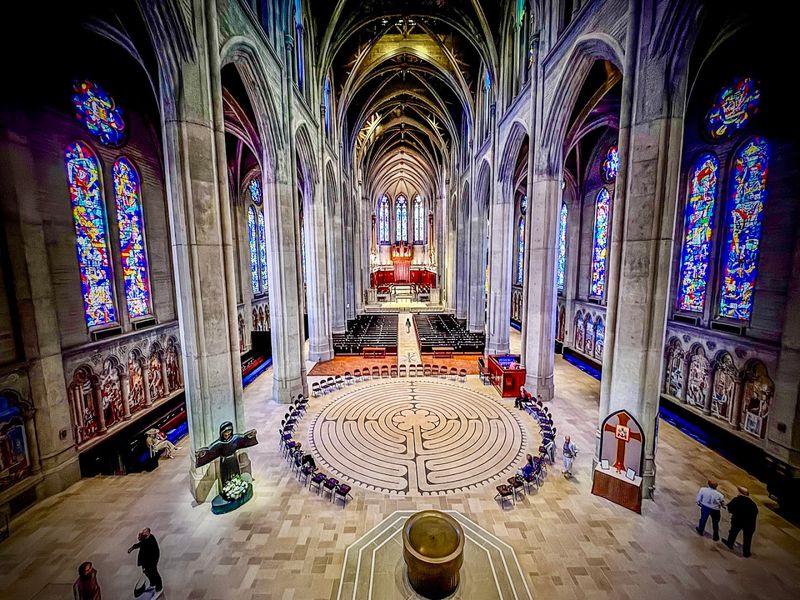
Grace Cathedral contains 7,290 square feet of stained glass windows depicting more than 1,100 figures ranging from Adam and Eve to Albert Einstein.
That range alone hints at the ambition behind the glass program, which treats the windows not just as decoration but as a visual record of human history and spiritual thought.
The Chapel of Grace within the cathedral is particularly notable for holding one of the largest collections of medieval stained glass in the United States.
The effect of so much colored glass on the interior atmosphere is hard to overstate.
On bright days, the light that filters through the windows transforms the stone walls and floors into something that feels almost alive, with shifting patches of blue, red, gold, and green moving slowly across the surfaces.
The visual experience is very much in line with what the original Gothic builders of Europe intended when they designed their great windows centuries ago.
Visitors who want to appreciate the glass most fully should plan to spend time in different parts of the cathedral at different times of day, since the light quality changes significantly between morning and afternoon.
The Chapel of Grace is a quieter space within the larger building and rewards slow, unhurried attention from anyone with an interest in the history and craft of medieval glasswork.
The Art Collection Goes Beyond Church Decoration
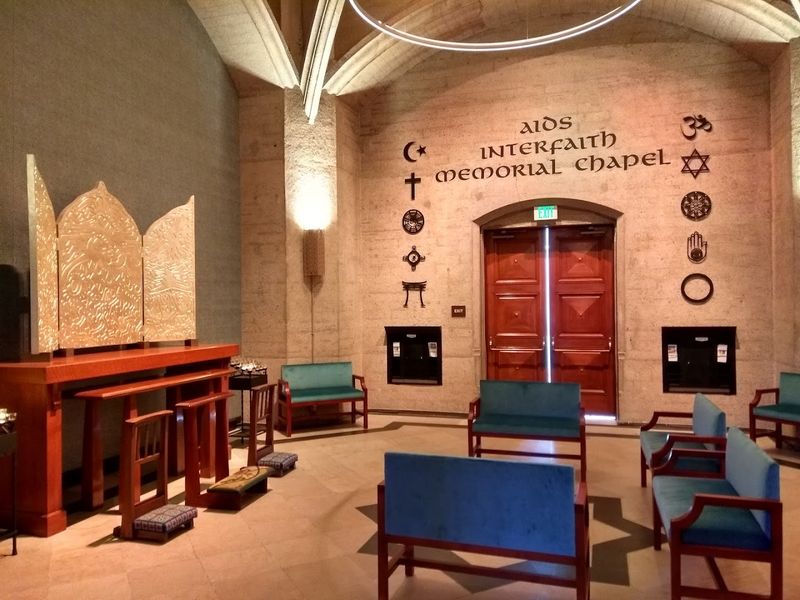
Beyond its architectural and liturgical elements, Grace Cathedral functions as a serious art venue with a collection that spans centuries and styles.
The Keith Haring AIDS Chapel altarpiece is among the most discussed pieces in the building, bringing the bold graphic language of late 20th-century street art into direct conversation with the Gothic stonework surrounding it.
The visual contrast is striking and intentional, and it gives the cathedral a contemporary edge that many historic religious buildings lack.
A work by David LaChapelle titled Our Lady of the Flowers adds another layer of contemporary visual culture to the collection, sitting alongside murals by Jan Henryk De Rosen and Antonio Sotomayor.
The De Rosen and Sotomayor murals include scenes from the 1906 earthquake and the signing of the United Nations Charter, grounding the cathedral’s art program in local and global history simultaneously.
The breadth of the collection means that a visit to Grace Cathedral works as both a spiritual and a cultural experience, with enough visual material to engage visitors who come primarily for the art rather than the architecture or the liturgy.
Taking time to move through the building slowly and look at the walls as well as the windows reveals a layered visual program that rewards genuine curiosity and unhurried attention.
The Organ And Carillon Add Another Layer Of Grandeur
Sound is as much a part of the Grace Cathedral experience as sight, and the building’s acoustic instruments are a significant part of what makes the space feel complete.
The Aeolian-Skinner pipe organ is among the largest pipe organs in the western United States, and when it plays, the sound fills the nave with a richness that the 91-foot vaulted ceiling amplifies in a deeply satisfying way.
The instrument has a tonal range and volume that genuinely matches the architectural scale of the room around it.
The cathedral also houses a 44-bell carillon, which can be heard from the surrounding streets and plaza when it rings.
Carillon bells have a different quality from standard church bells, producing a melodic, layered sound that carries well over distance and adds a distinctly European character to the Nob Hill neighborhood.
On days when the carillon is played, the sound drifts down the hill in a way that feels both historic and unexpectedly moving.
The cathedral hosts regular musical events and services that make use of both instruments, and checking the events calendar before a visit is a practical way to plan around a performance.
Hearing the organ or carillon live within the cathedral adds a sensory dimension to the visit that photographs and descriptions simply cannot capture, and it is one of the experiences that tends to stay with visitors for long.
The Building Took Decades To Finish
Few buildings in San Francisco carry as much layered history as Grace Cathedral, and understanding the timeline makes the finished structure feel even more remarkable.
The ancestral congregation, Grace Church, was established in 1849 during the California Gold Rush, making it one of the oldest Episcopal communities on the West Coast.
The original church building was destroyed in the catastrophic 1906 earthquake, which reset the entire project and led to the decision to build something far more permanent and ambitious.
Construction on the current cathedral began in 1927 on land donated by the Crocker family, and the building opened enough for regular use by 1934.
Full consecration did not come until 1964, meaning the project spanned nearly four decades from groundbreaking to completion.
That kind of extended construction timeline was common among the great European cathedrals that inspired the design, which gives Grace Cathedral an unexpected historical parallel to its architectural models.
In 1984, Grace Cathedral along with the Crocker walls and Diocesan House was designated San Francisco City Landmark No. 170, a recognition that formalized its place in the city’s architectural and cultural heritage.
The landmark status adds a layer of civic significance to the building that sits alongside its religious and artistic identity, making it a place that belongs to the broader story of San Francisco as much as to any single community.