11 California Hikes That Lead To Historic Ruins, Forgotten Relics, And Old Structures
Some hikes come with better plot twists than others.
A trail can start with the usual promises. Fresh air. Dirt underfoot. Views that make the uphill part feel slightly less rude.
Then an old wall appears. Or a rusted relic. Or the remains of a structure that clearly had a whole life before hikers started taking photos of it.
Just like that, the walk has a mystery attached.
California trails get extra interesting when history refuses to stay indoors. These hikes lead to places where the past still has something visible to say.
Some routes pass old mining remains. Others reveal abandoned buildings, weathered foundations or ruins slowly being claimed by the landscape.
The scenery matters, of course. But the real surprise is finding evidence that people worked, built, and dreamed at these places long before they became weekend destinations.
A hike like that changes the pace. People slow down. They look closer. They start wondering what stood there and how much of the story the trail still remembers.
1. Solstice Canyon Trail, Malibu (Tropical Terrace/Roberts Ranch Ruins)
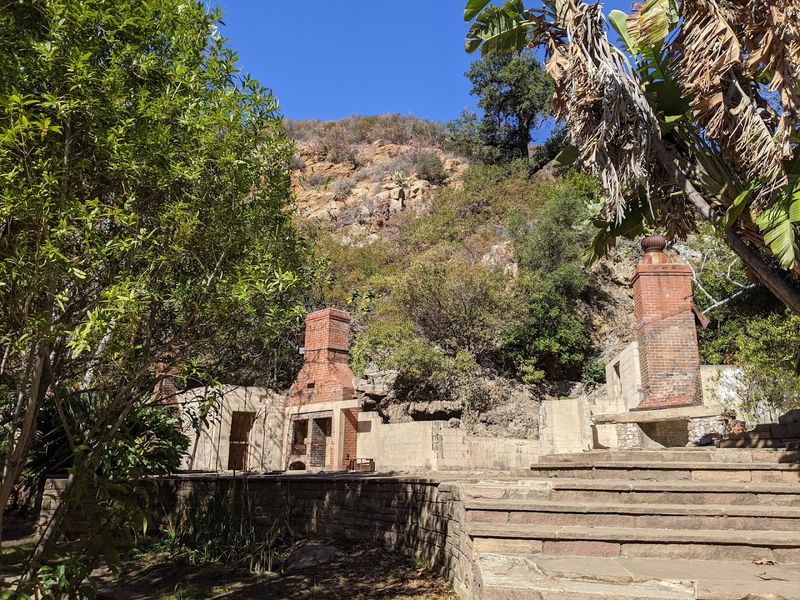
Few hikes in Southern California pack as much history and scenery into such a short distance as Solstice Canyon Trail in Malibu.
The round trip clocks in at roughly two miles, making it accessible for most fitness levels, including families with older kids who enjoy a bit of exploration.
The path follows a shaded creek through coastal canyon vegetation before opening up to the dramatic stone ruins of the Roberts Ranch, also known as Tropical Terrace.
Built in the 1950s and later destroyed by wildfire in 1982, the ruins include crumbling fireplaces, stone walls, and a small waterfall that spills over mossy rocks nearby.
The contrast between the lush greenery and the charred, weathered stonework gives the site a moody, almost cinematic atmosphere.
Visitors often find themselves lingering longer than expected, circling the ruins and piecing together what the estate might have looked like in its prime.
Parking is available at the Santa Monica Mountains Conservancy trailhead lot, and the trail is open daily.
Weekday mornings tend to be quieter, which makes for a more reflective experience among the old walls. Comfortable walking shoes work fine since the terrain stays relatively flat throughout most of the route.
2. Wolf House Historic Trail, Jack London State Historic Park, Glen Ellen
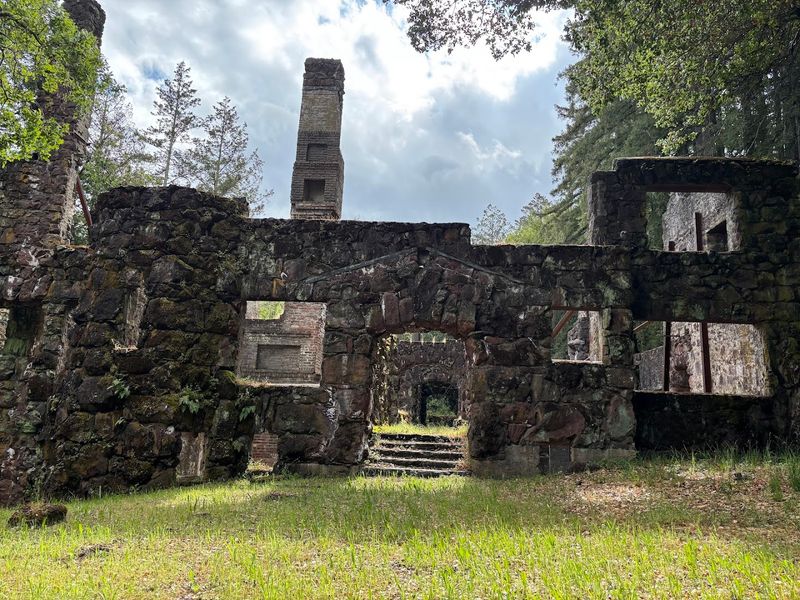
Jack London State Historic Park in Glen Ellen holds one of the most emotionally charged ruins in all of California.
The Wolf House trail leads to the skeletal remains of a grand stone mansion that the famous author spent years planning and building, only to see it burn to the ground just days before he was set to move in, back in 1913.
The cause of the fire was never definitively determined, and the mystery still lingers around the mossy stone walls today.
The trail itself is a comfortable walk through forested hillside terrain, with interpretive signs along the way that fill in the story of London’s life and his deep connection to the land.
Reaching the ruins feels genuinely moving, especially standing inside the roofless shell and looking up at sky where ceilings once were planned.
The scale of the structure makes clear just how ambitious London’s vision had been.
The park also includes a museum, London’s grave site, and the cottage where he actually lived and wrote.
Admission fees apply for entry into the park, and hours can vary by season so checking ahead before visiting is a good idea. The trail to Wolf House is well-marked and easy to follow year-round.
3. Fall Creek Lime Kiln Trail, Henry Cowell Redwoods State Park, Felton
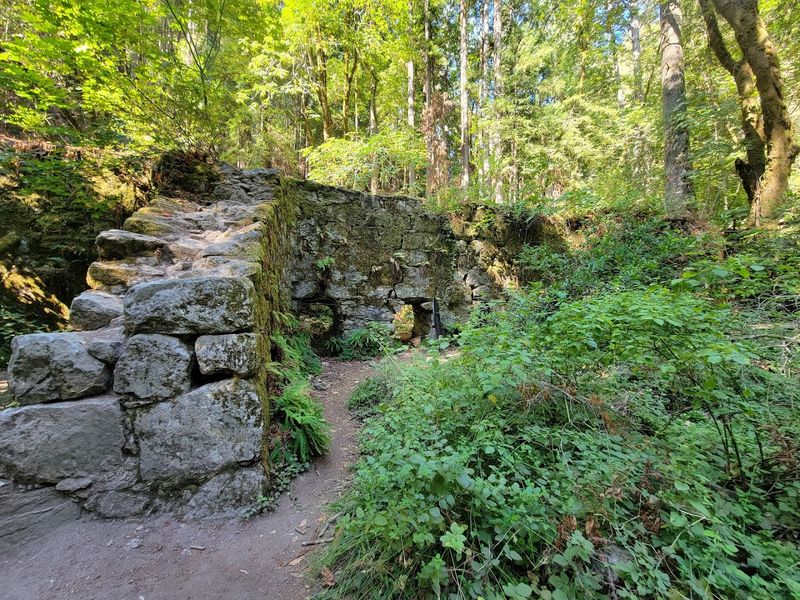
In the redwood-shaded canyon of Fall Creek, a quiet and largely undervisited section of Henry Cowell Redwoods State Park near Felton holds a collection of remarkably well-preserved 19th-century lime kilns.
These stone furnaces were used in the 1870s and 1880s to process limestone quarried from the surrounding hills, and the resulting lime was shipped out to help build much of early San Francisco.
Walking through this forest today, it is genuinely surprising to stumble upon industrial ruins of this scale hiding among the ferns and redwoods.
The trail system in the Fall Creek unit winds through several miles of peaceful forest, and the lime kilns appear at various points along the way.
The stonework remains in impressive condition, with thick walls and arched openings that still hold their shape after more than a century of abandonment.
Signs along the route provide historical context that helps visitors understand the scale of what was once a busy industrial operation in this now-tranquil canyon.
The Fall Creek unit has its own separate parking area from the main park entrance, so arriving with directions specific to that section saves confusion.
Trail surfaces can get muddy during wet months, so waterproof footwear is a practical choice for winter and spring visits.
4. Empire Mine State Historic Park Trails, Grass Valley
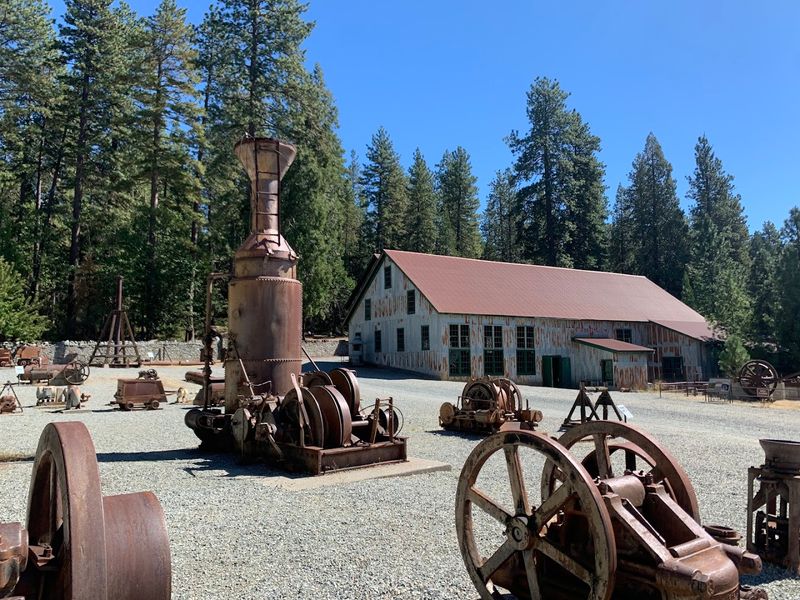
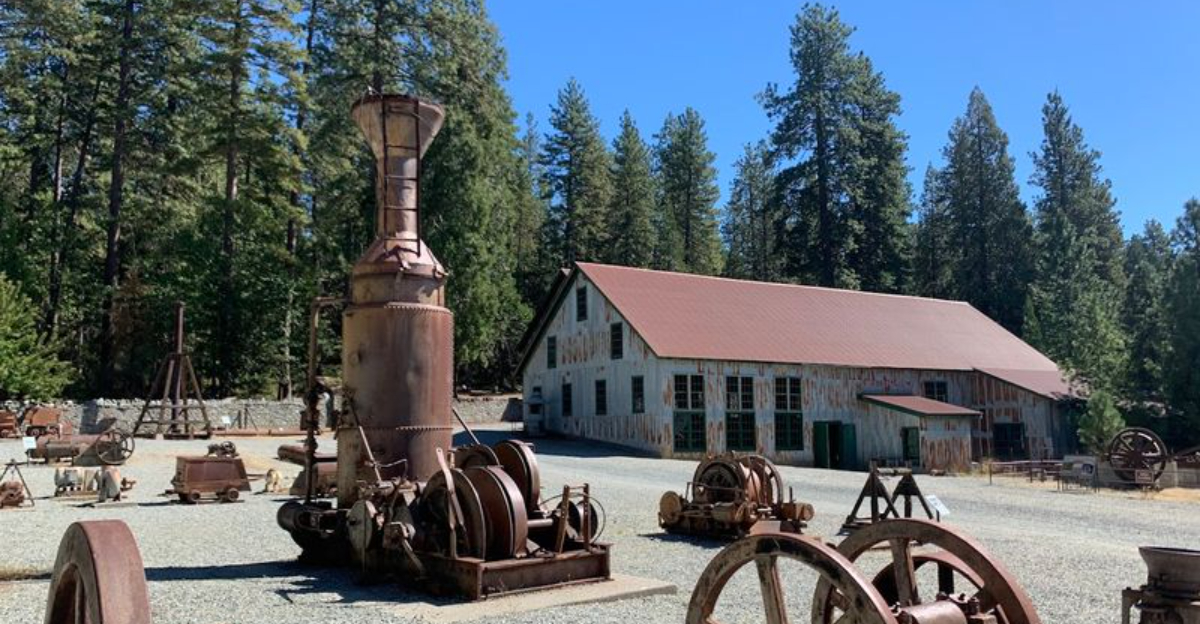
Gold rush history feels tangible at Empire Mine State Historic Park in Grass Valley, where the trails wind past more than a century’s worth of hardrock mining infrastructure still standing in various states of preservation.
Operating from 1850 until 1956, the Empire Mine was one of the oldest, largest, and richest gold mines in California, and the park does an excellent job of conveying just how massive the operation once was.
Stone buildings, mine shaft openings, rusted machinery, and the owner’s cottage all remain on the grounds.
Several trail loops run through the property, including the Union Hill, Hardrock, and Osborn Hill routes, each offering a slightly different perspective on the mining landscape.
The Hardrock Trail in particular passes through areas where the scale of underground tunneling becomes easier to comprehend when standing above the collapsed terrain.
Informational signs placed throughout the park connect the physical remnants to the broader story of California’s gold rush era.
The park is located at 10791 East Empire Street in Grass Valley and is open to visitors most days of the year, with a small admission fee that supports ongoing preservation efforts.
Guided tours are sometimes available and offer deeper context than self-guided walking alone. Comfortable sneakers or light hiking shoes handle the trail surfaces well.
5. Big Horn Mine Trail, Angeles National Forest, near Wrightwood
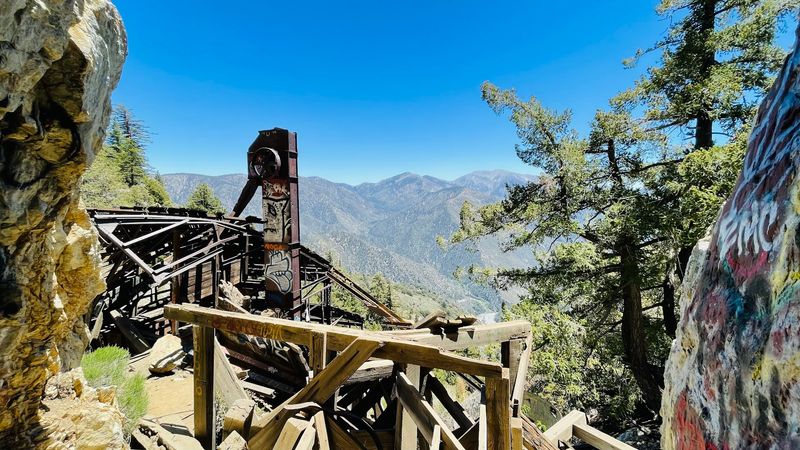
Reaching the Big Horn Mine requires a solid commitment, but the payoff makes every step worthwhile for anyone fascinated by California’s gold mining past.
Located in Angeles National Forest near Wrightwood, this hike leads to an abandoned gold mine established in 1895, complete with a stamp mill complex and the weathered remains of the cabin belonging to Charles T. Vincent, the man credited with discovering the deposit.
The combination of industrial ruins and personal history gives the site a layered quality that goes beyond a typical trail destination.
The route gains significant elevation and covers rugged terrain, so proper footwear, plenty of water, and a reasonable fitness level are genuinely necessary rather than optional suggestions.
Along the way, the canyon scenery shifts from chaparral-covered slopes to rocky alpine terrain, offering sweeping views that reward the effort even before the mine comes into view.
The stamp mill structure, while weathered, still conveys the mechanical ingenuity that early miners brought to remote mountain operations.
Visitors should be aware that conditions in the San Gabriel Mountains can change quickly, especially at higher elevations, and trail conditions may vary seasonally.
Checking current conditions with the Angeles National Forest ranger station before heading out is always a practical step. The trail is best attempted in spring or fall when temperatures stay manageable.
6. Bridge to Nowhere via East Fork Trail, San Gabriel Mountains, near Azusa
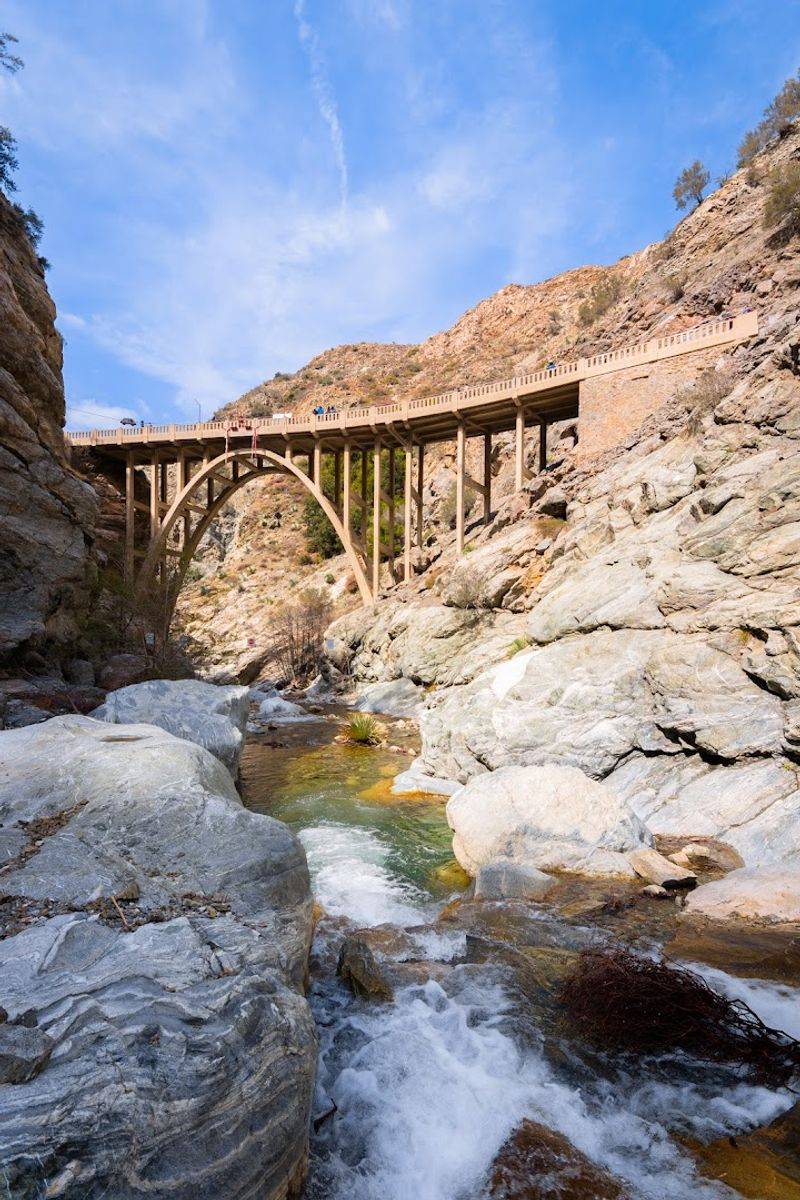
Standing in the middle of a concrete bridge with no road on either side and canyon walls rising in every direction is one of the more surreal experiences available on a California hiking trail.
The Bridge to Nowhere was constructed in 1936 as part of an ambitious plan to build a highway through the San Gabriel Mountains, but a catastrophic flood in 1938 wiped out the approach roads before the project could be completed.
The structure has remained there ever since, a monument to an infrastructure dream that never made it past the first major obstacle.
Getting there requires crossing the East Fork of the San Gabriel River multiple times, which means wet feet are essentially guaranteed during higher water periods.
The round trip covers roughly ten miles of rocky canyon terrain, and the river crossings add an adventurous element that many hikers find genuinely enjoyable.
Bungee jumping operations have historically used the bridge as a platform, adding an unexpected modern layer to this historical relic.
Starting early in the morning is strongly recommended, particularly on weekends when the trail draws significant crowds.
Trekking poles help with the river crossings, and water shoes or sandals that can handle rocky creek beds make the wading sections far more comfortable than standard trail runners.
7. Skyline Drive Trail to Beek’s Place, Corona/Santa Ana Mountains

Not many Southern California hikes offer the combination of solitude, mountain views, and genuine historical mystery that the route to Beek’s Place delivers.
Located in the Santa Ana Mountains near Corona, the site consists of old stone homestead ruins that sit quietly at the end of a long and demanding trail, roughly ten and a half miles round trip with considerable elevation change.
The identity of who built the structure and exactly when remains somewhat unclear, which adds to the appeal for hikers who enjoy a destination with a bit of unresolved backstory.
The trail passes through chaparral-covered ridgelines with panoramic views toward the Inland Empire and, on clear days, all the way to the coast.
The rugged terrain means this hike is better suited to experienced hikers who are comfortable with sustained climbs and limited shade for long stretches.
Carrying at least two to three liters of water per person is not an exaggeration given the exposure and distance involved.
Spring is widely considered the best season for this route, when wildflowers add color to the hillsides and temperatures stay in a comfortable range before summer heat sets in.
The trail falls within the Cleveland National Forest, and a valid Adventure Pass may be required for parking at the trailhead.
Checking current trail conditions and fire closure status before visiting is a reliable habit to build for any Santa Ana Mountains hike.
8. Angel Island Perimeter Road, Angel Island State Park, San Francisco Bay
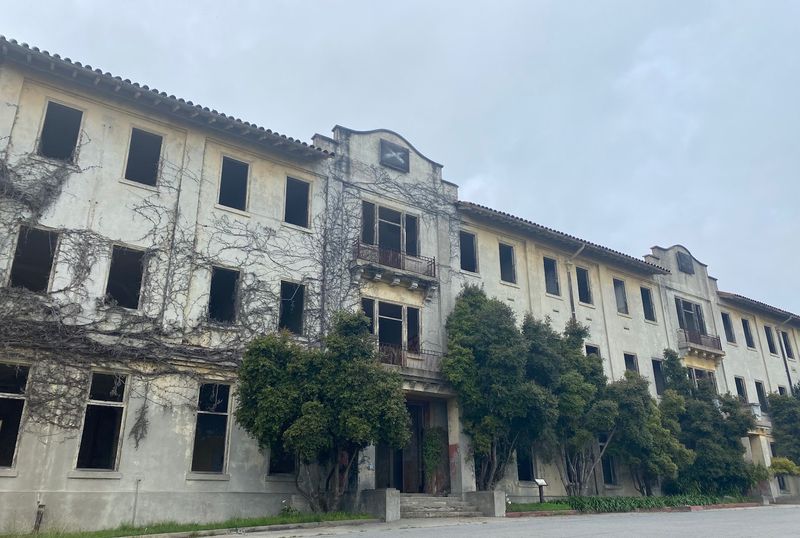
Sitting in the middle of San Francisco Bay, Angel Island holds more layers of California history than most visitors expect from a single island.
The perimeter road loops around the island for roughly five miles, passing military fortifications from multiple eras.
The variety of historic structures encountered along the route makes the walk feel more like an open-air museum than a standard trail.
Camp Reynolds, built during the Civil War era, features some of the oldest surviving military structures on the island.
Point Blunt and Point Stuart each hold their own collections of early 20th-century military buildings, some restored and some left in a state of atmospheric decay that tells its own story.
The immigration station, which processed hundreds of thousands of arrivals primarily from Asia between 1910 and 1940, has been preserved and turned into a museum with tours available on select days.
Reaching the island requires a ferry from either San Francisco’s Pier 41 or Tiburon, with schedules varying by season.
Bikes can be rented on the island for those who prefer to cover the perimeter road with a bit more speed.
Comfortable walking shoes work well, and bringing layers is practical since bay wind can make the exposed sections feel considerably cooler than the mainland.
9. Burleigh H. Murray Ranch Trail, Half Moon Bay
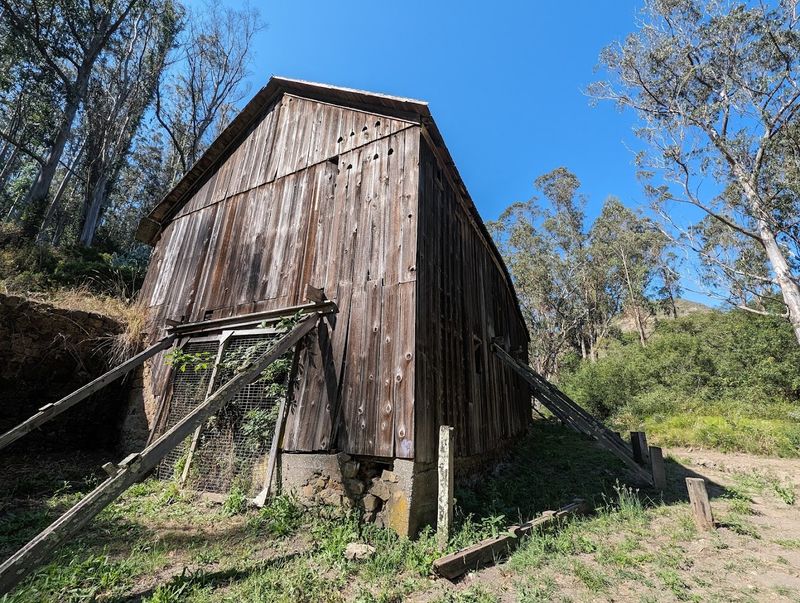
A short drive south of Half Moon Bay leads to one of the more quietly rewarding historical hikes on the San Mateo County coast.
The Burleigh H. Murray Ranch Trail follows a gentle creek through a pastoral canyon to a collection of historic ranch outbuildings, with the centerpiece being a large English-style bank barn built in the 1890s known as the Mills Barn.
The structure is remarkably intact for its age and stands as a striking reminder of the agricultural history that shaped this coastal stretch long before the area became known for its beaches and pumpkin farms.
The trail itself covers about two and a half miles one way and stays relatively flat, following the creek through willows and coastal scrub before opening into the ranch clearing.
The barn’s weathered wood and stone foundation give it a photogenic quality that rewards anyone who brings a camera.
Additional outbuildings scattered around the site hint at the scale of what was once a working cattle and dairy operation.
The ranch is managed as part of the California State Parks system and is generally open for day use.
No admission fee is charged for the trail, making it an accessible option for families or anyone looking for a low-key historical outing near the coast.
Trail surfaces stay mostly firm but can get soft near the creek after heavy rain.
10. Bodie State Historic Park Walking Route, near Bridgeport
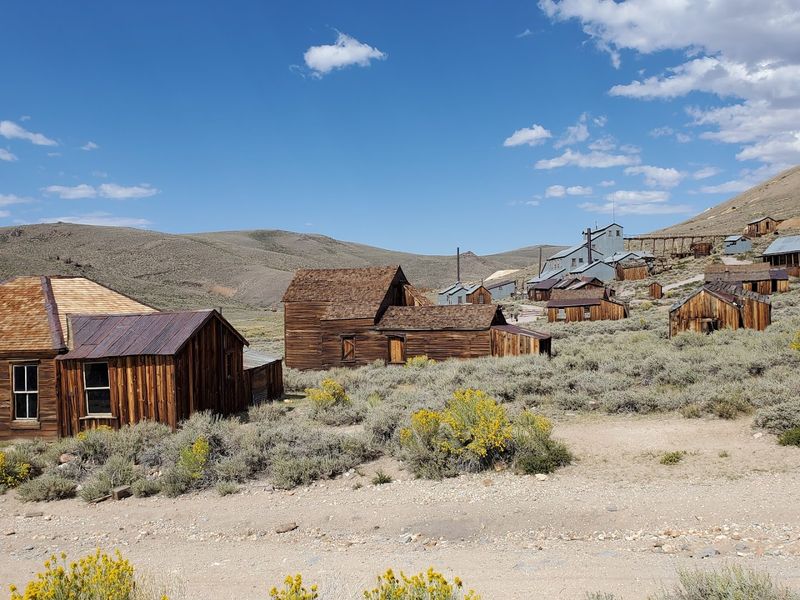
California’s most famous ghost town does not require a difficult hike to explore, but the walk through its preserved streets feels unlike anything else the state has to offer.
Bodie State Historic Park sits at over 8,000 feet elevation in the high desert near Bridgeport, and the extreme climate that made life here brutal for its 19th-century residents is also what helped preserve so many of the original structures.
Buildings lean, paint peels, and furniture sits exactly where it was left when the last residents moved out decades ago.
At its peak in the late 1870s, Bodie was home to nearly 10,000 people and had a reputation as one of the roughest mining towns in the American West.
Today, roughly 200 structures remain standing across the townsite, including a church, a stamp mill, and dozens of residential and commercial buildings that visitors can peer into through dusty windows.
The park offers self-guided walking routes with informational signs that bring the history of specific buildings to life.
The park is located about 13 miles east of Highway 395 on a partially unpaved road, and the last few miles may require a high-clearance vehicle depending on conditions.
The park is typically open from late spring through fall, and the high elevation means temperatures can drop sharply even on summer afternoons, so bringing an extra layer is always a smart move.
11. Old LA Zoo Loop, Griffith Park, Los Angeles
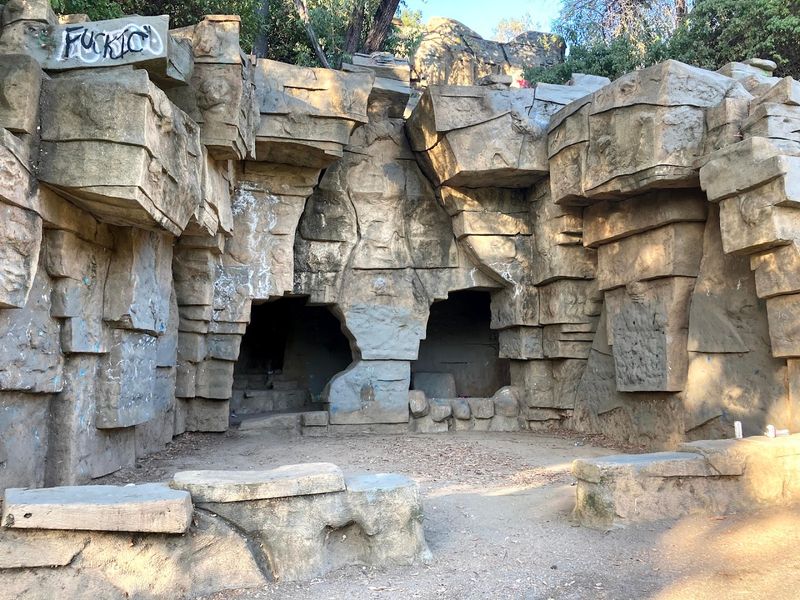
Griffith Park holds more history than most Angelenos realize, and one of its strangest and most memorable corners is the site of the original Los Angeles Zoo, which operated from 1912 until 1966 before relocating to its current facility nearby.
The Old LA Zoo Loop is a short and easy trail that winds past the abandoned animal enclosures left behind after the move, including concrete grottos and fenced pits that once housed bears, big cats, and other animals.
The structures have been left largely as-is, creating an eerie and fascinating open-air relic right in the middle of the park.
Families with kids often find the old cages surprisingly engaging, sparking conversations about how zoos have changed over the decades and how animal care standards have evolved significantly since the early 20th century.
Picnic areas have been set up among the ruins, making it a popular spot for casual weekend outings that combine a bit of walking with a relaxed meal in an unusual setting.
The vegetation growing over and around the concrete structures adds to the atmosphere.
The loop is accessible from several Griffith Park entry points and requires no permit or admission fee.
Parking is available in the park’s general lots, though weekend afternoons can get crowded since Griffith
Park draws visitors from across the Los Angeles metro area. The terrain is gentle and paved in sections, making it suitable for most visitors regardless of fitness level.