12 California Mountaintop Observatories And Skywatching Spots Where The Night Feels Bigger
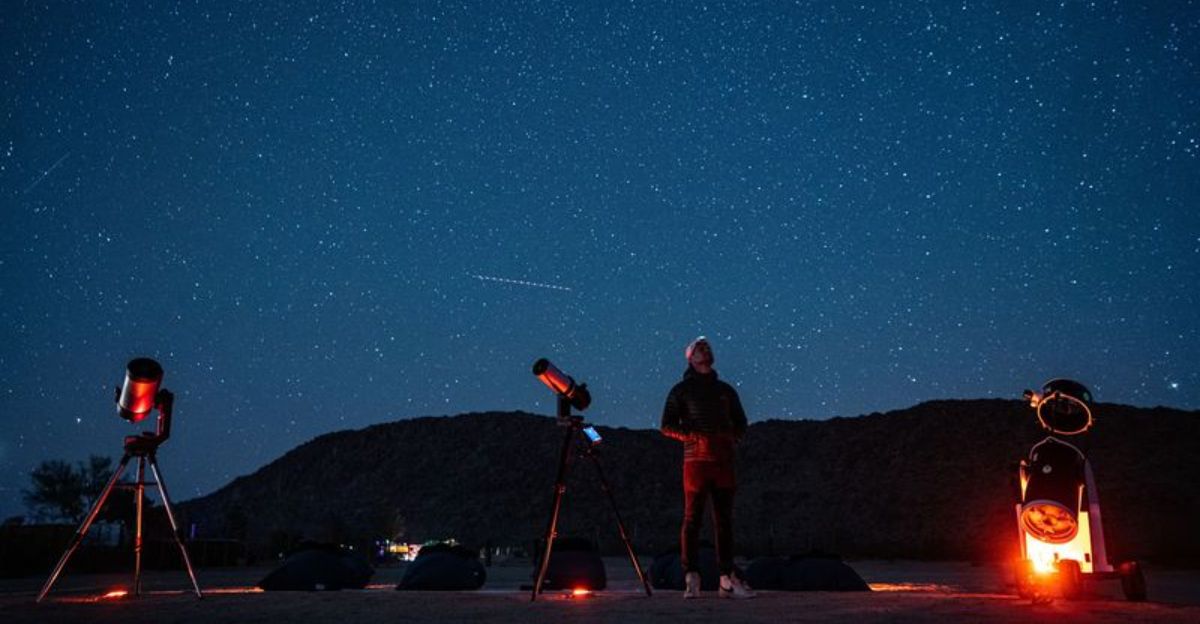
City nights have a ceiling. Mountain nights do not.
Climb high enough and the sky stops feeling like background scenery. It becomes the whole reason nobody is talking much.
That is the pull of observatories and serious skywatching spots.
They make people remember that looking up can still feel exciting. In the real way, where the air gets cooler and someone says they had no idea there were that many stars.
Up in California’s higher places, the night can feel bigger than the map.
Maybe you go for planets. Maybe you go for meteor showers.
Maybe you just want one evening that makes your phone feel useless for a while.
These spots make the sky feel close enough to hold your attention and huge enough to reset your mood.
1. Mount Wilson Observatory
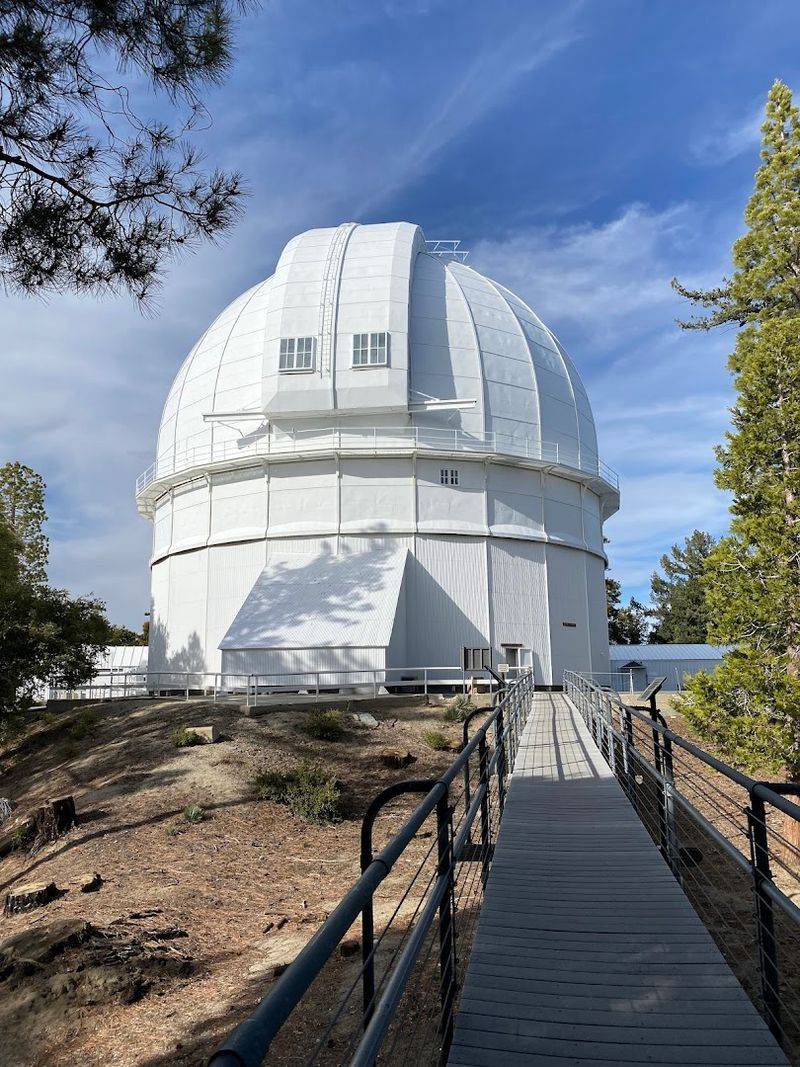
Perched at 5,710 feet in the San Gabriel Mountains above Pasadena, Mount Wilson Observatory has been one of California’s most important scientific landmarks since its founding in 1904.
The observatory grounds are open daily, and the Cosmic Cafe operates on weekends for visitors who want to grab something to eat while taking in the mountain views.
Public programs run seasonally and include observing sessions through historic telescopes, astronomy lectures, and even concerts held during spring and summer evenings.
The telescopes here are genuinely large by public-access standards, and getting a look through one of them on a clear night is a memorable experience.
Mount Wilson Road leads up to the site from the Angeles Crest Highway, and the drive itself offers sweeping views of the greater Los Angeles basin below.
Arriving early on a program night gives visitors time to walk the grounds before dark and get oriented with the layout.
Light pollution from the city below is noticeable but the elevation still provides impressive views, especially of planets and the moon during scheduled public nights.
2. Palomar Observatory
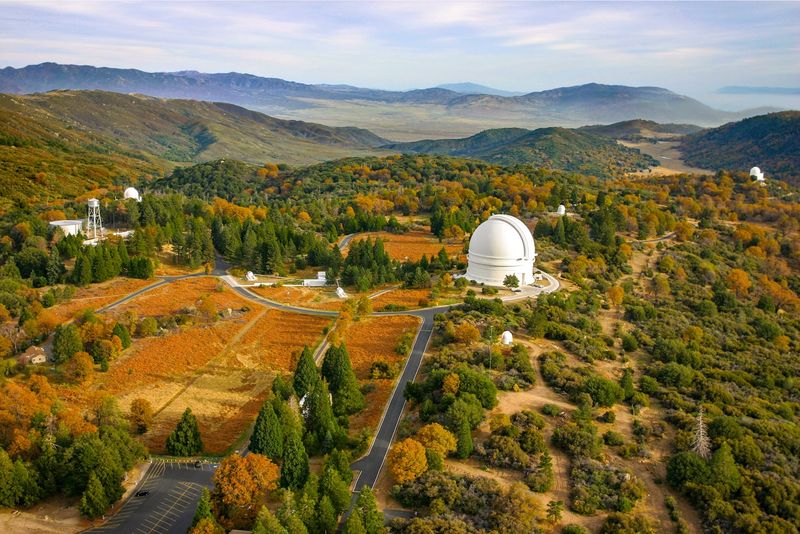
Sitting high on Palomar Mountain in northern San Diego County, Palomar Observatory is home to the legendary 200-inch Hale Telescope, one of the most celebrated instruments in the history of astronomy.
The facility is owned and operated by Caltech and welcomes visitors for self-guided tours of the Hale Telescope daily from 9 a.m. to 3 p.m.
Guided tours are available on Saturdays and Sundays from April through October, offering a more in-depth look at the telescope and the science behind it.
The observatory is located at 35899 Canfield Road on Palomar Mountain, and the Greenway Visitor Center on-site includes exhibits and a gift shop worth browsing.
The mountain itself sits at roughly 5,500 feet, which means temperatures can be noticeably cooler than the surrounding lowlands even in summer.
Visitors who time their trip around one of the observatory’s periodic public events get the added benefit of hearing from scientists and seeing the telescope in action.
The surrounding Palomar Mountain area also has campgrounds and state park land nearby, making it possible to extend a visit into an overnight trip for serious stargazers.
3. Lick Observatory
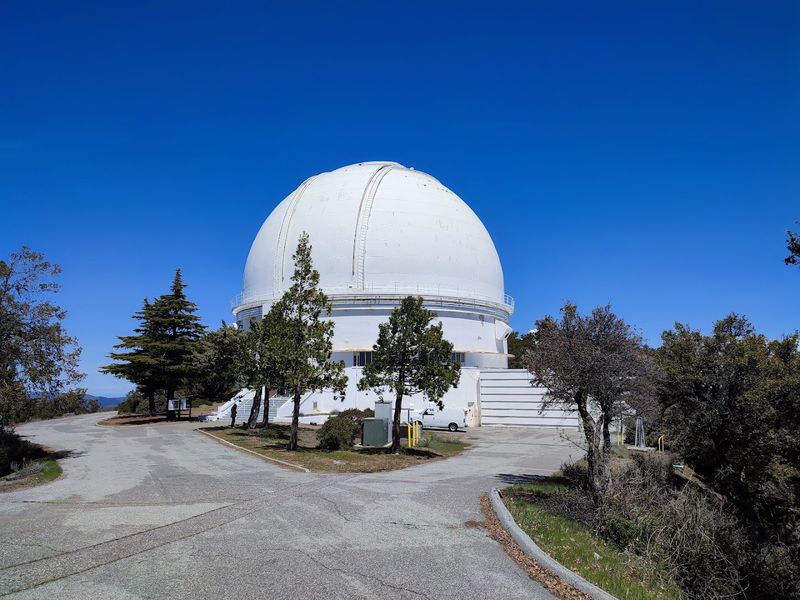
Operated by the University of California since 1888, Lick Observatory sits atop Mount Hamilton at an elevation of about 4,200 feet, roughly 20 miles east of downtown San Jose.
The drive up Mount Hamilton Road is winding and scenic, and the observatory complex comes into view gradually as the summit approaches.
Friday Evening with the Stars events are a highlight here, combining astronomy talks by working scientists with public viewing through the 36-inch Great Lick Refractor and the 40-inch Nickel Reflector.
Summer programming at Lick also includes Music of the Spheres, a series that pairs live concerts with evening tours of the 3-meter Shane Telescope.
The combination of music and stargazing at high elevation makes for an unusual and genuinely enjoyable outing.
Visitor access details and event schedules are worth checking in advance since conditions and programming can shift seasonally.
The mountaintop setting means evenings can turn cold quickly, so layering up before the sun sets is a practical move for anyone attending an outdoor event here.
4. Griffith Observatory
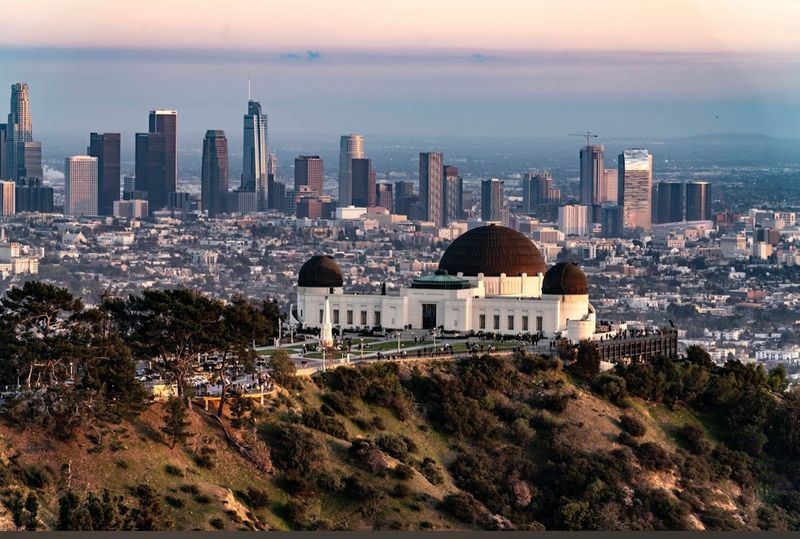
Sitting on the south slope of Mount Hollywood in Los Angeles, Griffith Observatory is California’s most visited public observatory and one of the most recognizable landmarks in the entire state.
The building at 2800 East Observatory Road offers free admission to the grounds and public telescopes, along with exhibits and live shows in the Samuel Oschin Planetarium.
Panoramic views of Los Angeles and the Hollywood Sign add a dramatic backdrop that makes even a daytime visit feel worthwhile.
The observatory is closed on Mondays, so planning around that detail avoids an unnecessary trip.
Weekends draw large crowds, and arriving closer to opening time on a weekday tends to offer a more relaxed experience.
The public telescopes on the roof allow visitors to look at the moon, planets, and occasionally double stars depending on the night and the season.
Griffith is not a remote dark sky location, but the combination of accessible astronomy programming, stunning city views, and free entry makes it an easy first stop for anyone building interest in skywatching across California.
5. Mount Laguna Observatory
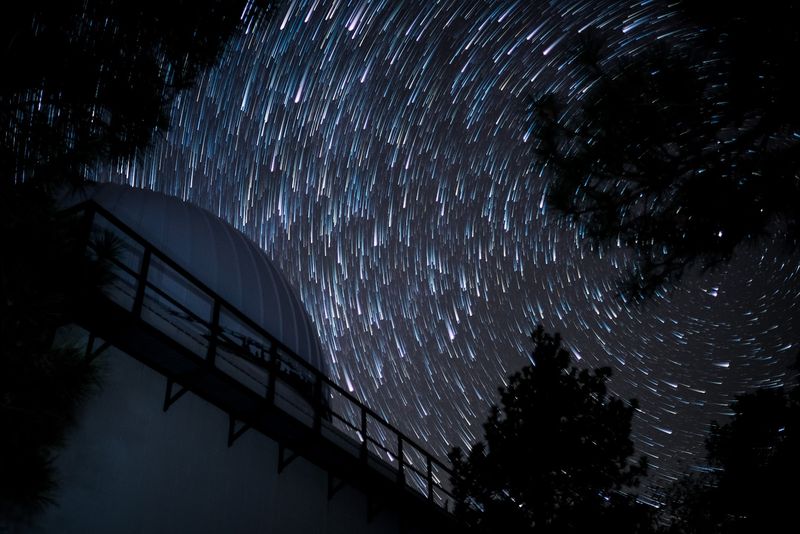
In the pine-covered highlands of San Diego County, Mount Laguna Observatory belongs to San Diego State University and sits at an elevation of about 6,100 feet above sea level.
The elevation and relative distance from major city centers give the site noticeably darker skies than most of coastal Southern California.
A visitors’ telescope at the facility is used for special public outreach programs, including summer viewing opportunities that allow guests to observe through research-quality equipment.
Public programs at Mount Laguna tend to be smaller and more intimate than those at larger observatories, which can make the experience feel more personal and educational.
The surrounding area on Mount Laguna is part of the Cleveland National Forest, and the landscape of tall conifers and open meadows adds to the atmosphere on a clear night.
Checking the SDSU astronomy department’s schedule ahead of time is the best way to confirm upcoming public events since programming is offered on a seasonal basis.
Bringing warm layers is strongly recommended because mountain temperatures at this elevation drop significantly after sunset even during the summer months.
6. Mount Pinos Chula Vista Parking Area
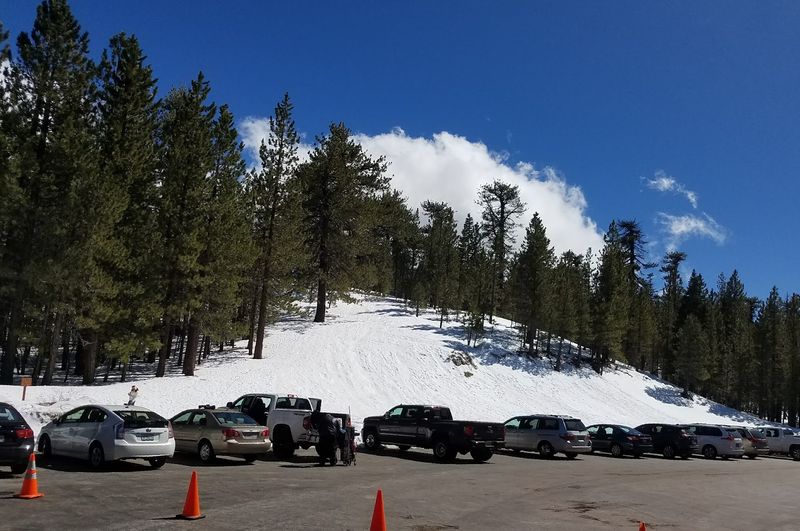
Among amateur astronomers in Southern California, Mount Pinos holds a near-legendary reputation as one of the best accessible dark sky sites in the region.
Located near Frazier Park in Ventura County at an elevation of roughly 8,831 feet, the Chula Vista parking area near the summit is a well-known gathering spot for telescope users on clear nights.
Low light pollution, high elevation, and frequent clear conditions make this spot genuinely productive for deep-sky observing.
No formal programs or observatory buildings are present here, which means the experience is entirely self-directed and requires bringing personal equipment or joining informal groups that gather on popular observing nights.
Weekend evenings around the new moon phase tend to attract the largest crowds of amateur astronomers, and seeing rows of telescopes set up under a blazing sky is a sight in itself.
The road to the summit can be snow-covered during winter and early spring, so checking road conditions before making the drive is essential.
Summer and early fall nights offer the most reliable access and the best combination of dark skies and comfortable temperatures at this elevation.
7. Mount Tamalpais State Park Rock Spring Area
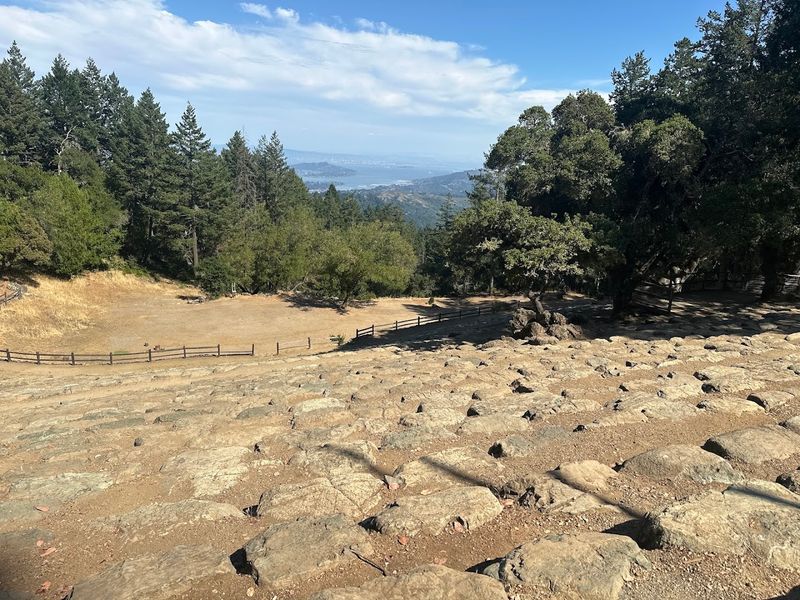
Rising above the Marin County hills northwest of San Francisco, Mount Tamalpais State Park offers one of the stronger Bay Area options for organized nighttime astronomy.
The Rock Spring area serves as a gathering point for astronomy programs that run between the new moon and first-quarter moon from April through October.
These programs are coordinated to take advantage of the darkest nights in the monthly lunar cycle, which significantly improves sky quality for observers.
The park sits at elevations ranging from sea level to about 2,571 feet at the summit, and the Rock Spring area provides open sky views with relatively minimal obstruction from surrounding terrain.
Coastal fog is a real factor on the peninsula, and checking local forecasts before heading out helps avoid arriving at a socked-in hilltop.
The drive up the mountain is scenic and accessible from Mill Valley, making it a reasonable evening excursion for Bay Area residents.
Layering clothing is a consistent recommendation for any evening spent outdoors here since marine air can make temperatures feel much colder than expected even on summer nights.
8. Glacier Point at Yosemite National Park
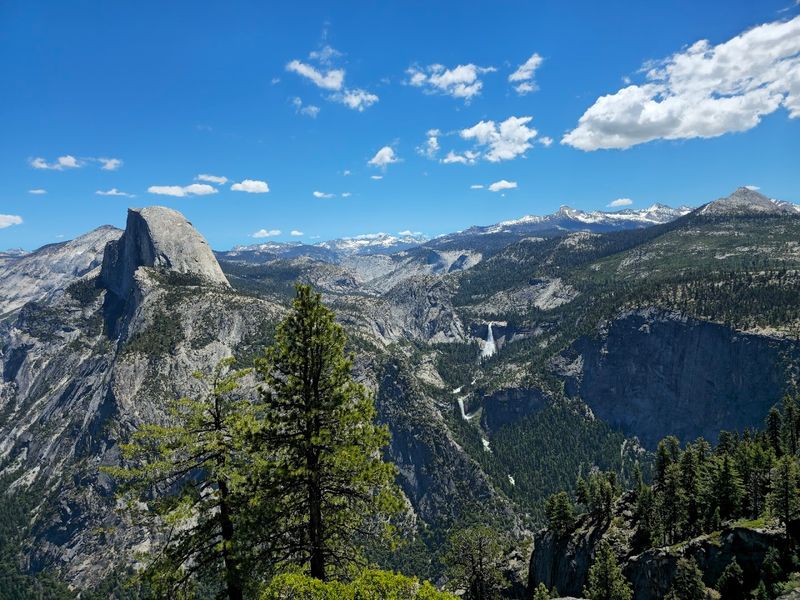
At roughly 7,214 feet above sea level, Glacier Point delivers one of the most dramatic stargazing backdrops available anywhere in California.
The viewpoint looks out over Yosemite Valley with Half Dome directly in sight, and on a clear moonless night the sky above fills with stars in a way that feels genuinely overwhelming.
Access to Glacier Point Road is generally open from late May through November, with exact timing depending on snowpack and road conditions each year.
The combination of high elevation, granite surroundings, and the absence of nearby urban light pollution makes the Milky Way visible to the naked eye during peak summer nights.
Ranger-led programs have historically been offered at Glacier Point during the summer season, though checking the Yosemite National Park website for current programming is always the reliable way to confirm availability.
Parking at the point can fill quickly on summer evenings, so arriving before sunset is a practical strategy.
The area gets cold after dark at this elevation, and wind can pick up considerably, so packing extra layers and a windbreaker makes the experience much more comfortable.
9. Sky’s The Limit Observatory and Nature Center
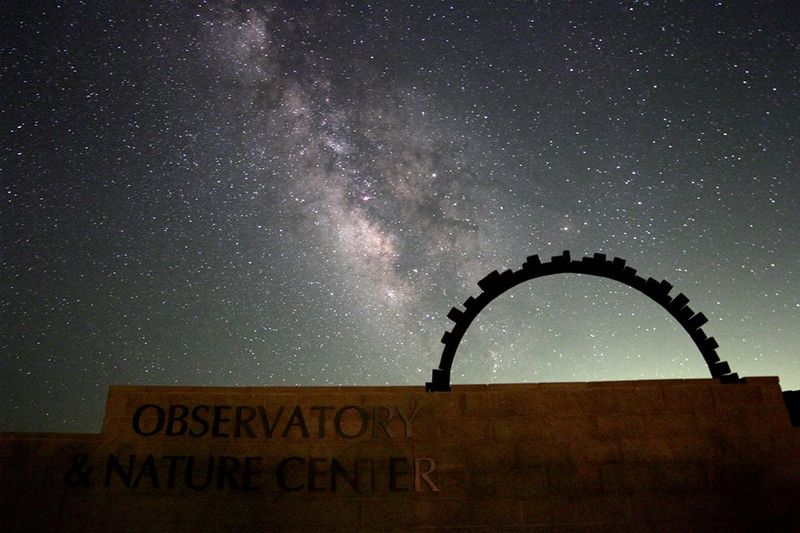
Just outside the north entrance to Joshua Tree National Park in Twentynine Palms, Sky’s The Limit Observatory and Nature Center offers a welcoming public astronomy experience in one of Southern California’s darkest regions.
Visitors are encouraged to bring their own telescopes or binoculars, and the site also hosts programs where on-site astronomers guide groups through the night sky.
The desert elevation and distance from major light sources make this location genuinely productive for observing faint objects.
The nature center side of the facility focuses on the local Mojave Desert ecosystem, so a visit can combine natural history learning with nighttime astronomy for a well-rounded outing.
The facility is operated as a nonprofit and has historically offered free or low-cost public programming, though verifying current hours and event schedules before visiting is recommended since availability can vary.
The surrounding high desert landscape adds an atmospheric quality to the experience, with Joshua trees silhouetted against a star-filled sky creating a scene that feels unlike anywhere else in the state.
Bringing a red-light flashlight rather than a standard white-beam light helps preserve night vision during observing sessions.
10. Joshua Tree National Park Stargazing Areas
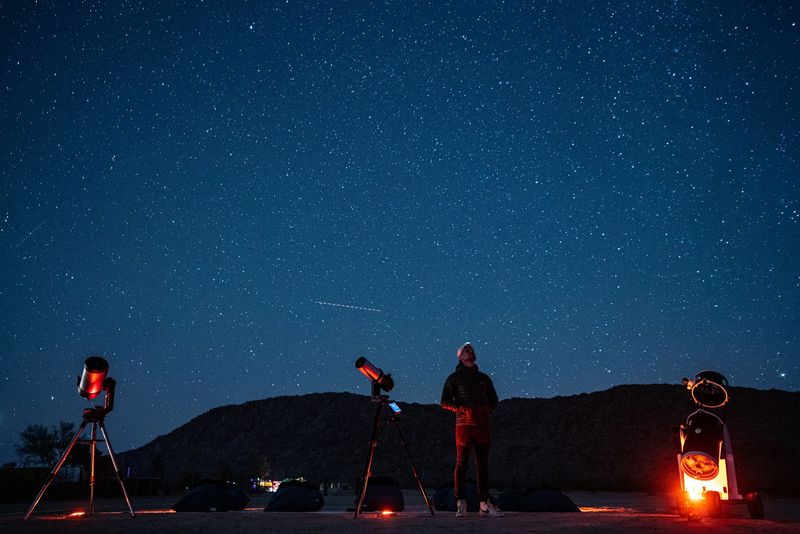
Designated as an International Dark Sky Park, Joshua Tree National Park is one of the most accessible and visually striking stargazing destinations in all of Southern California.
Four specific areas within the park are listed as designated stargazing locations: Quail Springs, Hidden Valley, Cap Rock, and Ryan Mountain.
Each of these spots provides open sightlines and the kind of dark sky that makes the Milky Way visible to the naked eye on moonless nights.
The park’s nine campgrounds also offer excellent overnight stargazing, with the added benefit of waking up to sunrise over the desert landscape.
Elevation within the park ranges from about 1,000 feet in the lower Colorado Desert section to over 5,000 feet in the Mojave Desert portion, and the higher sections tend to offer slightly darker and crisper skies.
Summer nights can still be warm at lower elevations, while spring and fall offer more comfortable temperatures for extended viewing sessions.
Checking the National Park Service website for ranger-led night sky programs adds an educational layer to any visit, and the park occasionally hosts annual star party events that draw astronomy enthusiasts from across the region.
11. Death Valley National Park Dark Sky Viewing
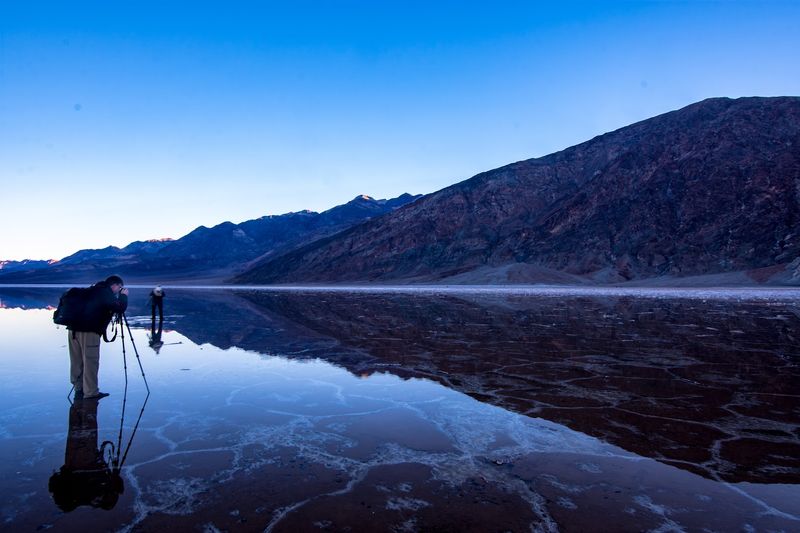
Recognized as California’s only Gold Tier Dark Sky Park by the International Dark-Sky Association, Death Valley National Park offers some of the darkest measurable skies in the contiguous United States.
The sheer scale of the park and its distance from major population centers creates conditions where faint celestial objects become visible that simply cannot be seen from most other locations.
The National Park Service recommends several specific viewing spots within the park including Mesquite Flat Sand Dunes, Harmony Borax Works, Badwater Basin, and Ubehebe Crater.
Each of those locations provides a dramatically different foreground for night photography and naked-eye observing, from the white salt flats of Badwater to the volcanic crater rim at Ubehebe.
The Furnace Creek area serves as a practical base for visitors and sits at an elevation of about 190 feet below sea level, making it one of the lowest stargazing spots on Earth.
Summer temperatures in the valley can be dangerously hot even at night, so visiting during fall, winter, or early spring is strongly advisable.
Ranger-led night sky programs are offered periodically and provide an organized way to learn about what is visible on a given evening.
12. Tenaya Lake and Olmsted Point on Tioga Road
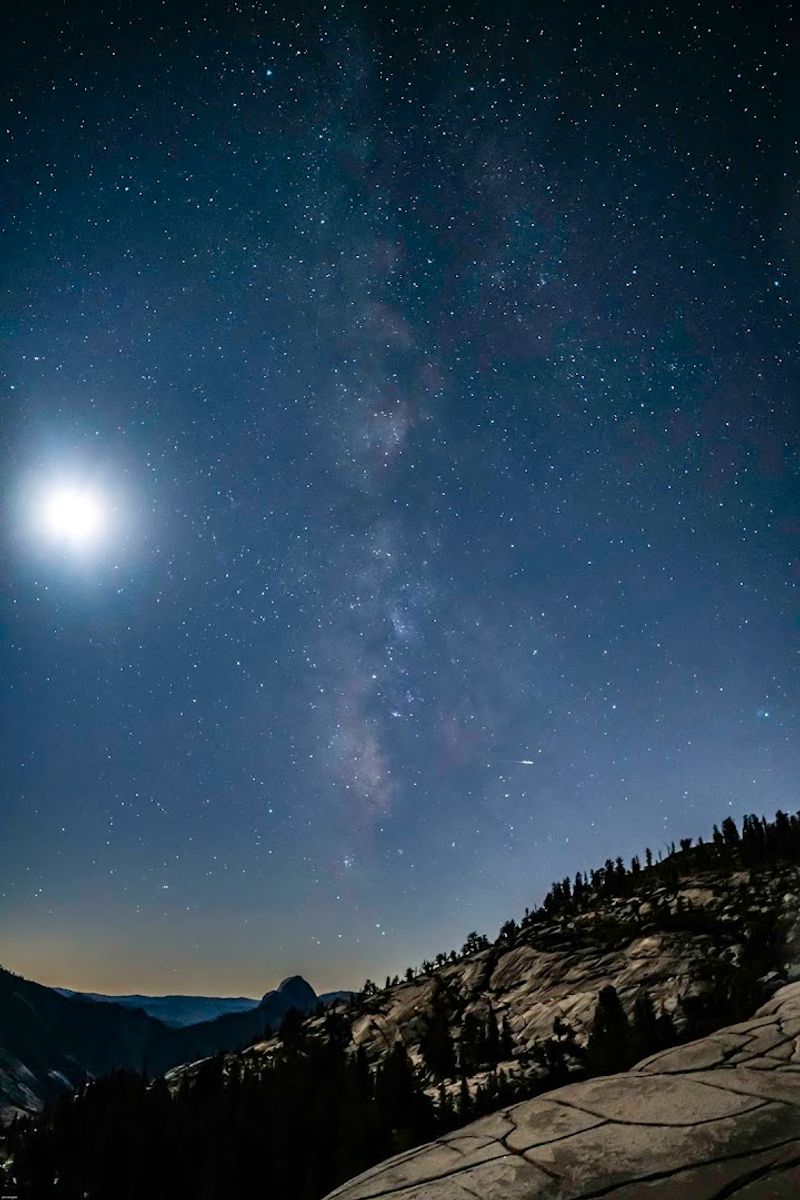
Along Tioga Road in Yosemite National Park, Tenaya Lake and Olmsted Point offer two of the most scenic high-elevation stargazing options available when the road is open.
Tioga Road typically opens in late May or June depending on snowpack and remains accessible through November, giving visitors a roughly five-month window to experience these spots.
Tenaya Lake sits at about 8,150 feet and the still water surface can reflect the stars above on calm nights, creating a mirrored effect that makes the experience feel almost surreal.
Olmsted Point, positioned slightly west of the lake, provides an open granite overlook with sweeping views toward Half Dome and the surrounding high country.
The elevation at both locations means the air is thinner and the sky tends to appear noticeably darker and more detailed than at lower Yosemite elevations.
Crowds along Tioga Road are generally lighter after sunset, and many visitors who stop during the day never return at night, leaving the area relatively uncrowded for evening stargazing.
Temperatures drop sharply after dark at this elevation regardless of the season, so packing insulated layers and a warm hat is a practical necessity rather than just a suggestion.