12 California Stargazing Spots To Visit As September Nights Get Longer
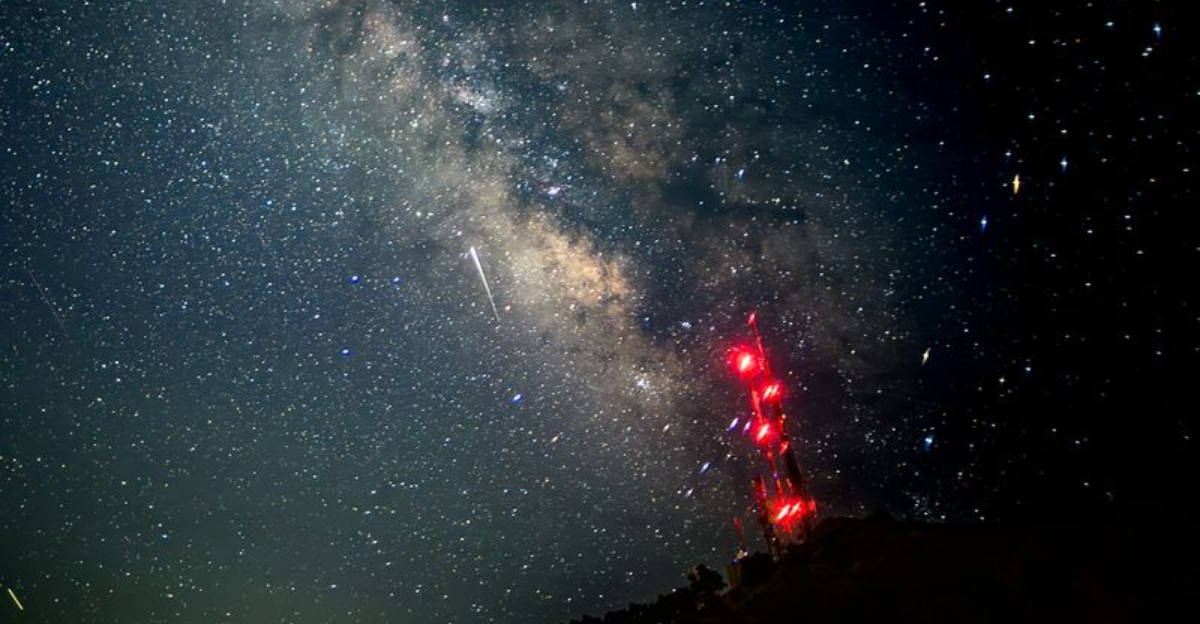
September gives night owls a little more sky to work with.
The sun slips away earlier, the air often feels cleaner after dark, and staying out late sounds like the whole point.
California has stargazing spots where the reward really begins after everyone else starts heading home.
Bring a blanket and resist the urge to check your phone every thirty seconds.
Once the darkness settles in, familiar constellations sharpen and the sky starts looking much busier than it did from the city.
That is when the evening gets interesting.
A good stargazing trip does not need much.
Just distance from bright lights and enough patience to look up long enough for the universe to show off.
1. Joshua Tree National Park, Twentynine Palms
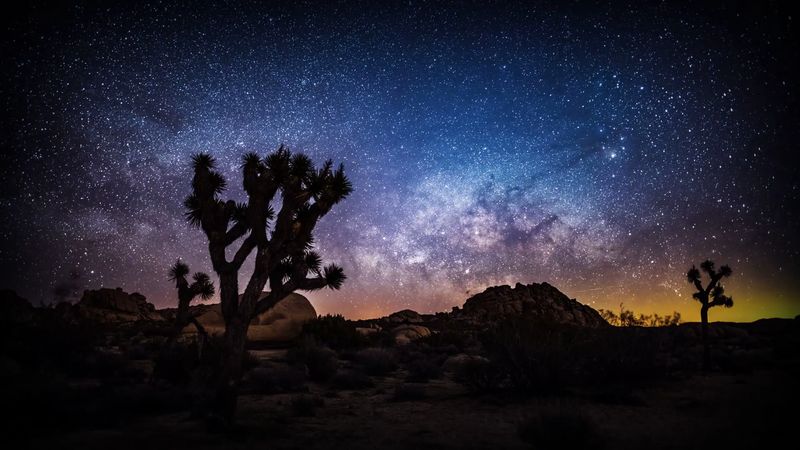
Plenty of visitors see the Milky Way for the very first time here, and the reaction is almost always the same: a long, quiet pause. Joshua Tree carries an official International Dark Sky Park badge, and it earns it.
The east side of the park runs darker than the west, since fewer town lights leak in from that direction.
Four parking areas have been set aside just for stargazers: Quail Springs, Hidden Valley, Cap Rock, and Ryan Mountain. Pull in, turn off your headlights, and let the sky do the rest.
Campers get the best deal. Nine campgrounds sit inside the park, and Cottonwood down south is one of the darkest.
Waking up surrounded by boulders after a night of constellations is a memory that sticks.
A few practical notes from people who learned the hard way, yes I’m included.
Cell service basically does not exist inside the park, so download your star maps and directions before you arrive.
Bring more water than you think you need, plus a jacket, because desert nights cool off fast once the sun drops.
Good viewing usually kicks in about two hours after sunset, once the last glow fades from the horizon. Twisted Joshua trees and stacked granite make unbelievable foregrounds for photos.
One more reason to circle September on your calendar: the park hosts an annual Night Sky Festival, with telescopes, rangers, and fellow sky nerds happy to share a view.
2. Anza-Borrego Desert State Park, Borrego Springs
Here is a rare setup: a giant dark sky park that completely wraps around a dark sky town.
Anza-Borrego holds Silver-tier International Dark Sky Park status, and it surrounds Borrego Springs, the first International Dark Sky Community in California.
That pairing matters. Local lighting rules are strict, and fixtures have been swapped out for warm amber bulbs that point down instead of up, so very little glow escapes into the sky.
Almost anywhere in the park delivers a wide, uninterrupted view, but a few places stand out.
Fonts Point looks over eroded badlands that glow faintly under starlight. Coyote Canyon, Culp Valley, and Blair Valley all give you space to spread out and settle in.
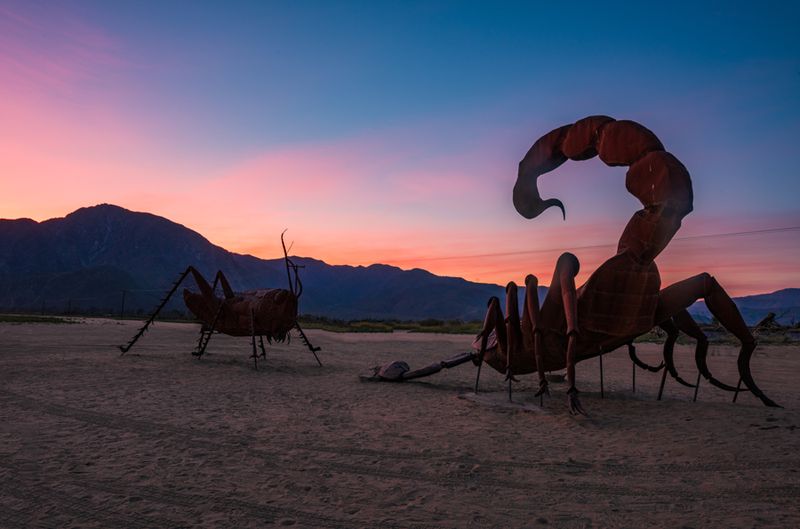
Photographers, listen up. The Galleta Meadows metal sculptures scattered around the area, including dinosaurs, a giant serpent, and desert animals, make foregrounds that nobody else in the country can copy.
A sky full of stars behind a steel raptor is a genuinely unforgettable shot.
Park rangers and volunteers offer night sky interpretive programs on a regular schedule, so check listings before your trip and you might get free telescope time.
Practical tip: many of the best viewpoints sit at the end of dirt roads, and some need high clearance or four-wheel drive. Ask at the visitor center about road conditions and watch where you step after dark.
3. Death Valley National Park, Furnace Creek
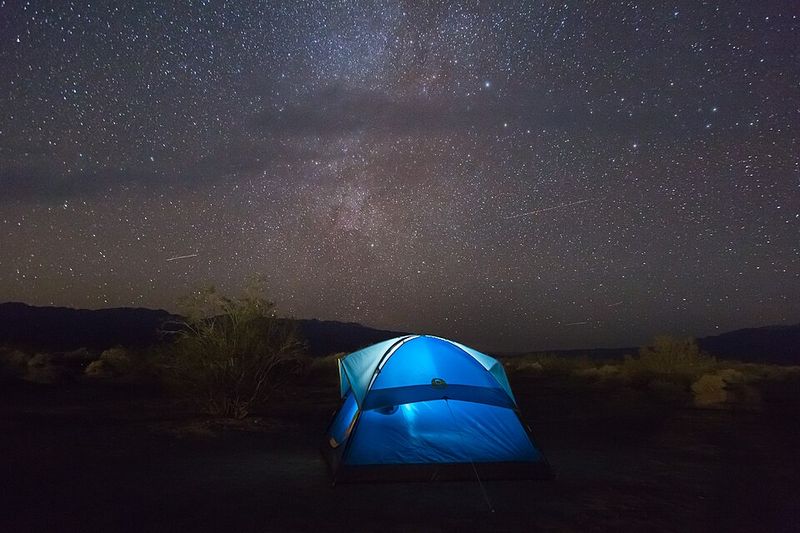
Gold Tier. That is the top rating a Dark Sky Park can receive, and Death Valley holds it, which puts this stretch of desert among the darkest places anywhere in the United States.
Size helps. The park is enormous, wildly remote, and bone dry, and dry air means fewer clouds and less haze between you and the stars.
On a clear, moonless night, the Milky Way looks less like a smudge and more like a river of light pouring across the whole sky.
Furnace Creek makes a natural home base, with lodging, a visitor center, and easy access to wide open viewing ground just minutes away.
Rangers run stargazing programs here too, and they are worth catching because a good guide can turn random dots into recognizable stories.
September is a smart month to try.
Daytime temperatures are still serious, but they have eased from the brutal summer highs, and the earlier sunset means you can be watching planets by 8 p.m. instead of fighting to stay awake.
Take the desert seriously. Fuel up before you enter, carry extra water in the car, and tell someone your plan since service is spotty across much of the park.
Bring binoculars if you have them. Saturn and Jupiter look shockingly good, and even a cheap pair reveals star clusters your eyes alone will miss completely.
4. Mount Pinos, Frazier Park
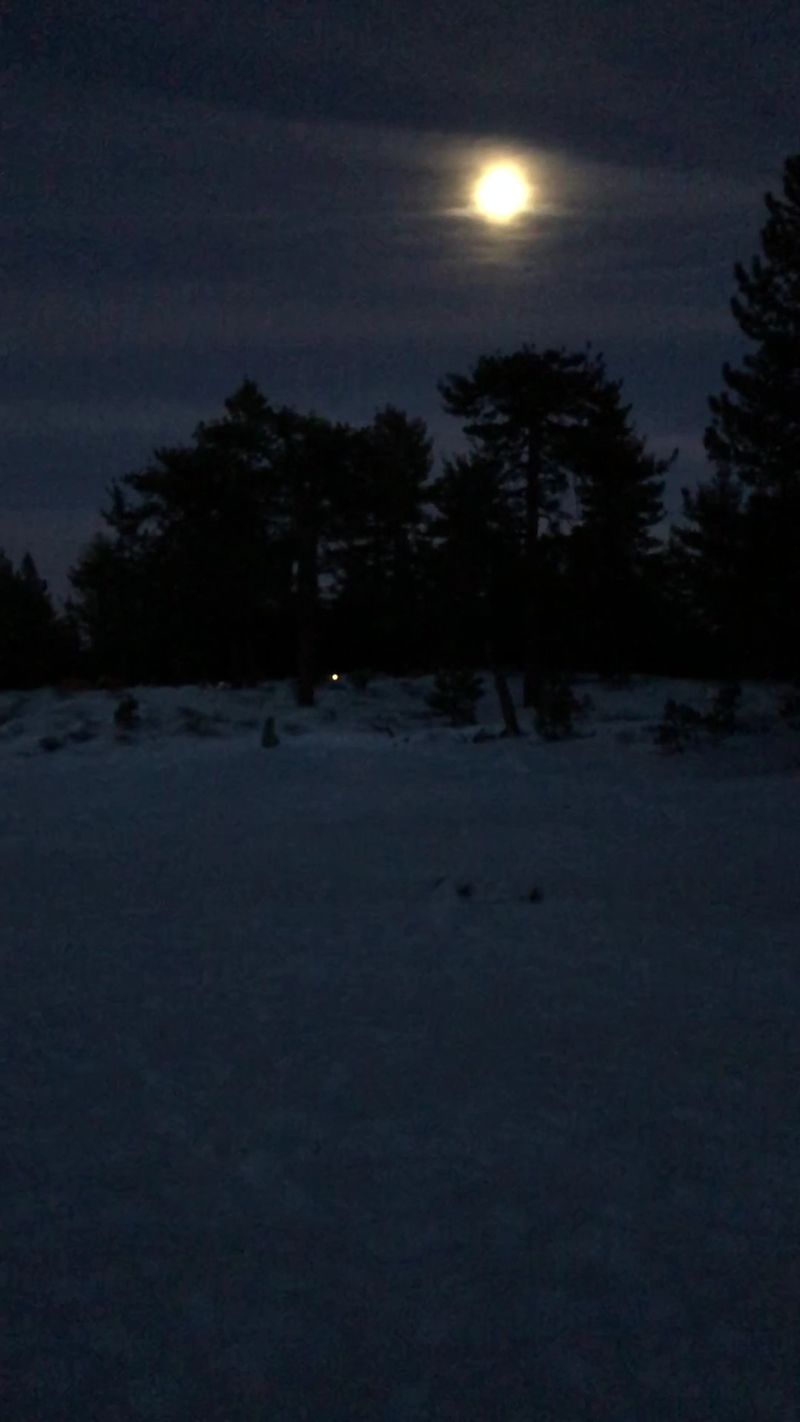
Ask a Los Angeles astronomy club member where they actually go on a Saturday night, and Mount Pinos comes up again and again. It is one of those places locals love and tourists rarely hear about.
Elevation is the secret weapon. The mountain rises somewhere between 8,100 and 8,831 feet depending on where you stand, which lifts you above a good chunk of the atmosphere and most of the haze.
Light pollution up there is remarkably low, and clear nights are common.
The Chula Vista parking area, roughly 1.4 miles east of the peak, is the unofficial headquarters.
On a good weekend you will find serious telescopes pointed skyward and generous owners inviting strangers to take a peek. Be polite, use a red light, and do not slam car doors or flick on your brights.
Best stretch for a visit runs June through October, which puts September right in the sweet spot. The Milky Way sits high and bright, and the nights have stretched out nicely.
Dress like it is winter, honestly. Temperatures at that height can drop into the 30s and 40s after midnight even when the valley below is warm.
Hat, gloves, thick socks, hot drink in a thermos.
The real gift here is convenience. No multi-hour desert drive required, just a couple of hours from the city to genuinely dark sky.
5. Alabama Hills, Lone Pine
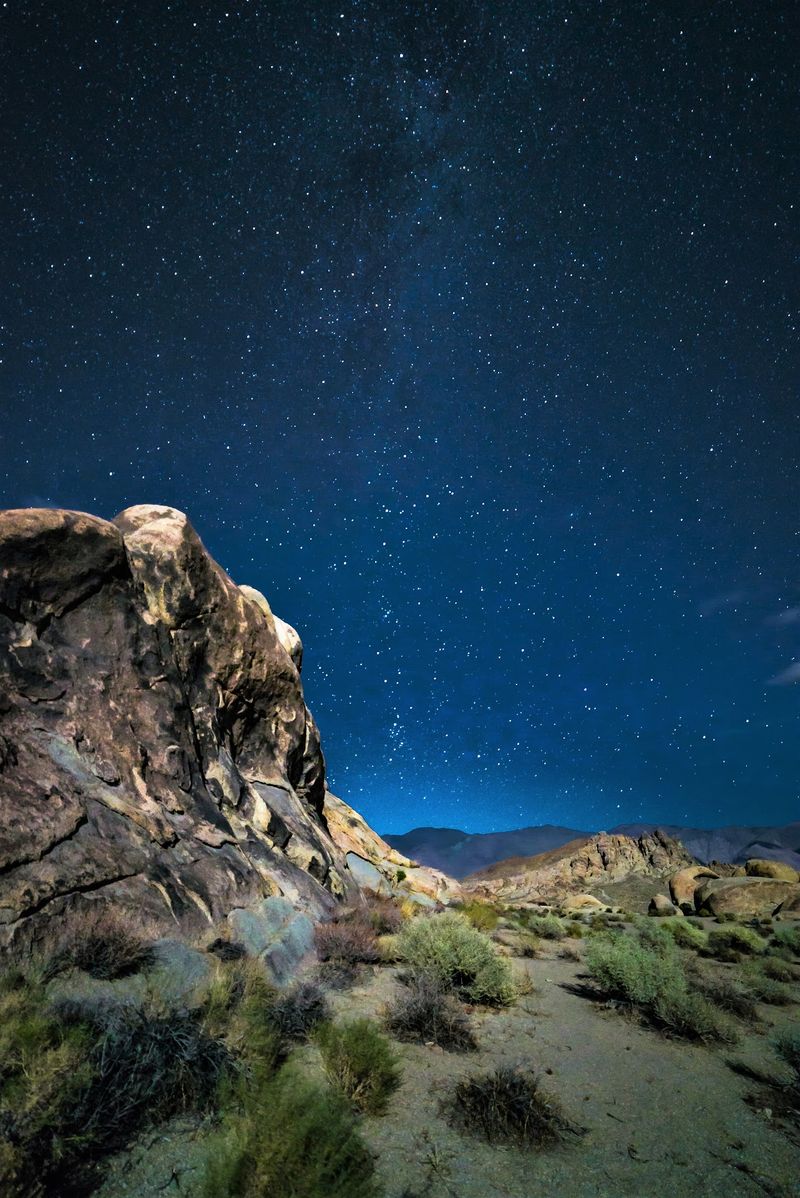
Rounded orange boulders, arches you can walk through, and the jagged wall of the Sierra Nevada rising straight up behind everything.
Hollywood filmed hundreds of westerns in the Alabama Hills, and once you arrive it is obvious why.
After dark the place transforms. Sitting at the base of the Eastern Sierra, far from any real city, the sky here goes deeply black and the stars pile up thick from horizon to horizon.
Astrophotographers treat this spot almost like a pilgrimage site.
Mobius Arch is the famous frame, with Mount Whitney visible through the opening, and pointing a camera up through that rock window at the Milky Way produces the kind of image people hang on their walls.
Access is easy compared to some dark sky destinations. Movie Road runs right through the formations, and dispersed camping is allowed in designated areas, so you can park, cook dinner, and simply stay put until the stars come out.
September brings comfortable evenings in the Owens Valley, warm enough to be pleasant but cool enough that you will want a fleece by midnight.
Do the area a favor while you are there. Pack out everything, stick to existing roads and pullouts, and skip campfires when restrictions are in place.
Stop in Lone Pine for supplies first. The town is small, friendly, and five minutes away.
6. Lassen Volcanic National Park, Mineral
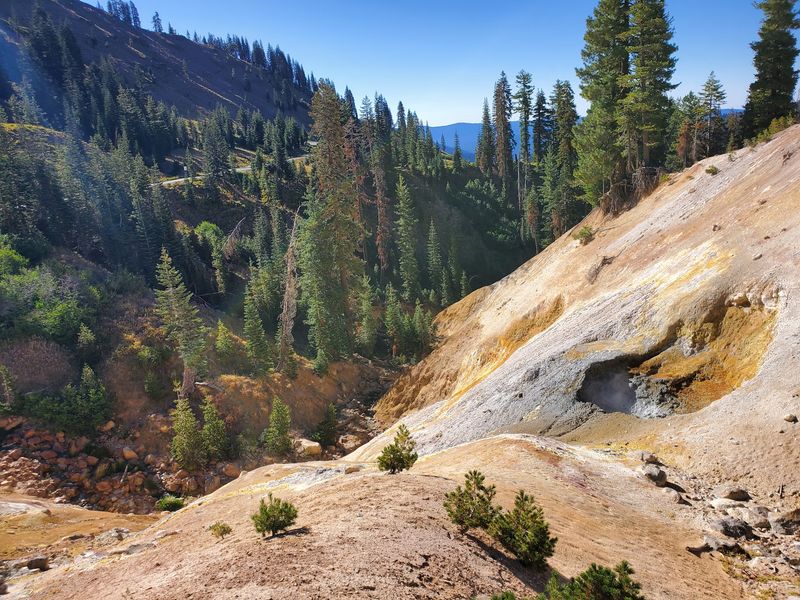
Bortle Class 1. If that means nothing to you, here is the translation: the darkest reading on the scale astronomers use, and Lassen Volcanic National Park sits right there at the bottom end.
Northern California keeps this park pleasantly far from big cities, and the result is a night sky so rich that the Milky Way casts a faint glow and unfamiliar stars crowd in between the constellations you know.
Rangers lead astronomy programs during the season, complete with telescopes and explanations that make sense whether you are eight or eighty.
Prefer to go solo? Trailhead parking areas work beautifully, especially Bumpass Hell, Lassen Peak, and the Devastated Area.
My personal pick is a lakeshore. Manzanita Lake and Summit Lake both sit right beside the road, and on a windless night the water turns into a mirror that doubles every star above it.
Photographers, bring a tripod and thank me later.
Pack warm layers no matter what the forecast says. Elevations here climb past 8,000 feet along the park road, and September nights can flirt with freezing.
This is volcano country, with bubbling mud pots and steaming vents around every corner during the day. Combine an afternoon of geology with an evening of galaxies and you have one of the best 24-hour stretches California can offer.
7. Mojave National Preserve, Kelso
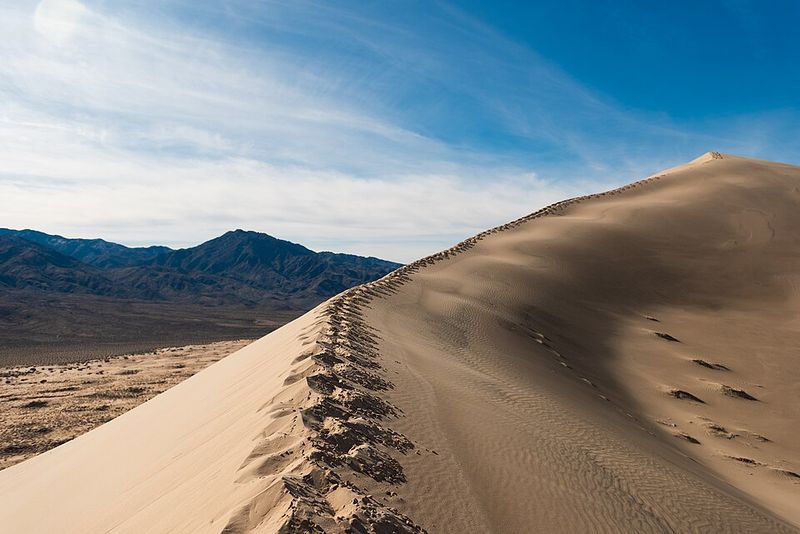
Want to feel pleasantly small?
Drive into Mojave National Preserve on a September evening and stop somewhere in the middle of all that emptiness. It is 1.6 million acres of almost nothing, which for a stargazer is everything.
Darkness here is legitimately impressive. Hole-in-the-Wall Campground measures around Bortle 2, placing it among the darkest accessible skies in Southern California.
Set up a chair, look up, and watch satellites drift by between shooting stars.
Over near Amboy Crater, light pollution drops so low that on the clearest nights the Milky Way can throw a faint shadow.
If you have never experienced starlight strong enough to see your own hand, that alone is worth the trip.
The beauty of a place this big is freedom. You can pull off at countless spots, from the base of the Kelso Dunes to lonely stretches of Kelbaker Road, and never see another set of headlights all night.
Come prepared, because services are scarce. Fill your gas tank, bring plenty of water and food, carry a spare tire, and do not count on a phone signal anywhere.
Watch for wildlife on the roads at dusk, particularly desert tortoises, kit foxes, and jackrabbits. Drive slowly.
Stay for sunrise if you can swing it.
8. Fremont Peak State Park, San Juan Bautista
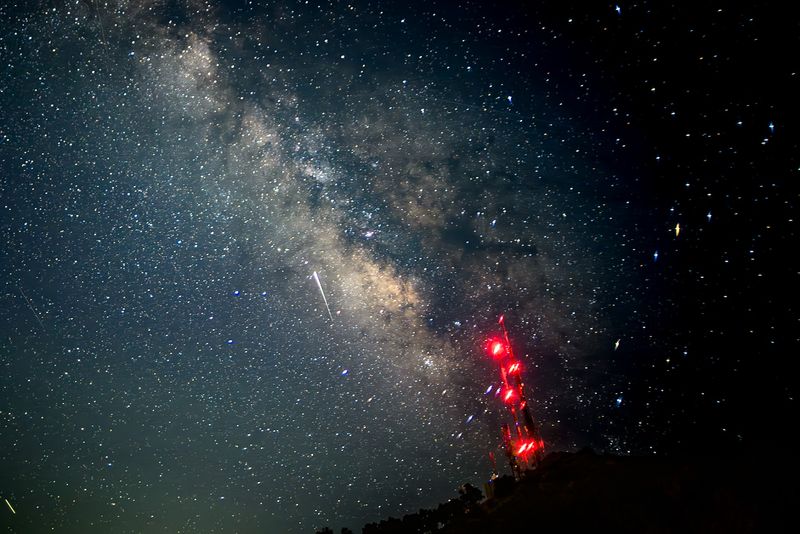
A 30-inch telescope on a mountaintop, free for the public to look through. That is the headline at Fremont Peak State Park, and it is a genuinely special offer.
The park’s observatory opens for public programs on select moonless Saturday evenings between April and October, which means September gives you a real shot at peering through serious glass at Saturn, nebulae, or a distant galaxy.
Volunteers run the sessions and explain what you are seeing in plain language.
Elevation plays a clever trick here. At 3,169 feet, the peak often rises above the coastal marine layer, and that low blanket of fog acts like a curtain blocking city light from the valleys below.
Nights that look hazy near Monterey Bay can be crystal clear up top.
Daytime visitors get panoramic views stretching from the Salinas Valley to the Santa Cruz Mountains, so arriving early and hiking a bit is time well spent.
Prepare for a winding, narrow access road and a small parking lot that fills quickly on program nights. Show up before dark so you are not navigating those curves in the dark for the first time.
Warm clothing is not optional, since wind funnels across that ridge. Blanket, thermos, closed-toe shoes.
Confirm the observatory schedule online before driving out. Programs depend on weather and volunteers, and cloudy nights get canceled.
9. Mount Laguna, Mount Laguna
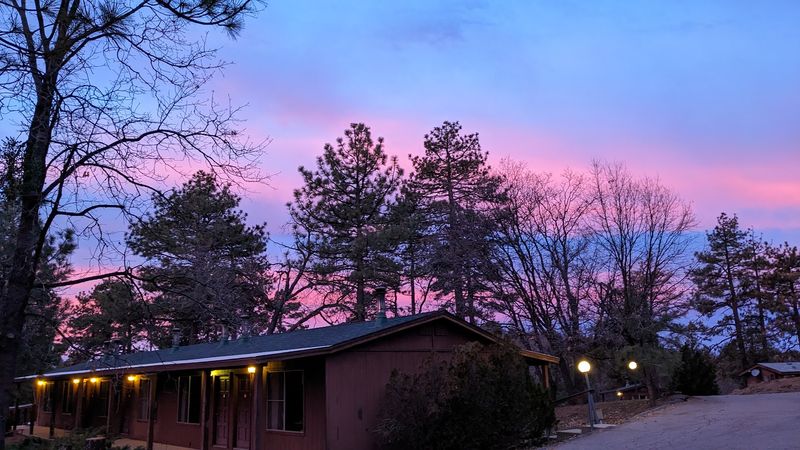
San Diegans have a standing escape plan when the city glow gets old, and it involves an hour of driving east into the pines.
Mount Laguna, in the Cleveland National Forest, sits around 6,000 feet and far enough from the coastal sprawl that the stars snap into focus.
Local astronomy clubs practically adopted this mountain.
On weekends you may stumble across a small gathering of telescopes, and amateur astronomers are famously happy to show off Saturn’s rings to anyone who asks nicely.
Laguna Campground makes a solid base if you want to stay the night rather than drive home sleepy.
Reserve ahead, especially on September weekends when the weather is close to perfect and everyone else has the same idea.
Sunset views are a bonus feature. Pull off along the Sunrise Highway and you can look straight down into the Anza-Borrego desert thousands of feet below, watching the light fade before turning your attention upward.
Bring layers. The mountain runs 20 degrees cooler than San Diego, and the breeze through the pines has a bite once the sun leaves.
Also worth knowing: dark adaptation takes a full 20 to 30 minutes, so resist checking your phone. If you must have light, cover your flashlight with red cellophane or use a red headlamp setting.
10. Big Bear Lake, Big Bear Lake
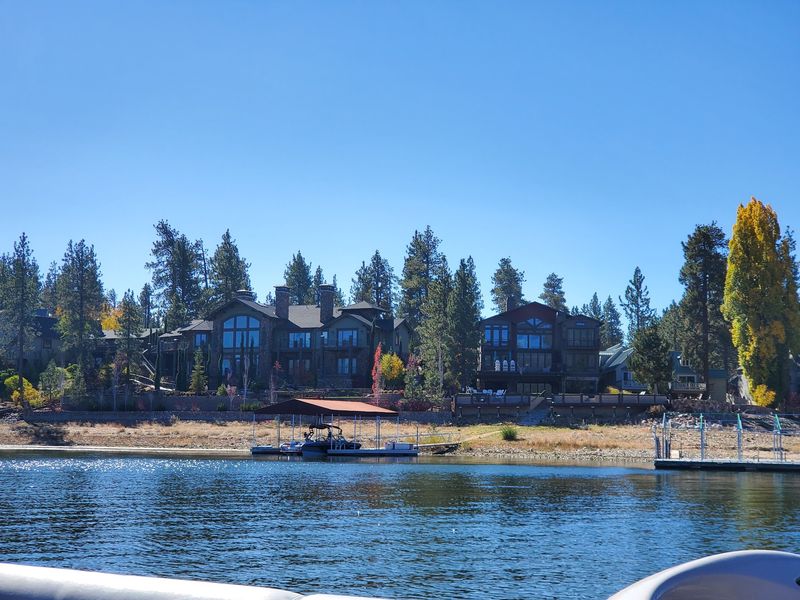
Mountain air, pine trees, and a lake that mirrors the sky. Big Bear Lake is better known for skiing and summer boating, but the nighttime side of this mountain town deserves attention too.
Altitude plus distance from Los Angeles and San Bernardino lights add up to easy constellation spotting, solid meteor shower viewing, and a clear look at the Milky Way on moonless nights.
Several locations stand out. Holcomb Valley Road has a reputation for the darkest skies in the area.
The Woodland and Cougar Crest trailheads give you parking plus open sky, and the north shore near the Big Bear Solar Observatory offers a wide view across the water.
Keep an eye on community calendars. The Big Bear Valley Astronomical Society regularly hosts free public stargazing events, and the town throws SkyFest Big Bear, a full celebration of dark skies and astronomy.
September up here is delightful. Days are mild, evenings turn crisp, and the tourist crowds have thinned out after Labor Day.
A couple of reminders: the air is thin at nearly 7,000 feet, so drink extra water and take it slow if you are coming from sea level. Bring a warm hat, since temperatures drop quickly after sunset.
Rent a cabin, cook something cozy, then wander outside with a blanket. Pretty hard to beat that as a weekend plan.