10 California Towns So Enchanting They Look Like They Were Made For Postcards
A postcard town has to earn the cliché.
It needs the kind of street that makes you slow the car without meaning to or a cluster of buildings so charming they seem slightly suspicious in real life.
These California towns manage exactly that without feeling like movie sets built for tourists.
Bring the camera, but do not spend the whole visit chasing the perfect shot.
Wander the side streets. Look up at the old facades. Follow the road that curves toward the mountains, the coast, or whatever view keeps pulling you farther.
The prettiest moments are not always the obvious ones. A quiet porch. A flower-filled lane. Late-afternoon light hitting a hillside. A main street that looks completely different once the crowds thin out.
These 10 towns make it very easy to understand why postcards still exist.
1. Carmel-by-the-Sea, Storybook Cottages Beside White Sand
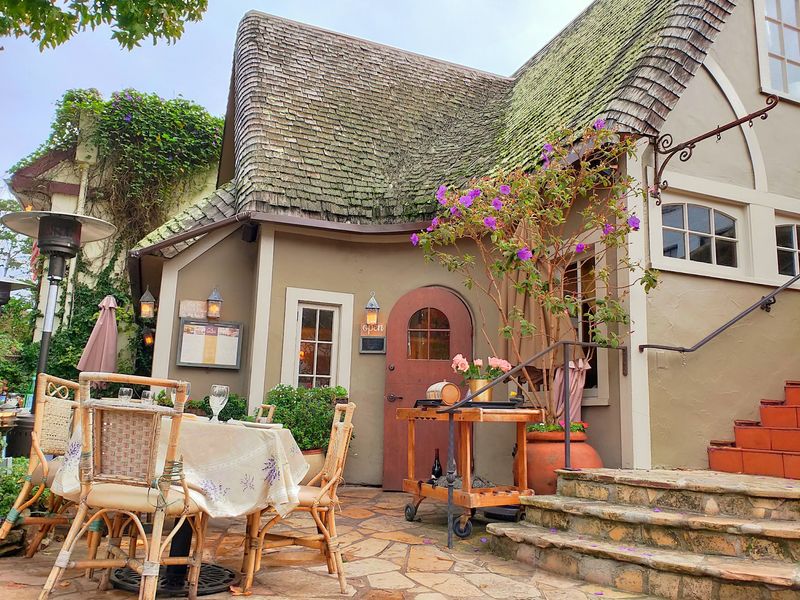
Think of a town where houses look like they were built by illustrators instead of contractors.
Carmel-by-the-Sea has dozens of those crooked-roof cottages, many designed in the 1920s by builder Hugh Comstock, who started making them for his wife’s handmade dolls.
The village sits above a wide beach of pale, powdery sand, with twisted cypress trees leaning over the bluffs.
Art galleries fill nearly every block, which makes sense in a town founded largely by painters, poets, and writers escaping city life.
Wandering here feels like a treasure hunt. Streets have no house numbers and no street lights, so residents pick up mail at the post office and buildings are known by name instead of address.
Hidden passageways lead to courtyards with fountains, bakeries, and tiny wine tasting rooms you would never spot from the sidewalk.
Bring comfortable shoes, since the sloping streets and tree roots can be uneven. Dogs are welcome almost everywhere, including restaurant patios and the beach, so expect plenty of tail-wagging company.
Fog often rolls in during summer mornings and burns off by lunchtime, giving photographers moody light early and golden light later.
Fun detail: actor Clint Eastwood served as mayor here in the 1980s, and one of his old rules involved making it legal again to eat ice cream on the street.
2. Solvang, Denmark Dropped Into Wine Country
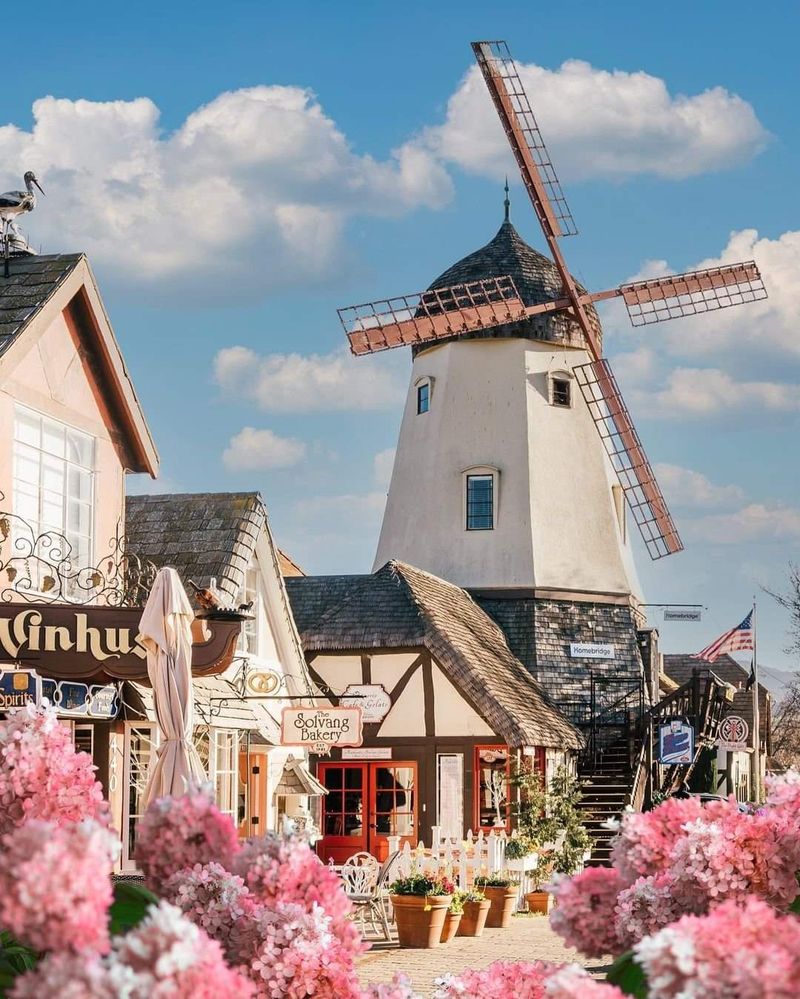
Windmills, half-timbered walls, and the smell of warm pastries greet you the moment you park in Solvang.
Danish immigrants founded the town in 1911 to start a folk school, and their heritage still shapes almost every rooftop and shop sign.
Locals proudly call it the Danish Capital of America. Bakeries sell butter-rich aebleskiver, round pancake balls dusted with powdered sugar and served with raspberry jam, and there is a small museum devoted to writer Hans Christian Andersen.
What makes the setting even better is the Santa Ynez Valley around it.
Rolling vineyards, horse ranches, and oak-covered hills stretch in every direction, and dozens of tasting rooms sit within walking distance of downtown.
Visit in December if you can, when Julefest lights up the streets with garlands, a tree lighting, and a candlelight parade. Spring and fall bring milder weather and thinner crowds, which helps on narrow sidewalks.
Practical tip: park once and explore on foot, because the whole village core covers only a few blocks. A horse-drawn streetcar called the Honen still clip-clops along the main street, and kids usually beg for a ride.
Solvang also sits close to Ostrich Land, where you can feed birds taller than most adults from a dustpan.
3. Ferndale, The Victorian Village Among Dairy Pastures
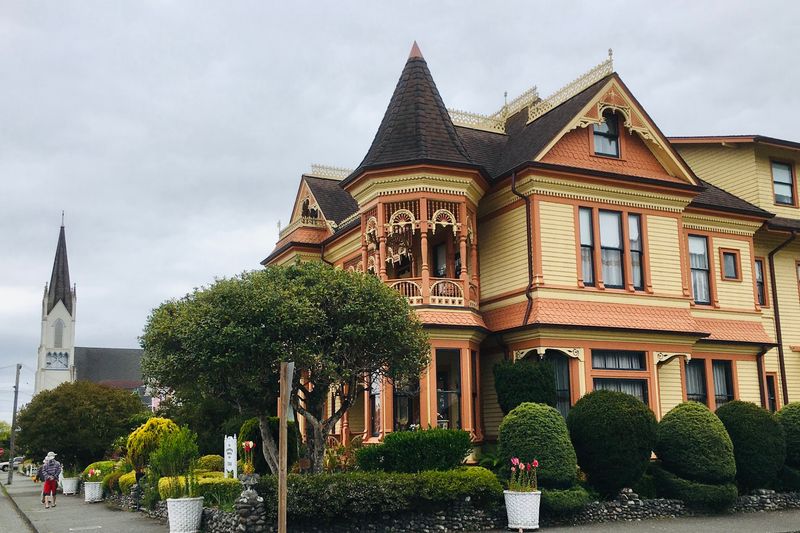
Dairy money built Ferndale, and the town has the fancy houses to prove it.
Locals nicknamed the grandest homes Butterfat Palaces because 19th century farmers spent cream profits on turrets, spindles, and painted gingerbread trim.
Main Street looks like a movie set, mixing Gothic Revival, Italianate, Eastlake, and Queen Anne styles along a few walkable blocks.
The entire town is listed on the National Register of Historic Places, which is why filmmakers keep showing up with cameras.
Step outside the shops and the scenery shifts to green pastures, grazing cows, red barns, and white farmhouses spread across the Eel River valley. Rolling hills frame it all, and morning mist tends to hang low over the fields.
Ferndale also makes a great base for adventure. The rugged Lost Coast, one of California’s wildest shorelines, lies just west, and ancient redwood groves stand a short drive north.
Plan around the Kinetic Grand Championship each Memorial Day weekend, a wonderfully strange race of human-powered art sculptures that finishes right in town. The Ferndale Cemetery on the hillside offers surprisingly beautiful valley views if you enjoy quiet history.
Bring a rain jacket, because Humboldt County weather changes fast, and cell service can get spotty on back roads.
4. Mendocino, A Village Perched Above Crashing Waves
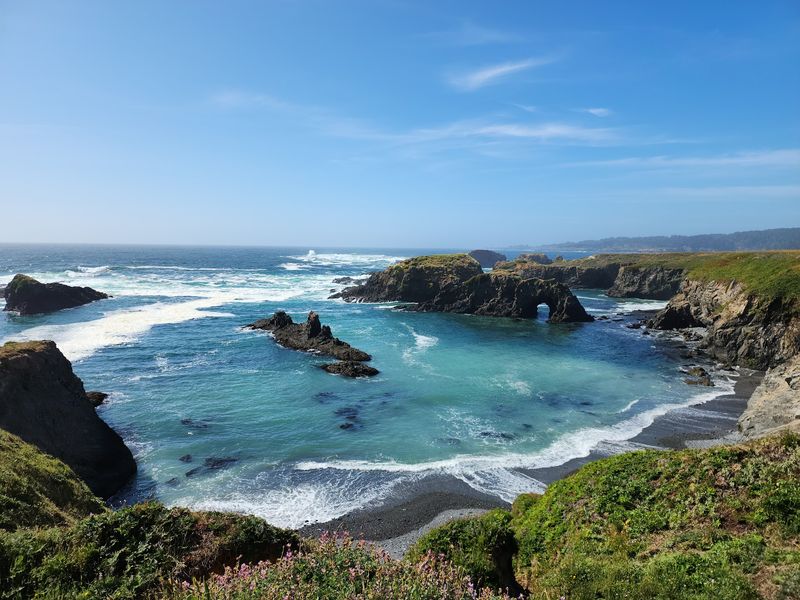
Few places earn the word dramatic like Mendocino, where a whole village sits on a rocky headland jutting into the Pacific. Waves pound sea caves below while wildflowers wave along bluff-top trails above.
New England settlers founded the town in 1852 to harvest redwood timber, and they built homes that reminded them of the East Coast.
Victorian houses, wooden water towers, and steepled churches still line the streets, and the whole village appears on the National Register of Historic Places.
Mendocino Headlands State Park wraps around three sides of town, so a scenic walk begins right at the edge of the sidewalk. Winter and spring bring gray whales migrating close to shore, and binoculars pay off.
Inns here lean cozy rather than flashy, often with claw-foot tubs, gardens, and breakfast served family style. Restaurants focus on local seafood, foraged mushrooms, and wine from nearby Anderson Valley.
Give yourself extra driving time. Highway 1 twists along cliffs, and the trip from inland towns takes longer than the map suggests, especially in fog.
Trivia worth sharing: the town played the fictional Maine village of Cabot Cove on a television series which explains why it feels oddly familiar to some visitors.
5. Capitola, Candy-Colored Cottages On The Sand
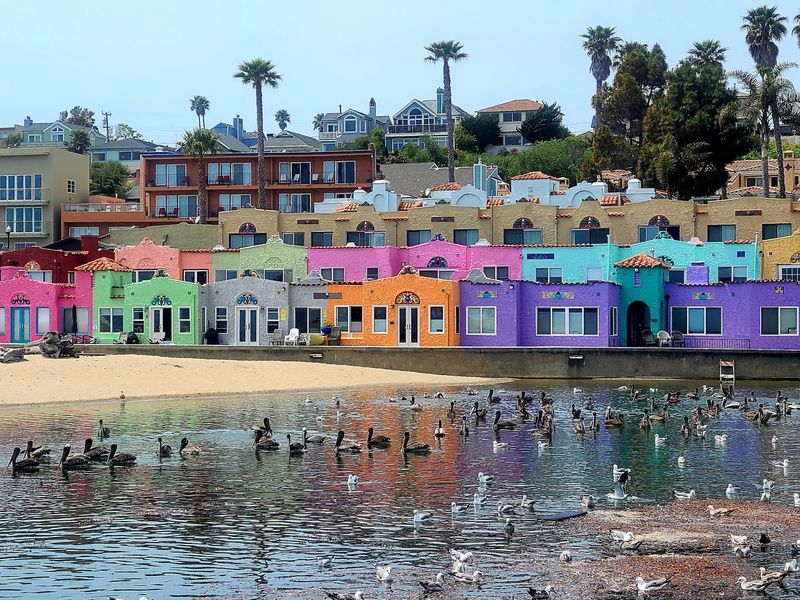
Pink, mint, yellow, and turquoise buildings stand shoulder to shoulder right on the sand in Capitola, and photographers love them for good reason.
The Venetian Court dates to the 1920s and looks a bit like an Italian fishing village that wandered onto Monterey Bay.
Capitola claims the title of California’s oldest seaside resort town, welcoming vacationers since the 1870s. Beyond the famous pastel row, side streets hide small beach cottages painted in equally cheerful colors.
The village stays compact and easy to explore without a car once you park. Boutiques, art galleries, taco spots, ice cream counters, and a few cafes with lagoon views sit within a couple of blocks.
Walk out on Capitola Wharf for wide views of the bay, fishing boats, and sometimes sea otters floating on their backs.
Soquel Creek empties into the ocean here, creating a shallow lagoon where younger kids can splash safely.
Parking gets tight on summer weekends, so arrive early or use the lots up the hill and walk down.
September brings the Begonia Festival tradition and a begonia-decorated flower parade history that locals still celebrate.
Sunset light hits those colorful walls beautifully, making late afternoon the best time for pictures.
6. Nevada City, Gold Rush Charm In The Foothills
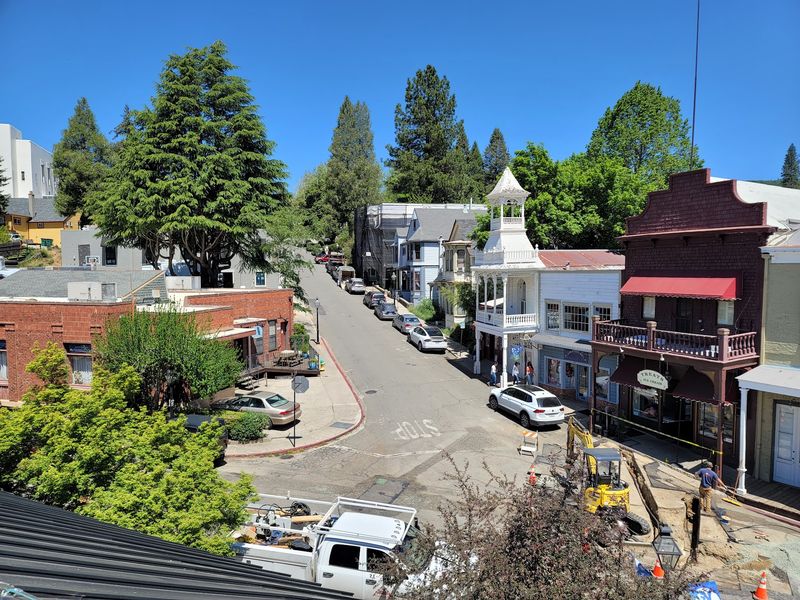
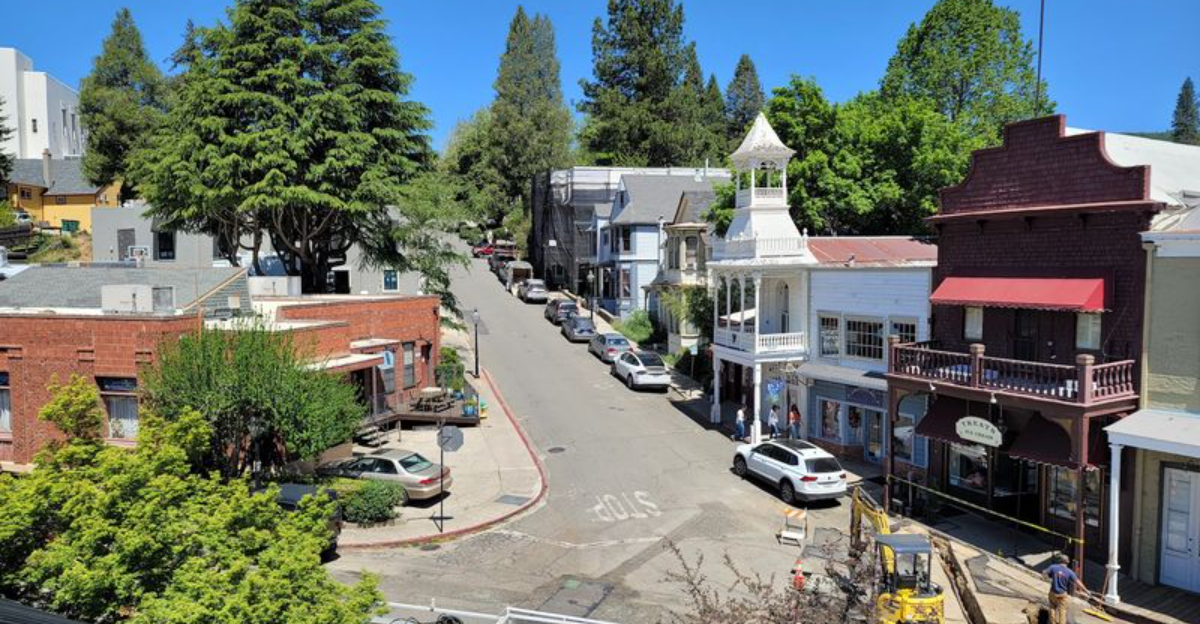
Gas lamps and brick storefronts from the 1850s make Nevada City feel like the Gold Rush never quite ended.
Miners once crowded these sidewalks, and the Downtown Historic District still holds their buildings in remarkable shape.
Set in the Sierra Nevada foothills, the town is surrounded by forested ridges, rolling hills, and mountain views.
Deer Creek runs through the edge of downtown, and a photogenic suspension bridge crossing it draws a steady stream of camera phones.
Spring is spectacular thanks to Crystal Hermitage Gardens, where roughly 17,000 tulips bloom in bright waves. Autumn competes hard, with maples and dogwoods turning the streets gold and red.
Live music, small theaters, and a long-running film festival keep the arts scene lively for a town of just a few thousand people. Independent bookstores, bakeries, and old-fashioned candy shops fill in the rest.
Wear shoes with grip, since Broad Street climbs a real hill and sidewalks are uneven in places.
Nearby South Yuba River State Park offers swimming holes and the longest single-span covered bridge in the country.
7. Julian, Apple Pie In The Mountain Pines
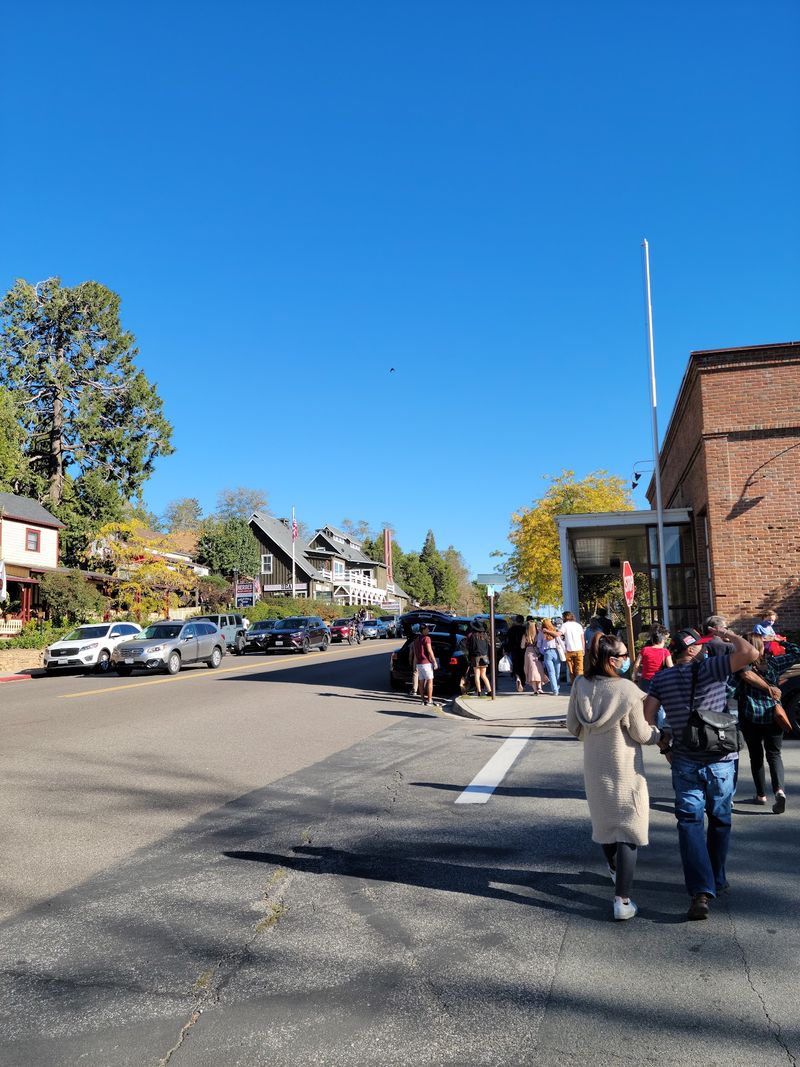
The smell of cinnamon and baked apples practically pulls you down Main Street in Julian.
Bakeries here have been perfecting pie for more than a century, and locals argue passionately about which shop makes the best slice.
Gold brought the first crowds in 1869, and preserved 19th century buildings with wooden porches still line the historic core.
You can tour the Eagle Mining Company mine and walk through actual tunnels where miners chipped away at quartz veins.
Sitting in the Cuyamaca Mountains at about 4,200 feet, Julian feels nothing like the beaches an hour west. Oak and pine forests surround the town, and light snow sometimes dusts the rooftops in winter.
Fall harvest season is the busiest stretch, when orchards open for apple picking and cider pressing. Weekday visits mean shorter pie lines and easier parking.
Stargazing is a real draw after dark since the town sits far from city glow, and volunteers sometimes set up telescopes for visitors.
Nearby trails in Cuyamaca Rancho State Park and Volcan Mountain reward hikers with views stretching toward the desert.
8. Avalon, Island Colors Around A Crescent Harbor
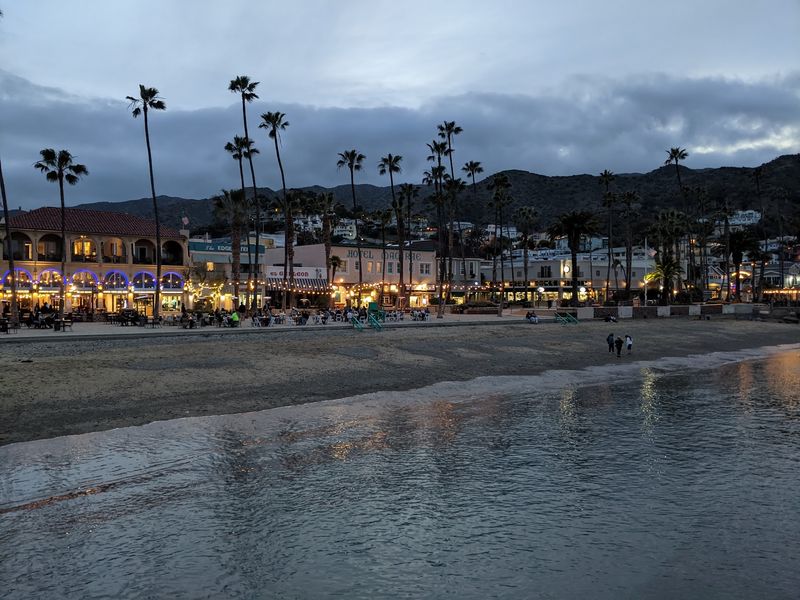
Step off the ferry in Avalon and the mainland suddenly feels far away. Bright hillside homes stack up above a curved harbor filled with sailboats, and the water glows an almost tropical turquoise.
The round white Casino building anchors one end of the bay and shows up on countless postcards.
Despite the name, nobody ever gambled there. It holds a grand ballroom and a beautifully decorated movie theater, since casino simply means gathering place in Italian.
Santa Catalina Island lies about 22 miles off Southern California, reachable by a one-hour ferry ride or a short helicopter hop.
Cars are strictly limited, so residents zip around in golf carts, which visitors can rent by the hour.
Snorkelers head to Lover’s Cove and Descanso Beach to spot bright orange garibaldi fish drifting through kelp. Glass-bottom boats work well for anyone who prefers staying dry.
Book lodging ahead during summer, because the island’s room supply is small and fills quickly. Bring a light jacket for evening ocean breezes.
Interesting history: chewing gum magnate William Wrigley Jr. bought most of the island in 1919 and brought his Chicago Cubs here for spring training. Bison introduced for a 1920s film shoot still roam the interior.
9. Idyllwild, Pine-Scented Escape Under Tahquitz Peak
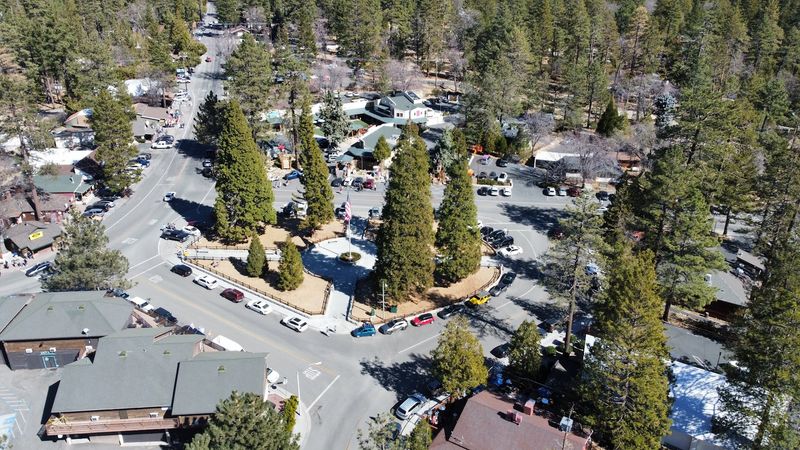
Tall pines and the granite face of Tahquitz Peak overhead make Idyllwild feel like a mountain hideaway, even though busy Palm Springs sits below.
Idyllwild elected a golden retriever named Max as honorary mayor, and his successors continue the tradition.
The town rests at 5,400 feet in the San Jacinto Mountains, where summer temperatures run far friendlier than the desert floor.
Downtown is small, rustic, and lined with log-sided shops, coffee roasters, art studios, and cabin rentals. Mule deer stroll through neighborhoods so often that residents barely look up.
Hikers have options for every ability, from flat nature loops at the nature center to steep climbs toward Suicide Rock and Devils Slide Trail.
Some routes require a free wilderness permit, so check with the ranger station before setting out.
Winter turns everything quiet and soft, with snow settling on pine boughs and twinkling lights strung across storefronts. Chains are sometimes required on the mountain highways, and the drive up involves plenty of curves.
Rock climbers travel from around the world for Tahquitz Rock, one of the birthplaces of American climbing rating systems. Musicians and painters fill the town too, thanks to a longstanding arts academy.
10. Dunsmuir, Waterfalls, Rivers, And Mount Shasta Views
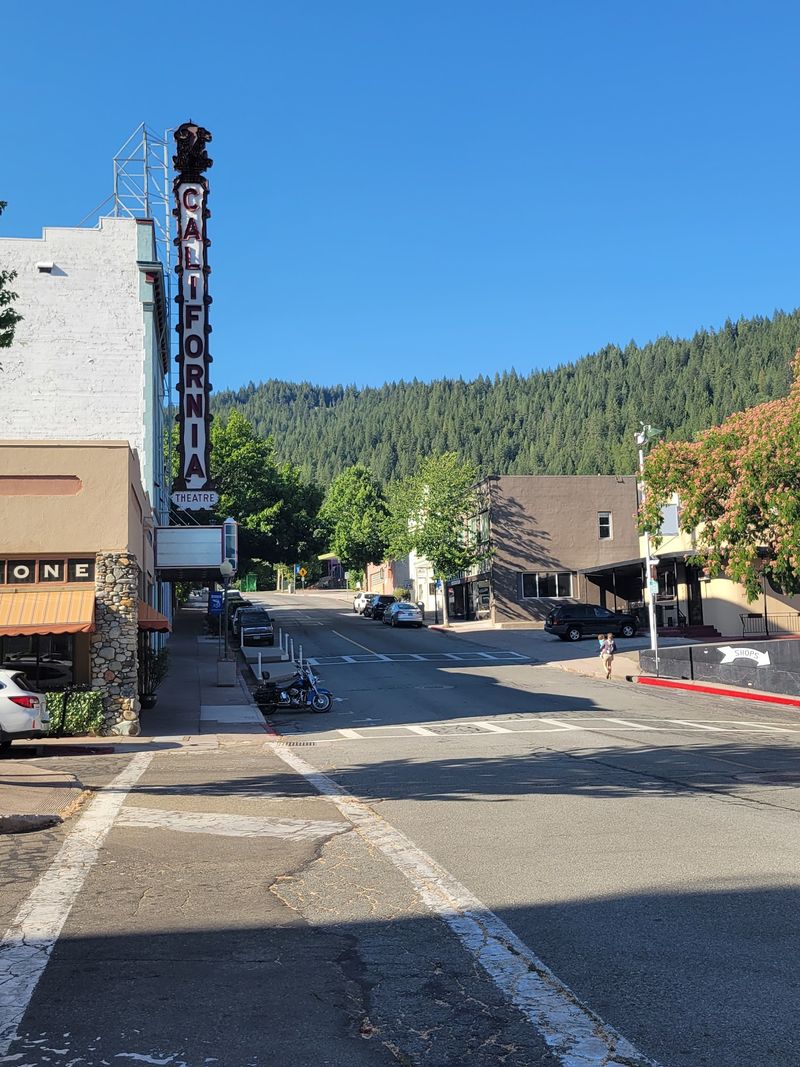
A town motto that brags about its tap water sounds odd until you taste it. Dunsmuir advertises the best water on earth, drawn from springs beneath Mount Shasta, and visitors often fill bottles before leaving.
The town stretches along the Upper Sacramento River in the Trinity Mountains, hemmed in by steep forested slopes.
Anglers come for wild trout, and railroad history runs through everything, since Dunsmuir grew as a Southern Pacific engine stop.
Waterfalls are the headline attraction. Mossbrae Falls spills out of a green, moss-covered cliff in dozens of delicate streams, while Hedge Creek Falls lets you walk into a cave behind the curtain of water.
Castle Crags State Park rises nearby with jagged granite spires that look almost alpine, and trails climb toward viewpoints of Mount Shasta. Dunsmuir Botanical Gardens offers gentler paths winding among native plants.
Historic downtown holds brick and wood buildings from the late 1800s and early 1900s, now filled with cafes, antique shops, and a classic theater.
Railroad lovers can even sleep in restored cabooses at a local park.
Note that reaching Mossbrae Falls involves access issues, so ask locally about legal routes rather than walking the active tracks.