10 California Towns Where One Old Neon Sign Still Does A Lot Of Heavy Lifting
An old neon sign can carry a whole block on its back.
Buzzing letters help. A glowing arrow helps more. Before you know it, a quiet main street gets personality after dark.
One stubborn sign can make a California town feel like it still knows how to flirt with road-trippers.
That is the charm here. Neon does not need polish. It needs color and attitude that will make people slow down before they even know why.
A motel sign, diner sign, or old roadside marker can turn an ordinary stop into something with a little cinematic pull.
People may arrive for lunch, shopping, or a quick walk. Then the sign steals the mood.
That is when a town starts feeling remembered instead of merely visited.
1. Amboy, Roy’s Motel & Café Sign
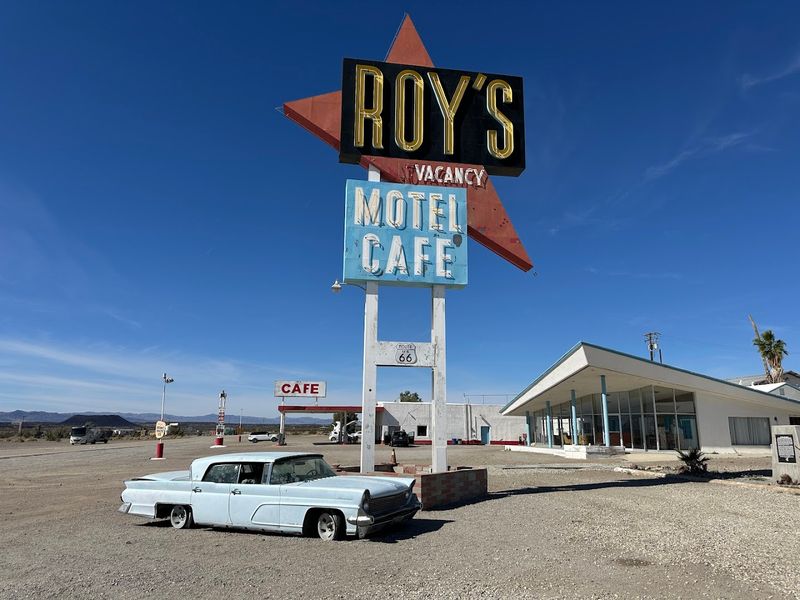
Few signs in the American West carry as much weight as the towering Roy’s Motel and Café sign rising out of the Mojave flatlands in Amboy, California.
Roy’s Motel and Café is located at 87520 National Trails Highway, Amboy, CA 92304, and the sign is visible long before any other structure comes into view.
The contrast between the emptiness of the surrounding desert and the bold, retro lettering of that sign is genuinely striking.
Amboy itself is a near-ghost town, with very little left standing beyond Roy’s and the volcanic cinder cone nearby.
The sign dates back to the 1940s and has become one of the most photographed landmarks along the entire stretch of Route 66.
Travelers make specific detours just to stand beneath it and take in the full effect of old-road nostalgia at its most concentrated.
The café and gas station have had periods of limited operation over the years, so checking current hours before visiting is a smart move.
Even when the café is closed, the sign and the surrounding scenery are fully accessible and entirely worth the drive.
The Mojave light hits that sign differently at golden hour, giving the whole scene a warm, almost cinematic quality.
2. San Luis Obispo, Fremont Theater Sign
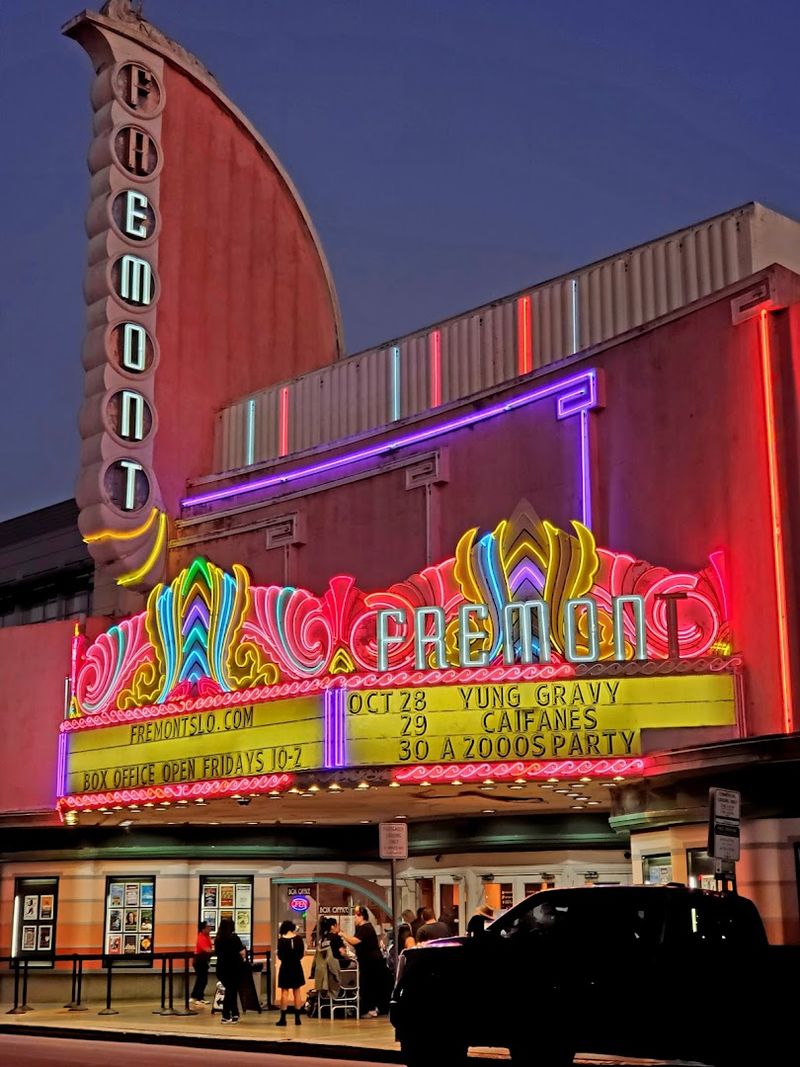
Bold and colorful and absolutely impossible to miss, the Fremont Theater sign in downtown San Luis Obispo has been setting the mood on Monterey Street since 1942.
The Fremont Theater sits at 1035 Monterey Street, San Luis Obispo, CA 93401, and its neon display in pink, yellow, and blue remains one of the most visually distinctive signs on the Central Coast.
The combination of colors feels playful and warm at the same time.
The theater was designed in a Streamline Moderne style that was already considered sleek and forward-thinking when it opened.
Today it functions as a live music and event venue rather than a traditional movie house, which means the sign now draws in concertgoers as much as film fans.
The neon still does its original job of pulling people’s attention from across the street and up the block.
Downtown San Luis Obispo has a walkable, unhurried energy that pairs well with a slow look at the Fremont’s facade. Visiting at dusk gives the best view of the full neon effect against the fading sky.
The sign has become so tied to the city’s identity that it appears regularly in promotional materials, local photography, and travel features about the Central Coast.
3. Modesto, State Theatre Marquee
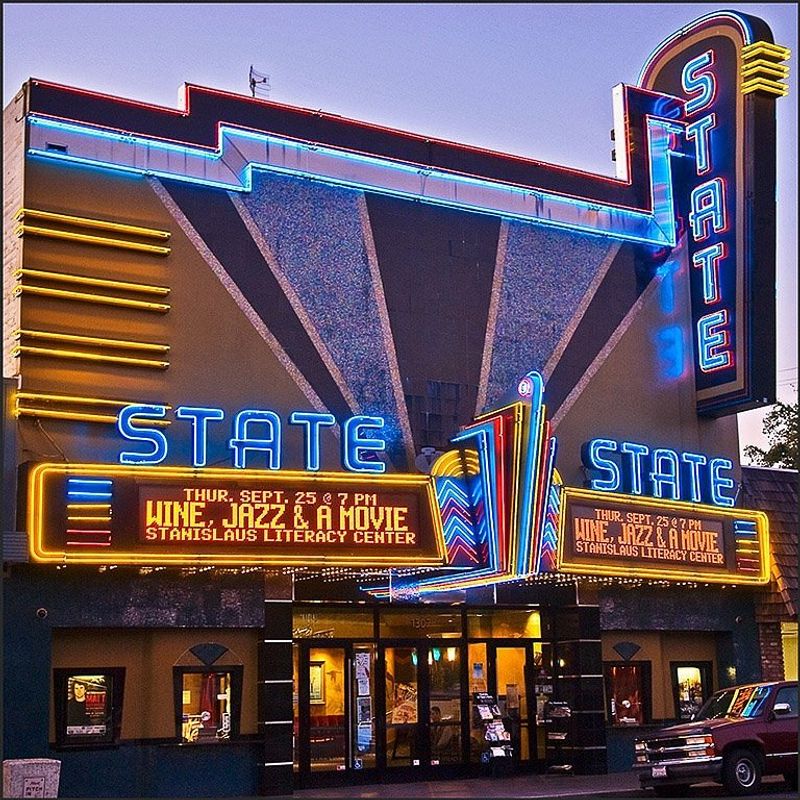
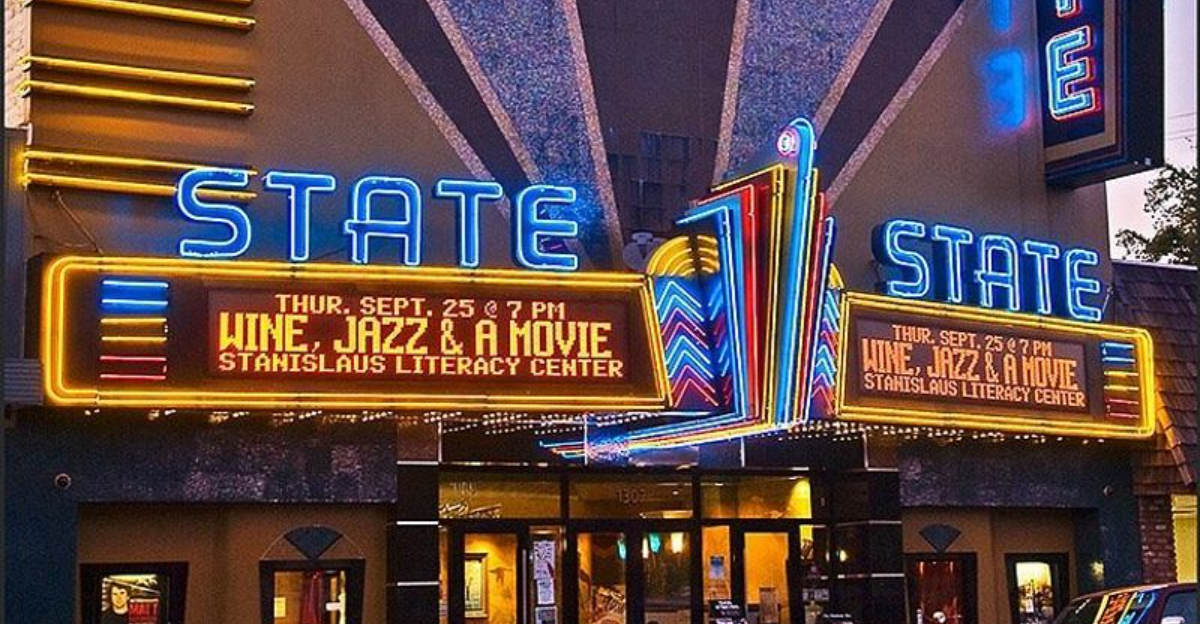
Art Deco architecture has a specific kind of confidence, and the State Theatre in downtown Modesto wears it well.
Built in 1934, the theater at 1307 J Street, Modesto, CA 95354 features a neon marquee that gives the surrounding block a cinematic glow on weekend evenings.
The vertical blade sign and the horizontal marquee work together in a way that feels both timeless and theatrical.
Modesto does not always get the attention it deserves as a city with genuine architectural character, but the State Theatre is a strong argument for a closer look.
The building has been preserved and continues to host live events, which keeps the neon lit and the energy around it active.
Seeing the marquee updated with current show titles while framed by original 1930s neon is a genuinely satisfying combination of old and new.
J Street in downtown Modesto has enough nearby spots to make an evening out of a visit, so the theater works well as the centerpiece of a longer walk through the area.
The neon is brightest and most atmospheric after sunset, and the surrounding streetscape adds to the overall retro feel.
4. Sacramento, Tower Theatre Sign
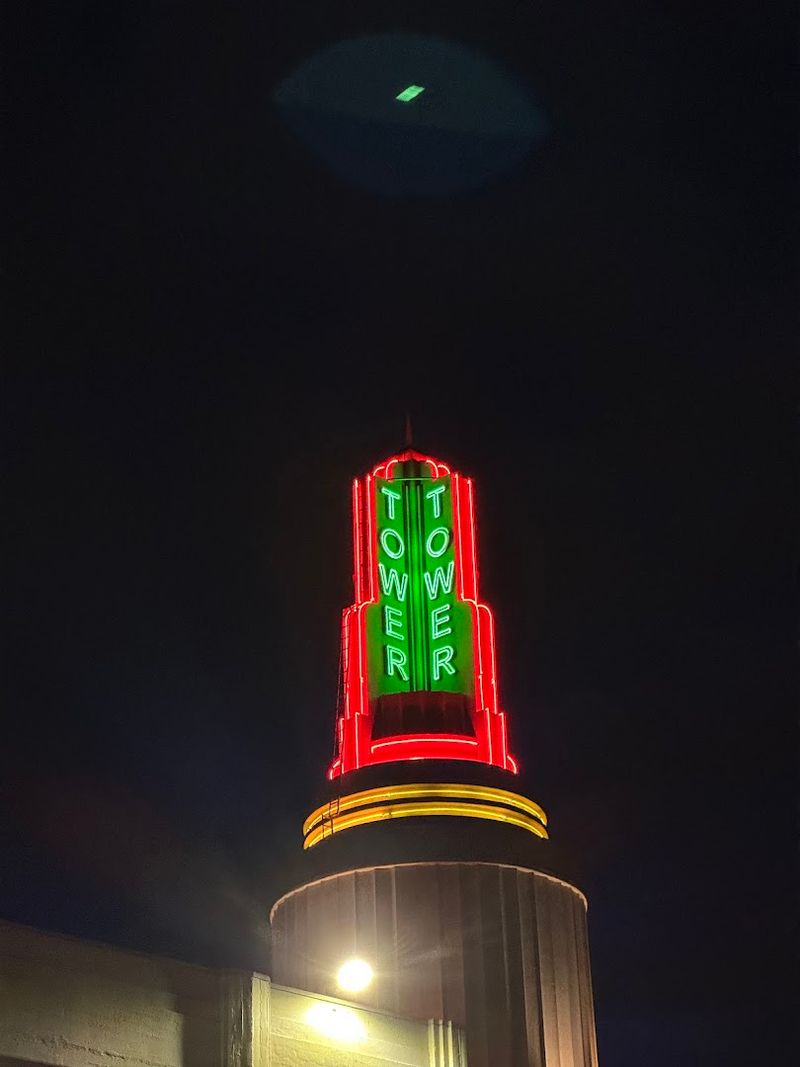
At the corner of Broadway and 16th Street in Sacramento, the Tower Theatre sign has been anchoring that intersection since 1938 with a confident, old-school neon presence.
Tower Theatre is located at 2508 Land Park Drive, Sacramento, CA 95818, and its vertical neon tower sign remains one of the most recognized landmarks in the city.
The red and white glow of the sign carries a kind of authority that newer digital signs simply cannot replicate.
The Tower has gone through various phases of use over the decades, from first-run movies to independent cinema and beyond.
The building and its iconic sign have remained a constant even as the surrounding neighborhood evolved.
There is a reason the sign appears on merchandise, murals, and local photography collections throughout Sacramento.
Visiting the Tower District on a Friday or Saturday evening gives the best sense of how the sign interacts with the surrounding energy of the neighborhood.
The area around the theater has cafés, bookshops, and restaurants that make a pre- or post-show stroll genuinely enjoyable.
The sign itself looks best from a slight distance, where the full vertical tower display can be taken in without craning upward, and the street-level neon lettering reads clearly against the facade.
5. Rancho Cucamonga, Route 66 Roadside Signs
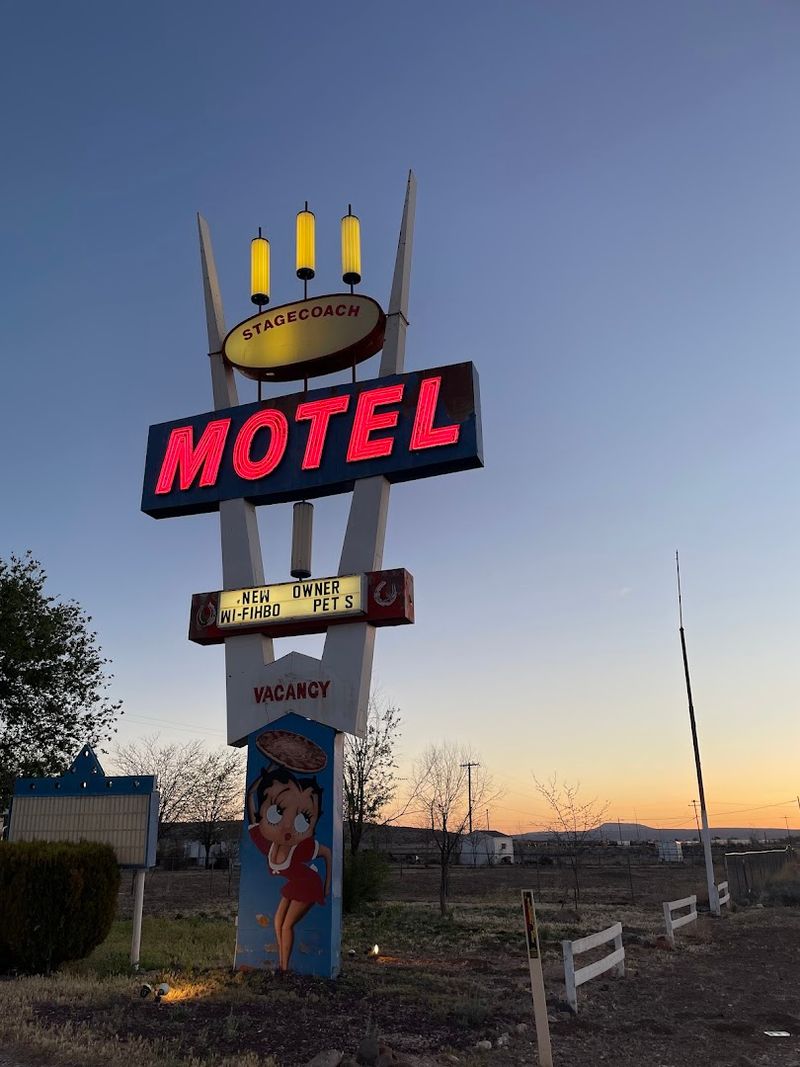
Foothill Boulevard through Rancho Cucamonga still carries the bones of Route 66, and the vintage neon signs scattered along its stretch are some of the clearest evidence of what the Mother Road once looked and felt like.
The older motels and roadside businesses along this corridor have held onto their original signage in ways that feel less like preservation and more like simple survival.
A slow drive along Foothill at dusk reveals more neon than most people expect from a modern suburban city.
Rancho Cucamonga is not typically framed as a Route 66 destination the way Amboy or Needles might be, but that lower profile has actually helped preserve some of its roadside character.
Signs that might have been replaced in higher-traffic tourist corridors have simply stayed put here, aging in place alongside the businesses they have always identified.
The result is a stretch of road that feels genuinely layered with history rather than restored for effect.
Visitors who enjoy Route 66 road trips often pass through without stopping, which makes the neon along Foothill feel like a reward for those who do slow down.
Early evening light makes the older signs glow with a warmth that daylight cannot replicate.
The surrounding San Gabriel Mountains provide a backdrop that adds unexpected visual drama to even the most modest roadside sign.
6. Fontana, Sand and Sage Motel Signs
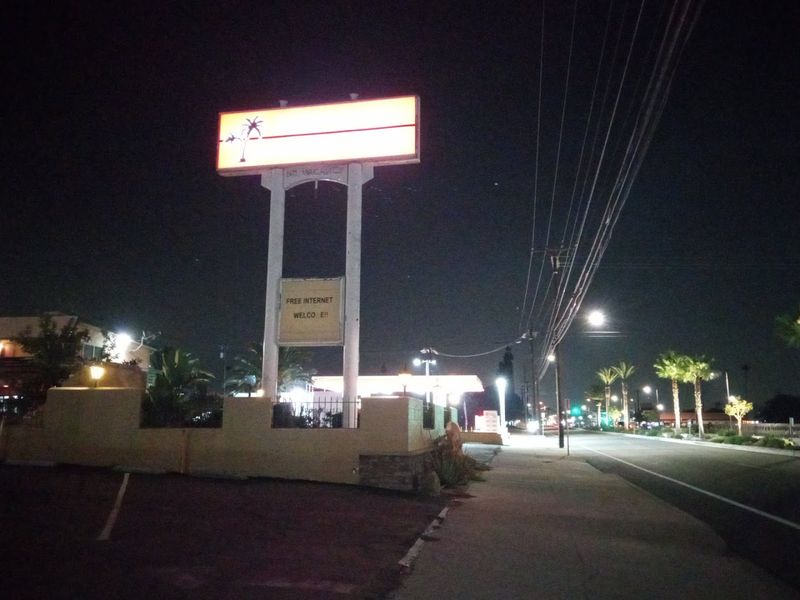
Two wall-mounted neon signs on the exterior of the Sand and Sage Motel in Fontana have quietly held their ground along one of the most historically significant roads in the country.
The motel sits along the old Route 66 corridor, and the signs carry that roadside-Americana energy in a way that feels more accidental than intentional.
There is no grand restoration story here, just two signs that survived because the building they are attached to survived.
Fontana is not often discussed in the same breath as the more famous Route 66 stops, but the Sand and Sage signs represent exactly the kind of overlooked roadside heritage that makes a long drive worthwhile.
The neon tubing on both signs carries the visual language of mid-century motel culture, with lettering and color choices that would have been perfectly at home on any highway in 1955.
Seeing them still in place on a working building feels like finding something the highway forgot to erase.
The surrounding area along this stretch of Fontana reflects the full arc of Route 66’s history, from busy Mother Road heyday to suburban sprawl and back toward renewed appreciation.
Driving this stretch in the early evening gives the signs their best light and the surrounding landscape its most atmospheric quality.
7. West Hollywood, The Roxy Sign
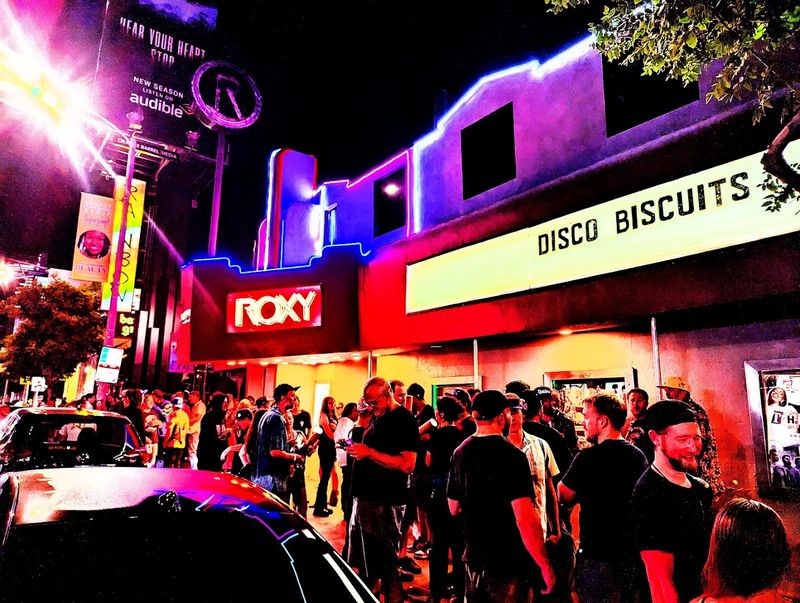
Red neon letters spelling out The Roxy against the Sunset Strip skyline carry a specific kind of cultural weight that goes well beyond roadside nostalgia.
The Roxy Theatre is located at 9009 W Sunset Blvd, West Hollywood, CA 90069, and its sign has been part of the visual identity of one of the most storied music corridors in the world since the venue opened in 1973.
The sign is not old in the same way a 1940s motel sign is old, but it has accumulated enough history to earn its place on any list of California’s most meaningful neon.
The Roxy has hosted performances that shaped the direction of rock, punk, new wave, and alternative music over five decades.
The sign out front has become inseparable from the mythology of the Strip, appearing in photographs, documentaries, and music videos that span generations.
Seeing it lit up on a busy Sunset Boulevard evening still produces a genuine reaction, even for visitors who are encountering it for the first time.
West Hollywood’s Sunset Strip is walkable in segments, and the Roxy sits in a stretch that includes several other landmark venues worth noting.
Evening visits give the full effect of the neon against the busy street, and the surrounding energy of the Strip amplifies the sign’s presence.
8. Los Angeles, Pann’s Restaurant Sign
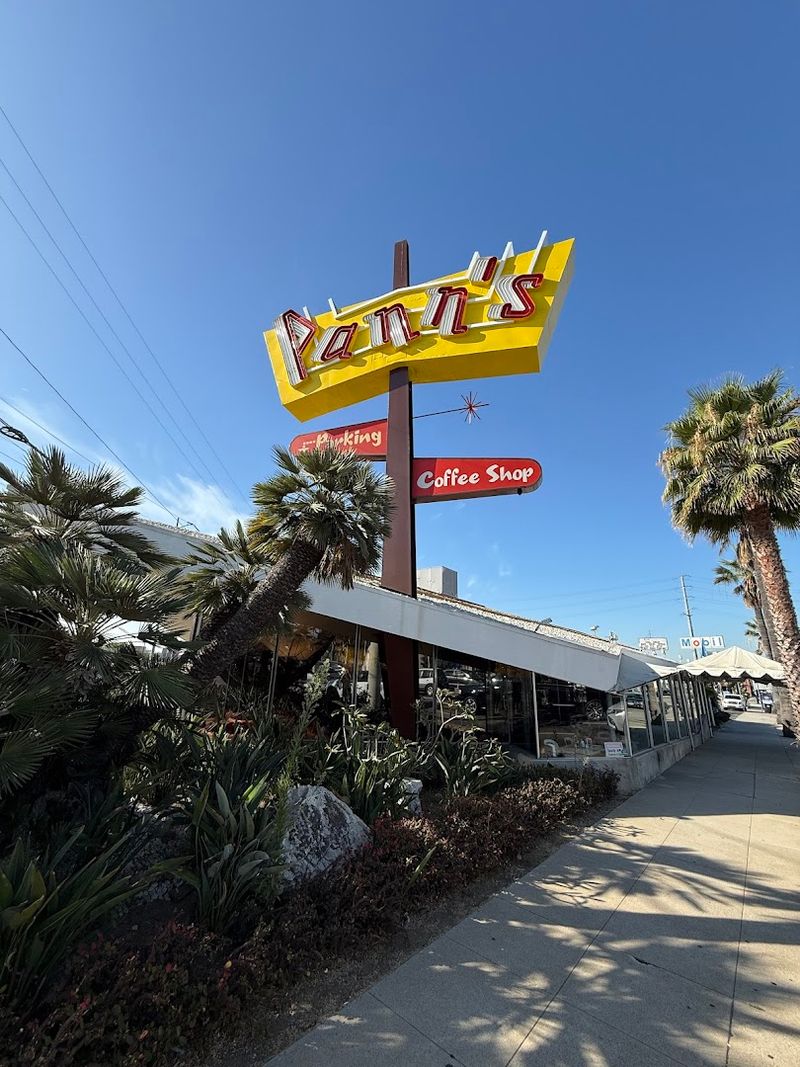
Before a single bite of food arrives, the neon sign and the sweeping Googie roofline of Pann’s Restaurant have already done most of the heavy lifting.
Pann’s is located at 6710 La Tijera Blvd, Los Angeles, CA 90045, and the building and its signage together represent one of the most intact examples of 1950s roadside diner design still operating in Southern California.
The sign’s bold lettering and the structure’s dramatic angles create a visual package that stops people mid-commute.
Pann’s opened in 1958 and has maintained its original design with remarkable consistency, which makes the whole property feel like a working museum as much as a functioning restaurant.
The neon sign is part of a larger visual conversation with the architecture, neither element making full sense without the other.
Together they communicate something specific about the optimism and energy of postwar Los Angeles design culture.
The surrounding neighborhood near LAX is not a typical tourist destination, which gives Pann’s an authenticity that more prominent landmarks sometimes lack.
Visiting during off-peak hours on a weekday gives the best chance to appreciate the exterior signage and architecture without the distraction of a crowded parking lot.
9. Hollywood/Los Angeles, El Coyote Sign
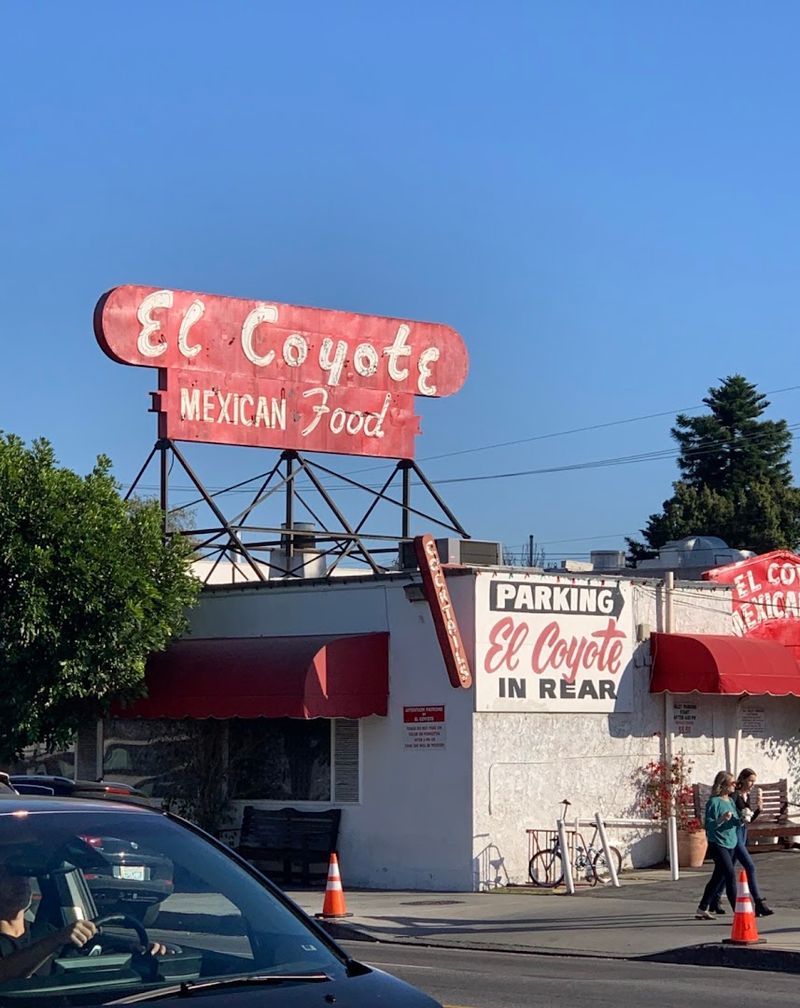
A restaurant that has been feeding Hollywood since 1931 has earned the right to let its neon do the talking.
El Coyote Cafe is located at 7312 Beverly Blvd, Los Angeles, CA 90036, and the red-and-white neon sign above the entrance has been a fixture of the Beverly Boulevard streetscape for decades.
The sign carries the full weight of nearly a century of Hollywood history in a way that few restaurant signs anywhere in the country can match.
El Coyote is one of Los Angeles’s oldest continuously operating restaurants, and its longevity has given the sign a cultural significance that goes beyond simple branding.
The neon lettering is not flashy or elaborate, but its consistency and staying power have made it iconic.
Generations of Angelenos have used that sign as a landmark, a meeting point, and a symbol of the city’s deep Mexican food culture.
Beverly Boulevard in this stretch has a dense, lived-in energy that suits the restaurant’s unpretentious character.
Visiting on a weekday evening tends to be more relaxed than weekend nights, when the line outside can stretch down the sidewalk.
The sign looks best in the early evening when the ambient light is still warm enough to complement the neon rather than compete with it, giving the whole facade a welcoming, familiar glow.
10. Santa Monica, Route 66 End of the Trail Sign
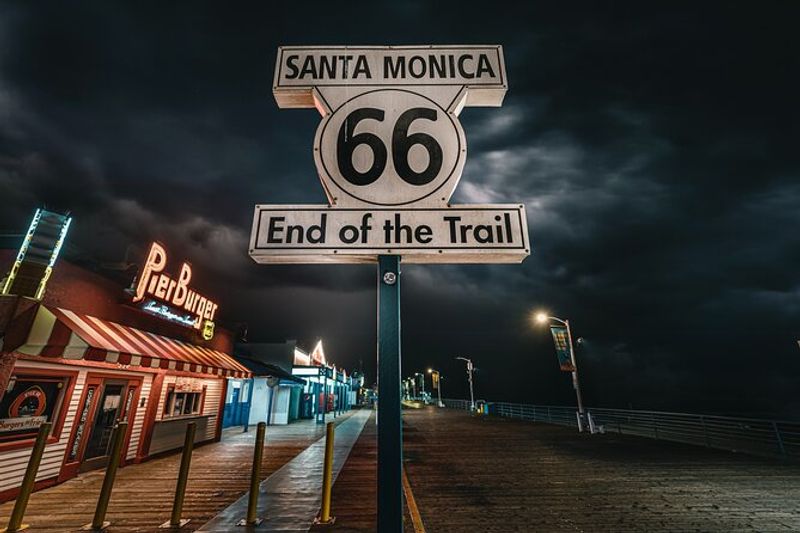
Every road has to end somewhere, and Route 66 ends in Santa Monica with a sign that carries enormous symbolic weight for anyone who has ever driven the Mother Road from its eastern start in Chicago.
The Route 66 End of the Trail sign near the Santa Monica Pier at Ocean Avenue and Santa Monica Boulevard marks the coastal finish line of one of the most iconic road trips in American history.
Standing next to it after a long drive feels like completing something that deserves to be completed.
The sign itself is not as gritty or weather-worn as the desert markers along the route, which makes sense given its location at the polished, tourist-friendly end of the road.
What it lacks in roadside patina it makes up for in meaning, drawing travelers who have crossed hundreds or thousands of miles to reach the Pacific.
The surrounding Santa Monica waterfront adds a dramatic sense of arrival that no inland sign could replicate.
The area around the pier is busy on weekends, so a weekday morning visit tends to allow for a more relaxed experience with the sign.
The ocean backdrop and the coastal light give the whole scene a quality that feels like a genuine ending, which is exactly what it is.