California’s Hidden Literary Haven Every Book Lover Needs To Explore Immediately
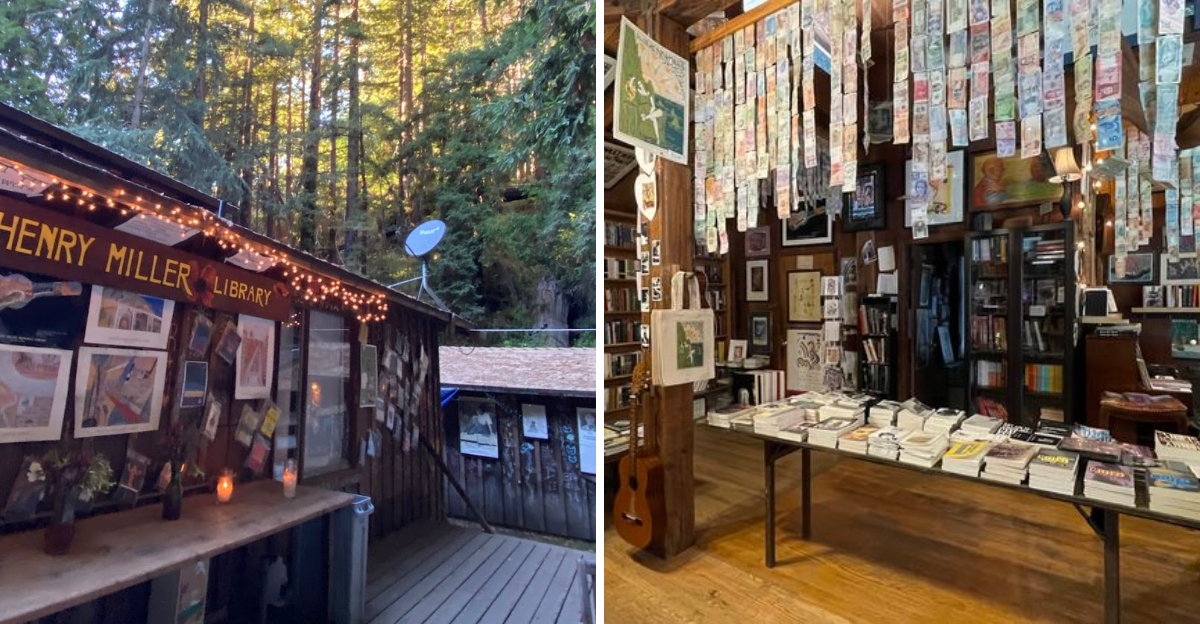
Most places built around books ask for quiet.
California has a literary hideaway where reading feels wrapped into the whole atmosphere, making the experience far richer than a simple stop.
The setting carries its own kind of spell, the sort that makes a person slow down without thinking about it.
Pages seem to matter more there. So does silence.
The mood has that tucked-away, half-mythic quality great creative places sometimes hold, as if writers, wanderers, and daydreamers have all left a little trace behind.
You do not come only to browse. You come to linger, let your thoughts drift, and enjoy the rare pleasure of being somewhere that seems to exist slightly outside ordinary time.
The Story Behind The Library And Its Founding
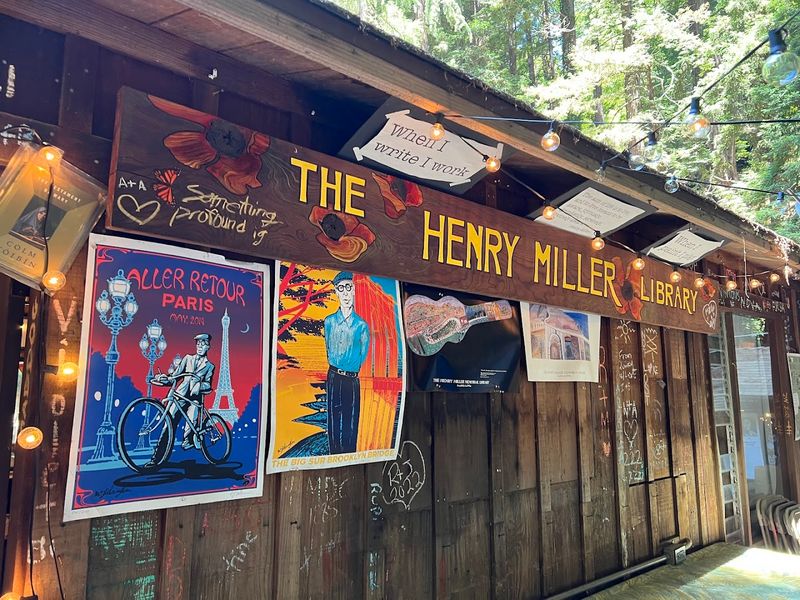
Not every memorial starts with friendship, but the Henry Miller Memorial Library did exactly that.
Emil White, a longtime friend of writer and artist Henry Miller, opened the space in 1981 inside his own former home after Miller passed away.
Rather than building a stiff, formal tribute, White envisioned something warmer and more alive, a place where art and ideas could keep moving forward.
The library sits at 48603 CA-1, Big Sur, CA 93920, right along the iconic coastal highway surrounded by redwood forest.
From the beginning, White used the space as a gallery for local artists, which means the creative energy here has roots just as deep as the literary ones.
Miller himself had a complicated relationship with the idea of being memorialized. He famously disliked traditional monuments, which makes the library’s lively, community-driven spirit feel like the most fitting tribute possible.
The space has grown into a nonprofit arts center that honors Miller not through rigid preservation but through ongoing creativity, conversation, and connection.
The Bookstore Collection and What Makes It Unique
Walking into the bookstore section of the Henry Miller Memorial Library feels a little like stepping into someone’s carefully curated personal library.
The shelves lean toward big ideas, challenging perspectives, and titles that push readers to think differently rather than simply offering bestsellers or crowd-pleasers.
The selection reflects Miller’s own rebellious and wide-ranging intellectual spirit.
Beyond the general collection, the library holds what is considered the second most comprehensive repository of Henry Miller’s books, manuscripts, letters, and ephemera in the entire world, surpassed only by the collection at UCLA.
Holdings include the William Ashley Collection, which features over 120 published versions of Tropic of Cancer alone.
The Emil Schnellock Archive adds even more depth, containing a first draft of that same landmark novel along with hundreds of personal letters.
Purchases from the bookstore can be embossed with the library’s distinctive logo, which depicts a crab holding a copy of Tropic of Cancer.
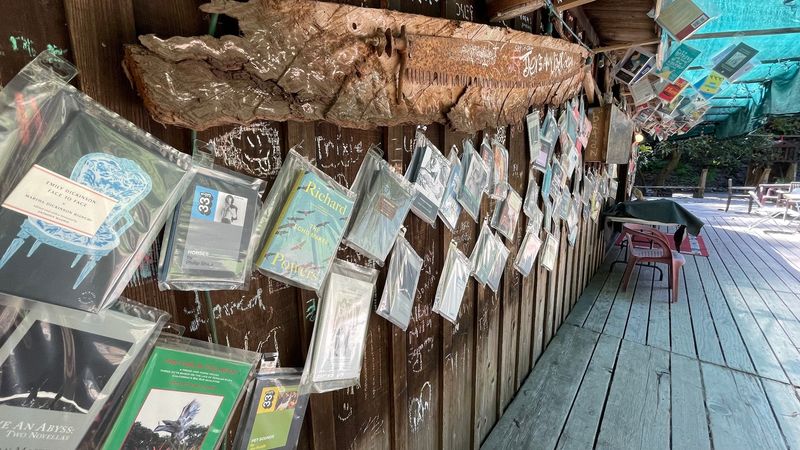
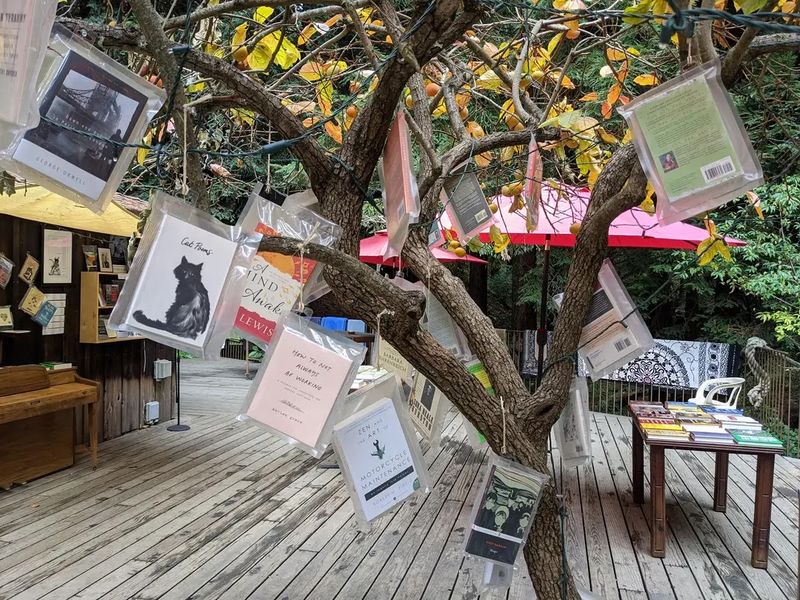
Books hang from the eaves and trees outside in plastic bags, available for browsing and purchase in a wonderfully unconventional display.
The Outdoor Space And Redwood Setting
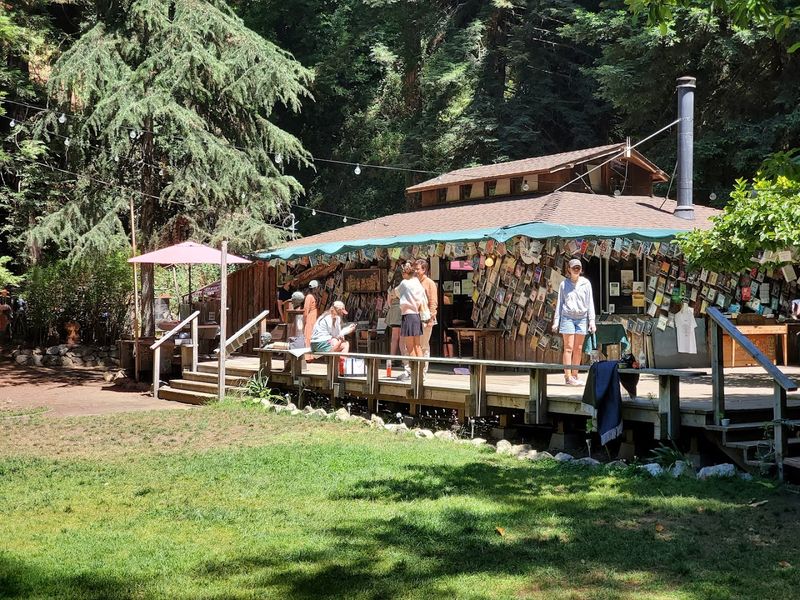
Few bookstores in California can claim a setting quite like this one.
The property sits within a genuine redwood grove, and the trees create a natural canopy that filters light in soft, shifting patterns throughout the day.
The outdoor space includes a deck, open lawn, and seating areas where visitors tend to linger far longer than they originally planned.
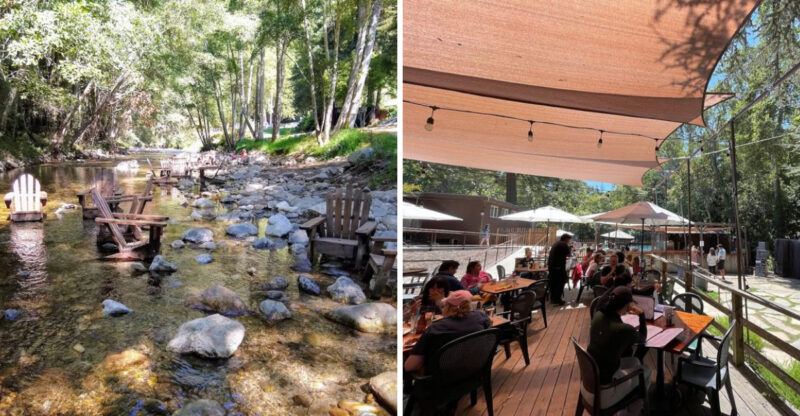
A small stream runs behind the property, and the sound of moving water adds a quiet, meditative quality to the experience that is hard to replicate anywhere else.
Hammock swings and casual seating encourage slow, unhurried browsing rather than a quick in-and-out visit. The whole atmosphere feels more like a woodland retreat than a roadside stop.
Even on quieter days without scheduled events, the outdoor area offers a rare kind of stillness that feels genuinely restorative.
Visitors who stop in while driving Highway 1 often describe the outdoor setting as one of the most unexpectedly peaceful spots along the entire route.
Live Concerts And Performances At The Library
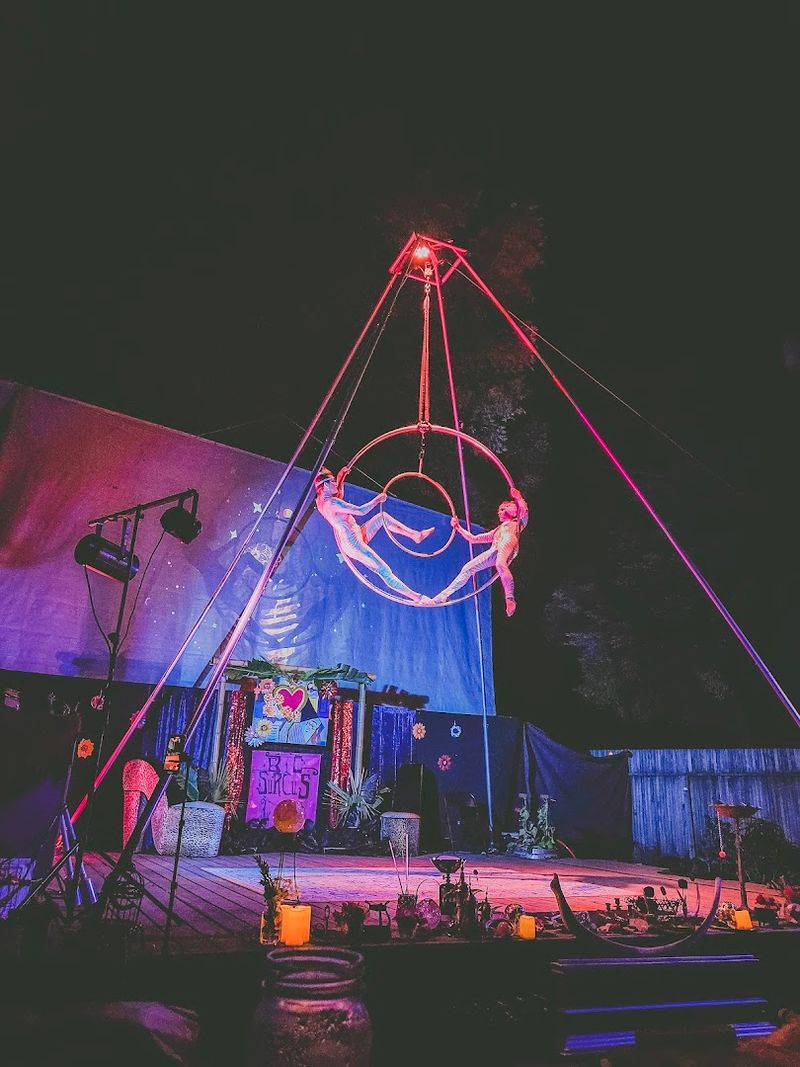
The Henry Miller Memorial Library has built a reputation as one of the most atmospheric small performance venues on the California coast.
Concerts happen primarily from May through October, taking advantage of the outdoor redwood amphitheater and open lawn that transforms into an intimate stage setting.
The combination of live music and towering trees creates an experience that feels genuinely removed from the ordinary concert circuit.
Over the years, the venue has hosted acts ranging from the Red Hot Chili Peppers to Arcade Fire, which speaks to the cultural reach this small nonprofit has managed to establish.
Most shows sell out, and the audience tends to be a relaxed mix of locals and travelers who spread out on rugs and camp mats across the lawn.
Beyond major concerts, the library also hosts open mic nights, poetry readings, film screenings through the Big Sur International Short Film Screening Series, and community fundraiser events throughout the year.
Checking the library’s event calendar before visiting is a practical step for anyone hoping to time their trip around a performance.
Art, Memorabilia, And Visual Displays Inside The Space
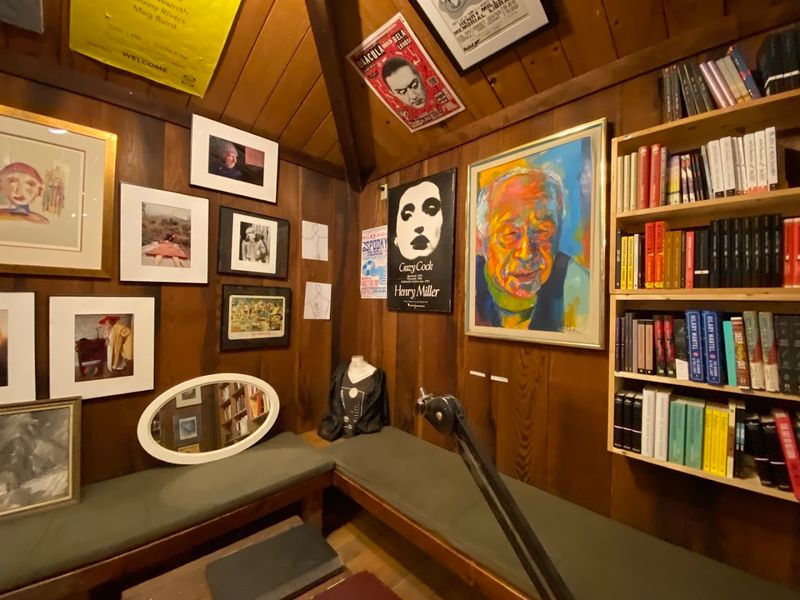
The walls inside the Henry Miller Memorial Library tell a story that goes well beyond books.
Framed letters, original manuscripts, movie posters, and prints of Miller’s own paintings cover the interior in a way that feels layered and personal rather than museum-formal.
The visual displays are part of what makes the space feel like a living archive rather than a static exhibit.
Miller was as serious about painting as he was about writing, and the library reflects that dual identity clearly.
Prints of his watercolors appear alongside literary memorabilia, giving visitors a fuller picture of who he was as a creative person.
Original letters and manuscripts are part of the collection, and seeing his actual handwriting and correspondence adds a tactile intimacy that printed books alone cannot provide.
Emil White originally established the space with local artists in mind, so visual art has always shared equal footing with literature here.
Art pieces, sculptures, and rotating exhibits appear both inside the cabin and throughout the outdoor grounds.
Postcards, posters, and art prints are available for purchase alongside books and gifts, making it easy to bring home something that reflects the visual character of the place.
The Library As A Community Hub And Cultural Center
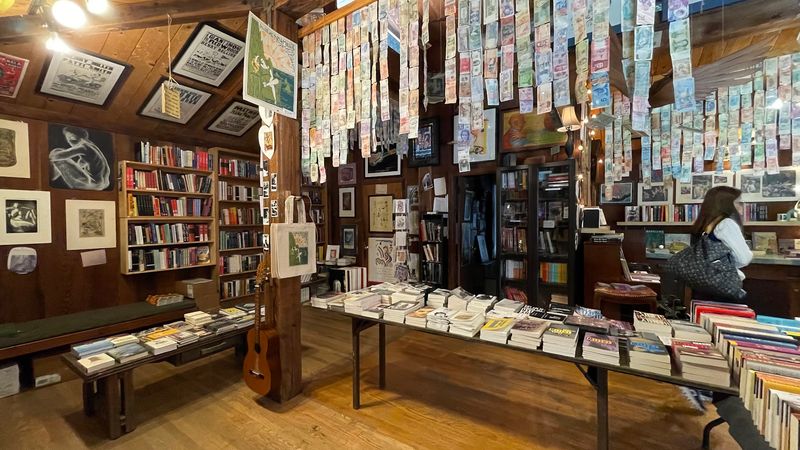
Beyond its identity as a bookstore or archive, the Henry Miller Memorial Library functions as a genuine community anchor for the Big Sur area.
Events like the annual community fundraiser known as the Big Share draw local residents and visitors together in a way that feels organic and warm rather than organized or transactional.
The space has a long history of bringing people together around shared creative interests.
Writing workshops, art exhibits, lectures, and book signings appear on the event calendar alongside concerts and film screenings, reflecting a programming philosophy that values breadth and accessibility.
The library won Monterey County’s Champion of the Arts award in 2013, which recognized its sustained contribution to the regional cultural landscape.
Complimentary coffee is available for visitors, and the informal, unhurried atmosphere encourages conversation and connection among people who might otherwise just pass through on a road trip.
Staff tend to be knowledgeable, approachable, and genuinely enthusiastic about the space and its history.
Hours, Location, And Planning Tips
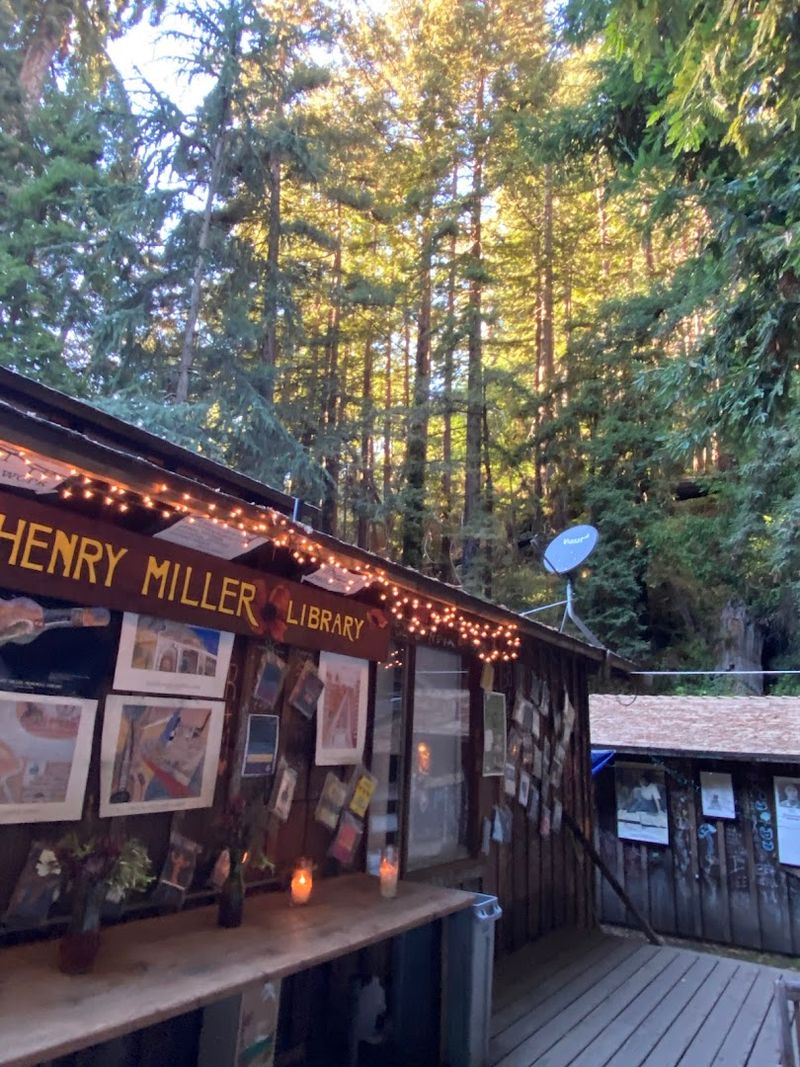
Planning a visit to the Henry Miller Memorial Library requires only modest preparation, but a few practical details make the experience smoother.
The library is located at 48603 CA-1 in Big Sur, California, and is generally open daily from 11 a.m. to 5 p.m., though holiday closures and special event scheduling can affect regular hours.
Checking the official website at henrymiller.org before arriving is a reliable way to confirm current availability.
Parking along Highway 1 near the library is limited, and weekends during the summer months tend to bring more visitors than weekday mornings.
Arriving earlier in the day allows for a quieter, more unhurried experience inside the bookstore and on the outdoor grounds.
The property is accessible from the highway through an open gate, and the walk from the road to the cabin is short and easy.
The library is not a traditional lending library, so visitors should come expecting a bookstore and arts space rather than a place to borrow titles.
Budget enough time to explore the outdoor areas, read the framed letters and quotes on the walls, and browse the full collection without rushing.
A visit that feels genuinely satisfying tends to take at least an hour, especially when the outdoor setting is at its best during mild weather.
Henry Miller’s Connection To Big Sur And Why It Matters
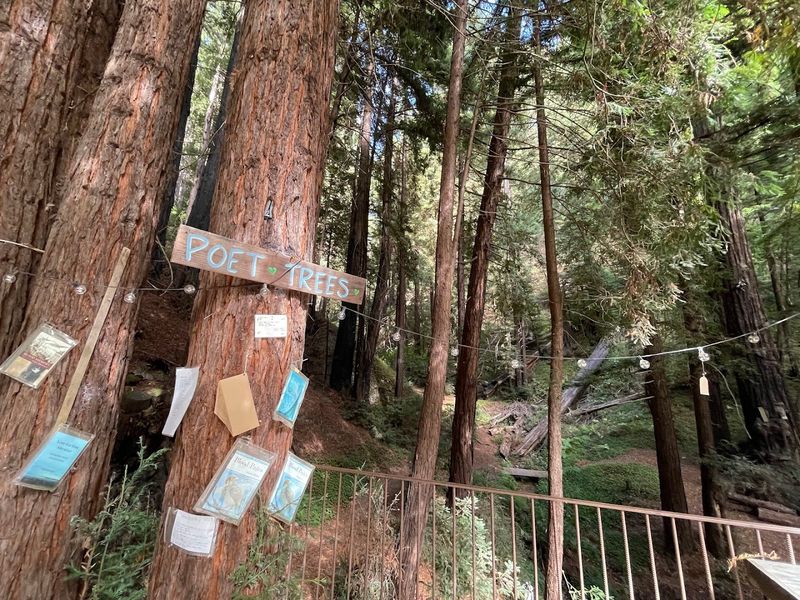
Henry Miller moved to Big Sur in 1944 and lived there for nearly two decades, a period that profoundly shaped his later writing and his understanding of what a creative life could look like outside of urban literary circles.
The landscape itself, dramatic coastline, dense forest, and long stretches of quiet, seemed to suit the kind of reflective, unconventional thinking that defined his work.
Big Sur and the Oranges of Hieronymus Bosch, one of his most personal books, was written during this period and dedicated to Emil White.
That dedication carries real weight because it connects the literary legacy of the book directly to the man who later built the library in White’s own former home.
The friendship between Miller and White was not just personal but creatively significant, and the library reflects that bond in its atmosphere and its approach to honoring his memory.
Understanding Miller’s years in Big Sur adds a meaningful layer to any visit because the library is not simply a place that sells his books.
The location itself is part of the story, and standing in the redwood grove where his friend once lived makes the connection between the landscape and the writing feel tangible rather than abstract.
The Bohemian Atmosphere
There are plenty of independent bookstores in California, but very few carry the kind of atmosphere that makes a visitor feel like time has slowed down in the best possible way.
The Henry Miller Memorial Library has a distinctly bohemian character that comes from decades of accumulated creative energy rather than deliberate interior design.
Books hanging from tree branches in plastic bags, eclectic art on every wall, and the sound of a nearby stream all contribute to a sensory experience that is genuinely hard to categorize.
The library’s operators have described the space as a place where nothing happens, which sounds like a drawback but actually captures something important.
That deliberate slowness and resistance to digital distraction is part of what makes the library feel like a counterpoint to the rushed, screen-heavy pace of modern travel.
During winter months especially, the library takes on the feeling of a writer’s retreat, quiet, cool, and surrounded by the kind of natural stillness that encourages reflection.
The funky, unhurried vibe is not accidental but is built into the philosophy of the space from its founding days.
Gifts, Art Prints, And Souvenirs Worth Browsing
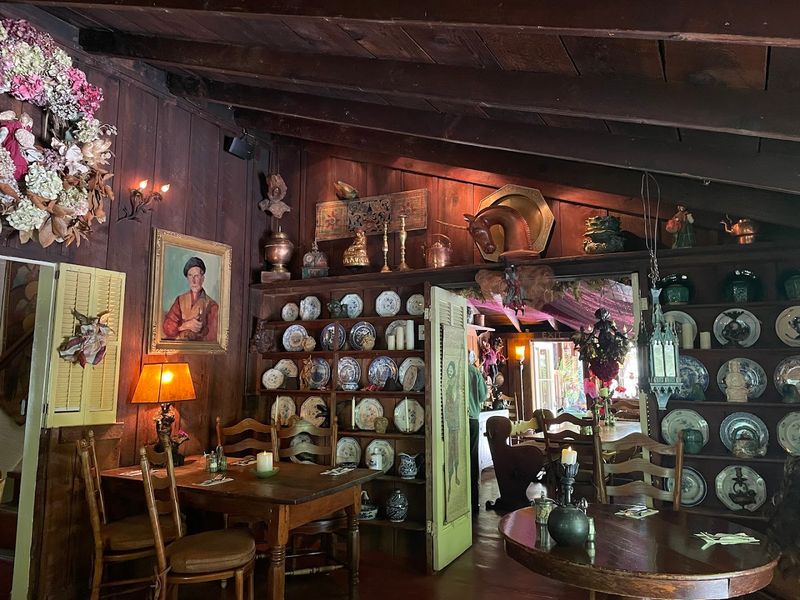
For visitors who want to bring something home beyond a book, the library’s selection of gifts and art materials offers some genuinely distinctive options.
Prints of Henry Miller’s own watercolor paintings are available for purchase, which gives art lovers a chance to own something tied directly to his creative output rather than just his literary reputation.
Postcards, posters, and other printed materials related to Miller’s life and work round out the retail offerings alongside books and general art gifts.
Purchases from the bookstore can be embossed with the library’s signature logo, a crab holding Tropic of Cancer, which turns even a simple book into a small keepsake with a specific story attached to it.
Local art has been part of the library’s identity since Emil White first opened the space as a gallery, so the items available for purchase tend to reflect genuine artistic intent rather than generic tourist merchandise.
Browsing the gift area is worth doing slowly, especially for anyone who appreciates handmade or artist-made objects with a clear connection to place and history.