California’s Strangest Beach Town Is Actually The Most Charming Place Ever
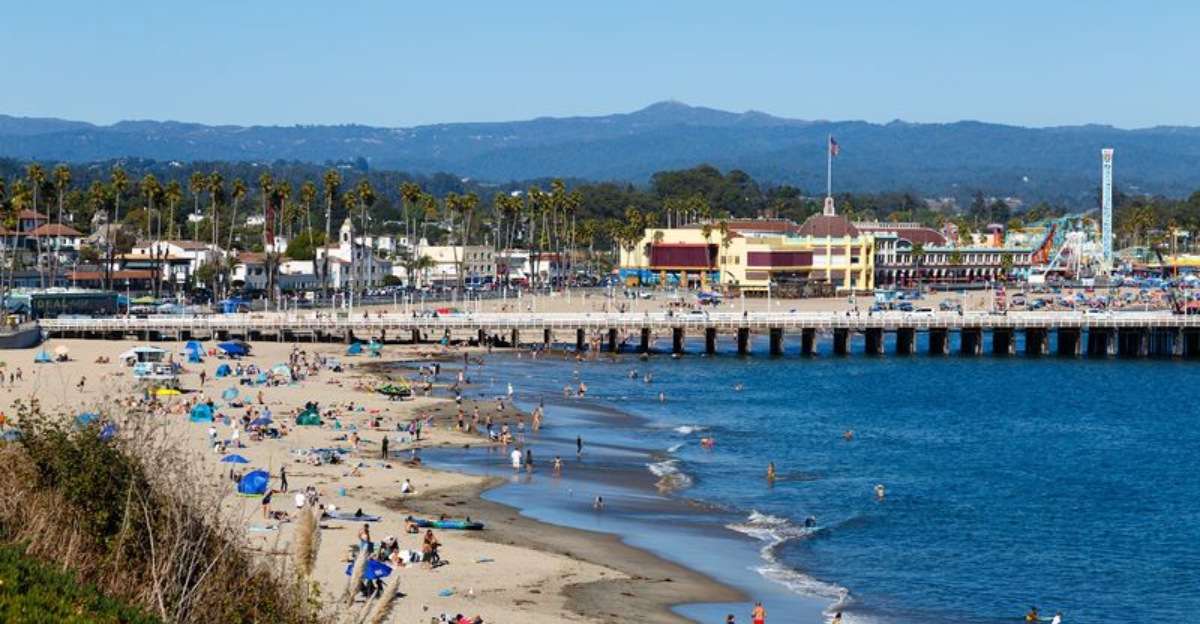
Something feels different the moment you arrive in this unusual California beach town.
Quirky details, offbeat charm, and a setting that never quite behaves like a typical coastal getaway give it a personality that is hard to shake off.
First impressions may lean curious, maybe even a little amused, yet that quickly gives way to real affection.
Places like this do not win people over by feeling polished or predictable. They stay memorable because they feel lived-in and completely comfortable in their own skin.
Ocean air helps, of course, but the deeper pull comes from the town’s spirit and the way it turns odd little moments into part of the appeal.
By the end of a visit, strange no longer feels like the right word. Charming fits much better, and somehow it still does not say quite enough.
An Unmistakable Old-School Beach Identity That Has Lasted Over a Century
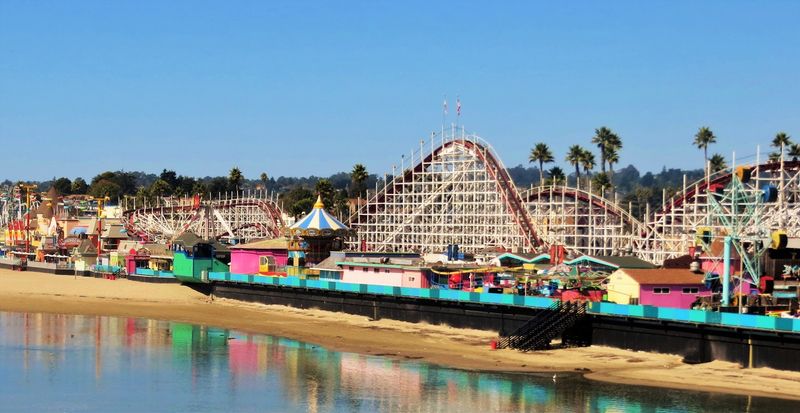
Few places carry their history as visibly as the Santa Cruz Beach Boardwalk, which has been operating continuously since 1907.
Calling itself the oldest amusement park in California, the Boardwalk sits right on the sand and gives the city a seaside personality that feels rooted in a different era entirely.
The rides, the sounds, and the salt-air setting all combine into something that feels genuinely old rather than artificially nostalgic.
Most amusement parks in the U.S. have moved inland or been absorbed into massive resort complexes, which makes the Boardwalk’s beachfront location all the more unusual.
Families walk from the shore directly to the rides without ever leaving the coastal atmosphere, and that seamless connection between ocean and entertainment is hard to find anywhere else on the West Coast.
The Boardwalk is listed at 400 Beach St, Santa Cruz, CA 95060.
Weekends tend to draw larger crowds, so visiting on a weekday could allow for a more relaxed pace.
The energy shifts depending on the season, but the Boardwalk holds onto its classic character year-round, and that consistency is a big part of what makes Santa Cruz feel so distinct among California beach destinations.
Two Rides That Are Actual National Historic Landmarks
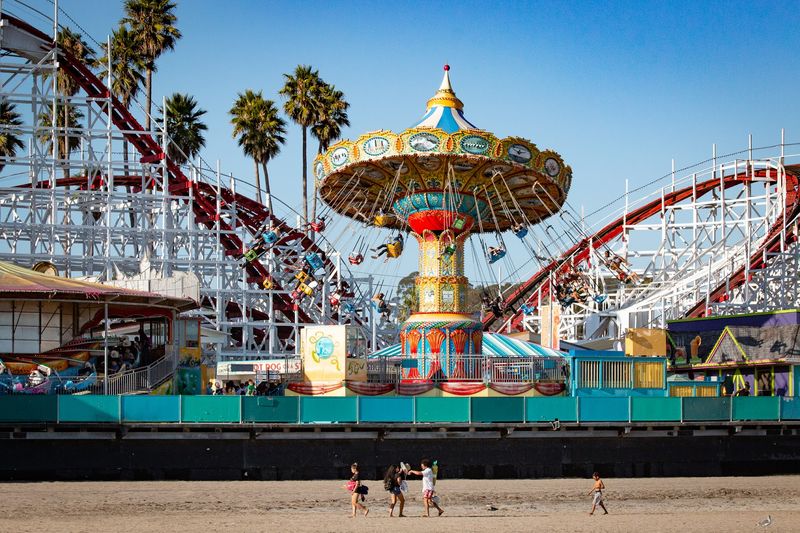
Most roller coasters get replaced or retired after a few decades, but the Giant Dipper at the Santa Cruz Beach Boardwalk has been thrilling riders since 1924 and holds the designation of a National Historic Landmark.
The Looff Carousel, built in 1911, carries the same distinction, making the Boardwalk home to two federally recognized landmarks that people can actually ride on a regular afternoon.
That combination gives Santa Cruz a playful Americana quality that feels genuinely older and stranger than a typical California beach town.
Riding a century-old wooden coaster next to the Pacific Ocean is a specific kind of experience that does not exist in many places, and the fact that it happens inside a working amusement park adds to the appeal considerably.
The texture of the old wood, the mechanical clatter of the carousel, and the ocean backdrop all reinforce each other in a way that is hard to replicate.
Both landmarks are preserved and maintained as active attractions rather than display pieces, which means the history here is participatory rather than passive.
Visitors do not just observe the past at the Boardwalk; they move through it, and that distinction matters a great deal to the overall feeling of the place.
A Wharf That Stretches Nearly 2,600 Feet Into Monterey Bay
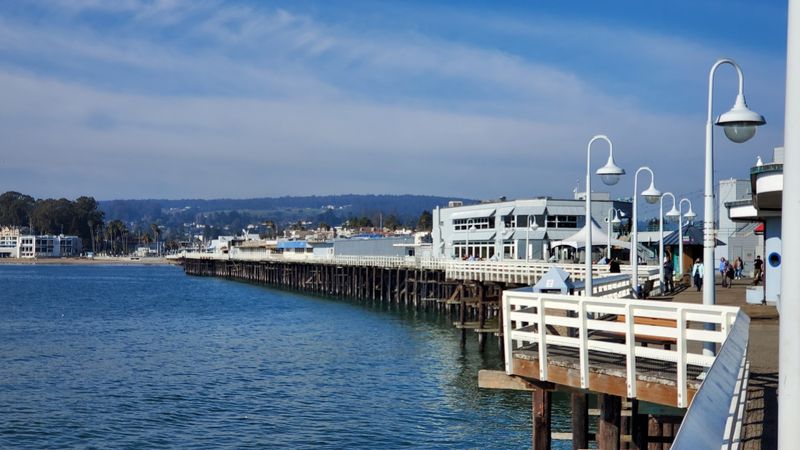
Stretching nearly 2,600 feet into Monterey Bay, the Santa Cruz Wharf is described by Visit Santa Cruz as the longest pier on the Pacific shore.
The structure holds restaurants, seafood shops, and open viewing areas, but the real draw is the feeling of walking out over open water with the bay spreading out in every direction around you.
Located at 21 Municipal Wharf, Santa Cruz, CA 95060, the wharf gives visitors a perspective on the coastline that is simply not available from the beach itself.
Looking back toward the shore from the far end of the pier offers a view of the entire Santa Cruz waterfront, including the Boardwalk, the hills behind the city, and the curve of the bay.
The scale of that view tends to catch people off guard the first time they experience it.
Wandering the wharf without a specific destination in mind is genuinely one of the better ways to spend time in Santa Cruz.
The pace out there slows down naturally, the sound of water is constant, and the combination of sea air and open sky tends to make even a short visit feel restorative.
Mornings can offer a quieter experience before the midday foot traffic builds up along the wooden planks.
Sea Lions That Make the Waterfront Feel Louder and More Alive
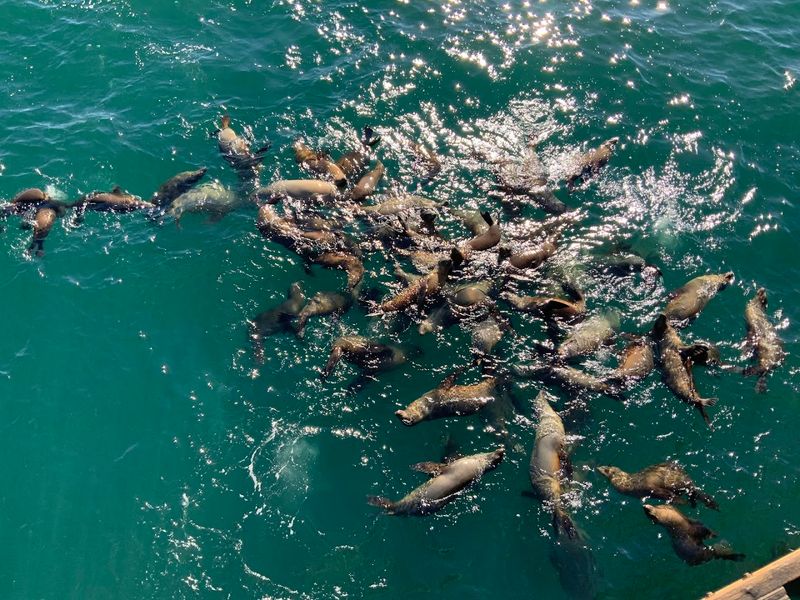
Underneath the wooden planks of the Santa Cruz Wharf, a colony of sea lions has made a permanent home among the pilings, and their constant barking is one of the most recognizable sounds in the city.
Visit Santa Cruz specifically highlights this colony as part of what makes the waterfront experience so memorable, and hearing them before you see them is a pretty common introduction for first-time visitors.
The sea lions are not a scheduled attraction or a trained exhibit. They simply live there, hauling out onto the lower structures, jostling for position, and making as much noise as they want at all hours.
That wildness in the middle of a working pier gives Santa Cruz a texture that a more curated resort town would never allow, and locals tend to treat the sea lions with the same casual familiarity they extend to everything else.
Peering down through gaps in the wharf planks or leaning over the railing to spot the colony below is one of those small Santa Cruz moments that sticks with people long after a visit.
The animals are genuinely entertaining to watch, and the setting, sea air, creaking wood, open water, adds a layer of atmosphere that photographs rarely manage to capture fully.
A Surfing Legacy That Predates the Modern Surf Culture by Generations
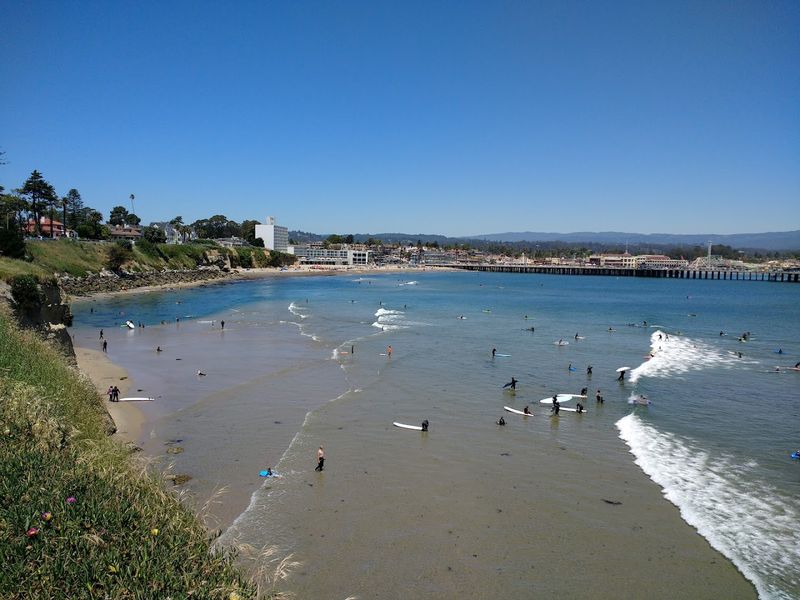
Long before surf culture became a global lifestyle brand, something quietly historic happened on the shores of Santa Cruz in the late 1880s.
Three visiting Hawaiian princes introduced surfing to the U.S. mainland right there, and that origin story gives the city a connection to the sport that runs considerably deeper than simply having good waves.
Steamer Lane, the famous surf break near Lighthouse Point, has been drawing skilled surfers for generations and continues to host competitive surfing events.
Watching the lineup from the cliffs above gives a clear sense of why the spot earned its reputation, with powerful swells moving through a rocky channel that rewards experienced surfers and humbles less prepared ones.
The energy at Steamer Lane on a good swell day is electric in a way that feels entirely unscripted.
Santa Cruz surfers tend to carry a certain seriousness about their relationship with the ocean, which is different from the more casual beach-party image associated with other California surf towns.
That seriousness makes sense given the depth of the local surfing history, and it contributes to an atmosphere at the water’s edge that feels earned rather than performed.
A Surfing Museum Housed Inside a Cliffside Lighthouse
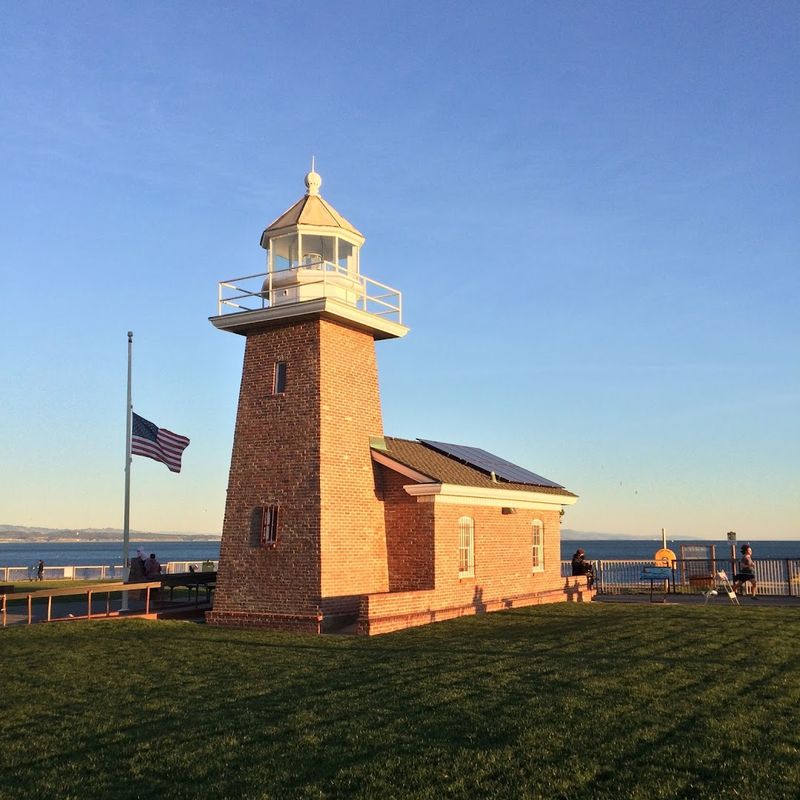
Perched on a cliff directly above Steamer Lane, the Santa Cruz Surfing Museum occupies the Mark Abbott Memorial Lighthouse and offers one of the more unexpectedly perfect settings for a museum anywhere on the California coast.
The building itself is a working lighthouse structure, and the views from the surrounding grounds look directly down onto one of the most celebrated surf breaks in the country.
The museum, located at 701 W Cliff Dr, Santa Cruz, CA 95060, traces the full arc of surfing history with a particular focus on the sport’s roots in the Santa Cruz area.
Vintage boards and artifacts from the early days of West Coast surfing fill the small interior, and the combination of the exhibits and the live ocean view just outside the windows creates a layered experience.
Admission is free, though donations are welcomed, and the museum tends to attract a mix of surf enthusiasts and history buffs.
The Mystery Spot Adds a Genuinely Weird Chapter to the City’s Story
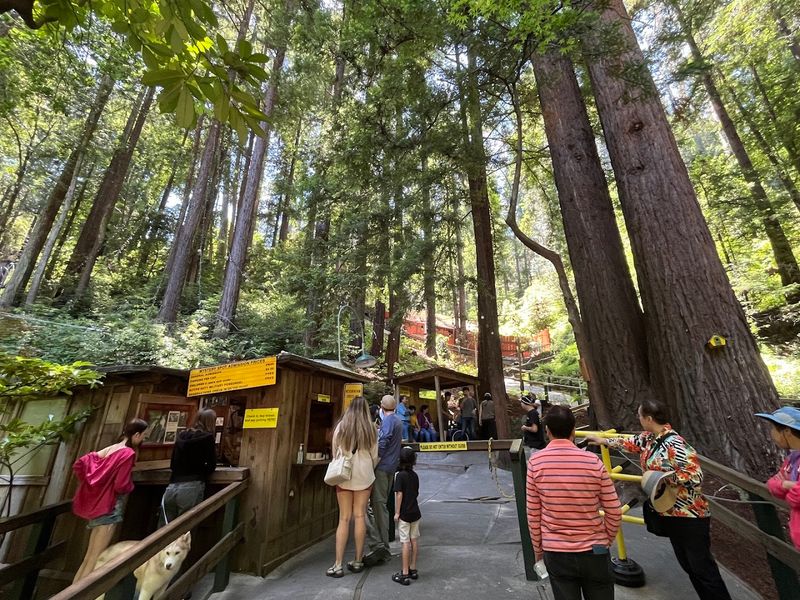
Tucked into the redwood hills above Santa Cruz, the Mystery Spot has been drawing curious visitors since 1940 with its claim of being a gravitational anomaly.
Over here, balls seem to roll uphill and people appear to grow taller or shorter depending on where they stand.
Whether the explanation is geological, optical, or purely theatrical probably depends on how skeptically a visitor approaches the whole thing, but the experience itself is consistently entertaining regardless of where someone lands on that question.
The attraction is located at 465 Mystery Spot Rd, Santa Cruz, CA 95065, and guided tours run regularly throughout the day.
The forested setting adds to the atmosphere, with towering redwoods surrounding the tilted structures that make up the main demonstration area.
The combination of old-growth trees, slanted buildings, and enthusiastic guides gives the Mystery Spot a roadside-attraction energy that feels like something from a different era of American travel.
Parking reservations are recommended since the access road is narrow and the lot fills up on busy weekends.
The Mystery Spot is one of those places that works best when visited with a sense of humor and an openness to being genuinely puzzled, even briefly.
Monarch Butterflies Turn the City Into Something Truly Unusual Each Winter
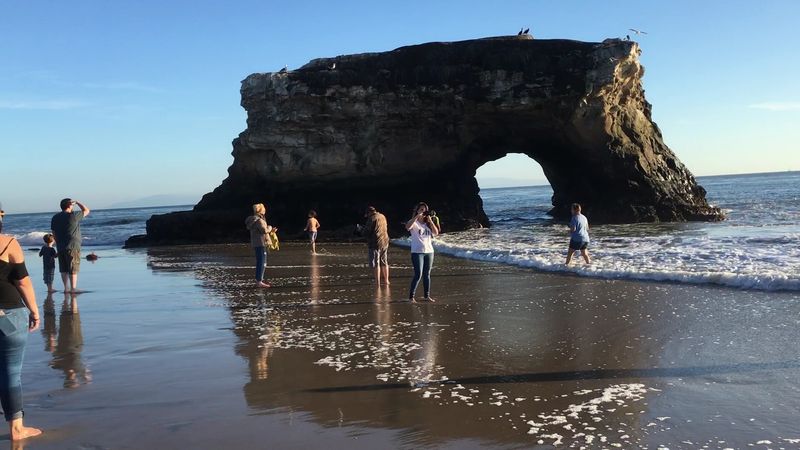
Each year from October through January, thousands of monarch butterflies migrate to the eucalyptus grove at Natural Bridges State Beach, making it one of the most accessible monarch viewing sites in California.
It’s the only State Monarch Preserve in California, which adds a layer of ecological significance to what is already one of the more visually striking seasonal experiences the city offers.
Seeing monarchs in large clusters on tree branches is a genuinely different experience from spotting a single butterfly in a garden.
The sheer number of them, the way the clusters shift and occasionally take flight together, and the rustling sound of wings in motion all combine into something that surprises most visitors regardless of whether they came specifically to see the butterflies.
The eucalyptus grove at Natural Bridges provides exactly the kind of sheltered, sun-warmed environment the monarchs seek during their overwintering period.
The timing of peak butterfly numbers can vary from year to year depending on migration patterns and weather conditions, so checking with the park before visiting during the shoulder months of October or January could help set realistic expectations.
Docent-led butterfly walks are offered on weekends during the season and tend to provide helpful context for understanding the migration cycle and what visitors are observing in the grove.
All the Contrasts Live Together Without Canceling Each Other Out
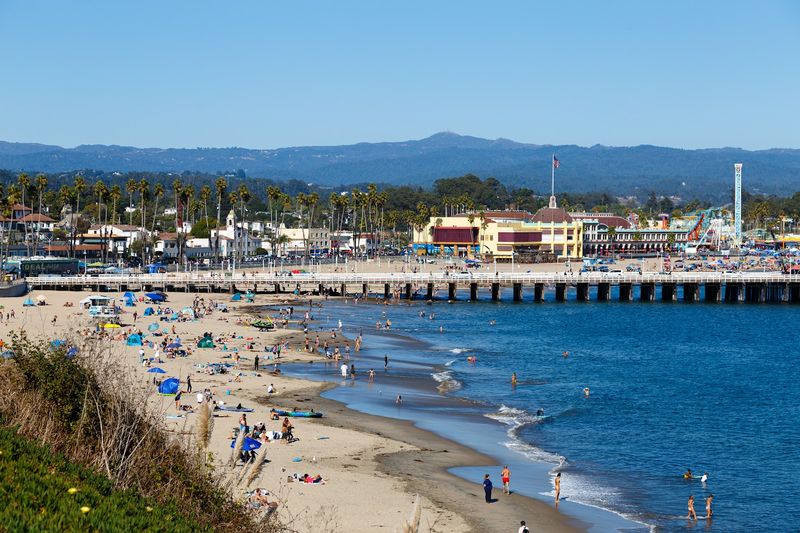
Very few places manage to hold as many contrasting identities as Santa Cruz does without any of them feeling out of place.
A century-old wooden roller coaster, a lighthouse surfing museum, barking sea lions under a working pier, and a gravity-defying roadside attraction in the redwoods all belong to the same city, and none of them seem to undercut the others.
That range of experiences means different kinds of travelers tend to find something genuinely meaningful in Santa Cruz rather than simply tolerating it as a backdrop for a beach day.
History enthusiasts, surfers, nature lovers, families with kids, and people who just want to walk a long pier and eat seafood can all have a satisfying visit without following the same itinerary.
The city accommodates that variety without feeling scattered or unfocused.
What holds everything together is probably the underlying coastal character that runs through every part of the city, from the salt air to the ocean view, from the surfing museum to the sound of waves audible from the butterfly grove.
Santa Cruz earns the strange label honestly, but the charm that comes with the strangeness is what tends to bring people back. The two qualities are not in conflict here; they are the same thing.