12 Central Coast California Day Trips That Feel Like A Real Vacation Without Spending More Than $65
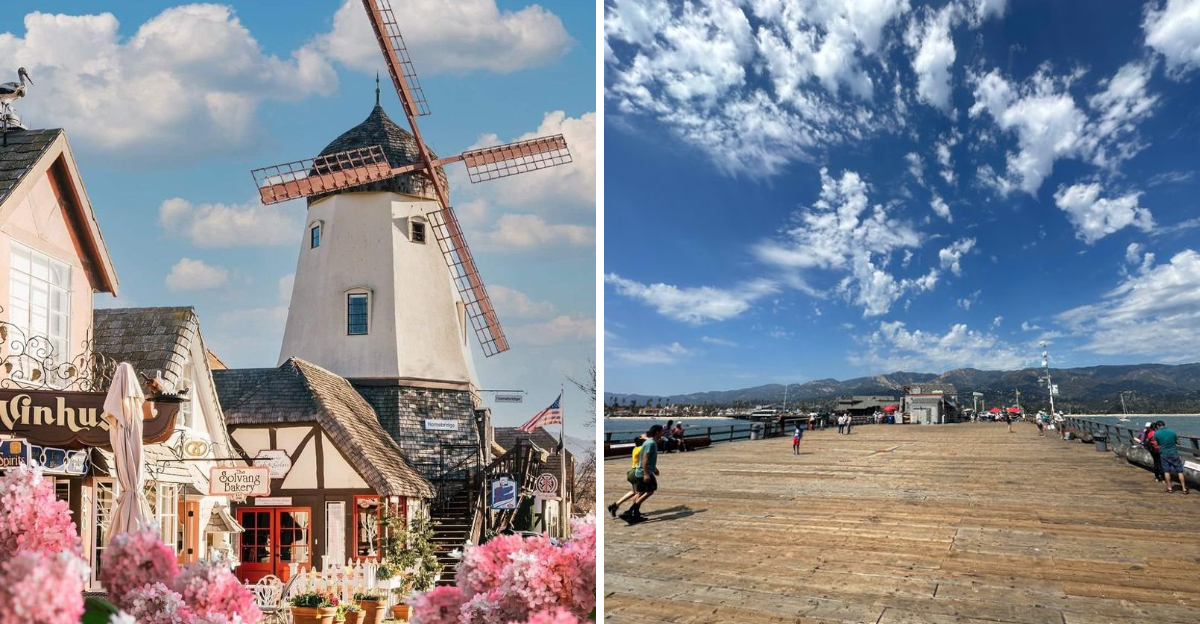
Sixty-five dollars does not sound like much of a vacation budget. Good. That makes finding a day that feels far more expensive especially satisfying.
Pack lunch when it makes sense, fill the tank, and aim for somewhere that changes the scenery enough to convince your brain you actually went away.
California’s Central Coast makes affordable escapes surprisingly easy with beaches, trails, scenic overlooks, and waterfront stops within day-trip distance.
The trick is spending money on the things that matter and skipping the ones that do not.
Walk the free trail before paying for an attraction. Bring snacks so a gorgeous viewpoint does not somehow turn into a $30 lunch. Save enough for one treat you will actually remember.
These 12 day trips keep the individual outing budget under $65 while still delivering that satisfying “we went somewhere” feeling. No hotel key required.
1. Point Lobos State Natural Reserve, Carmel
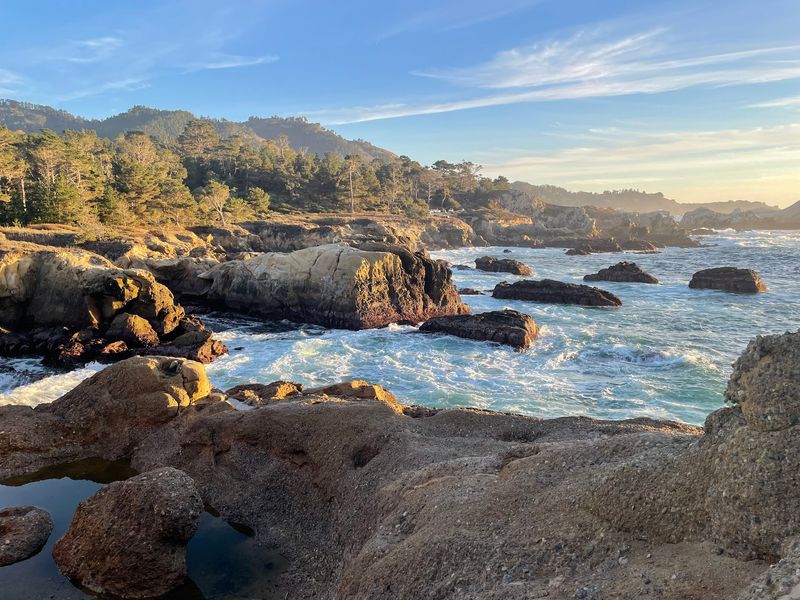
Few coastlines in California pack this much drama into a single afternoon of walking.
Point Lobos State Natural Reserve sits at 62 CA-1, Carmel-by-the-Sea, CA 93923, just south of town along the highway.
Sixteen trails branch out from the parking areas, including the Bird Island Trail Loop and the Cypress Grove Trail, both offering wide views over coves and open water.
Vehicle day use runs $10.00 per vehicle, which leaves plenty of the $65 budget for a packed lunch and gas. Parking is limited, so arriving before 9:30 a.m. or after 3:00 p.m. may help on busy weekends.
Gates open daily at 8:00 a.m. and close at 7:00 p.m., with last entry at 6:30 p.m.
Wildlife sightings often include harbor seals, sea lions, sea otters, and shorebirds working the rocks.
Gray whales typically pass by from December through April, and humpbacks are more common between May and December.
Four ADA-compliant trails exist, and wheelchairs can be borrowed at the entry kiosk, the Information Station, or Whalers Cabin.
Dogs are not allowed apart from ADA-qualified service animals, and collecting shells or rocks is prohibited.
2. Monterey
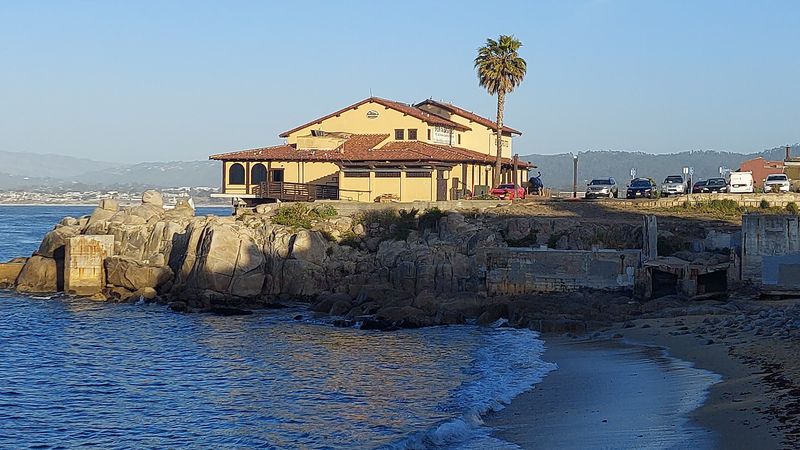
Barking sea lions carry across the harbor here long before the water comes into view.
Cannery Row, Old Fisherman’s Wharf, and the downtown blocks can fill a full day without a single paid admission.
The Monterey Bay Coastal Recreation Trail runs 18 paved miles, which makes walking or cycling the shoreline simple and free.
A seasonal trolley operates without charge from May 23 through Labor Day, September 7, 2026, running 10:00 a.m. to 6:00 p.m. every 10 to 15 minutes.
Stops connect downtown, the wharf, Cannery Row, and the aquarium area, including the Downtown Parking Garages on Tyler Street and Del Monte Avenue.
Colton Hall Museum offers a quiet look at early California statehood, and the building stands at 570 Pacific St, Monterey, CA 93940.
Free Wharf Walks happen on the first Saturday of each month, meeting at #1 Old Fisherman’s Wharf and suitable for ages 10 and up.
Reservations for those two-hour walks can be arranged through the city library events page or by calling 831-646-3933.
San Carlos Beach sits steps from Cannery Row and makes an easy picnic stop.
3. Pacific Grove
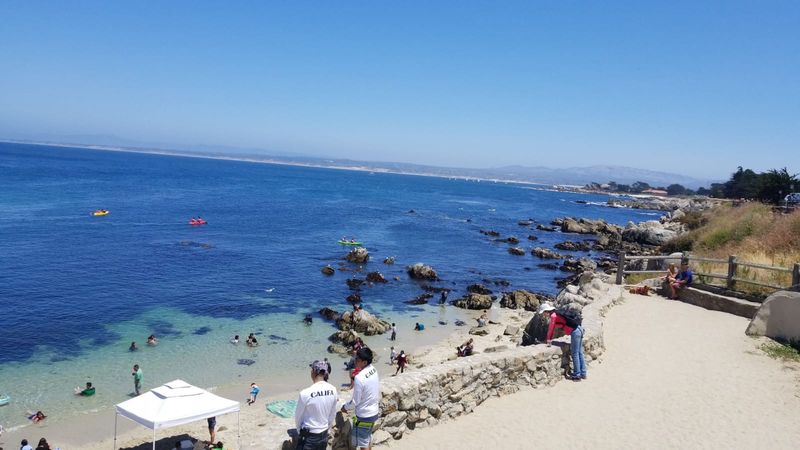
Scenery does most of the heavy lifting on this particular day trip. Bluffs, small sandy pockets, and tide pools line the shore, and all of it can be reached on foot for nothing.
The Pacific Grove Coastal Recreation Trail follows the water and links up with Asilomar State Beach, making a long, flat walk easy to stretch out over hours.
Sea otters and harbor seals often turn up close to shore, especially in calmer morning water.
Lovers Point Park covers about 4.4 acres with grassy lawns, a sheltered beach, picnic areas, and restrooms, and entry is free.
East-facing views there mean sunrise happens over the water, which is unusual on this stretch of California coast.
The Monarch Butterfly Sanctuary is another no-cost stop, located at 250 Ridge Rd, Pacific Grove, CA 93950. Overwintering monarchs gather there from October into late February, with peak viewing generally between November and January.
Downtown streets are compact and lined with Victorian buildings, so wandering feels unhurried rather than rushed.
4. Carmel-by-the-Sea
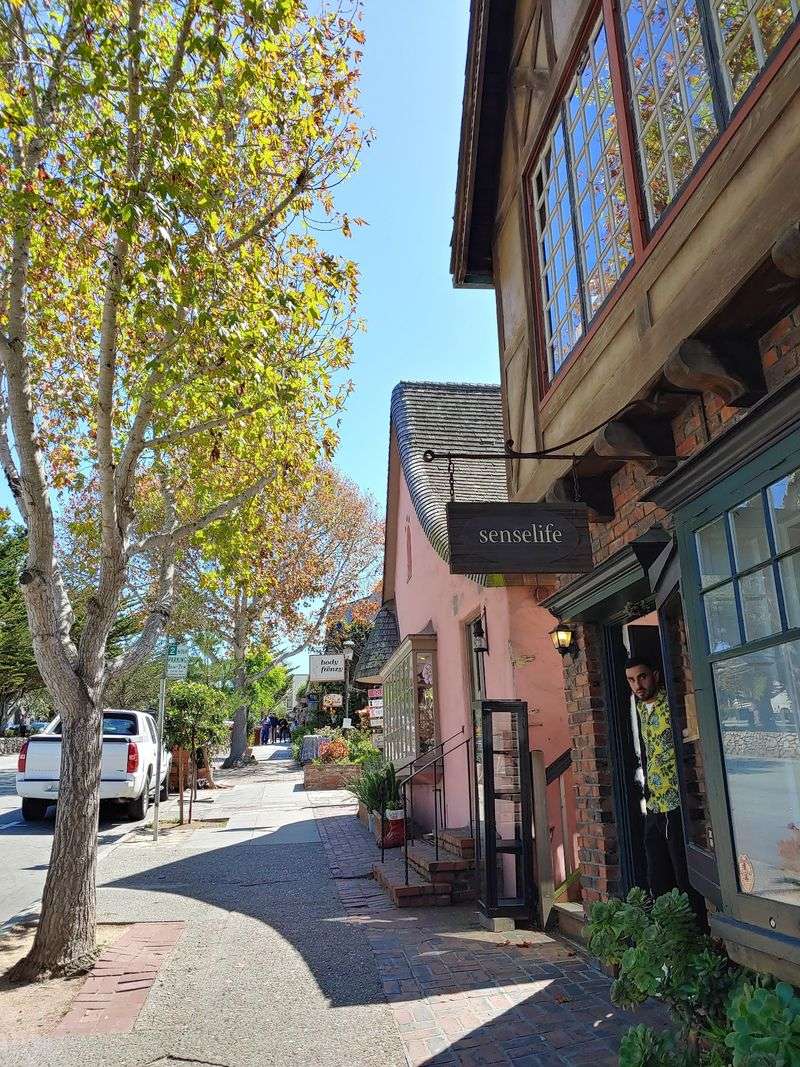
Treating this village as a walking day rather than a shopping trip keeps the budget intact.
Carmel Beach anchors the western edge of town with pale sand, cold surf, and cypress trees leaning away from the wind.
Getting there means a short downhill walk from downtown, though the return climb is noticeably steeper.
Cottage-lined streets wind in gentle grids, and many homes carry names instead of numbers, a local quirk that dates back generations.
Hidden courtyards and passageways branch off the main blocks, and peeking into them costs nothing at all.
Gallery windows line Ocean Avenue, and browsing from the sidewalk is a legitimate way to spend an hour.
Free street parking exists with posted time limits, so checking signs before settling in matters.
Weekday mornings usually feel calmer than weekend afternoons, when foot traffic thickens considerably.
Dogs are welcome on Carmel Beach, which makes it a popular stop for travelers bringing pets along.
Packing food ahead leaves room in the budget for coffee or a pastry without pushing past $65. Fog often burns off by midday, so patience with the marine layer pays off.
5. Pinnacles National Park
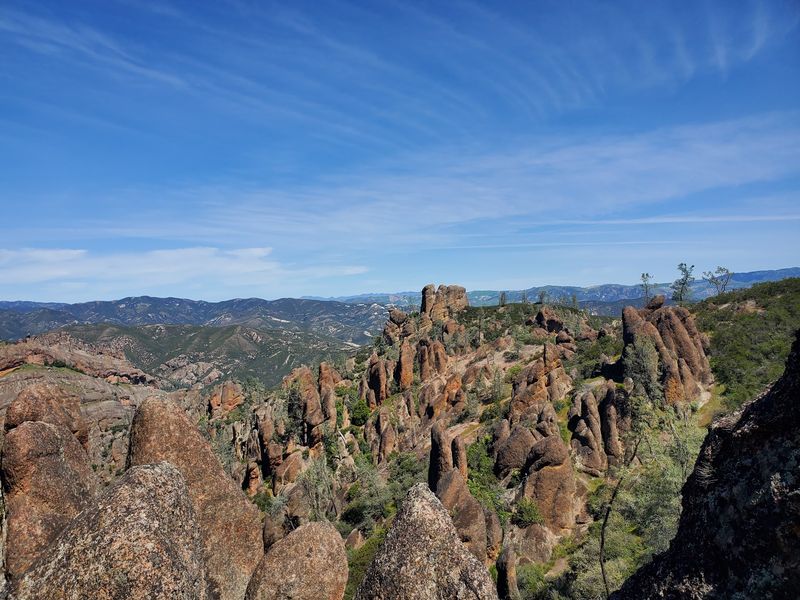
Volcanic spires replace ocean views on this one, and the change of pace is welcome.
Pinnacles National Park protects a landscape of jagged rock formations, talus caves, chaparral slopes, and narrow canyons in San Benito and Monterey counties.
Standard entrance passes currently range from $15 to $30 depending on how visitors arrive, which sits well under the $65 ceiling.
Trails vary widely, from short valley walks to steep climbs that gain real elevation.
Cave access depends on conditions and bat protection schedules, so checking current closures ahead of time is worthwhile.
A flashlight or headlamp is necessary for the caves when they are open, since the passages get genuinely dark.
Summer heat can be intense here, and shade is limited across much of the park. Carrying more water than seems necessary is standard advice among regular hikers.
California condors are sometimes spotted soaring over the high rocks, one of the few places where that happens.
The east and west entrances do not connect by road, so choosing a side before leaving home saves considerable driving.
6. Morro Bay
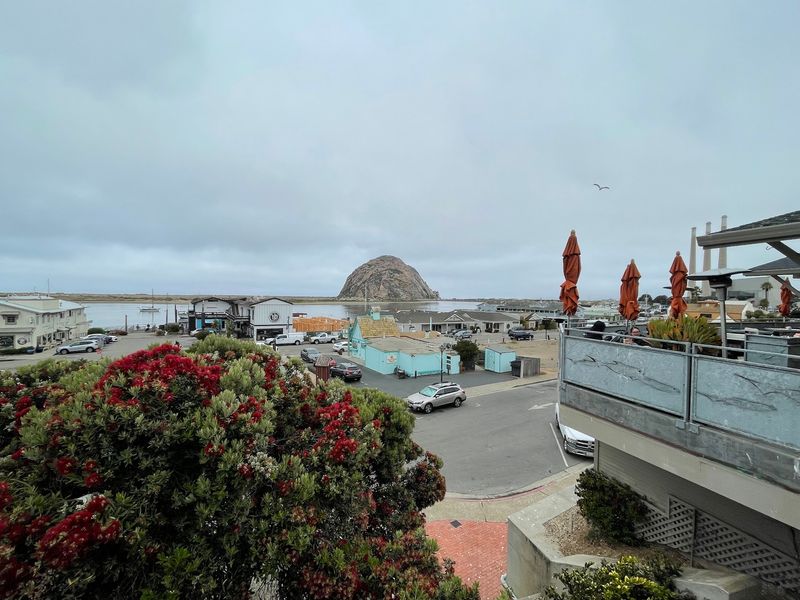
A 576-foot volcanic plug sitting at the harbor mouth gives this town an unmistakable skyline.
Morro Rock is visible from nearly everywhere in the area, and walking toward it along the beach is a free activity that eats up plenty of time.
The Embarcadero waterfront runs along the harbor with boardwalks, benches, and views across the estuary. Morro Bay State Park adds hiking paths, marina access, and quiet spots to sit with a sandwich.
State Parks lists hiking, beach exploration, birdwatching, and wildlife viewing among the main draws here.
Estuary waters attract a remarkable variety of shorebirds, and binoculars turn a short walk into something more absorbing.
Sea otters occasionally float in the calmer harbor channels, wrapped in kelp. Fog is common in the mornings and often lifts by early afternoon, so timing a walk for later can improve visibility.
Climbing Morro Rock itself is not permitted, as it serves as a protected nesting site for peregrine falcons.
Parking near the waterfront fills faster on weekends than weekdays.
7. Montaña de Oro State Park, Los Osos
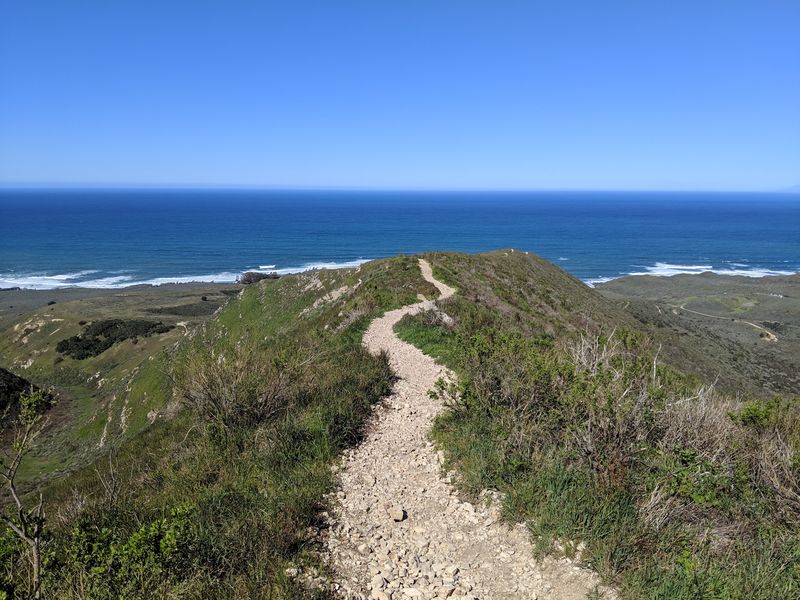
Bluffs here drop straight into churning water, and the scale makes a day trip feel much longer than it is.
Montaña de Oro State Park spreads across roughly 8,000 acres of coastline, canyons, and hills near Los Osos.
State Parks highlights hiking, beachgoing, mountain biking, wildlife viewing, and tide pooling as primary activities.
The Bluff Trail follows the cliff edge on mostly level ground, which makes it approachable for a wide range of walkers.
Spooner’s Cove offers a sheltered beach with layered rock formations that look almost folded.
Tide pools become accessible at low tide, so checking a tide chart before leaving helps considerably.
Cell service can be spotty inside the park, so downloading a trail map ahead of time is practical. Wind picks up along the bluffs in the afternoon, and a light jacket usually earns its space in the bag.
Restrooms are available near the main parking areas, though services are otherwise minimal.
8. Pismo Beach
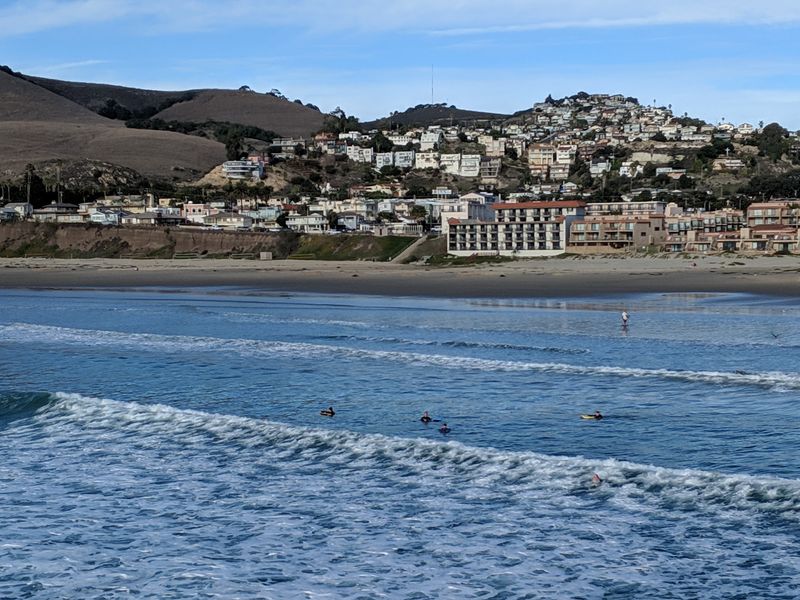
Wide, flat sand stretches far enough here that walking becomes the whole plan. The pier area sits at the center of town, and strolling out over the water is free.
Pismo State Beach remains open for hiking, swimming, and general beach recreation. Long shoreline walks are easy on the legs since the sand stays firm near the waterline at lower tides.
Packing a picnic and settling near the dunes is a common way to stretch a day here without spending much.
The Monarch Butterfly Grove sits along Highway 1 south of downtown and draws overwintering monarchs during the cooler months, with viewing free of charge.
Downtown blocks are compact and walkable, sitting just a short distance from the sand. Fog often hangs around in the morning, and afternoons tend to clear.
Parking lots and street spaces are available near the pier, with some metered and some free depending on location.
Weekday visits generally feel roomier than summer weekends, when the beach fills quickly.
Bringing a windbreaker is a reasonable call, since breezes off the water pick up as the day goes on.
9. San Luis Obispo
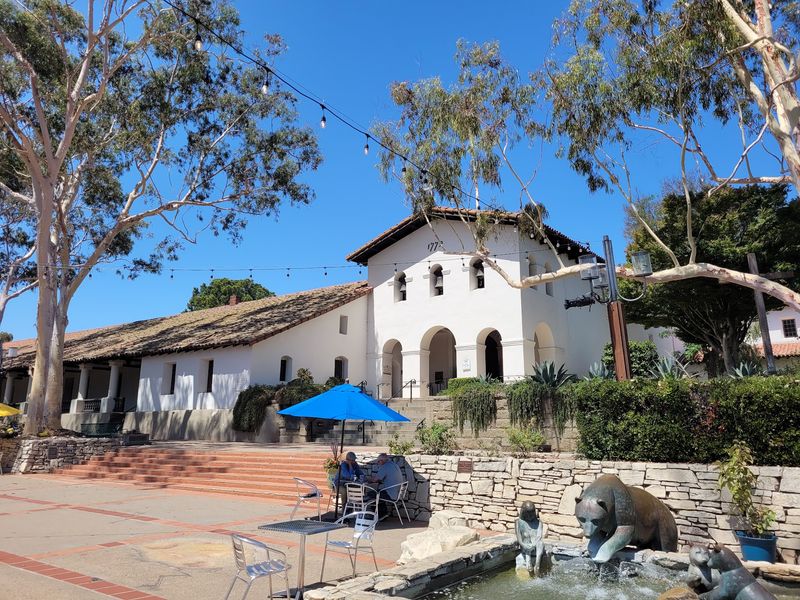
Inland warmth and a walkable downtown give this stop a different rhythm from the beach towns.
Mission San Luis Obispo de Tolosa anchors the center of town, and the mission stands at 751 Palm St, San Luis Obispo, CA 93401.
Mission Plaza wraps around the building with brick paths, shade trees, and a creek running below street level. Benches along the water make an easy spot to eat something packed from home.
Downtown blocks hold independent shops, bookstores, and public art, and browsing costs nothing.
Bubblegum Alley is a strange local landmark on Higuera Street, covered in decades of chewed gum and free to walk through.
Nearby trails climb the volcanic peaks that ring the city, offering views back over the valley for those wanting a workout.
Parking garages downtown charge hourly rates, and street parking is metered in most central areas.
Thursday evenings bring a long-running farmers market to Higuera Street, which shifts the whole downtown atmosphere.
10. San Simeon
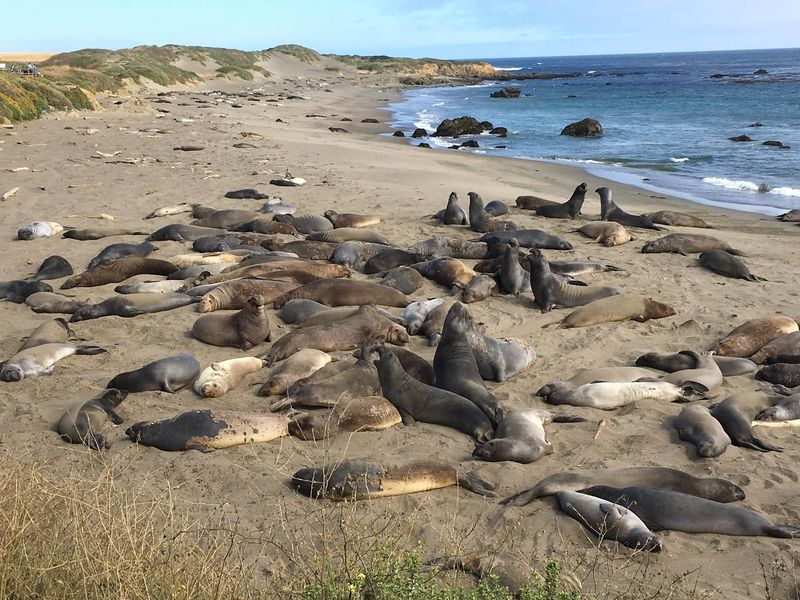
Skipping the expensive version of this trip turns the coastline itself into the main event.
William Randolph Hearst Memorial Beach sits at 750 Hearst Castle Rd, San Simeon, CA 93452, directly across from the castle entrance road.
The beach is open from dawn to dusk and offers a protected cove with unusually calm water for this stretch of California coast.
Picnic tables and restrooms are available, which makes a packed lunch simple to manage.
Green hills rise right behind the sand, giving the spot a tucked-away feeling. Kayakers sometimes launch from the cove when conditions allow.
Farther north along Highway 1, marked pullouts and overlooks provide wide ocean views with room to stop safely.
Elephant seals gather at the nearby Piedras Blancas rookery, and viewing from the boardwalk area is free, with peak numbers in winter months.
Coastal weather here shifts fast, so layers are more useful than a single heavy jacket.
Services in the immediate area are limited, so filling the gas tank earlier in the drive is sensible.
11. Solvang
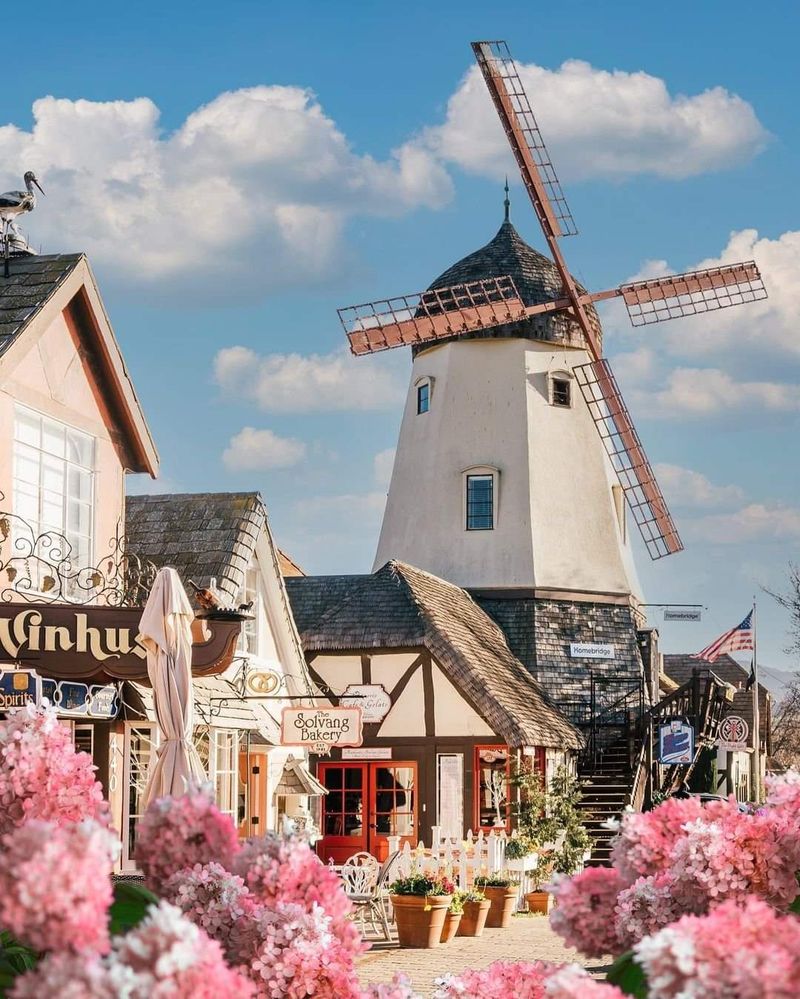
Half-timbered buildings and wooden windmills make wandering feel more distinctive than a standard downtown walk.
Danish settlers founded the town in 1911, and the architecture reflects that heritage in a way that has become the main attraction.
Storefronts, bakery windows, small parks, and flower planters line streets that are easy to cover on foot in an afternoon.
Bakeries here are well known, and a pastry or two fits comfortably into a modest budget.
Several windmills stand around town, and finding all of them turns into a low-key scavenger hunt for kids.
Solvang Park offers shade and benches, which helps on warmer inland days. Surrounding Santa Ynez Valley scenery adds rolling hills and oak-studded views to the drive in and out.
Keeping the day under $65 mostly means skipping paid tours and tastings. Free street parking and public lots exist near the central blocks, with time limits posted in places.
Weekends bring noticeably more foot traffic than weekdays, and mornings tend to feel calmer.
12. Santa Barbara
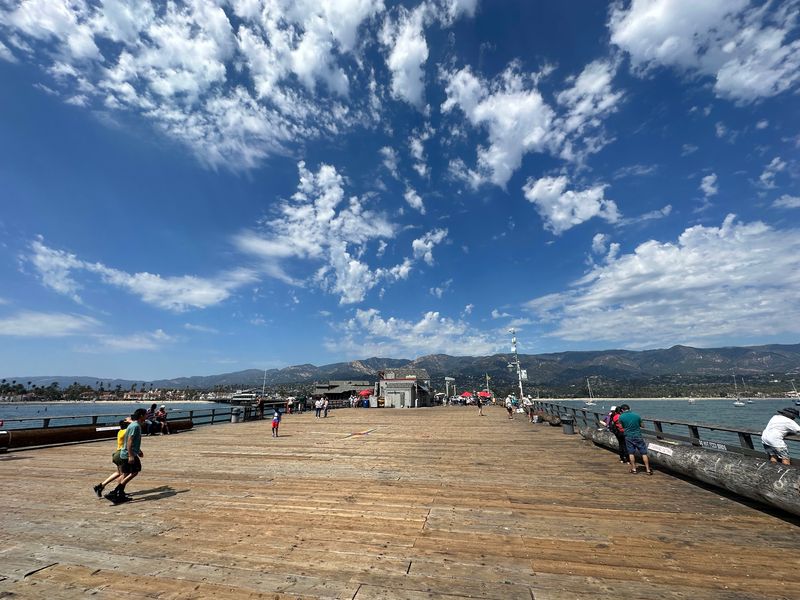
A resort budget is not required to make this city feel like a genuine getaway. Stearns Wharf extends over the water at the foot of State Street, and walking its wooden planks is free.
Views from the end take in the harbor, the mountains behind town, and the long curve of the shoreline.
East Beach offers wide sand, volleyball courts, and a paved path that runs alongside the water for easy walking.
The Santa Barbara County Courthouse is worth a stop, and the building sits at 1100 Anacapa St, Santa Barbara, CA 93101.
Its clock tower observation deck is open to the public without charge and delivers a panoramic look over red tile rooftops.
Downtown State Street blocks are walkable, with courtyards, tiled fountains, and window shopping filling time at no cost.
Parking downtown includes garages that offer a period of free parking, though rules can change, so signs are worth reading.