16 Charming Beach Towns In California That Make You Pack Your Bags
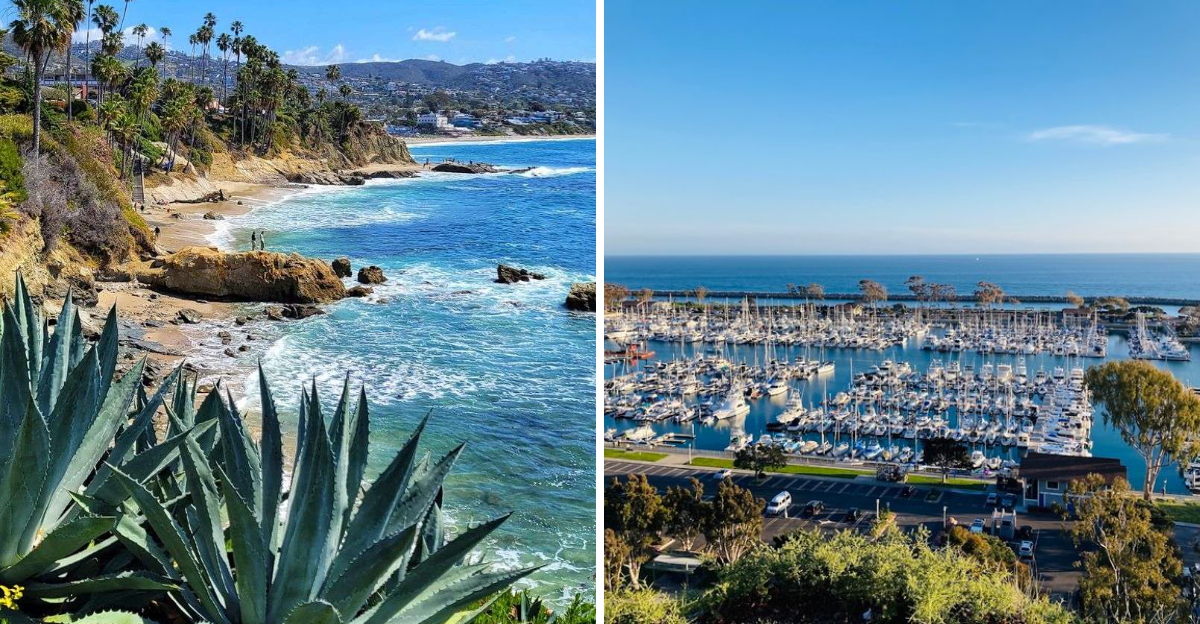
The California coast has a way of drawing people closer the moment the ocean comes into view.
Waves roll against dramatic cliffs, seabirds circle above quiet harbors, and every bend in the road seems to reveal another town worth stopping for.
Some places feel lively and colorful, filled with art galleries, cafés, and boardwalk energy. Others move at a slower pace, where fishing boats rock gently in the harbor and sunsets become the main event of the day.
What makes California’s coastal towns so special is the variety. No two feel quite the same.
One might be known for creative culture and historic streets, while another charms visitors with hidden beaches and peaceful seaside views.
Travelers often arrive planning a quick stop and end up staying longer than expected.
From the misty coves of Northern California to the sunny shoreline farther south, these beach towns capture the relaxed rhythm and natural beauty that define the coast.
Together, they create one of the most unforgettable stretches of shoreline in the world.
1. Carmel-By-The-Sea
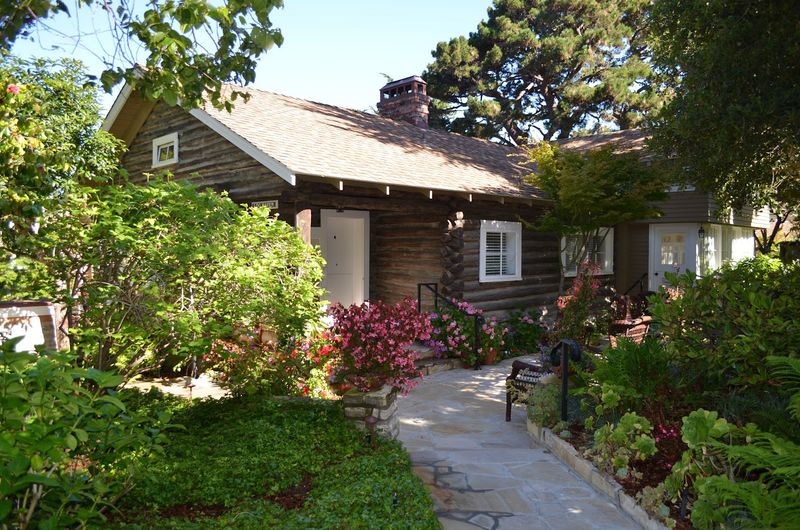
Few places in California manage to feel like a fairy tale without trying too hard, and Carmel-by-the-Sea is one of them.
The town sits along the Monterey Peninsula and is known for its cottage-style architecture, art galleries tucked into narrow lanes, and a white-sand beach that tends to stay uncrowded even on warmer days.
Streets here do not have sidewalks in many areas, which gives the whole place a relaxed, almost rural quality that feels very different from busier California destinations.
Carmel Beach stretches along the edge of town and allows dogs off-leash, making it a popular stop for pet owners.
The downtown area is walkable and filled with small shops, bakeries, and galleries that reflect the town’s long history as an artist colony.
Parking can be tricky on weekends, so arriving earlier in the day tends to make the experience smoother.
The drive along Scenic Road, which hugs the coastline near the beach, offers views of Carmel Bay that are genuinely hard to forget.
Visitors who take time to wander without a strict itinerary often find the town reveals itself slowly and rewards patience with quiet, memorable moments.
2. Avila Beach
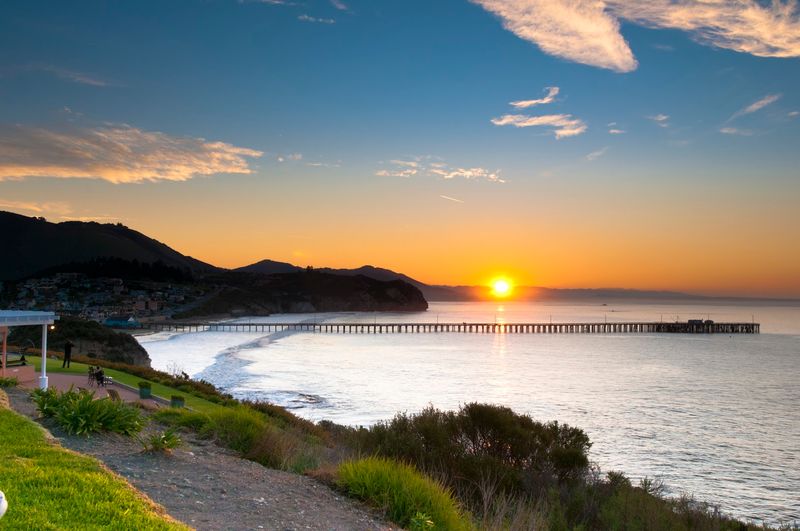
Tucked behind a protective headland on California’s Central Coast, Avila Beach enjoys more sunshine than many of its neighbors thanks to its sheltered position.
The cove creates calm, swimmable water that makes it particularly appealing for families and those who prefer gentler surf.
San Luis Obispo County owns and operates the beach, and the promenade along the waterfront is flat and easy to walk along regardless of fitness level.
The small downtown strip runs close to the sand and has a laid-back quality that suits the town’s pace well.
Fresh seafood is easy to find, and the area around the pier tends to be lively on weekend afternoons without feeling overwhelming.
Avila Beach Golf Resort and the Avila Valley Barn nearby give visitors additional reasons to spend more than just a few hours in the area.
Natural hot springs are accessible just outside of town at Sycamore Mineral Springs Resort, located at 1215 Avila Beach Dr, San Luis Obispo, CA 93405, which offers outdoor tub soaking with hillside views.
The combination of warm water, sheltered beach, and a genuinely small-town feel makes Avila Beach one of the Central Coast’s most underappreciated stops for travelers looking to slow down without sacrificing comfort.
3. Pismo Beach
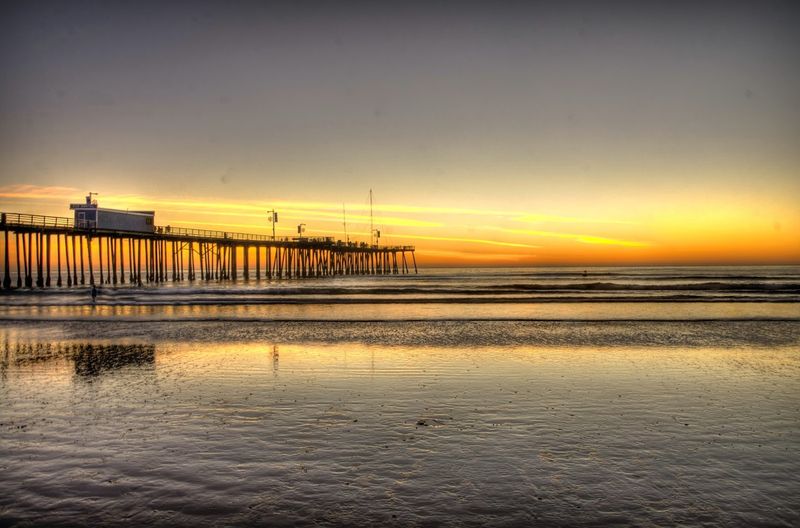
Pismo Beach carries a classic California beach town energy that feels rooted in decades of coastal tradition.
The wide, flat sand stretches for miles and is accessible enough for strollers, wheelchairs, and even vehicles in the designated ATV areas near the Oceano Dunes.
The historic Pismo Pier juts out into the Pacific and is a popular spot for fishing and watching sunsets, especially during the golden hour when the light turns the water a deep amber.
Clam chowder has become something of a local signature here, and several spots along Price Street serve it in sourdough bread bowls, a combination that has become almost inseparable from a visit to the town.
The downtown area is compact and easy to navigate on foot, with a mix of casual eateries, surf shops, and small boutiques lining the main drag.
Monarch butterflies migrate to the eucalyptus grove at the Pismo State Beach Monarch Butterfly Grove each winter, typically from late October through February, drawing nature enthusiasts alongside the usual beach crowd.
The grove is located near the South Pismo Beach Campground and is free to visit.
Pismo Beach manages to feel both familiar and genuinely pleasant, making it a reliable stop on any Central Coast road trip.
4. Capitola
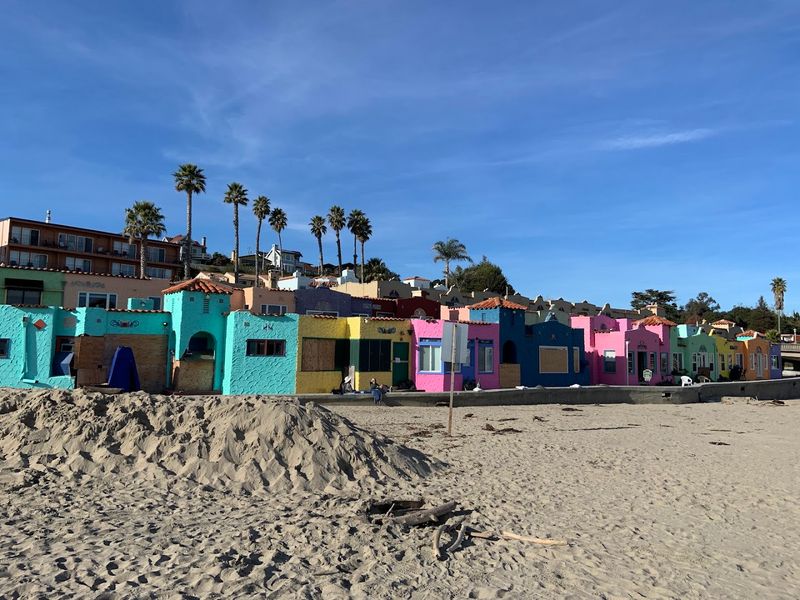
Capitola sits at the edge of Monterey Bay and has a distinctly colorful personality that sets it apart from most California beach towns.
The beachfront is lined with pastel-painted buildings that reflect in the calm water of Soquel Creek where it meets the sand, creating a scene that photographers and casual visitors alike tend to pause at for longer than expected.
The beach itself is small but lively, and the creek that cuts through the middle of it adds a quirky geographic feature that children especially seem to enjoy.
The Capitola Wharf stretches out over the bay and is open to the public for walking and fishing.
Nearby, the village shops and restaurants are clustered close together in a way that makes browsing feel easy and unhurried.
Capitola Village has been recognized as California’s oldest seaside resort, with roots going back to the 1870s, which gives the town a sense of history that its cheerful exterior does not always immediately suggest.
Parking close to the beach can be limited on summer weekends, and arriving before noon tends to improve the chances of finding a spot without circling too long.
The overall atmosphere leans relaxed and family-friendly, and the town’s small scale makes it easy to see most of what it offers in a single afternoon visit.
5. Half Moon Bay
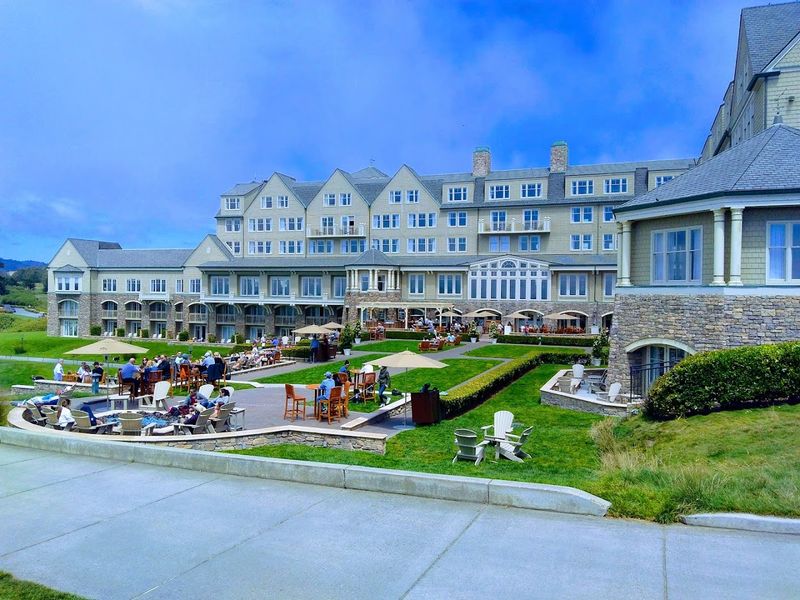
Half Moon Bay sits about 30 miles south of San Francisco along Highway 1 and has a personality shaped as much by its farming roots as by its coastal setting.
The town is perhaps best known for its annual Art and Pumpkin Festival held each October, which draws large crowds to the area and reflects the agricultural character of the surrounding San Mateo County coastline.
Outside of festival season, the town feels noticeably quieter and more accessible.
The Coastal Trail runs along the bluffs above the ocean and connects several beaches including Dunes Beach and Venice Beach, offering views of the Pacific that feel expansive and a little humbling on clear days.
The trail is flat enough for most fitness levels and is popular with joggers, cyclists, and families pushing strollers.
Pillar Point Harbor nearby is a working fishing harbor where fresh seafood is available directly from local vendors on most mornings.
Mavericks, one of the most famous big-wave surf spots in the world, breaks just offshore from Pillar Point and draws professional surfers during winter swells.
Spectators can watch from the harbor area on particularly large swell days, though conditions vary significantly and the experience is never guaranteed.
Half Moon Bay rewards visitors who appreciate a slower, more grounded version of California coastal life.
6. Morro Bay
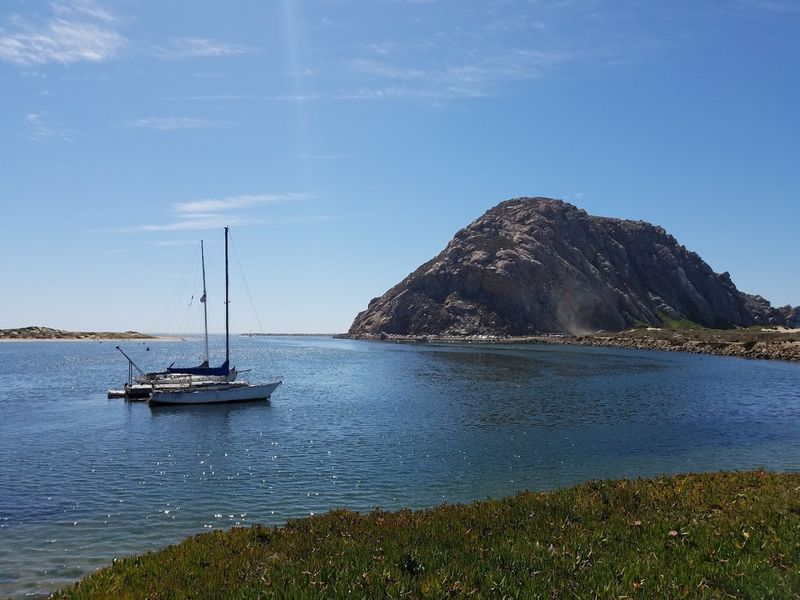
Morro Rock rises 576 feet straight out of the ocean at the entrance to Morro Bay’s harbor, and it is the kind of landmark that makes first-time visitors stop the car and simply stare for a moment.
The rock is a protected state historic landmark and cannot be climbed, but it can be viewed up close from the causeway that connects it to the shore.
The harbor itself is a working fishing port, and the smell of salt water and fresh catch tends to follow visitors along the Embarcadero waterfront.
Kayaking in the estuary behind the harbor is one of the most popular activities in the area, with calm, protected water that suits beginners well.
The Morro Bay State Park encompasses much of the surrounding land and estuary, offering camping, hiking, and some of the best bird watching on the Central Coast.
Over 200 species of birds have been recorded in the estuary, which makes it a genuine draw for birding enthusiasts.
The Embarcadero is lined with seafood restaurants, souvenir shops, and small boat rental outfits that give the waterfront a lively but unpretentious energy.
Weekday visits tend to feel calmer and easier to navigate than weekend ones.
Morro Bay holds onto a genuine fishing village character that many California coastal towns have lost over the years.
7. Santa Cruz
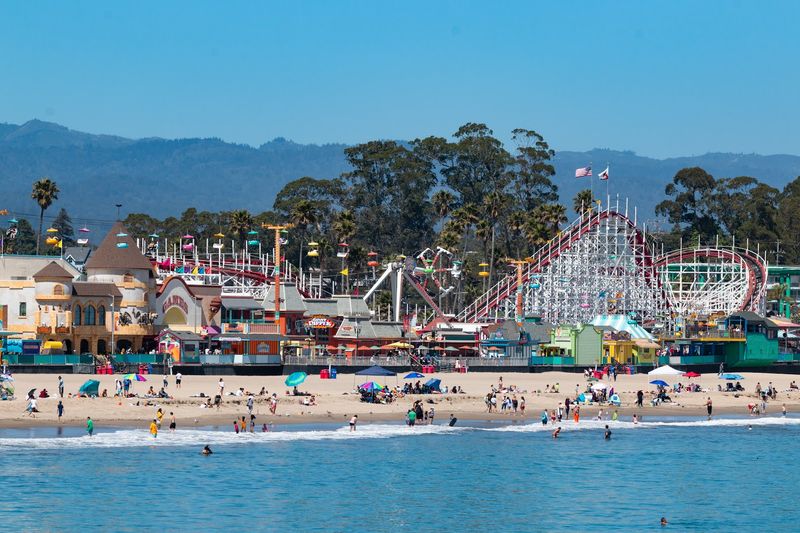
Santa Cruz has been a hub of California surf culture since the sport first arrived on the West Coast in the early 1900s, and that energy still runs through the town today.
The Santa Cruz Beach Boardwalk is one of the few remaining seaside amusement parks in California and has been operating since 1907, making it a genuinely historic attraction rather than just a tourist novelty.
The Giant Dipper roller coaster is a National Historic Landmark and still draws lines on summer weekends.
Beyond the boardwalk, the town has a distinct personality shaped by its university presence and long history of counterculture.
The downtown area along Pacific Avenue is walkable and filled with bookstores, cafes, and local shops that reflect the community’s independent spirit.
Surfers of all levels gather at Steamer Lane, a well-known break along West Cliff Drive, where a small viewing area allows non-surfers to watch the action from the cliffs above.
Natural Bridges State Beach on the western edge of town features a natural rock arch that is accessible during low tide and serves as a monarch butterfly overwintering site from October through February.
Santa Cruz manages to balance a lively tourist scene with a genuine local culture that gives it more texture than a typical beach town visit tends to offer.
8. Solana Beach
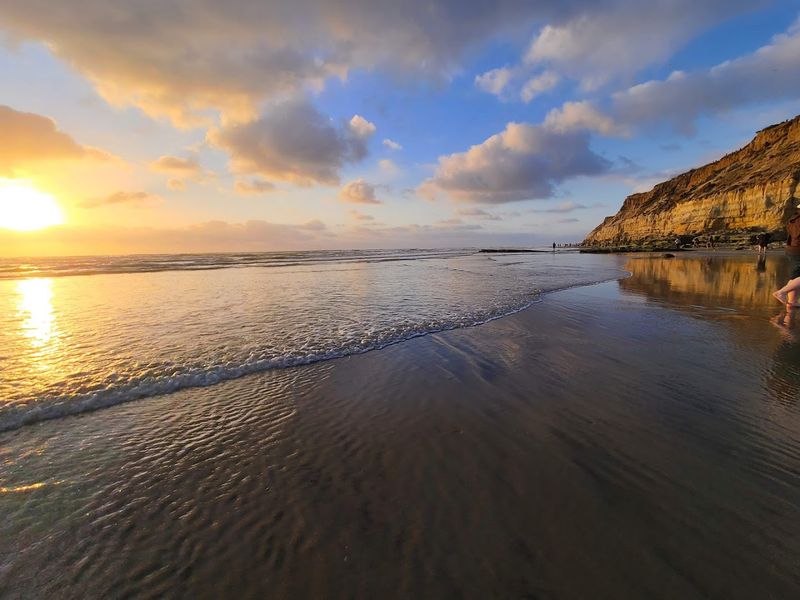
Solana Beach is one of those North San Diego County towns that locals tend to keep to themselves, and it is easy to understand why once a visitor arrives.
The sandstone bluffs that line the coast here are dramatic and warm-toned, and the beach access points require descending stairways carved into the rock, which gives the whole experience a slightly adventurous feel before the sand is even reached.
Fletcher Cove Beach Park is the most central access point and has a small parking area and public restrooms.
The Cedros Design District is one of the more distinctive shopping areas along the Southern California coast, with a concentration of antique stores, furniture dealers, design studios, and independent boutiques clustered along a few walkable blocks.
It draws a crowd separate from the beach visitors and gives the town a creative, design-conscious identity that sets it apart from neighboring communities.
The Belly Up Tavern at 143 South Cedros Avenue, Solana Beach, CA 92075, is a well-regarded live music venue that has hosted performers ranging from local acts to nationally recognized artists since 1974.
Solana Beach tends to feel unhurried even during peak summer season, and its combination of natural scenery and local character makes it worth more than a passing visit on a drive up or down the coast.
9. Encinitas
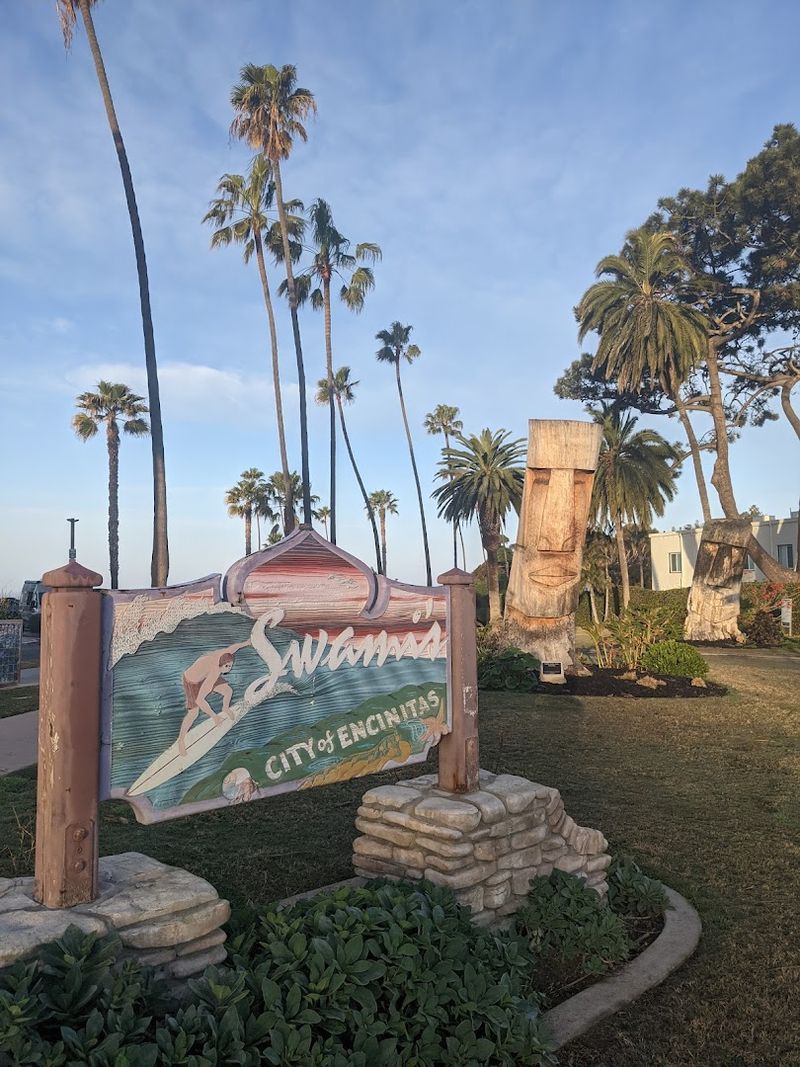
Encinitas has a reputation as one of the most genuinely surf-focused towns in Southern California, and that reputation holds up when walking through the downtown area along Coast Highway 101.
Surf shops, yoga studios, and health-conscious cafes line the street in a combination that reflects the town’s particular blend of beach culture and wellness identity.
The town has been known as a center for yoga in the United States, partly due to the presence of the Self-Realization Fellowship Hermitage and its famous gold lotus domes overlooking the ocean.
Moonlight State Beach is the main public beach and has a large parking area, volleyball courts, and a snack stand that operates during warmer months.
Swami’s Beach just south of downtown is a protected surf break and marine reserve, popular with experienced surfers and tide pool explorers during low tide.
The bluff-top park above Swami’s offers a good vantage point for watching surf without getting in the water.
The San Diego Botanic Garden, located at 300 Quail Gardens Drive at, Ecke Ranch Rd, Encinitas, CA 92024, spans 37 acres and features collections from around the world including a bamboo garden and a children’s garden that tends to delight younger visitors.
Encinitas rewards visitors who take time to move slowly through it rather than rushing between highlights.
10. Dana Point
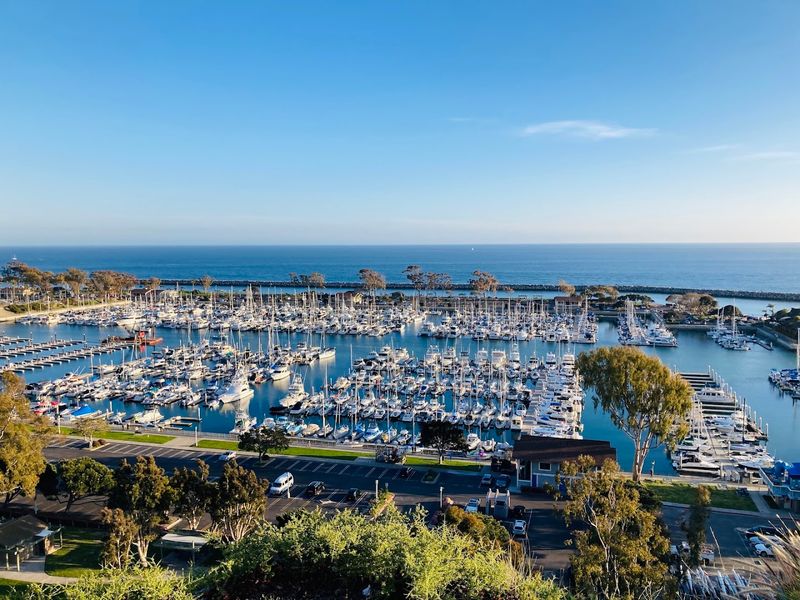
Dana Point is named after the writer Richard Henry Dana Jr. who described the area in his 1840 memoir Two Years Before the Mast, calling it the most romantic spot on the California coast.
The harbor that now anchors the town was built in the 1960s and has grown into one of the largest recreational harbors in Southern California, with berths for thousands of vessels and a waterfront area that draws visitors year-round.
The harbor is calm and walkable, with shops and restaurants lining the inner edge of the marina.
Whale watching tours depart regularly from Dana Point Harbor, and the area is considered one of the best whale watching locations on the West Coast due to its position along major migration routes.
Gray whales are most commonly seen from December through April, while blue whales and dolphins tend to appear during summer months.
Ocean Institute, located at 24200 Dana Point Harbor Drive, Dana Point, CA 92629, offers educational programs and tall ship experiences that are particularly well-suited for school-age visitors.
Doheny State Beach at the southern edge of the harbor has a campground, a beginner-friendly surf break, and a marine life refuge area that is accessible during low tide.
Dana Point carries a slightly more polished feel than some neighboring Orange County beach towns but retains a genuine connection to the ocean that keeps it grounded.
11. Seal Beach
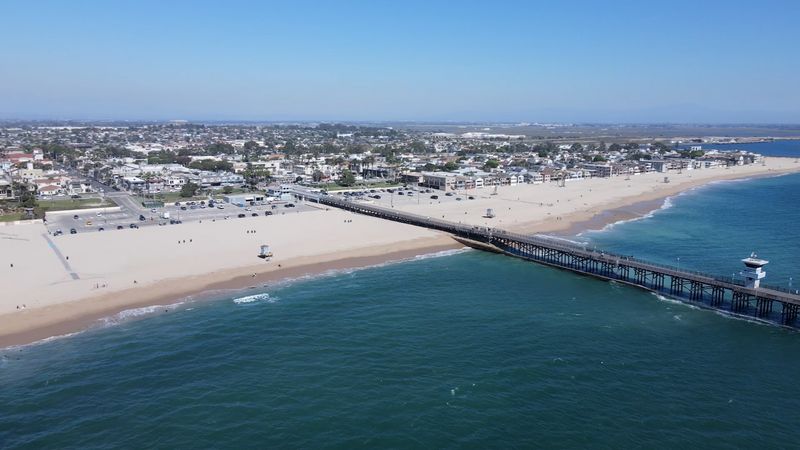
Seal Beach sits at the northern edge of Orange County and has the kind of small-town feel that is increasingly rare along the Southern California coast.
Main Street runs perpendicular to the beach and is lined with locally owned restaurants, ice cream shops, and small boutiques that give it a neighborhood character rather than a tourist-corridor one.
The town is compact enough to cover on foot in an afternoon, which makes it an easy and low-pressure stop for visitors who prefer a quieter pace.
The Seal Beach Pier is one of the longest wooden piers in California and extends 1,865 feet into the Pacific.
It was rebuilt after storm damage in the early 1980s and remains a central gathering spot for the community, particularly in the evenings when the light softens and fishermen line the railings.
The beach itself is wide and gently sloping, with conditions that tend to suit families and casual swimmers more than serious surfers.
Old Ranch Country Club and the nearby Bolsa Chica Ecological Reserve, though technically in neighboring Huntington Beach, are within easy reach for visitors staying in Seal Beach who want to extend their time in the area.
Seal Beach tends to attract visitors who have already seen the bigger names along the coast and are looking for something that feels a little more like a real place to belong to.
12. Laguna Beach
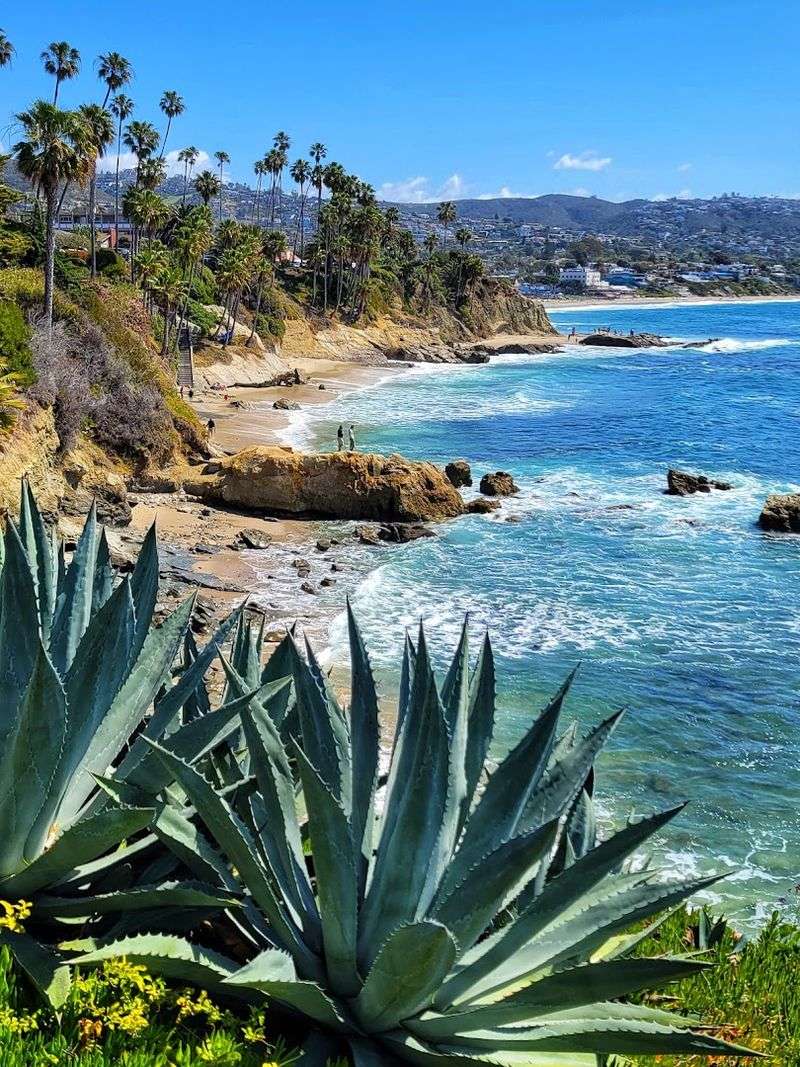
Laguna Beach has a reputation for being glamorous, but spending a day there reveals something more layered and genuinely interesting.
Located in Orange County, the town sits between rocky bluffs and the Pacific Ocean, and its coastline is broken up into dozens of small coves and beaches that each feel slightly different from the last.
Main Beach is the most central and busiest spot, while quieter options like Victoria Beach or Thousand Steps Beach reward visitors willing to walk a little farther.
The arts scene here is one of the most established of any beach town in California.
The Laguna Art Museum has been part of the community since 1918 and continues to showcase California artists alongside rotating exhibitions.
The annual Pageant of the Masters, held each summer, draws large crowds and has been a local tradition for decades.
Tide pooling along the rocky stretches near Heisler Park offers a quieter way to spend time near the water, especially during low tide.
The town’s downtown has a good mix of casual spots and more refined options for dining, and the overall pace feels unhurried even during peak season, which tends to run from late spring through early fall.
13. Monterey
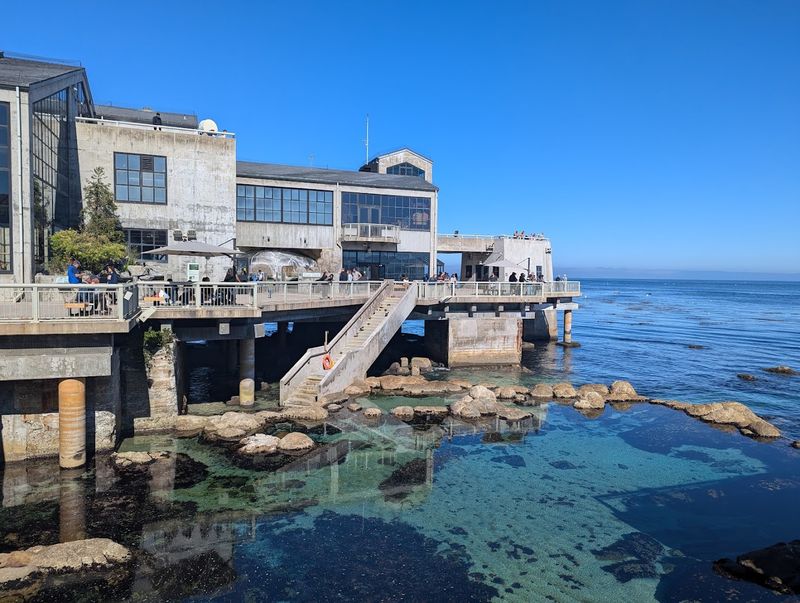
Monterey carries more history per square mile than almost any other California coastal town, and that history is woven into the physical landscape in ways that are easy to notice on a walk through the waterfront district.
Cannery Row, once the heart of a booming sardine industry, is now lined with restaurants, shops, and the Monterey Bay Aquarium, which sits at the end of the row and has been one of the most respected marine science institutions in the world since it opened in 1984.
The Monterey Bay Aquarium at 886 Cannery Row, Monterey, CA 93940, draws visitors from around the world and features exhibits on kelp forests, open sea species, and local marine life including sea otters, which can also be spotted in the wild in the bay just outside.
The 17-Mile Drive, accessible through toll gates at several entry points, winds through the Del Monte Forest and along the coast between Monterey and Carmel, passing landmarks like Lone Cypress and Pebble Beach.
Old Fisherman’s Wharf is a working pier turned tourist destination where fresh seafood, clam chowder, and bay cruises are all available within a short walk of each other.
Monterey rewards visitors who come with enough time to move slowly between its many layers rather than rushing through the obvious highlights in a single morning.
14. Carpinteria
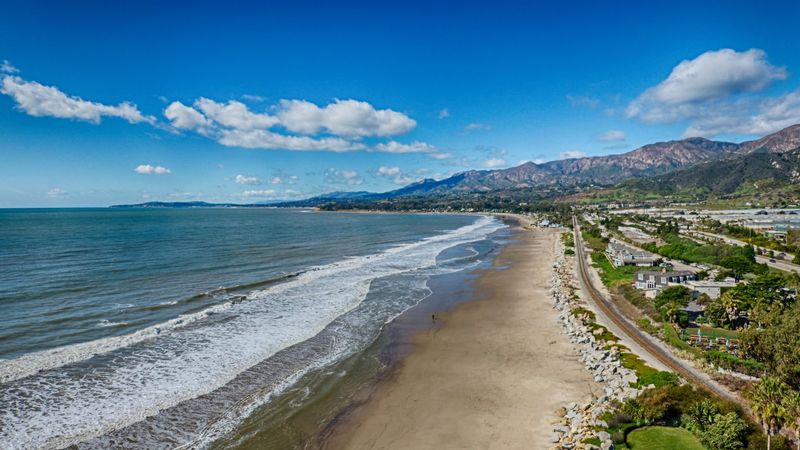
Carpinteria sits between Santa Barbara and Ventura along a stretch of coast that benefits from natural protection from offshore kelp beds, which helps keep the surf gentle and the water relatively calm.
The city has marketed itself as the world’s safest beach for decades, and while that is a promotional claim, the conditions here genuinely do tend to be milder than at many other Southern California beaches.
The main beach is wide, sandy, and backed by a grassy bluff area that gives families plenty of room to spread out.
The Carpinteria Salt Marsh Nature Park preserves one of the last remaining coastal salt marshes in Southern California and is home to a range of shorebirds and marine species.
A walking path runs along the edge of the marsh and is accessible from several entry points near the beach, offering a quieter alternative to time on the sand.
The annual Carpinteria Avocado Festival, held each October, draws large crowds to the downtown area and celebrates the agricultural heritage of the surrounding region.
Downtown Carpinteria along Linden Avenue has a relaxed, unpretentious energy with local shops and casual dining options that reflect the town’s community-first character.
The drive between Carpinteria and Santa Barbara along Highway 101 passes through scenery that regularly catches passengers off guard with its coastal beauty, making even the journey between towns feel worthwhile.
15. Bodega Bay
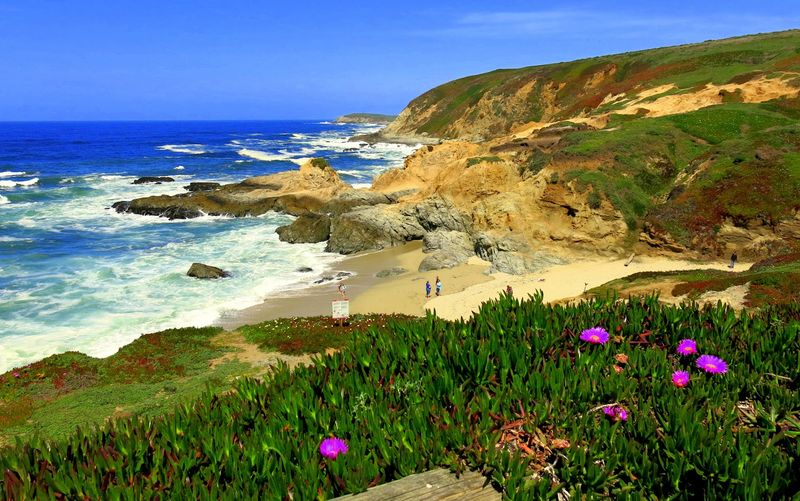
Bodega Bay has a moody, cinematic quality that feels different from the sunnier beach towns further south, and part of that atmosphere comes from its history as the filming location for Alfred Hitchcock’s 1963 thriller The Birds.
The town sits about 65 miles north of San Francisco along the Sonoma Coast and is surrounded by dramatic headlands, rolling hills, and a working harbor that still sends fishing boats out each morning.
The fog rolls in regularly, giving the landscape a shifting, atmospheric quality that photographers tend to appreciate.
Bodega Head, a short drive from the main harbor area, offers one of the most spectacular coastal viewpoints in Northern California.
The trail to the headland is about one mile round trip and ends at a high bluff above the ocean where gray whales can sometimes be spotted during their winter migration from December through April.
The Sonoma Coast State Park encompasses much of the surrounding coastline and provides access to several beaches including Doran Regional Park Beach near the harbor.
Fresh Dungeness crab and other local seafood are available at the harbor when in season, typically from late fall through winter, and the waterfront has a handful of casual spots where visitors can eat close to the water.
Bodega Bay suits travelers who appreciate raw, unpolished coastal scenery more than curated beach resort experiences, and it tends to leave a strong impression on those who take the time to slow down within it.
16. Fort Bragg
Fort Bragg sits on the Mendocino County coast about three hours north of San Francisco and has a character shaped more by its timber and fishing history than by tourism, which gives it a refreshingly unpolished feel.
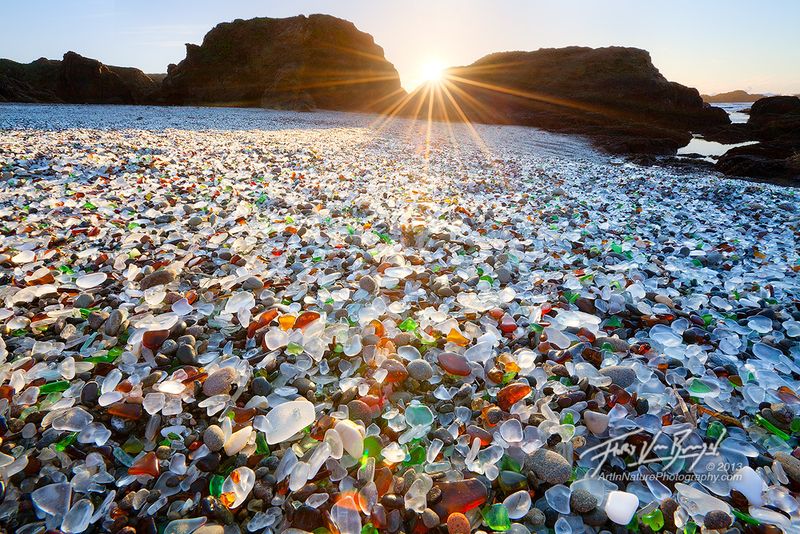
The town is perhaps best known for Glass Beach, a stretch of shoreline where decades of wave action have tumbled discarded glass into smooth, frosted pieces that wash up among the rocks.
Collecting glass from the beach is no longer permitted in order to preserve what remains, but walking along the shoreline and observing the colors in the stones is still a genuinely interesting experience.
The Skunk Train, a historic narrow-gauge railroad that has operated since 1885, departs from the Fort Bragg Depot at 100 West Laurel Street, Fort Bragg, CA 95437, and travels through the redwood forest toward Willits.
The train offers seasonal excursions and has been a beloved local attraction for generations of visitors.
MacKerricher State Park just north of town provides access to tidepools, a haul road trail popular with cyclists, and a harbor seal rookery that is viewable from a distance during pupping season.
Fort Bragg’s downtown along Main Street has a working-town practicality mixed with galleries and locally owned restaurants that reflect the community’s creative and maritime identity.
The surrounding Mendocino County coastline is consistently dramatic, with wave-carved cliffs and open headlands that make even a short drive north or south of town feel like a genuinely rewarding experience.