This Charming Georgia Street Is Filled With Colorful Historic Homes
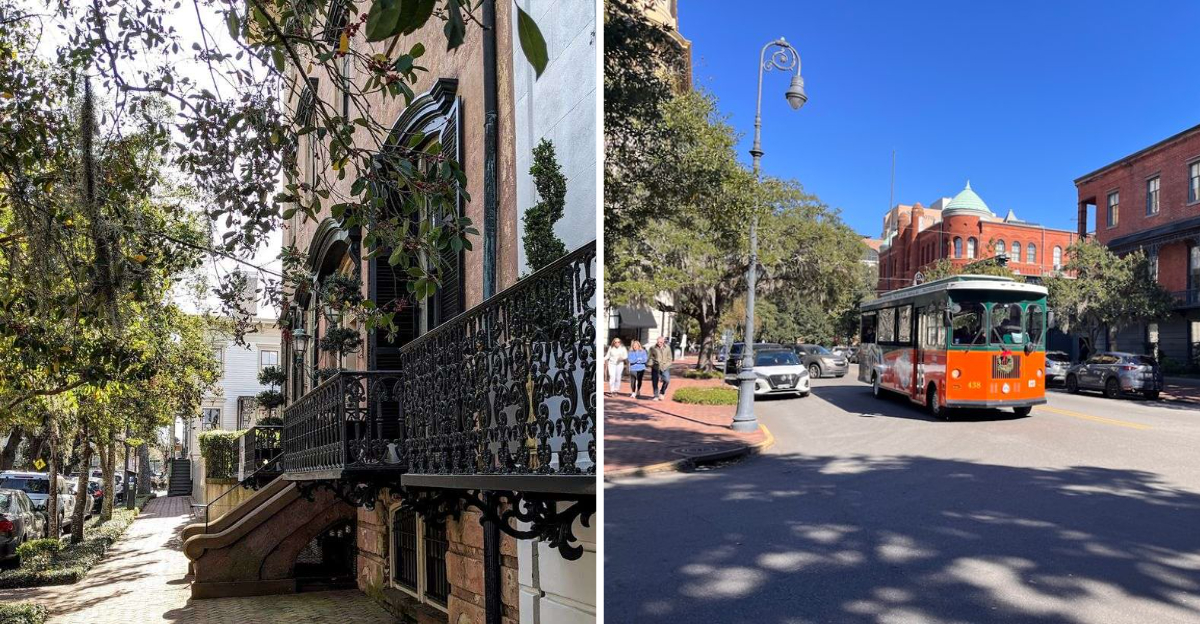
A quiet stretch of brick and shade somehow manages to steal the spotlight. Jones Street in Savannah, Georgia does not need crowds or noise to stand out, it draws you in with a calm, almost effortless beauty that feels timeless.
The details are what make it unforgettable. Oak trees arch overhead, their branches draped in Spanish moss, while rows of colorful antebellum homes line the street with a kind of quiet elegance. Gas lamps add a soft glow in the evenings, giving the whole place a warmth that feels both historic and inviting.
Walking here is less about getting somewhere and more about taking it all in. Every few steps reveal something worth noticing, a hidden garden, a perfectly framed doorway, or a stretch of sidewalk that feels like it belongs in another era. It is the kind of place where time naturally slows down.
Whether it is a first visit or a return trip, Jones Street leaves an impression that lingers. For anyone exploring Savannah, it offers a glimpse into the city’s charm that feels authentic, peaceful, and truly unforgettable.
1. Historical Significance of Jones Street
Few streets carry as much Revolutionary War history as Jones Street in Savannah. Named after Major John Jones, a courageous aide-de-camp who served during the 1779 Siege of Savannah, the street stands as a quiet but meaningful tribute to his service during the American Revolutionary War.
Walking along Jones Street today, it is easy to forget that the ground beneath your feet has stories stretching back over two centuries. The name itself connects every visitor to a pivotal chapter in American history, which adds a surprisingly emotional weight to what might otherwise feel like a simple neighborhood stroll.
History enthusiasts will find this context especially rewarding. Knowing the backstory transforms an already beautiful walk into something more meaningful, like reading a living chapter of a history book written in brick, mortar, and old-growth oak trees.
2. Architectural Styles Along the Block
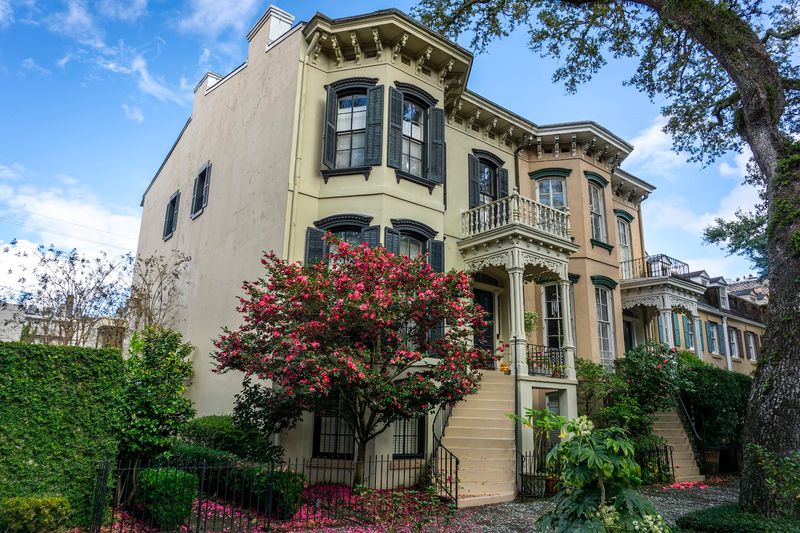
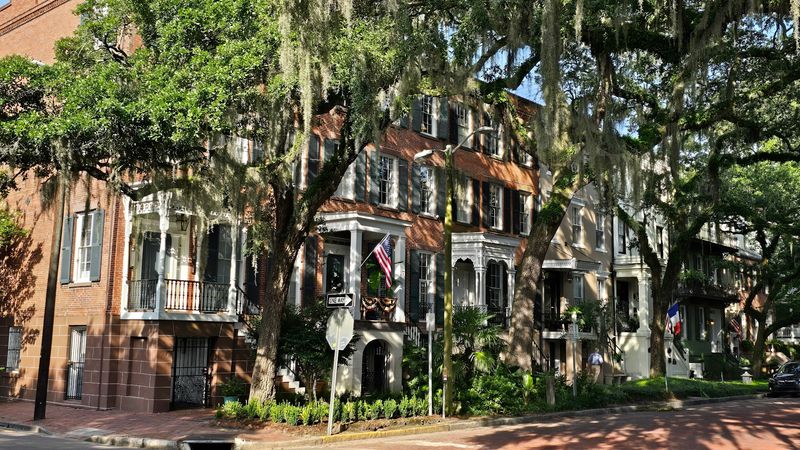
Architecture lovers genuinely have a lot to celebrate on Jones Street. The block showcases a rare and well-preserved mix of Federal, Greek Revival, and Italianate architectural styles, most of which were constructed during the mid-19th century when Savannah was experiencing significant growth and prosperity.
Each home feels slightly different from its neighbor, which keeps the eye moving and the curiosity alive. Some feature elegant columns and symmetrical facades typical of Greek Revival design, while others display the decorative cornices and arched windows associated with the Italianate style that became popular around the 1850s.
What makes this variety especially impressive is how cohesive the street still looks despite the stylistic differences. Thoughtful preservation has kept the visual harmony intact, making Jones Street feel like an outdoor architecture museum that people actually live in and love every single day.
3. The Eliza Thompson House
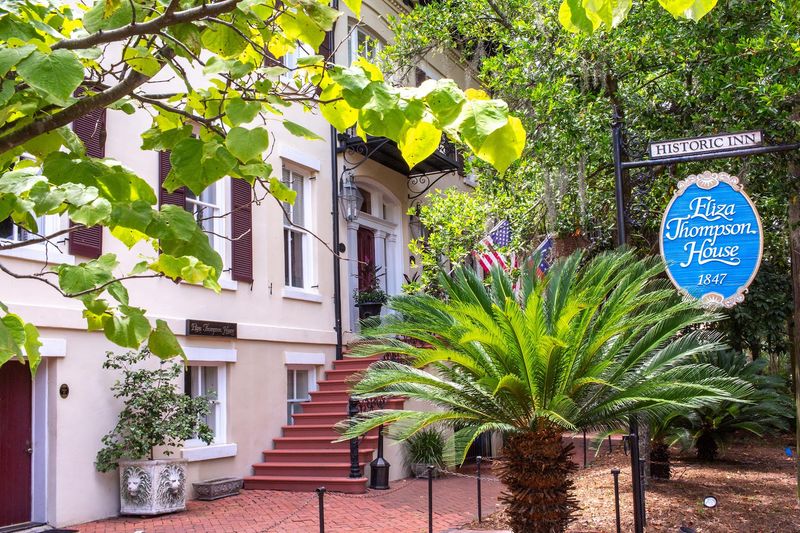
Built in 1847, the Eliza Thompson House holds the distinction of being the very first residence constructed on Jones Street, making it a cornerstone of the neighborhood’s identity. Located at 5 West Jones Street, Savannah, GA 31401, this graceful property has since been converted into a charming bed and breakfast inn that welcomes guests year-round.
Staying here means waking up inside a piece of living history, surrounded by period-appropriate decor, a beautifully maintained courtyard, and the kind of quiet elegance that Savannah does so effortlessly well. The inn’s Federal-style architecture has been carefully preserved, giving it an authenticity that modern hotels simply cannot replicate.
Even visitors who are not staying overnight often pause outside to admire the facade. The Eliza Thompson House serves as a perfect reminder that some of the best accommodations in Savannah are found not in high-rise hotels, but in buildings that have been standing for nearly 180 years.
4. The John Scudder Property
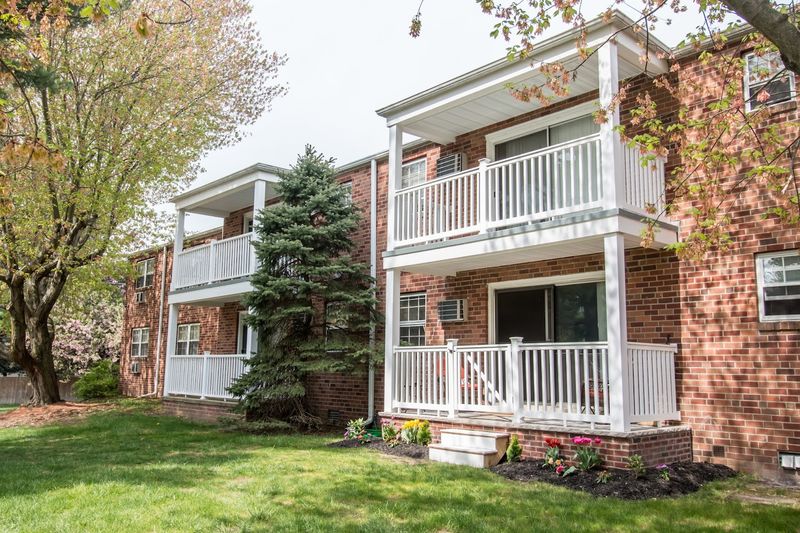
There is something quietly fascinating about a building that tells you exactly who built it just by how it stands. The John Scudder Property at 15 East Jones Street, Savannah, GA 31401 was constructed in 1851 by one of Savannah’s most prolific antebellum builders, a man whose craftsmanship shaped much of the city’s early residential landscape.
John Scudder was responsible for dozens of structures throughout Savannah during the mid-1800s, and this particular property reflects the quality and attention to detail that defined his work. The building has been recognized for its historical and architectural significance, earning a place in records that document Savannah’s rich construction heritage.
For anyone walking Jones Street with a keen eye, the Scudder property rewards careful observation. Its proportions, materials, and detailing speak to a time when buildings were crafted by hand with genuine pride, making it one of the street’s most quietly impressive landmarks.
5. Original Red Brick Paving
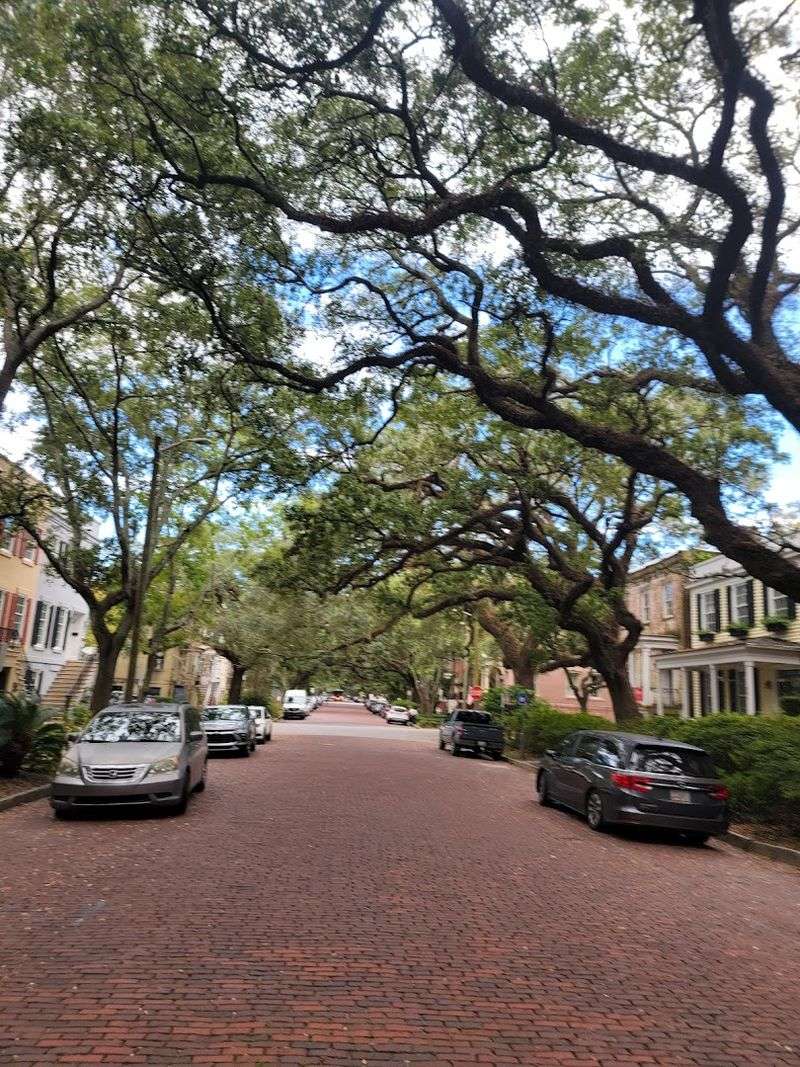
Not many streets in America still have their original mid-1800s paving intact, which makes the western portion of Jones Street genuinely special underfoot. The red brick surface has survived decades of foot traffic, weather, and urban development, and it continues to give the street a tactile, old-world texture that asphalt simply cannot offer.
Walking on these bricks feels noticeably different from a modern sidewalk, slightly uneven in the most charming way, with small gaps where moss and time have worked their way in. That imperfection is exactly what gives the street so much character and keeps photographers coming back season after season.
Preservation efforts have helped protect this original paving from being replaced or covered over, which is a decision the community has clearly embraced. The bricks serve as a subtle but powerful reminder that some things are worth protecting not because they are perfect, but because they are irreplaceable.
6. Majestic Oak Trees and Spanish Moss
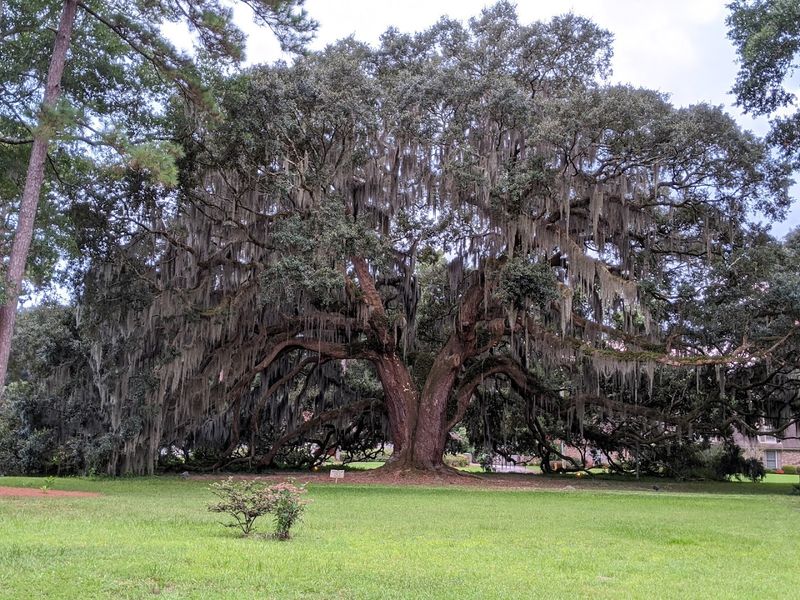
Spanish moss hanging from ancient oak trees is practically synonymous with Savannah, and Jones Street delivers this iconic image in full, breathtaking effect. The trees form a natural canopy overhead that filters sunlight into soft, dappled patterns across the brick pavement below, creating an atmosphere that feels almost cinematic.
On warm afternoons, the shade provided by these oaks makes strolling Jones Street genuinely comfortable even during Savannah’s famously humid summers. The rustling of moss in a light breeze adds a gentle, almost meditative soundtrack to the walk that is hard to find anywhere else in the city.
These trees have been growing for generations, and their size reflects that longevity in the most impressive way. Visitors often stop mid-stride just to look up at the canopy, which is honestly a completely reasonable response to something this naturally stunning and quietly grand.
7. Primarily Residential Character
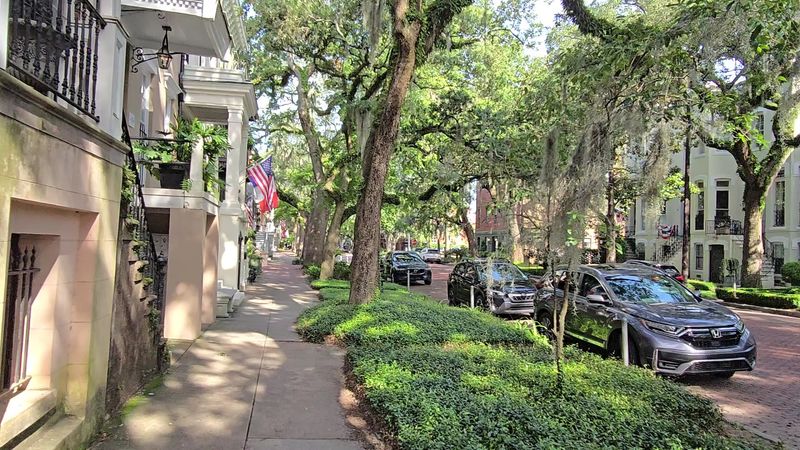
Unlike some of Savannah’s more commercialized historic streets, Jones Street has largely retained its residential identity, and that restraint is a big part of its appeal. Most of the homes along the block are private residences, which means the street has a lived-in warmth that tourist corridors often lack entirely.
Window boxes filled with seasonal flowers, bicycles parked near front steps, and the occasional neighborly wave from a front porch all contribute to an atmosphere that feels genuinely inhabited rather than staged for visitors. That authenticity is something money cannot manufacture, and it is part of what makes Jones Street feel so special compared to more heavily developed areas nearby.
Visitors should be mindful that this is a real neighborhood where people live and go about their daily routines. Respectful, quiet
8. The Colorful Painted Facades
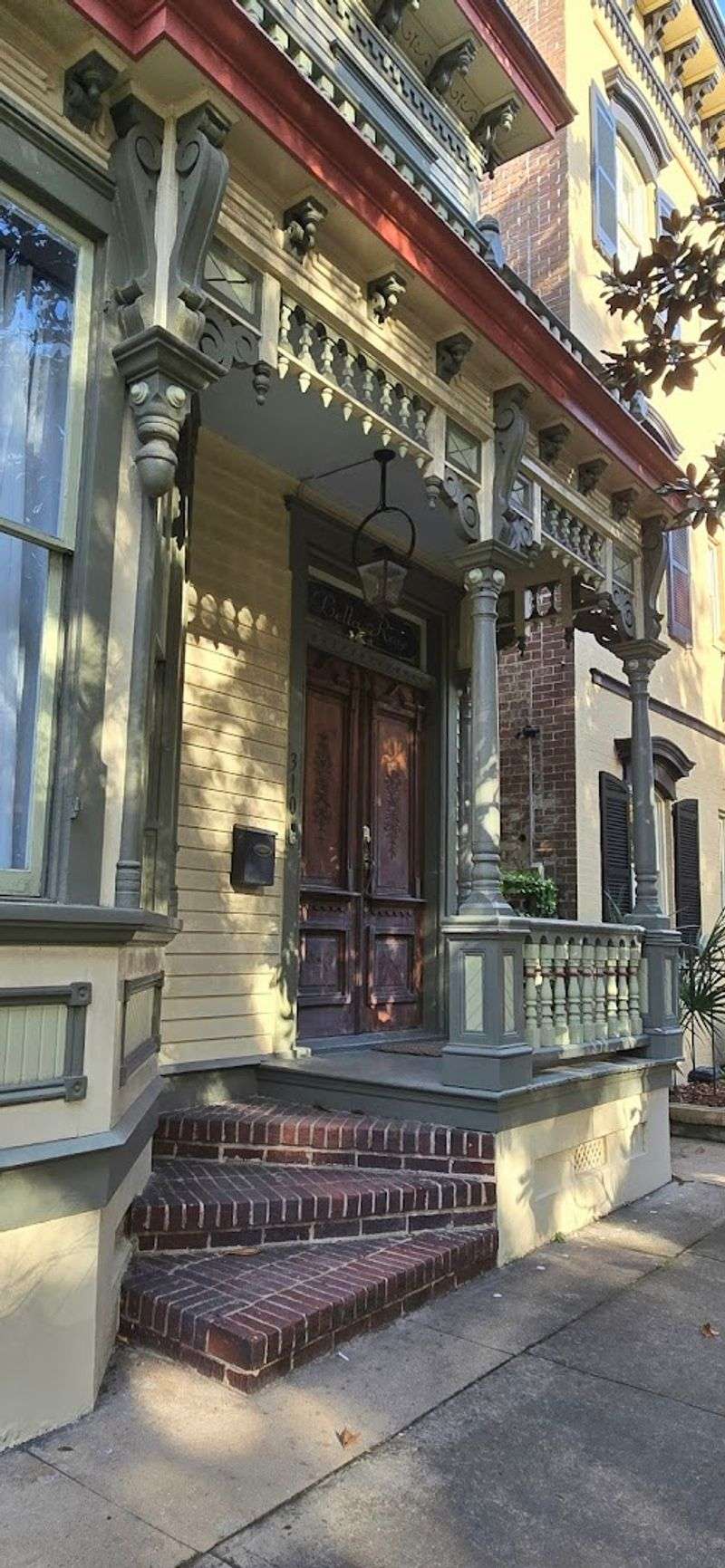
One of the first things that stops visitors in their tracks on Jones Street is the spectacular array of painted home facades. Unlike many historic districts that stick to neutral tones, Jones Street celebrates personality through color. Soft pinks, warm yellows, deep blues, and sage greens line the block, each home telling its own visual story.
These painted exteriors are carefully maintained by proud homeowners who understand the street’s reputation. Many of the colors are historically inspired, chosen to reflect the original palettes of the 19th century. Walking the block feels less like a stroll and more like flipping through a living, breathing history book filled with vivid illustrations.
9. The Wrought Iron Ironwork Details
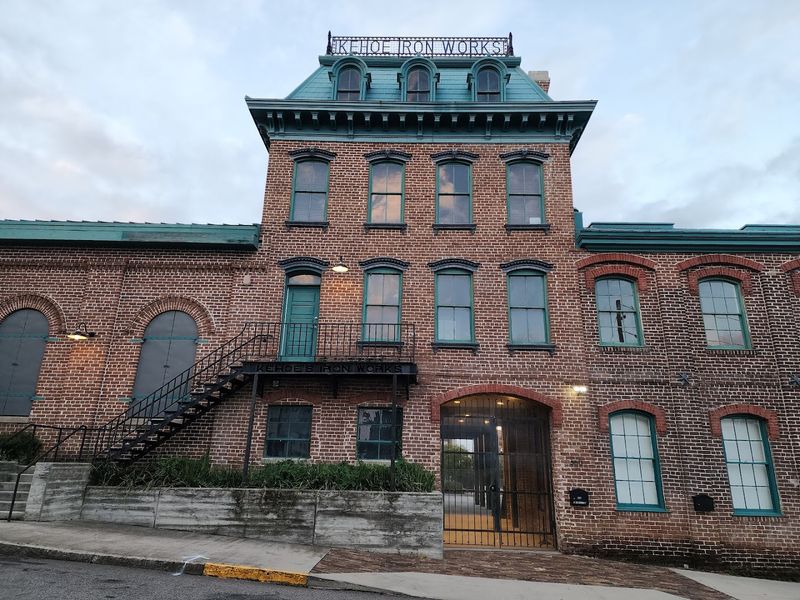
Look closely at any home along Jones Street and you will notice the breathtaking ironwork that decorates fences, railings, balconies, and gates. Crafted by skilled artisans during the 1800s, these intricate designs feature scrolls, floral patterns, and geometric shapes that are nothing short of miniature works of art.
Savannah has long been celebrated for its ironwork tradition, and Jones Street showcases some of the finest examples in the city. Each piece was custom-made, meaning no two homes share identical designs. Historians consider these details as important cultural artifacts, offering a window into the craftsmanship and artistic sensibilities of 19th-century Southern life.
10. Traditional Gas Lamps
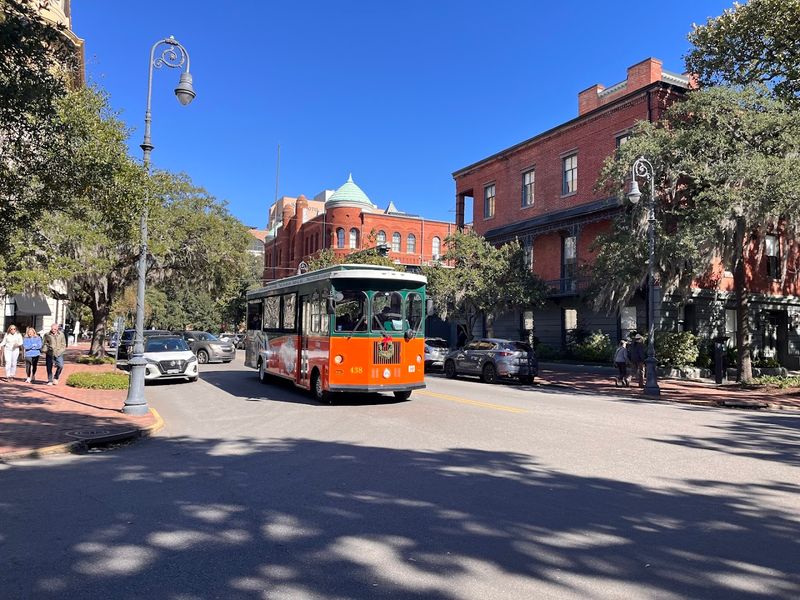
After the sun sets over Savannah, Jones Street transforms into something almost magical, and the traditional gas lamps are largely responsible for that shift. These old-fashioned lights cast a warm amber glow along the entire block, softening the shadows and giving the street a romantic, lantern-lit quality that feels genuinely timeless.
Gas lamps like these were once common throughout American cities but have become increasingly rare as modern lighting replaced them. Jones Street has held onto its lamps as part of a broader commitment to preserving the historic character of the neighborhood, and the decision pays off beautifully every single evening.
Evening visitors are strongly encouraged to walk the street after dark, even briefly, to experience this particular quality of light. The combination of glowing lamps, moss-draped oaks, and painted historic facades creates a scene that feels far removed from the noise and pace of modern life, in the best possible way.
11. The Private Gardens and Courtyards
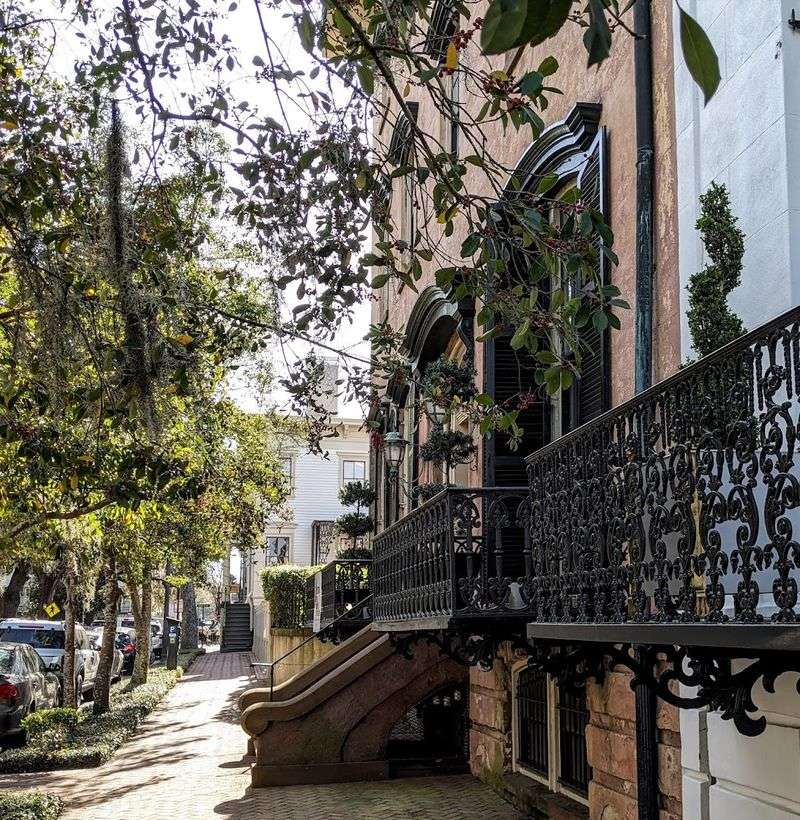
Behind the elegant streetfront homes of Jones Street lie some of Savannah’s most enchanting private gardens and courtyards. Hidden from casual passersby, these green sanctuaries burst with azaleas, camellias, jasmine, and magnolias throughout the year. They represent a deeply rooted Southern tradition of cultivating beauty in even the smallest outdoor spaces.
Many of these gardens date back to the original construction of the homes and have been tended by generations of families. Spring is arguably the most magical time to visit, when blooms spill over brick walls and the air carries a sweet floral perfume. These courtyards are quiet reminders that Jones Street rewards those who look beyond the obvious.
12. The Neighborhood’s Film and TV Fame
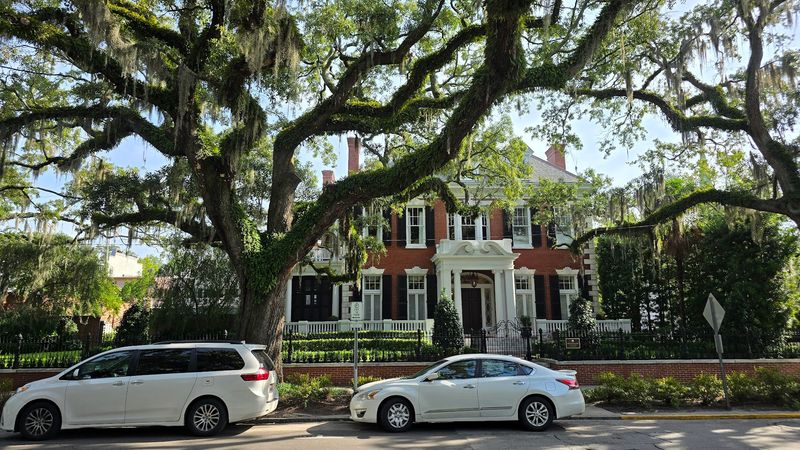
Jones Street has earned a quiet kind of celebrity status over the decades, serving as a backdrop for numerous films, television productions, and photography shoots. Its picture-perfect combination of historic homes, brick pavement, and canopied oaks makes it one of the most photogenic streets in the American South.
The 1994 classic film Forrest Gump famously used nearby Chippewa Square, and the broader Savannah Historic District, including Jones Street, has attracted filmmakers ever since. Productions are drawn to the street because it requires almost no set dressing to look like a scene from another