10 Connecticut Nature Playgrounds With Treehouses, Trails And Outdoor Adventures
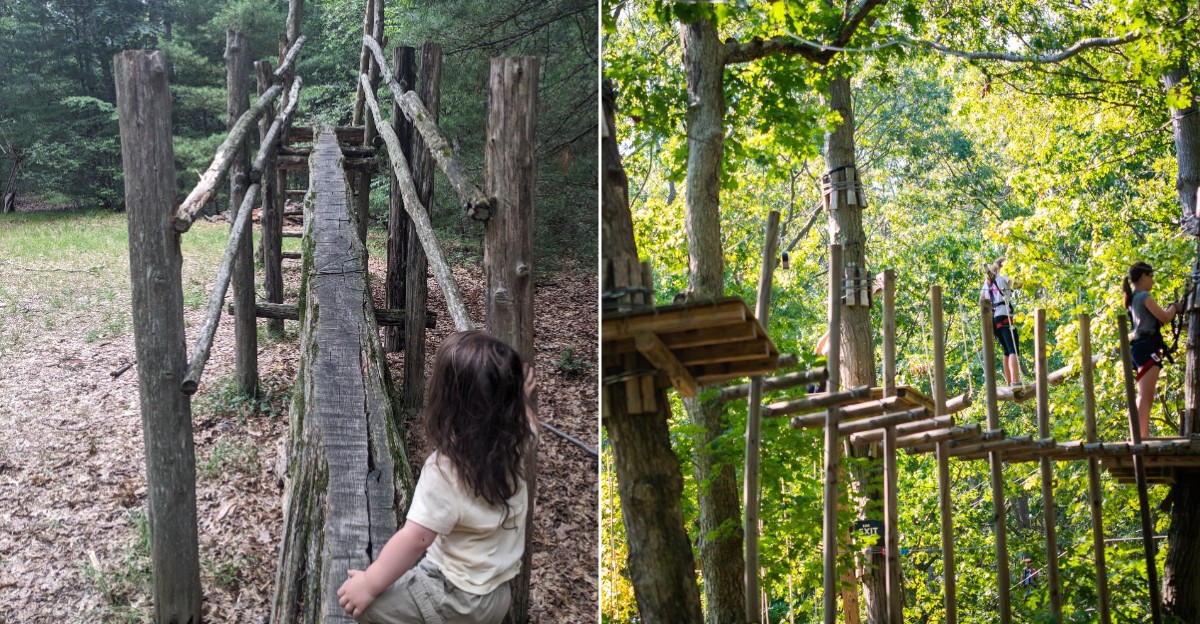
A playground gets a lot more interesting when nature is part of the fun. Connecticut has outdoor play spaces where kids can climb, explore and turn an ordinary afternoon into their own little adventure.
These are not the places where everyone spends the whole time waiting for a swing. Trees become part of the experience, while winding paths give curious kids somewhere new to investigate.
And honestly, who needs another perfectly predictable playground?
There is something wonderfully freeing about letting children explore outdoors without every minute of the visit being planned. They can follow whatever catches their attention and burn off plenty of energy along the way.
Parents may appreciate the change of scenery just as much. Fresh air makes a pretty nice alternative to another afternoon spent watching the same indoor activities unfold.
The best playground adventures sometimes begin where the pavement ends.
1. Rockland Preserve Natural Playground, Madison
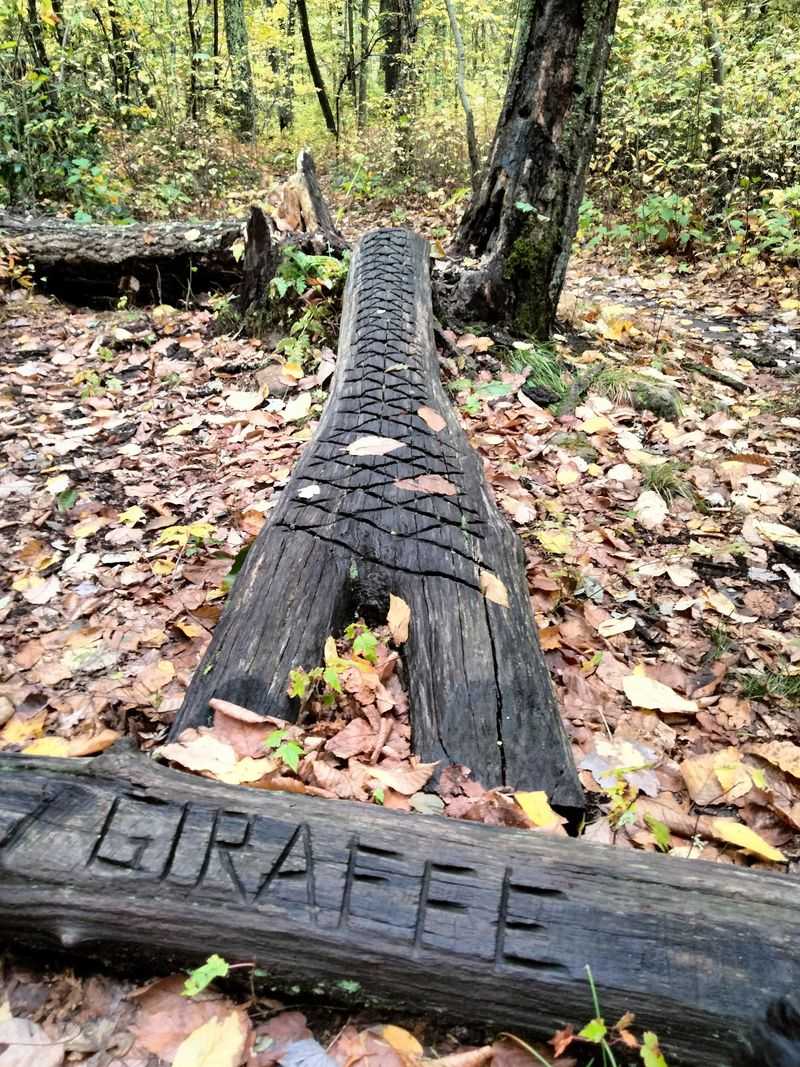
This playground plays by different rules. Trees are part of the fun.
Instead of feeling separate from the surrounding forest, the Accessible Natural Playground at Rockland Preserve was designed to blend right into it, with slides branching from different levels of a treehouse-style structure and climbing features leading upward.
The playground opened in October 2020, several years after the idea first took shape.
Accessible paths connect the main structure with another creative play area farther into the woods, giving children with different mobility needs more ways to join the adventure. Beyond the playground, Rockland Preserve spreads across roughly 649 acres of rocky hills and woodland.
Exploring can easily continue for hours. Huge glacial boulders, old charcoal pits, wooded trails, and rocky ledges add surprises well beyond the play area.
Coan Pond brings another change of scenery, with frogs, turtles, and beaver among the wildlife associated with its pond-and-fen environment.
Nearby, a pollinator garden established in 2022 has its own self-guided walking tour.
For the playground, use the Route 79 entrance on Durham Road, directly across from Samantha Lane.
Another entrance at 99 Renee’s Way provides access to beginner-level trails.
That makes it easy to pair playground time with a longer family adventure outdoors.
2. Stamford Museum & Nature Center, Stamford

Climbing into a hawk’s nest, crawling through an ant tunnel and digging for fossils in a giant sand pit are all part of a normal visit here.
Nature’s Playground is built into a rocky hillside and asks kids to see the world the way animals do, with a treehouse lookout, a tubular slide, an otter slide, a bouncing bug and a moving bridge.
Oversized maple leaves invite wiggling across them, and a boat structure fuels whatever story the kids invent that day. Tables and benches nearby give grown-ups a spot to sit or spread out lunch.
The Susan Garver Family Discovery Garden adds balancing logs and climbing mounds made from fallen trees and stumps.
Across the 118-acre property, more than 80 acres of trails pass through mature forest, vernal pools and meadows, and the Wheels in the Woods boardwalk with its observation platform welcomes visitors of all mobility levels.
You will also find the 10-acre Heckscher Farm with heritage breed animals, an otter pond, a planetarium and rotating art exhibitions inside the Tudor-style Bendel Mansion. The entrance sits at 39 Scofieldtown Rd, grounds generally open daily 9 AM to 5 PM, and admission is charged.
3. Woodcock Nature Center, Wilton
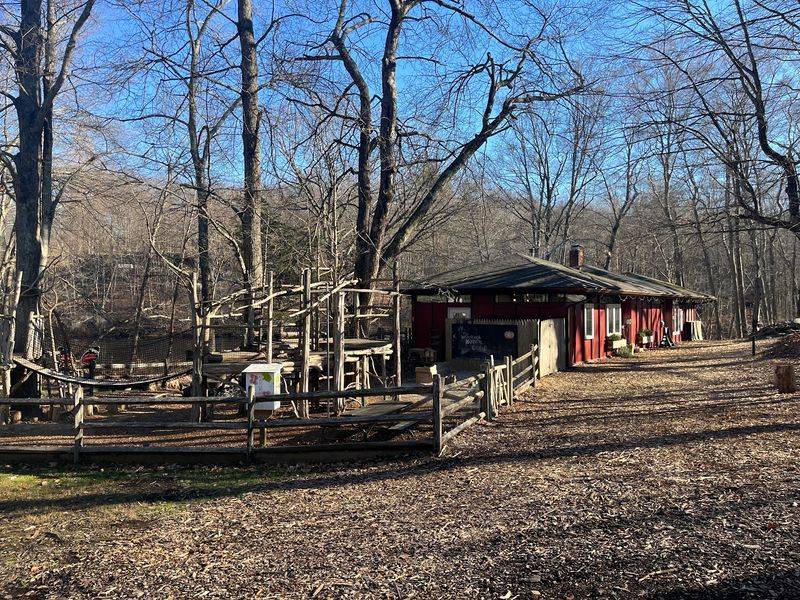
Ready for a swampy little adventure? Start with the boardwalk.
It carries visitors across Woodcock Nature Center’s wetlands, where slowing down and watching the water becomes part of the fun. The nature center welcomes visitors at 56 Deer Run Road in Wilton, close to the Ridgefield border.
The preserve spreads across more than 150 acres, with about three miles of trails winding through forest and wetland habitat. Routes pass old stone walls and rocky areas, while seasonal changes give families different reasons to return.
Kids have another reason to stick around. An outdoor natural playground near the main building is available during daylight hours, although programs and summer camps can occasionally limit access.
Sensory gardens were added beside the playground fence in 2024.
The grounds also include a pollinator garden established in 2016 and recognized as a Certified Butterfly Habitat. Additional garden areas near the pond and bird enclosures feature interpretive signs.
When the nature center building is open, visitors can see resident ambassador animals indoors.
Trails and grounds remain free to explore every day from dawn until dusk. Leashed dogs are welcome, and winter visitors can hike, snowshoe, or cross-country ski.
Bikes and horseback riding are prohibited.
4. Earthplace, Westport
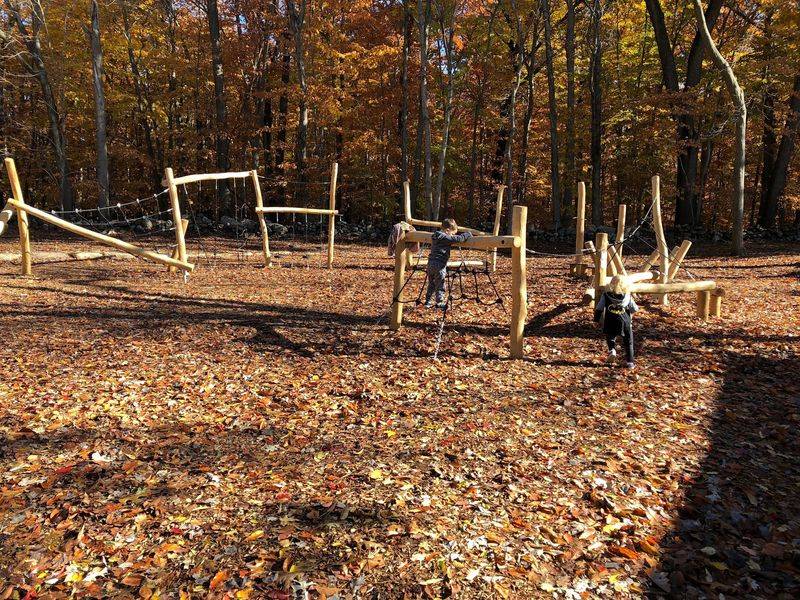
Bald eagles, owls, snakes and small mammals that cannot return to the wild live in the Animal Hall here, more than 50 rescued ambassadors in all. That indoor lineup pairs nicely with 62 acres of sanctuary just outside the door.
The community playground opened in October 2018 and includes tunnels and structures meant for open-ended play.
It stays available dawn to dusk year-round, though it is reserved for the preschool on weekdays between 8 AM and 6 PM, which makes weekends and late afternoons the easiest times to visit.
Roughly two miles of trails thread through wetlands, ponds, streams, hardwood forest and meadow.
The Meadow Grass Trail is universally designed and works for wheelchairs, strollers and walkers, while the Swamp Loop Trail fills about 30 minutes and shows off wildflowers in spring and summer. A StoryWalk, letterboxing and word hunting give kids a reason to keep moving.
Inside the main building at 10 Woodside Ln, the NaturePlace museum uses dioramas and interactive displays to explain state ecosystems, and daily drop-in animal programs come with admission. Dogs and bikes stay off the trails.
Picnic tables and free water stations make packing lunch simple, and snowshoe rentals appear after storms.
5. Ansonia Nature & Recreation Center, Ansonia
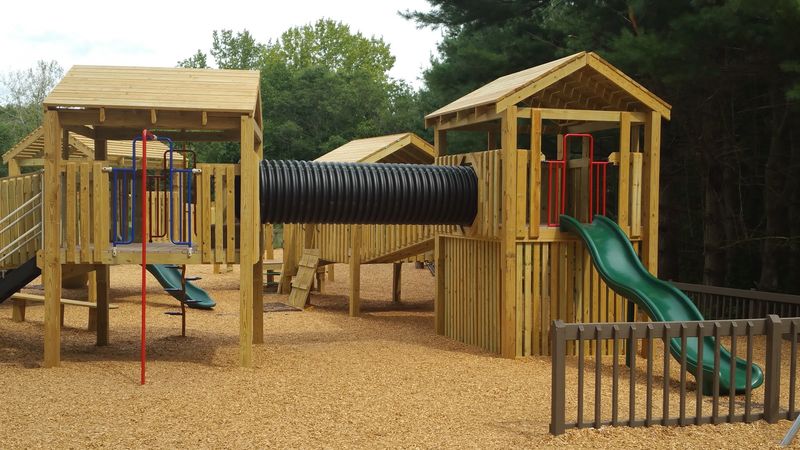
Need an easy outdoor win? This one comes with plenty of room to roam.
At the Stamford Museum & Nature Center, wooded trails, open fields, streams, and a pond give families several ways to turn a quick visit into an afternoon outside.
The property covers 118 acres, with walking trails passing through forests, wetlands, and meadows. Young explorers can follow paths through changing habitats, listen for frogs around wet areas, and spot native plants along the way.
Playtime gets its own space too. The Nature’s Playground includes climbing structures, slides, bridges, and areas designed for different ages, giving kids a chance to burn off some energy before or after exploring the trails.
Animals add another layer to the visit. Heckscher Farm is home to heritage breeds and other farm animals, while the Overbrook Nature Center features exhibits and educational spaces focused on the natural world.
Regular programs give families even more reasons to return throughout the year.
Picnic areas make it easy to stretch the outing through lunch without leaving the grounds.
The Stamford Museum & Nature Center is at 39 Scofieldtown Road in Stamford.
Admission policies and hours vary by attraction and program, so checking the current schedule before visiting is worthwhile.
It is an easy place to mix trails, animals, and playtime into one family outing.
6. Leonard Schine Preserve & Children’s Natural Playground, Westport
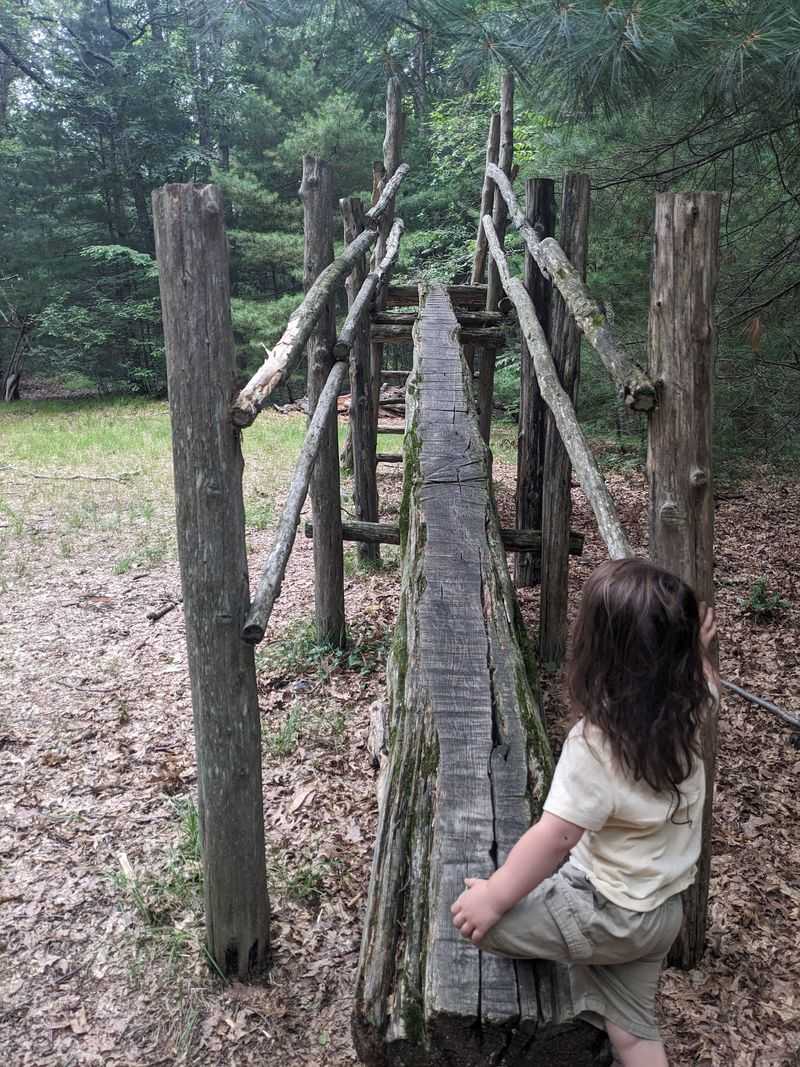
Not a single piece of plastic or metal shows up in this playground. Every element comes from the preserve itself: red cedar, sticks, logs, saplings, pine cones and acorns, shaped into roughly 10,000 square feet of open-ended play in a meadow.
Aimed at children ages 3 to 7, the space encourages fort building, digging, stick stacking, tower climbing, pretend tea parties and nature collages. Additions in 2016 brought a bear’s den woven from grapevine and a giant bird’s nest that kids keep expanding with sticks they gather.
An elvin village set in a tree holds pine cone dolls for whoever discovers it. The playground opened in June 2010 and was named one of the Top 50 Playgrounds in the U.S. in 2015 by Early Childhood Education Zone.
A Family Nature Trail added in June 2016 runs through the 20-acre preserve with ten interpretive signs covering the meadow, pond and woodland floor, plus acorn markers on trees that young hikers can follow. Grabbing a map at the trailhead and letting the kids lead works well here.
Managed by the Aspetuck Land Trust, the entrance is on Glendinning Place, 27-99 Glendinning Pl, with roadside parking by the wooden guard rails.
7. Hungerford Nature Center & Museum, Berlin
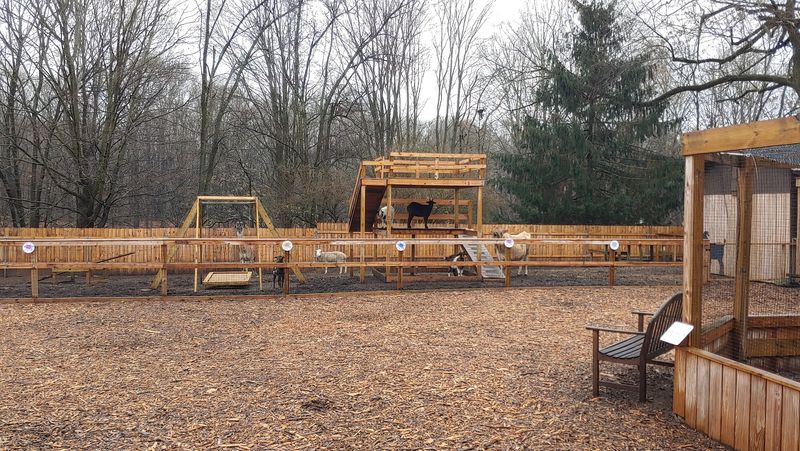
Llamas, sheep and chickens in the farmyard tend to steal the show before families even reach the trails. Hungerford has been running since 1984 and spreads across 22 acres of woodland and interpretive gardens in Berlin.
Walking trails are open daily from sunrise to sunset and wind through preserved woods at a pace that suits short legs and casual strollers alike. Bikes and motorized vehicles are not allowed, pets must be leashed, and visitors are asked to leave plants and animals undisturbed.
A playground sits on the property and can be used during business hours, with covered picnic tables nearby for snack breaks.
Step indoors and the focus shifts to more than 50 live animal ambassadors, including reptiles, amphibians, mammals and birds. Among them is a red fox named Pippen, who stays at the center because injuries prevent release.
Themed STEAM stations, a small aviary and a padded area for crawlers and new walkers fill out the space, and drop-in Wild Encounters and Animal Tales story times run with live animal guests.
The museum at 191 Farmington Ave is open Tuesday through Sunday, 10 AM to 4 PM, closed Mondays, with modest admission fees. Free on-site parking fills quickly during festivals like Pumpkin Palooza and WinterFest.
8. Northwest Park & Nature Center, Windsor
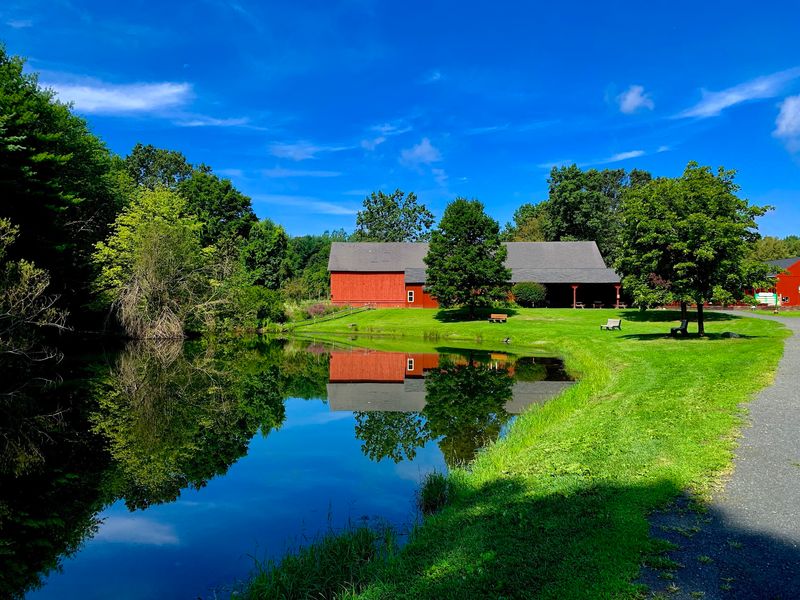
Need room to wander? You have plenty here.
Northwest Park mixes miles of trails with animals, a playground, and hands-on nature experiences, making it easy to build an entire afternoon around whatever catches the kids’ attention first.
The Windsor park covers 473 acres, with more than 12 miles of trails crossing forests, fields, and wetlands. Families can choose an easy loop or tackle longer routes, including the Brookside Trail with its gentle hills and waterside scenery.
An accessible Sensory Saunter offers another way to explore the outdoors.
Younger visitors can trade hiking for swings and slides at the playground. Elsewhere, heritage-breed animals live around the park’s barns, adding a farm experience to the day.
The Nature Center brings the adventure indoors with displays exploring local wildlife, geology, and natural history. Live animals are part of the experience, while children have their own reading and play spaces.
Winter changes the possibilities rather than ending them. Snowshoeing becomes an option when conditions cooperate, and the park’s maple sugaring traditions bring seasonal programming.
The main entrance is at 145 Lang Road in Windsor.
The Connecticut Valley Tobacco Museum, dog park, picnic areas, and additional facilities also share the property.
Best of all, park grounds are free to explore from sunrise to sunset throughout the year.
9. The Adventure Park At Storrs, Storrs
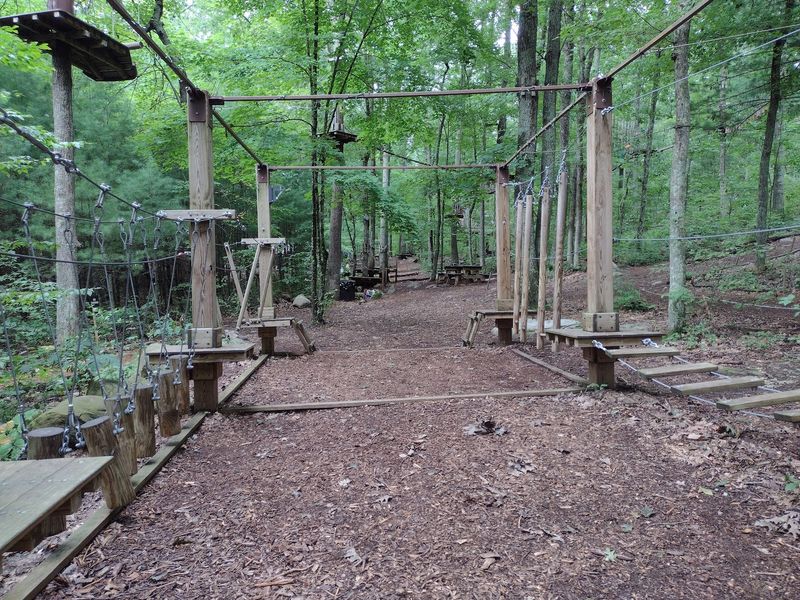
Here the trails run overhead instead of underfoot. Nine treetop trails hold 106 challenge elements and 28 ziplines, and the Pine Rush trail alone strings together six ziplines, including the park’s highest and longest.
Trails carry ski-style color codes from yellow and green through blue, black and double black, so a cautious first-timer and a fearless teenager can climb the same afternoon at completely different intensities.
Younger siblings are not stuck watching. An Adventure Playground built for ages 3 to 6 offers a low, scaled-down version of the big courses, while axe throwing is available outdoors for ages 12 and up.
The main courses require a minimum age of 7 and a maximum weight of 265 pounds. Everyone gets a safety briefing and practice session, then climbs wearing a harness with an always-attached system of interlocking carabiners.
Closed-toe shoes are required, gloves are strongly recommended, and a signed waiver is needed for every climber, completed by a parent or guardian for minors.
Sessions typically run three hours plus about 30 minutes of orientation, and reservations usually save money. Special nights include Glow in the Park climbing with LED lights and Firepit Fridays with s’mores.
The park operates at 2007 Storrs Rd with seasonal hours.
10. The Adventure Park At The Discovery Museum, Bridgeport
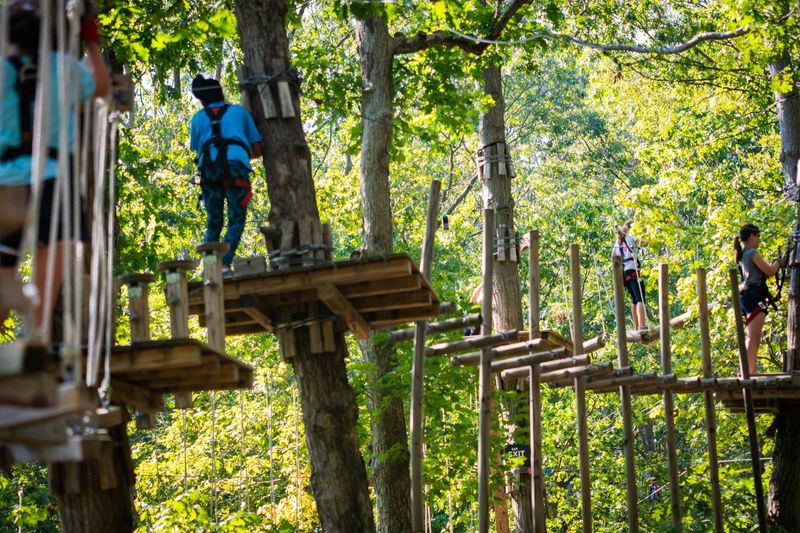
Billed as state’s largest climbing park, this aerial course fills five acres of woods behind The Discovery Museum. Between 13 and 15 treetop trails link platforms, bridges and ladders through roughly 180 to 200 challenge elements, with ziplines woven throughout.
Difficulty runs from purple and yellow for beginners up to black and double black for climbers chasing a real workout. A 210-foot zipline was added to the double black diamond Commando course, which gives experienced climbers something new to aim for.
Families with small kids get in earlier than at most aerial parks, since the minimum age is 5. Children aged 5 and 6 climb the purple trails with an adult at a one-to-two ratio.
Everyone completes a safety briefing and practice session and wears a harness with an always-attached carabiner system, staff circulate throughout the park, closed-toe shoes are required, and the weight limit is 265 pounds.
General admission covers three hours of climbing, and reservations are strongly encouraged. Outdoor axe throwing is open to ages 12 and up.
A connecting walking trail with signage about local plants and wildlife links the park at 4450 Park Ave to the museum and planetarium. Bring a picnic; tables and free water stations are on site.