10 Connecticut Restaurants Inside Buildings That Were Never Meant To Be Restaurants
Would dinner feel different if your table were sitting somewhere originally built for a completely different purpose?
Absolutely, especially when clues from the building’s former life are still visible around you.
Old banks and converted industrial spaces have found surprising second lives as restaurants, giving Connecticut diners places where the address can be almost as interesting as the menu.
That history creates atmosphere no decorator can simply order.
Instead of walking into another purpose-built dining room, you might spend half the meal noticing architectural details and wondering what happened in the same space decades before anyone thought of putting tables there.
Adaptive reuse can produce some wonderfully odd combinations.
The restaurants ahead prove that a building does not need to begin life with a kitchen to eventually become a memorable place for dinner. Sometimes the strangest transformation ends up giving a restaurant exactly the personality it needed.
1. Twisted Vine Restaurant, Derby
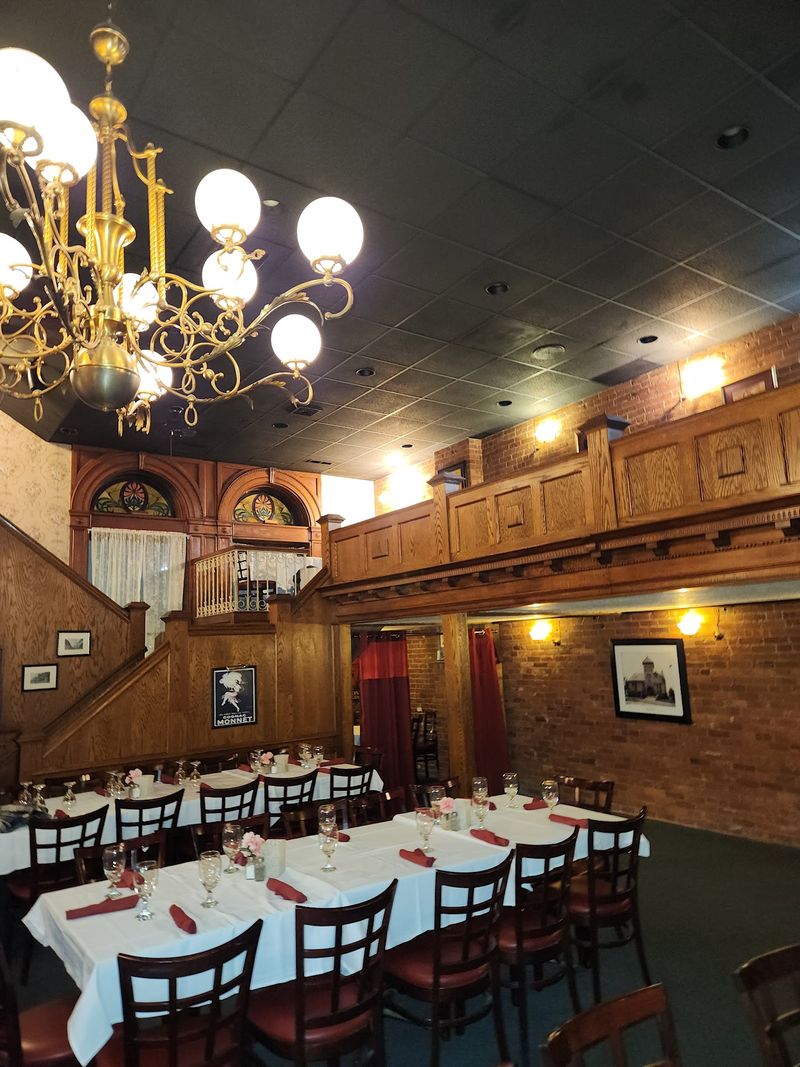
Money changed hands here once. Now it is dinner plates. The transformation is part of what makes this historic building such an unusual place for a meal.
Twisted Vine Restaurant occupies a striking former bank built in 1892 for the Manufacturers Bank of Birmingham. Architect Warren R.
Briggs designed the red sandstone building, which still carries architectural details from its original life.
History follows diners right into the main room. Stained glass, substantial woodwork and period-style chandeliers help preserve an old-fashioned atmosphere, while exposed brick and an upper balcony make the space feel surprisingly grand.
Then comes the detail that is hard to miss: the original bank vault remains inside. Rather than stripping away every reminder of the building’s past, the restaurant has made its unusual history part of the dining experience.
Twisted Vine opened in 2005, decades after the former financial building began its transition into a restaurant space.
The restaurant occupies 285 Main Street in Derby, so diners are eating inside a genuine piece of the city’s commercial history.
Stories surrounding the property go beyond banking. The building has developed a reputation for paranormal activity over the years, and ghost-themed events have previously been held here.
That combination of food and preserved history gives the meal a setting that feels very different from an ordinary dining room.
2. Harrie’s Jailhouse, Middletown
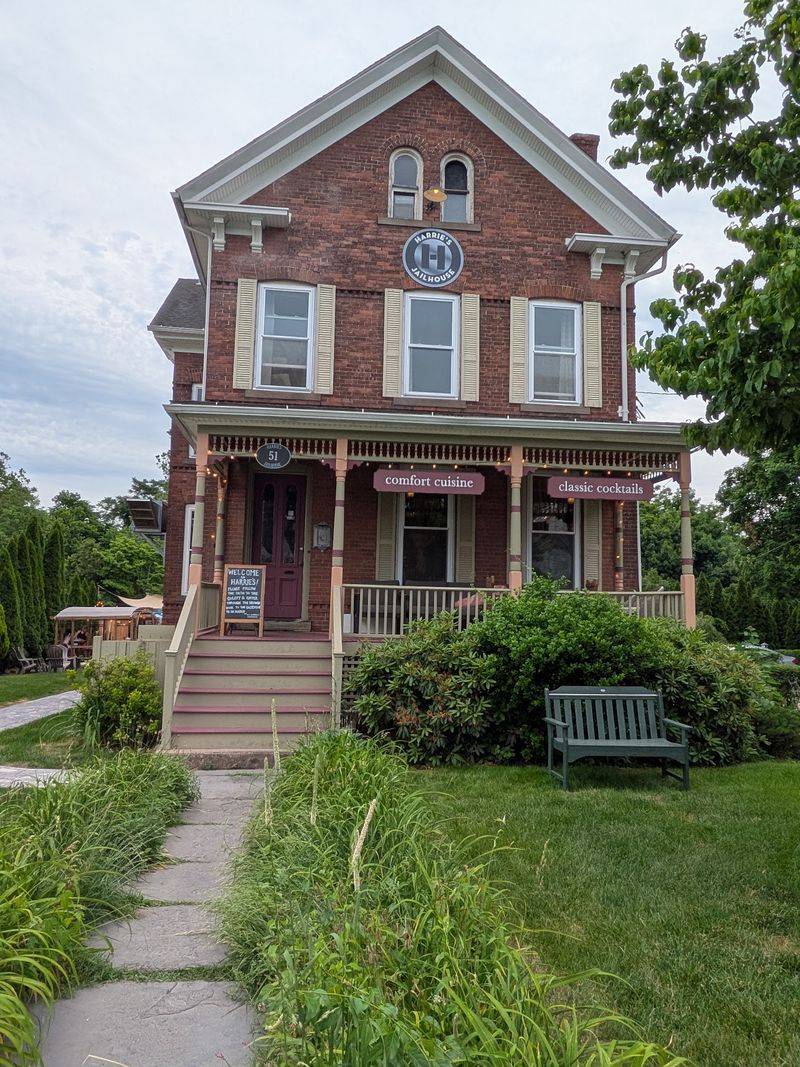
Getting locked up has never tasted this good. Back in the 1850s, the Victorian building at 51 Warwick St in Middletown served as the Pameacha Jail, with a home for the jailer and twelve brownstone cells for prisoners.
Most of those cells were taken out around the turn of the 20th century. Two brownstone walls from the old cell block still stand, though, and part of a former cell remains as a spot where guests can actually eat.
Ask about it when you arrive if you want the most memorable seat in the house.
Harrie’s Jailhouse opened in March 2021 and leans happily into the theme. The place calls its food comfort cuisine, and the menu centers on signature sandwiches and housemade snacks.
Sliders come in chicken, eggplant, French dip, and Nashville hot versions, while wings and several loaded fry options round things out.
Seating is spread out, which helps when you want a certain mood. There is a lower-level bar area, more tables on the first floor, and an outdoor patio for warm days.
The space feels snug and friendly, part old and part new. Ghost story lovers may enjoy knowing the building once appeared on the TV show Ghost Hunters, thanks to local tales about a young spirit named Sarah.
3. OKO Westport, Westport
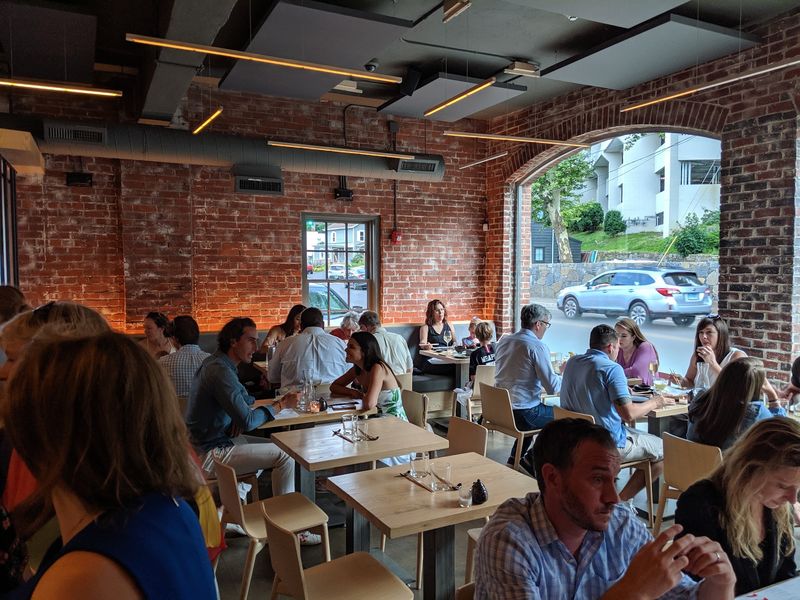
Fire engines came first. Sushi arrived much later. The change could hardly be more dramatic.
OKO occupies a former Westport firehouse built in 1931, giving its Japanese-inspired menu a setting with an entirely different original purpose. The restaurant opened in 2018, but the renovation kept reminders of the building’s earlier life rather than wiping its history away.
Exposed brick helps tell that story. Large arched windows facing the street bring light into the compact dining room, while wood, concrete and black steel give the interior a cleaner, more contemporary edge.
Overhead details inspired by Japanese scaffolding add another unexpected element.
The relatively intimate space keeps the atmosphere energetic. Tables and banquettes fill the main dining area, with additional seating at the counter.
Food takes an equally interesting approach. Chef Brian Lewis built the menu around Japanese techniques, with nigiri, sashimi, ramen, tempura and dishes prepared on the robata grill.
Seasonal ingredients also influence what appears in the kitchen.
OKO operates at 6 Wilton Road in Westport, inside the former Vigilant Fire Station.
Outdoor seating can add extra room when conditions cooperate, while reservations are especially useful during busier periods.
The old firehouse bones remain part of the appeal, giving dinner a backdrop that would have been difficult to predict when engines once occupied the building.
4. Paci Restaurant, Southport
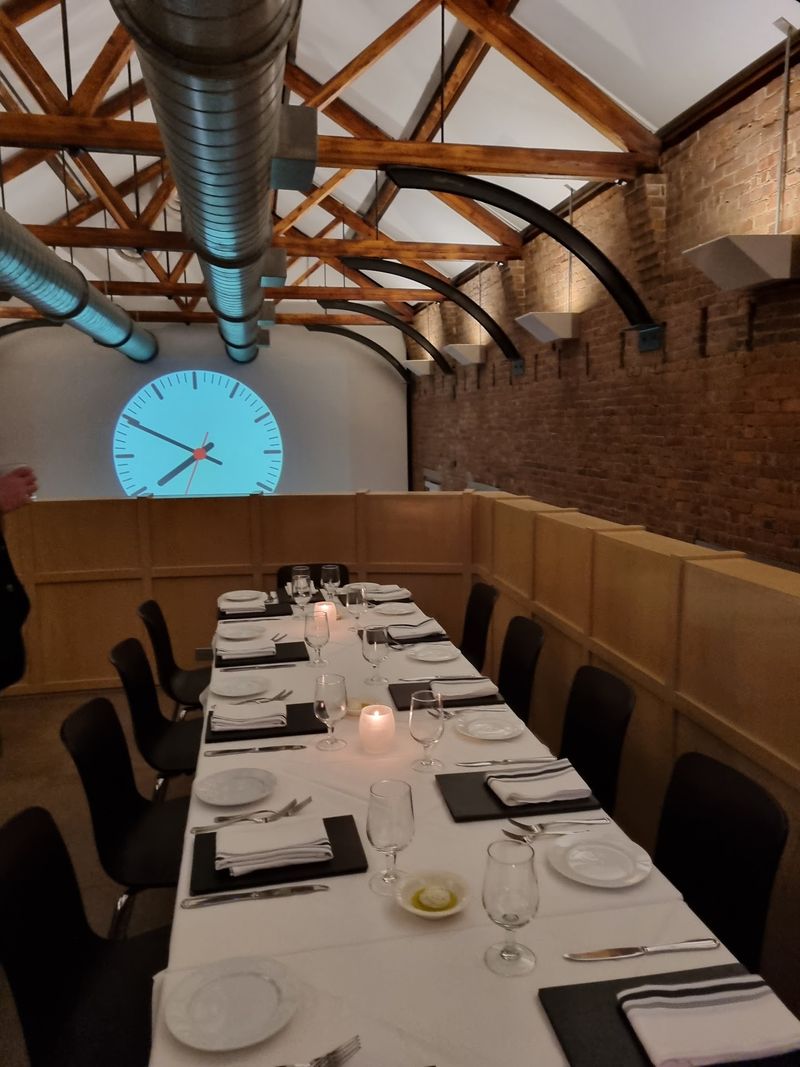
Trains still rumble nearby. Dinner now has the better seat. This former railroad station has traded waiting passengers for plates of Italian-inspired food.
Paci Restaurant occupies Southport’s historic eastbound depot, a brick station dating to the 1880s. Its railroad past remains easy to spot, particularly from outside, where the distinctive roof and period architectural details make the building look very different from a typical restaurant.
The station is part of the Southport Railroad Stations historic listing on the National Register of Historic Places, adding another layer to the setting. Inside, however, the atmosphere has evolved considerably.
A major renovation completed in 2017 refreshed the longtime restaurant with updated furnishings, flooring and a brighter dining room. One of the biggest changes was a glass-enclosed addition that created extra space while keeping the historic structure at the heart of the experience.
Guests can choose between the main dining room and more relaxed spaces, while outdoor seating surrounded by greenery becomes especially appealing during warmer weather.
Paci serves seasonal Italian-inspired cooking, with ingredients sourced from local markets and some produce grown in its own garden.
The restaurant operates at 96 Station Street in Southport, steps from the active railroad tracks.
That proximity makes the transformation even more interesting. Trains continue passing nearby while the old depot carries on with a completely different purpose.
5. The Station Restaurant, Naugatuck
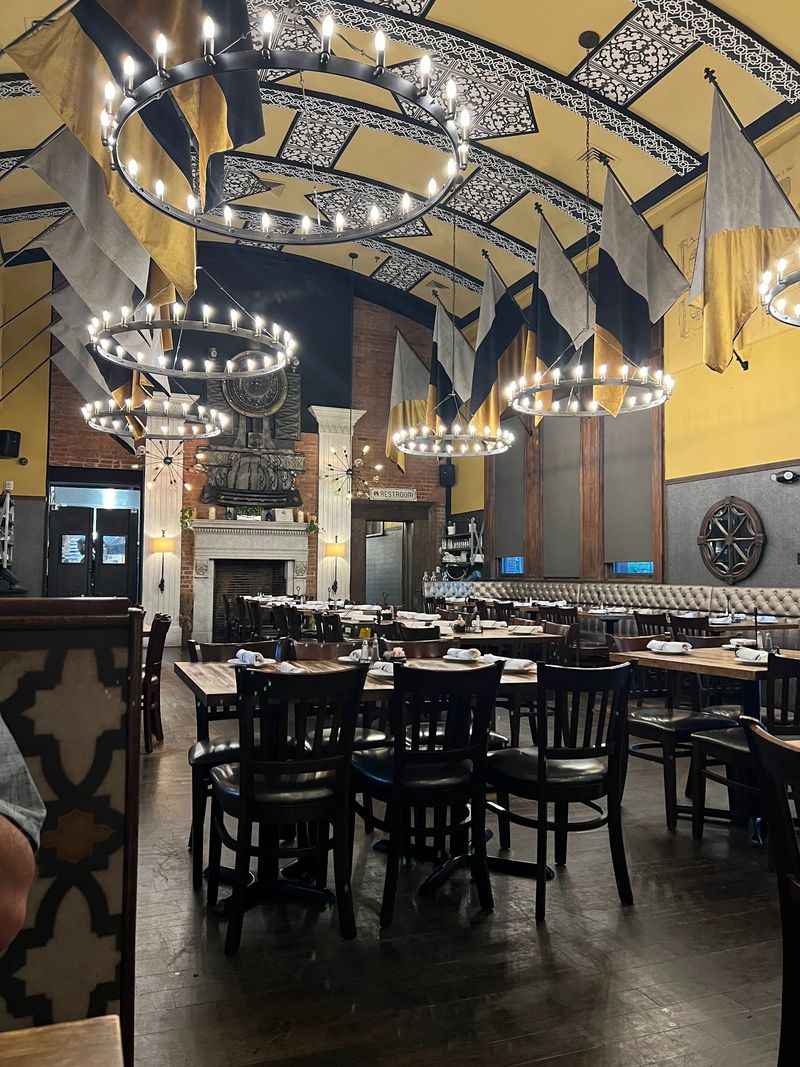
Here is a fun fact to share at the table: the architect behind this train station also designed the Lincoln Memorial. Henry Bacon drew up the building, which went up between 1908 and 1910, and local manufacturer John H. Whittemore paid for it.
Its Spanish Colonial Revival look, sometimes called Italian Villa style, is rare for a public building in state. Trains stopped using the station in the mid-1960s.
After that, it spent years as a newspaper plant for the Naugatuck Daily News and later as a museum for the Naugatuck Historical Society.
New owners bought the building in 2016 and renovated it while keeping its old charm. Today, The Station Restaurant at 195 Water St welcomes diners with a blend of grand architecture and modern comfort.
Families and big groups fit easily, since the dining space seats up to 150, the bar area adds 45, and the patio holds 65 more.
The menu covers a lot of ground, with steaks and seafood alongside Italian and Mediterranean-influenced dishes, pasta, sandwiches, and other hearty options. Train fans will like this bonus: commuter trains still serve Naugatuck from a newer station close by.
6. Engine Room, Mystic
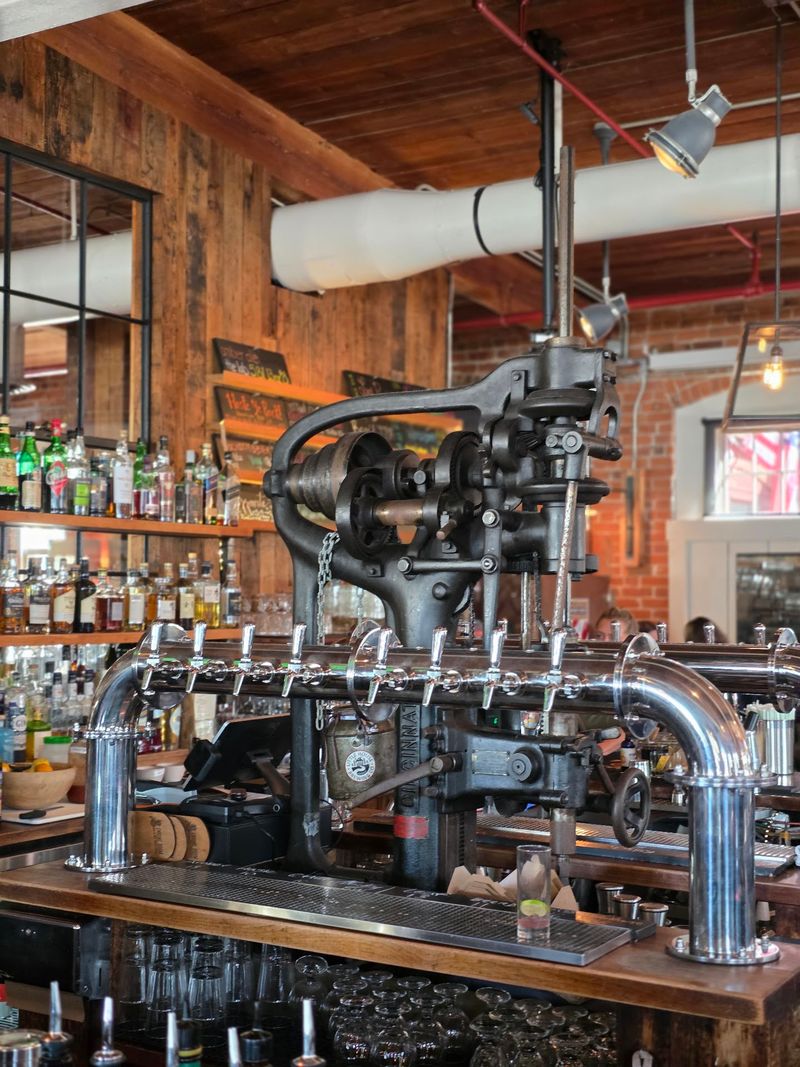
Boat engines built in this brick shop once powered vessels up and down the coast. Mystic was a busy shipbuilding town, and the Lathrop Marine Engine Company made its home in the building at 14 Holmes St. Local stories say Lathrop engines were popular with both the Coast Guard and smugglers during Prohibition.
Engine Room keeps that working past on full display. Exposed brick and beams give the room an industrial backbone.
Reclaimed pieces from the region add personality, like a drill press from Tavenet Machine Co. in Pawcatuck that stands out at the bar and wood salvaged from a Rhode Island bicycle factory.
Expect energy. The open kitchen and upbeat crowd make this a good choice when you want a buzzing night out rather than a hushed dinner.
Even so, the space stays comfortable and welcoming.
Burgers are the big draw, made with locally sourced ingredients as part of a farm-to-table approach. The menu also offers small bites, salads, fried chicken and pulled pork sandwiches, and larger plates for hungry diners.
Weekend visitors can plan around Sunday brunch, and seasonal outdoor seating is a nice treat on warm Mystic afternoons after a stroll around downtown.
7. Grano Arso, Chester
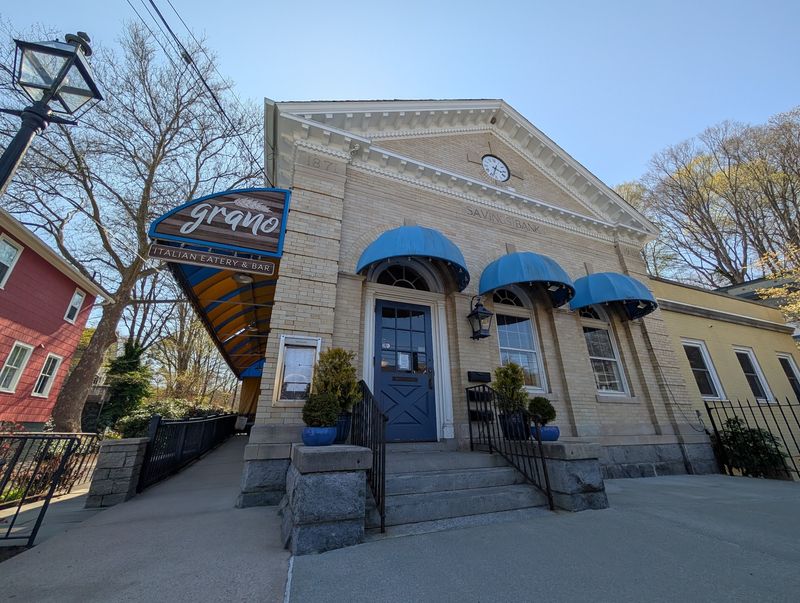
Two dates are carved into the front of this handsome building: 1871 and 1902. The first marks when the Chester Savings Bank was founded, and the second marks when it built its home at 6 Main St in Chester.
Buff brick, brownstone lintels, a granite base, and a pediment with a restored replica clock make it easy to spot.
Later on, the building held offices and even a vegan restaurant. When the team behind Grano Arso moved in, they tore out office walls and brought the old banking room back to life.
A pressed-tin ceiling, hidden above later changes, turned out to be in great shape.
The bank’s three original vaults stayed too. One now works as a service station for the staff, which is a clever use of a very sturdy room.
Curious about the name? Grano arso means burnt grain in Italian, a nod to an old milling method from Apulia that gives flour a smoky, nutty taste.
The kitchen mills native New England grains in-house for pasta and bread. Menus shift with the seasons and lean on fresh, local ingredients, with tasting menus offered at times.
The mood blends country warmth with polished plating.
8. Millwright’s Restaurant, Simsbury
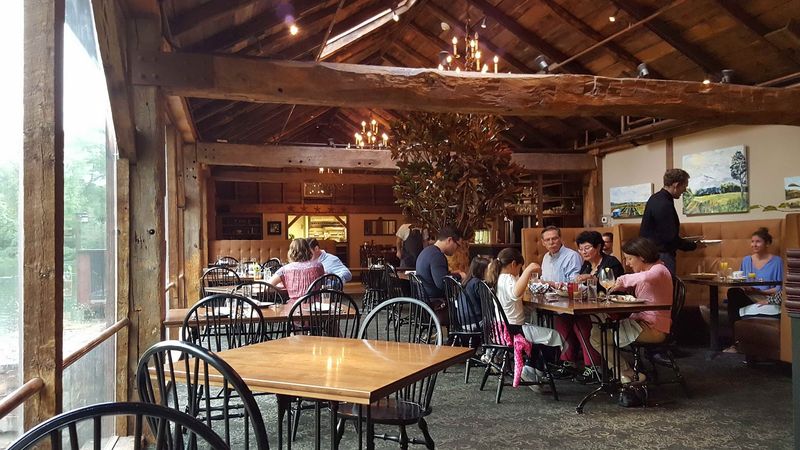
A waterfall rushes right beneath the dining room. That alone makes Millwright’s Restaurant memorable, but the history adds even more.
The mill site at 77 West St in Simsbury dates back to 1680, when it held the town’s oldest saw and gristmill, and it later became a hemp spinning site in the 1800s.
The building had been a restaurant before, then slipped into poor shape. A restoration brought it back, and Millwright’s opened in 2012.
Lofty ceilings and big windows now frame the falling water, and an enclosed bridge has been turned into indoor dining so guests can enjoy the view from both sides.
You get two very different ways to eat here. Upstairs, the main dining room can offer a tasting-menu experience for a special evening.
Downstairs, the 1680 Tavern feels cozier, with close seating and a large stone fireplace adding warmth to the historic setting.
The kitchen calls its style Inspired New England. Ingredients come from farms, producers, and foragers across New England and upstate New York, and the menu changes weekly with the harvest.
Reservations are wise, especially if you want a window seat near the falls.
9. Present Company, Simsbury
Dinner comes with a show. No stage required. At Present Company, the open kitchen puts much of the cooking action right in view.
The surroundings have a much older story. Present Company opened in 2016 inside the historic Tariffville Mill, a building constructed after an earlier carpet factory was destroyed by fire in 1867.
The Connecticut Screw Company rebuilt the mill the following year, continuing a manufacturing history in the village that stretches back to the 1820s.
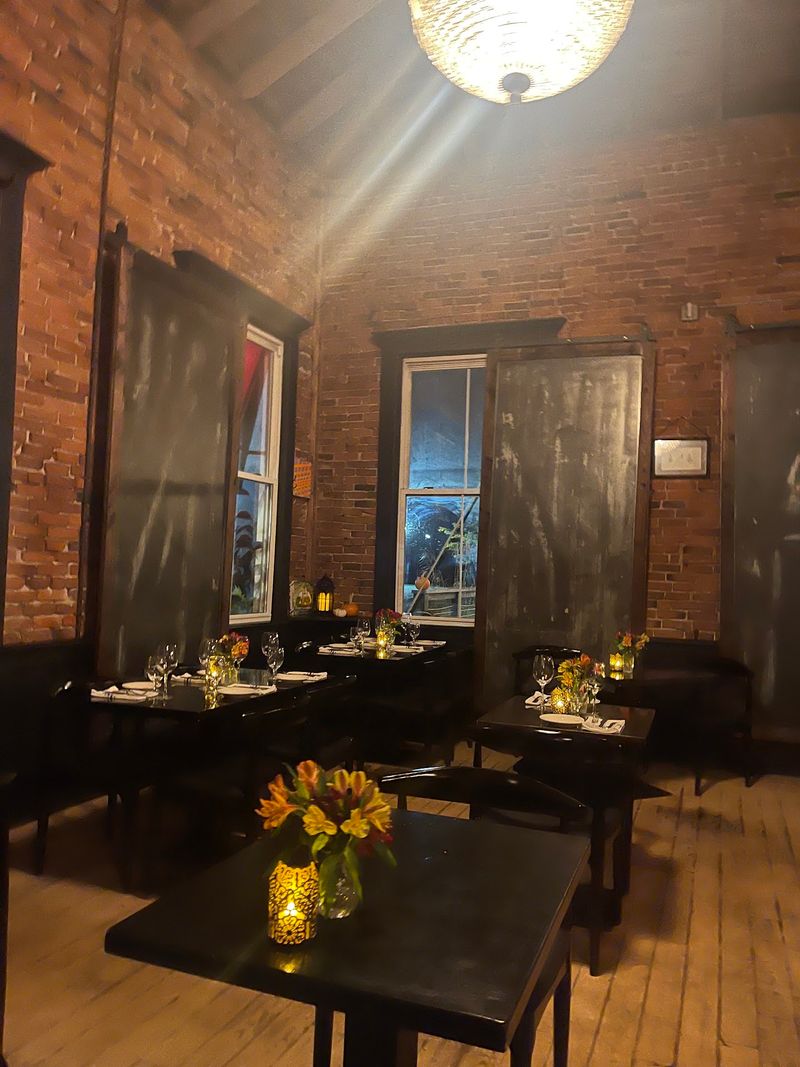
Old industrial character remains visible inside. Exposed brick, wood floors and original architectural details give the intimate dining room plenty of warmth, while contemporary furnishings bring the former factory into its new chapter.
Food follows a seasonal approach, with fresh local ingredients playing an important role. Present Company has also offered a five-course tasting menu, giving the kitchen room to change dishes as ingredients and ideas evolve.
The open-kitchen setup adds another layer to dinner, letting guests watch some of that careful preparation unfold nearby.
Present Company operates at 2 Tunxis Road in Tariffville, right inside the old mill complex.
Dinner service currently begins at 5 p.m. Tuesday through Saturday.
What once belonged to the village’s industrial world now makes an unexpectedly atmospheric setting for dinner.
10. The Mill On The River, South Windsor
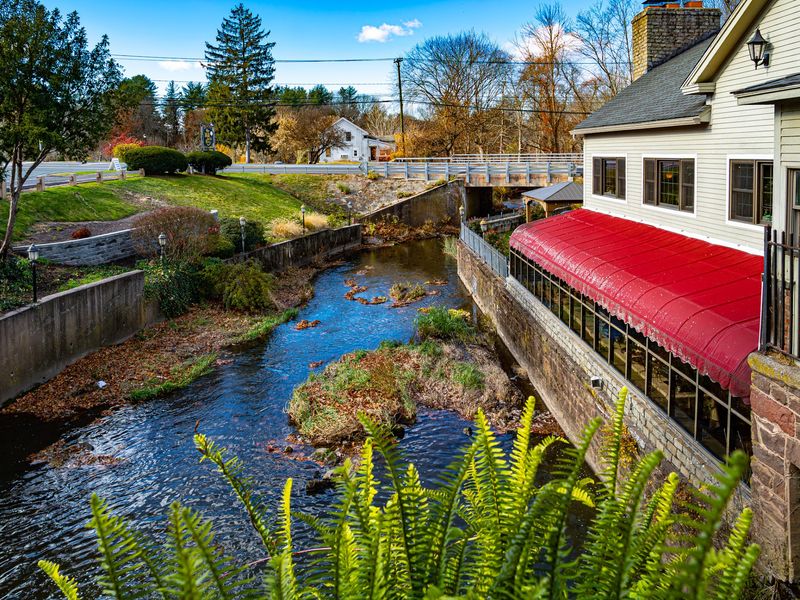
Floods, farmers, and even the mail are part of this mill’s long tale. The first mill on the site was swept away by a flood in 1750.
It was rebuilt in 1775, and the new mill ground corn, buckwheat, and rye that were stored in large bins and sold to neighbors.
Here is a neat detail to point out at dinner. The kitchen area of today’s restaurant once served as the town’s first post office, and the miller doubled as the postmaster.
The dam on the site is known as the oldest in state.
Over the years the crumbling mill got a full restoration, using timbers and boards from nine old tobacco sheds. Now The Mill On The River at 989 Ellington Rd in South Windsor offers a romantic, welcoming room with views of the pond and waterfall from both the dining room and the outdoor patio.
The menu is big enough to please almost anyone. Modern American cooking with a New England touch includes steaks, chops, seafood, house-made pastas, and plenty of appetizers, soups, and salads.
Four banquet rooms can host groups of 15 to 125 guests, which makes this a strong pick for birthdays, showers, and family reunions.