9 Connecticut Towns People Are Quietly Moving Away From
Population changes rarely happen with a dramatic announcement. Families relocate, younger residents settle elsewhere and the numbers gradually begin telling a different story.
That is what makes town-level shifts interesting.
Recent population patterns show that certain communities in Connecticut have been losing residents, even while other parts of the state move in another direction.
The reasons behind those changes are rarely simple. Housing costs can matter, but so can employment opportunities or the stage of life residents happen to be entering.
So where has the decline been most noticeable?
We looked at population data to identify towns where the numbers have moved downward rather than relying on anecdotes about who seems to be leaving.
That distinction matters. A shrinking population does not automatically tell us why people moved or what living in a town is like.
It does, however, reveal which places are quietly becoming smaller while relatively few people are paying attention.
1. Somers
Back in 2007, Money Magazine ranked Somers 53rd on its list of the best places to live in America. That honor still says a lot about this Tolland County town of roughly 10,000 people, even though growth here has stayed slow and steady rather than booming.
So why do some folks drift away? Part of the answer is simple geography.
Somers sits far from major job centers, and many younger adults head toward bigger cities for work. Home prices in the area can also stretch a first-time budget.
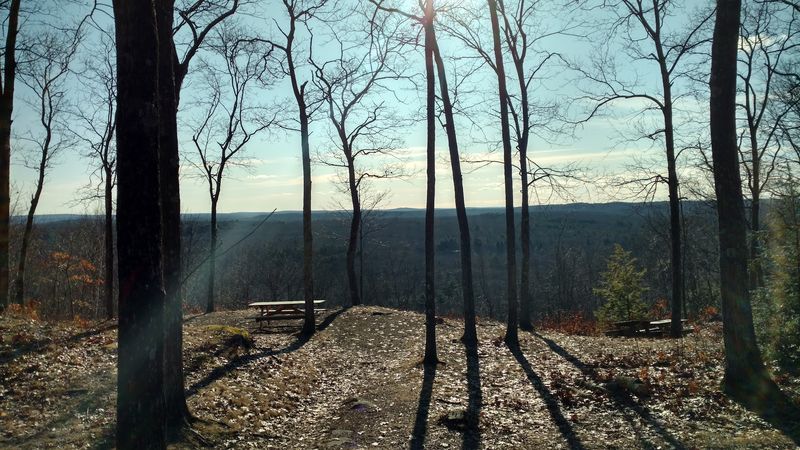
Those who stay, though, get plenty in return. Shenipsit State Forest offers trail access to Soapstone Mountain, a favorite spot for hikers who want a view without an all-day climb.
Scantic River State Park adds quiet fishing spots and wooded paths.
Families often spend weekends at Sonny’s Place, a local fun center with go-karts, mini-golf, and an arcade. Its indoor Playland is built for kids under 54 inches tall, so pack socks, because they are required.
History lovers should stop by the Somers Historical Society Museum at 11 Battle St., Somers, CT 06071. The building once held the town’s free public library, and today it keeps old photos, local artifacts, and family records.
The Four Town Fairgrounds also hosts big agricultural fairs and markets through the year.
2. Montville
Some towns sit right next to famous attractions yet rarely get noticed themselves. Montville, in New London County, is a good example.
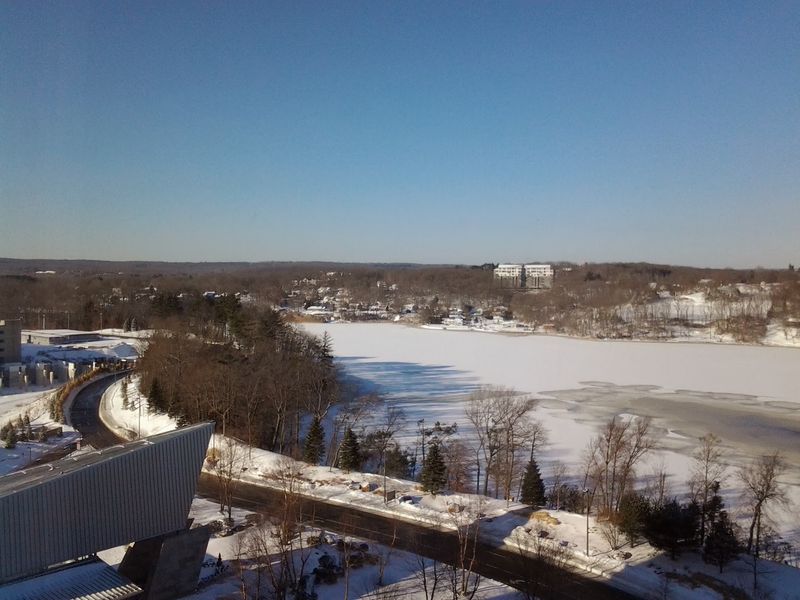
Along its eastern side runs the Thames River, and the town is home to Mohegan Sun, one of the biggest entertainment and resort complexes in New England.
Even so, Montville’s own population has been flat or slightly down in recent census counts, as some residents move closer to larger job markets or to towns with different school and tax options.
Like any population number, these trends can shift from year to year.
What makes Montville appealing is its mix of convenience and quiet. Route 32 and Interstate 395 connect residents to Norwich, New London, and the shoreline in a short drive.
That means beaches, city dining, and shopping are never too far away.
At the same time, much of the town still feels wooded and calm. Local ponds and small parks give kids room to run, and neighborhoods tend to feel spread out rather than crowded.
Montville also carries deep Native American history. The Mohegan Tribe’s reservation lands are here, and the tribe’s culture and story are an important part of the area’s identity.
For people who want a home base near both the coast and the countryside, Montville checks a lot of boxes.
3. North Branford
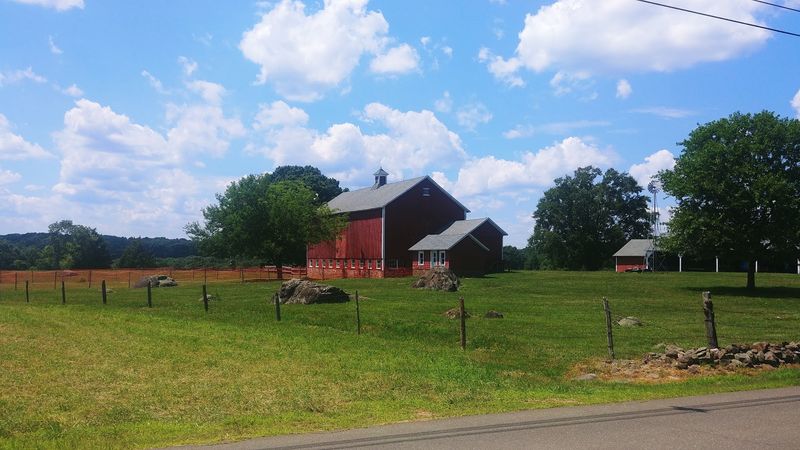
Country calm comes surprisingly close to city life. North Branford still has stretches of farmland, wooded roads, stone walls, and open scenery that give everyday life a quieter rhythm.
Getting elsewhere is fairly easy. New Haven is close enough for museums, performances, restaurants, and other city attractions without giving up the town’s more rural character.
Shoreline communities such as Branford and Guilford are also nearby when the coast starts calling.
Population change has been minimal rather than declining sharply. The U.S.
Census Bureau estimates 13,551 residents in 2025, essentially unchanged from its 2020 estimate base of 13,541. That stability fits a community that has largely maintained its size in recent years.
Fall gives the landscape another reason to explore. Local roads brighten with seasonal color, while trails and green spaces make it easy to spend an afternoon outside.
Northford and the North Branford center area also give different corners of town their own character.
Dinner can be part of the outing, too. Dalton’s serves contemporary Italian cooking and emphasizes quality local ingredients, with its open kitchen adding another interesting touch.
Its dining room is at 2429 Foxon Road, North Branford, CT 06471.
For people drawn to breathing room without feeling disconnected, North Branford strikes an appealing balance.
4. Enfield
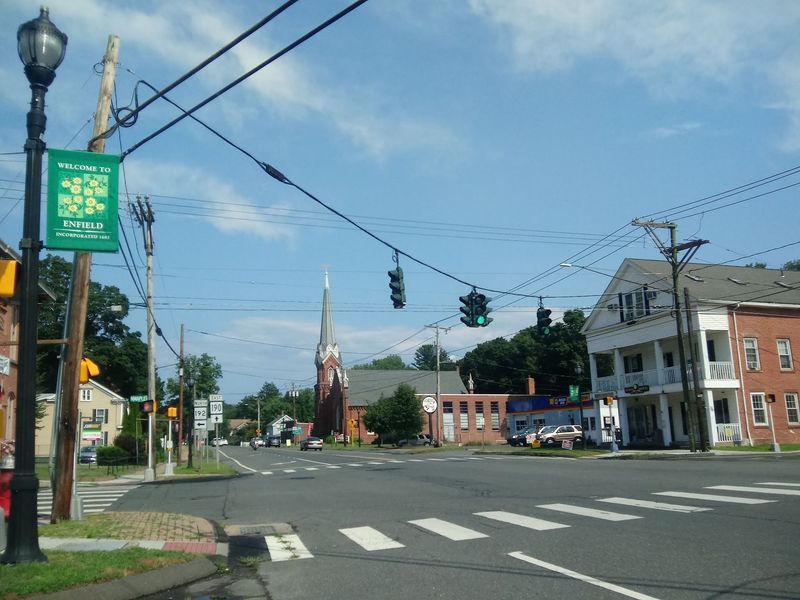
Right on the Massachusetts border, Enfield works like a front door to Connecticut. Interstate 91 runs through it, putting Hartford and Springfield within easy reach.
With about 41,000 residents, Enfield is one of the larger towns on this list. Its population dipped years ago when a big state prison and some businesses changed, and growth since the 2020 census has been small.
Recent estimates show the number now holding fairly steady.
Families have a lot to work with here. The town manages 31 public recreation facilities across 465 acres, including ball fields, tennis courts, and skate parks.
Scantic River State Park covers 784 acres, with fishing spots and trails near old powder mill sites.
Want a free afternoon of local history? The Old Town Hall Museum at 1294 Enfield Street, Enfield, CT 06082 fills three floors with artifacts and photos.
It usually opens Sundays from 1 to 5 p.m. between mid-May and October, and admission is free, though hours can change.
Fun Fact: the Enfield Historical Society runs two more museums, including the one-room Wallop School, which can be visited by appointment.
Around the calendar, the Town Green hosts a Jack-O-Lantern Festival and a weekly farmers market. The Fourth of July celebration adds a 5K, a kids race, and a parade.
5. Canaan
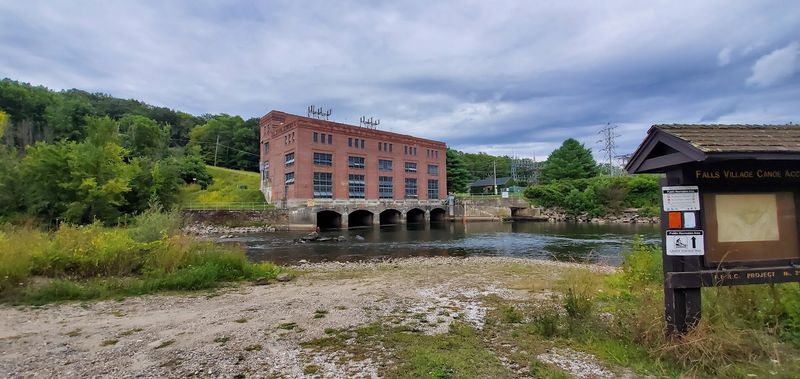
Names get tricky here. Canaan and North Canaan are neighboring towns in the state’s far northwest, and the community commonly called Falls Village is actually within the town of Canaan.
The landscape is the real draw. Great Falls sends the Housatonic River over a dramatic drop near Falls Village, while the Appalachian Trail winds through this corner of the state.
Hiking opportunities continue around the surrounding hills, giving outdoor lovers plenty of reasons to linger.
Railroad history runs deep, too. The historic station in Falls Village dates to the nineteenth century and remains an important reminder of the era when trains helped shape these small communities.
North Canaan celebrates that heritage each summer with Canaan Railroad Days, a long-running tradition featuring community activities and events.
Population numbers have remained relatively steady in North Canaan. The 2020 Census counted 3,211 residents, reinforcing just how small and close-knit this part of Litchfield County remains.
After exploring, food provides an easy excuse to slow down. Blackberry River Bistro in North Canaan offers a varied menu that includes pasta, burgers, seafood dishes, and other hearty choices.
Local history can also be explored at the Canaan History Center, which operates at 115 Main Street, North Canaan, CT 06018.
Between waterfalls, trails, railroad heritage, and quiet country scenery, this northwest corner rewards travelers who enjoy taking the slower road.
6. Stafford
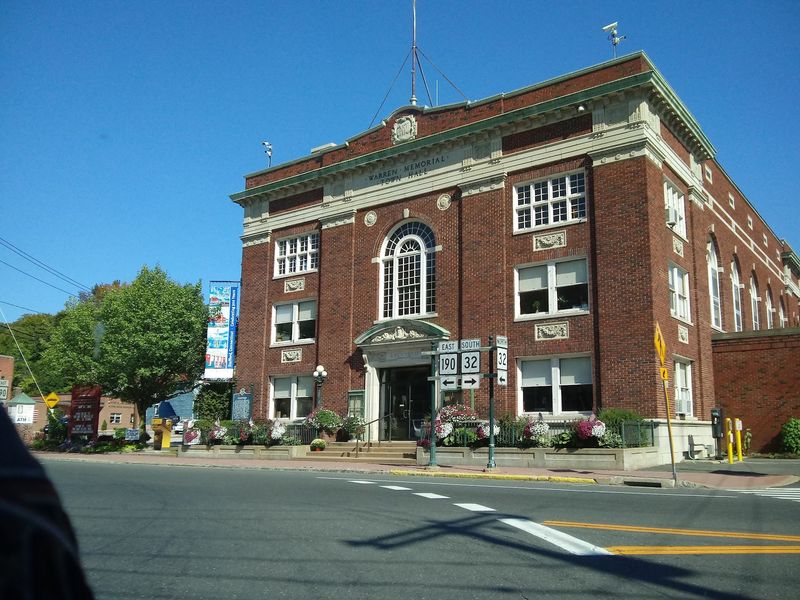
Long ago, visitors traveled to Stafford Springs to drink its mineral water, hoping it would improve their health. That spa history still shapes this Tolland County town, one of the largest in state by land area at about 58 square miles.
Stafford’s population of around 11,500 has stayed fairly level, with modest gains in recent estimates. Like many old mill towns, it saw people leave as factory work declined, but new residents keep finding it.
A good first stop is the Stafford Historical Society Museum at 5 Spring St, Stafford Springs, CT 06076. The Victorian building was once a bottling house for the Stafford Mineral Waters Company, and admission is free.
Right next door, the Iron Spring still sits inside its wellhouse.
Did you know? State’s only surviving Civilian Conservation Corps barracks building now holds a museum inside Shenipsit State Forest.
Outdoors, Staffordville Lake covers 149 acres, and its public beach is open to residents and taxpayers with ID. Nipmuck State Forest adds peaceful woodland trails.
The town’s slogan could be “small town, big events.” There is the Polar Bear Paddy Plunge in March, SummerFest with fireworks in July, AppleFest in September, and a WinterFest Parade of Lights in December. The restored Palace Theater hosts music and comedy downtown.
7. Thompson
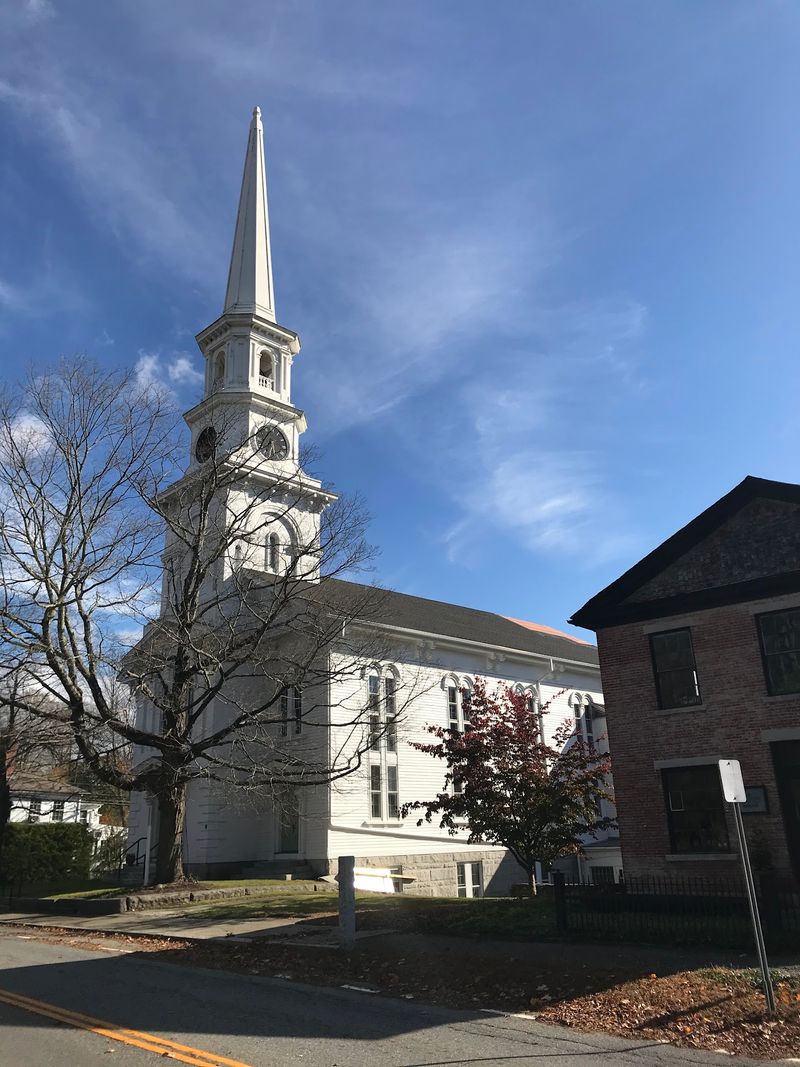
Stand in one spot in Thompson and you can technically be in three states at once. The Tri-State Marker, a granite post reached by trail, marks where Connecticut, Massachusetts, and Rhode Island meet.
Thompson belongs to the Quiet Corner, a name locals proudly use for the rural northeast part of the state. Its residents skew older, with a median age above 50, and younger adults often move away for work.
Recent estimates, though, show the town’s population inching upward.
Summer life often centers on Quaddick State Park at 811 Quaddick Town Farm Road, Thompson, CT 06277. The lake there is popular for swimming, boating, and fishing, and the park is usually open daily from 8 a.m. to sunset.
In winter, the same trails work for snowshoeing and cross-country skiing.
Walkers and bikers can follow the Air Line State Park Trail, a long rail trail with several entry points. West Thompson Lake offers camping and kayaking.
Thompson also has a need for speed. Thompson Speedway Motorsports Park opened in 1940 and still hosts racing from spring into fall.
For a slower pace, the Ellen Larned Museum on Thompson Hill tells the story of the town’s ten villages. Community Day each October brings food trucks and a car show.
8. Plainfield
Four villages, four post offices, and one town name. Plainfield is made up of Plainfield Village, Moosup, Wauregan, and Central Village, and each has its own fire department and personality.
First incorporated in 1699 under the name Quinebaug, Plainfield grew around textile mills along its rivers. When those mills closed, many workers moved on.
Today the population sits around 15,000, and recent estimates suggest slow growth, with a younger median age than many nearby towns.
Summer evenings here often end at Hank’s Dairy Bar, 1006 Norwich Rd, Plainfield, CT 06354. It has served fried seafood, lobster rolls, burgers, and ice cream since 1957, with outdoor picnic tables and a relaxed family feel.
It runs seasonally, so check before you go.
If you like exploring on foot or by bike, the Moosup Valley State Park Trail stretches 5.8 miles through woods and wetlands along the Moosup River. Horseback riders use it too.
Pachaug State Forest, the largest in the state system, is close by for longer hikes.
The Wauregan Historic District is listed on the National Register of Historic Places. Walk past its old mill, boarding houses, and company store to see what a 1800s mill village looked like.
Local farms add berry picking in season.
9. Sprague
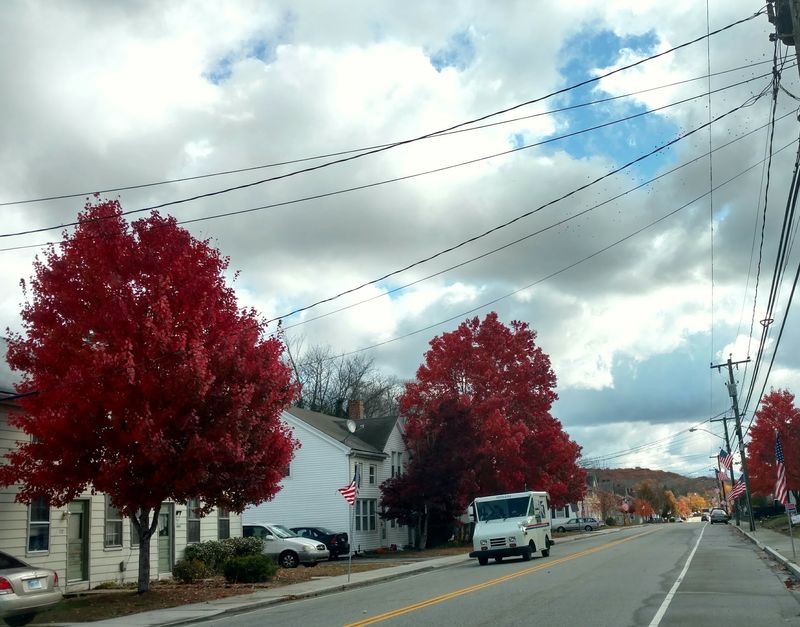
Water shapes life here. The Shetucket River cuts through Sprague, giving this small eastern town a peaceful backdrop for paddling, fishing, and afternoons outdoors.
Sprague is made up of three villages, Baltic, Hanover, and Versailles, each adding its own identity to the community. With roughly 3,000 residents, the population has changed only modestly in recent years.
The town’s mill history remains especially visible around Baltic, where historic buildings recall its industrial past.
Outdoor recreation takes center stage at Salt Rock State Campground. Campers get more than a mile of river frontage, while fishing and paddling make it easy to spend much of the day near the water.
The campground also offers RV sites with water, electric, and sewer hookups, an unusual amenity within the state park system.
More exploring waits at the Sprague Land Preserve. Marked routes include River Ridge Trail and Waterfall Trail, where hikers can head toward Little Muk Falls and wander through woodland scenery that remains inviting beyond fall.
Salt Rock State Campground can be accessed at 173 Scotland Road, Baltic, CT 06330.
History adds another layer. The Baltic Historic District appears on the National Register of Historic Places, while the town library occupies a former grist mill.
Sprague may be small, but river scenery, trails, camping, and old mill character give visitors plenty to explore.