Deep In Southwest Florida, A Utopian Settlement Glows Among Giant Bamboo
I pulled off the highway for a quick leg stretch and somehow lost an entire afternoon. Florida has a riverside state park where century-old workshops, a strange belief about the shape of the planet, and towering bamboo groves all share the same shady acres.
From the road it looks like any other patch of pines and parking spaces. Pack sturdy shoes, bring water, and give yourself more time than you think you need.
A Quiet Gate Off Corkscrew Road
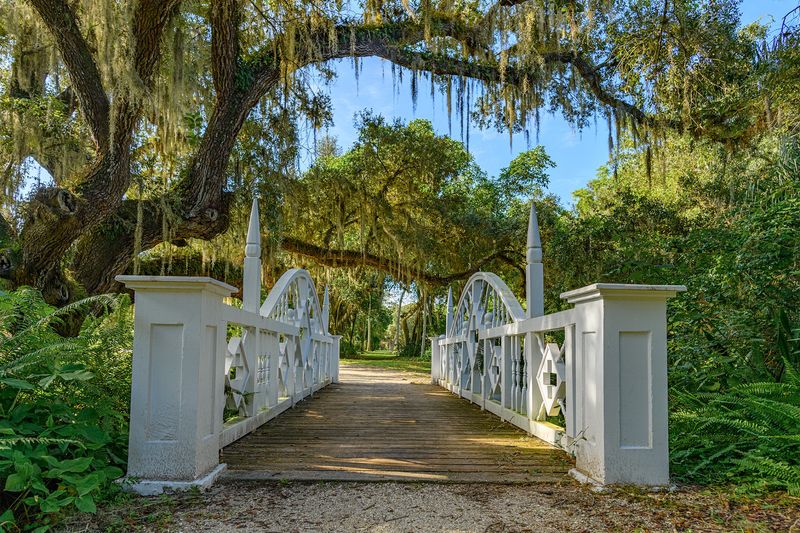
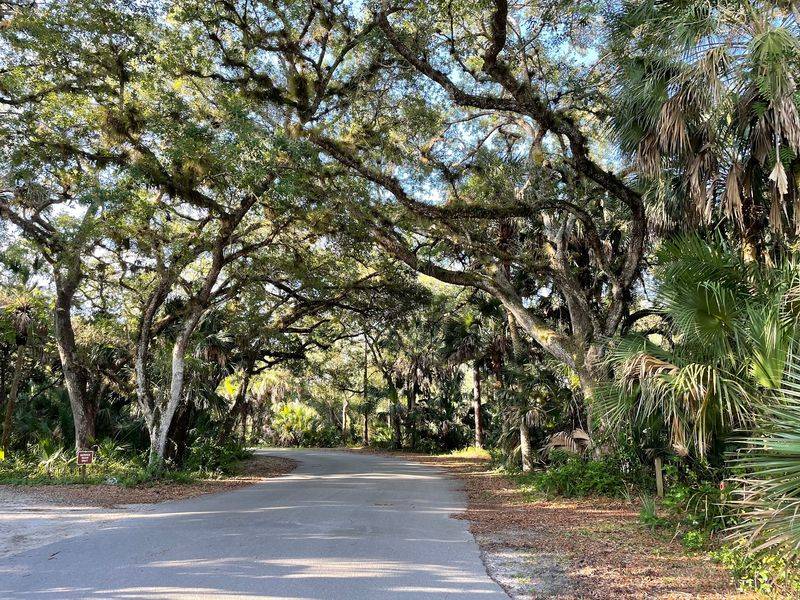
Nothing about the entrance hints at what waits inside. A modest sign, a ranger booth, a parking area ringed by pines and palmettos, and that is about it.
Then a ranger leans out with a smile, hands over a map, and starts listing everything ahead: old homes, workshops, river paths, a campground, a boat ramp. The staff here greets people warmly and has a way of turning a casual stop into a planned outing.
Within minutes, my five-minute detour had become a two-hour walking route sketched in pen.
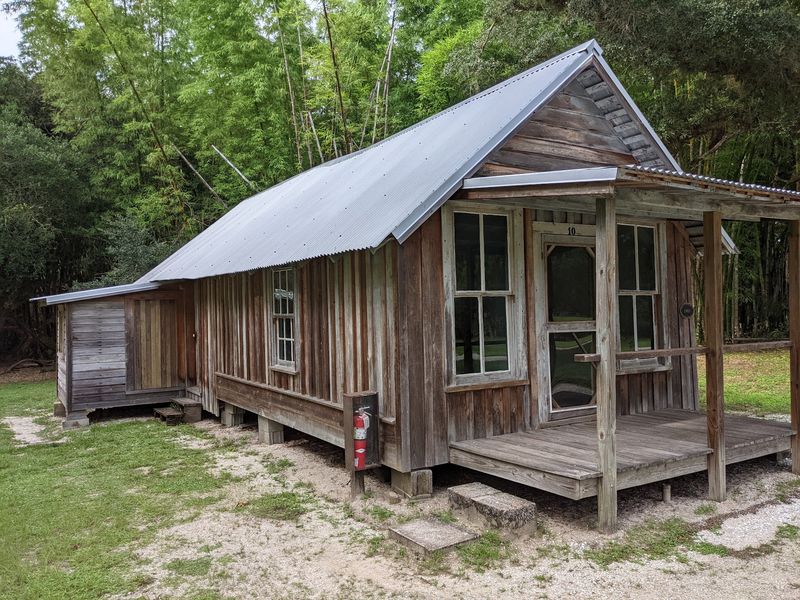
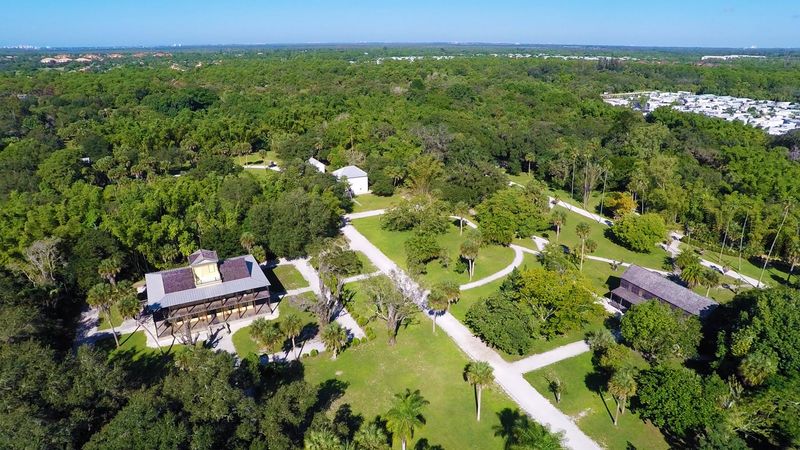
Picture the setup as a long, leafy campus. Shell and sand paths connect clusters of wooden buildings, each one fronted by signs explaining what happened inside.
Plants along the way carry labels too, so even a short stroll becomes a small botany lesson about palms, fruit trees, and ornamentals planted generations ago.
Estero sits along I-75 between Fort Myers and Naples, which makes the park an easy hop for anyone already rolling through Southwest Florida. It works as a planned day trip or as a spontaneous break while running errands nearby.
The official name is Koreshan State Park, found at 3800 Corkscrew Road, Estero, Florida 33928.
Believers Who Thought We Lived Inside the Earth
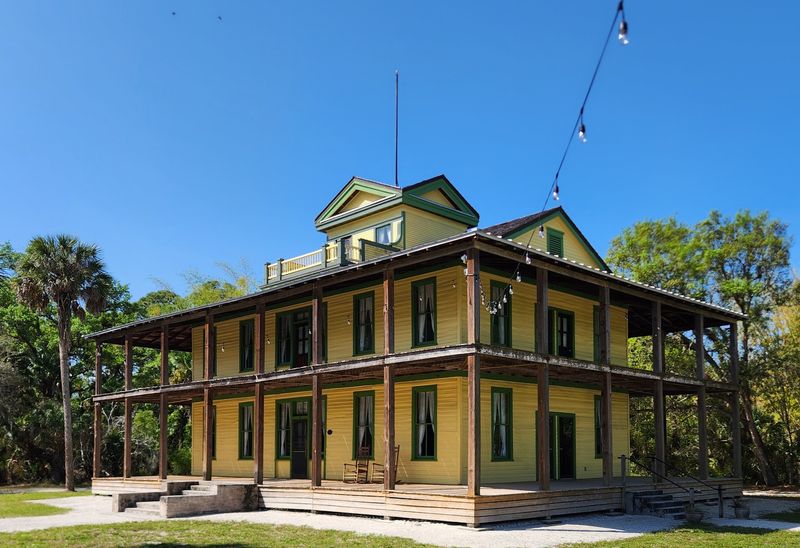
Imagine moving to the Florida frontier in the late 1800s because you believed humanity lived on the inside surface of a hollow planet. That was the core idea of the Koreshan Unity, the religious community that settled these grounds along the Estero River.
Odd cosmology aside, the group held views that were ahead of their era. Women stood as equals to men within the community, and the settlement became a safe haven for them at a time when that kind of equality was rare.
Members were remarkably self-sufficient, running their own shops, kitchens, and gardens far from any big city.
Their story is told plainly on the grounds, through signs, displays, and an informational video. Some of the beliefs may prompt questions from kids, so parents of younger children might want to preview the material and frame it in their own words before the visit.
History buffs get the richest reward. The community planted an impressive range of trees and flowering species, and much of that greenery still thrives today, which means the landscape itself is a living artifact.
Walking through it, the line between nature trail and museum blurs in the nicest way.
Machine Shops, a Bakery, and a Blacksmith’s Forge
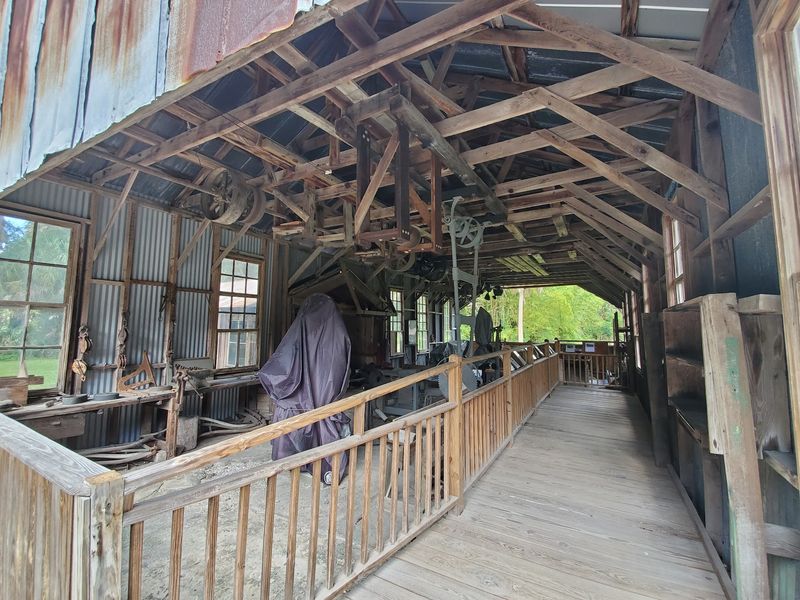
Grease-darkened gears, long leather belts, rows of iron tools hung neatly on the wall. The machine shop feels as if the workers just stepped out for lunch.
Several preserved buildings stand open for wandering, while others can be viewed through large glass panels that let you peer into rooms without disturbing the contents. Inside, displays show the everyday objects of a simple, working life from the early 1900s: kitchen gear, furniture, hand tools, and the kind of sturdy equipment a remote community needed to keep running.
A bakery building hints at how the group fed itself. Nearby, a blacksmith setup shows where metal was shaped into hinges, hardware, and repairs.
Each structure comes with signage, so the picture builds as you move from one door to the next.
Here’s a tactic that helps: walk the whole loop once at an easy pace, then circle back to the two or three buildings that grabbed you most. The settlement is spread out, and a first pass gives you a sense of scale before you start reading every panel.
Guided tours of the old homes are offered for those who prefer a narrator, and they add context that a sign alone cannot.
Volunteers, Videos, and the Art Hall
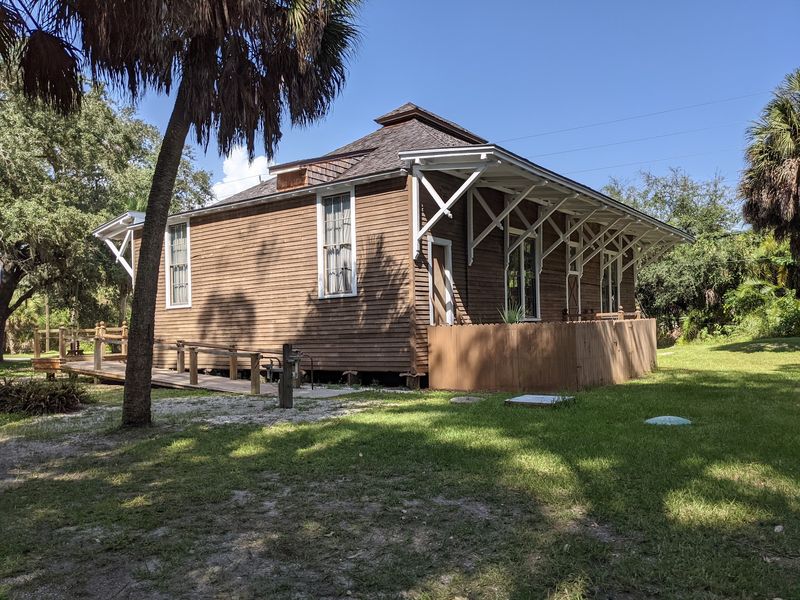
Long before reaching the river, I found myself standing in the Art Hall listening to a volunteer who clearly knew every corner of the place. She had been sharing these stories for years, and her answers came quickly and with good humor.
That human element shapes much of the experience. Rangers and volunteers move around the historic district ready to explain who lived where, what a strange machine did, or why a certain tree was planted.
Questions are welcome, and the knowledge on offer goes well beyond what fits on a placard.
Over at the founder’s house, a short video plays inside and fills in the backstory clearly. It makes a smart early stop, since everything you see afterward suddenly has a name and a purpose attached to it.
Did you know the community staged performances and gatherings in the Art Hall? The building still carries that sense of an audience waiting for the next act, with its wide room and old furnishings.
Check the park calendar before heading out. Special programs and events pop up through the year, and timing a trip around one turns a self-guided wander into something closer to a living history day.
Bamboo Tunnels Along Florida’s Estero River
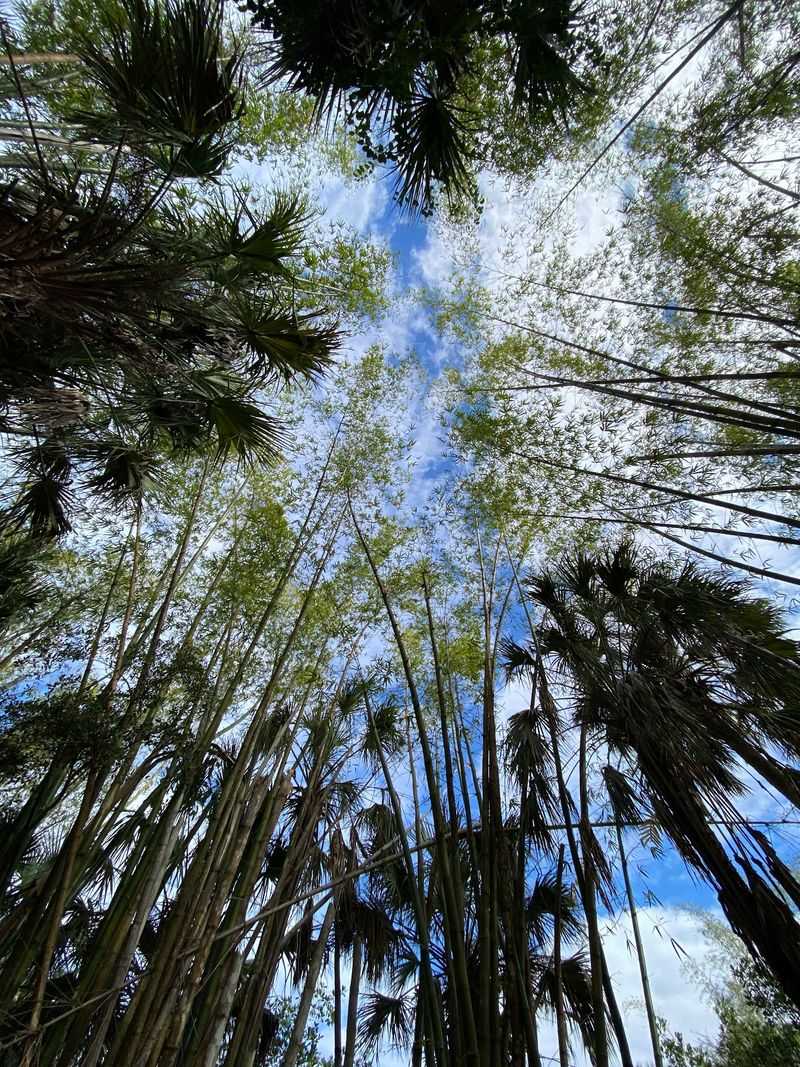
A breeze rolls through and the bamboo starts to creak and whisper overhead. Stalks rise far above your head, arching into a green ceiling that filters the Florida sun into soft, shifting patches.
The River Trail is the showpiece. It follows the Estero River, passing through dense bamboo groves, crossing little bridges, and offering benches where you can sit and watch kayakers glide past below.
Shade covers much of the route, which makes it friendlier on warm days, and pets on a leash are welcome to come along.
So how tough is it? The path is mostly flat, yet some stretches of the river trail and the blue trail are uneven, with loose sugar sand that tugs at every step.
Sturdy shoes beat flip-flops by a wide margin, and a full water bottle is a smart companion.
Cyclists can roll along parts of the grounds as well, though sandy patches reward patience.
Foggy mornings lend the groves an almost dreamlike mood. Midday brings brighter light for photos, when the green of the stalks practically glows against the darker water.
Either way, plan to stop often, because every bend seems to offer a new frame.
Paddles on Calm Water
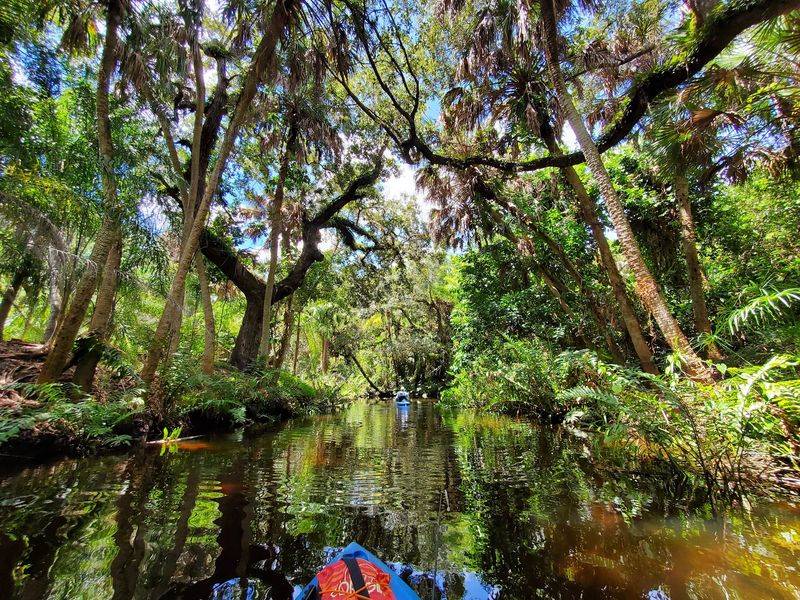
Kayaking ranks among the most popular ways to see this park, and for good reason. The Estero River moves slowly here, wrapped in greenery, with a lagoon area where paddlers drift at an unhurried pace.
Kayak rentals are available on site, so there is no need to strap a boat to the car. Those who bring their own gear will find a boat ramp and a dedicated kayak launch, making it simple to slip onto the water and head downstream.
Seen from the river, the place feels completely different. The bamboo groves that tower over walkers become a wall of green along the bank, and the historic grounds fade behind a curtain of leaves.
Birds and other wildlife sometimes appear along the edges, adding a little suspense to every quiet stretch.
Fishing is also part of the mix for anyone who prefers a line to a paddle.
A practical note for Southwest Florida’s warmer months: afternoon thunderstorms can build fast, and hurricane season runs from June through November. Check conditions with the park before driving out, start early, and bring sunscreen, a hat, and plenty of water.
Calm water rewards an early start.
Tortoises, Campfires, and Saturday Night Music
Spotting a gopher tortoise feels like winning a tiny lottery. These slow, armored residents shuffle across sandy patches, along with armadillos and an assortment of beetles, though cool, foggy mornings tend to keep them tucked into their burrows.
Patience helps. Walk slowly, scan the edges of the trail, and keep voices low, and the odds improve.
The campground turns a day trip into a getaway. Sites come with picnic tables and fire rings, and there is a good amount of privacy between them.
A playground keeps younger campers busy, and the boat ramp and kayak launch sit close by. Renovations have closed the campground at times, so confirm availability before booking anything.
Evenings bring their own charm. Small concerts take place on certain Saturday nights, a relaxed way to end a long day of walking and paddling.
The grounds even host the occasional small wedding, which says plenty about how lovely the setting is.
Families, history lovers, quiet walkers, and campers all fit here comfortably. The overall mood stays peaceful and well kept, with a steady trickle of people that makes the grounds feel safe without ever feeling crowded.
Planning the Visit
Cost barely registers. Entry runs a few dollars per vehicle, with a small hourly parking option in some areas, which makes this one of the easiest budget outings in the region.
Fees may be waived on certain holidays, so check the park’s official page before you go.
Hours can shift, so confirm before driving out. Morning is the sweet spot, with cooler air, softer light, and quieter paths.
Plan on roughly two to three hours to see the historic district and walk a trail or two, longer if paddling is on the agenda.
Restrooms are on site. A small gift shop sells T-shirts and souvenirs at fair prices, a handy stop for a keepsake.
Picnic areas make it easy to bring lunch and linger under the trees.
Getting here is straightforward. The park sits just off I-75 in Estero, a short drive from Fort Myers and Naples, and an easy add-on to a Gulf Coast weekend.
Here’s my honest take: come for the bamboo, stay for the strange and fascinating history, and leave planning a return trip with a kayak. Few spots in Florida pack this much story into one shady stretch of riverbank.