Dim Sum Carts Still Roll From Table To Table At This Florida Restaurant
Some of the best meals in Florida sit behind plain glass doors in shopping plazas you would drive past without a second look. I walked into one of them expecting a paper menu and a carton of fried rice, and walked out with a table covered in bamboo steamers and a check that felt like a clerical error in my favor.
Trays of dumplings still come around the dining room here, offered table to table the old way, hot from a kitchen that never seems to slow down. Bring people, come hungry, and plan on ordering more than you think you can finish.
A Storefront on Southwest 40th Street
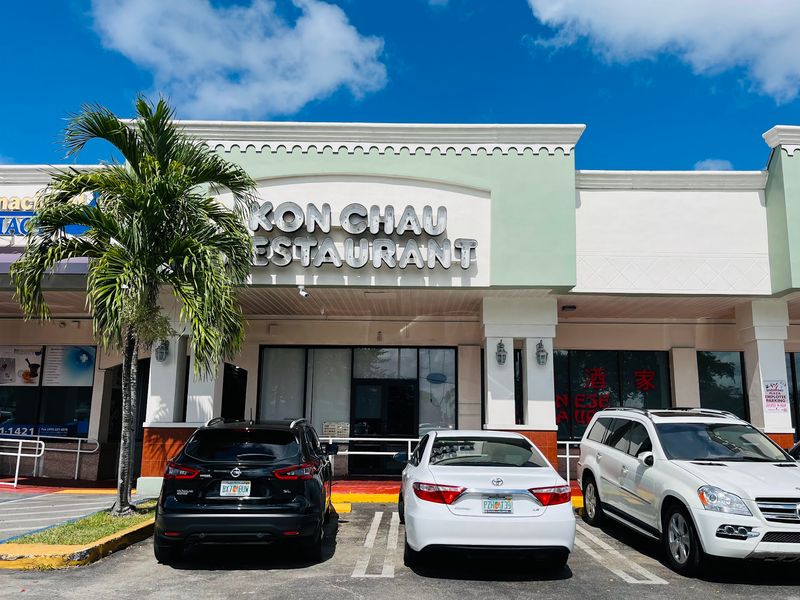
Pull into the plaza on Southwest 40th Street and the storefront tells you close to nothing. Glass doors, a plain sign, a sidewalk shared with a few neighboring shops.
Kon Chau Chinese Restaurant sits in that lineup, and nothing outside hints at the stacks of bamboo steamers waiting past the entrance. The kitchen turns out Cantonese specialties alongside the wok classics most of us grew up ordering, with a dim sum list long enough to keep one table busy for an hour.
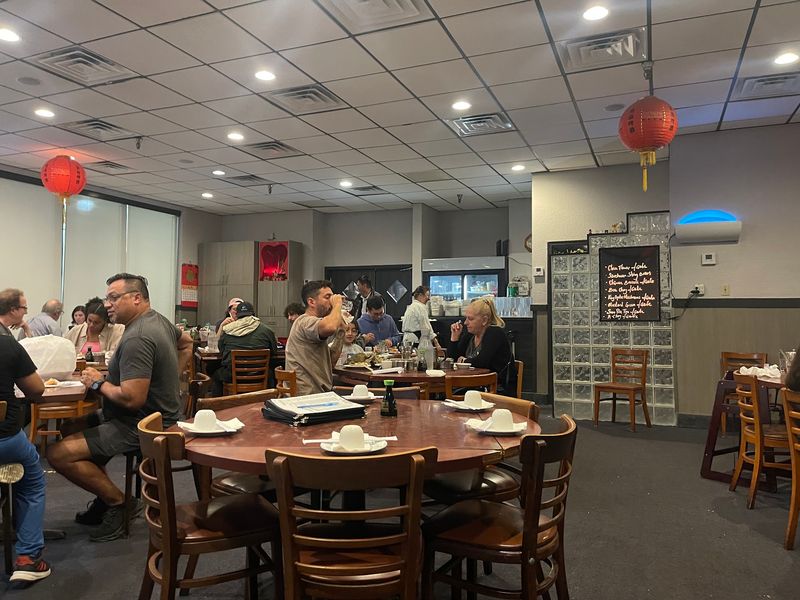
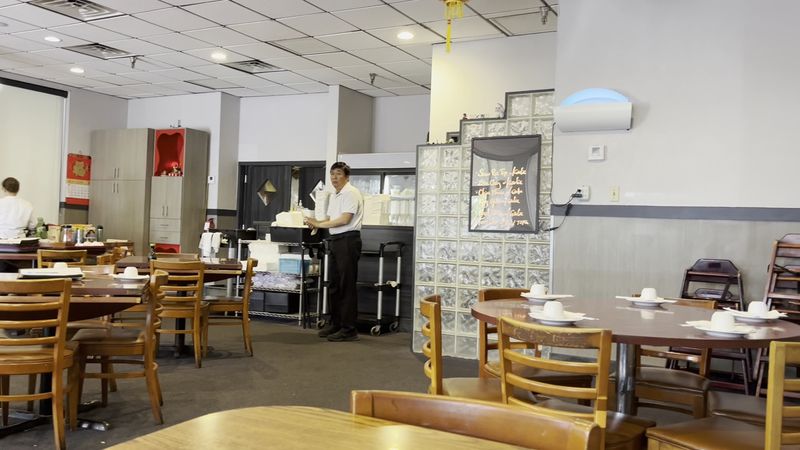
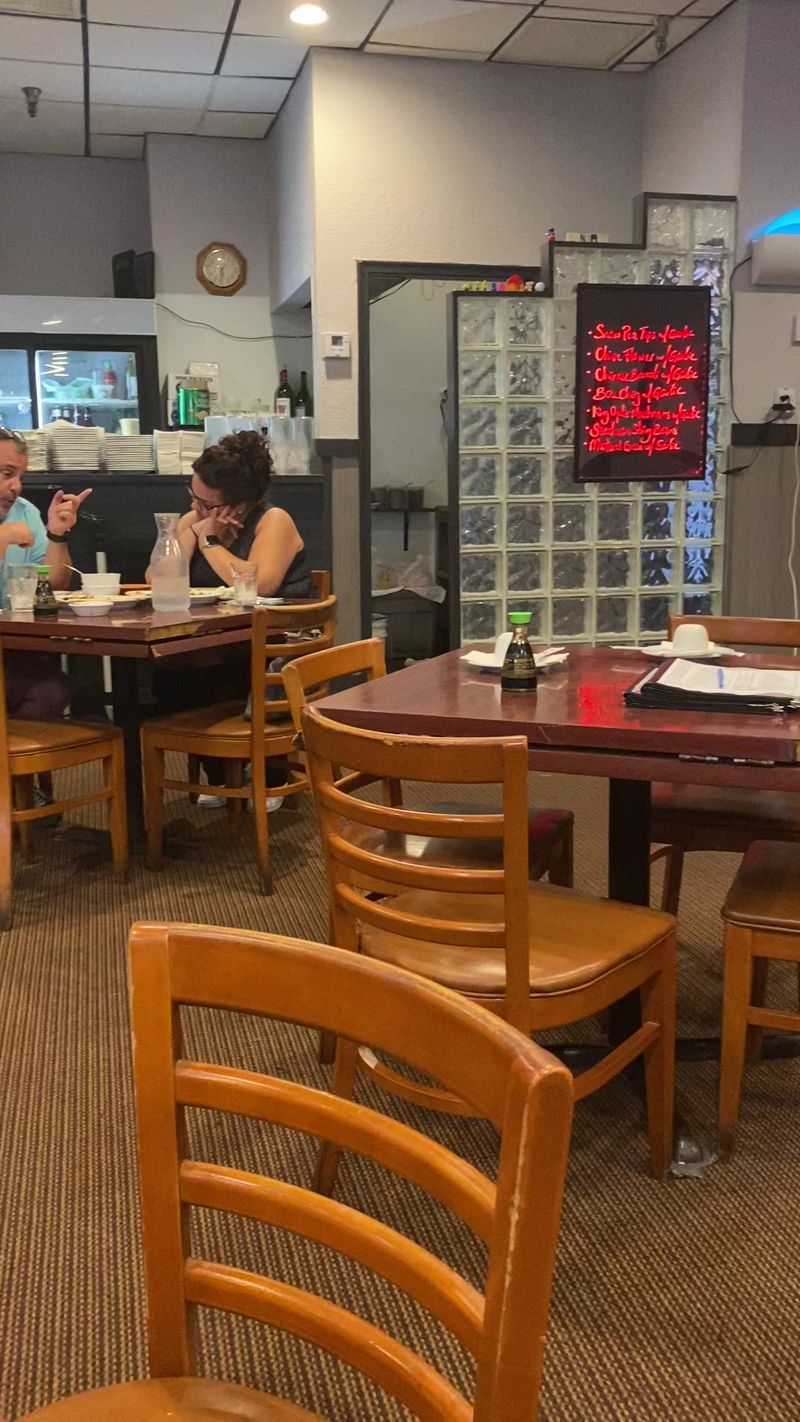
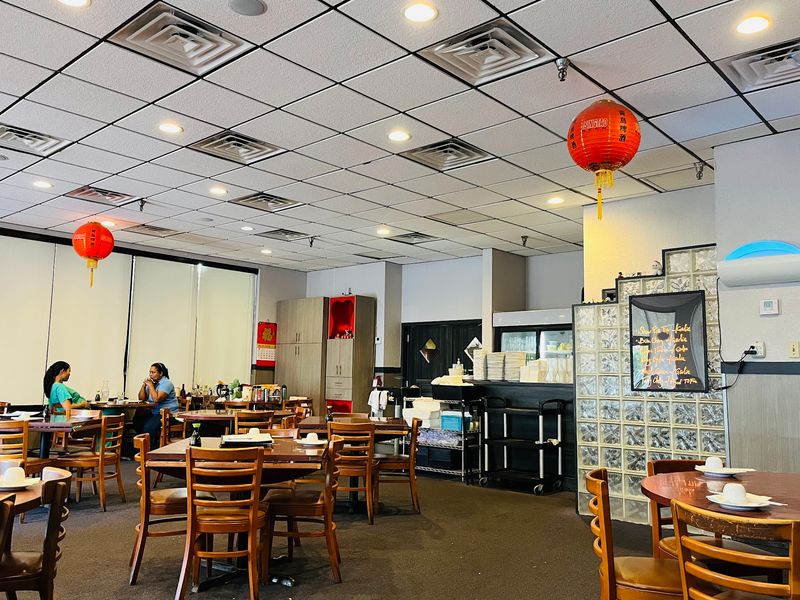
Inside, the room is built for function rather than polish. Wood tables, wood chairs, carpet underfoot, and a counter near the front where takeout bags pile up through the afternoon.
Parking is easy, which in this stretch of Miami-Dade counts for plenty. The lot wraps the building, so even during a rush there is usually a space a short walk from the door.
Portions arrive generous and the check stays modest, a pairing that explains the steady flow of people in and out all day. Traffic through those doors rarely stops for long.
You will find it at 8376 SW 40th Street in Miami, Florida.
Trays That Come Around the Room
Most dim sum in Florida now works off a printed checklist and a golf pencil. The older rhythm survives here, with someone moving through the room carrying what just came out of the kitchen while you point at whatever looks good.
Food reaches the table minutes after it was folded and steamed, which is the entire argument for this style of service. It also means you should keep one eye on the aisle.
If a tray of chow mein noodles or fresh rice rolls passes two tables over and never swings your way, speak up. Staff will bring it over without fuss, but they do not always circle back on their own.
Ordering in waves beats ordering everything at once. Three or four small plates, a pause, then three or four more keeps the table hot instead of crowded with cooling baskets.
Servers give good suggestions when asked, and they are patient with anyone working through the list for the first time. Pointing at a neighboring table and asking what that thing is remains an acceptable strategy in any language.
The whole system rewards attention more than planning.
What Arrives in the Bamboo Steamers
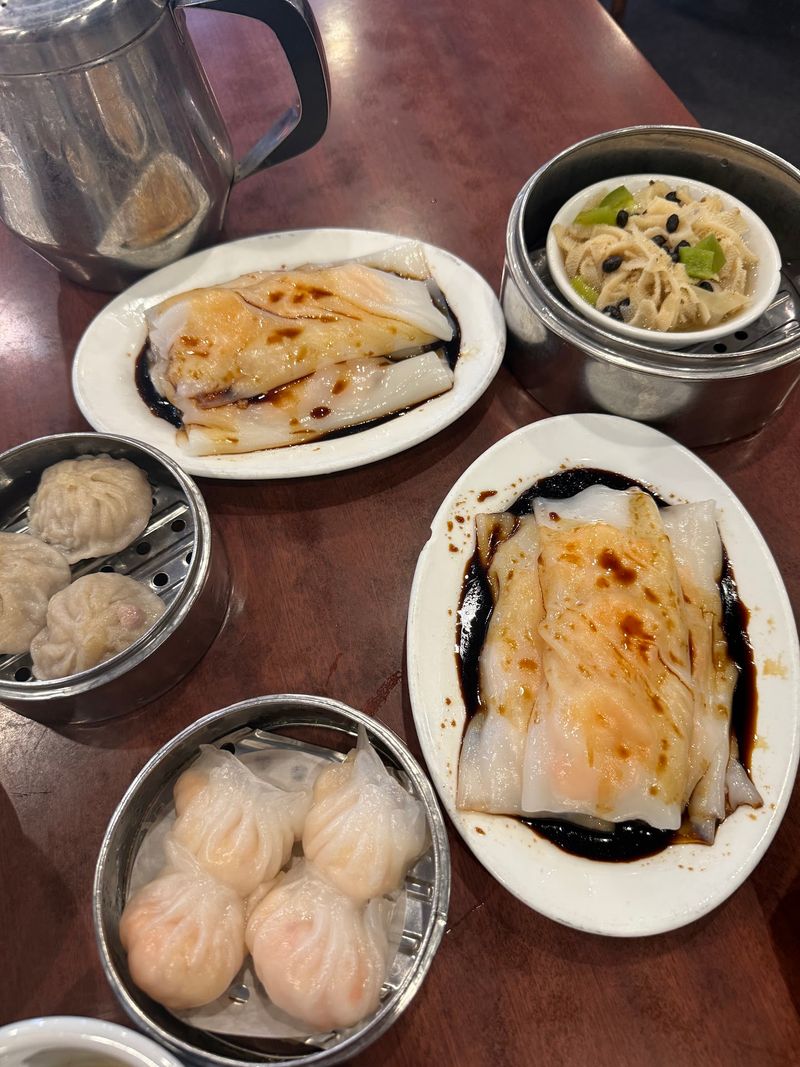
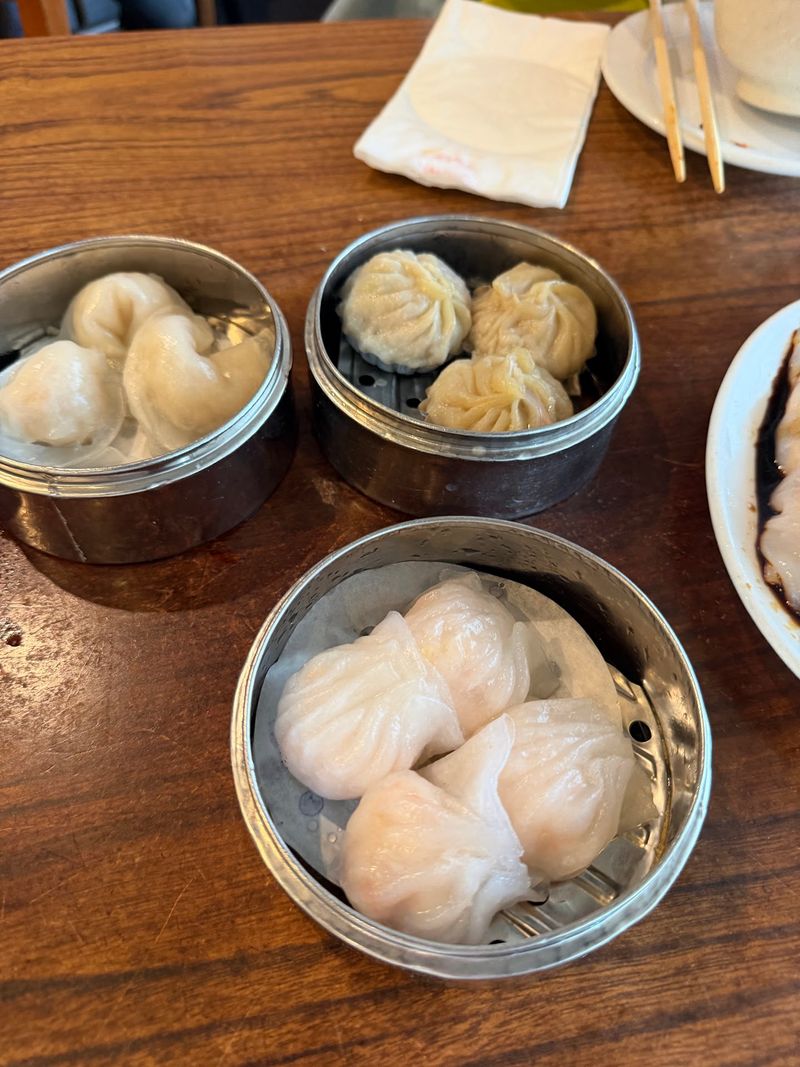
Lift the lid on a steamer basket and the first thing that hits you is the steam, then the shine on a row of shrimp dumplings with wrappers thin enough to show the pink filling through the pleats.
Those har gow anchor the steamed side of the list. Pork and shrimp shumai sit beside them, along with scallop dumplings, green tea duck dumplings, and shrimp rice rolls that come out soft, chewy, and slicked with soy.
Chicken feet appear for anyone who grew up with them, and sticky rice steamed in lotus leaf arrives as a single generous parcel rather than the usual pair. Stuffed green peppers and stuffed bean curd round out the savory steamed selections, and a Chinese sausage steamed bun makes a fine detour.
Each small plate holds two or three pieces, which suits a party of two neatly. Four people should double up on anything they want more than one bite of, or the math turns into a negotiation.
Everything is handmade in-house, and it shows in the irregular pleats. Perfect folds are a machine thing.
These are not.
The Fried Side of the Order
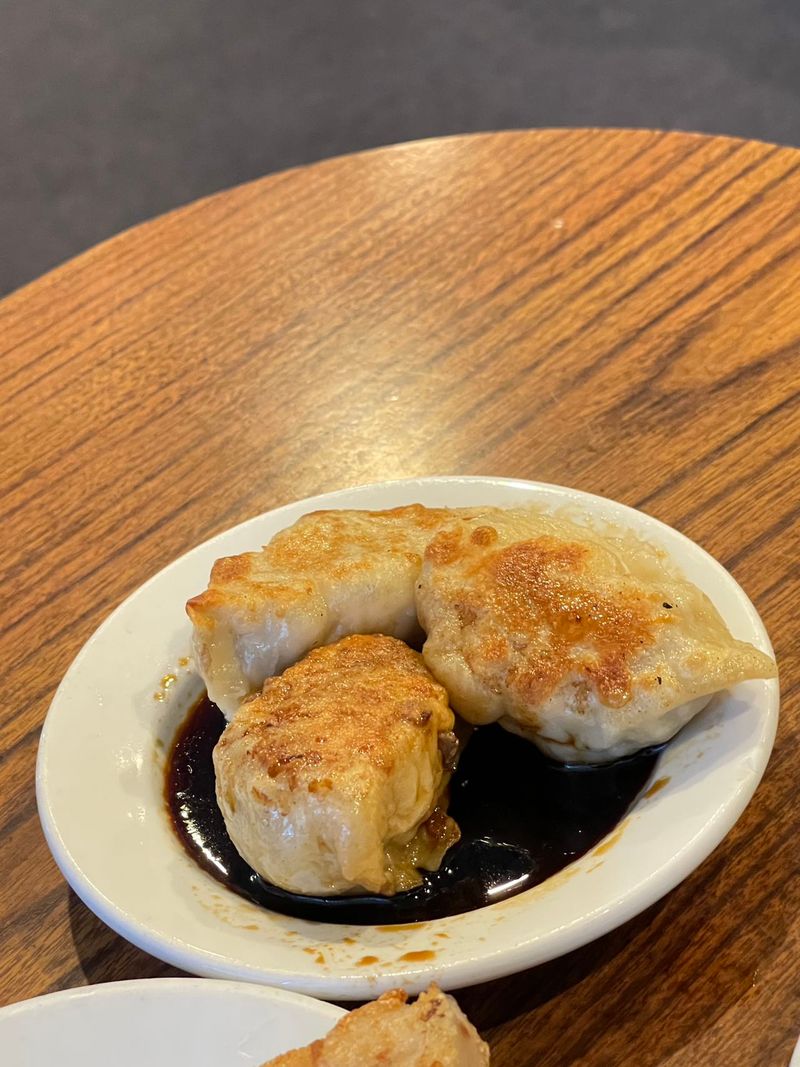
Crunch matters, and the fryer side of the menu knows it. Fried shrimp taro cake leads the pack, crisp at the edges and creamy in the middle, the kind of thing people order twice in one sitting without apology.
Turnip cake gets it right too, with enough real daikon in the mix that it never turns into a doughy brick. Pan-fried pork dumplings come out with lacquered bottoms and soft tops, and they hold their heat well.
Fried shrimp balls rolled in sesame disappear fast when kids are at the table. Crab rangoon and spring rolls sit on the list for anyone who wants familiar territory, and both are cooked properly rather than treated as filler.
Nothing arrives swimming in grease, which is not a small compliment for a menu this fry-heavy. The oil stays hot and the plates stay dry.
My advice: order one fried item for every two steamed ones. The contrast keeps the meal moving, and a table of nothing but crisp things gets heavy around basket number five.
Save the taro cake for the middle of the meal, not the end.
Soup Dumplings, Handled Carefully
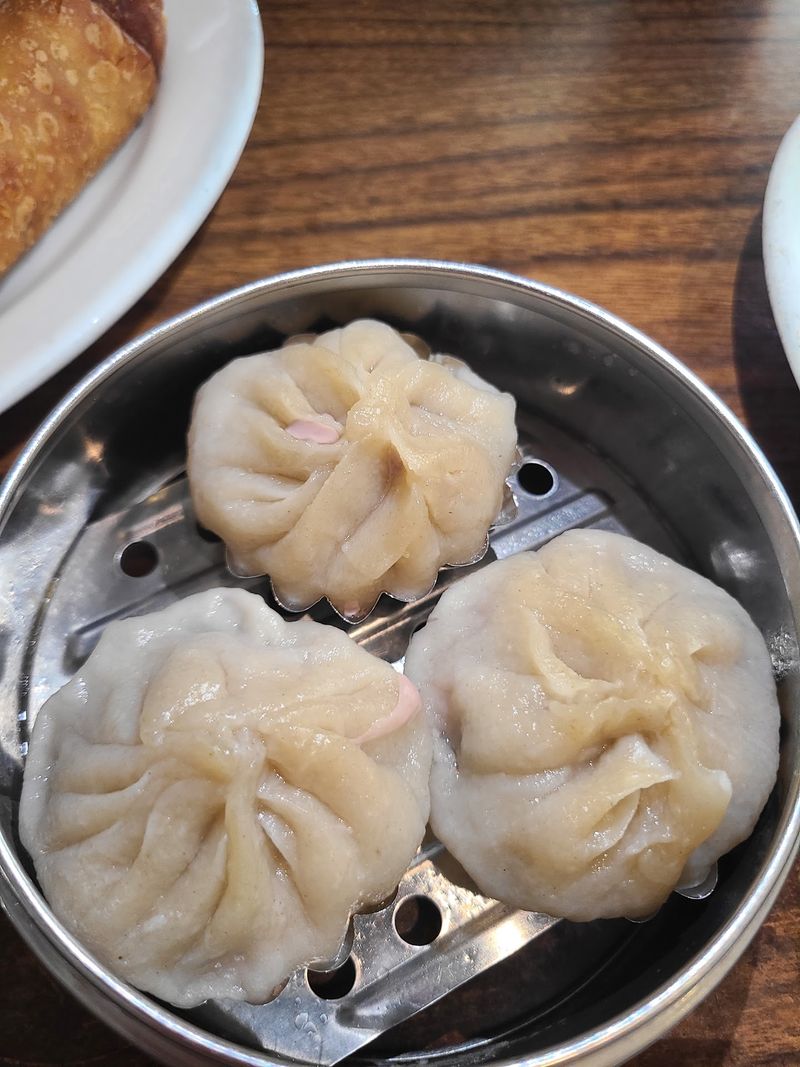
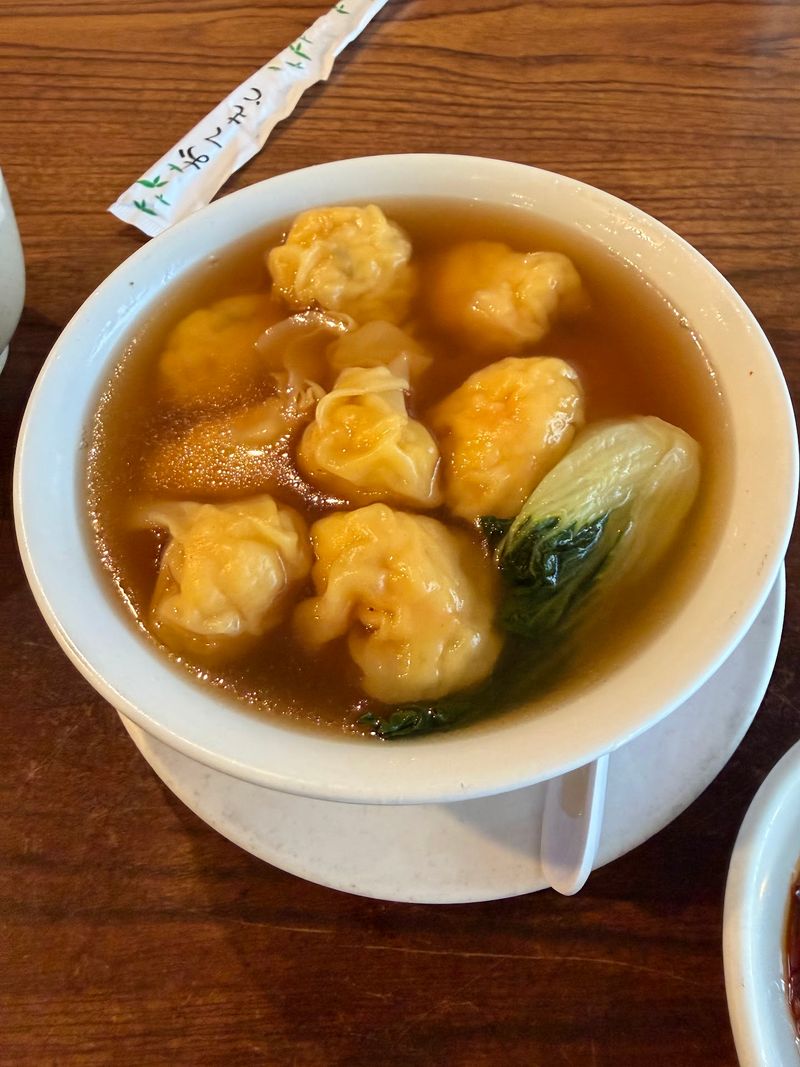
Ask around about what to order and the soup dumplings come up constantly. They are among the most requested items in the building, and the kitchen turns them out in both chicken and Shanghai styles.
The wrappers are pleated by hand and hold a real pour of broth inside. That broth is the whole point, and it is also the hazard.
Here is the technique. Lift one into a soup spoon rather than straight to your mouth, nibble a small opening in the side, let the steam escape for a few seconds, then sip before eating the rest.
Skip that pause and you will spend the next minute regretting the shortcut. I have made that error more than once and learned nothing until the third time.
They travel poorly, so these belong to the dine-in column. Order them early in the meal while everyone is still paying attention, because a cold soup dumpling is a sad object.
Pair them with something sharp and simple, like a plate of greens or a rice roll, so the richness has somewhere to land between bites.
Roast Duck and the Full-Size Plates
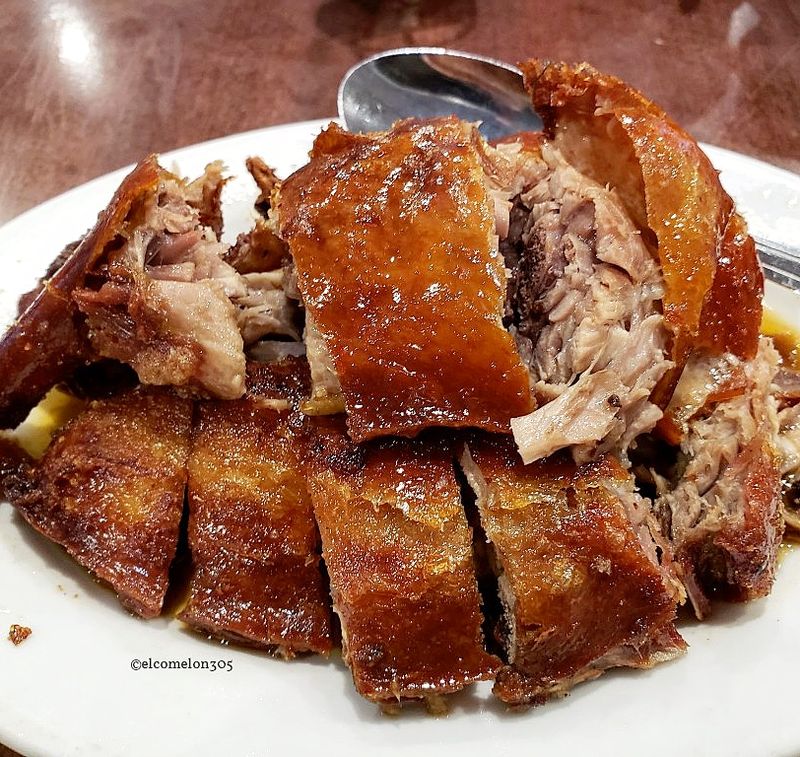
Anyone who treats the small plates as the entire menu is leaving the best part unexplored. The full-size dishes coming out of that wok carry real smoke, the kind of char that separates a working kitchen from a reheating station.
Roast duck arrives with burnished skin and a salty edge that plays well against plain rice. Mongolian beef and jalapeno beef both land with serious flavor, and Hunan chicken, honey garlic chicken, and general chicken cover the sweeter, spicier corners.
Pineapple fried rice is a standout, and the special lo mein comes loaded with pork, chicken, and shrimp in a portion built for sharing. Salt and pepper shrimp, barbecue ribs, eggplant with shrimp, and the vegetable delight fill out the rest.
Egg fried rice tastes properly of the wok rather than of oil. Even after a heavy order, the food does not sit like a brick.
Build your table around one or two large dishes and let the steamer baskets orbit them. That balance turns a snack into a proper meal, and it usually sends a box of leftovers home with somebody.
Custard Buns and the Sweet Finish
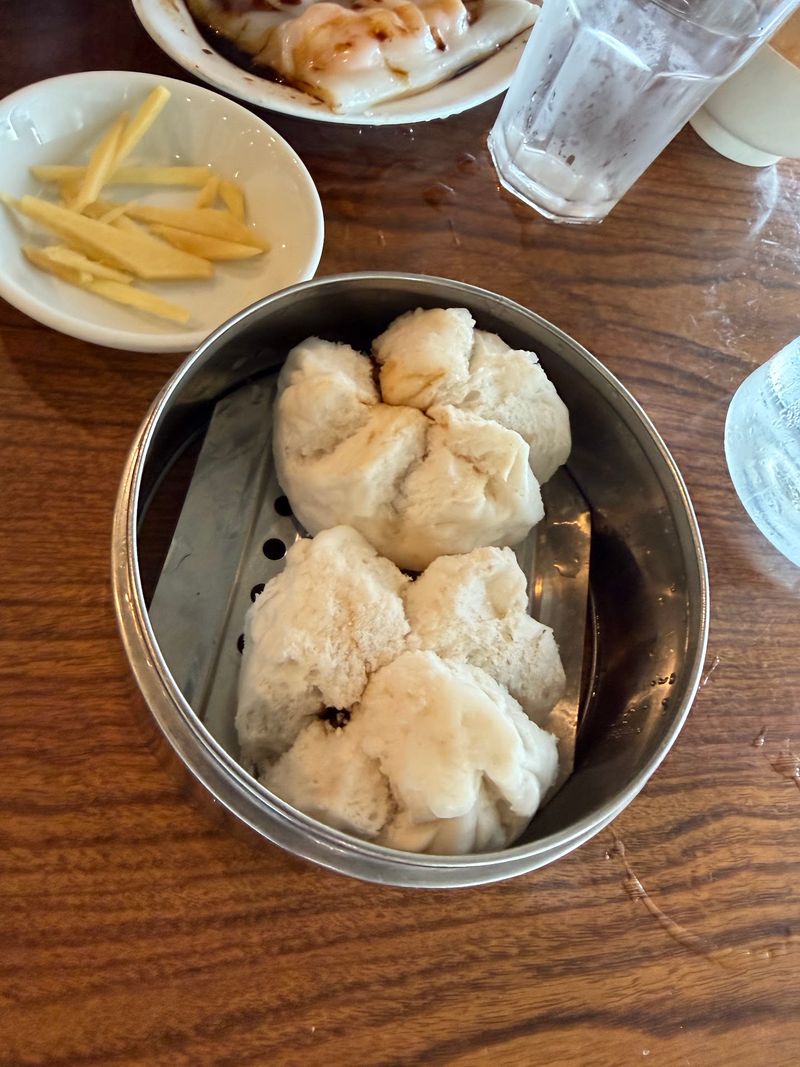
Dessert here is not an afterthought stapled onto the end of the meal. Tear open a warm egg custard bun and the filling slumps out, sweet and molten, somewhere between pudding and liquid sugar.
Order those even if the table swears everyone is finished. They change minds quickly.
Egg tarts come in the large format rather than the little all-crust versions, which means the custard actually gets room to be the star. It is set, wobbly, and not cloying.
Sesame balls hold up their end too, chewy inside and rolled thick with toasted seeds. Baked roast pork buns straddle the line between savory and sweet if you want one last bite that is not pure sugar.
Timing helps. Put in the sweet order before the last savory plates clear, because these come from the steamer and the oven rather than a case, and the wait is shorter when the kitchen is already moving.
A fresh pot of tea alongside makes the finish feel deliberate instead of accidental. That ten-minute stretch at the end of a dim sum meal is the best part of the whole afternoon.
Hot Tea From the Moment You Sit
Sit down and tea shows up before you have opened the menu, along with water. Nobody asks whether you want it, which is the correct way to run a dim sum room.
The house tea is good, floral and clean, and it keeps coming as long as the pot lid signals for a refill. Between fried taro cake and a plate of duck, that cup does more work than you would expect.
Tea also sets the pace of the meal. It slows a table down just enough that the food arriving in waves feels like a rhythm instead of a race.
Big groups end up going through several pots across a long lunch, and the refills never turn into a production. Staff move fast and notice empty cups.
One practical note: the tea is hot, the cups are small, and toddlers reach. Slide the pot toward the center of the table early.
Drinks beyond tea and water are not the reason anyone comes through the door. The pot in the middle of the table is the beverage program, and it is enough.
A Room Without Any Pretense
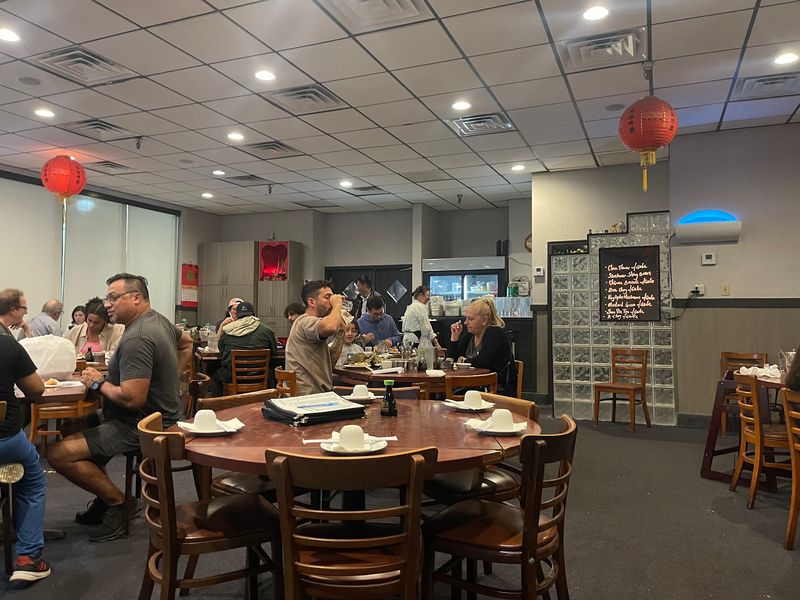
Decor was clearly never the priority. Wood tables, wood chairs, carpet that has seen a couple of decades of service, and lighting chosen for visibility rather than mood.
The room smells clean and the tables get wiped between parties, which matters more than whatever design trend is happening elsewhere in Miami. Nothing about the space is trying to impress anybody.
What gives the place its character is the staff. The cashier jokes with regulars while ringing up takeout, the owner circulates through the dining room, and the whole operation runs with the easy shorthand of a family business that has been doing this for years.
Service can be direct and quick, occasionally brusque during a rush, and always efficient. Plates hit the table fast enough that you sometimes wonder how the kitchen keeps pace.
Tables sit close together, so a full room gets loud in the best way, all clattering porcelain and overlapping conversation.
If you want tablecloths and a curated playlist, there are plenty of other options. What you get here instead is food that tastes like someone’s grandmother is in the back checking the folds.
Big Groups, Big Portions, Leftovers Guaranteed
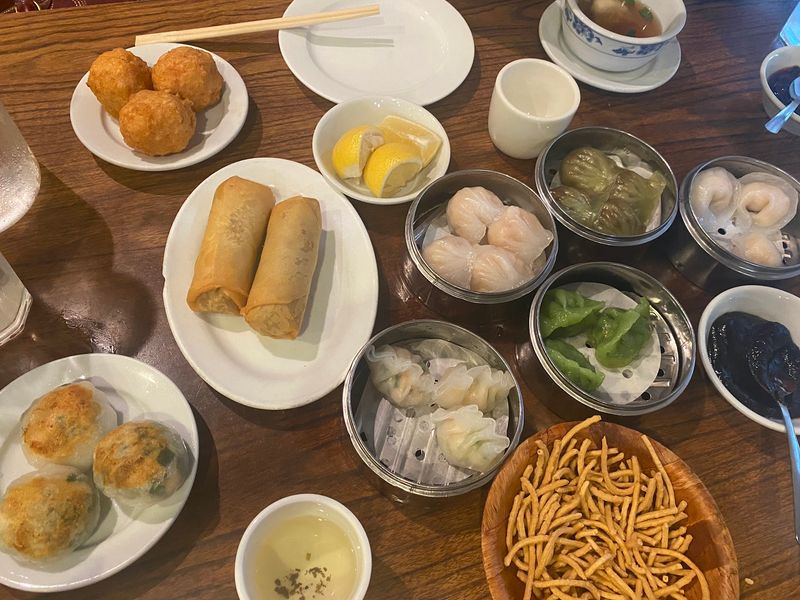
Three people can order what looks like a reasonable spread and walk out with enough boxes to feed two more the next day. Portion sizes run large across the full-size dishes, and the small plates add up faster than anyone expects.
That makes a group of four to six the sweet spot. More people means more of the menu gets sampled, and the per-person cost stays reasonable even with a long list of baskets.
Solo diners do fine too. Two or three steamers and a pot of tea is a complete lunch, and the counter service handles takeout without any drama.
Kids take to the fried shrimp balls and the custard buns immediately, and the casual setup means nobody minds a noisy table. The dining room is level and easy to navigate, with plenty of parking right outside.
Weekend afternoons fill the place completely, and a short wait for a table is normal at peak hours. Weekday lunch runs calmer if you would rather not stand around.
Come hungry, order in rounds, and accept that the leftovers are part of the deal.
The Florida Plaza It Calls Home
Shopping centers across Florida hide their better tenants behind identical facades, and this one is no exception. The restaurant shares its plaza with the Blue Elephant and Pinecrest Bakery, which makes the after-meal coffee run about thirty steps long.
Parking is the quiet advantage. The lot is large, turnover is quick, and you are not circling a block hunting for a meter the way you would closer to the city center.
The neighborhood sits in the Olympia Heights and Pinecrest corridor, an ordinary stretch of Southwest 40th Street lined with small businesses rather than destinations. Tropical Chinese sits across the road, and plenty of people who found one door locked ended up discovering the other.
None of the surroundings do the restaurant any favors visually. There is no patio, no view, no signage designed by anyone in particular.
What the location does offer is convenience. You can pick up pastries next door, run an errand in the same lot, and still be sitting in front of a steamer basket ten minutes after parking.
Plain settings sometimes protect the good stuff. This is one of those cases.
Timing Your Visit and Settling the Check
One scheduling detail saves a wasted drive: the doors stay closed on Tuesdays. Every other day the kitchen runs from late morning straight through the evening, so a mid-afternoon visit lands between the rushes.
Weekend lunch is the busiest window, and a brief wait for a table is normal then. Arrive before noon or after two if standing around is not your idea of a good time.
Prices sit in modest neighborhood territory, with the little plates running a few dollars each and the large dishes costing about what you would expect from a family-run kitchen. A full table of food for a group still adds up quickly, simply because it is easy to keep ordering.
A service charge is added automatically to the bill, so read the total before adding anything on top. Splitting one check across several cards goes smoother if you mention it when ordering rather than at the register.
Takeout is a real option here, though the steamed items are best eaten within arm’s reach of the kitchen.
Come with cash or card, either works, and come with an appetite.
Where Kon Chau Lands
Nobody is handing this place an award for interior design, and that is fine. The carpet is old, the chairs are plain, and the sign outside could belong to a dry cleaner.
What the kitchen does is harder than decorating. Handmade dumplings, wok dishes with genuine smoke, roast duck with crackling skin, and custard buns that come out warm enough to burn an impatient mouth.
Not every plate lands at the same height, and a busy room can mean service that moves faster than it charms. Order the dim sum and the wok dishes, and you are on the strongest ground the menu offers.
For a Florida city with plenty of Chinese restaurants, few still send the food around the dining room table by table. That alone gives the meal a shape you cannot get from an app.
Bring four people, order in rounds, save the egg custard bun for last, and leave room in the trunk for a box or two.
Plain plazas keep producing the meals people remember. Southwest 40th Street has one of them.