Drive Through This Nebraska Wildlife Park In Fall And You Might Hear Bull Elk Bugling
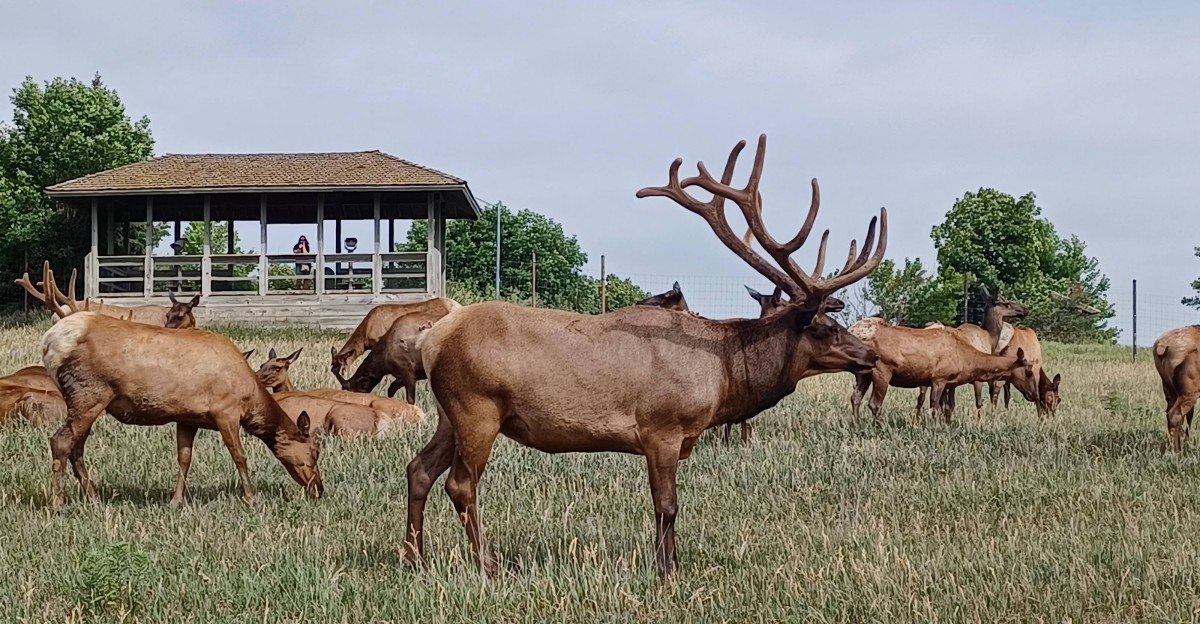
The first time you roll down the window on a cool October morning in eastern Nebraska and hear something that sounds like a whistle wrapped around a roar, you will probably hit the brakes. That sound belongs to a bull elk, and it carries for a startling distance across open prairie.
Most people assume you have to drive to Colorado or Wyoming for that, yet there is a 440-acre stretch of grassland and wetland less than an hour from Omaha where it happens every autumn. The road through it is only four miles long, but it may be the best four miles of driving in the state come fall.
A Four-Mile Road Through Prairie and Wetland
Gravel dust, tall bluestem leaning over a fence line, and a narrow paved lane that curls out of sight ahead. That is the opening view at Wildlife Safari Park, a 440-acre nature preserve in Saunders County where the road does the walking for you.
The full drive runs about four miles, and the posted crawl of 7 mph is not a suggestion so much as the whole point. At that speed, a bison standing twenty feet off the pavement becomes an event rather than a blur.
Habitats along the loop shift from dry upland prairie to wetland and back again, which is why the animal list runs so long. American elk, bison, white-tailed deer, pronghorn antelope, sandhill cranes, pelicans, prairie dogs, grey wolves, and black bears all live somewhere along the route or on the trails branching off it.
An hour covers the drive if you keep rolling. Stop at every overlook, stretch your legs, eat a sandwich at a picnic table, and two or three hours disappear without much effort.
Where It Sits and How the Park Came to Be
Southeast of Ashland, just off Interstate 80 at Exit 426, the land rises and falls in the low hills above the Platte valley. The address is 16406 292nd St, Ashland, NE 68003, which puts it roughly between Omaha and Lincoln and makes it one of the easier afternoon drives in the eastern half of the state.
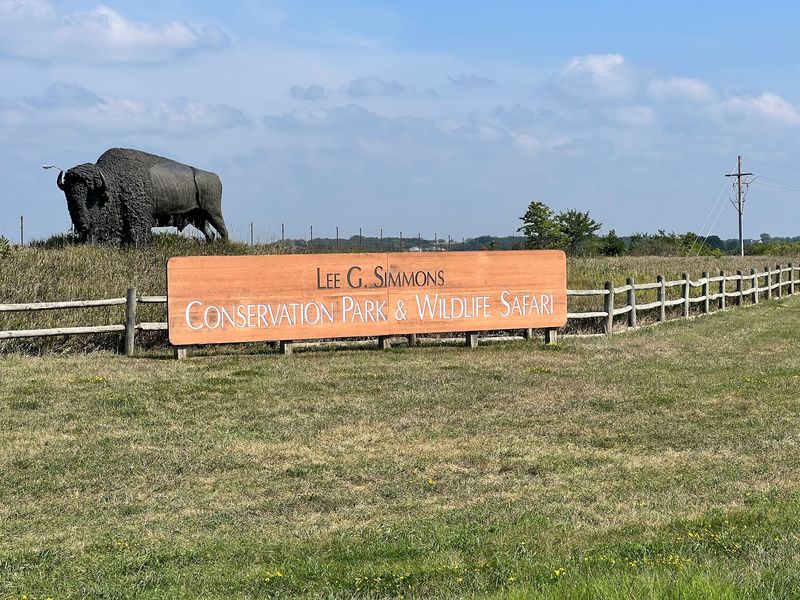
Officially it carries the name Lee G. Simmons Conservation Park and Wildlife Safari, and it operates as an affiliate of Omaha’s Henry Doorly Zoo and Aquarium.
The connection matters: a season pass here often comes as an add-on to a zoo membership.
The concept is different from a traditional zoo, though. Rather than moving people past enclosures, the park moves cars through large open ranges built to resemble the prairie and wetland that once covered this part of Nebraska.
Fences exist, and you can spot them if you look. From inside a vehicle with the windows down, surrounded by grass and birdsong, the interstate a few miles north stops registering entirely.
Elk Prairie and the Sound of the Rut
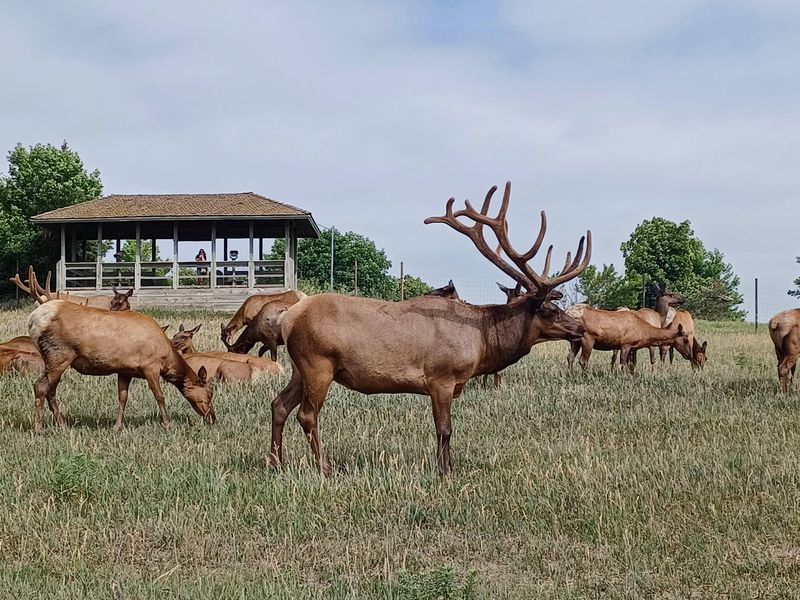
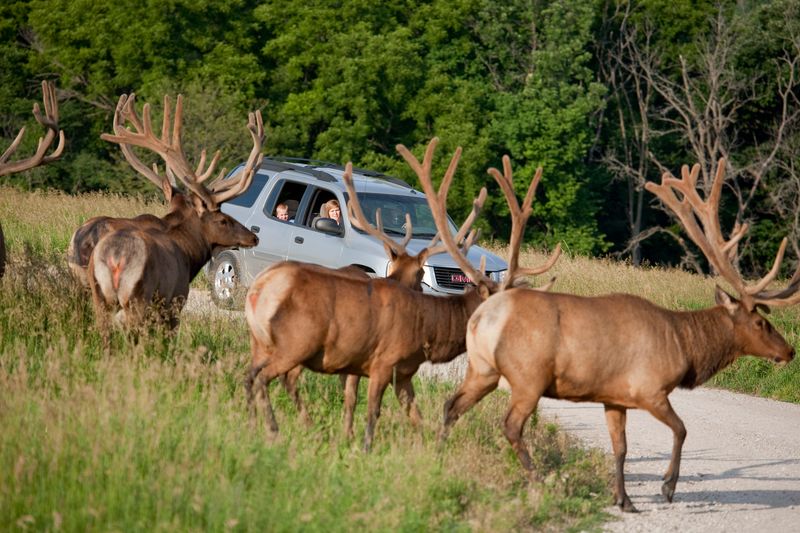
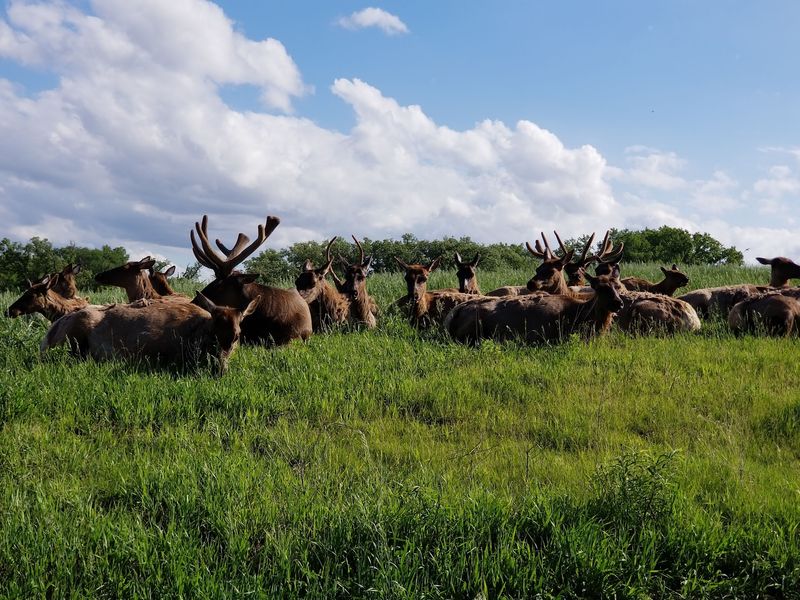
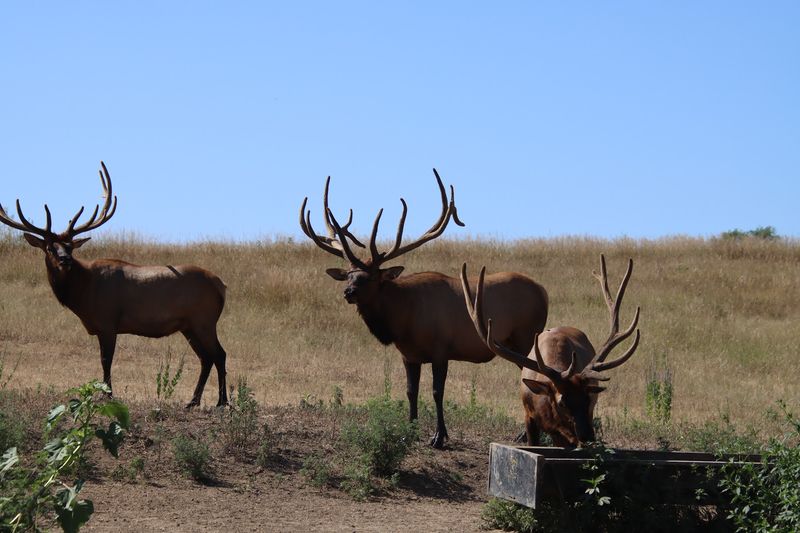
More than 69 American elk live on the section of the park called Elk Prairie, and in September and October the herd gets loud. Bull elk bugle to pull cows toward them and to warn rival bulls off, and the call itself is strange enough that first-timers often mistake it for something mechanical.
Picture a low roar that climbs into a thin, hanging whistle and then drops off into grunts. It travels for miles across open ground, which means you can hear a bull long before you spot the antlers.
Timing is everything with the rut. Elk turn most active and vocal in the twilight hours before sunrise and after sunset, and they will keep bugling through the night.
Since the park does not stay open into the dark, your best shot falls in the first hour after opening. Shut off the engine at the overlook, roll the window down, and wait quietly.
Bulls carry heavy antlers through fall and spar with each other, so the visual show can match the audio.
Bison That Walk Right Up to the Car
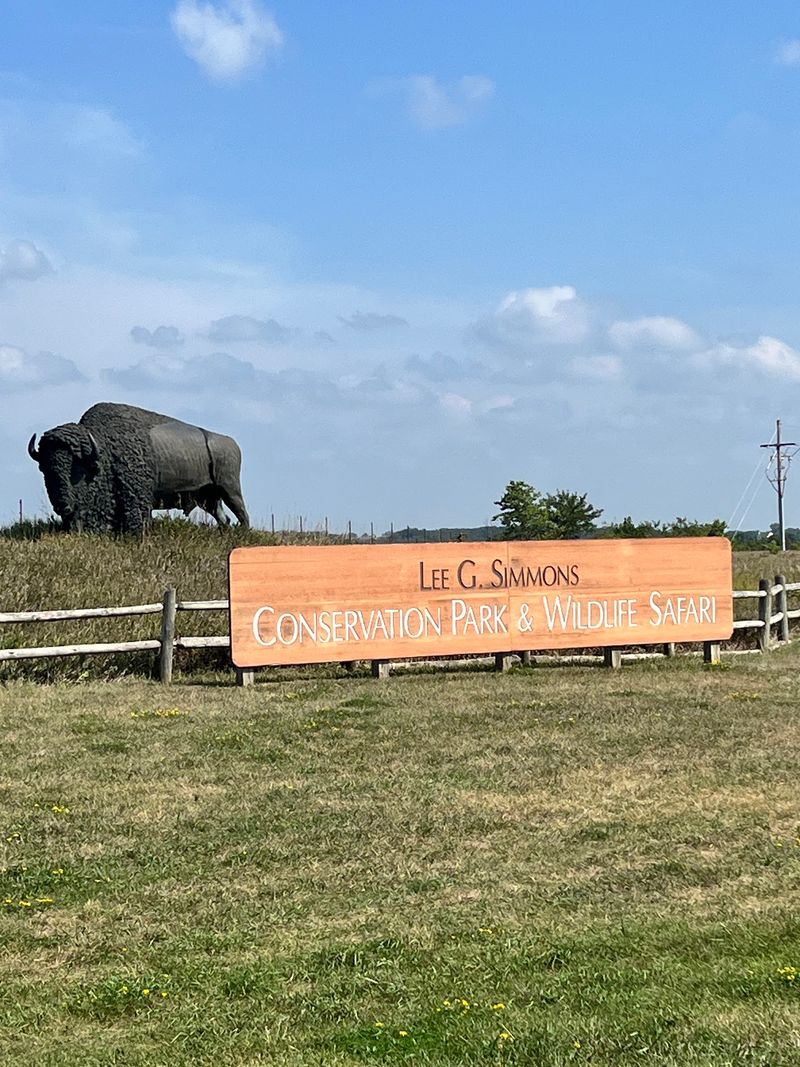
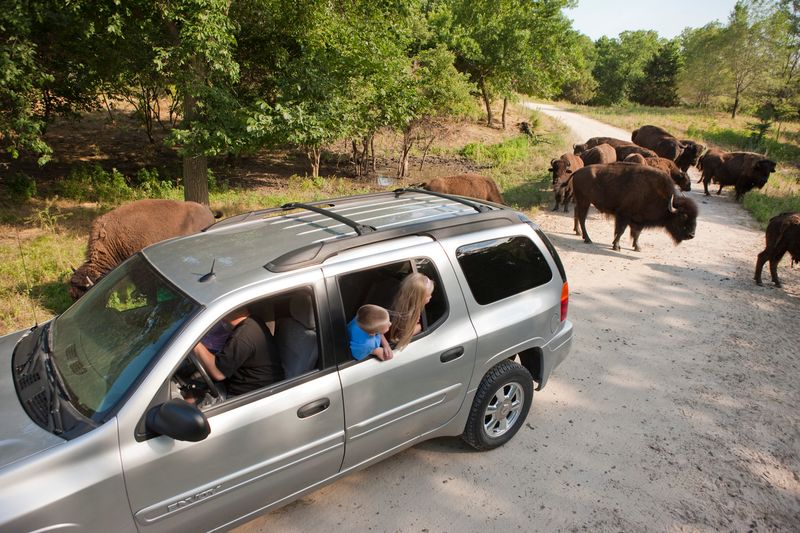
A bison the size of a refrigerator deciding to inspect your driver’s side mirror is a memorable few seconds. It happens here, and the herd has no particular respect for the pavement.
Bison come up in more visitor conversation than almost anything else at the park, and for good reason. They are enormous, unbothered, and often close enough that you can hear them breathing.
An observation deck overlooks the bison range for people who would rather watch from solid ground, and it sits next to one of the better play areas on the property. From there, a loop road carries you around the herd, and that stretch stays a windows-up, stay-in-the-vehicle affair.
Fall does the animals a favor visually. Their winter coats thicken up, the grass turns gold behind them, and the light in October flatters everything.
Patience pays off because bison sometimes bed down in tall grass well off the road. Give it a few minutes at the overlook rather than assuming the range is empty.
Wolf Canyon and the Hike to the Bears
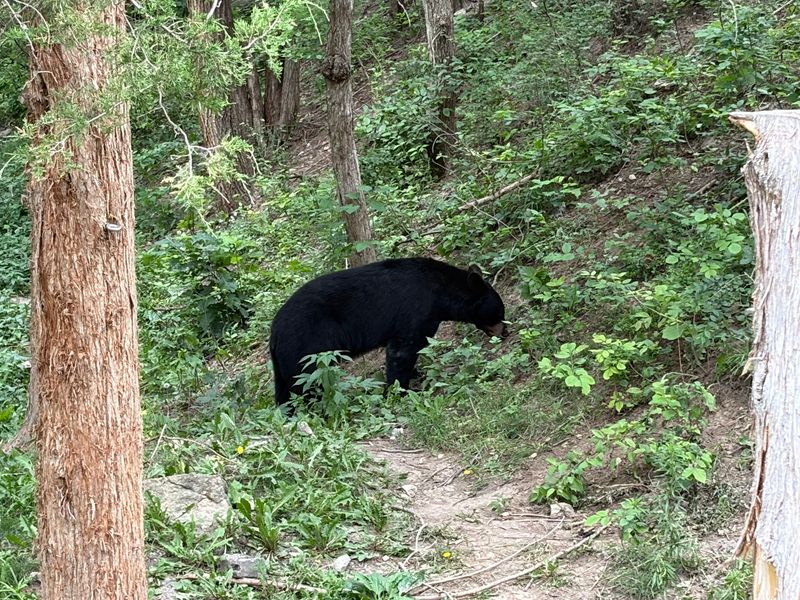
Some of the park’s best residents refuse to come to you. Grey wolves and black bears live along the walking trails rather than the drive, which means the only way to see them is on foot.
Wolf Canyon has an overlook built above the wolves’ wooded ravine, and the black bear area sits nearby on the same trail system. Roughly two miles of paths thread through this part of the property, some of it following streams and wetland edges.
Fair warning on the terrain: the trail climbs, and the stretch running behind the frog wetlands gets genuinely steep. Signs flag the grades ahead of time, and strollers make the effort noticeably harder.
Wolves are also the park’s great gamble. Some people walk the loop repeatedly over several summers without spotting one, then catch three in the open on an ordinary Tuesday.
Cooler autumn air improves the odds and makes the climb far more pleasant. Wolves move more freely when the temperature drops, and shorter shadows in fall open up sightlines through the trees.
Birds, an Eagle Aviary, and Cranes on the Water
Walking into a building and finding yourself on the same side of the wire as a bald eagle rearranges your sense of scale fast. The Eagle Aviary here is built to be entered, not peered into, and the birds perch close enough to read every feather.
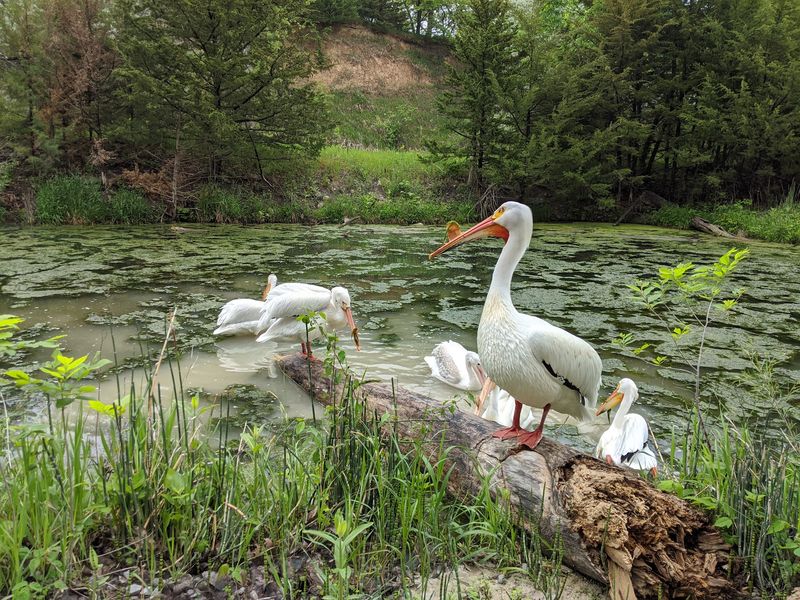
Sandhill cranes wade the wetland sections along the drive, along with pelicans, swans, and ducks. Cranes hold a special place in Nebraska because of the spring migration through the central Platte, so seeing them standing in shallow water here lands differently for anyone who has made that March pilgrimage to Kearney.
Owls and hawks occupy spots along the walking trails, tucked into shaded enclosures where you can watch without crowding them.
Bring binoculars and the bird portion of the visit stretches considerably. Telescopes stationed at certain overlooks help too, including one at Elk Overlook that pulls distant animals into focus.
Turtles, frogs, and prairie dogs round out the smaller attractions, and the prairie dog town tends to hold kids longer than anyone predicts.
Overlooks, Telescopes, and Places to Stretch
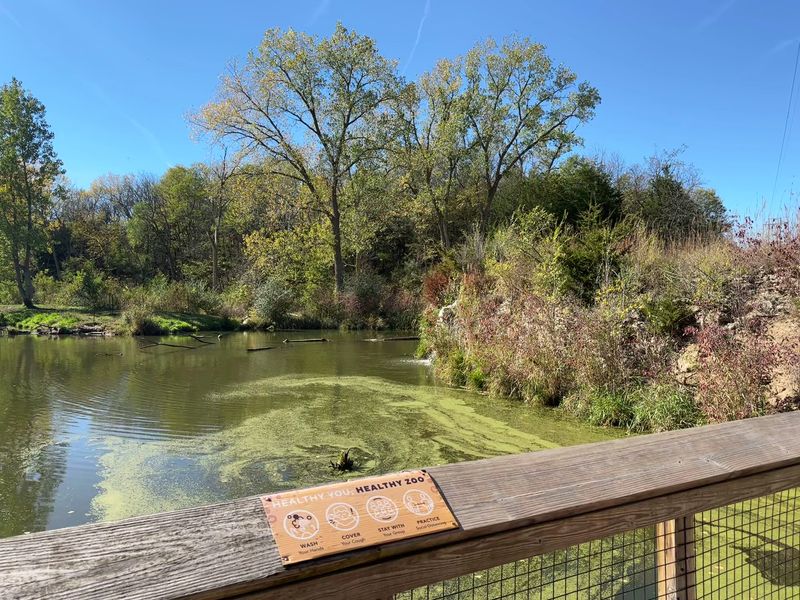
Pull-offs scattered along the four-mile route are what separate this from a plain scenic drive. Several are built as proper observation decks with mounted telescopes aimed at specific ranges.
Elk Overlook is the one to prioritize in fall, since the scope brings a bugling bull into view even when the herd stays well back in the grass. Wolf Canyon’s overlook serves the same purpose on the trail side of the park.
Restrooms sit at multiple points along the way, and they are clean, air-conditioned, and better finished than most people expect from a nature preserve. A changing table is available in the women’s restroom.
Picnic tables dot the grounds, which makes packing a cooler the smart move. Concessions operate near the entrance, but a thermos and sandwiches beat standing in line on a crisp morning.
Photographers get the most out of these stops. Long sightlines, open sky, and animals at middle distance add up to a landscape that rewards a zoom lens and a little patience at the railing.
Goats, Playgrounds, and the Kid Factor
Goats have zero interest in personal space, and the petting area near the visitor center takes full advantage of that. Rabbits share the space, and the whole setup runs at toddler height.
Play areas appear at a few points across the property. The standout sits beside the bison observation deck, a natural-style playground built with wood chips and a winding walkway that lets pent-up energy burn off halfway through the loop.
Younger kids treat the drive itself as a scavenger hunt. Watching for the next animal keeps attention up in a way that a straight highway stretch never manages, and the slow speed means nobody misses anything.
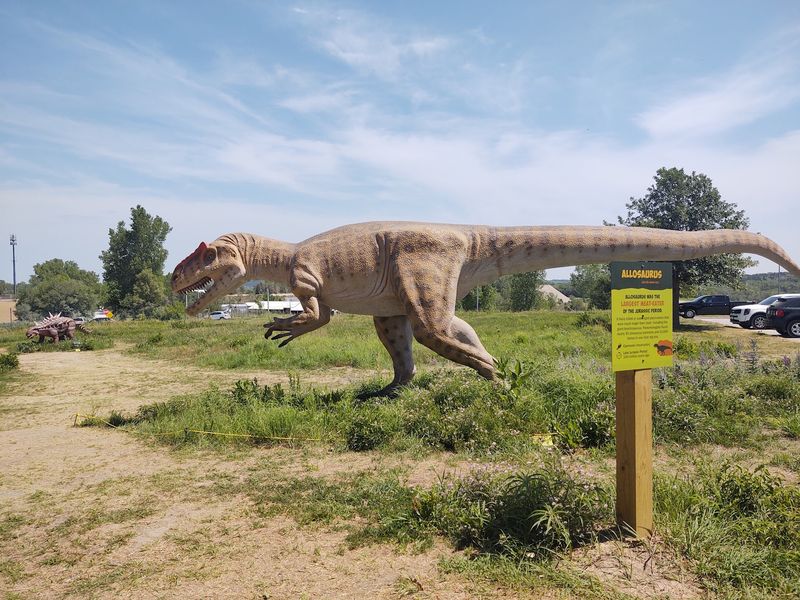
Seasonal exhibits rotate through the park and have included animatronic dinosaurs and oversized animatronic insects staged along the route. The dinosaurs tend to be the bigger hit with the six-and-under crowd.
Hand-washing stations sit near the petting area, though the restrooms are a reliable backup if one is out of service. Plan a stop there before the picnic table portion of the afternoon.
Autumn Light Across a Nebraska Grassland
Cottonwoods along the low wet ground turn yellow first, then the bluestem goes copper, and by mid-October the whole 440 acres reads in shades of gold and rust. The change is subtle compared to a hardwood forest, but on open grassland it spreads across every direction at once.
Cooler air makes animals bolder. Summer heat pushes elk, bison, and wolves into shade and tall grass where cars cannot see them, while a fifty-degree morning brings them out to graze in the open.
Wetland sections hold morning fog longer in fall, which does striking things to photographs of cranes standing in shallow water. Mosquito pressure drops off too, a real gift on the hiking trails.
September and October form the window that matters most. That is when the elk rut peaks, when the grass hits full color, and when the two-mile trail system becomes a pleasure rather than a sweat.
Layers are the right call. Wind moves freely across this landscape, and the temperature at the bison deck rarely matches the reading on your dashboard.
Who the Park Suits Best
Mobility is the quiet strength here. Because the bulk of the experience happens from a vehicle, people who struggle with long walks still see elk, bison, deer, pronghorn, cranes, and pelicans without leaving the seat.
Wheelchair users should know the split, though. Paved and packed areas work fine, but several trail sections run over rough terrain where standard chair tires bog down, and a power scooter handles those stretches better.
Grandparents with grandkids in the back seat get a lot of mileage out of this place. So do photographers, birders, and anyone who wants a quiet morning with the radio off.
Dog owners need to read the rules closely before loading up. Designated dog-friendly space is limited, and several parking areas are off-limits to pets regardless of size.
Anyone expecting a big-game park with hundreds of species will find the roster focused rather than sprawling. The draw is North American prairie wildlife living on North American prairie, with elk and bison carrying the show.
Fall visitors get one more thing: sound.
Planning the Drive Out From Omaha or Lincoln
Exit 426 off I-80 puts you within minutes of the gate, which makes this one of the simplest outings in eastern Nebraska to pull off on short notice. From either Omaha or Lincoln the drive runs well under an hour.
Season matters more than the clock. The park operates from April through October and closes to the public for the winter, so an autumn visit sits right at the back edge of the calendar.
Gates open in the morning and the park shuts in the late afternoon, though hours shift with the season. Check before you leave, especially late in October.
Admission is charged per person rather than per vehicle, a change from the older pricing, and it stays reasonable for a family outing. Zoo members can often add the park to an existing pass.
The visitor center holds a gift shop, concessions, a small education area, and a few animals on display near the entrance. Fill your water bottles there, then head for the road.
Restrooms and picnic tables are plentiful once you are inside.
Roll the Window Down Before the Season Ends
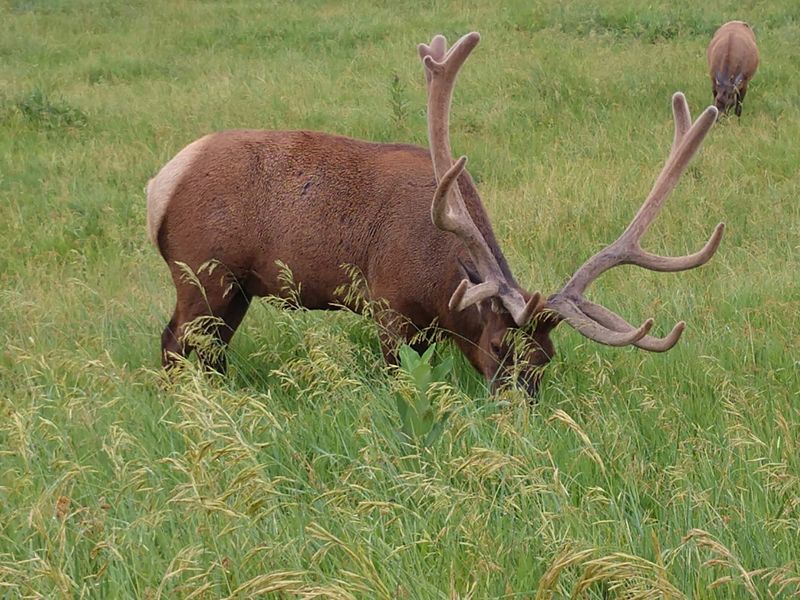
There are louder attractions within an hour of here and flashier ones too. Few of them let you sit in your own car, engine off, while a bull elk announces himself across half a mile of grass.
The four-mile loop delivers reliably: bison up close, deer and pronghorn in the open, cranes on the water, and a wolf sighting when luck cooperates. Add the two miles of trail, the eagle aviary, and a picnic table in October sun, and an afternoon fills itself.
Expect an hour of driving at minimum and plan for two or three if you want the overlooks and the hike to the bears. Bring a cooler, sturdy shoes, and binoculars.
Once the gates close for the winter, the elk keep bugling to an empty prairie until April brings everyone back.
A drive between Omaha and Lincoln does not usually come with a soundtrack like this one. Sixty-nine elk and a stretch of Saunders County grassland make that possible for a few weeks each fall.