Every Shop At This Nebraska Antique Town Sits Inside An Old Round Grain Bin
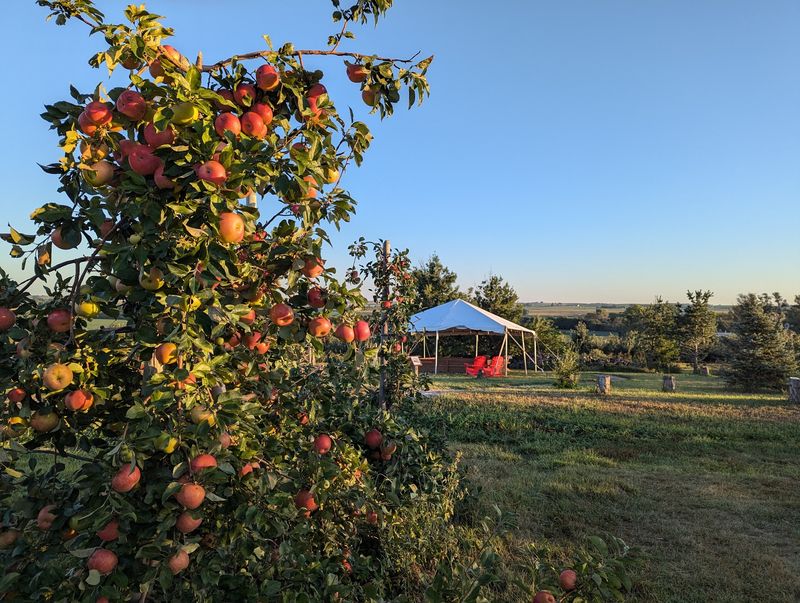
Gravel crunching under the tires, canyon walls rising where Nebraska is supposed to be flat, and no sign of a store anywhere. That stretch of road makes you check the map twice before a cluster of round wooden buildings finally appears over a rise.
Each one used to hold grain. Now they hold cast iron skillets, painted signs, farm tools, and the exact kitchen bowl your grandmother kept on the counter.
A Circle of Shops South of North Platte
Twenty old wooden grain bins stand in a loose arrangement on a rise in Lincoln County, each one fitted with a door and windows, each one packed with antiques. A wooden boardwalk links them together so you can step from bin to bin without touching dirt.
Grain Bin Antique Town sits south of North Platte, and the setup does what the name promises. There is no strip of storefronts, no mall corridor, no single cash register room to funnel through.
Instead you wander a small village of round rooms, plus one large barn-style building that holds still more inventory.
Depression-era bins like these once held corn and wheat on farms across central Nebraska before steel replaced wood. Most were torn down or left to sag.
Here they were hauled in, patched up, and given a second job.
The effect is odd in the best way. Curved walls change how merchandise looks, how sound carries, how you move.
Shopping in a circle takes some adjusting, and that adjustment is half the fun.
How One Couple’s Antiquing Habit Became a Town
Start with a love of antiques and a husband who builds things, and this is roughly where you end up. Lori Clinch collected.
Pat Clinch, a builder, could cut a doorway into a curved wooden wall and make it look like it belonged there.
The couple began buying up Depression-era wooden grain bins and moving them onto their land south of town. Pat widened openings, added windows, and stitched the whole arrangement together with a boardwalk built from lumber salvaged out of an old school.
Recycled wood holding up a shop made of recycled buildings feels about right.
Lori Clinch passed away in 2022. Pat continues running the place, and her name still comes up in conversation out there, because the project was never one person’s idea alone.
That history is the reason the property reads as a town rather than a warehouse. Someone decided each bin deserved its own identity, its own door, its own small world inside.
Nobody builds twenty separate shops for efficiency.
Inside the Round Rooms
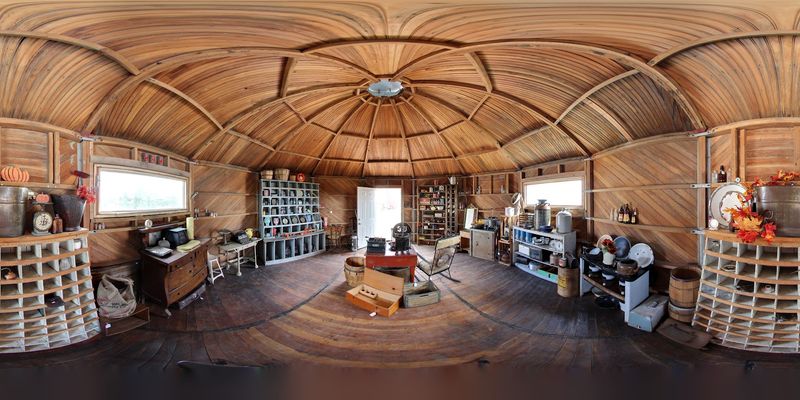
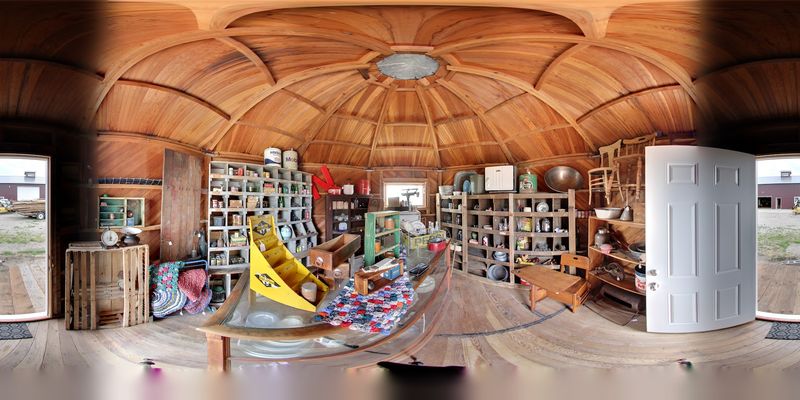
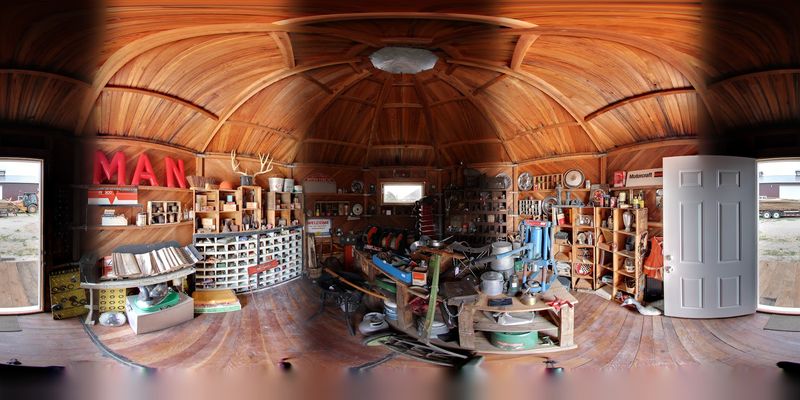
Curved walls mean nothing hangs quite straight. Shelves follow the bend, signs lean, and the ceiling above you is a wooden cone with tools and baskets suspended from it.
Looking up is not optional here, because a good share of the inventory lives overhead.
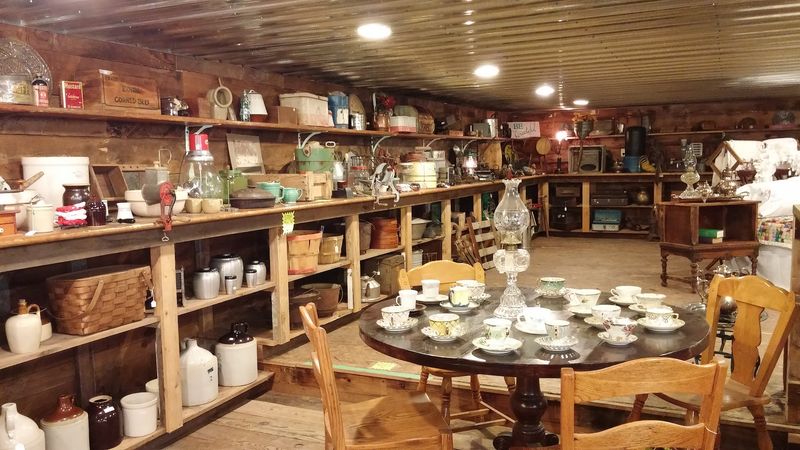
Each bin tends to carry its own personality, with different dealers curating different collections. One might lean toward kitchenware and glassware.
Another leans primitive: farm implements, weathered wood, cow skulls, painted advertising signs that once hung in Nebraska feed stores.
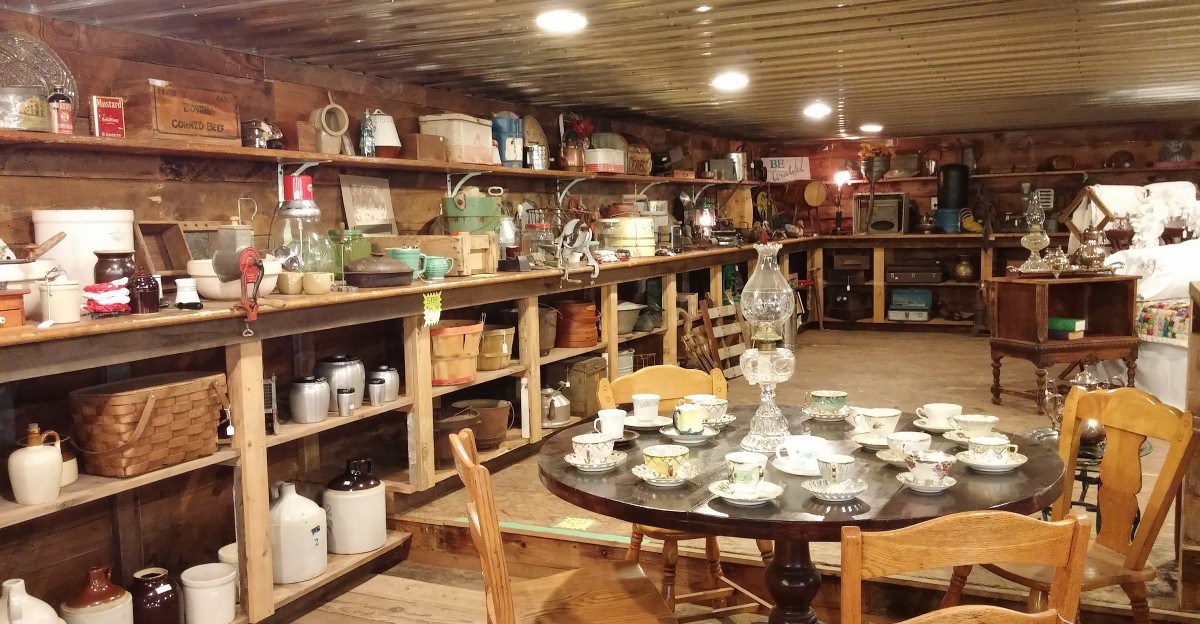
Furniture shows up too, the solid wooden kind that outlasted three households. Then the small stuff fills every gap, trinkets and tins and tools with handles worn smooth.
What keeps it from feeling like a junk pile is the order. The bins are tidy, swept, and arranged with real thought, which is not something every antique operation manages.
You can actually see what you are looking at.
Bring patience. There are nooks inside a round room you would not expect a round room to have.
The Big Barn and Its Rustic Interior
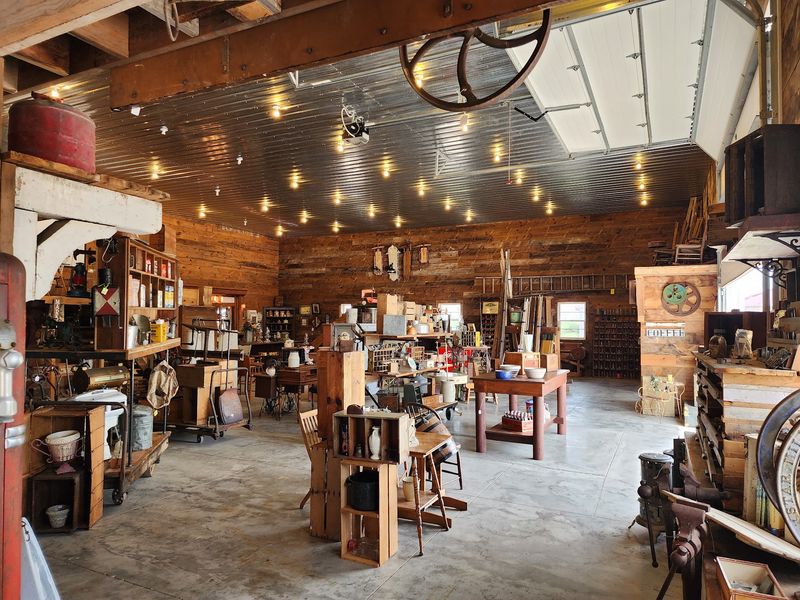
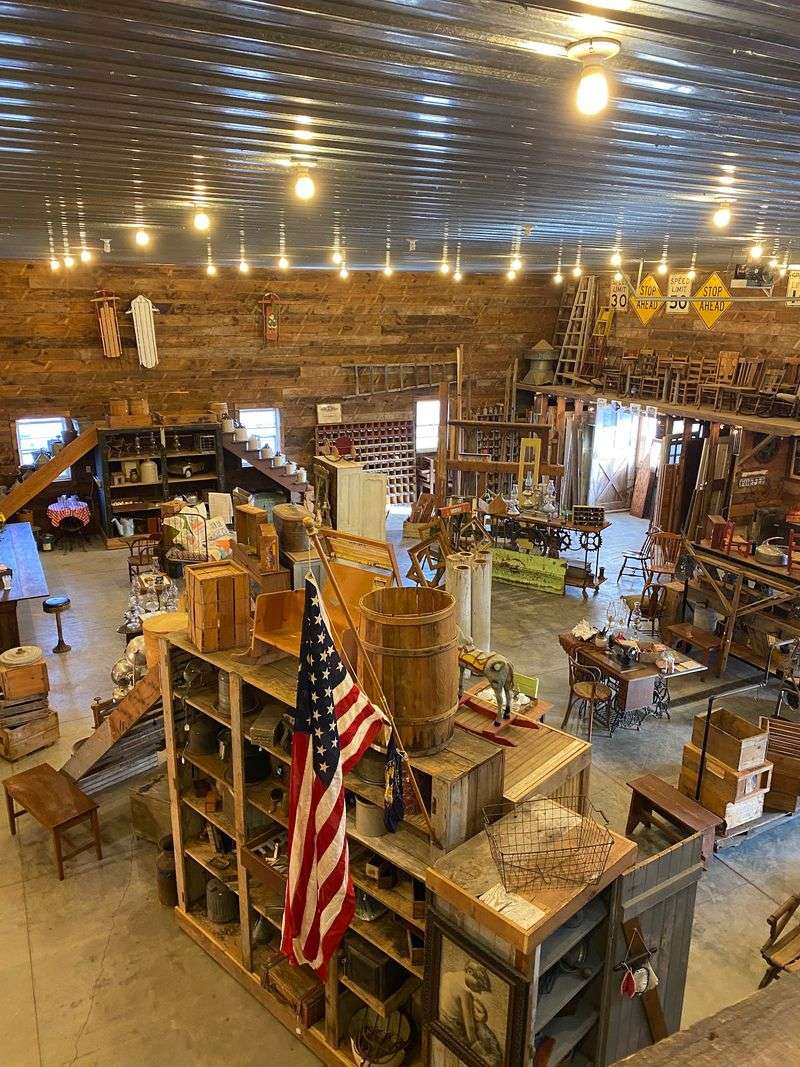
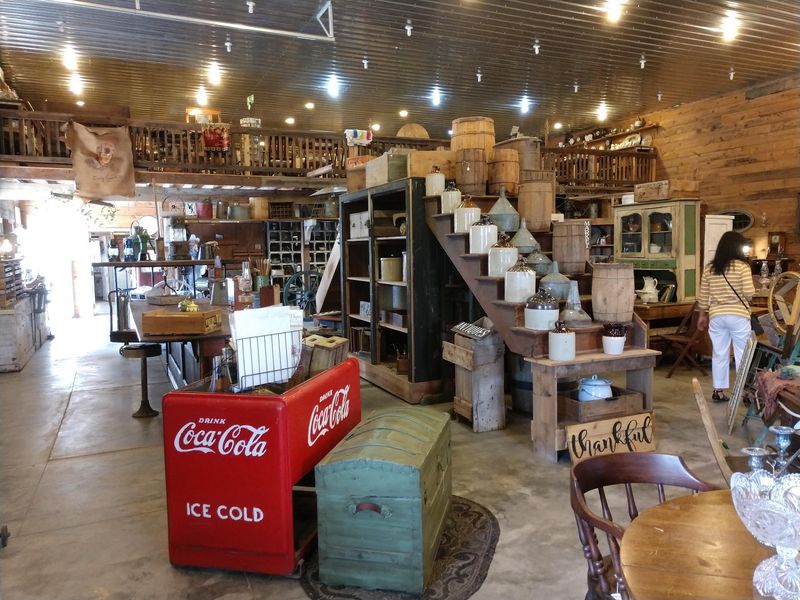
Beyond the bins sits the anchor of the property: a large barn-style building with a rustic wooden interior and considerably more floor space than any single round shop can offer.
Bigger pieces live here. Classic furniture, display fixtures pulled from old stores, back bar cabinetry with carved wood and mirrors, the sort of architectural salvage people hunt for when remodeling an old house.
Walking it end to end takes a while even if you are not stopping to price anything.
The barn also functions as a rest point. Benches, a place to sit down, cold water and coffee within reach, and a sold shelf where staff will stash your finds so you are not hauling an armload of cast iron around the boardwalk.
Events happen out here on occasion as well, which changes the feel of the property entirely on those days.
If the bins are the novelty, the barn is where serious shoppers slow down. Plenty of people come for the round buildings and end up spending their longest stretch under this roof.
The Boardwalk Made From an Old Schoolhouse
Reclaimed lumber from an old school forms the walkway that ties the whole property together, running bin to bin so nobody is picking their way across grass or gravel between stops.
Practical detail worth knowing: the boardwalk is flat and wide enough that a wheelchair rolls fine and a walker works without trouble. Benches sit along the route for anyone who needs to catch a breath before the next doorway.
Families bringing an older parent out for the afternoon do not have to plan around rough ground.
Doors were widened during the conversion, which matters more than it sounds. Original grain bin openings were never meant for people carrying purchases.
The walkway also sets the rhythm of the visit. You browse, step outside into open air and canyon views, then step into another room entirely.
Weather becomes part of the experience, which is why a mild day beats a bitter one.
Small thing, that boardwalk. It is also the reason the place works as a town instead of twenty scattered sheds.
Prices, Finds, and the Kitchen Bowl You Recognize
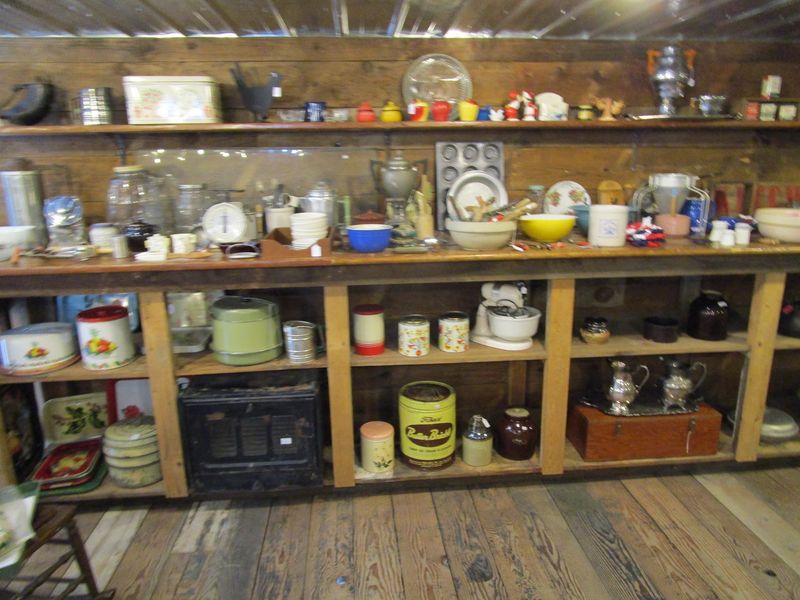
Reasonable is the word that follows this place around, and the stock backs it up. Small trinkets run cheap enough to buy on impulse, while larger furniture and salvage pieces carry the prices those things fetch anywhere.
Half the pleasure has nothing to do with buying. You will round a curved wall and spot the exact mixing bowl, the same pattern of jar, the identical advertising tin that sat in a relative’s kitchen.
Recognition hits before memory catches up.
Collectors do well here because the variety is enormous and the turnover is real. Come twice a year and the bins look different.
Kitchenware, glassware, signs, farm implements, primitives, furniture, oddities like cow skulls, all of it rotating as dealers restock. Somebody looking for one specific missing piece of a set has a genuine shot.
Bring cash or a card and some restraint. The common problem out here is not finding something.
It is fitting what you found into the vehicle you drove.
Dogs, Kids, and an Unhurried Afternoon
Leashed dogs are welcome, and a playful pup of the resident variety may greet you before anyone else does. For anyone who has been driving I-80 with a restless back seat, a stop where kids and pets can stretch their legs outdoors is a rare find.
Children tend to like it more than they like ordinary antique stores, mostly because there are twenty doors to open instead of one long aisle to endure. The staff are easygoing about it.
Time budgeting matters. An hour gets you a quick pass.
Three or four hours lets you cover the bins and the barn properly, and some people simply split the place across two trips.
Conversation is part of the visit too. Pat Clinch will explain how the bins were salvaged and converted if you ask, and questions about specific pieces get real answers.
Temperature is the one honest caveat. Wooden bins are not climate controlled, so a mild spring or fall afternoon beats midsummer heat or a January wind out of the canyons.
Finding It on a Nebraska Gravel Road
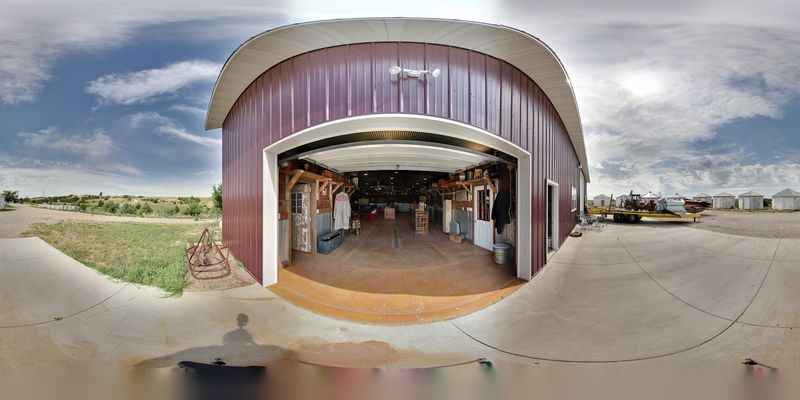
Getting there involves a few miles of gravel, and that stretch is where people start second-guessing the directions. Keep going.
The turnoff runs south from North Platte along the old Highway 83 route, roughly four miles below State Farm Road.
The address is 10641 South Old Hwy 83 Rd, North Platte, NE 69101. Plug it in before you lose signal, because the last leg feels considerably more remote than the mileage suggests.
Anyone convinced Nebraska is one flat sheet gets corrected on this drive. The road drops into canyon country with real relief and long views, and the scenery alone justifies the detour.
Hours run midweek through Saturday, opening late morning and closing in the afternoon, with the shop shut on Sunday, Monday and Tuesday. Those can shift with the seasons, so it pays to confirm before you commit to the drive.
Winter is the wildcard. Unheated wooden buildings and gravel roads both respond poorly to Nebraska weather, which makes spring through fall the safer window.
Why the Detour Earns Its Gravel
Plenty of antique stores fill a building. Very few build twenty of them out of structures that were headed for a scrap pile.
What sticks with people afterward is not any single purchase. It is the shape of the visit: stepping in and out of round rooms, the boardwalk under your feet, the canyon air between stops, and the odd satisfaction of seeing farm buildings put back to work instead of flattened.
Nebraska has lost a great many of these wooden bins. Twenty of them standing in one place, swept clean and full of the state’s own castoffs, amounts to a small act of preservation with a cash register attached.
Go on a mild day. Give it more time than you think you need, and plan the drive with the shop’s limited open days in mind.
You may leave with a cast iron pan, an old sign, or nothing at all. Either way, the drive south of North Platte hands you a Nebraska afternoon that no strip-mall antique mall can match.