Explore 10 Places In California In 2026 That Feel Straight Out Of A Dream
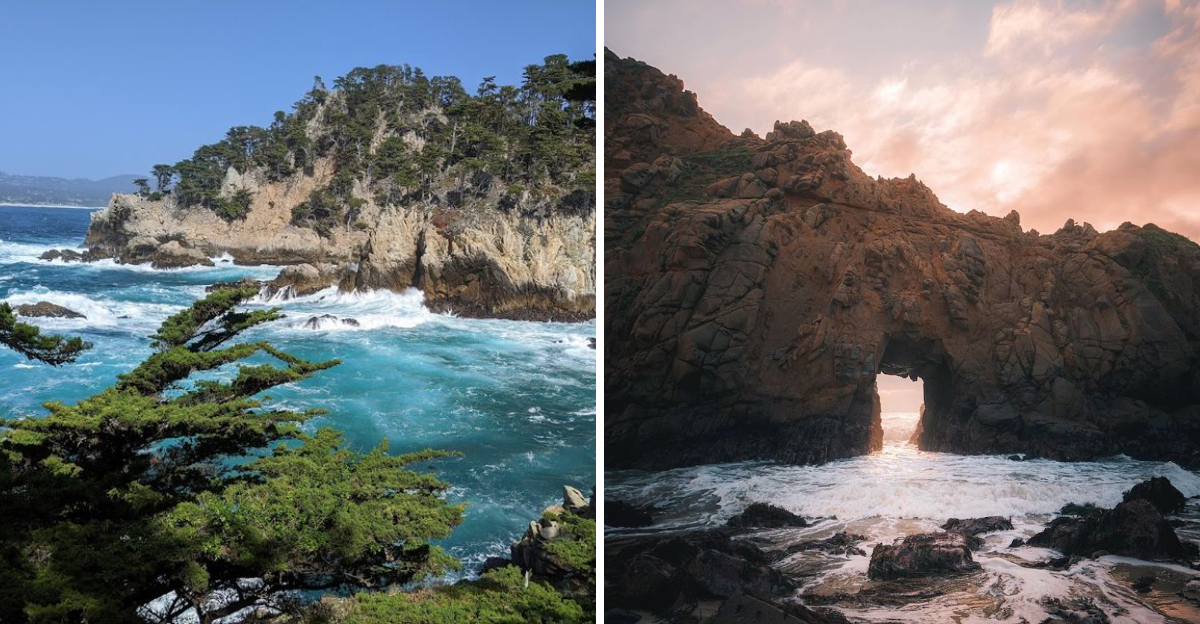
A quiet kind of wonder lingers in certain corners of the world, the kind that doesn’t announce itself but settles in slowly as you move through it.
The air feels different. Softer, almost. As if something older than memory is just beneath the surface.
Trails lead through forests where light barely touches the ground, then open suddenly to places shaped by wind, water, and time.
Shores glint with unexpected color. Hidden falls carve their way through stone that has stood for ages. Nothing feels rushed here.
Moments like this are scattered across California, waiting between mountains, coastlines, and wide, open stretches of land.
You don’t always plan to find them. That’s part of what makes them stay with you.
Each place holds its own quiet pull. Some feel bright and almost unreal. Others feel deep, still, and grounded in something ancient.
What follows is a path through eleven of these places, each one real, each one open to be explored, and each one capable of turning an ordinary trip into something that lingers long after.
1. Glass Beach, Fort Bragg
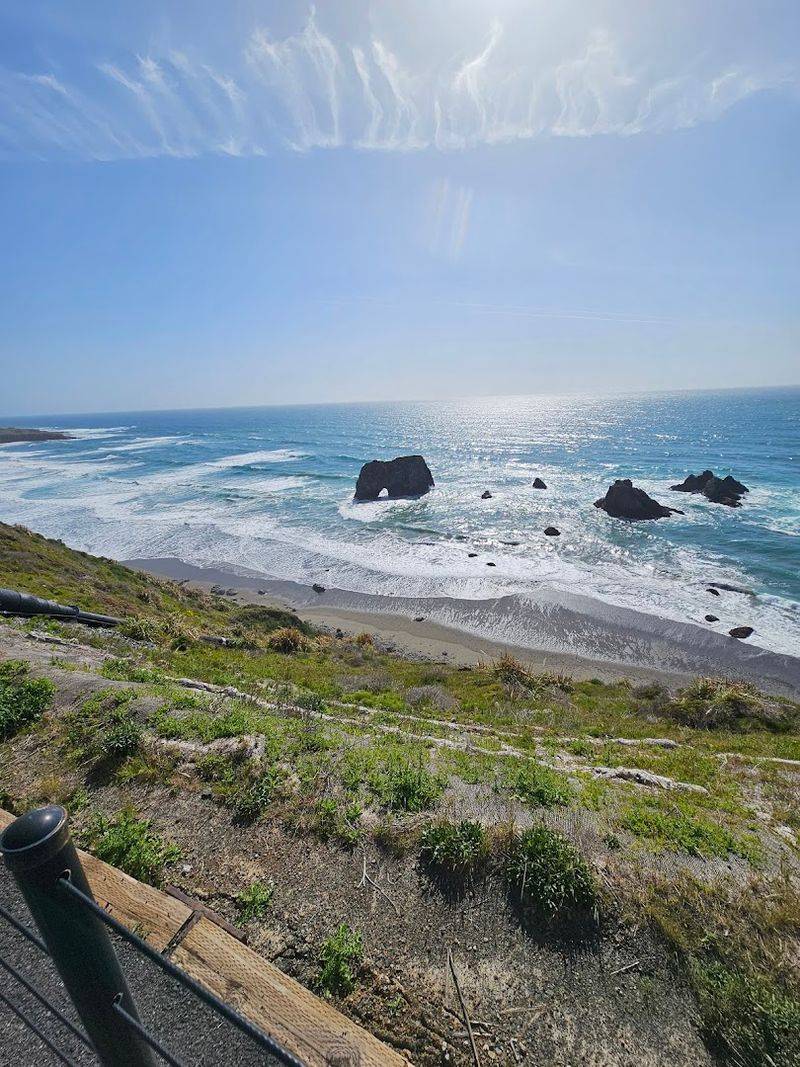
Walking onto a beach covered in smooth, colorful pieces of sea glass feels like stepping into a place that should not exist.
Glass Beach in Fort Bragg, California, is exactly that kind of place, where decades of ocean tumbling have turned old glass into jewel-like pebbles that catch the light in every color imaginable.
The beach sits at the end of a short trail off Elm Street in Fort Bragg, and the walk there is easy enough for most visitors.
The sea glass here is the result of old landfill waste that was once dumped into the ocean before environmental laws changed.
Over many years, the waves polished the broken pieces into the smooth gems visitors see today.
The irony that something so beautiful came from something so careless makes the place feel even more striking.
Visitors are asked not to collect the glass, since the supply is slowly shrinking over time. The best light for photography tends to be in the late morning when the sun hits the shore at a low angle.
Weekdays tend to be less crowded than weekends, which allows for a more peaceful experience along the water.
2. Burney Falls, McArthur-Burney Falls Memorial State Park
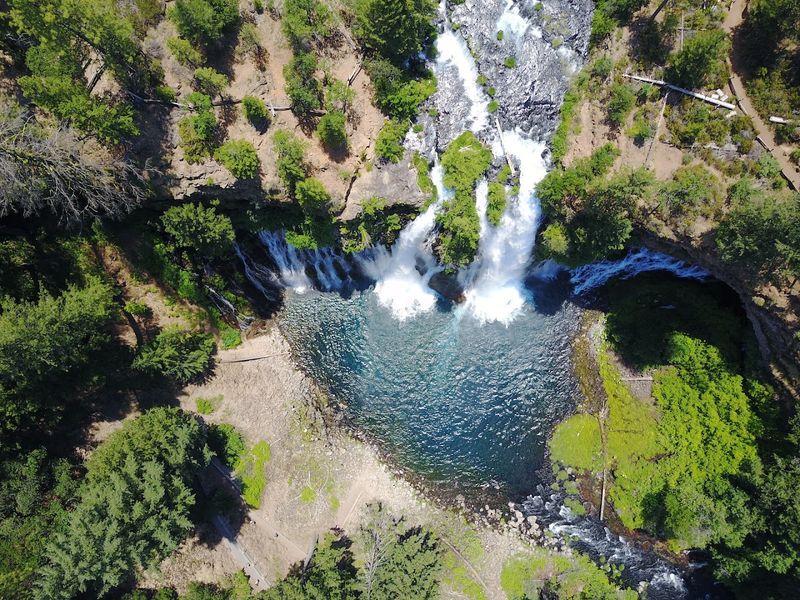
There is something almost unreal about watching water pour from an entire cliff face rather than a single stream, and that is exactly what happens at Burney Falls.
Located inside McArthur-Burney Falls Memorial State Park at 24898 CA-89, Burney, CA 96013, the falls drop roughly 129 feet into a crystal-clear pool below.
The water does not just fall from the top but also seeps directly through the volcanic rock on either side, creating a curtain effect that feels genuinely otherworldly.
President Theodore Roosevelt reportedly called Burney Falls the eighth wonder of the world, and standing in front of them makes that description feel less like an exaggeration.
The mist from the falls keeps the surrounding area cool and lush even during dry California summers.
A paved trail loops around the falls and the pool below, making it accessible for a wide range of visitors.
The park is open year-round, and the falls flow consistently because they are fed largely by underground springs rather than snowmelt alone.
Arriving early in the morning could help avoid the largest crowds. The sound of the water alone, a constant and enveloping rush, makes the visit feel worth the effort.
3. Alabama Hills, Lone Pine
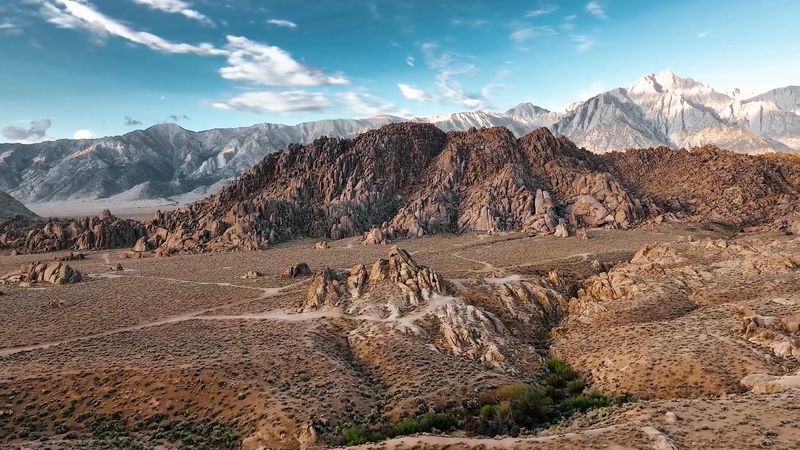
Rounded orange boulders scattered across a flat valley floor with snow-capped mountains rising sharply behind them create a landscape that looks almost too cinematic to be real.
The Alabama Hills near Lone Pine, California, have actually served as a filming location for hundreds of movies and television shows over the decades, including classic Westerns and modern blockbusters.
The contrast between the warm desert tones of the rocks and the cool white peaks of the Sierra Nevada in the background is striking in person.
The area is managed by the Bureau of Land Management and is free to visit, with dirt roads winding through the boulders and connecting to various arches and viewpoints.
Arch formations like the Mobius Arch frame a perfect view of Mount Whitney, the tallest peak in the contiguous United States.
Most of the terrain is accessible by foot without needing technical hiking gear.
Sunrise and sunset are particularly dramatic here because the low light turns the rocks deep amber and casts long shadows across the valley floor.
Camping is allowed in designated areas, and stargazing at night can be exceptional due to the low light pollution in the region.
Spring and fall tend to offer the most comfortable temperatures for exploring.
4. McCloud Falls, McCloud
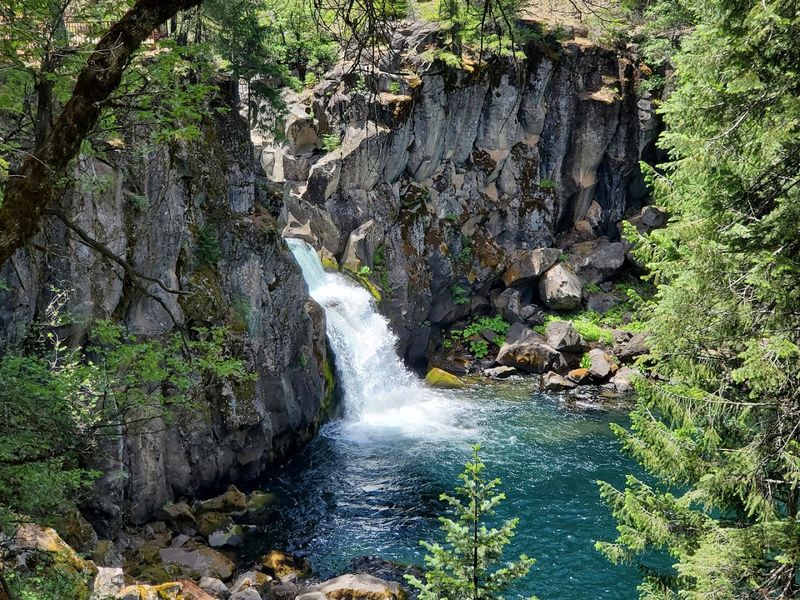
Few places in Northern California offer the kind of quiet, layered beauty found along the McCloud River.
The McCloud Falls area near the town of McCloud features three separate waterfalls, each with its own personality, connected by a trail that winds through dense forest along the river.
The lower falls are the most dramatic, tumbling over dark volcanic rock into a wide pool that shimmers in the filtered light coming through the trees.
The middle falls are shallower and wider, spreading across the rock face in a way that looks almost like a natural stage.
The upper falls are smaller but surrounded by lush greenery that makes them feel tucked away and private.
Hiking between all three takes a few hours at a comfortable pace, and the trail is well-maintained and clearly marked throughout.
Swimming is permitted at certain sections of the river, and on warm days the cool water can be a welcome break from the trail.
The area sits at a higher elevation than much of Northern California, which keeps temperatures mild even in midsummer.
Dogs are welcome on leash, and the parking area at the lower falls is the most convenient starting point for a full visit to all three.
5. Point Lobos State Natural Reserve, Carmel-By-The-Sea
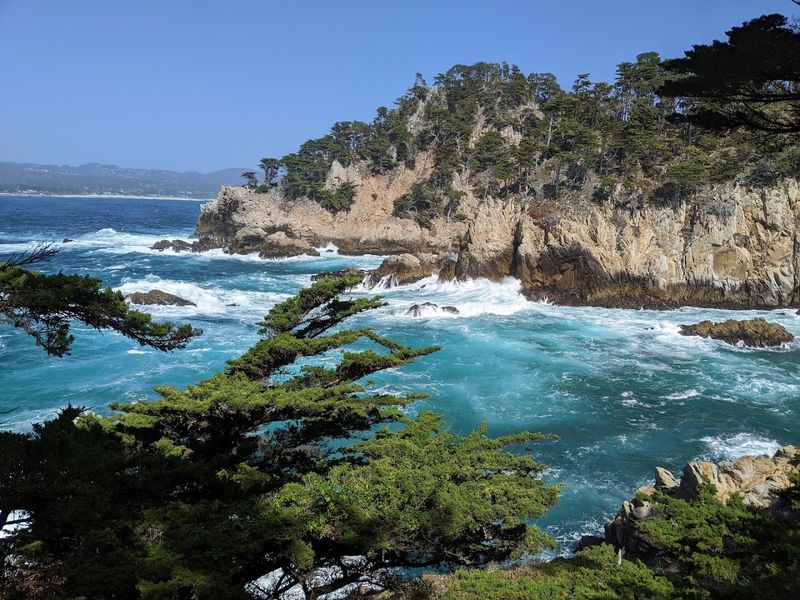
Rocky coves, twisted cypress trees, and water so clear it looks painted are the defining features of Point Lobos State Natural Reserve near Carmel-by-the-Sea.
The trails inside wind along some of the most visually striking coastline in the entire state.
Sea lions and harbor seals often rest on the rocks just offshore, close enough to watch without any binoculars needed.
The reserve is considered one of the richest marine habitats on the West Coast, and the underwater park that extends offshore is a popular diving destination.
On the land side, the trails are short and well-marked, with most loops taking between one and two hours to complete.
The combination of open ocean views, sheltered coves, and forest interiors gives the reserve a variety that feels almost like multiple places in one.
Entry fees apply and reservations are sometimes required during peak season, so checking the reserve website ahead of time is a smart step.
The light in the late afternoon tends to turn the water a vivid green-blue that photographs beautifully. Weekday visits tend to feel noticeably quieter and more relaxed than weekends.
6. Mammoth Lakes Basin, Mammoth Lakes
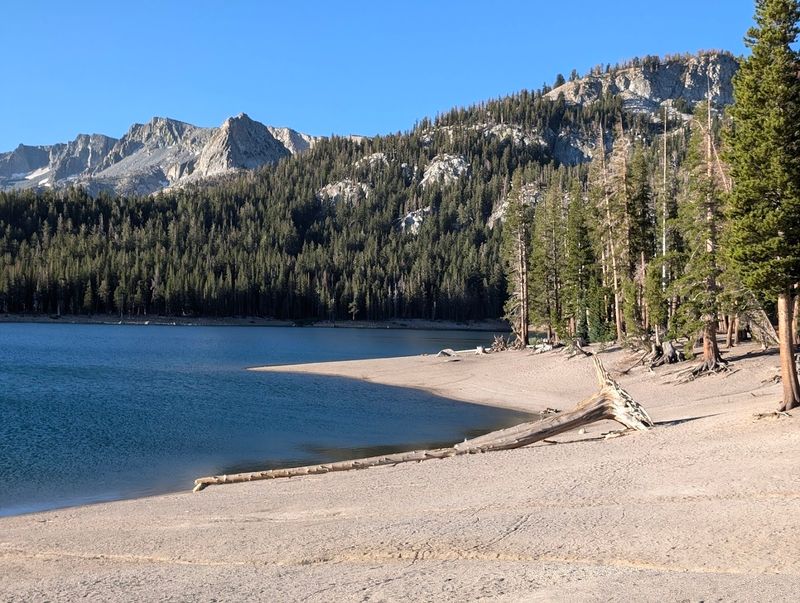
At an elevation above 8,000 feet, the air feels different and the colors look sharper than almost anywhere else in the state.
The Mammoth Lakes Basin in Mammoth Lakes, California, is a cluster of alpine lakes nestled among rugged peaks and pine forests that together create a scene that feels more like a painting than a real place.
The five main lakes, Twin, Mary, George, Mamie, and Horseshoe, are each accessible by road during the summer months. Fishing is a popular activity here, and the lakes are stocked regularly with trout.
Kayaking and paddleboarding are also common on the calmer lakes, and the reflections of the surrounding peaks on the still water can be stunning on windless mornings.
Hiking trails branch out from the basin into higher terrain for those who want to explore beyond the lakeshores.
Winter transforms the area entirely, with deep snow turning it into a skiing and snowshoeing destination.
The town of Mammoth Lakes has lodging, dining, and gear rental options close by, which makes logistics straightforward.
Visiting in late July or August typically offers the best combination of warm weather, open trails, and wildflowers blooming along the water’s edge.
7. Pfeiffer Beach, Big Sur
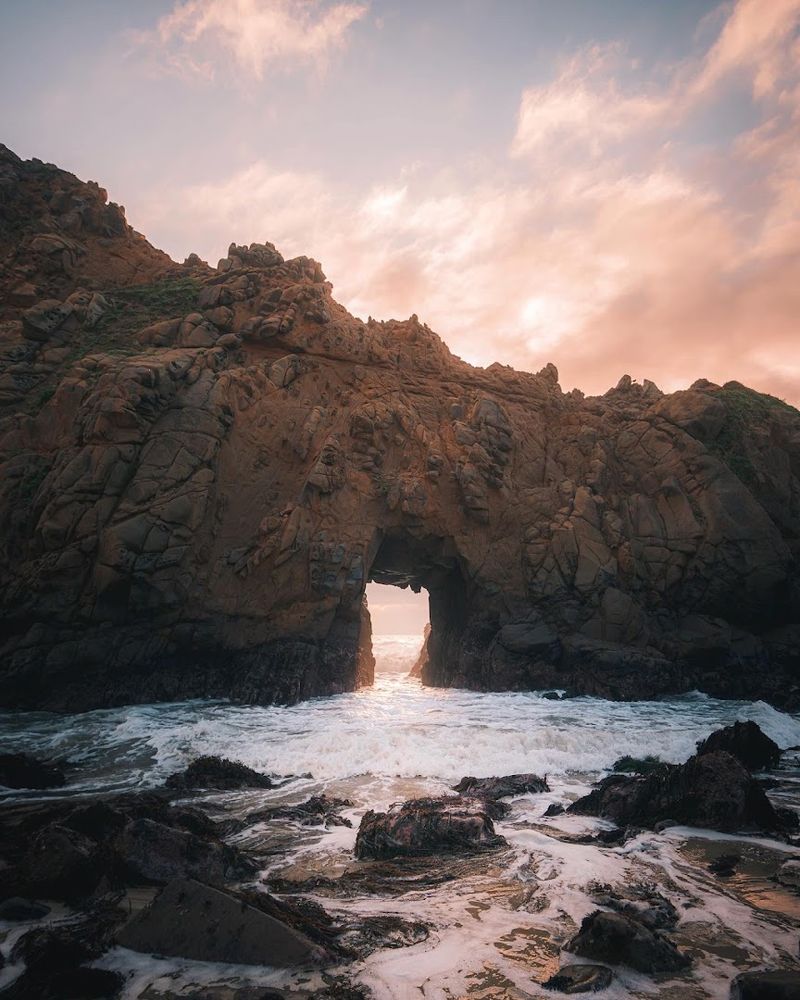
Purple sand sounds like something out of a fantasy novel, but Pfeiffer Beach along the Big Sur coastline actually has it.
The distinctive color comes from manganese garnet deposits in the hillside cliffs above, which wash down onto the beach over time and mix with the darker sand near the water.
The rock arch at the north end of the beach frames the crashing waves in a way that makes even a simple photograph look extraordinary.
Getting to Pfeiffer Beach requires turning onto Sycamore Canyon Road off Highway 1 and driving about two miles down a narrow road to the parking area.
A day-use fee applies, and the road is not suitable for large vehicles or RVs.
The beach itself is not ideal for swimming due to strong currents, but it is one of the most visually stunning places to sit, walk, and watch the ocean along the entire California coast.
The purple color in the sand is most visible near the waterline during and after high tide when the garnet particles concentrate.
Visiting around sunset can produce remarkable light as the sun drops toward the horizon and shines directly through the rock arch.
Arriving early helps secure a parking spot since the lot fills quickly on weekends and holidays.
8. Sonoma Lavender Fields, Sonoma
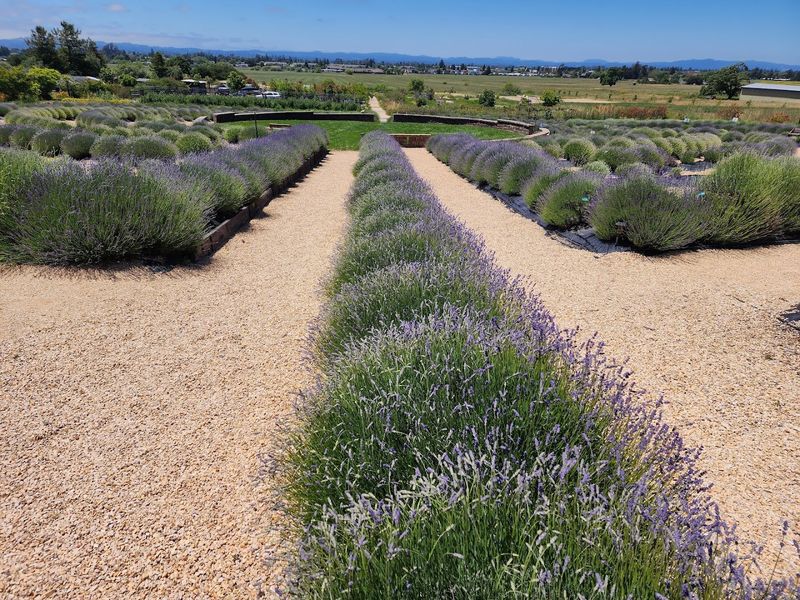
Few scents are as immediately calming as lavender, and walking through rows of it in full bloom under a wide open sky is a sensory experience that is hard to replicate anywhere else.
The Sonoma region of California is home to several lavender farms that open to visitors during the blooming season, which typically runs from late spring through early summer.
The rows of purple stretching toward the horizon against golden hills create a visual that stops most people mid-step.
Lavender Labyrinth and Flower Gardens at 3883 Petaluma Hill Rd, Santa Rosa, CA 95404 is one of the most well-known spots in the Sonoma area for lavender, with an extensive lavender garden on the property that draws visitors specifically during peak bloom.
The grounds are peaceful and the lavender is planted in long, neat rows that are easy to walk between.
Many farms in the area also sell lavender products such as sachets, soaps, and dried bundles directly on-site.
Bloom timing can vary by a few weeks depending on the weather each year, so checking ahead before visiting is a practical step.
Morning visits tend to offer the strongest fragrance since the heat of the day has not yet faded the essential oils.
Weekdays are generally much quieter than weekend visits during peak season.
9. Salvation Mountain, Niland
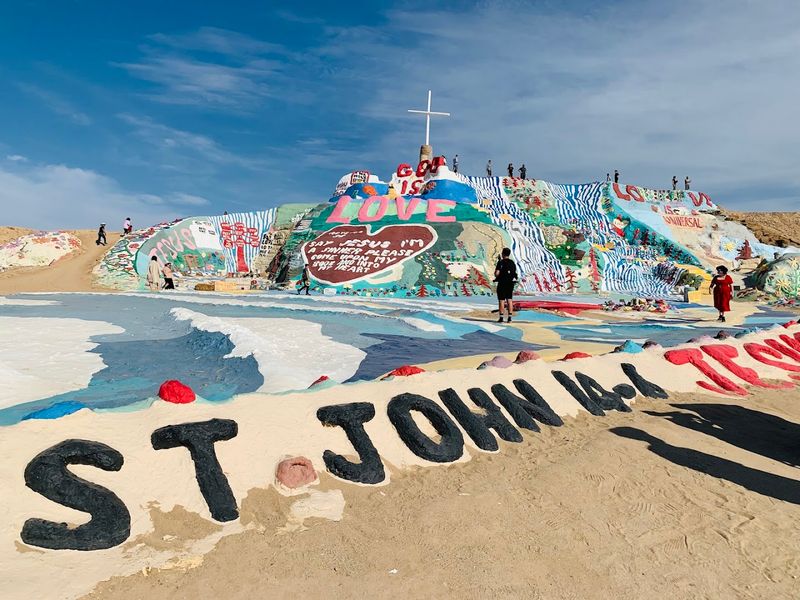
Bright yellow suns, red hearts, and hand-painted flowers covering an entire hillside in the middle of the California desert create a scene that is unlike anything else in the world.
Salvation Mountain near Niland, California, is a large folk art installation created by Leonard Knight starting in the late 1980s, built from adobe, straw, and thousands of gallons of donated paint.
The structure has been designated a folk art site and continues to be maintained by volunteers who visit regularly to repaint and preserve it.
The mountain stands about 50 feet tall and is covered in religious messages, colorful imagery, and hand-lettered text that Knight painted over decades before his passing in 2014.
Visitors are welcome to walk up and around the structure, and the texture of the painted adobe surface is something that photographs simply cannot fully capture.
The surrounding Slab City area, an off-grid community nearby, adds an additional layer of unconventional character to the visit.
The site is free to visit and open during daylight hours, though donations are appreciated to help fund ongoing maintenance.
Summer temperatures in the desert near Niland can be extreme, so visiting in the cooler months between October and April is strongly recommended.
Early morning visits in any season offer the most comfortable conditions and softer light for photography.
10. Fern Canyon, Prairie Creek Redwoods State Park
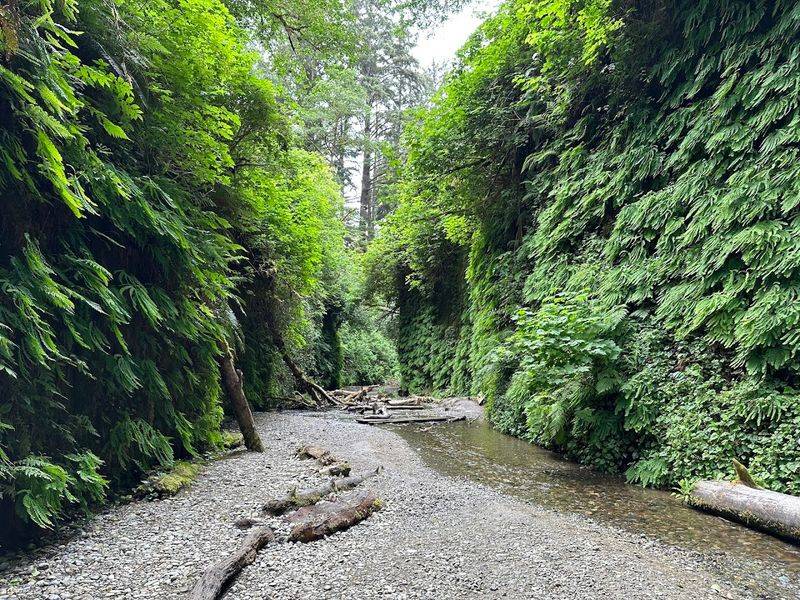
Walking through a narrow canyon where every inch of the walls is covered in thick green ferns feels like entering a world that time forgot.
Fern Canyon in Prairie Creek Redwoods State Park in Humboldt County, California, is a short but extraordinary slot canyon where Home Creek runs through the middle and wooden plank bridges help visitors cross back and forth.
The walls rise about 50 feet on either side and are blanketed so completely in five-finger ferns that almost no rock is visible beneath them.
The canyon gained wider attention after serving as a filming location for the dinosaur scenes in a well-known Hollywood blockbuster, and the prehistoric atmosphere makes that connection feel completely natural.
The main loop through the canyon is less than a mile long, but the density of what there is to see makes it feel much more immersive than the distance suggests.
The surrounding old-growth redwood forest adds another dimension to the visit for those who want to extend their time in the park.
The access road to the canyon trailhead is unpaved and can be rough, and it may require a vehicle with some ground clearance depending on recent weather conditions.
An entrance fee applies to the state park.
Visiting in spring or early summer tends to offer the lushest fern coverage and the most vibrant green color along the canyon walls.