Explore This Whimsical Outdoor Museum In Wisconsin With More Than 30 Bizarre Sculptures
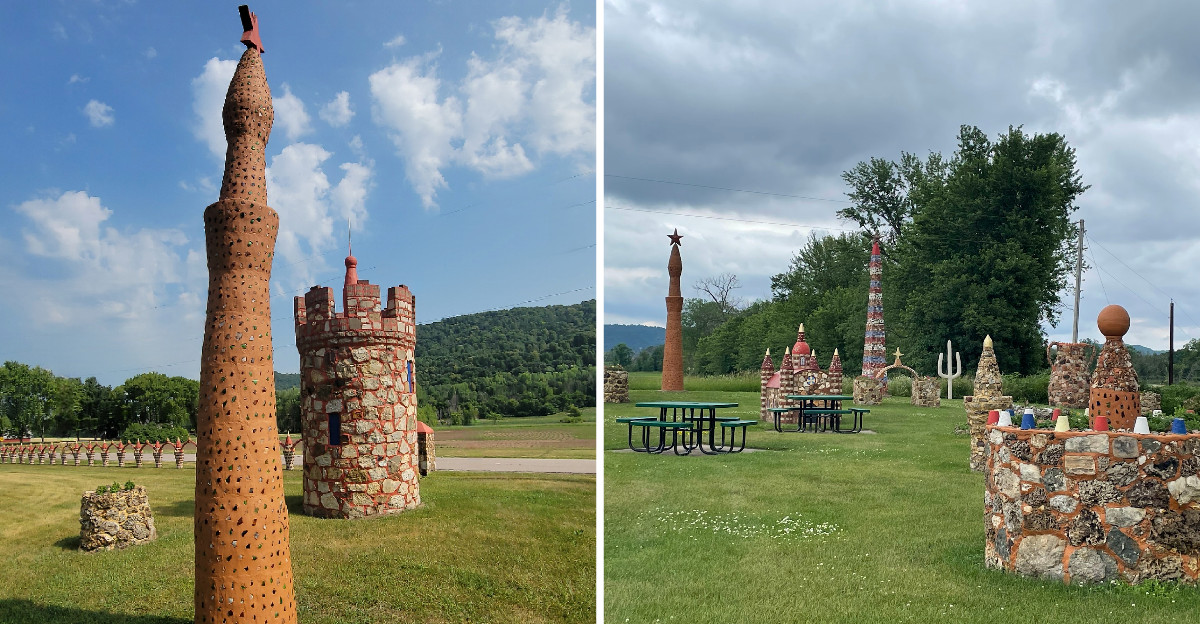
A retired farmer started building giant concrete sculptures at around age 72. He kept going until he was 89. That alone earns my respect.
Then there’s the price of admission, which is zero. The grounds stay open from dawn to dusk, all year long.
One fan loves the backstory, another loves a free stop. Honestly, both are excellent reasons to pull over in Wisconsin.
And then the details get stranger. The art is studded with seashells, mirrors, broken crockery, and bits of bottle glass.
There’s a dinosaur, a rocket, and a Hindu temple sharing one lawn.
Apparently, nobody told this guy that hobbies are supposed to fit in a garage.
A Retired Farmer Built An Entire Wonderland Out Of Concrete
Herman Rusch was born in 1885, and he clearly never got the memo about slowing down. His Prairie Moon Sculpture Garden and Museum is the colorful result of his very busy retirement.
After leaving farming in 1952, Rusch rented and later purchased the old Prairie Moon Dance Pavilion. He wanted a place to display his collection of curiosities and natural wonders.
Around 1957, he decided the bare grounds needed sprucing up. He started with a concrete and stone planter. That project quickly grew into something much bigger.
Over the next 17 years, Rusch created nearly 40 large sculptures by hand. He was self-taught, which makes the scale of his work even more impressive. His creations eventually established him as an important figure in Wisconsin’s tradition of outsider art.
His work attracted national attention in 1974, when it was included in the Walker Art Center’s exhibition Naives and Visionaries.
Rusch lived to be 100 years old. Walking the grounds today, you can appreciate the patience behind every piece.
Bring Your Sharpest Eyes For All The Sparkly Little Surprises
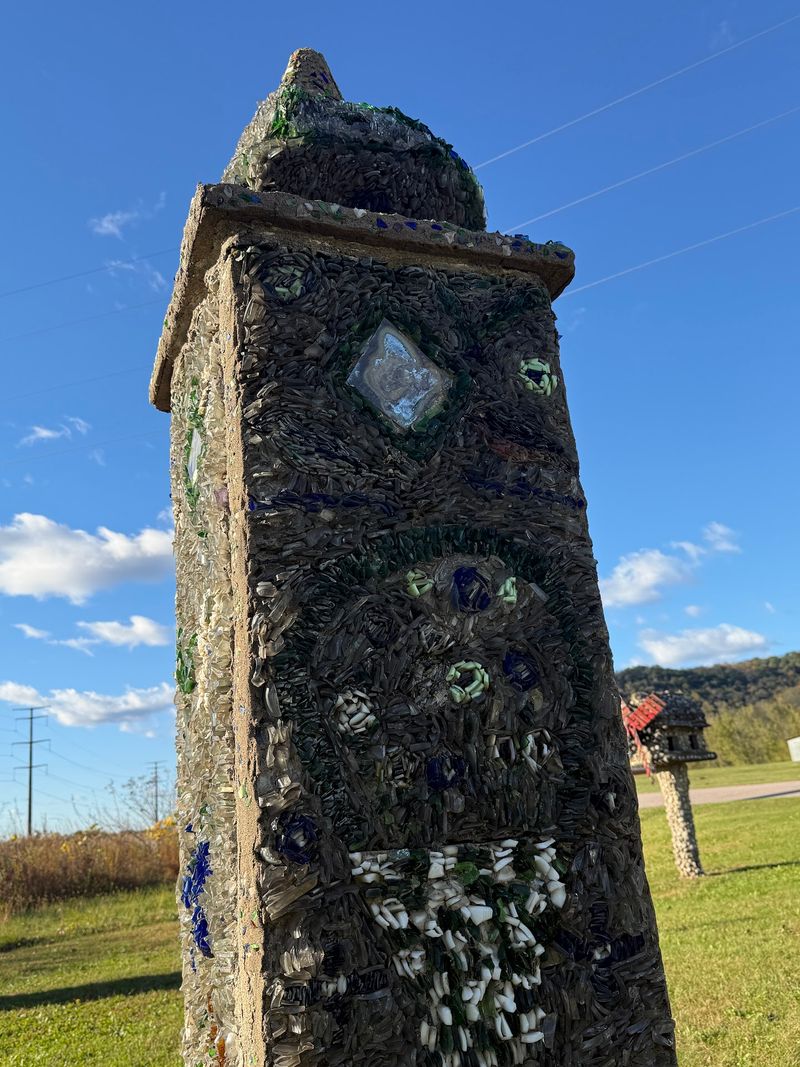
Look closely at almost any sculpture here, and it starts to twinkle back at you. Rusch loved pressing found objects into wet concrete.
Seashells, mirrors, colored glass, and shards of crockery all show up in his work. Some surfaces were colored while the concrete was still fresh. Others were painted after they hardened.
That mix gives each piece its own texture and personality. On a sunny day, the glass and mirrors catch light in cheerful little flashes.
His sculptures cover a wide range of subjects. You’ll find architectural shapes, human figures, animals, and imaginative scenes. Towers, fountains, and decorative arches reveal his remarkable sense of proportion and craftsmanship.
Concrete, stone, and locally collected rocks form the foundations of many pieces. Rusch carefully selected materials from nearby quarries, combining them with decorative objects gathered over the years.
The two-acre garden offers plenty to inspect without requiring a long hike. Children get a mission, and adults get to slow down and notice the craftsmanship.
Dinosaurs And Rockets Somehow Share The Same Lawn
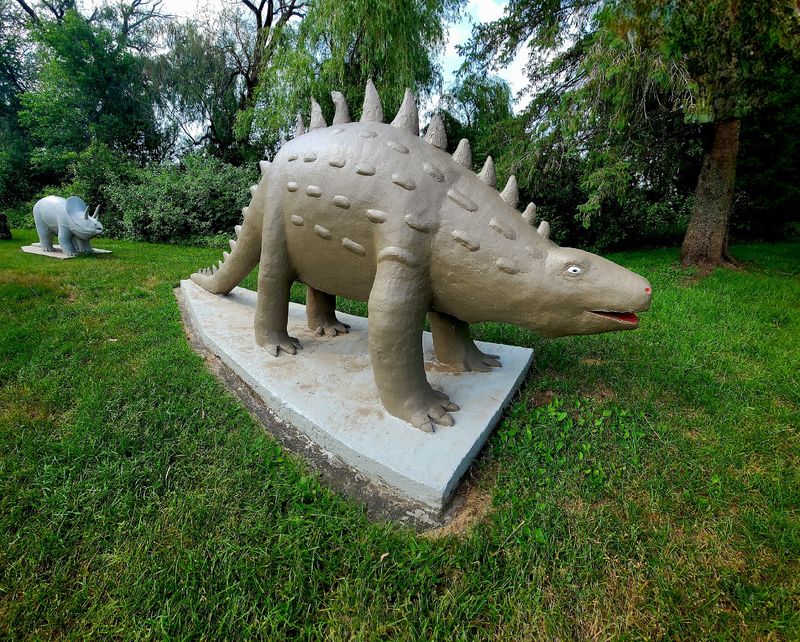
Few places let you stroll from the Jurassic era to outer space in about twenty steps. That’s the charm of this lineup.
One standout is the Rocket to the Stars, a pointed sculpture that looks ready for liftoff. Nearby, dinosaurs make a strong showing, including a Plateosaurus, Triceratops, and Stegosaurus. Rusch clearly didn’t limit himself to one theme.
There’s also a Hindu temple, a church, a tower, a snake, and miniature mountains. The variety feels like flipping through a giant scrapbook of one man’s imagination.
Then comes the watchtower. Standing 13.5 feet tall, it ranks among his final and most impressive pieces. He built it using rocks collected from a quarry high in the nearby bluffs.
The garden also features a sun spire, an enormous decorative vessel, and a concrete self-portrait of the artist.
A numbered guide helps identify the various sculptures. Take your time and circle around the bigger pieces. Different angles reveal patterns and embedded treasures you might miss at first.
You Will Not Believe He Built This Fence In One Summer
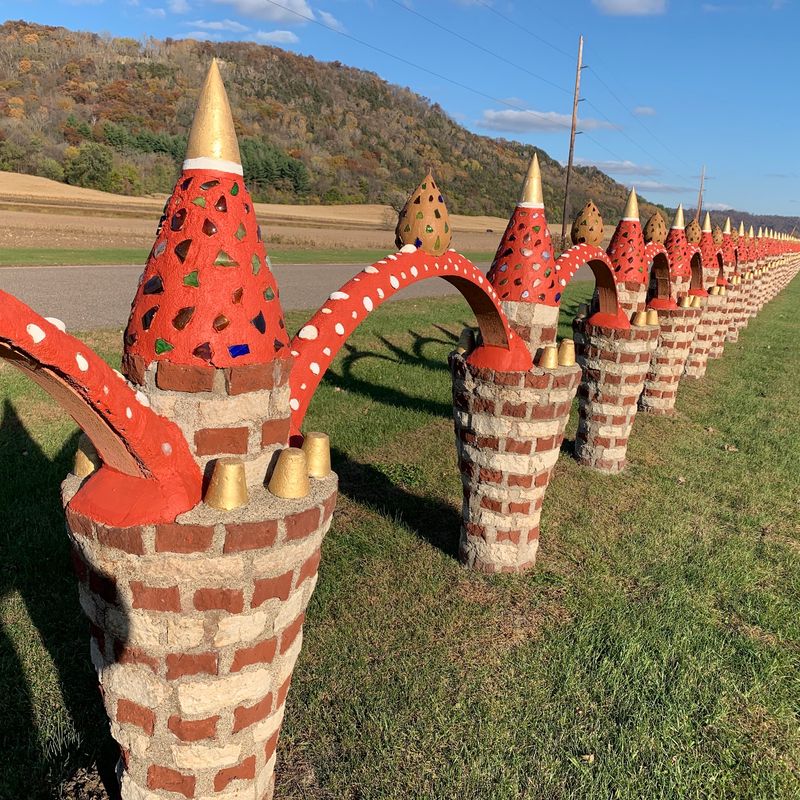
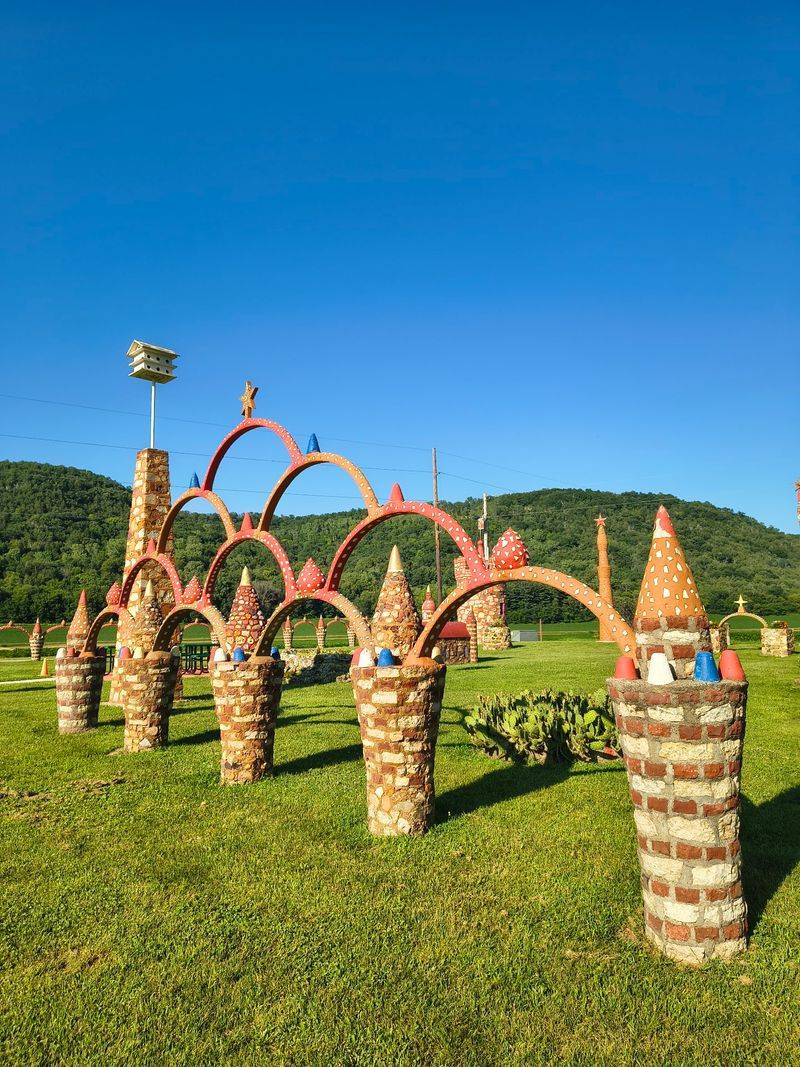
At 79 years old, Rusch tackled a project that would wear out most people half his age. He built a long arched fence along the property in just one summer.
The fence stretches approximately 260 feet. That’s nearly the length of a football field, give or take.
The design is wonderfully precise. Conical posts line up neatly, decorated with contrasting bands of stone and brick. Colorful arches connect the pillars, creating a repeating pattern across the lawn.
The clever part is how he made the arches. Rusch used iron wheels from old grain drills as forms, covering the curved metal with concrete. Only a farmer would think of that.
Practical touches show up everywhere. The six-foot posts have pointed tops designed to discourage birds from perching. Concrete reinforcements around the bases also make maintaining the surrounding grass easier.
Each arch spans approximately six feet, with the posts anchored by substantial underground foundations.
Other Folk Artists Moved Into The Neighborhood
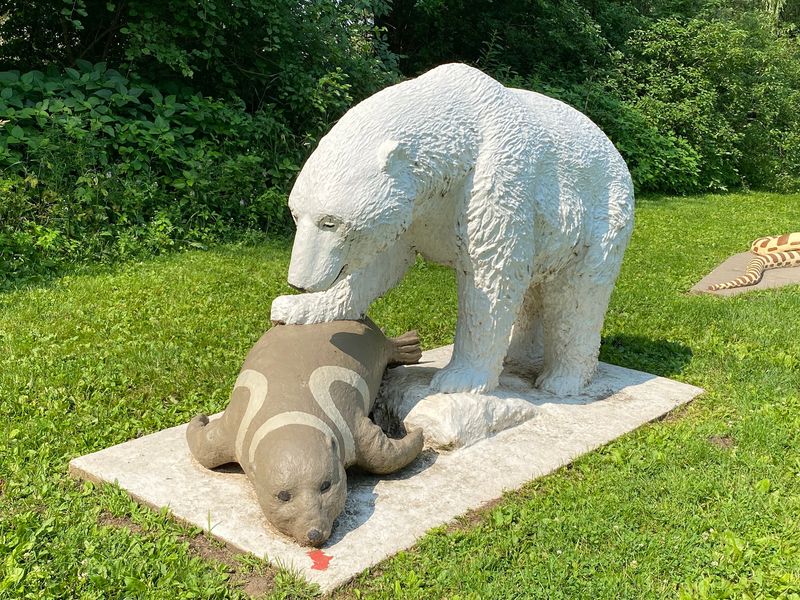
Rusch isn’t the only creative mind represented on these grounds. Over time, other folk artists’ work found a home here too.
Minnesota artist Halvor Landsverk contributed four sculptures originally created during the 1930s. Among them are a Norwegian hunter confronting a bear and a polar bear with a seal.
Those pieces add a fresh style to the mix. They sit comfortably beside Rusch’s work while still feeling distinct.
Then there’s the Fountain City Rock Garden, created by John and Bertha Mehringer during the early 1930s.
The couple originally built their miniature stone structures into a hillside overlooking the Mississippi River. Their work included decorative concrete pieces covered with colorful glass and carefully arranged rocks.
The collection was eventually relocated to Prairie Moon, where the sculptures were restored and permanently installed.
Another artist represented here is Fred Schlosstein, whose miniature buildings recreate homes and businesses from early twentieth-century Cochrane.
Together, these collections reveal an interesting side of Wisconsin’s folk-art heritage. Each artist approached concrete and stone differently, turning ordinary materials into something remarkably personal.
An Old Dance Hall Holds Even More Curiosities
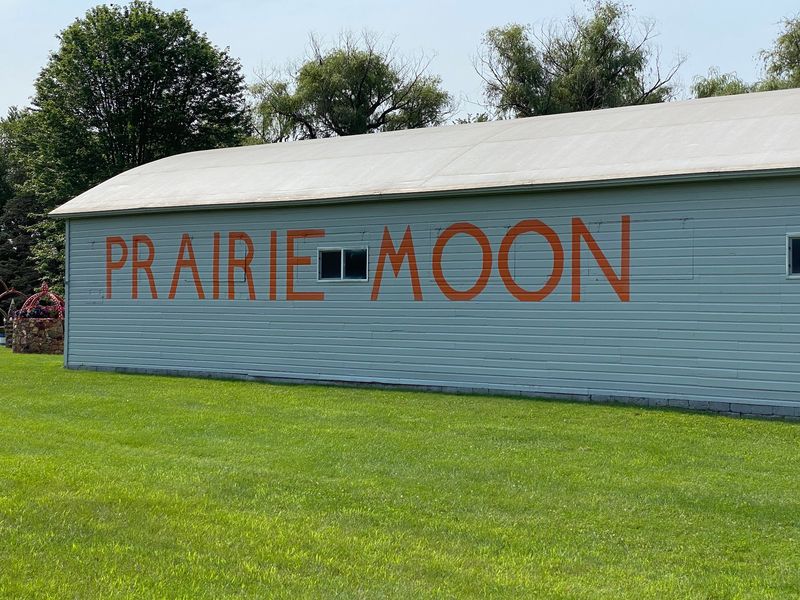
Once upon a time, folks danced the night away inside the Prairie Moon pavilion. Rusch later turned it into his own museum of oddities.
He filled it with quirks of nature and personal treasures. Historic accounts mention a tree grown around a scythe and a washing machine powered by a goat walking on a treadmill.
Unusual rocks, pieces of wood, antique tools, and other curiosities also filled the original collection.
After restoration, the pavilion became home to an interpretive exhibit. It includes documentary photographs, artifacts, and personal keepsakes connected with Rusch’s life.
In 2002, the museum added a collection of miniature buildings created by Fred Schlosstein.
The restored village features 18 buildings modeled after structures that once stood in Cochrane. Many have tiny wooden doors, windows, and painted details that imitate real architectural features.
Schlosstein built them using concrete and locally collected stone. Seeing an entire miniature community recreated by hand is delightful. Additional sculptures from his collection were installed outside in 2008.
Free Admission Makes This An Easy Yes
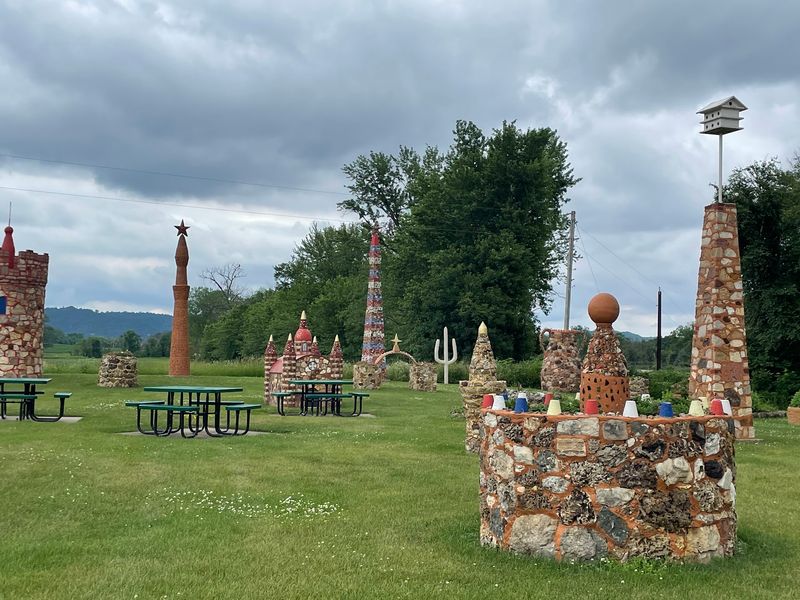
Good news for your wallet arrives right away. Entry to the grounds is completely free.
The garden is open all year from dawn to dusk. That means you can swing by during a fall color drive or a spring road trip. Self-guided wandering is the name of the game here.
Donations help with upkeep, so consider leaving a little something. Contributions support the ongoing care of these historic sculptures.
The property has a small parking area, basic restroom facilities, and outdoor space where you can pause between exploring the exhibits.
A full tour doesn’t take all day. Many families treat it as a fun leg-stretching stop on a scenic drive through the Mississippi River valley.
Comfortable shoes are smart, since you’ll be walking across grassy areas between sculptures. The outdoor setting also means weather conditions can affect how comfortable your visit feels.
Bring a camera or charged phone. The bold shapes, unusual structures, and sparkling details provide plenty of interesting subjects. With open access throughout the year, Prairie Moon makes an easy addition to a western Wisconsin road trip.
Thank A Foundation And A Small Town For Saving It
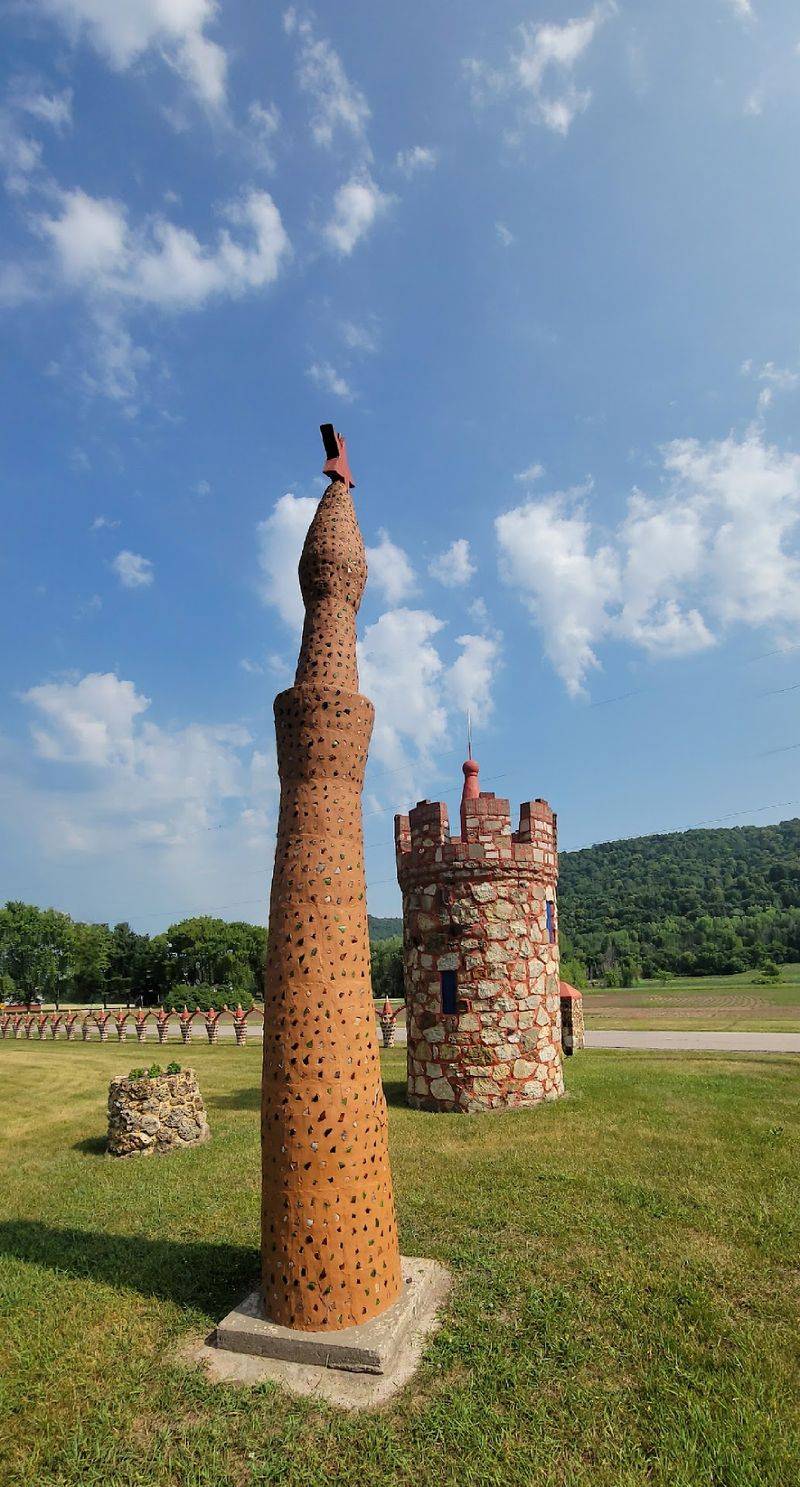
Folk art environments require special care, especially when their sculptures spend decades outdoors. Thankfully, this one has a remarkable preservation story.
Rusch sold Prairie Moon at auction in 1979. Over the following years, the property changed hands, and the collection became separated from many of its original displays.
In 1992, the Kohler Foundation purchased the site and began restoring it. The goal was to preserve Rusch’s sculptures for future generations.
The work involved structural stabilization, cleaning, surface repairs, and careful restoration of the original colors.
Landscaping improvements helped recreate the garden’s earlier appearance, while the pavilion received attention inside and out.
Late in 1994, the foundation donated the property to the Town of Milton. A public celebration marked the reopening in 1995.
Today, the Friends of Prairie Moon helps care for the grounds and collections, continuing the preservation effort.
Herman Rusch’s Prairie Moon Sculpture Garden and Museum remains an important part of Wisconsin’s folk-art heritage.
Gorgeous River Bluffs Make The Drive Worth It
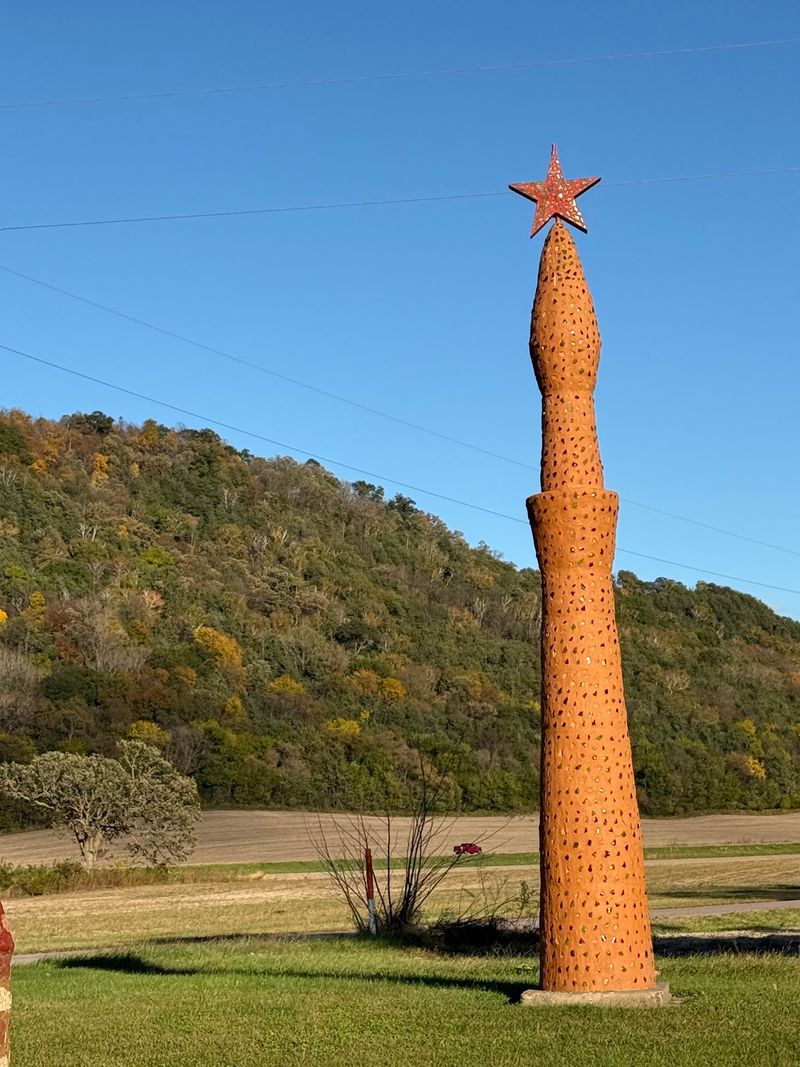
Scenery here does half the work before you even park. The garden sits among the rolling bluffs of western Wisconsin, close to the Mississippi River.
You’ll find it at S2727 Prairie Moon Rd, Cochrane, WI 54622. It’s in Buffalo County, between Fountain City and Cochrane, a short distance from Highway 35.
That highway forms part of the Great River Road, which follows the Mississippi through some of the region’s most beautiful countryside.
Prairie Moon Sculpture Garden and Museum fits nicely into that kind of trip.
The natural setting really frames the artwork. Green hills rise behind the bright concrete sculptures, while nearby fields and wooded slopes create a peaceful rural backdrop.
In autumn, the surrounding trees add another layer of color to the landscape.
Merrick State Park is also in the area, offering opportunities for hiking, camping, and exploring the Mississippi River backwaters. Pairing the two destinations makes for a well-rounded day outdoors.